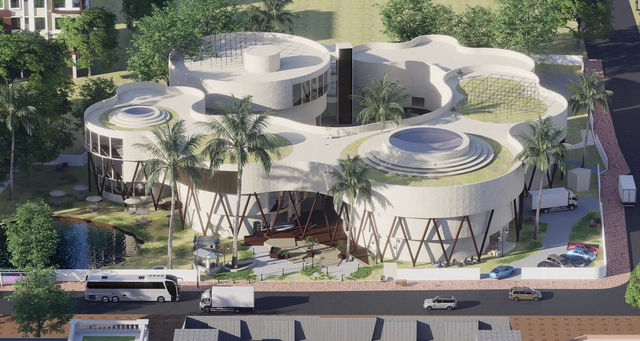
From forest-inspired offices in Sweden to jungle-nest clubhouses in Tulum, mixed-use architecture continues to evolve as a tool for integrated living. As cities grow and our expectations of public, private, and commercial space shift, designers are increasingly rethinking how different functions including work, play, rest, learning, can coexist in a single architectural language. These projects suggest that buildings and projects no longer need to silo activities, but rather choreograph them to reflect the rhythms of everyday life.
This collection, submitted by the ArchDaily community, presents a global spectrum of approaches to mixed-use design, from large-scale masterplans to conceptual theses. What ties them together is a commitment to spatial overlap, ecological sensitivity, and reimagined programs that prioritize user experience. Whether it's a student dormitory in Tehran, a public plaza in Cairo, or a community hub in Texas, each project embraces complexity to create spaces that are alive with interaction, transformation, and meaning.
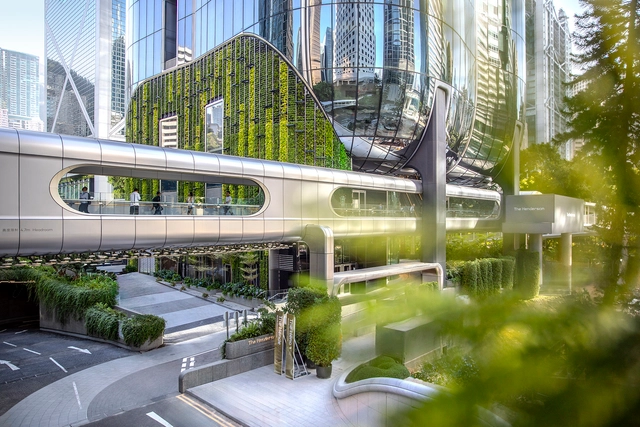
Architectural landmarks often cluster together. In Tokyo, the iconic Omotesando is a well-known stretch where global "starchitects" built flagship luxury retail spaces in the 2000s. Hong Kong has a lesser-known but equally powerful architectural agglomeration along Queensway—though historically more corporate and less publicly engaging. Beginning in the 1980s, this corridor became home to a series of landmark buildings by some of the world's most prominent architects: Norman Foster's HSBC Headquarters, I.M. Pei's Bank of China Tower, Paul Rudolph's Lippo Centre, and the nearby Murray Building by Ron Phillips—now revitalized as a hotel by Foster + Partners. The area is further enriched later on by Heatherwick Studio's renovation of Pacific Place and Tod Williams Billie Tsien Architects' Asia Society Hong Kong Center.
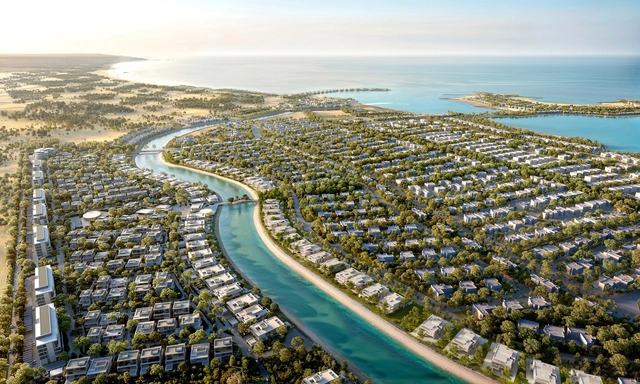
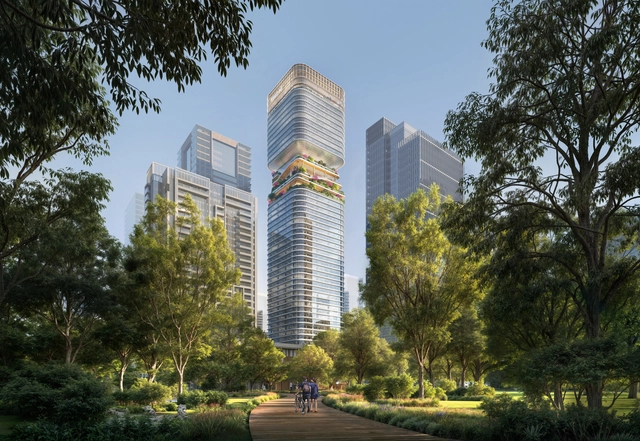
A series of recently announced projects across Europe, Asia, the Middle East, and North America reflects an ongoing shift in architectural thinking toward approaches that integrate buildings with their landscapes, programs with public life, and design with long-term environmental goals. In Nantes, France, a healthcare campus redefines medical education through climate-conscious planning, while in San Antonio, Texas, a new arboretum transforms a former golf course into a research-driven public landscape. Residential towers are rising beside Bangkok's Lumphini Park, a new coastal community is underway in the UAE, and an expansion to the Nelson-Atkins Museum in Kansas City reconsiders how cultural institutions connect with their surroundings. Together, these announcements point to a growing interest in projects that embed architecture within broader ecological and civic systems, proposing new models of spatial integration, accessibility, and resilience.
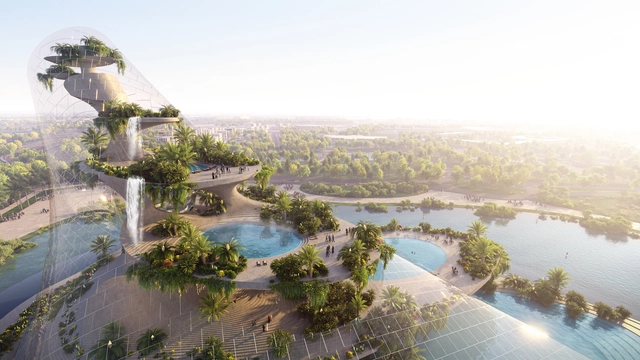
Diller Scofidio + Renfro has unveiled the design for Therme Dubai – Islands in the Sky, a new urban wellbeing destination set to be developed in Zabeel Park, United Arab Emirates. The project, created in collaboration with Therme Group and Dubai Municipality, has been approved as part of Dubai's Quality of Life Strategy 2033, which aims to enhance the city's landscape through innovative and sustainable infrastructure.
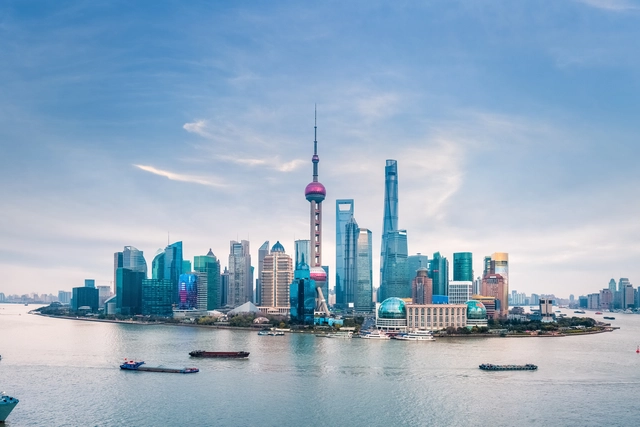
Shanghai, as one of China's most representative global cities, features an architectural vocabulary that seamlessly blends its distinctive "Haipai" (Shanghai style) urban character with an international perspective. The city boasts a rich spatial hierarchy, ranging from the micro-level of alleyways and neighborhoods to the macro-scale of urban planning. From the Suzhou Creek to the Huangpu River, every architectural landmark embodies Shanghai's unique history, culture, and vision for the future.
Our contemporary society has been witnessing a surge in skyscraper construction in urban centers worldwide for various reasons—including engineering advancements, increased urban density, space constraints, and, arguably, a competitive drive for building the tallest structures. The allure of all-glass facades and the pursuit of curtain walls with larger panes of continuous glass have often come at the cost of functionality.
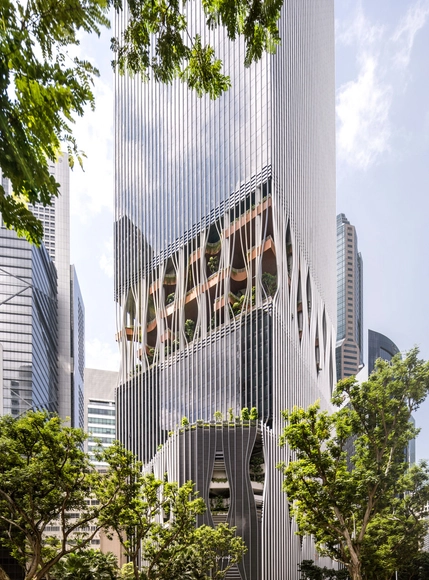
In these towers, operable windows are sacrificed for aesthetics and expansive views, with a central core layout that maximizes 360-degree views while creating architectural "solar heat-gain monsters." Without natural or cross ventilation, these glass skyscrapers trap significant heat from solar radiation within habitable spaces, relying almost exclusively on mechanical HVAC systems to cool these spaces. This raises the question: is passive ventilation strategy becoming obsolete in high-rise design, or can operable systems be integrated effectively into our high-tech towers?
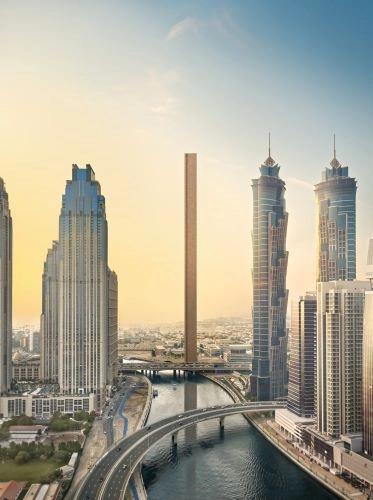
Muraba and RCR Arquitectes, recipients of the 2017 Pritzker Prize, have collaborated on Muraba Veil, a modern architectural project in Dubai that aims to incorporate traditional elements alongside contemporary innovation. This 380-meter-high tower is the latest result of a decade-long partnership between Muraba, a Dubai-based developer, and RCR Arquitectes, a Spanish architectural firm. The project introduces a skyscraper designed to engage with the local environment and culture, seeking to combine modern architectural techniques with regional heritage.
Skidmore, Owings & Merrill (SOM) has commenced construction on the global headquarters for China International Marine Containers Group (CIMC) in Shenzhen's Qianhai district. The 270-meter-tall structure, designed by SOM after winning an international competition, will stand as a 53-story tower. The project aims to serve as a corporate hub while also incorporating sustainable practices. The development is scheduled for completion by 2029.
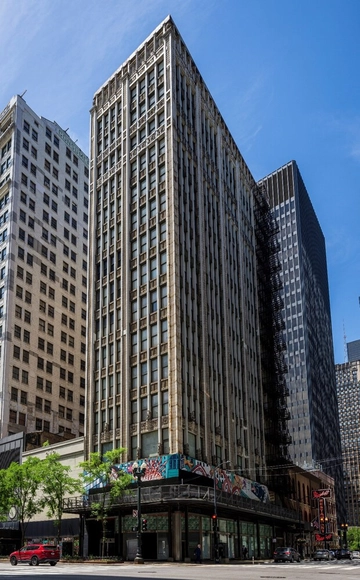
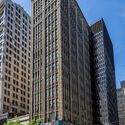
In a significant win for historic preservation, two landmark Chicagoskyscrapers, the Century and Consumers Buildings, have been saved from demolition. These iconic structures, located on State Street, were initially set for destruction due to security concerns, given their proximity to the Dirksen U.S. Courthouse. However, after extensive advocacy and public pressure, the U.S. General Services Administration (GSA) has shifted toward an adaptive reuse plan, ensuring the preservation of these architectural landmarks.
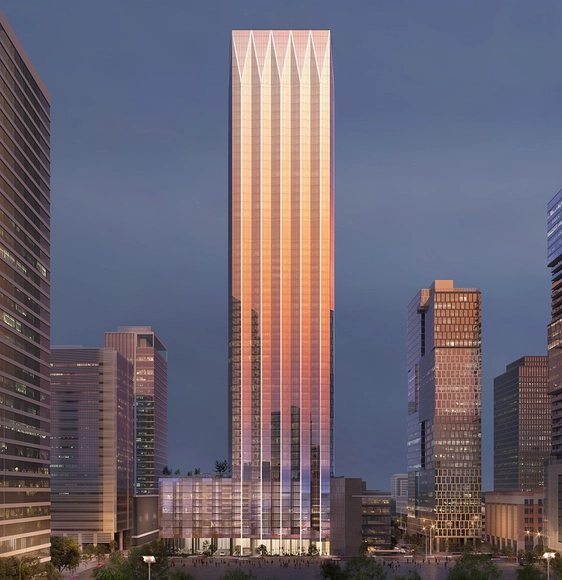
Goettsch Partners has just revealed the design for a new tower in Nashville, United States, which is set to become the city’s tallest structure. The building, named “Paramount,” will reach 750 feet across 60 stories, surpassing the current tallest, the 617-foot AT&T Building. Located in downtown Nashville, the Paramount will include 360 apartments, 140 condominiums, a 517-space parking garage, and a 60,000-square-foot expansion to the neighboring Downtown YMCA.
Deutsches Architekturmuseum (DAM) has announced the International High-Rise Award 2024/25. Selected from more than 1,000 new high-rises worldwide dating from the past two years, the nominated projects are located in 13 counties from 5 continents. In autumn, the five finalists will be announced, followed by the winner announcement scheduled for November 12, 2024. The main objective of the award is to highlight good practices in the ongoing trend of mixed-use high-rises.
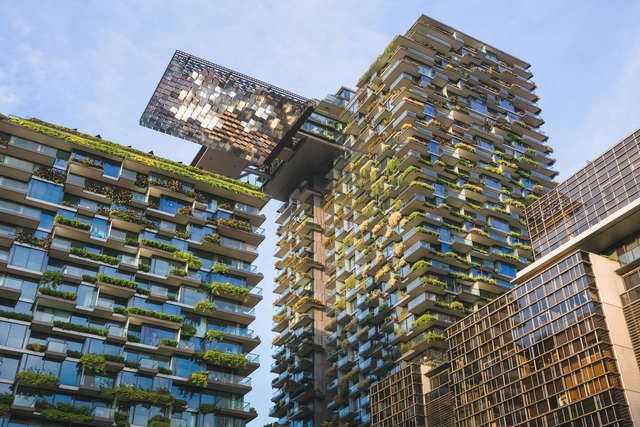
With the increase in the construction of high-rises, special features such as the introduction of greenery in the design, unusual shapes, or the construction of clusters of towers, have become the new normal. DAM’s research this year also shows a growing eco-awareness, as the focus in high-rise construction is increasingly on the use of existing buildings. While the majority of tall buildings continue to be erected in China, followed by the USA, Australia, and Singapore have emerged as new hubs of high-rise architecture.
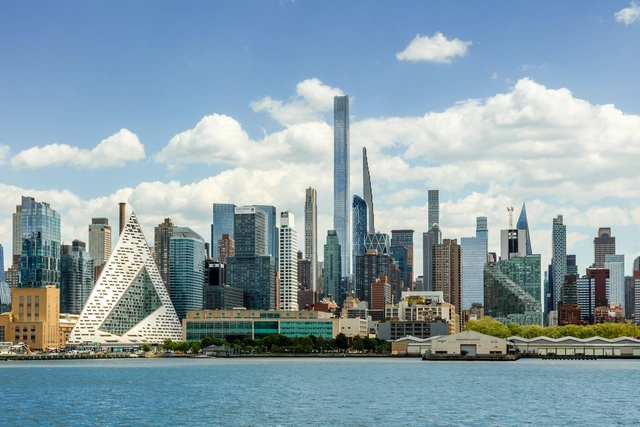
Skyscrapers are iconic symbols of modern urbanization and technological advancements all over North America. These structures are a sign of economic prosperity, urban density, and the capabilities of humanity’s ambition. In major cities across the continent, they shape the skyline and give identity to these metropolises. Cities like New York City, Toronto, and Florida utilize these cutting-edge designs to showcase power beyond their physical stature.
In general, skyscrapers are characterized by their remarkable height and pioneering engineering capabilities. They use advanced materials such as steel, glass, and concrete and serve as multifunctional spaces, ranging from housing to hotels and offices. Architects all around the world continually push the boundaries of architectural creativity, design, sustainability, and functionality while crafting these buildings. The structures allow architects to maximize land use in new ways, tackling densely populated urban areas.
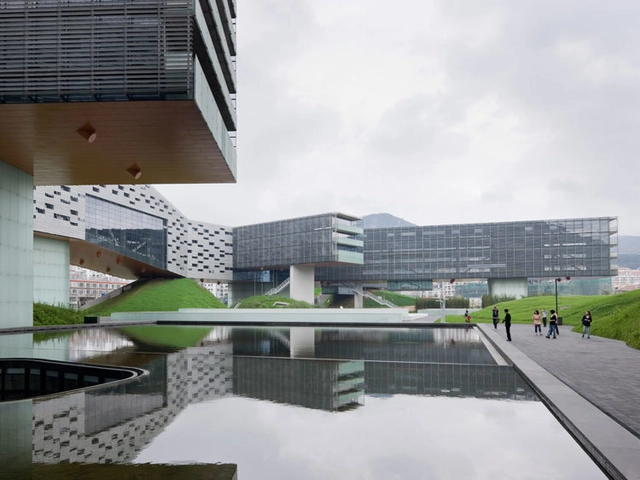
A ground scraper is essentially the opposite of a skyscraper - a large building that sprawls outward horizontally instead of soaring vertically into the sky. Though no strict definition exists, groundscrapers are generally described as extremely long but low-rise buildings with over 1 million square feet of space, sometimes called sidescrapers or landscrapers. The term came into the spotlight with Google's plans for their massive $1.3 billion London headquarters. Designed to be only 11 stories tall but over 1,000 feet long, this vast office block epitomizes using horizontal expansion to create immense space for thousands of employees.
While hybrid working and flexible hours represent the most obvious ways to improve work/life balance for many, because of the missed social interactions and the lack of space or functionality at unproductive home workspaces, the majority of 16-24-year-olds are the only age group who prefer to work from the office.
PIF Tower, Riyadh, Saudi Arabia Photo: Bader Otaby. Image Courtesy: The International High-Rise Award 2022/23
The future Saudi tower designed by Foster + Partners is expected to reach a staggering height of two kilometers. This multibillion-dollar project, towering twice as high as the current record holder, the Burj Khalifa in Dubai, will dominate the skyline of Riyadh, accommodating offices, residences, and entertainment spaces. It forms part of a development program led by Saudi Arabia, driven by the vision of Crown Prince Mohammad bin Salman to establish the country's presence through ambitious, large-scale projects. While these super-tall towers symbolize visibility and global recognition, they face criticism for their extravagant construction costs and environmental impact.
Pelli Clarke & Partners has just completed the Mori JP Tower, now standing as Japan’s tallest building. Situated in the recently revitalized Azabudai Hills district, the tower emerges at the center of this development. Establishing a new focal point for Tokyo’s skyline, the building soars 330 meters at the heart of this dynamic new mixed-use district in the city center.