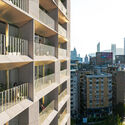
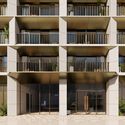
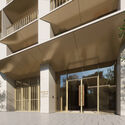
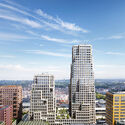
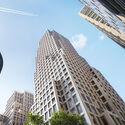
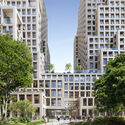
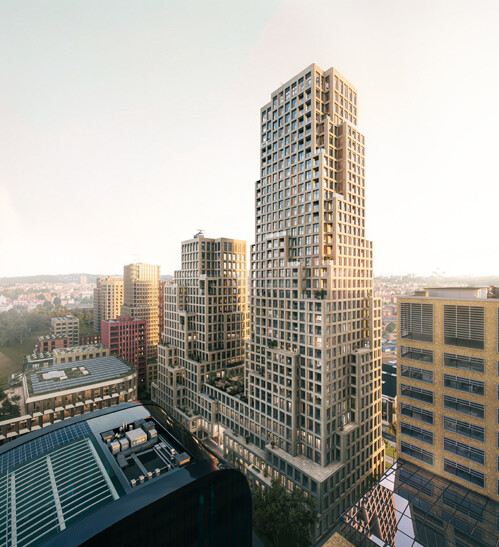
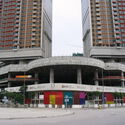
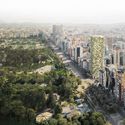
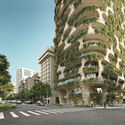
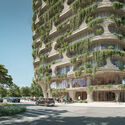
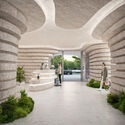
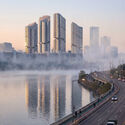
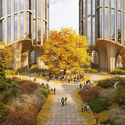
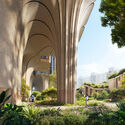
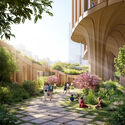
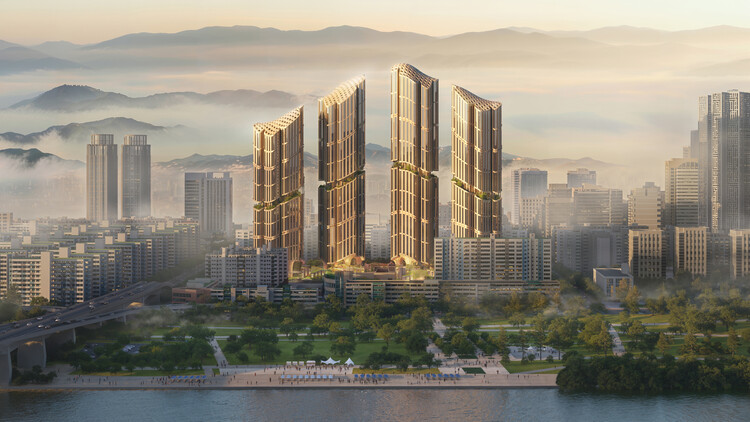
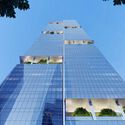
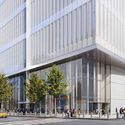
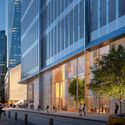
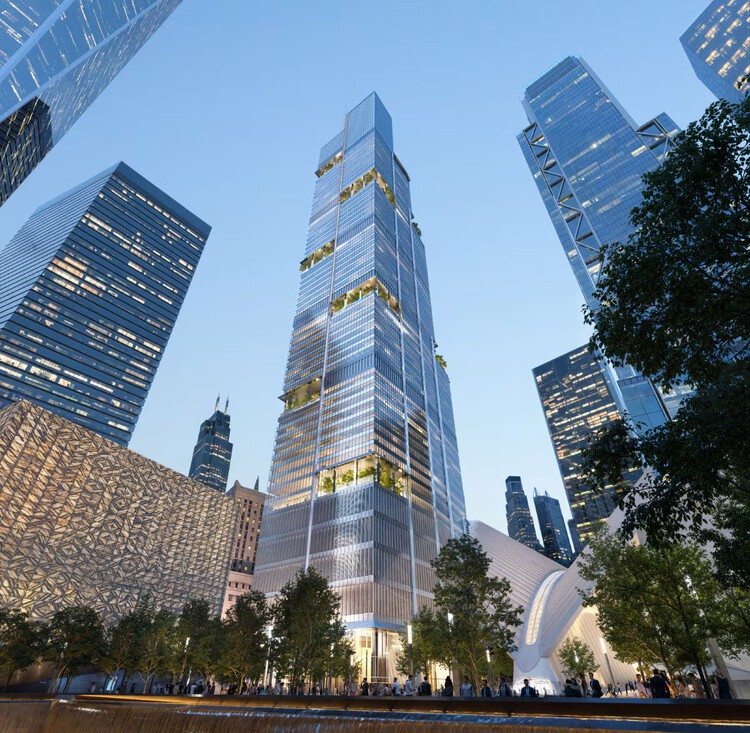
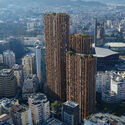
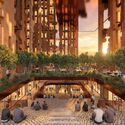
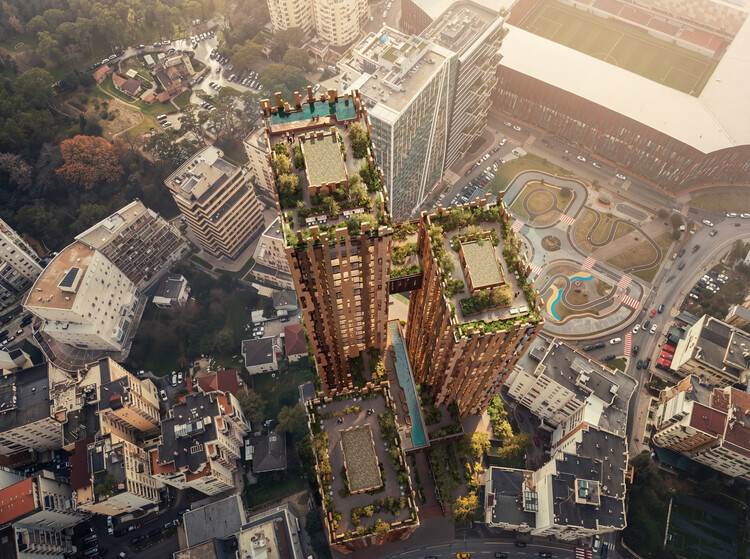
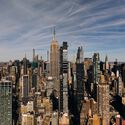
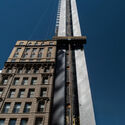
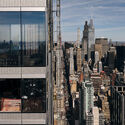
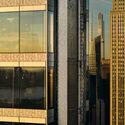
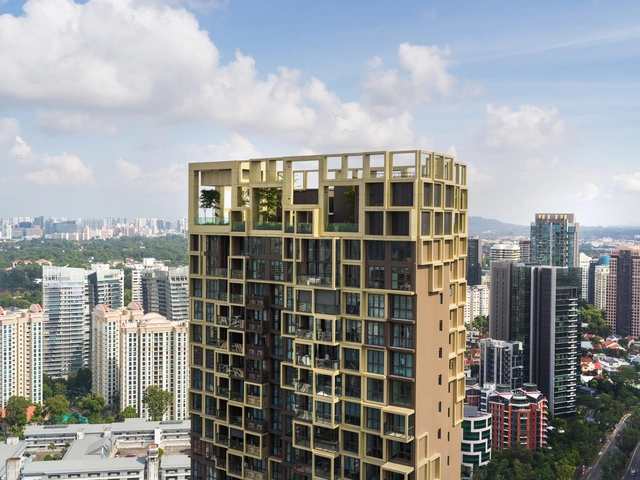
Two 36-storey residential towers have been completed on Irwell Bank Road in Singapore, featuring a pixelated facade designed by MVRDV. The scheme builds on the modular system developed by ADDP Architects, who designed the buildings using Prefabricated Prefinished Volumetric Construction (PPVC). MVRDV's facade introduces variation across the elevations and marks the locations of the communal green spaces on the 24th floor and the rooftop. Irwell Hill Residences, developed by City Developments Limited (CDL), is MVRDV's debut collaboration on a building in Singapore's urban core.
The Sax residential towers by MVRDV. Render. Image Courtesy of MVRDV
The City of Rotterdam, developers BPD and Synchroon, and architecture firm MVRDV have officially begun construction on The Sax, a major residential project located on Rotterdam's Wilhelminapier. Designed to contribute to the city's ongoing densification efforts, the development will deliver 916 apartments within two interconnected towers. Once completed, The Sax will make Wilhelminapier the most densely populated area in the Netherlands, making the project an example of compact urban growth. The design comprises two towers, combining a wide mix of housing types and shared amenities with strong connections to public transport and sustainable mobility solutions, including parking for 1,800 bicycles and a fully automated car garage. With its silver façade and undulating balconies, the building's form echoes the shape of a saxophone, reflecting the character of Rotterdam.
As cities continue to expand upward, the office tower remains one of the most visible symbols of architectural ambition and urban evolution. No longer defined solely by efficiency or corporate image, contemporary workplace architecture is being reimagined as a hybrid ecosystem, one that balances density with daylight, productivity with well-being, and technology with material and spatial integrity. The following unbuilt projects, submitted by the ArchDaily community, reveal how architects across continents are rethinking the typology of the tower, turning verticality into an opportunity for connection, adaptability, and sustainability.
From India's Shivalik Curv and Embassy Zenith, where form and movement are combined to redefine skyline identity, to Dungen in Sweden, a low-rise timber office that mirrors the calm of a forest grove, each project explores how workplaces can become more flexible, humane, and environmentally conscious. In Kyiv, APEX Business Center positions itself as a catalyst for urban vitality, while Jakarta's BNI Tower PIK 2 transforms the corporate tower into a crystalline symbol of growth. In Munich and Ankara, mixed-use concepts like Highrise Hufelandmark and Rhythm Ankara explore the office as part of a broader civic landscape, where work, leisure, and public life intersect.
Oricon Tower project by Eduardo Souto de Moura and OODA. Exterior render. Image Courtesy of Plomp
Eduardo Souto de Moura and OODA have unveiled the design of the Oricon Tower, a 180-meter mixed-use skyscraper planned for Tirana, Albania. Located near OODA's recently completed Bond Tower, the project is part of the city's ongoing transformation under the Tirana 2030 Masterplan, which envisions a denser and more connected urban core. The tower will house offices, residences, retail areas, and a hotel, contributing to the city's evolving skyline and serving as a new urban gateway between Tirana's historic center and its expanding western districts.
Houhai Hybrid Campus design. Render. Image Courtesy of Büro Ole Scheeren
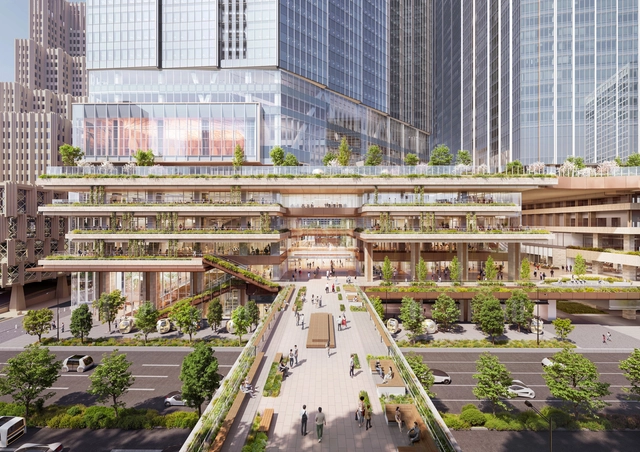
The international firm Büro Ole Scheeren has unveiled images of the Houhai Hybrid Campus, a new urban complex in Shenzhen's Houhai district. The development is situated in a strategic area within the original Shenzhen Special Economic Zone (SEZ), bridging the city's commercial center and its bayfront. The release of the Hybrid Campus images coincided with the 45th anniversary of Shenzhen's designation as a Special Economic Zone, a milestone marking the city's transformation from a fishing village into a global innovation hub. Currently under construction, the Hybrid Campus integrates work, living, culture, commerce, leisure, recreation, and nature into a unified urban complex, scheduled to open in late 2026.
The 39 storey Sudameris Plaza office tower. Image Courtesy of Foster + Partners
Foster + Partners has won an international competition to design the headquarters of Sudameris Bank in Asunción, Paraguay. The project, named Sudameris Plaza, is a 39-storey office tower featuring an exposed concrete frame and an angular form. It includes a landscaped plaza, art gallery, auditorium, and a large public garden at the tower's base. The studio aims to integrate greenery throughout the shared spaces of the building, fostering a strong connection with nature from within the tower.
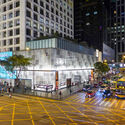
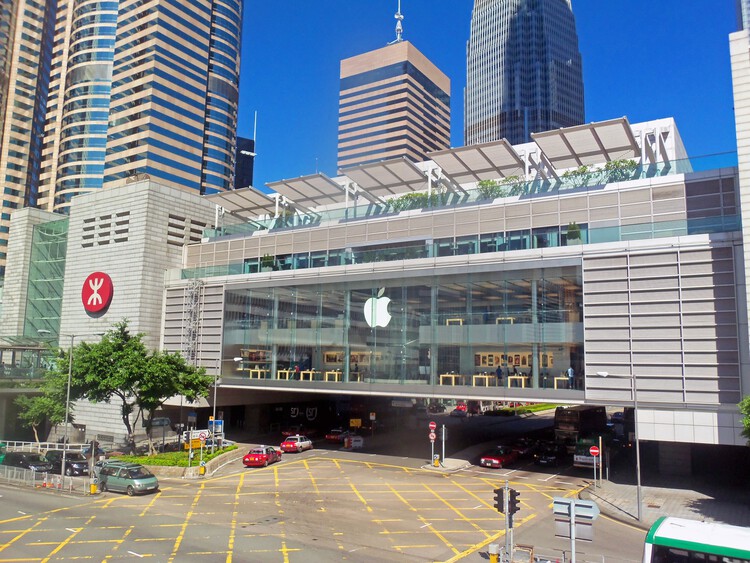
Architectural landmarks often cluster together. In Tokyo, the iconic Omotesando is a well-known stretch where global "starchitects" built flagship luxury retail spaces in the 2000s. Hong Kong has a lesser-known but equally powerful architectural agglomeration along Queensway—though historically more corporate and less publicly engaging. Beginning in the 1980s, this corridor became home to a series of landmark buildings by some of the world's most prominent architects: Norman Foster's HSBC Headquarters, I.M. Pei's Bank of China Tower, Paul Rudolph's Lippo Centre, and the nearby Murray Building by Ron Phillips—now revitalized as a hotel by Foster + Partners. The area is further enriched later on by Heatherwick Studio's renovation of Pacific Place and Tod Williams Billie Tsien Architects' Asia Society Hong Kong Center.
The desire to see the world from above transcends cultures and time — an almost instinctive impulse to seek new horizons, gain perspective, and momentarily step outside everyday life. Observation towers embody that desire: built in forests, mountains, urban parks, or coastal landscapes, they invite us to pause, look closely, and discover the surroundings in a quiet or playful way. These structures offer more than just views; they offer experiences. As we climb their steps or ramps, our bodies take part in a ritual of transition — from ground to sky.
Symbiosis, a Prototype for Living and Working. Image Courtesy of contexo
The future of urban life is increasingly being imagined as collective, layered, and adaptable. As cities grow denser and the boundaries between work, home, and leisure blur, architects are rethinking the traditional notion of residential living, shifting from isolated units to integrated, community-driven environments. This collection of unbuilt projects, submitted by the ArchDaily community, reflects this shift: a global exploration into how design can shape more resilient, inclusive, and connected ways of living.
In recent weeks, a series of notable architectural projects have been announced, reflecting a broad spectrum of design approaches aimed at enhancing urban life, infrastructure, and environmental sustainability. From cultural venues to large-scale masterplans and infrastructural advancements, these developments highlight how architecture continues to shape cities and communities. Among them, Knight Architects' Kruunusillat Bridge in Helsinki marks a milestone as Finland's tallest and longest bridge, designed to support sustainable mobility. Meanwhile, Unibail-Rodamco-Westfield's masterplan for Croydon sets out a vision for a vibrant mixed-use district, integrating historic preservation with contemporary urban renewal. At Kew Gardens, Mizzi Studio's Carbon Garden introduces a new permanent installation that explores carbon cycles through landscape design. This collection of recent announcements underscores the evolving priorities in architecture, from connectivity and urban regeneration to climate-conscious interventions.
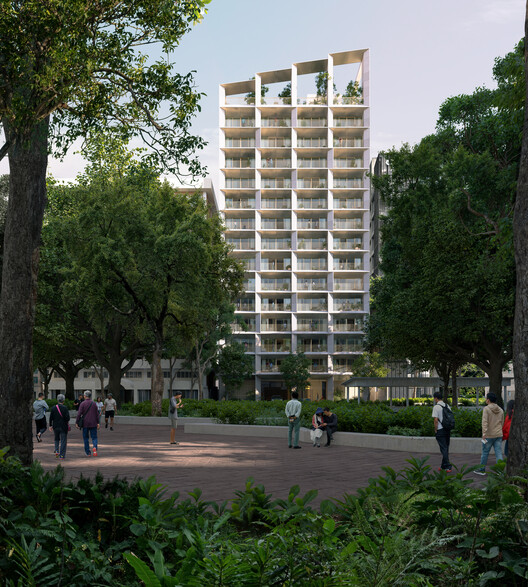
Zaha Hadid Architects has just revealed the design for Cityzen Tower, a 42-story high-rise set to become a landmark in Tbilisi, Georgia. Positioned in the Saburtalo district, the tower is part of the Cityzen development, a new civic hub integrating residential, commercial, and public spaces. Designed as a vertical extension of Tbilisi's new Central Park, the tower will bring together urban living and nature through cascading terraces and green spaces.
Red Sol Resort in Dhërmi. Image Courtesy of Ricardo Bofill Taller de Arquitectura
Architecture has been at the center of a transformation process in Albania, particularly significant in Tirana, its capital city. In 2017, the winning project for the Tirana 2030 Masterplan was unveiled, designed by Stefano Boeri Architetti, UNLAB, and IND [Inter.National.Design] as part of a competition organized by the Ministry of Urban Development. Aiming to give Tirana a new metropolitan dimension while promoting and preserving green spaces, the strategy integrates a system of open spaces, natural elements, and strategic projects at key points in the city. The multidisciplinary Catalan firm Bofill Taller de Arquitectura has contributed to this transformation with two mixed-use towers in Tirana and a resort project in the coastal town of Dhërmi, reflecting the distinctive aesthetic of Ricardo Bofill's work.
As cities grow and available land becomes more limited, high-rise architecture plays an important role in addressing urban density while shaping new ways of living and working. Tall buildings are evolving beyond their traditional functions to integrate environmental strategies, enhance public engagement, and contribute to the urban fabric. Architects are exploring new materials, energy-efficient technologies, and spatial configurations that make towers more adaptable to their surroundings. Some projects incorporate green spaces and shared amenities to create a stronger connection between the built environment and its users, while others introduce innovative construction techniques to improve sustainability and efficiency.
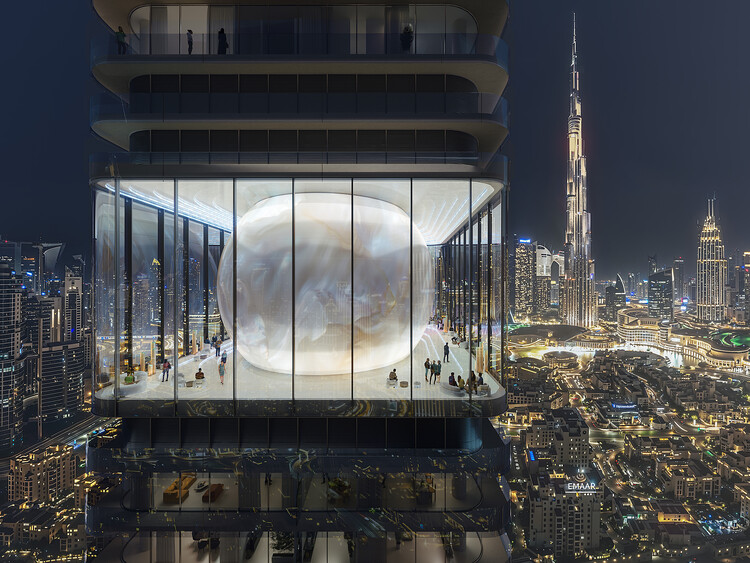
Among this selection of projects submitted by the ArchDaily community, The Residences at 1428 Brickell by Arquitectonica in Miami, United States introduces a solar-powered facade that contributes to the building's energy needs. In Dubai, UAE, AVA by SOMA creates a transition from the city into a more enclosed, water-defined environment with a focus on luxury living. In Bangkok, Thailand, HAS Design and Research proposes the Bangkok Civic Center Tower as a new type of public space, combining green landscapes with mirrored surfaces to connect the city with nature. These projects reflect different approaches to vertical architecture and highlight how designers are responding to the challenges and opportunities of dense urban environments.
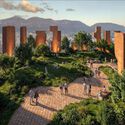
Swiss architect Valerio Olgiati has unveiled plans for Rruga Adem Jashari, a mixed-use development in Tirana, Albania, that seeks to blend urban living with the surrounding natural landscape. Positioned at the boundary between the city grid and an adjacent park, the project features three distinctive red concrete towers and a central white ziggurat. Combining residential, hospitality, and retail spaces, the development aims to create a seamless connection between the built environment and nature.
Foster + Partners has announced the breaking ground of BDO Unibank's new headquarters in Makati, Manila. The design aims to offer a climate-responsive approach inspired by vernacular architecture. The campus integrates five separate plots into a cohesive whole, featuring two high-rise towers flanking a sheltered public space incorporating lush landscaping and artwork.
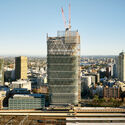
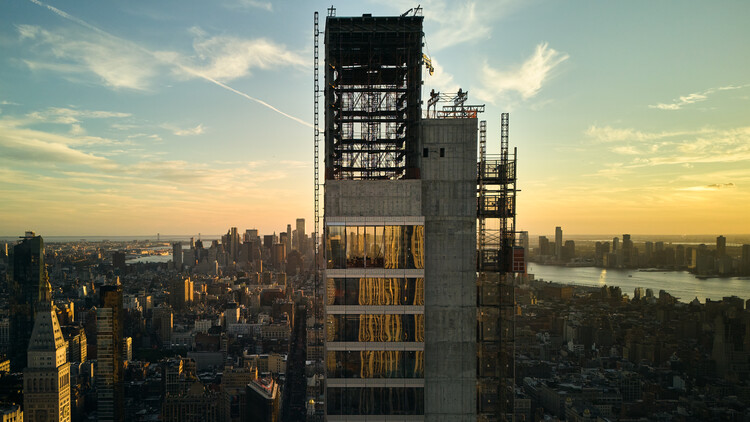
Construction has commenced on the Shenzhen Institute of Financial Technology tower, a 46-story building designed by Zaha Hadid Architects. Its design, situated on a narrow site in Shenzhen's Futian district, aims to respond to its urban context. The building's form, measuring 199 meters in height, incorporates setbacks placed to maximize sunlight penetration to surrounding streets and public areas. This design decision is further reflected in the façade's varying transparency and color, created by vertical and angled glazing mullions in black and bronze. Recent construction photographs reveal the topped-out tower, waiting to receive its envelope while temporarily showcasing openly its structure and interior organization.
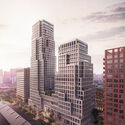
OODA has just revealed its design for a new mixed-use urban development in central Tirana, Albania. Located in the central district of Tirana on Myslym Street, the Ndarja building, represents a new approach to mixed-use urban development, incorporating residential, hospitality, office, and commercial functions within a single structure. The building comprises two distinct sections positioned along their narrow sides, creating a central square that serves as a gathering spot, contrasting the busy surroundings.