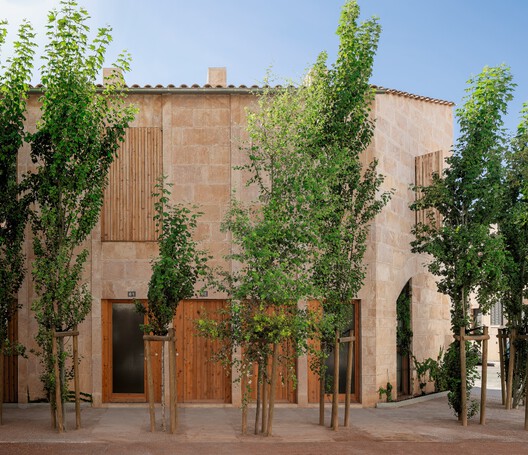
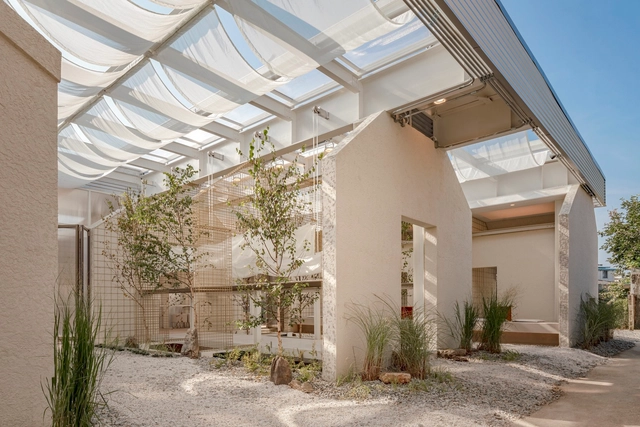
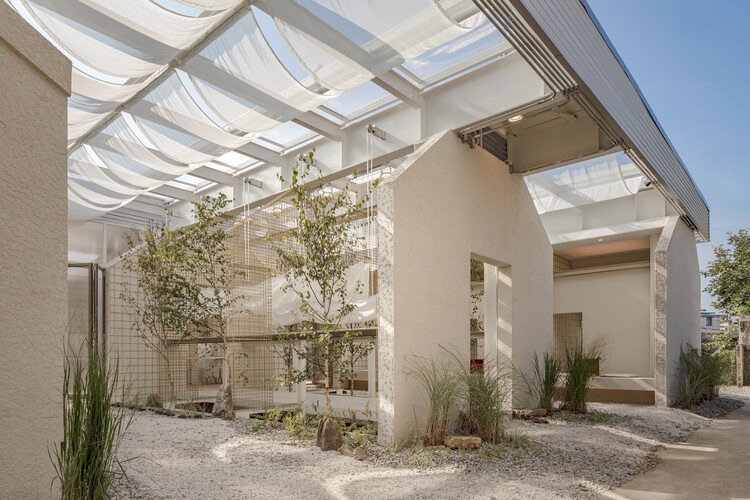
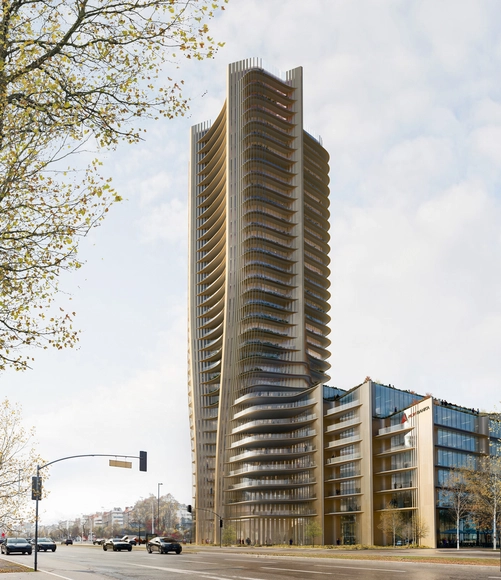
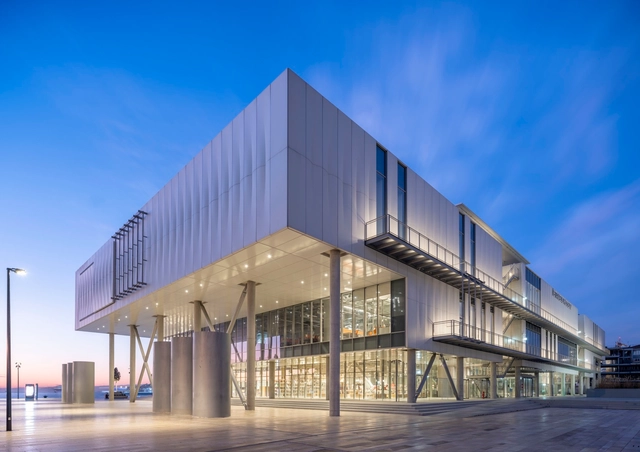
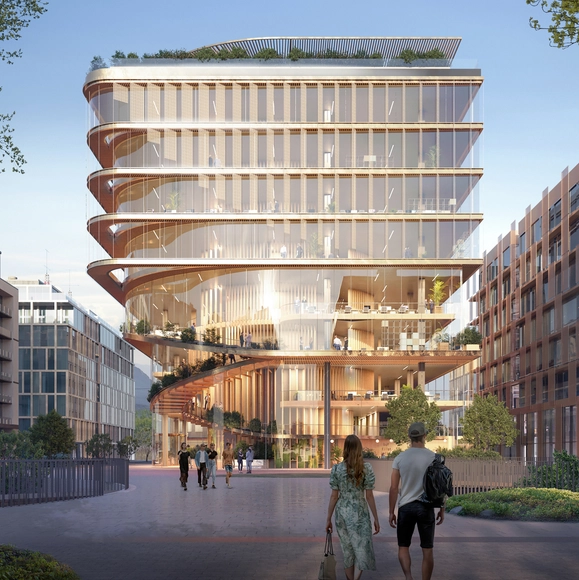
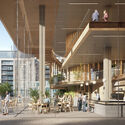
Breidablikk Gården / Asplan Viak and Facade Cladding by SolarLab. Image Courtesy of SolarLab
Solar panels are often treated as equipment added to a building. What happens when they become part of the architecture itself? Once integrated into the envelope, photovoltaics can generate energy while also influencing the building's form, construction, and environmental performance.
Roofs are often the most obvious location for photovoltaic panels, yet other parts of the building can generate power while performing additional architectural functions. Facades can provide shading, louvers can control sunlight, and ventilated rainscreens can combine weather protection with energy generation. Their orientation, position, and integration into the building envelope therefore become part of the architectural design rather than a separate technical decision.
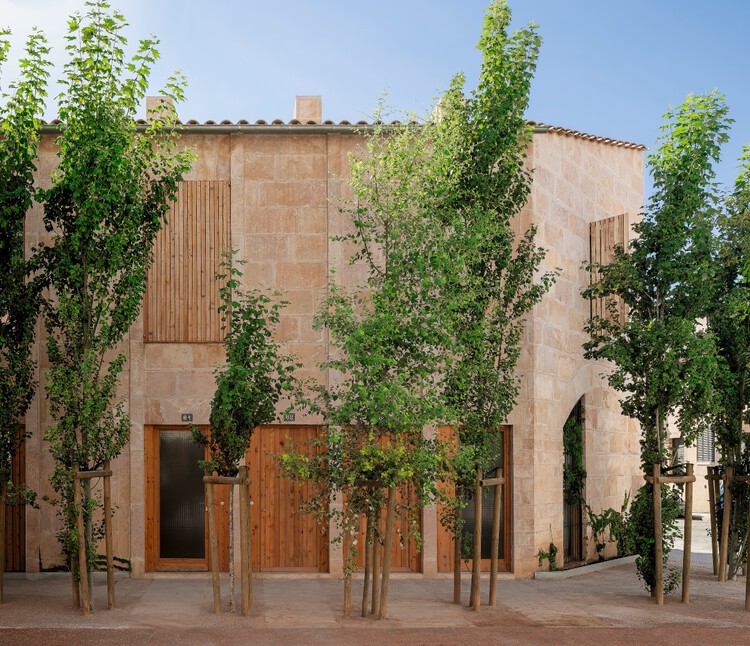
A week of architecture news has highlighted the growing connections between environmental change, public systems, and the evolving role of architectural practice. Extreme weather events in different regions have drawn attention to the vulnerability of settlements, infrastructure, and territorial networks, while new approaches to housing demonstrate how changes in procurement, construction, and governance can influence architectural outcomes. At the same time, the recognition of established practitioners points to the lasting impact of architectural ideas across generations, as the profession continues to engage with questions of resilience, systemic change, and the broader conditions shaping the built environment.
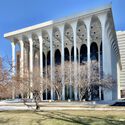
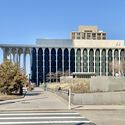
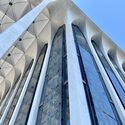
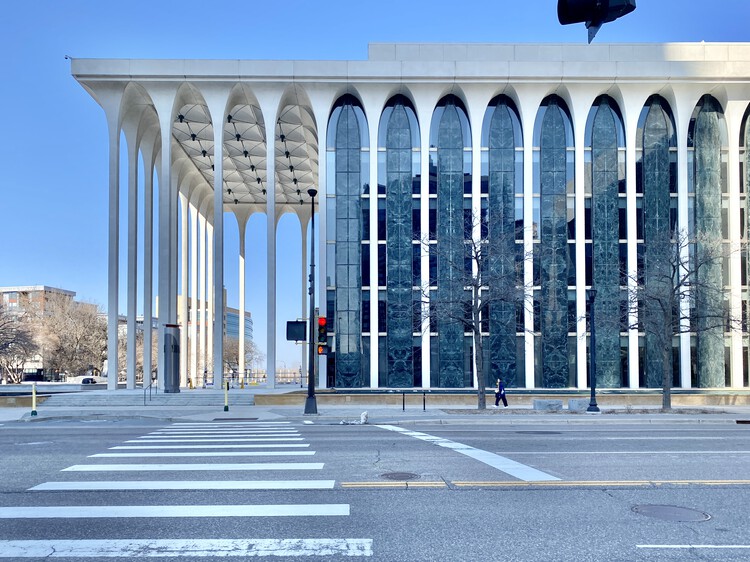
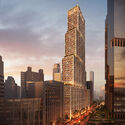
A building designed by Minoru Yamasaki in downtown Minneapolis is set to be converted into a hotel, marking a new phase in the life of the former headquarters of the Northwestern National Life Insurance Company, one of the architect's lesser-known yet formally distinctive works. Vacant since 2023, the building at 20 Washington Avenue South is now the subject of an adaptive reuse proposal that aims to introduce hospitality and public-facing functions. Initial plans were presented in April 2026, outlining a transformation of the structure while retaining its defining architectural features. The project is expected to move forward pending approvals, with a projected opening targeted for 2028.
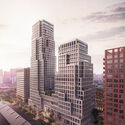
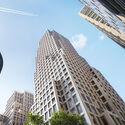
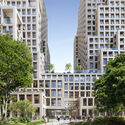
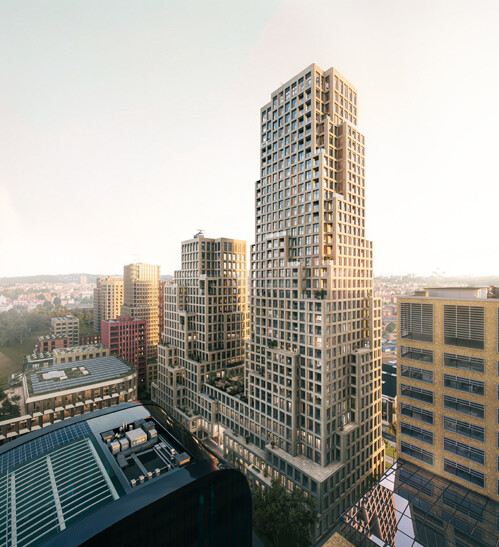
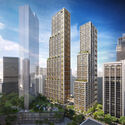
Rotterdam-based firm MVRDV has announced a new milestone in the development of its Tour & Taxis Towers, a mixed-use project in Brussels, Belgium. The design was commissioned by real estate investor and developer Nextensa in 2021, within the framework of a site-specific land use masterplan also designed by MVRDV. The two-tower project combines offices, housing, and public amenities across 58,000 m², forming a landmark in the neighbourhood and reaching 126 metres at its highest point. Recently granted construction permission, the project is designed to reduce embodied carbon through the use of a hybrid structure and lightweight façade elements, aiming to minimize the use of concrete in both the structure and foundations. From the early stages, the firm has employed its CarbonSpace software to guide these decisions.
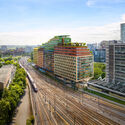
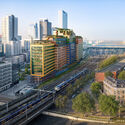
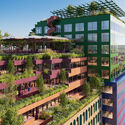
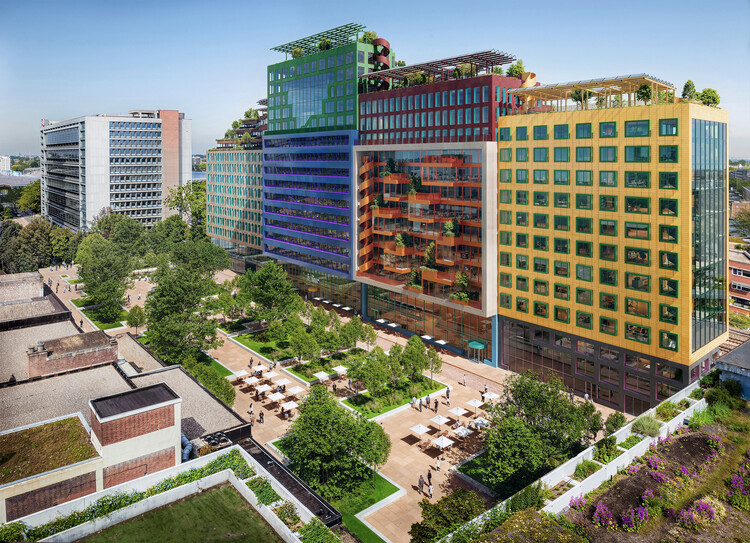
MVRDV and SYNRG have received approval to construct Schieblocks, a 47,000-square-metre office building in Rotterdam, the Netherlands. Designed for developer LSI, who markets the project as The Bluezone Offices, the building will occupy a narrow site along the railway line, reaching 61 metres in height and extending almost 150 metres in length. The programme includes commercial spaces at ground level, offices throughout, and a restaurant and event venue on the upper floors. Conceived as a "3D neighbourhood," the design breaks the large volume into a series of colourful, distinct blocks that incorporate numerous references to Rotterdam's architectural character.
While adaptive reuse has been increasingly acknowledged as a vital architectural strategy worldwide, its discourse and implementation in Asia are still expanding—driven by growing ecological awareness and a shifting understanding of architectural knowledge. Rather than accelerating a developmentalist model centered on demolition and new construction, architects today are confronted with a different approach to the built environment: treating the existing structure as a resource—an archive of materials, spatial organizations, and informal histories.
Adaptive reuse is often associated with the preservation of historic buildings and culturally significant heritage. Yet the vast field of seemingly 'less-valued' structures—abandoned houses, standard yet old dwellings, non-conforming office buildings, and overlooked urban voids—has become ground for experimentation. These sites challenge architects and designers to reconsider prevailing standards of efficiency and market-driven development, and to imagine spatial and ecological practices that avoid the continual loss of embodied material and cultural knowledge inherent in constant rebuilding.
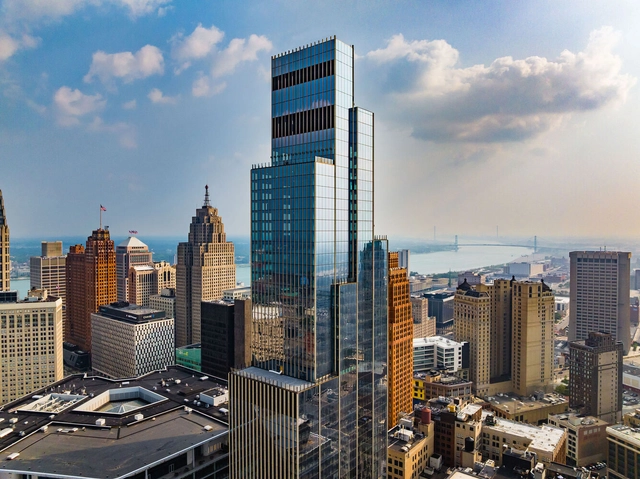
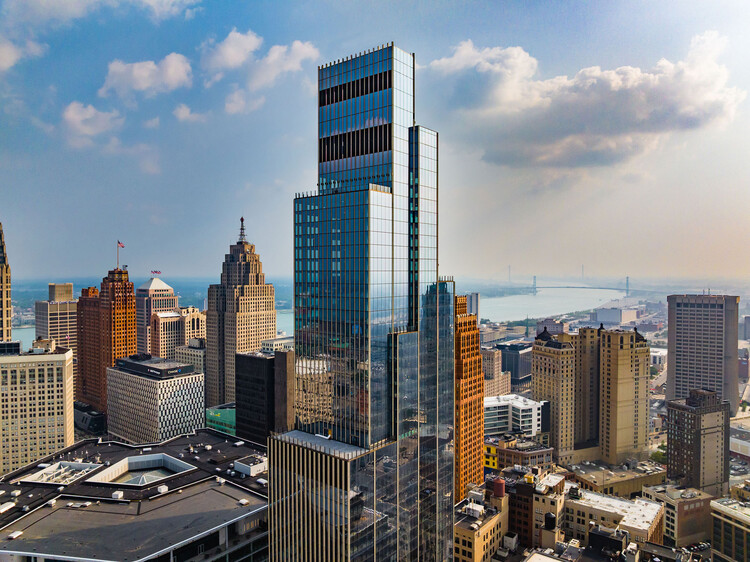
Hudson's Detroit mixed-used development. Aerial view. Image Courtesy of Bedrock
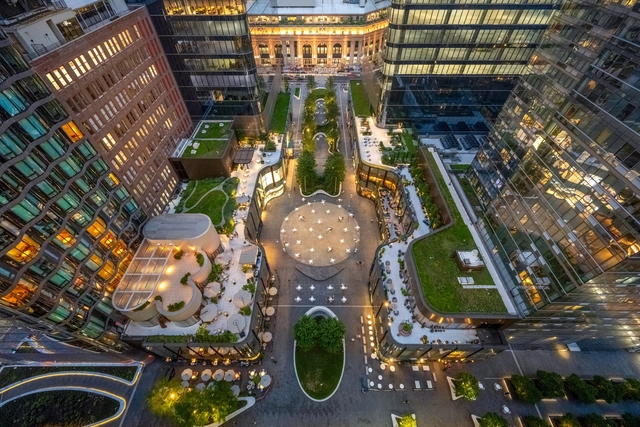
Detroit-based Bedrock development group has announced the completion of the first phase of its Hudson's Detroit mixed-use project in the city center. The project was first unveiled in 2017, when the company presented plans for a 1.2-million-square-foot development designed by SHoP Architects to be built on one of downtown Detroit's long-abandoned sites, formerly occupied by the J.L. Hudson's Department Store. Once the tallest department store in the world and a central gathering place for the city throughout much of the 20th century, the site has now been reimagined as a contemporary urban destination. After nearly a decade of planning and construction, Hudson's Detroit aims to bring new activity and public space to a location emblematic of the city's commercial and cultural past.
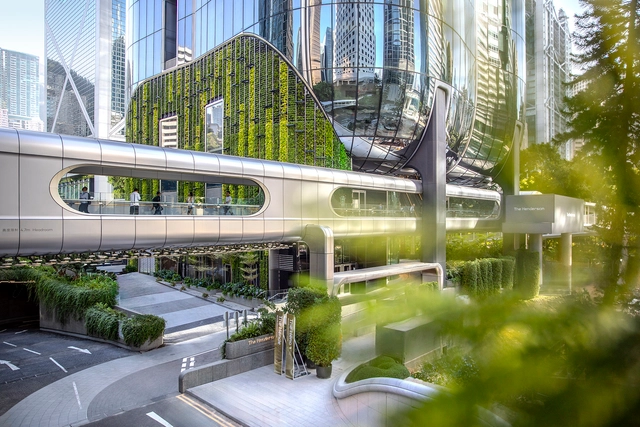
Architectural landmarks often cluster together. In Tokyo, the iconic Omotesando is a well-known stretch where global "starchitects" built flagship luxury retail spaces in the 2000s. Hong Kong has a lesser-known but equally powerful architectural agglomeration along Queensway—though historically more corporate and less publicly engaging. Beginning in the 1980s, this corridor became home to a series of landmark buildings by some of the world's most prominent architects: Norman Foster's HSBC Headquarters, I.M. Pei's Bank of China Tower, Paul Rudolph's Lippo Centre, and the nearby Murray Building by Ron Phillips—now revitalized as a hotel by Foster + Partners. The area is further enriched later on by Heatherwick Studio's renovation of Pacific Place and Tod Williams Billie Tsien Architects' Asia Society Hong Kong Center.
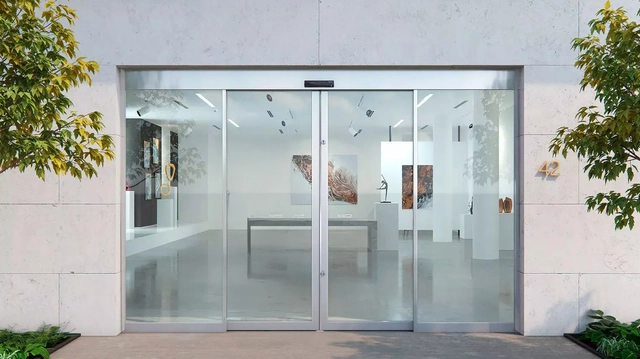
SL500 Sliding Door System. Image Courtesy of ASSA ABLOY
Throughout history, doors—and later automatic doors—have served a far greater purpose than merely marking an entrance or exit. They define thresholds, guide the flow of movement, and subtly shape the way people interact within a space. We can trace their evolution back to the 1st century, when Heron of Alexandria devised a steam-powered door—an early example of technology merging with architecture. Since then, contactless automatic door systems have incorporated technological advancements that enhance operation and redefine their role within buildings. Today, they are integrated across a range of building types and scales, acting as transitional elements that enhance comfort, energy efficiency, and the overall quality of indoor spaces.
https://www.archdaily.com/1029498/the-greener-future-of-automatic-door-systems-a-shift-in-design-and-performanceEnrique Tovar
BDO Unibank Inc. Campus - The sheltered ground plane incorporates lush planting and an array of artworks. Image Courtesy of Foster + Partners
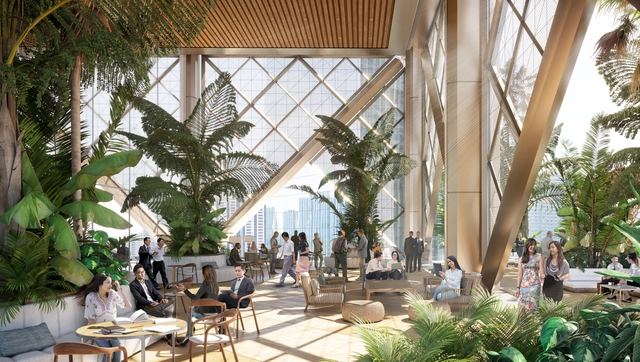
Foster + Partners has announced the breaking ground of BDO Unibank's new headquarters in Makati, Manila. The design aims to offer a climate-responsive approach inspired by vernacular architecture. The campus integrates five separate plots into a cohesive whole, featuring two high-rise towers flanking a sheltered public space incorporating lush landscaping and artwork.
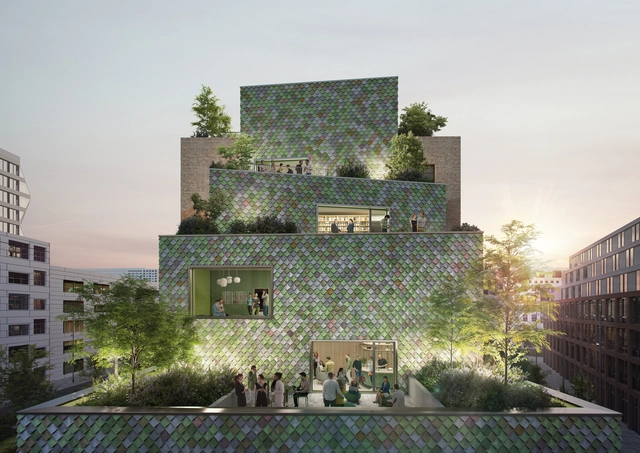
MVRDV has revealed its design for Monaco, a six-story office building situated in Munich's transforming Werksviertel neighborhood. This region, previously known for its industrial past and later as a cultural hotspot, has been evolving into a dynamic work-and-leisure district since 2016. Positioned near MVRDV's earlier project, WERK12, the Monaco building uses recycled materials and distinctive shapes to create a balanced "work and play" office environment, inspired by the color and creative spirit of the Kultfabrik era.
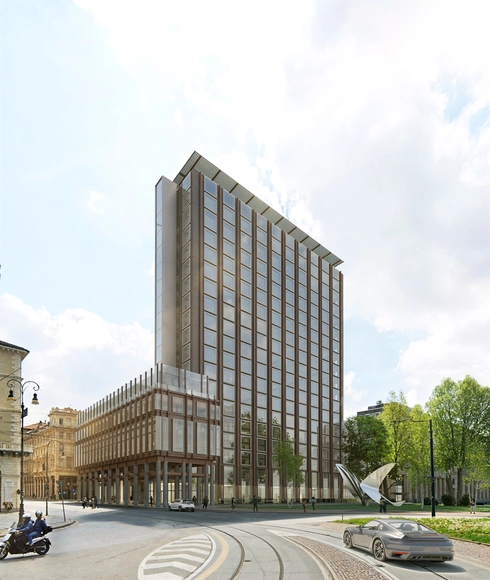
CRA-Carlo Ratti Associati, in partnership with real estate group IPI, has revealed plans to transform the iconic modernist Palazzo Micca in Turin, Italy. Originally the headquarters of RAI, Italy's national broadcaster, the 19-story building will undergo a comprehensive adaptive reuse project. A significant feature of the redesign is the creation of an elevated public plaza at 26.5 meters, offering views of Turin's Baroque rooftops, the surrounding hills, and the Alps. The project also integrates sustainable design principles by converting parts of the office spaces into residential units and reusing existing materials.
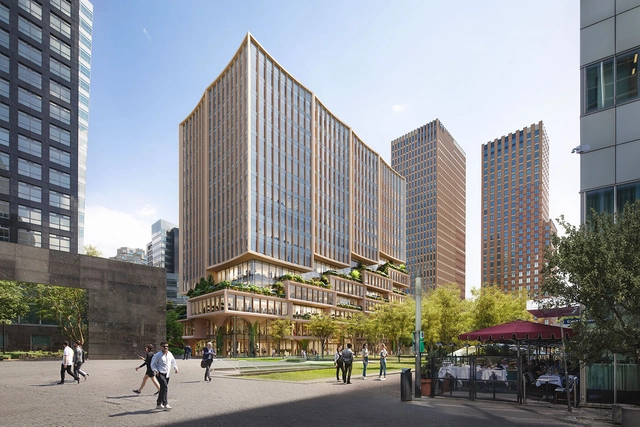
3XN GXN has revealed its design for Mahler 1, a 15-storey mixed-use office building. The structure, developed in collaboration with Victory Group, Icon Real Estate, and Erik Dhont Landscape Architects, features a hybrid-timber construction system that creates a stepped volume, breaking down the building’s mass. At the street level, the development offers a wide variety of public amenities, striving to become an active hub for both residents and office workers. The project is expected to begin construction in the first half of 2025 and conclude in late 2027.
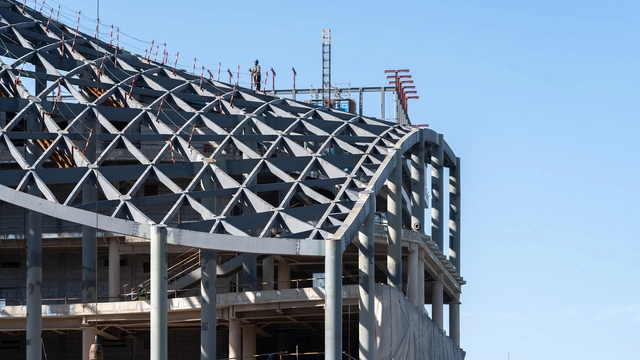
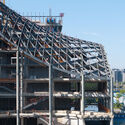
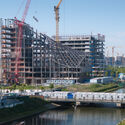
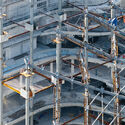
In 2021, MVRDV unveiled the design of a terraced office building created for the agriculture company Lankuaikei. Set within a rapidly developing area of Shanghai, the 11-storey structure is covered by a curved technological roof that follows the stepping structure. The project is conceived as a showcase of the company's vision of food production, with an extensive sustainability agenda encompassing various strategies. These include extensive use of greenery, integration of renewable energy, and the use of low-carbon materials. The construction process is now captured by StudioSZ Photo / Justin Szeremeta, revealing an intermediary state where the bare-bone structure begins to reveal the shape and scale of the building. Structural construction details are also visible at this stage,
Four years after the onset of the COVID-19 pandemic, its effects are still felt in the construction and real estate sectors in the United States. Accelerated remote work and hybrid schedules are leading to a sharp decline in demand for traditional office space in cities across America. In major metros like New York and San Francisco, occupancy rates have dropped, property values have diminished and rents have fallen significantly. As architects design for the future of work, the real estate market faces divided perspectives on whether to invest in the country's growing inventory of vacant office buildings.
UNStudio, in collaboration with local partner HYP Architects, has won the competition for the design of the Kyklos building in Luxembourg. The project is part of Beval, a large-scale redevelopment initiative aiming to transform a former industrial site into an urban center complete with a university and technological center, in addition to residential, office, and retail spaces. When designing the Kyklos building, which will occupy a central position in the district's main square, the architects set out to find solutions to create the smallest carbon footprint for both operational and embedded metrics.