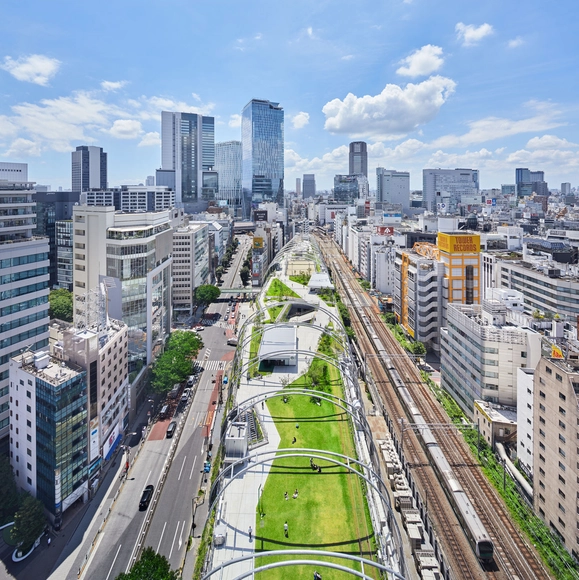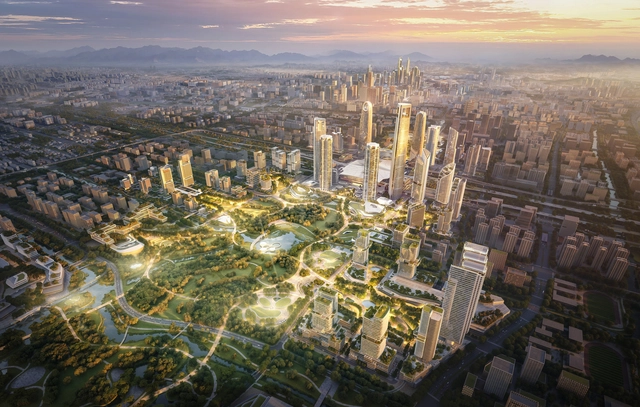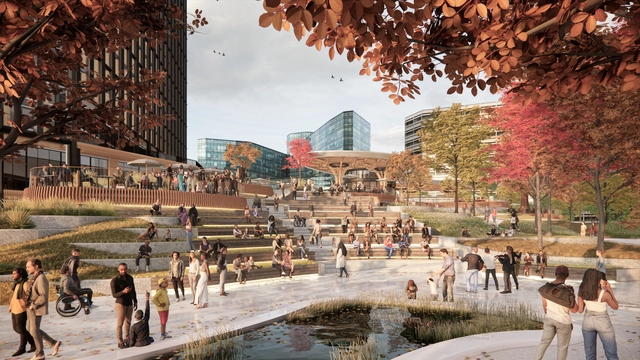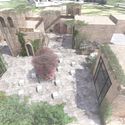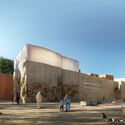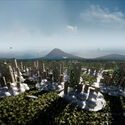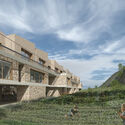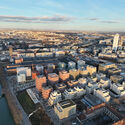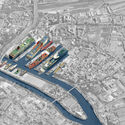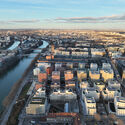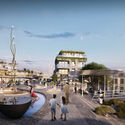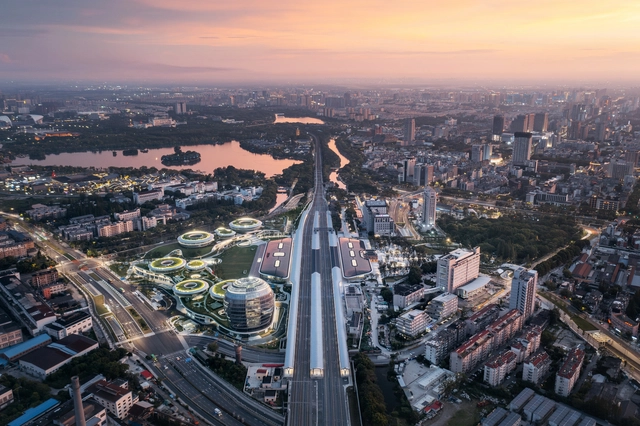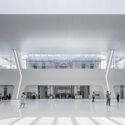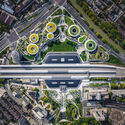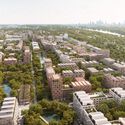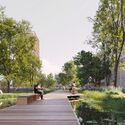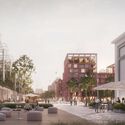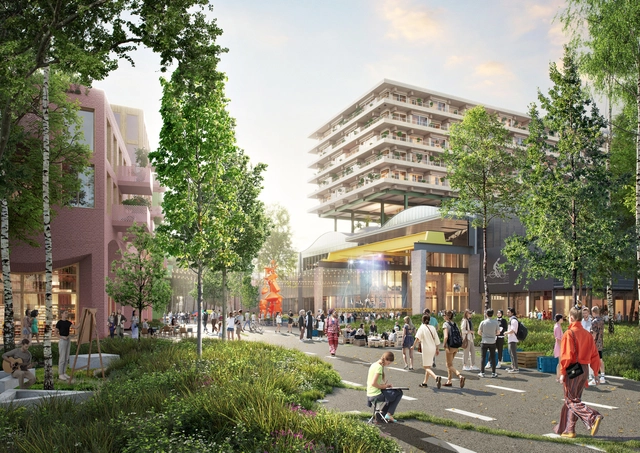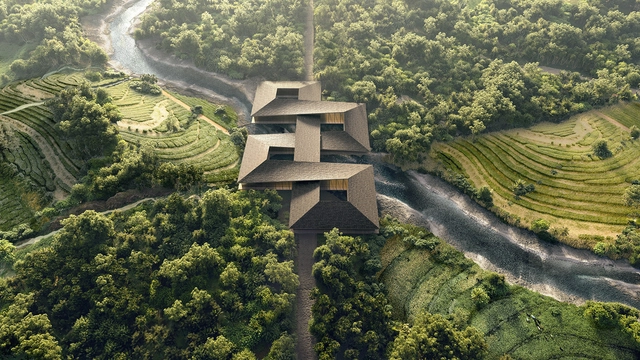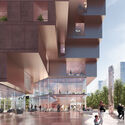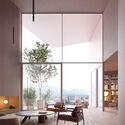
Skidmore, Owings & Merrill (SOM) and GAD have been chosen to design the Hangzhou Science and Technology Innovation Central Business District (CBD) in Hangzhou, the capital of Zhejiang province, China. Their proposal outlines a versatile regional hub that merges advanced transit systems with the traditional Jiangnan landscape, establishing a framework that promotes creativity and the growth of the tech sector.
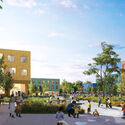
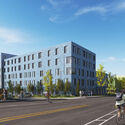
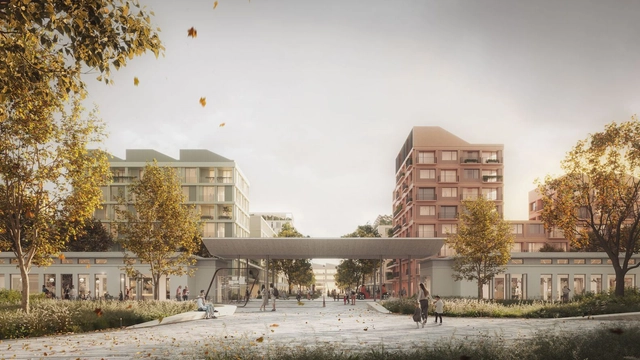
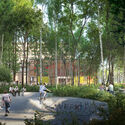
MVRDV, in collaboration with JGE Architects, landscape architects Copley Wolff, and Langan Engineering, has developed a masterplan for the redevelopment of Faneuil Gardens, a public housing site in the Brighton neighborhood of Boston. This project, commissioned by The Community Builders in partnership with the BostonHousing Authority, aims to replace the outdated 1940s apartment complex with five contemporary buildings that incorporate mixed-income affordable housing, artist live-work spaces, and significant green spaces. At the center of the redevelopment is a new community center, located along a public boulevard that runs through the heart of the site.
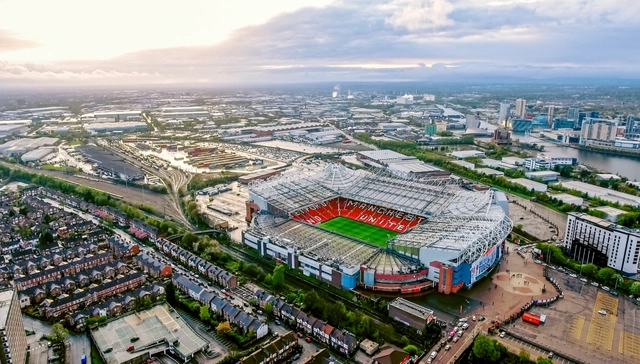
Foster + Partners has just announced its upcoming appointment by Manchester United to lead the development of a masterplan for the Old Trafford Stadium District, focusing on club-owned land surrounding the current stadium. The goal is to create a world-class football destination for Manchester United fans, integrated with a broader vision for a mixed-use development that benefits the local community. This transformation aims to attract new residents, increase job opportunities, and establish the area as a vibrant hub for visitors from Manchester, across the UK, and beyond.
Courtesy of BCT Design Group and Gensler | The Wildset
Master plans are comprehensive design strategies that guide the future development of cities, districts, or large-scale projects. From a design and architectural perspective, they strive to balance the need for flexibility, long-term vision, and the integration of infrastructure with the public realm. Key themes in master planning often include sustainable development, urban connectivity, and cultural integration. Master plans shape not only the physical environment but also the social fabric of communities by emphasizing walkability, mixed-use spaces, and the blending of natural and built environments. These large-scale frameworks showcase the role architecture plays in shaping the future of urban life.
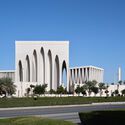
This curated selection of Unbuilt Architecture,submitted by the ArchDaily community, illustrates a range of visionary urban strategies. Whether it’s the revival of the village of Ad-Damun in Palestine, reconnecting with a rich historical past, or the bold reconstruction of the Al-Nouri Complex in Iraq as a cultural and spiritual hub, some of these projects engage with complex narratives of memory and restoration. From the sustainable design of Mokolo Green Scarf City in Cameroon to the marine research center in Yemen, these projects showcase diverse approaches to architectural challenges, focusing on community, environment, and the preservation of cultural heritage. By addressing unique regional contexts, these proposals reflect a broader commitment to rethinking how architecture can foster resilience and inclusivity.
Masterplan Framework, designed by KPF. Image Courtesy of Plomp
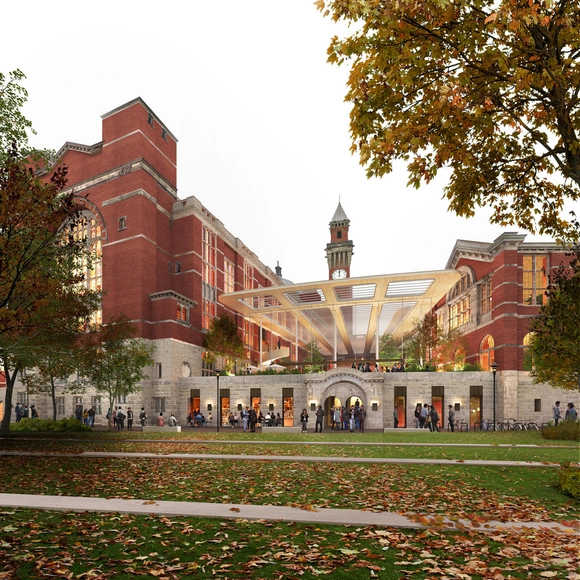
Kohn Pedersen Fox (KPF) has just unveiled its 2045 Campus Vision for the University of Birmingham, a plan designed to shape the future of the institution. This framework evaluates the university’s portfolio of over 300 buildings, identifying areas for retention, refurbishment, transformation, or replacement to support its goal of becoming a net-zero, future-ready university. Developed in collaboration with Ayers Saint Gross, the 2045 Campus Vision leverages data on building conditions, operational costs, environmental performance, and space utilization. In fact, this data-driven approach aims to help the university achieve its long-term objectives while maintaining its historical legacy.
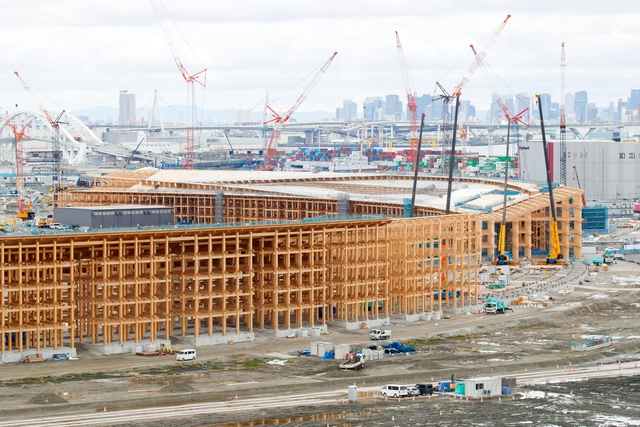
In preparation for Expo 2025 Osaka, Kansai, Japan, The "Grand Ring," designed by renowned architect Sou Fujimoto, has reached a significant milestone. As of August 2024, the wooden construction of this structure is now complete, fully connecting the 2-kilometer ring into a continuous loop. This achievement is a crucial step in the development of the Expo site on Yumeshima, an artificial island on Osaka's waterfront, where the Expo will take place from April 13 to October 13, 2025.
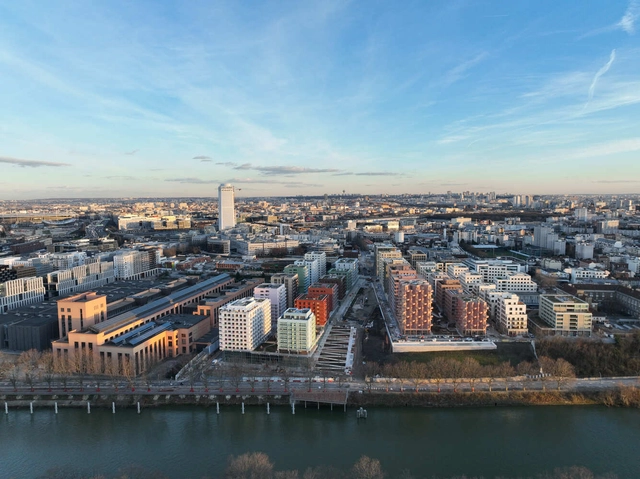
On Friday, July 26th, Paris began the long-awaited Olympic and Paralympic Games. Located in the city’s Seine-Saint-Denis district, Dominque Perrault Architecture designed the master plan for the Athletes Village. Featuring 2,400 housing units and 119,000 square meters of various activities, offices, and services, this master plan has become a significant portion of the legacy of the Paris Games.
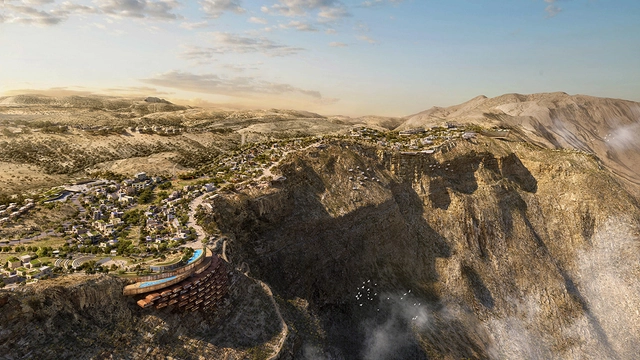
Oman has just announced plans for a $2.4 billion mixed-use project, the new Omani Mountain Destination on Jabal al Akhdar. Masterplanned by AtkinsRéalis, the scheme aims to attract sustainable development opportunities, hoping to "operate as Net Zero Carbon and striving to use 100% renewable energy." The project is in alignment with Oman Vision 2040, seeking a developed, diversified, and sustainable economy;, featuring residences, hotels, and a health village.
MAD Architects has announced the completion of the Jiaxing Train Station, the first transportation infrastructure project developed by the architecture office. Located in the historic city of Jiaxing, 100 kilometers southwest of Shanghai, the project involves the replacement of a dysfunctional station that had stood at the site between 1995 and 2019. As China has developed significantly in terms of urbanization, its train stations have grown into complicated, widespread, and uninviting infrastructures. Through their project, MAD Architects strive to return to a human scale, to create a facility that responds to the newest developments in transportation technology, while creating spaces that are comfortable and easy to navigate for its users.
Last week, WXCA Architects unveiled the design for a new “green district of the future,” to be developed on a former FSO car factory site in Warsaw. Covering over 60 hectares, the project aims to accommodate more than 17,000 residents and provide employment for approximately 13,000 individuals by 2050. The Polish automotive FSO factory will be transformed, outlined in a master plan envisioning a multi-functional and environmentally conscious district.
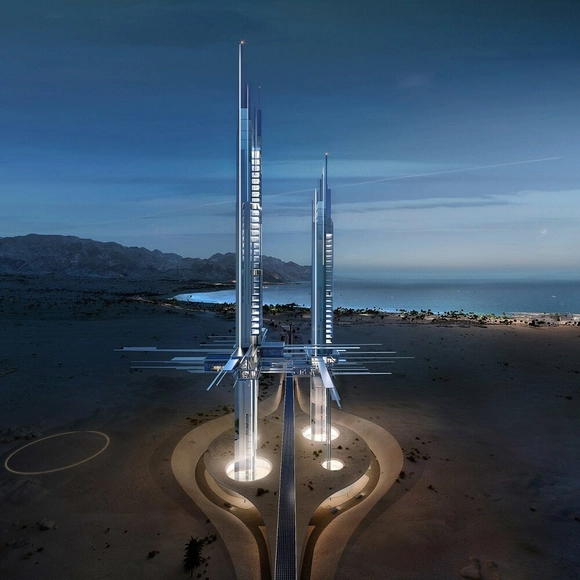
NEOM - or "new life" in a blend of Greek and Arabic- is a new urban development planned by the Kingdom of Saudi Arabia. Imagined as a cross-border city located in the northwest of the country, it aims to diversify the economy and reduce its dependence on oil. With promises of sustainability and innovation, the mega development has grabbed global attention with its 10 distinct regions.
It is conceptualized as a cutting-edge metropolis, aspiring to emerge as a worldwide epicenter for groundbreaking advancements and an exemplar of eco-friendly lifestyles. Since its announcement in 2017, NEOM has revealed the plans for 10 central regions, featuring a 170km long skyscraper, a futuristic ski resort, an upside coastal hotel, a tourism destination in a mountainous valley, and many more.
MVRDV has just announced the WärtZ masterplan, that repurposes a former business park near the railway station into a dynamic innovation hub. Developed by AM and designed by a team including MVRDV, Orange Architects, and LOLA Landscape Architect, the scheme introduces residential homes, creative workspaces, dining establishments, and various neighborhood amenities. At the core of the new design is the newly renovated Wärtsilä hall, a former factory redesigned with a signature undulating roof topped by a hovering wooden apartment block.
BIG has just unveiled “Gelephu,” an envisioned master plan that draws from Bhutanese culture, Gross National Happiness principles, and spiritual heritage. During the 116th National Day of Bhutan, His Majesty King Jigme Khesar Namgyel Wangchuck introduced the plans for the prospective economic center in the country. Designed in collaboration with Arup and Cistri, the master plan is adhering to the sustainable standards of the world’s first official carbon-negative country, Bhutan.
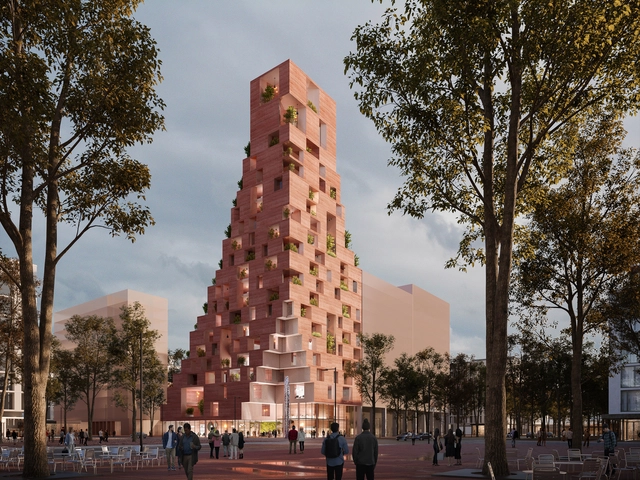
CHYBIK+KRISTOF has won an international competition to design a multifunctional tower as a significant part of Tirana’s evolving landscape. The structure is situated in the heart of the capital city’s culture hub within the New Boulevard, reflecting a shift in Tirana’s urban development. With its distinctive red concrete silhouette, it aims to create a new landmark, signaling the commencement of various other projects outlined in the masterplan.
Tadao Ando has revealed the designs for a new performing arts center in Sharjah’s Aljada. “II Teatro” is a 2000-seat auditorium with a gallery and an event space and will serve as a focal point within the Aljada master plan. Dedicated to art, culture, and design, the Naseej district will house the theater with a multi-layered cultural plaza. In collaboration with local developer Arada, The scheme is expected to be completed in 2027, acting as a true reflection of Tadao Ando’s architectural simplicity.
Seven architecture studios, including MVRDV, have designed separate buildings in the long-anticipated master plan for the Lake Side development in Brussels. To introduce diversity, the master plan has been designed by MVRDV and aims to bring about a denser and more vibrant life on the Tour & Taxis side, offering various amenities for its residents. The newly designed site also includes different workspaces and a nine-hectare park that promotes a more car-free communal environment. The project’s entirety is supervised by MVRDV, who also designs one of the 17 buildings within the new master plan.