Space exploration isn’t merely a testament to human ambition or a quest for new territories and resources. Our ventures beyond Earth’s atmosphere are driven by a deeper purpose: to understand better our place in the cosmos and to pioneer innovations that can transform life on our home planet.
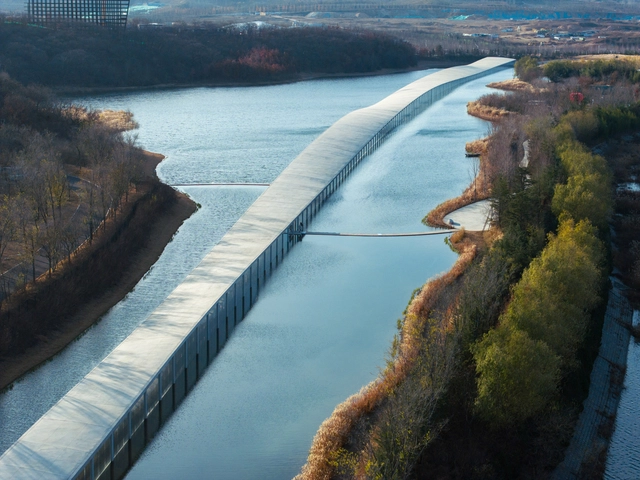
The Suzhou Museum of Contemporary Art, spanning 60,000 square meters, is envisioned as a village of 12 pavilions, presenting a contemporary take on the city's historic urbanism, architecture, and landscape. Designed by Bjarke Ingels Group - BIG, ARTS Group, and Front Inc., the project is part of Suzhou's development around Jinji Lake. It reimagines the classical garden 'lang,' or corridor, framing gardens with outdoor art installations. The pavilions' layout draws inspiration from Suzhou’s garden heritage, guiding visitors through an artistic, natural, and aquatic journey. The museum, which recently celebrated its topping out, is scheduled for completion in 2025.
2 World Trade Center Video Clip / BIG, Squint/Opera. Image Courtesy of BIG
Architectural presentations to clients typically include renders, diagrams, and drawings. Interpreting these and envisioning the final product requires imagination and architectural insight to fill in the gaps and visualize a final product. BIG and Squint/Opera, a partnership between an architectural powerhouse and a creative digital studio, explore innovative methods to convey spatial and architectural design beyond traditional means. They reimagine architectural storytelling beyond static 2D visuals through cutting-edge video production and immersive technology, enabling clients and the general public to fully experience their futuristic visions of city planning and architectural design. Their notable collaborations include the video production for the Toyota Woven City Project and the creation of the VR collaborative design tool HyperForm.
In a conversation with ArchDaily, Daniel Sundlin, partner at BIG, and Matt Quinn, Commercial Director at Squint/Opera, discuss their insights on the future of architectural digital storytelling.
Prague, the capital of the Czech Republic, is one of Europe's best-preserved cities, having miraculously survived the widespread bombings of World War II. As the capital of the Czech Republic, Prague is home to over 1.3 million people and features an architectural heritage spanning centuries, covering a variety of architectural styles from Romanesque, Gothic, Renaissance, Baroque, and Rococo, to Modernist, Deconstructivism, and contemporary tendencies. The Old Town Square, where various architectural styles coexist, is a testament to this diversity. Known as the "Mother of all Cities," “the Golden City and “The City of a Hundred Spires,” Prague blends history and contemporary culture seamlessly. Its origins, steeped in legend, add to the city's charm.
ICON, the office that pioneered large-scale 3D printing, has announced a new residential development of 3D-printed homes to take shape at Wimberley Springs, in Texas, United States. The complex, comprising 8 single-family homes, features designs from ICON’s CODEX Digital Architecture Catalog. The houses, currently under construction and available for sale, leverage ICON’s robotic technologies to create an energy-efficient, low-carbon construction process.
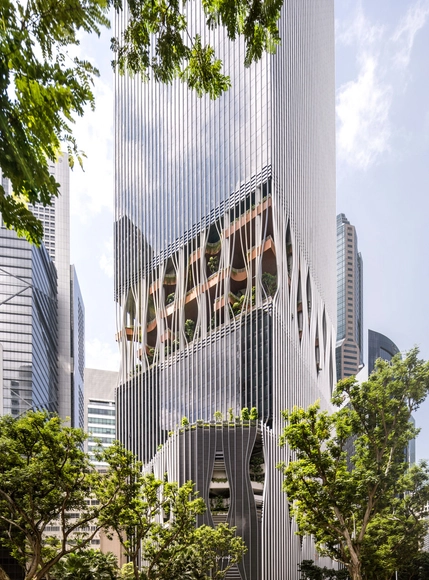
Deutsches Architekturmuseum (DAM) has announced the International High-Rise Award 2024/25. Selected from more than 1,000 new high-rises worldwide dating from the past two years, the nominated projects are located in 13 counties from 5 continents. In autumn, the five finalists will be announced, followed by the winner announcement scheduled for November 12, 2024. The main objective of the award is to highlight good practices in the ongoing trend of mixed-use high-rises.
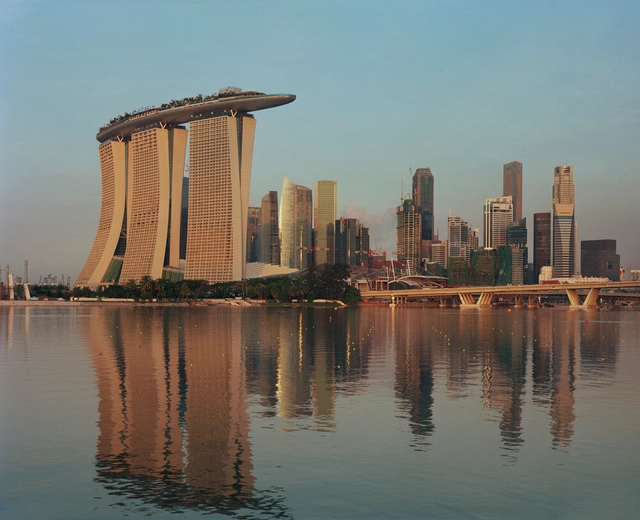
With the increase in the construction of high-rises, special features such as the introduction of greenery in the design, unusual shapes, or the construction of clusters of towers, have become the new normal. DAM’s research this year also shows a growing eco-awareness, as the focus in high-rise construction is increasingly on the use of existing buildings. While the majority of tall buildings continue to be erected in China, followed by the USA, Australia, and Singapore have emerged as new hubs of high-rise architecture.
Skyscrapers are iconic symbols of modern urbanization and technological advancements all over North America. These structures are a sign of economic prosperity, urban density, and the capabilities of humanity’s ambition. In major cities across the continent, they shape the skyline and give identity to these metropolises. Cities like New York City, Toronto, and Florida utilize these cutting-edge designs to showcase power beyond their physical stature.
In general, skyscrapers are characterized by their remarkable height and pioneering engineering capabilities. They use advanced materials such as steel, glass, and concrete and serve as multifunctional spaces, ranging from housing to hotels and offices. Architects all around the world continually push the boundaries of architectural creativity, design, sustainability, and functionality while crafting these buildings. The structures allow architects to maximize land use in new ways, tackling densely populated urban areas.
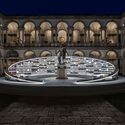
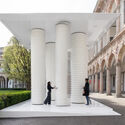
Since its launch in 2000, the Serpentine Pavilion has been providing renowned and emerging architects with a platform for design experimentation, becoming an important display of contemporary architecture. Each year, the commissioned architects and designers envision a temporary structure that speaks not only to their roots as creators, but also brings into focus what they consider to be important themes in the architectural world, from the need to redefine spaces for contemplation or conviviality, to explorations into the potential of natural materials or vernacular building techniques. On the day of the public opening of the 2024 Serpentine Pavilion, the "Archipelagic Void" designed by Korean architect Minsuk Cho and his firm Mass Studies, we look back at the last eight editions of the famous annual structure.
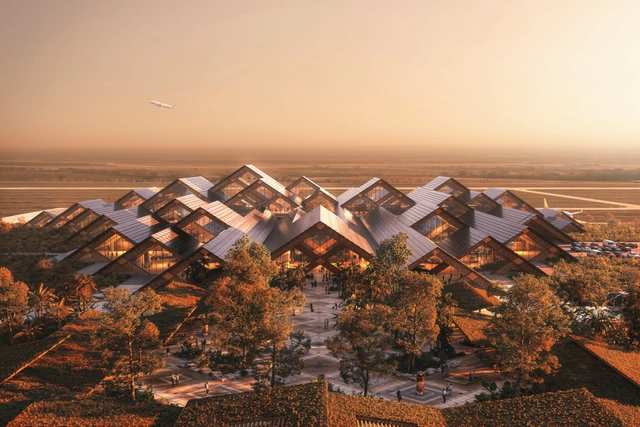
“The Mindfulness City will be a sustainable city. To be mindful is to be aware — to perform best,” said Giulia Frittoli, partner and head of landscape at BIG. The Kingdom of Bhutan is a landlocked Buddhist country in the eastern Himalayas, nestled between China and India. It covers 14,000 square miles and has a population of nearly 800,000.
The Royal Office of Bhutan asked BIG, Arup, and Cistri to develop a plan for a new Mindfulness City in Gelephu in southern Bhutan, near the border with India. The city will span 386 square miles and include a new international airport, railway connections, hydroelectric dam, university, spiritual center, and public spaces.
PIF Tower, Riyadh, Saudi Arabia Photo: Bader Otaby. Image Courtesy: The International High-Rise Award 2022/23
The future Saudi tower designed by Foster + Partners is expected to reach a staggering height of two kilometers. This multibillion-dollar project, towering twice as high as the current record holder, the Burj Khalifa in Dubai, will dominate the skyline of Riyadh, accommodating offices, residences, and entertainment spaces. It forms part of a development program led by Saudi Arabia, driven by the vision of Crown Prince Mohammad bin Salman to establish the country's presence through ambitious, large-scale projects. While these super-tall towers symbolize visibility and global recognition, they face criticism for their extravagant construction costs and environmental impact.
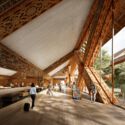
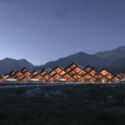
Bjarke Ingels Group and A+Architecture have revealed the design for the 12,000-square-meter Marengo Multimodal Transport Hub in Toulouse, France. The project will expand the functionality of the city’s central station, Gare Matabiau, strengthening the area’s public transport networks by creating a hub for bus, railway, and metro, all connected under one roof. The design of the new hub takes cues from the city’s distinctive roofscape and the traditional use of the rose-colored “foraine” brick, employing a mass timber structure and low-carbon concrete to ensure a sustainable intervention adapted to its environment. The Hub is set to begin construction in 2026.
Pioneering advanced construction and large-scale 3D Printing, ICON was selected as ArchDaily’s Best New Practices of 2021 due to its boundary-breaking technology that is advancing capability in the built environment. The Texas-based startup has just unveiled various toolkits and products to modernize construction processes further. Dubbed “Domus Ex Machina,” the event showcased a range of innovations, such as an AI Architect created for home design and construction, a digital library containing over 60 pre-designed home plans, a new eco-friendly building material, and a robotic printed facilitating multi-story construction. Together, these developments aim to offer a quicker, more environmentally friendly way to build high-quality, affordable housing globally.
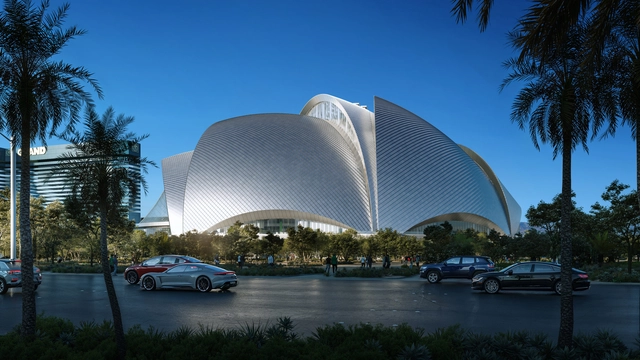
BIG and HNTB have just won the competition to design an Athletics ballpark in Las Vegas. Situated along the iconic Las Vegas Strip, the ballpark for the Athletics Major League Baseball team promises to uphold the values of the “Entertainment Capital of the World.” Nestled between Tropicana Avenue and Reno Avenue on Las Vegas Boulevard, the ballpark boasts 33,000 seats in an open-air stadium sprawling across nine acres.
Located along Manhattan’s East River waterfront, the Freedom Plaza sets out to create a new civic and cultural hub, introducing a new open and green space in the crowded area, with plans to add an in-park Museum of Freedom and Democracy. Additionally, the scheme designed by BIG-Bjarke Ingels Group includes affordable housing units, two hotels, retail, and restaurants. Developed by Soloviev Group and Mohegan, the Freedom Plaza development reimagines one of the largest undeveloped plots in Manhattan, measuring 6.7 acres located south of the United Nations headquarters in the Midtown East neighborhood.
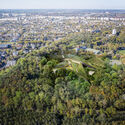
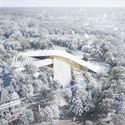
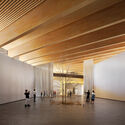
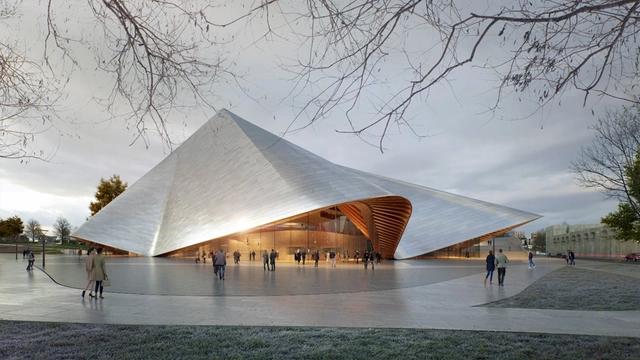
After winning the international competition for the design of the Vltava Philharmonic Hall in May 2022, Danish studio BIG-Bjarke Ingels Group has now developed the design into a detailed architectural study. The project continues the central concept of the competition, that of connecting the riverbank with the venue’s rooftop via a meandering path that expands the public space and invites visitors to engage with the new building. Construction is expected to start in 2027, after completing the project documentation for the building permit and selecting a contractor. The Philharmonic Hall is expected to open in 2032.
BIG has released sneak peek images into their “Not A Hotel Setouchi” project in Japan. The scheme draws inspiration from the surrounding beauty and Japanese landscape artworks, situated in the southwest cape of Sagi Island, overlooking the Seto Inland Sea. Consisting of three distinct holiday villas, Not A Hotel aims to blend Japanese and Danish architectural influences.
NEOM - or "new life" in a blend of Greek and Arabic- is a new urban development planned by the Kingdom of Saudi Arabia. Imagined as a cross-border city located in the northwest of the country, it aims to diversify the economy and reduce its dependence on oil. With promises of sustainability and innovation, the mega development has grabbed global attention with its 10 distinct regions.
It is conceptualized as a cutting-edge metropolis, aspiring to emerge as a worldwide epicenter for groundbreaking advancements and an exemplar of eco-friendly lifestyles. Since its announcement in 2017, NEOM has revealed the plans for 10 central regions, featuring a 170km long skyscraper, a futuristic ski resort, an upside coastal hotel, a tourism destination in a mountainous valley, and many more.