
This guide covers a workflow that moves from project parameters to generated floor plans, 3D perspective views, exterior design exploration, and site context visualization, using AI tools in place of preliminary CAD and rendering work.
This guide covers a workflow that moves from project parameters to generated floor plans, 3D perspective views, exterior design exploration, and site context visualization, using AI tools in place of preliminary CAD and rendering work.

The Metropolitan Housing Observatory of Barcelona, established to provide both the public and public administrations with the information and tools necessary to evaluate and design housing policies, has released the first results of its work conducted during 2017.
The report reveals concerning results, shedding light on the complex and problematic reality faced by many residents who find it difficult or simply impossible to afford the high rents currently being reached in Barcelona and virtually all other Spanish cities.
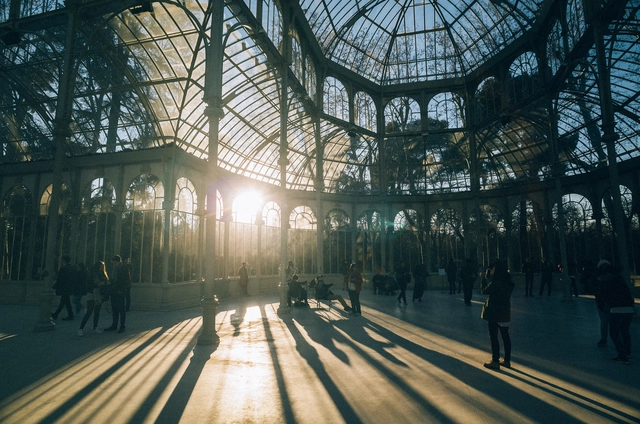
The Spanish Historical Heritage Council has approved the nomination of the Paseo del Prado and the Retiro for potential inclusion on the World Heritage List. This nomination will be officially submitted to UNESCO by Spain before February 1, 2019, and will be reviewed and evaluated by the World Heritage Committee in 2020.
The property proposed for inscription is located in the heart of Madrid and can be classified as a designed cultural landscape that has evolved over the centuries. Its origins lie in the explicit desire to provide the city with a place to enjoy nature without leaving the city—a vision later expanded to include a core Enlightenment goal: disseminating the Arts and Sciences for the education and instruction of the public, without class distinction.

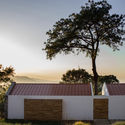
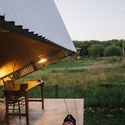
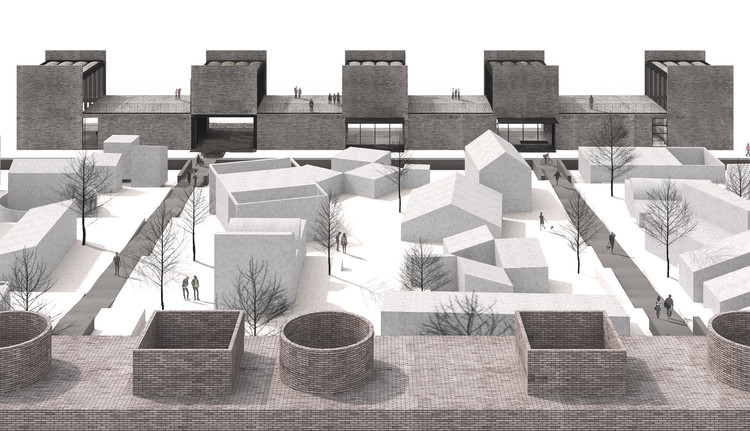
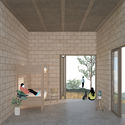
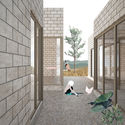
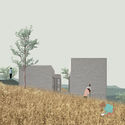
RSAA / Büro Ziyu Zhuang has unveiled the design for the "Linpan Guesthouse" in Chengdu. Located in Chongzhou, a county-level city under the administration of Chengdu, the project sits in a region with a rich history and deep cultural heritage that has inspired the poetry of literary figures like Lu You, Du Fu, and Wang Bo, preserving the ancient style, charm, and character of western Sichuan. The "Linpan Guesthouse" scheme integrates western Sichuan's historical residential spatial typology with local climatic conditions, cultural characteristics, and the living habits and lifestyles of the local population. It aims to overlap and reorganize the *linpan* (traditional forest settlement) archetype with the multi-point perspective of traditional Chinese painting on a spatial level. This approach seeks to enrich the spatial dynamics and narrative possibilities of both the interior and exterior architectural experience. The project is currently under construction.
.jpg?1538618605&format=webp&width=640&height=580)
Thirty-three years ago, the Association of Architects of the State of Jalisco (Colegio de Arquitectos del Estado de Jalisco A.C.) established the Jalisco Architecture Prize to recognize the work of established architects and to encourage and motivate architectural professionals in the State of Jalisco. The award also promotes the state's long-standing tradition of excellence and innovation, which has produced numerous outstanding professionals, including the one who lends his name to the lifetime achievement award: Luis Barragán. This year, the award ceremony took place at the Teatro Degollado, where the jury announced the final verdict and named the following winners:
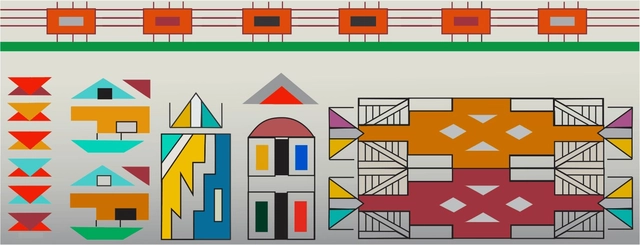
Far from over, discussions on race and gender in architecture are only beginning to gain momentum. One of their outcomes is the emergence of projects and initiatives that seek to map and identify Black architects who, despite their numbers and prolific activity, are rarely cited—or published.
Still rare and absolutely necessary, these initiatives represent an important step toward fairer, more egalitarian recognition in the field of architecture. Below, we present four investigative projects that aim to identify and shed light on these professionals and their work.
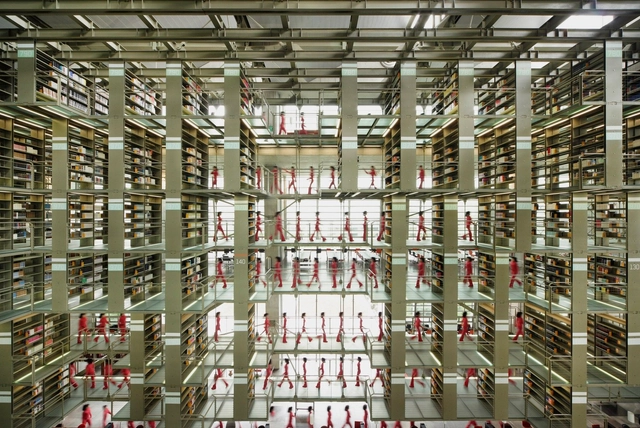
The establishment of an architectural drawing language throughout history is a tool that allows, for instance, a Japanese architect to design a building in Brazil, or makes it possible, by lingering over plans, sections, and elevations, to imagine the spatiality and character of a project that has not yet been built. This means that, despite local singularities, in terms of graphic representation, the field of architecture has successfully established itself as a common, international language.
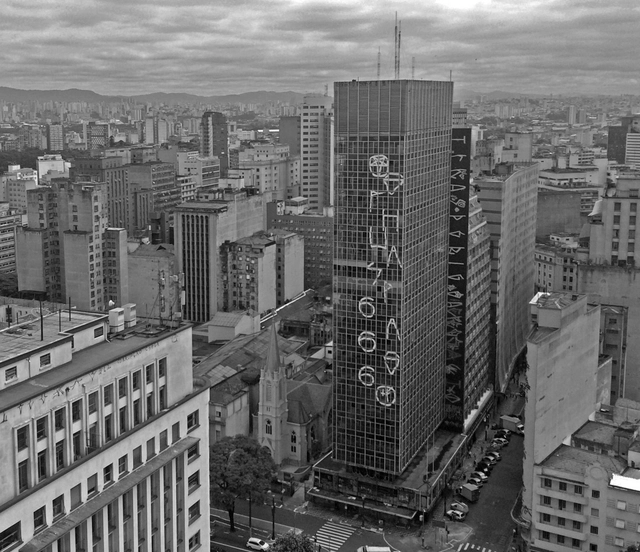
The collapse of the Wilton Paes de Almeida Building on May 1, 2018, exposed a glaring housing emergency. Compounding the cuts in public funding for the sector, in São Paulo alone during 2017, at least 14,000 families were evicted from their homes, and at least another 30,000 face displacement due to public works projects, according to the Eviction Observatory of the Faculty of Architecture and Urbanism (FAU/USP).
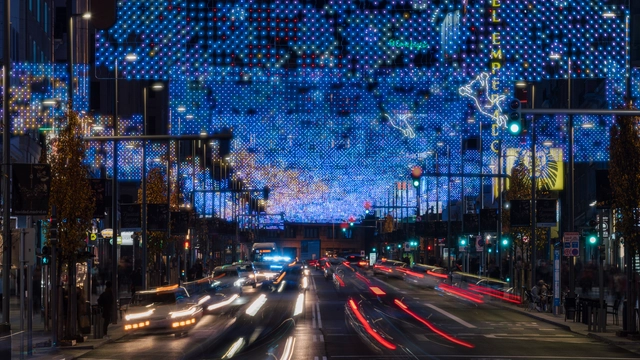
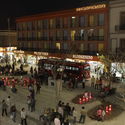
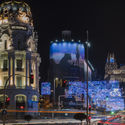
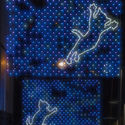
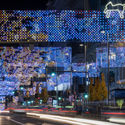
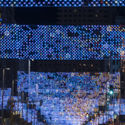
Madrid's Gran Vía is illuminated with LED bulbs along 1,300 meters thanks to a light installation by Brut Deluxe. Commissioned by the city council, the installation is inspired by nebulae and galaxies. Set up for this year's holiday season, the display was captured by Imagen Subliminal.
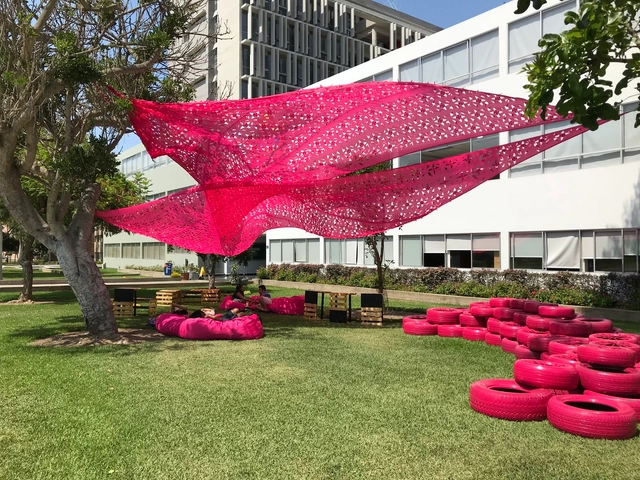
A breath of fresh air, new colors: A FUCHSIA intervention in the Faculty of Social Sciences (CCSS) at the PUCP. In this faculty's striking garden, students have always sat and lain on the grass to debate their ideas; however, with the increase in “social” activities, more seating, equipment, and shade were needed. Featuring a perforated textile canopy floating between the trees and stacked tires that organically integrate with the garden, this project creates a colorful focal point and an ideal gathering space that INTEGRATES in multiple ways: the students of this program and their ideas, all the campus students with one another, and the various recycled materials that culminate in FUCCSSIA-INNTEGRA.
The emergence of such a project right in the middle of the “tontódromo”—a busy campus street where students from la cato hang out—is highly significant, both for the project's inherent message and for the visibility and accessibility of its location. “Ocupa Tu Calle”, a citizen-led initiative that typically carries out urban interventions in Lima's public spaces, has now intervened on a university's main thoroughfare, partnering with the Faculty of Social Sciences to invite students to help design and improve their own campus through an ideas competition. In addition, the project prompts a reflection on the appropriation of private space using public space principles. The winning proposal reinterprets the Greek agora into a flexible, playful area for students to debate and simply be. Below, we explore the details of the project, from the design process to its construction.
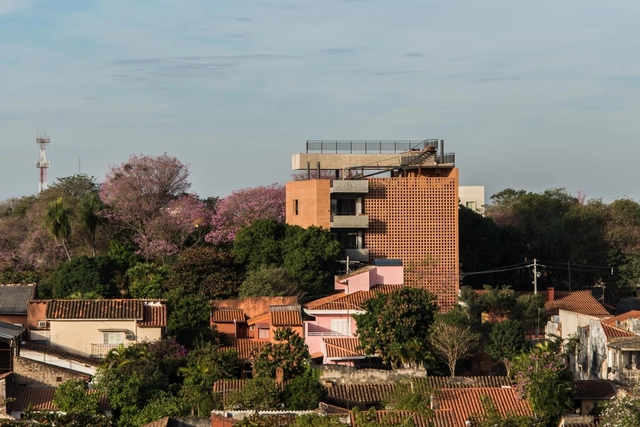
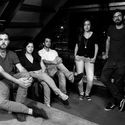
What began as a project to promote Paraguayan art has turned into a compelling showcase for local architecture. This is how The Society Paraguay was born in 2014, a collective currently made up of Mauricio Paiva, Salma Abraham, Leonardo Méndez, and Verónica Díaz de Vivar.
"Our beginnings stemmed from the desire to produce, document, and disseminate information on the architectural, artistic, and design worlds in Paraguay," the founders explain in a conversation with ArchDaily en Español. Although it is currently a purely digital project, they explain that their goal is to complement it "with printed material that can achieve a broader reach."
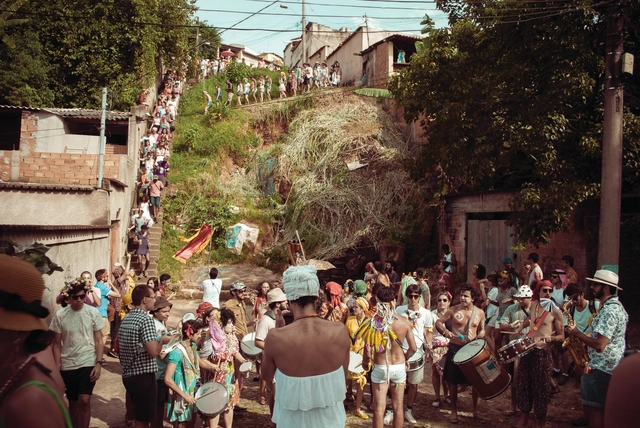

I have always felt a certain disconnect between the narrative found in popular songs, sociological and anthropological texts, and the actual experience of Carnival in Brazil. It is a gap between the promise of a rich, pluralistic festivity and the reality of someone born in the 1980s, growing up amidst the rise of mass culture, widespread violence, and a dehumanizing urbanization that leads to the abandonment or commercialization of urban rituals.

When designing a building, a recurring thought is often how long it will endure. Once construction is complete and the building opens its doors to users, its lifespan begins, and it gradually establishes its legacy. This raises the question of how it will be remembered, of what imprint the building will leave on our minds: architectural memory. And like human memory, architectural memory is fickle. Buildings are forgotten just as memories fade.
Madrid's architecture makes excellent use of memory. Styles characteristic of its historic heritage remain standing today, fully functional. The Neo-Mudéjar style, for example, took root at the end of the 19th century; today, numerous surviving examples remain vital urban hubs, housing uses such as hospitals, universities, schools, care homes, cultural centers, and museums.
.jpg?1537369258&format=webp&width=640&height=580)
The exhibition Vkhutemas: The Future in Construction 1918-2018, currently on view at Sesc Pompeia and curated by Neide Jallageas and Celso Lima, introduces the public to the Soviet pedagogical experience of Vkhutemas — the Moscow School of Arts and Techniques, founded in 1920. Despite its brief existence, closing in 1930, the school's teaching and production methodologies exerted a profound influence on the 20th-century global art scene.
Inaugurated in 1960, Brasília is perhaps the city in the world that most closely followed the principles and guidelines of modern architecture and urban planning in its design and construction. A synthesis of the vision of some of the most respected figures in the history of Brazilian architecture, its layout and buildings drew the world's attention to the nation's economic growth and Brazil's expansion into its own interior.
"Brasília is the dream come true of architects and urban planners. It is the only city in the world built where there was nothing but the cerrado, in central Brazil, and where the builders had complete freedom to apply the principles of the most modern urban planning without restrictions."
Walls of Air is the theme guiding Brazil's participation at the 16th International Architecture Exhibition in Venice. Jointly curated by Laura González Fierro, Sol Camacho, Gabriel Kozlowski, and Marcelo Maia Rosa, the Brazilian Pavilion features 17 projects from different regions of the country, selected through an open call, as well as a series of large-scale cartographic drawings addressing various aspects of the country's urbanization through the lens of architecture.

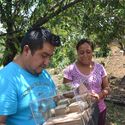
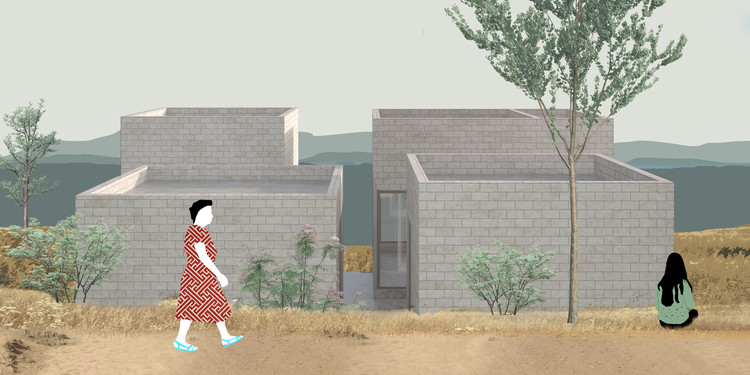
The proposal is part of a Master Plan that includes 32 experimental rural housing prototypes designed by different architecture firms invited to reflect on rural housing production across the country, as well as a welcome center designed by MOS Architects.
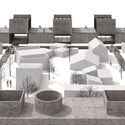
The project by Dellekamp Arquitectos, located in Apan, Hidalgo, Mexico, spans a total area of 1,465 square meters across two levels. It aims to enhance the duality between the welcome center and the central prototype area—which is framed by the two linear volumes—thereby strengthening the overall urban complex.
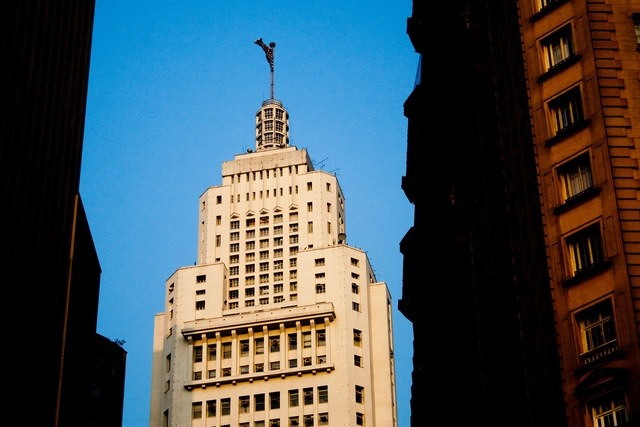
Closed for more than two years for renovations, the Altino Arantes Building, affectionately nicknamed Banespão by locals, will reopen to the public tomorrow in celebration of São Paulo's 464th anniversary. Built in 1947 to house the headquarters of the State Bank of São Paulo (Banespa), the 161-meter-tall skyscraper offered visitors access to its observation deck with panoramic views of the city.
Now, the downtown icon will feature a series of attractions including a museum on the building's history, art exhibitions, a skate park, and a loft available for rent on Airbnb.
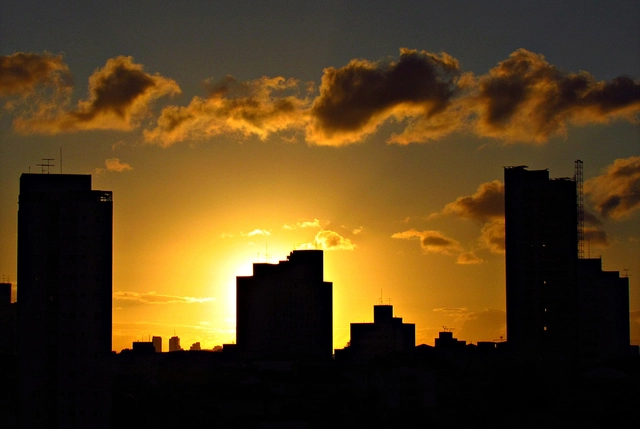
It is a frequent observation that Brazilian cities have grown haphazardly, without proper planning. Likewise, it is often said that Brazil's urban legislation is modern, yet translating these best practices into reality remains a challenge. However, few people actually understand how the gears of urban planning work and how these mechanisms can help guide urban centers toward a better, more sustainable future.


The 'Vivienda para Rosario' (Housing for Rosario) project by Rojkind Arquitectos + Dosa Studio arose in response to the events of 19S, when an earthquake with its epicenter in Morelos shook different areas of the country. In response, various organizations such as Reconstruir México, Pienza Sostenible, and Échale a tu Casa stepped in to support affected families by proposing long-term sustainable solutions. Guided by the premise that demolishing to rebuild from scratch was not the solution, efforts focused on promoting the reuse of existing materials and structures to facilitate diagnostic assessments and prevent future disasters.
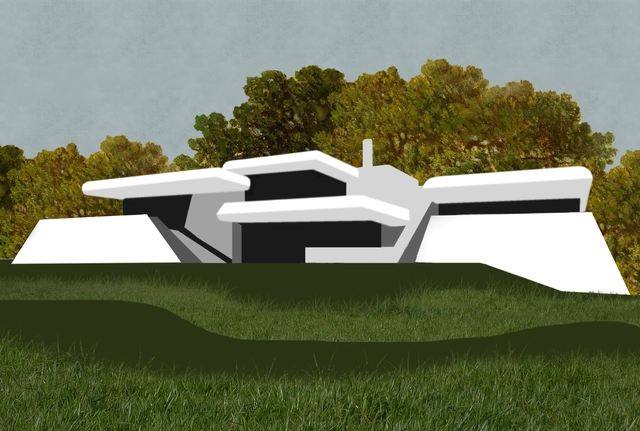
Overlooking the Río de la Plata, in the quiet of Laguna del Diario, amidst trees and a vast sky, lies Casa Poseidón, an example of modern Uruguayan architecture designed by Samuel Flores Flores in 1978. Unsurprisingly—as private interests and a lack of awareness have made demolition a recurring theme—its quiet existence is being disrupted to make way for yet another casualty of the real estate market.
The announcement of its demolition, justified by the construction of a building complex, has sparked well-founded criticism from the community seeking to protect the country's tangible architectural heritage. What are your thoughts on this?
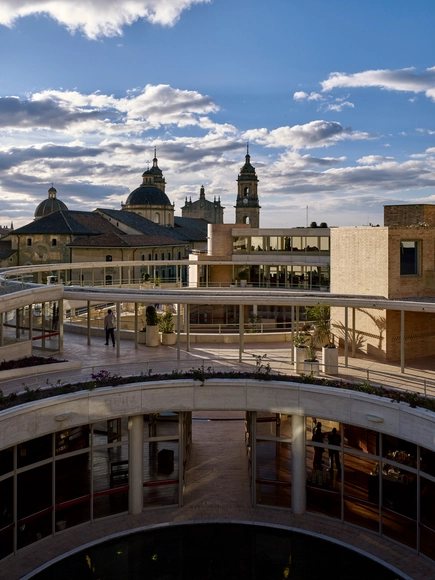

Declared an Asset of Cultural Interest at the district level by Resolution 626 of December 2017, the García Márquez Cultural Center in Bogotá is the last project by Rogelio Salmona, who passed away in 2007, a year before its inauguration. Below, the Rogelio Salmona Foundation shares the words written by the Colombian architect himself about his project in the heart of Bogotá.
Being invited to design the building for the headquarters of Mexico's Fondo de Cultura Económica in the heart of Bogotá was, for me, not only a privilege but also an enormous intellectual, professional, and urban responsibility.
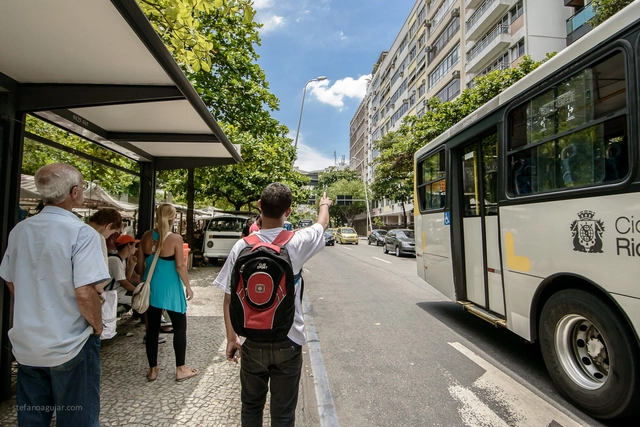
How can we foster data-driven discussions during elections and ensure urban mobility indicators are integrated into planning agendas to be implemented once elected officials take office? With this question in mind, the team at the Institute for Transportation and Development Policy (ITDP Brasil), in partnership with Purpose Climate Lab, has been working to influence campaigns in the cities of São Paulo, Rio de Janeiro, and Recife.
The strategy is to foster collaboration among local organizations and social movements active in mobility and sustainability agendas. Equipped with indicators compiled and made available on the MobiliDADOS platform, these organizations gain critical resources to influence the electoral debate. The tool presents illustrated, contextualized data on transportation realities across various cities and metropolitan areas, offering the necessary insights to challenge proposals from executive and legislative candidates.

.jpg?1528720917&format=webp&width=640&height=580)
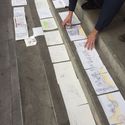
Croquiseros Urbanos is a group of primarily Argentine architects who meet periodically to explore the city and document it using sketching as a tool. Launched in late 2010, this initiative aims to promote analog work while reflecting on space and its construction.
The collective establishes a meeting time and location, from which attendees freely and spontaneously explore the surroundings, capturing the situations or details that stand out to each of them. Afterward, participants gather at a prearranged spot to share their experiences and work.
Over the years, the group has expanded its reach to various cities across the continent through "special visits," arriving in Santiago this past April.

As the end of the year approaches, we would like to thank our readers and contributors once again for making 2018 such a rich year for architecture. With your continued support, we are reaching more architects, students, and those outside the architectural community worldwide, inspiring them to build a better environment for everyone.
.jpg?1524419230 "El Retiro Park. Image © jninophotos [Flickr], licensed under CC BY 2.0")


.jpg?1538618605 "Casa Coronado Building / Trama Arquitectos. Image")
.jpg?1538618605)

.jpg?1519919737 "tda luque Studio / TDA. Image")



.jpg?1528720917)