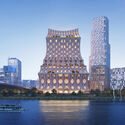
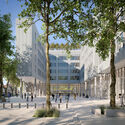
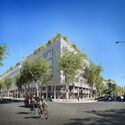
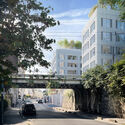
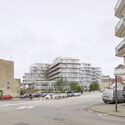
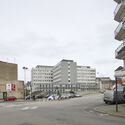
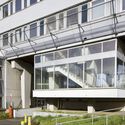
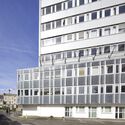
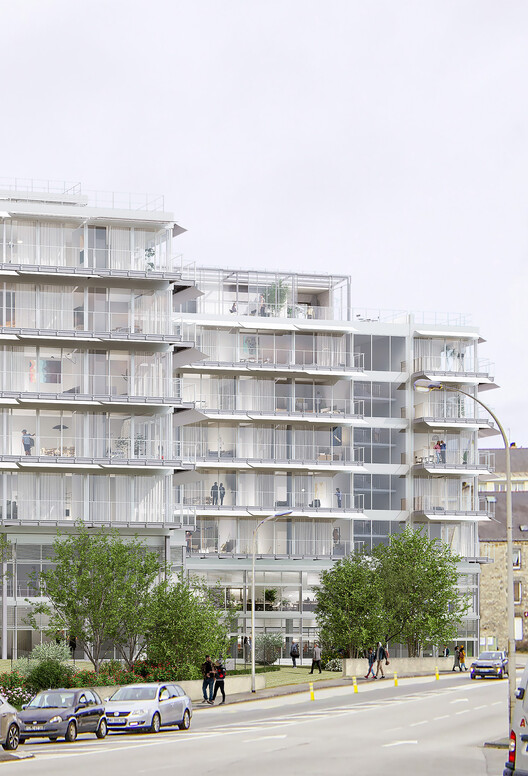
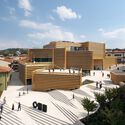
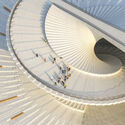
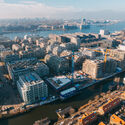
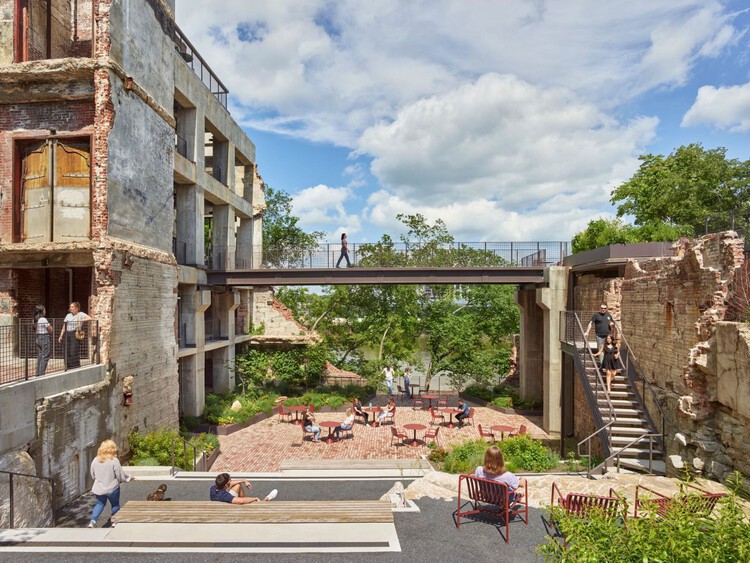
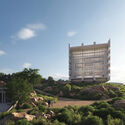
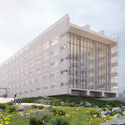
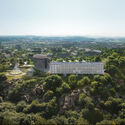
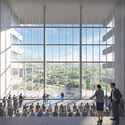
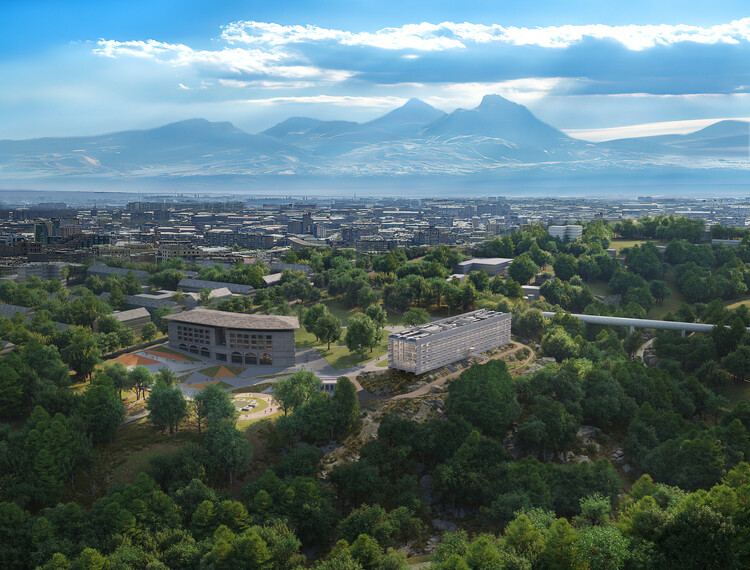
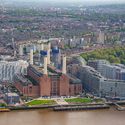
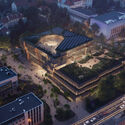
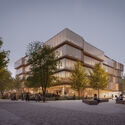
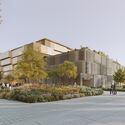
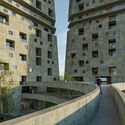
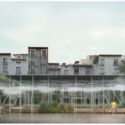
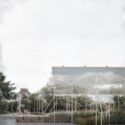
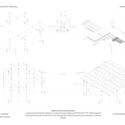
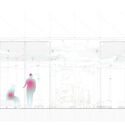
Situated on a suburban lot in Gallarate, in Italy's Lombardy region, the latest project by Álvaro Siza rises in two travertine marble blocks: a 20-unit residential complex developed in partnership with the Portuguese firm COR Arquitectos. Facing the busy Via Roma and the quiet Via Postporta, the development reinterprets two local typologies—the Lombard courtyard and the isolated villa—in a play of volumes that recalls the geometries of another Siza masterpiece, the Porto School of Architecture.
Monument honoring the victims of Covid-19. Photo: Courtesy of the artist
The first monument to the victims of the novel coronavirus in Brazil has been inaugurated. Named In-finito, the memorial was installed at the Penitência Cemetery and Crematorium, in Rio de Janeiro's port area, designed by architect Crisa Santos, of the collective of the same name.
The initiative came from the architect herself, who developed the project with the goal of donating it to public and private cemeteries, as well as municipalities, companies, or other institutions wishing to pay tribute to Covid-19 victims anywhere in the country.
Design is more than product design. It is also the construction of personas, with their bodies and souls. The natural state is just one of the design parameters. We are the design of ourselves, in permanent transformation.
Guilherme Wisnik talks with Ivana Wonder, a persona created by designer Victor Ivanon. Possessing a powerful voice and breaking down the boundaries between masculine and feminine, Ivana leads a multisensory experience of emotion and longing. From the central spotlight of a damp cabaret, this haunting and ethereal figure emerges.
Part of the archive of the architect Hans Broos has been cataloged, treated, and digitized, and is now available for online and in-person consultation at the Ingo Hering Memory Center of the Hermann Hering Foundation.
Architect and urban planner Maria Elisa Baptista is the new President of the National Board of the IAB. She succeeds Nivaldo Andrade, whose term ended on September 26 of this year. In nearly a century of existence, this is the first time a woman has held the position.
The leadership team also includes Rafael Pavan dos Passos (National Vice President, IAB-RS), Cláudio Listher Marques Bahia (Secretary General, IAB-MG), Rosilene Guedes Souza (Administrative-Financial Director, IAB-MG), Luiz Eduardo Sarmento Araújo (Cultural Director, IAB-DF), Fernando Túlio Salva Rocha Franco (Extraordinary Vice President of Institutional Relations, IAB-SP), and Luiza Rego Dias Coelho (Extraordinary Vice President of Affirmative Action, IAB-DF).
In August 2019, Eternit presented its photovoltaic solar tile at Intersolar South America. This first-of-its-kind product in the country has just received Inmetro certification for production. The model had already been approved by the institute, and with this certification, the first concrete tile capable of generating energy—developed in Brazil—can now be marketed.
Those who install these tiles on their homes will be able to capture sunlight to produce electricity—without the need for additional panels. This technology became globally known through Tesla's solar tiles.
The IAB-SP, organizer of the São Paulo International Architecture Biennial, following a public consultation on the open call guidelines from October 10 to 25, is launching a competition on November 4 to select the co-curatorial team for the 13th Biennial, which will take place in 2022. Proposals can be submitted through the Biennial's website until January 24, 2021. This edition features a 12-member committee, which includes IAB representatives from other Brazilian states to ensure a diverse perspective in overseeing the event, which has both national and international reach.
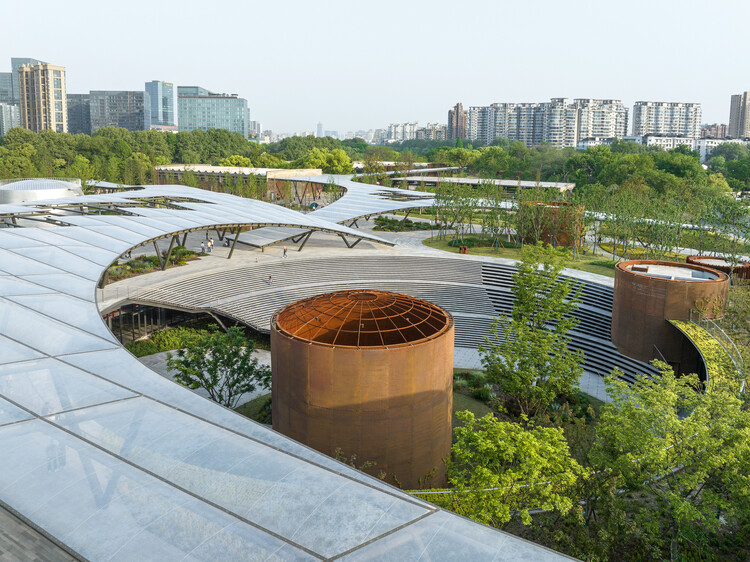
Organic urban agriculture, renewable energy, and a breathtaking landscape. All of these elements come together at Thammasat University in Bangkok, Thailand. TURF (Thammasat University Rooftop Farm) is the largest green roof in Asia, spanning over 70,000 square meters. Designed by the architecture and urbanism firm LANDPROCESS, the area was envisioned as a solution for green urban development.
The artwork “Pindorama” created on a mural in São Paulo by artist Rimon Guimarães. Photo: Converse City Forests
Cities around the world are welcoming the colors and benefits of murals painted with photocatalytic paint, which is known for helping to clean the air. The murals are part of the Converse City Forests project, developed by the brand behind the famous All Star sneakers. The goal is to paint more than 14,000 square meters of murals worldwide by the end of this year. Together, they are equivalent to planting approximately 40,000 trees.
The Covid-19 pandemic has brought unprecedented consequences for the global economy. In Brazil, it hit an economy that had barely recovered from the 2015–16 recession. However, responding to the crisis requires not only easing budget rules, but rethinking the very role of the state to address historical deficiencies that the pandemic has laid bare.
Guilherme Wisnik talks with Laura Carvalho, professor at the School of Economics and Administration of the University of São Paulo and holder of a PhD in economics from the New School for Social Research. She writes biweekly for the newspaper Nexo and is the author of "Valsa Brasileira: do boom ao caos econômico" (Todavia, 2018) and "Curto-Circuito: o vírus e a volta do Estado" (Todavia, 2020).
Luanda, Angola. Photo by Eugene Kaspersky, via Visualhunt. License CC BY-NC-SA
The COVID-19 pandemic has exacerbated various sanitary and infrastructural deficiencies in developing nations, particularly Angola, which already bears the burden of successive economic recessions.
The outskirts of major urban centers, with Luanda as a paradigmatic case, are critical territories for the spread of the disease. Home to nearly one-third of the country's population—80% of whom live in highly precarious urban conditions—a combination of factors creates an incredibly complex scenario. These challenges include a lack of basic sanitation, high built and population densities, overcrowded housing (averaging three people per room), inaccessibility for urban services (such as firefighters, waste collection, and police), a lack of public spaces and green areas, unsanitary indoor conditions, heavy reliance on the informal sector, and limited access to food security and healthcare services.
The struggle for the right to the city is deeply tied to the right to decent, permanent, and accessible housing. This involves downtown building revitalization projects driven by broad social participation, particularly by women who are heads of households—initiatives that serve as scalable models across the city. Guilherme Wisnik speaks with Carmen Silva, a Black woman from Northeast Brazil and an activist for the right to the city. A leader of the Movimento Sem-Teto do Centro (MSTC), she served as a Municipal Housing Councilor for two terms, and during the same period, she coordinated the Participatory Council of the Sé region.
The jury of the Maré-City International Competition, organized by the 27th World Congress of Architects – UIA2021RIO, has selected the three winning projects and three honorable mentions. The choice was not easy: out of 180 entries from places as diverse as Germany, China, Egypt, Brazil, Russia, Poland, Turkey, Colombia, France, Portugal, Oman, and Ukraine, the jury shortlisted 28 finalists before deciding on the winners. Chinese entrants represent the majority of the awardees, securing first and second place, as well as the Roberto Burle Marx and Demetre Anastassakis honorable mentions. Third place went to a project by Brazilian students from São Paulo, while the Luiz Paulo Conde honorable mention was awarded to a project by students from Bogotá, Colombia.
Erwin Rux House, Rio da Luz. Source: Espaço Arqueologia, 2019, taken from the book "Morar na Colônia: a arquitetura da imigração em Testo Alto e Rio da Luz"
A watercolor-illustrated tourist map, a mobile application available for Android and iOS, and two books gathering stories from the neighborhoods of Rio da Luz, in Jaraguá do Sul, and Testo Alto, in Pomerode—both in Santa Catarina—comprise the Projeto Lumiar. The initiative will launch these products online at 7:00 PM this Thursday, the 8th. The result of two years of research with local communities, the launch event is supported by the National Historic and Artistic Heritage Institute (Iphan).
Maria Inês Sugai is the 2020 Architect and Urban Planner of the Year. The award is presented annually by the National Federation of Architects and Urban Planners (FNA) to professionals who stand out for their work dedicated to the development of the profession and of Brazilian cities. Holding a bachelor's, master's, and doctorate degree from FAU-USP, with specializations in Urban and Regional Development and the Use and Conservation of Natural Resources from UFSC, the professor's nomination was supported by the Union of Architects and Urban Planners of Santa Catarina (SASC). Maria Inês Sugai is currently a professor in undergraduate and graduate programs at UFSC and the author of articles and books, including “Espaço e Desigualdade” (Space and Inequality). She also served as a member of the Santa Catarina State Council of Cities.
Sesc São Carlos, in upstate São Paulo, has launched a short video series on how permaculture works in practice. Produced by Associação Veracidade, the entire series will be available online for free.
Over six episodes, various social technologies will be presented, such as composting toilets, composting, solar ovens, and rainwater harvesting, among others. Viewers can explore the various ecological possibilities that can be integrated into a sustainable home—even in urban spaces.
October 16 marked World Food Day. On this date in 2020, the Stop Hunger Institute launched a project that includes a community garden and training and educational initiatives for the Paraisópolis community, a favela in São Paulo's South Zone.
Developed in partnership with the Instituto Escola do Povo, the project establishes a new space of approximately 900 square meters for growing vegetables. The goal is to educate, train, and distribute the harvest to registered community residents, ensuring access to healthier food.
Background image: "From the archipelago to the coast: interventions in the public spaces bordering Vila Parolin" by Nícolas Marques de Oliveira, a project selected among the best of 2019
After at least five years of study, the time comes for Architecture and Urbanism students to complete their final graduation projects—often called TCC, TFG, or Graduation Projects. In choosing their topics, students highlight civil, urban, or theoretical projects that play a crucial role in sparking debates about the future of our cities, the built environment, urban infrastructure, mobility, and many other fundamental topics that shape how we inhabit space.
São Paulo. Photo by Fernando Stankuns, via Visualhunt / CC BY-NC-SA
On October 29, the 2020 Inequality Map was launched virtually. Produced by Rede Nossa São Paulo and the Cidades Sustentáveis program, the study maps indicators such as mobility, human rights, education, and health across the city's 96 districts.
Although the mapping was conducted using pre-pandemic data, the goal is for the information to guide the development of public policies to mitigate inequality indicators, which have been exacerbated by the COVID-19 pandemic.
Small-scale renovations are among the most common projects in Brazil, but that does not mean they are immune to budgeting and specification issues. A useful tool to avoid these headaches is Pro-Reforma, a free web app that automatically specifies, quantifies, and estimates the products and services needed for a renovation project.
In October, the Brazilian Agency for Industrial Development (ABDI) launched a free basic online course on BIM (Building Information Modeling). Divided into two modules, the Democratizando BIM course is aimed at all professionals in the architecture, engineering, and construction (AEC) sectors. To register, simply visit the website and fill out the form.
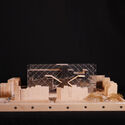

1º Lugar | Vencedor pelo voto popular | 164339. Image Cortesia de {CURA}
The 5th edition of the {CURA} Award continues its proposal of hosting ideas competitions with themes aligned with current discussions on architecture, the city, and society, always understanding that architecture is an action-based profession. This time, participants were challenged to design the renovation of an apartment in the iconic Copan Building, designed by Oscar Niemeyer in downtown São Paulo.
The Ícaro Jardins da Graciosa Building, designed by Studio Arthur Casas, was recognized in the Rethinking The Future Awards, an initiative that honors architecture and design projects from around the world across more than 40 categories. Located in Curitiba, the building features 21 apartment units distributed among three exposed concrete towers.
Competing in the residential (over five floors) category, the building designed by Casas features a facade defined by circulation pathways that double as balconies, emphasizing the towers' horizontality. With landscaping by Renata Tilli, these horizontal lines are accentuated by the lush greenery of plants grown in planters along the perimeter of each floor.
Solar energy is officially the cheapest way to generate electricity today, according to the International Energy Agency (IEA) in its newly released annual World Energy Outlook 2020 report. “With sharp cost reductions over the past decade, solar PV is consistently cheaper than new coal- or gas-fired power plants in most countries, and solar projects now offer some of the lowest electricity costs ever seen,” the document states.