This guide covers a workflow that moves from project parameters to generated floor plans, 3D perspective views, exterior design exploration, and site context visualization, using AI tools in place of preliminary CAD and rendering work.
This guide covers a workflow that moves from project parameters to generated floor plans, 3D perspective views, exterior design exploration, and site context visualization, using AI tools in place of preliminary CAD and rendering work.
.gif?1538085748)
Opening its doors alongside the Infinito Vão exhibition, “Two Houses by Paulo Mendes da Rocha” will be on display until February 10, 2019, at the House Gallery. Curated by Nuno Sampaio, “Two Houses” offers the opportunity to visit two unique projects from the collection of architect Paulo Mendes da Rocha, which, in line with the transatlantic focus of this program, are located in Portugal and Brazil.
Ever since we announced the results of the competition for the “New Biobío Regional Theater,” an initiative led by the Regional Government and the Architecture Area of the Council of Culture and the Arts, we had been eagerly looking forward to seeing the winning proposal finally built.

The IABsp Awards, one of the most anticipated and competitive honors in Brazilian architecture, revealed yesterday, December 7, the 2018 winners across 14 categories. Over the years, since its first edition in 1968, the IABsp awards have established themselves as an important platform for critique, recognition, and dissemination of national architecture and urbanism, promoting the exchange of ideas and new solutions among Brazilian architects.
In addition to the category awards, the Rino Levi Prize was awarded for lifetime achievement. This year, the honor went to Rosa Kliass for her lifetime body of work in landscape architecture.
Discover the winners in each category below:
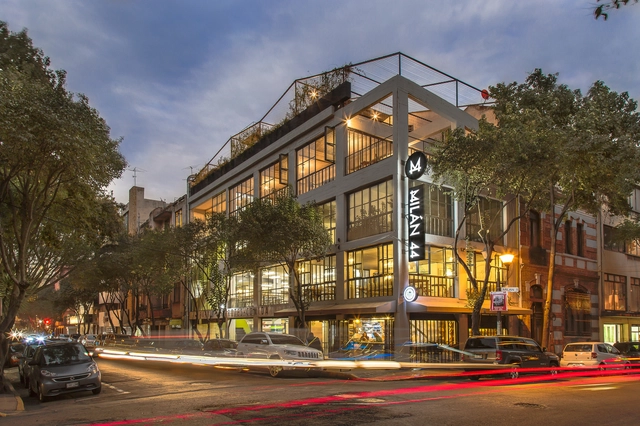
On October 13, the 2018 Archmarathon Awards concluded their fifth edition in Milan. Held at the impressive Palazzo Mezzanotte from October 11 to 13, 2018, the event featured 55 architecture and interior design projects across 16 categories, submitted by 55 studios from 23 countries and four continents. Selected by a prestigious international jury, the 55 firms were invited to present their projects to a large audience of architects, developers, and designers from around the world.
During the ceremony, the winners of each of the 16 categories and two overall winners—one for architecture and one for interior design—were announced. The selection was made by a main jury chaired by Luca Molinari, Gary Chang, Lesley Lokko, and Mexican architect Rozana Montiel, along with a guest jury comprising Massimiliano Cecconi, Cherubino Gambardella, and Evgeniya Murinets. Read on to discover the final winners in both categories.
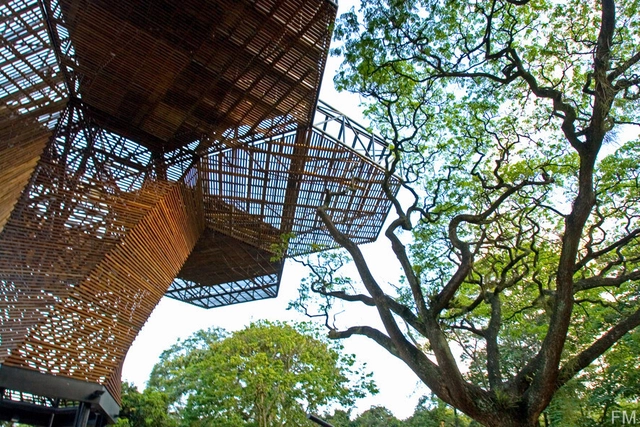
The close relationship between architecture and landscape in Latin America is undeniable. This is due not only to the region's geographical, climatic, and ecological diversity, but also to how these countries have built and shaped their cities amidst progress and setbacks. Among these ongoing achievements is a growing respect for the landscape, an architectural language tailored to its context, and solutions designed for its diverse climates.
For this selection, we have chosen 10 projects in Colombia that have successfully adapted to their landscape, both in form and construction, across both urban and rural contexts.

On September 12, Arq.Futuro and Insper will host the 2018 edition of the Arq.Futuro International Seminar - The City and the Water. As in previous editions, the event will present the Brazilian public with iconic success stories in the restoration of urban waterways and their surroundings. For this year's seminar, three cases were selected that stand out both for their urban quality and their explicit purpose of combating different forms of urban exclusion.
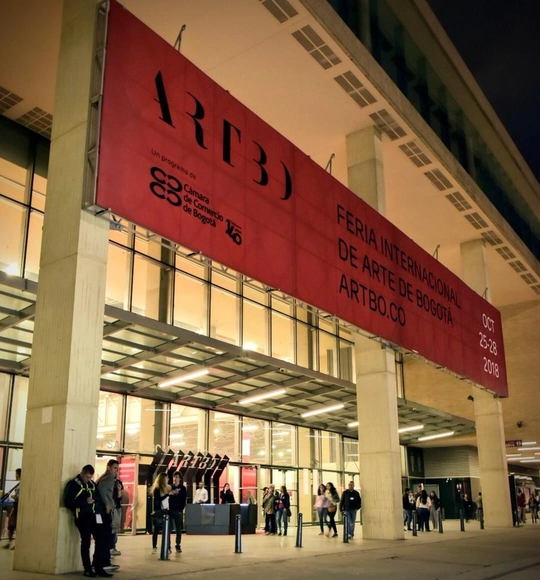
During the Bogotá International Art Fair (ARTBO), held between October 24 and 28, Colombian artist Miller Lagos was awarded the second edition of the Kubik Prize. According to the organization, the prize “commissions a project that bridges art and architecture from an innovative perspective for the benefit of the city and its inhabitants.”
“In his recent work, the artist has undertaken projects in public spaces, examining the relationship between human populations and their bodies of water,” Kubik Lab stated, explaining its decision.
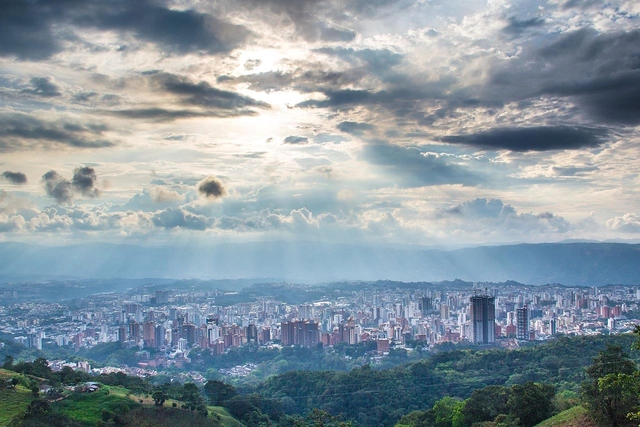
Bucaramanga is located 959 meters above sea level on a plateau in Colombia's Cordillera Oriental. Composed of 17 communes, it has a population of 528,575, while its metropolitan area is home to more than 1,141,700 people. Over the past 30 years, the city has systematically lost its public space due to abandonment, neglect, rapid urban growth, and a lack of coordinated political and planning initiatives that could foster direct communication between residents, public officials, academics, and private sector representatives.
The strategic project “Public Space: The Skin of Democracy” is a suite of initiatives designed by the Bucaramanga municipal government—and integrated into the city's current development plan—aimed at reconfiguring and renovating municipal public spaces. The initiative was launched by the Mayor's Office of Bucaramanga for the 2016–2019 term.
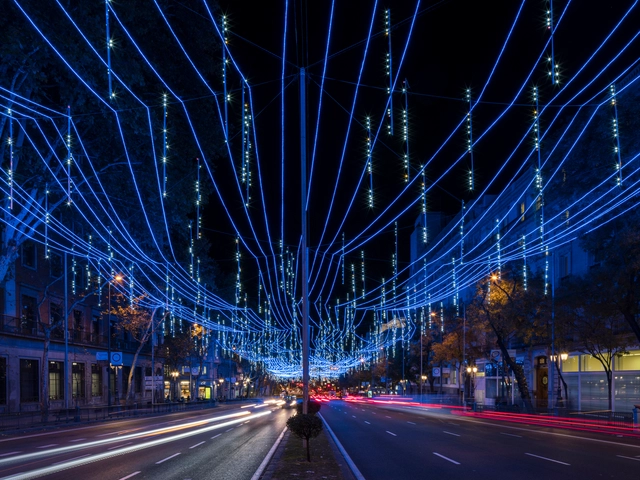
Alcalá Street was filled with light last Christmas thanks to the installation designed by the architecture studio Brut Deluxe and led by Ben Busche, commissioned by the City of Madrid.
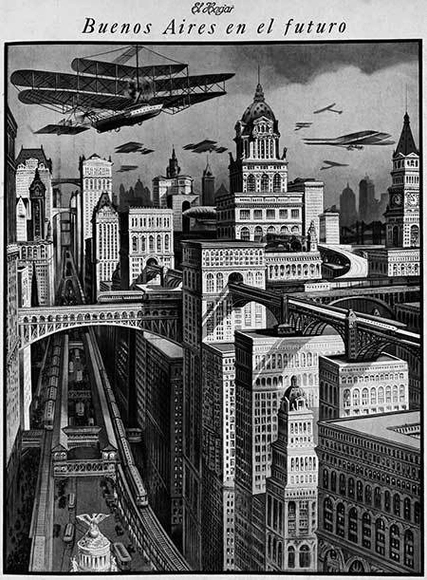
Buenos Aires, 2018. Population? Almost 3 million. High-speed maglev trains? Zero. Skyscrapers interconnected by railways? Zero. DeLoreans flying through the air? Unfortunately, zero. Transportation innovations? The Metrobus and bike lanes. In urban terms, the city seems not to have progressed at the pace once imagined.
There was blind faith in the future—a future where anything was possible, the sky was not the limit, and people could move freely above the clouds along a network of pathways connecting towering high-rises. What happened? To find out, we must travel back in time. To the past, to be precise.

A few days ago, we reported that BD Bacatá, Colombia's tallest skyscraper, has yet to open after a series of delays, and new reports from the local press make it clear that the outlook for its 4,200 investors is not improving.
The developer BD Promotores owes its suppliers an estimated 4 billion Colombian pesos (1.46 million USD) "for finishes and leases." Following a lawsuit filed by three suppliers demanding the payment of 750 million Colombian pesos (273,750 USD) for services rendered, "the only way out after declaring insolvency was the seizure of the trademark" by the Superintendency of Industry and Commerce (SIC), according to a report by local newspaper La República.
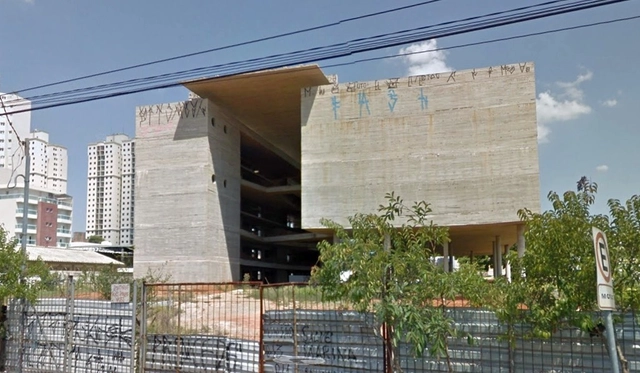
Designed by the firm Brasil Arquitetura, the Museum of Labor and the Worker is located in the city of São Bernardo do Campo. Once completed, it is set to house records of the "memory of the working world, from the arrival of the Portuguese to the present day." Although 5,500 square meters have already been built, construction has been halted and the site has been abandoned for about a year and a half.
In an op-ed published in the newspaper Folha de S. Paulo, Brazilian Pritzker laureate Paulo Mendes da Rocha and former UN Special Rapporteur Raquel Rolnik suggest that halting the museum's construction—officially blamed on suspected project overpricing—is actually more closely linked to an aversion to the cultural narrative surrounding the project.
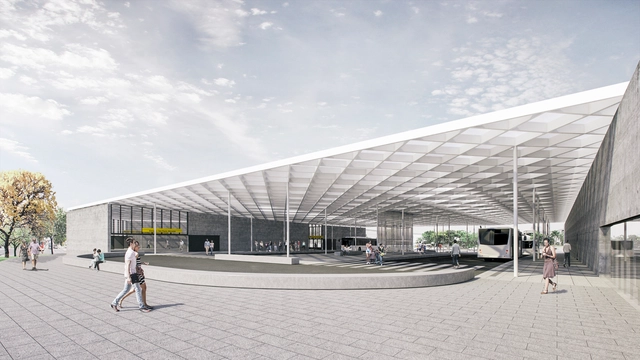
The São Paulo - Morumbi Station is part of the second implementation phase of the São Paulo Metro’s Line 4 – Yellow and is currently nearing completion. The project features two external entrances located at the intersection of Francisco Morato and Jorge João Saad avenues, as well as integration with the SPTRANS bus terminal.
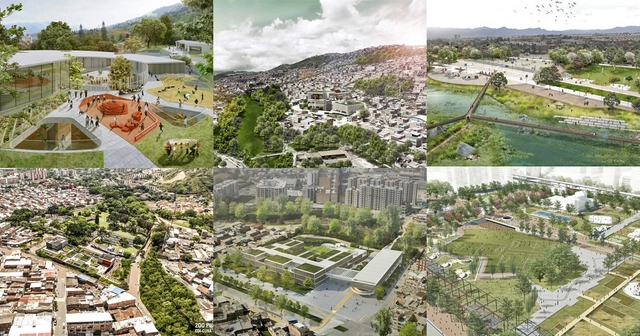

"Architectural competitions represent the combination of the art of choosing and the craft of being chosen," says Roberto Fernández about an area of our discipline that is widely recognized as an excellent platform for firms and independent professionals to present their ideas as true manifestos. Meanwhile, in academic circles, competitions often serve as tools for formal, conceptual, and graphic experimentation.
These types of commissions undoubtedly inspire not only architecture and urban planning professionals but also the public as a key player in their evaluation. Whether or not these proposals are built, they demonstrate that we must constantly champion innovation, recognizing the immense effort behind these results. With this in mind, we have selected six award-winning projects that reflect the value of architectural competitions in Colombia.

The Architecture and Design Festival "Concéntrico 04" is preparing for its fourth edition, taking place from April 27 to May 1, 2018. This public event invites residents and visitors to discover and rediscover key sites in the historic center of Logroño, Spain, through temporary urban installations.
As part of the temporary architectural installations for Concéntrico 04, the festival launched design competitions for interventions in Plaza de San Bartolomé, Viña Lanciano and the creation of an information pavilion in Plaza Escuelas Trevijano to serve as a landmark and starting point for the festival's routes and activities. These will be built, assembled, and dismantled by the winners themselves.

The "Floating Cemetery of Alto Biobío" project, developed by Universidad de Chile architect Fabián Leiva, proposes a memorial for the Quepuca cemetery—one of 14 flooded following the construction of the Ralco hydroelectric plant. The design features a monomaterial concrete volume positioned over the flooded cemetery to establish a vertical communication between the living and the dead, creating a point of connection between them.
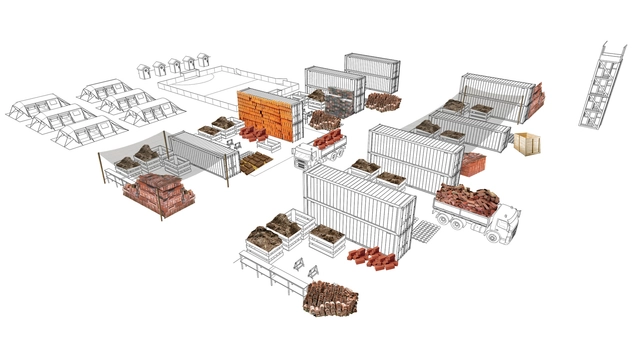


To mark the commemoration of the February 27 earthquake and tsunami, the creation of “Rubble Hospitals” is being promoted, drawing on recent earthquake experiences in Chile and Mexico.
A new guide for creating these spaces was announced in Concepción by Chile's Proyecta Memoria Foundation, coinciding with the anniversary of the February 27 earthquake and tsunami. The guide compiles experiences from earthquakes in Chile and Mexico, while promoting Rubble Hospitals as spaces to safeguard and reuse debris from large-scale seismic events.
The document is the result of three years of work and details memory rescue initiatives during the 2010 and 2015 earthquakes in Chile and the earthquakes in Mexico.
_20Wikimedia_Commons.jpg?1528296272&format=webp&width=640&height=580)
The “Welcome Mother Nature” project, winner of the June 2016 international competition to redesign Madrid's Plaza España, will ultimately not be allowed to alter the position of the Cervantes monument as initially planned.
The Community of Madrid announced at the Local Heritage Commission its intention to fast-track the declaration of the complex as an Asset of Heritage Interest (BIP). Consequently, the project designed by architects Fernando Porras Isla-Fernández, Aranzazu La Casta Muñoa, and Lorenzo Fernández-Ordóñez Hernández will not be allowed to rotate the statue of the Spanish writer to face the Edificio España, as reported by the Spanish newspaper El País.

The Federal District office of Iphan did not approve the project submitted by the Federal District Department of Roads (DER-DF) for the reconstruction of the section of the Eixão Sul that collapsed in February of this year, burying two cars and the tables of a restaurant.
The agency responsible for Brazil's artistic and cultural heritage blocked the proposal, claiming that the DER-DF/Novacap project "significantly alters the original architecture and compromises the architectural and urban integrity and, by extension, that of the Plataforma Rodoviária complex and complementary road system."

Featuring references to his career, projects, and travels, the Ocupação Paulo Mendes da Rocha celebrates the 90th birthday, on October 25, of Brazil's most important living architect. Through sketches, technical drawings, models, and other materials selected from Mendes da Rocha’s personal archive, curator Guilherme Wisnik reveals some of the architect’s most radical ideas, which use ideology and technique to challenge and subvert colonial mindsets that still echo in Brazilian architectural design.
_at_Cuadra_San_C....jpg?1518020946&format=webp&width=640&height=580)
_at_Cuadra_San_Cri....jpg?1518020987 "Sean Scully Wall of Light Cubed, Mexico 2018 Stone sourced locally near Mexico City © Sean Scully. Image © Felix Friedmann")
_at_Cuadra_San_Cristobal__....jpg?1518020930 "Sean Scully Landline That Pink, 2017 Oil on Aluminum © Sean Scully")
_at_Cuadra_San_C....jpg?1518020946 "Sean Scully Wall of Light Cubed, Mexico 2018 Stone sourced locally near Mexico City © Sean Scully. Image © Felix Friedmann")
_at_Cuadra_San_Cristobal__....jpg?1518020961 "Sean Scully Brown Silver Tower, 2016 Corten and Stainless Steel © Sean Scully. Image © Felix Friedmann")
_at_Cuadra_San_C....jpg?1518020946)
Curated by Oscar Humphries, this exhibition opened on Monday, February 5 at 11 AM, and will run from February 7 to March 24, 2018.
Sean Scully - San Cristóbal is the first exhibition presented at Cuadra San Cristóbal, and marks the first time the artist's sculptures will be exhibited in Latin America.
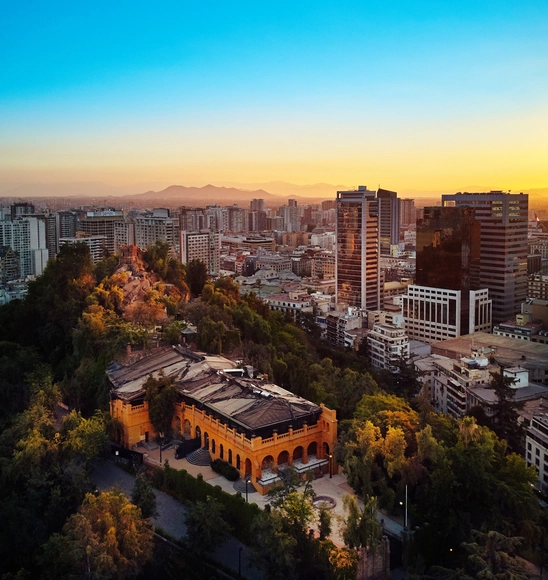
In the late 19th century, Santa Lucía Hill in Santiago, Chile, underwent a radical transformation, evolving from a rocky outcrop in the center of the capital into a vibrant green space. During the hill's redevelopment, the mayor of Santiago at the time, Benjamín Vicuña Mackenna, converted one of its structures, Hidalgo Fort, into a castle that housed a history museum. Reduced to an administrative warehouse during the 20th century, the fort—originally built in 1816—was converted into an event venue in 1997 and is now preparing for its most significant renovation since its construction.
According to the Chilean newspaper La Tercera, Castillo Hidalgo will be transformed into a cultural center featuring “a convention center and a laboratory.” This will allow the venue to open its doors for more than just private events, especially since Santa Lucía Hill receives over 600,000 tourists annually, according to figures from the Municipality of Santiago.
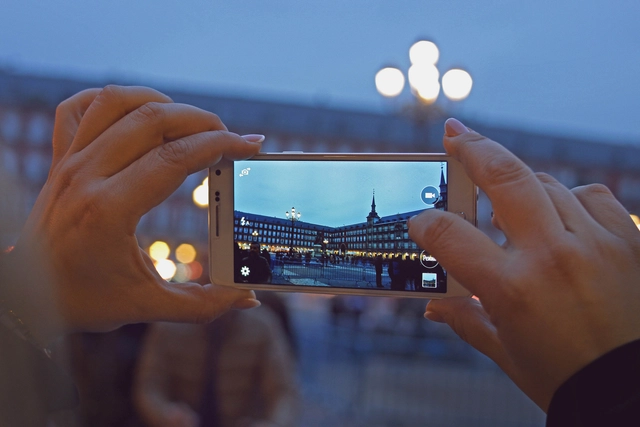
Yesterday, the Official Association of Architects of Madrid and the COAM Architecture Foundation presented the "Arquitectura de Madrid" mobile app, developed with the support of the Madrid City Council and the Foro de Empresas por Madrid.
This is arguably one of the most important and ambitious initiatives undertaken by COAM in recent years in a clear effort to connect architecture with society. In today's fully digitalized context, this app serves as a useful and powerful tool to promote Madrid's architecture, easily accessible to any citizen, student, professional, or visitor to the Spanish capital.
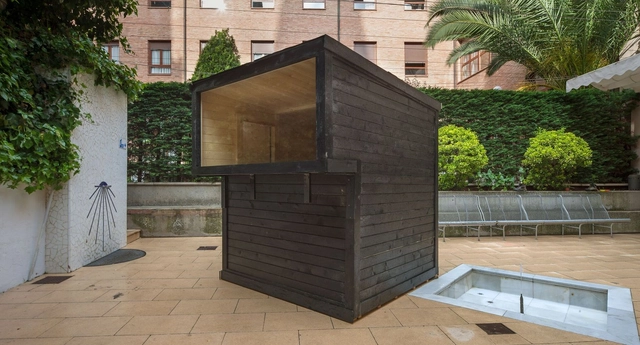
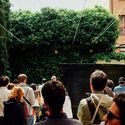
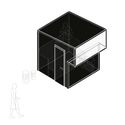
Conéntrico is an International Architecture and Design Festival that proposes to reflect on the city of Logroño (Spain) through the revitalization of undervalued public spaces. Its latest edition, Conéntrico 04, takes place between April 27 and May 1, 2018, in the Historic Center of Logroño. The festival invites visitors to explore the city through installations, exhibitions, meetings, activities, and performances that connect venues, plazas, streets, courtyards, and hidden spaces that usually go unnoticed in daily life. Jairo Rodríguez integrates the greatest number of senses in a sauna in the middle of the courtyard of the Municipal Pilgrims' Hostel.