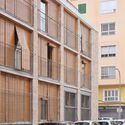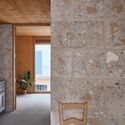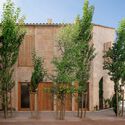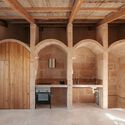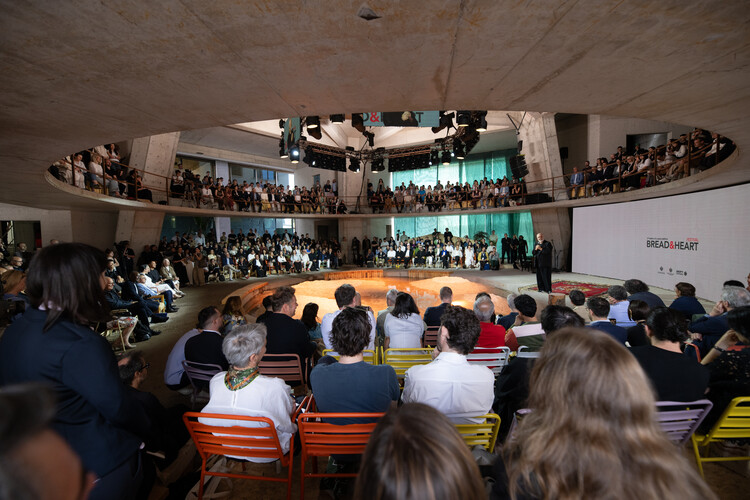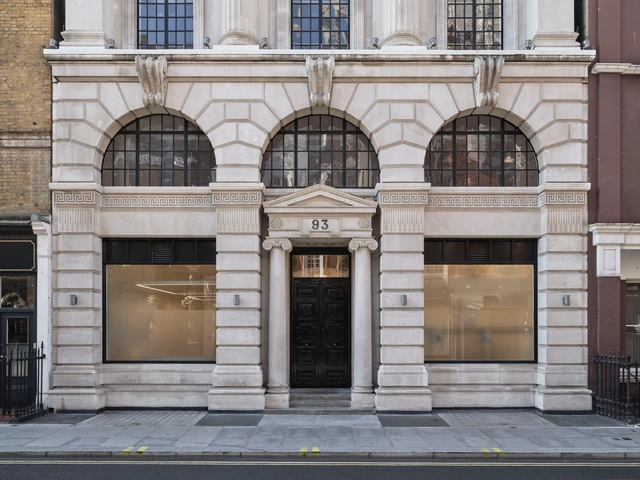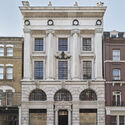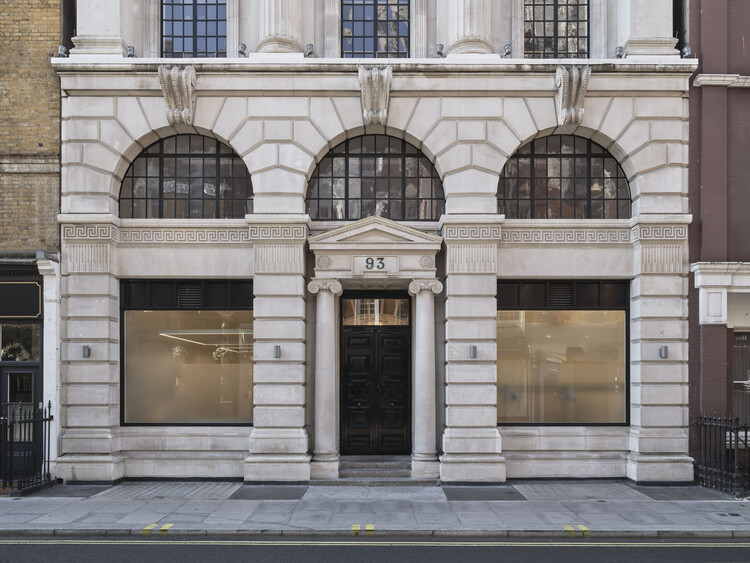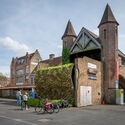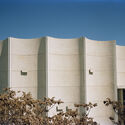
October will see the opening of Ibraaz, a new cultural space reimagined by Architect-in-Residence Sumayya Vally in central London. The initiative is led by the Kamel Lazaar Foundation and aims to highlight art, culture, and ideas from the Global Majority: communities of African, Asian, Indigenous, and Latin American heritage that together represent most of the world's population. The project seeks to bridge local and global conversations by creating a "world of many worlds" within a single venue: a six-floor, 10,000-square-foot building that has undergone multiple transformations, from synagogue to residence, club, and now cultural center.
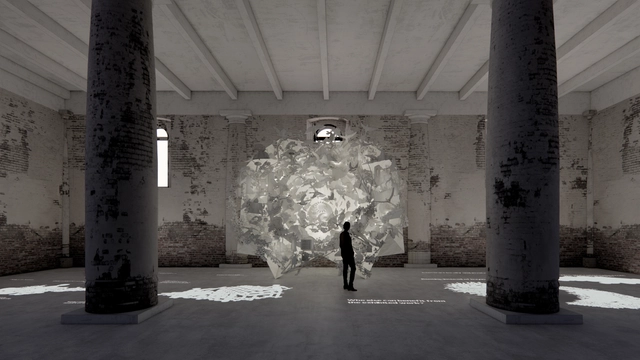
The Biennale promises to be a dynamic platform uniting over 750 participants from diverse backgrounds, including architects, engineers, mathematicians, climate scientists, and artists. Such a broad coalition of over 280 projects underlines the Exhibition's focus on inclusivity and interdisciplinary collaboration, an essential aspect for adaptation. The selection process proposed a bottom-up, open call approach through the Space for Ideas initiative, which ran between May and June 2024. It encouraged participation from global teams, from Pritzker Prize winners and Nobel laureates to emerging architects and scientists.
The OBEL Award is an international prize for architectural practice, presented annually by the Henrik Frode Obel Foundation. The jury, composed of representatives from firms such as Snøhetta and MVRDV, alongside professionals from other disciplines, selects a theme to guide the choice of winners for each edition. The goal is to steer proposals toward solutions that foster dialogue and generate knowledge on emerging issues, aiming to promote architecture in service of social and ecological development worldwide. For its seventh edition, the 2025 call focus is Ready Made, targeting projects that place reuse and repurposing at the core of architecture for the common good.
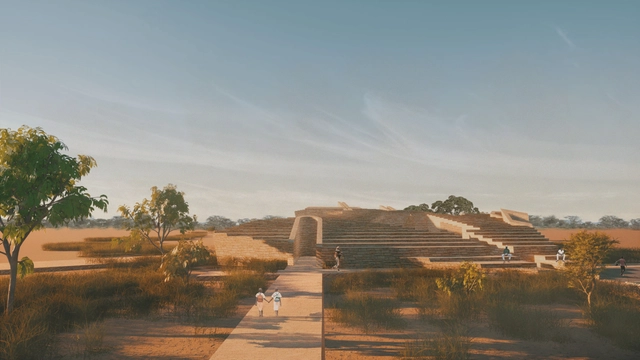
In collaboration with to.org, Counterspace, led by Sumayya Vally, has revealed its latest project, "Regenerate Kakuma," aimed at promoting holistic well-being in one of the world's largest refugee settlements in Kakuma, Kenya. This regenerative wellness and fitness hub blends fitness, agriculture, and cultural spaces for over 285,000 refugees. The settlement, known as one of the largest globally, primarily hosts individuals from 19 countries, including South Sudan and Somalia.
In his book "Curation: The Power of Selection in a World of Excess," Michael Bhaskar defines curation as "using acts of selection and arrangement (but also refining, reducing, displaying, simplifying, presenting, and explaining) to add value." Originating from the Latin word curare, meaning to take care of, the curator's role in dissecting our understanding of the world around us cannot be overlooked. Over time, as the definition morphs into different bodies, the practice of curation continues to evolve, filling the roles of caretakers of our built environment and thinkers of different forms for the overall bettering of society.
Sumayya Vally, architect, curator, and founder of Counterspace architecture office, joins the jury for the 2024 Obel Award. This international architectural prize, organized by the Henrik Frode Obel Foundation, honors projects that significantly impact people and the planet. The 2024 theme, "Architecture WITH," invites a re-examination of the architectural profession, emphasizing collaborative and co-creative processes that integrate diverse bodies of knowledge into the core of design. Vally's perspective on redefining architectural roles aligns with the theme's focus on non-hierarchical, co-creative approaches.
The Obel Award is an international prize for architectural achievement presented annually by the Henrik Frode Obel Foundation. Each year, the jury selects a specific theme and grants an award to a promising solution. For the 2024 edition, the prize that honors architectural contributions that positively impact both people and the planet will be focused on “Architecture With”.
Previous emphasis included Adaptations, Emissions, Cities, Mending, and Well-being. In 2023, the fifth cycle recognized ‘Living Breakwaters’ in New York, a green infrastructure project off the shore of Staten Island, by SCAPE Landscape Architecture and its founder Kate Orff. In 2022, the Obel was awarded to Seratech, a carbon-neutral concrete solution, in 2021, the concept of the 15-minute city received the prize for its value in creating sustainable and people-centric urban environments, and in 2020, Studio Anna Heringer was acknowledged for Anandaloy, in Bangladesh, an unconventional, multifunctional building that hosts a therapy center for people with disabilities on the ground floor and a textile studio on the top floor producing fair fashion and art. Finally, in its first edition, fixated on well-being, the Obel Award was granted to the Art Biotop Water Garden project in Tochigi, Japan, by Junya Ishigami & Associates.
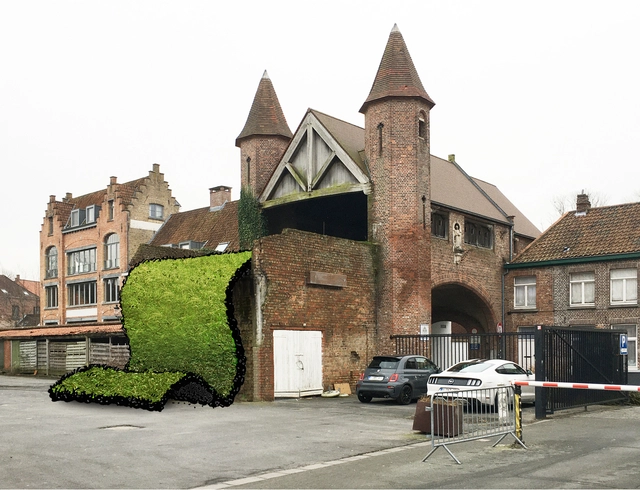
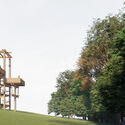
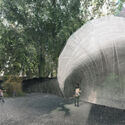
The fourth edition of the Bruges Triennial: Spaces of Possibility, curated by Shendy Gardin and Sevie Tsampalla, will be held from Saturday 13 April to Sunday 1 September 2024. This event promises to transform the streets and historic center of Bruges, Belgium, into a showcase of contemporary art and architectural interventions. With a focus on exploring the latent potential of this UNESCO World Heritage Site, the festival raises questions about how concepts like change and sustainability can interact with preservation.
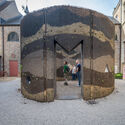
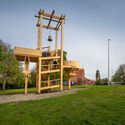
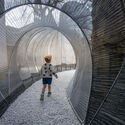
The 12 selected artists and architects have been prompted to challenge the existing spaces within Bruges. Among the invited names are Boonserm Premthada’s Bangkok Project Studio, Mona Hatoum, Studio Ossidiana, and Sumayya Vally, founder of Counterspace and curator of the first Islamic Arts Biennale, among others. Until September 1st, they are presenting temporary interventions and large-scale installations that seek to reveal the hidden potential of the city, echoing the festival's theme. Against the backdrop of Bruges' rich history, this edition of the Bruges Triennial underscores the importance of adaptable urban spaces in today's ever-evolving world.
The Bruges Triennial 2024 has announced its theme, “Space of Possibility,” along with a list of participating artists and architects and the locations of the 12 installations. Running from Saturday 13 April to Sunday 1 September 2024, the event will take over the streets and historic center of Bruges. Belgium, showcasing contemporary art and architectural interventions. The curators of this edition, Shendy Gardin and Sevie Tsampalla, have selected a list of 12 artists and architects who will challenge the existing locations within the city’s quarters in response to the theme which asks them to seek to reveal the hidden potential of the city.
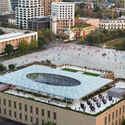
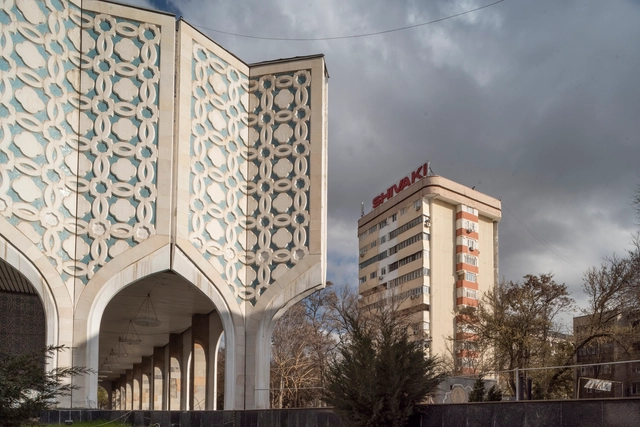
Exhibition Hall of the Union of Artists, Tashkent, Uzbekistan, 2022. Image Courtesy of Armin Linke
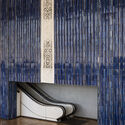
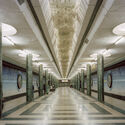
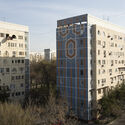
Tashkent, the capital city of Uzbekistan, stands as one of the most populous cities in Central Asia. Situated in the northeastern part of the country, near the border with Kazakhstan, Tashkent has been profoundly shaped and influenced by diverse cultures throughout its history. The most significant transformation of its urban landscape occurred during the Soviet era when the city was rebuilt as a model Soviet city, following the 1966 earthquake that caused substantial damage. During this reconstruction, architects from various regions of the Soviet Union collaborated with local experts, resulting in a unique form of architectural modernism that harmoniously integrated elements of Islamic architecture, indigenous creativity, and cutting-edge engineering achievements of that era. At that time, Tashkent held the esteemed status of a prominent international city in the East.
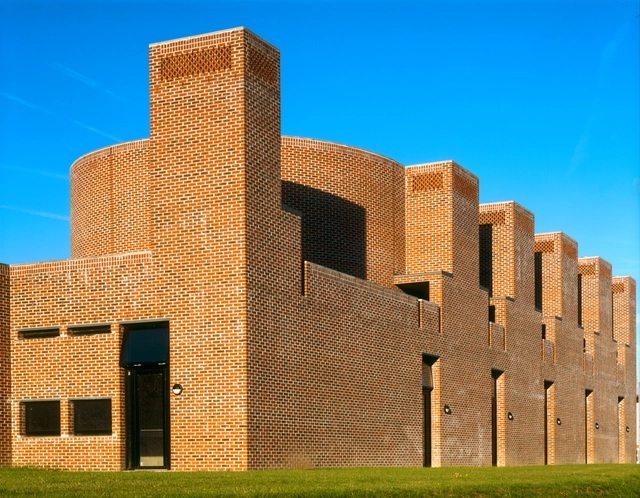
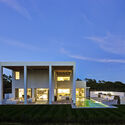
Irish architect Shane de Blacam has been awarded the 2023 Royal Academy Architecture Award in recognition of his commitment to creating communal spaces and the craftsmanship and detail of his projects. In 1976, De Blacam co-founded the architectural firm de Blacam and Meagher alongside John Meagher, establishing a collective practice focused on the careful integration of local materials and the creation of comfortable spaces for people. Each year, London’s Royal Academy awards individuals or collective practices whose body of work has made a meaningful and positive impact on society.
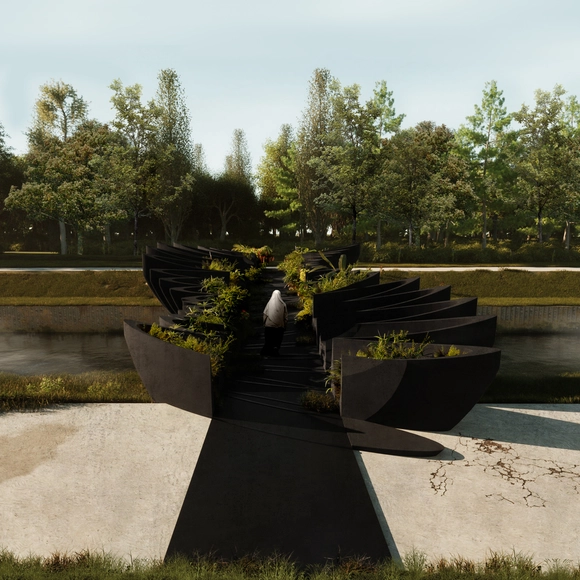
Asiat-Darse Pedestrian Bridge . Image Courtesy of Counterspace
Sumayya Vally, renowned architect and Principal of the Johannesburg/London-based studio Counterspace, won the competition to design the new Asiat-Darse pedestrian bridge in Vilvoorde, Belgium. Counterspace's design concept delved into the history and impact of Paul Panda Farnana, a significant yet under-appreciated figure in the city, who studied the intricate connections between past and future generations of migrant individuals and communities. "The studio has been praised for its research-led approach, which led to the discovery of Farnana and his work, and for shedding light on an otherwise overlooked, vital part of the city’s history". Construction on the Asiat-Darse pedestrian bridge is set to commence in April 2024, with an estimated completion date of December 2025.
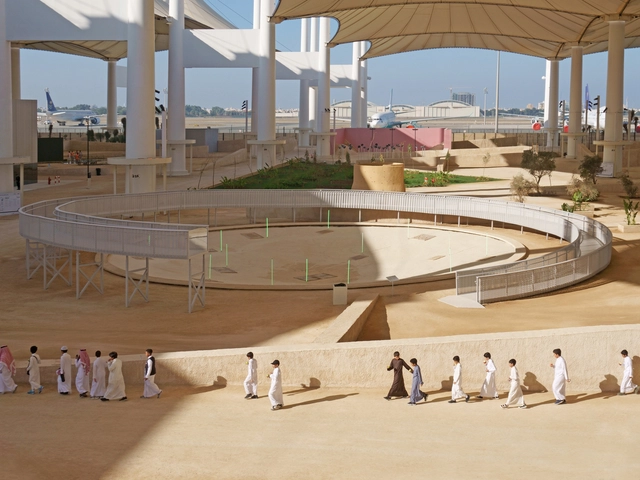
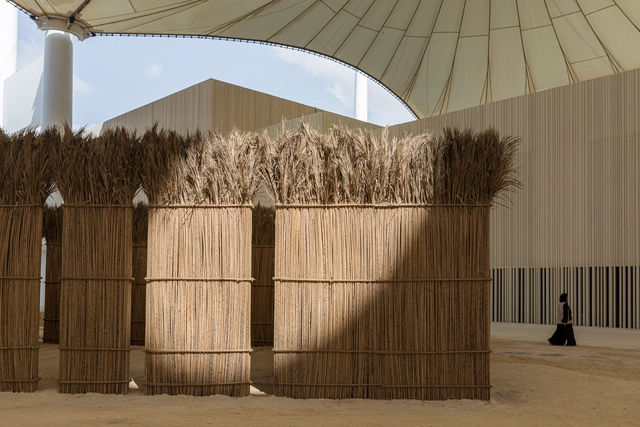
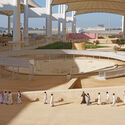
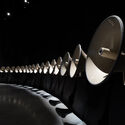
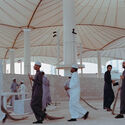
The First Islamic Arts Biennale, artistically directed by Sumayya Vally, opened on January 2023 and is still ongoing until May 23, 2023, in Jeddah, Saudi Arabia. The inaugural event was commissioned and produced by the Diriyah Biennale Foundation and was curated by Vally alongside Dr. Julian Raby, Dr. Omniya Abdel Barr, and Dr. Saad Al-Rashid. The biennale re-imagines the Western Hajj Terminal at King Abdulaziz Airport, designed by Skidmore, Owings & Merrill and winner of the 1983 Aga Khan Award, as a cultural space to redefine Islamic Arts from "within, in a way, that connects some of these art forms and forms of artistic expression to the experience and rituals" of those that live it.
Sumayya Vally is a South African architect, founder, and director of the Johannesburg-based collaborative architectural studio Counterspace. Designer of the Serpentine Pavilion in 2020/2021, she was the youngest architect to get this commission. Part of Time’s 100 emerging leaders who are shaping the future, in 2021, the only architect to make the list at that time, Sumayya started her career as a curator and teacher, and recently she was appointed as artistic director of the first Islamic Arts Biennale in Jeddah. ArchDaily had the chance to talk with Vally about her contribution to this biennale, her vision of the exhibition, the venue, the scenography, and the participating architects. Sumayya also shared some exclusive info about her entry for the 2023 Venice Architecture Biennale, starting on May 20th, in Venice, Italy.
EJS Presidential Center. Image Courtesy of Atelier Masōmī
Atelier Masōmī has just revealed its design for The Ellen Johnson Sirleaf Presidential Center for Women and Development (EJS Center). President Ellen Johnson Sirleaf chose an all-female team to work on the project with lead architect Mariam Issoufou Kamara of Atelier Masōmī, exhibition's architect Sumayya Vally of Counterspace, and the local architect Liberian architect Karen Richards Barnes. The EJS Center, located in Liberia’s capital Monrovia, will provide digital access to former President Ellen Johnson Sirleaf’s personal and professional archives.
The Islamic Arts Biennale re-imagines the Western Hajj Terminal at King Abdulaziz Airport in Jeddah, Saudi Arabia, as a cultural space to create an evocative journey to explore Islamic heritage. The terminal, designed by Skidmore, Owings & Merrill and a winner of the 1983 Aga Khan Award, will be extended and complemented to create the setting for the event. Through the contributions of over 60 artists from over 20 countries, the biennale aims to become a platform to explore and reflect the diversity of the Muslim experience worldwide. Themed Awwal Bait, or The First House, the event intertwines commissioned works with never-before exhibited historical artifacts to convey a holistic perspective of the Islamic arts. The Biennale, curated by Sumayya Vally, now in its inaugural edition, will be open from January 2023 to April 2023.
Diriyah Biennale Foundation recently revealed the curatorial team of Saudi Arabia's inaugural Islamic Arts Biennale, highlighting the past and present art of the Islamic culture. Among the curators is Sumayya Vally, co-founder of Johannesburg-based practice Counterspace, responsible for designing the 2021 Serpentine Pavilion. Taking place in Jeddah in early 2023, the Islamic Arts Biennale will foster artistic exchanges and further establish Saudi Arabia's status within the art scene.