1. ArchDaily
  2. Wang Shu

Wang Shu: The Latest Architecture and News

Global Urban Transformation and Climate-Responsive Design from Venice to Rio: This Week’s Review

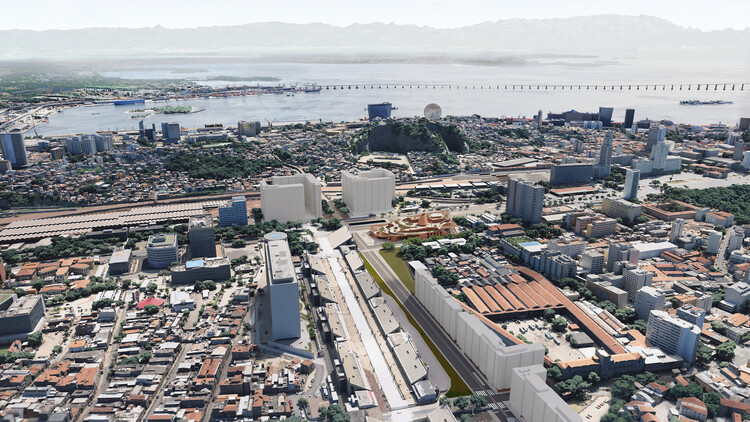
Amid ongoing global discussions on climate adaptation and resilient urban development brought into sharper focus by the outcomes of COP30, this week's architecture news illustrates how cities worldwide are rethinking their built environments. From Venice, where the 19th Architecture Biennale concluded with debates on material use and long-term cultural impact, to international awards foregrounding regenerative and socially responsive design, the conversation around architecture is increasingly intertwined with planetary priorities. Major urban interventions, from Thessaloniki's seafront redevelopment and Rio de Janeiro's new public library, to Abu Dhabi's Natural History Museum and a civic stadium in Birmingham, demonstrate how multiple cities are addressing mobility, heritage, density, and climate resilience. Additional plans, such as Mantua's ecological urban strategy, Utrecht's elevated landscape above transport networks, and Amsterdam Airport Schiphol's redesigned landside mobility system, further reflect a transition toward integrated, people-centred urban frameworks that prioritize environmental performance, public space, and long-term territorial stewardship.

Global Urban Transformation and Climate-Responsive Design from Venice to Rio: This Week’s Review - 1 的图像 4Global Urban Transformation and Climate-Responsive Design from Venice to Rio: This Week’s Review - 2 的图像 4Global Urban Transformation and Climate-Responsive Design from Venice to Rio: This Week’s Review - 3 的图像 4Global Urban Transformation and Climate-Responsive Design from Venice to Rio: This Week’s Review - 4 的图像 4Global Urban Transformation and Climate-Responsive Design from Venice to Rio: This Week’s Review - More Images+ 24

Lina Ghotmeh Named to TIME100 Next 2025 as One of the World’s Most Influential Rising Stars

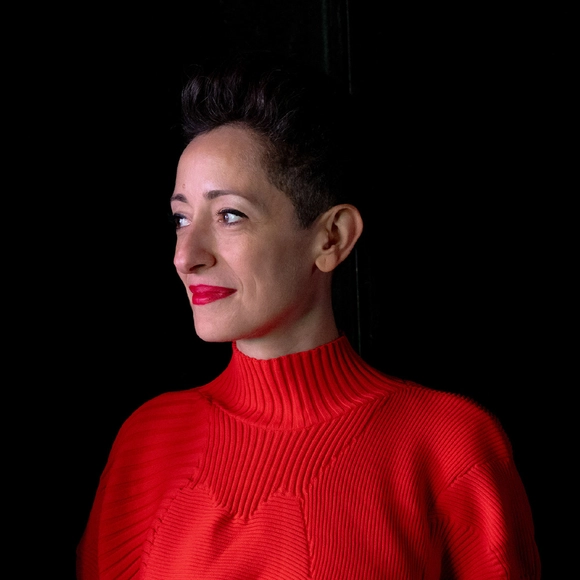
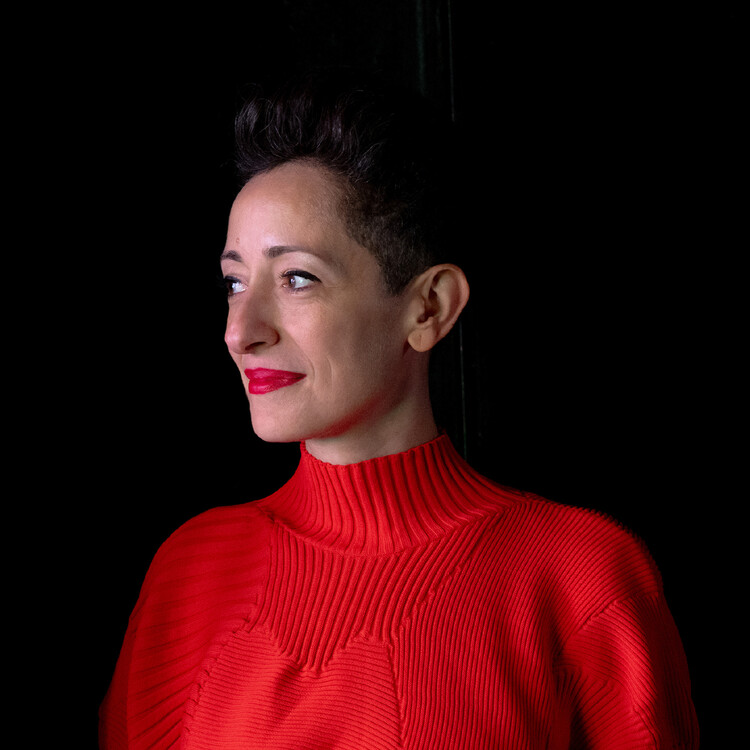
French-Lebanese architect Lina Ghotmeh has been recognized on the TIME100 Next 2025 list, an annual ranking of emerging leaders and innovators across disciplines. Known for her sensitive approach to context and materiality, Ghotmeh has built an international portfolio that bridges tradition and modernity. In her TIME profile, written by Danish architect Bjarke Ingels, Ghotmeh is praised for combining historical awareness with forward-looking experimentation. The acknowledgment positions her as the only architect on this year's list, highlighting the continued presence of design voices in a ranking that typically spans entertainment, politics, science, and business.

Lina Ghotmeh Named to TIME100 Next 2025 as One of the World’s Most Influential Rising Stars - Image 1 of 4Lina Ghotmeh Named to TIME100 Next 2025 as One of the World’s Most Influential Rising Stars - Image 2 of 4Lina Ghotmeh Named to TIME100 Next 2025 as One of the World’s Most Influential Rising Stars - Image 3 of 4Lina Ghotmeh Named to TIME100 Next 2025 as One of the World’s Most Influential Rising Stars - Image 4 of 4Lina Ghotmeh Named to TIME100 Next 2025 as One of the World’s Most Influential Rising Stars - More Images+ 11

On the Work of Three Pioneering Chinese Architects: Wang Shu, Yung Ho Chang, and Liu Jiakun

I first went to China in 2002, a year after the International Olympic Committee awarded the 2008 Summer Games to Beijing. That initial trip was about exploring nature, cuisine, ancient temples, archeological sites, and, in general, experiencing lifestyles in China, mainly outside of its major cities. I was motivated by the pure curiosity of a Western tourist driven to an Eastern country in search of the old world, the exotic, hoping to catch a glimpse of a rich traditional culture on the cusp of its inevitable radical transformation. At the time, there was no modern, or rather contemporary, architecture in China to speak of. There were only the promising first hints of the development of a potentially new architectural language being undertaken by just a handful of independent architects almost entirely under the radar.

On the Work of Three Pioneering Chinese Architects: Wang Shu, Yung Ho Chang, and Liu Jiakun - Image 1 of 4On the Work of Three Pioneering Chinese Architects: Wang Shu, Yung Ho Chang, and Liu Jiakun - Image 2 of 4On the Work of Three Pioneering Chinese Architects: Wang Shu, Yung Ho Chang, and Liu Jiakun - Image 3 of 4On the Work of Three Pioneering Chinese Architects: Wang Shu, Yung Ho Chang, and Liu Jiakun - Image 4 of 4On the Work of Three Pioneering Chinese Architects: Wang Shu, Yung Ho Chang, and Liu Jiakun - More Images+ 19

Can Local Architecture Help Cure the Ills of Globalism?

The global pause of the COVID pandemic has provided an opportunity to assess present-day globalism and the architecture that has emerged alongside it. Stemming back to the broad expansion of free trade in the 90s at the end of the Cold War, globalism’s cultural promise was simple and aspirational: integrating markets globally would increase the interaction between and learning of different cultures. By normalizing such experiences in our daily lives, we would become global citizens liberated from our previous prejudices–all well-intentioned objectives.

Can Local Architecture Help Cure the Ills of Globalism? - Image 1 of 4Can Local Architecture Help Cure the Ills of Globalism? - Image 2 of 4Can Local Architecture Help Cure the Ills of Globalism? - Image 3 of 4Can Local Architecture Help Cure the Ills of Globalism? - Image 4 of 4Can Local Architecture Help Cure the Ills of Globalism? - More Images+ 6

15 Facades That Push Conventional Limits: The Best Photos of the Week

Subscriber Access | 

15 Facades That Push Conventional Limits: The Best Photos of the Week - Image 1 of 415 Facades That Push Conventional Limits: The Best Photos of the Week - Image 2 of 415 Facades That Push Conventional Limits: The Best Photos of the Week - Image 3 of 415 Facades That Push Conventional Limits: The Best Photos of the Week - Image 4 of 415 Facades That Push Conventional Limits: The Best Photos of the Week - More Images+ 10

New technological developments in construction have given architects great freedom when designing. Innovations in construction materials and their properties allow for the creation of increasingly original and surprising facades. The buildings constructed as a result can even inspire people to travel thousands of kilometers just to see these masterpieces. This week, we present 15 of most ground-breaking facades through photos by prominent photographers such as Paul Ott, Peter Bennetts and Laurian Ghinitoiu.

Spotlight: Wang Shu

Subscriber Access | 
Spotlight: Wang Shu - Image 7 of 4
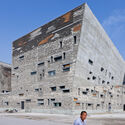
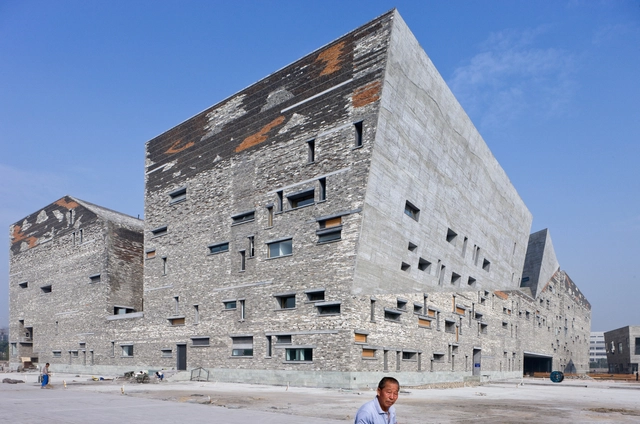
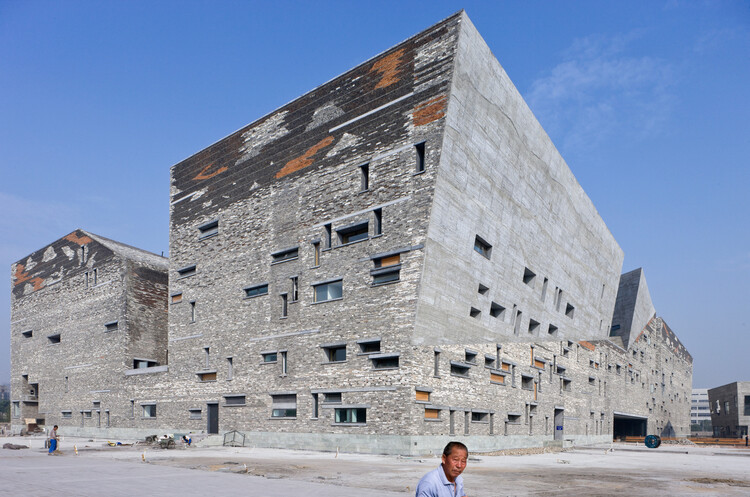
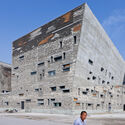
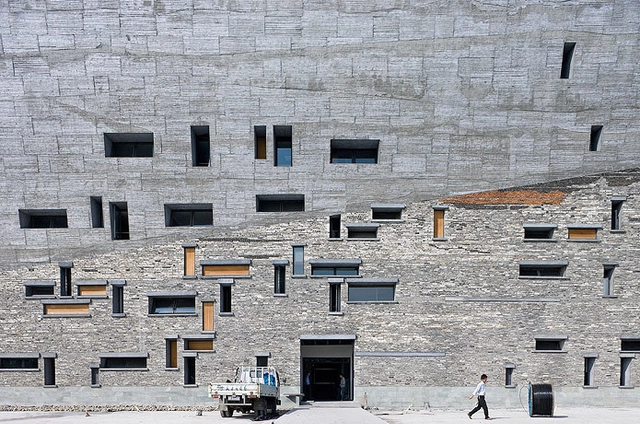
Ningbo History Museum. Image © Zhu Chenzhou

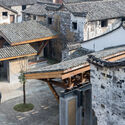
Wang Shu (born November 4, 1963) is a Hangzhou-based architect and dean at the China Academy of Art, known for his thoughtful resistance to what he considers “professionalized, soulless architecture.” His honoring of local tradition, environment, and craftsmanship saw him become the first Chinese citizen, and one of the youngest people overall, to receive the Pritzker Prize in 2012 for "an architecture that is timeless, deeply rooted in its context and yet universal.”
Spotlight: Wang Shu - Image 1 of 4Spotlight: Wang Shu - Image 7 of 4Spotlight: Wang Shu - Image 9 of 4Spotlight: Wang Shu - Image 10 of 4Spotlight: Wang Shu - More Images+ 11

Wang Shu and André Aranha Corrêa do Lago Named to 2018 Pritzker Prize Jury

Architecture’s most prestigious award, the Pritzker Architecture Prize, has announced the appointment of two new jurors to their distinguished jury: architect Wang Shu and Brazilian ambassador and architectural critic André Aranha Corrêa do Lago.

The 8-strong group will be tasked with selecting the upcoming 2018 laureate, who will become the 40th winner in the prize’s history.

“As we approach the 40th anniversary of the Pritzker Prize, the addition of André Corrêa do Lago and Wang Shu continues to embody the international range reflected by both present and past Laureates and Jury,” commented Tom Pritzker, Chairman of Hyatt Foundation. “The contributions of both individuals to the field of architecture, from different vantage points, makes them ideal members of the jury.”

Wang Shu: "Architecture is Not Just an Object That You Place in the Environment"

Subscriber Access | 

[Architecture can] change the life of people and give them a new one right away. This is not a job for normal people to do. This should be the work of God.

Kenneth Frampton On The Work of Wang Shu and Lu Wenyu

Subscriber Access | 

Until April 30th, the Louisiana Museum of Modern Art in Denmark is exhibiting the work of Wang Shu. The first in a new series of monographic exhibitions collectively titled "The Architect's Studio," this show of the work of the 2012 Pritzker Prize winner features an exhibition catalog that includes essays from Kenneth Frampton, Ole Bouman, Yiping Dong and Aric Chen. The following excerpt from the exhibition catalog, written by Kenneth Frampton, is republished here with the permission of the author and publisher.

The work of the Amateur Architecture Studio has come into being in categorical opposition to the recent, rapacious development that has engulfed large tracts of the Chinese continent, and which was first set in motion by Deng Xiaoping’s 1983 decision to open up the People’s Republic of China to foreign trade, first with special economic zones and later with regard to the entire country. Based in Hangzhou, Wang Shu and Lu Wenyu have witnessed firsthand the juggernaut of maximizing Chinese modernization from its impact on their own city. Three decades ago, Hangzhou had been expressly chosen by them as a desirable place in which to live and work, largely because of its venerable artistic traditions and its harmonious report with nature, symbolized for them by the virtually sacred West Lake, set in the very heart of the city and traversed, then as now, by the flat-bottomed boats plying across its surface. Wang Shu’s unique sensibility takes as its point of departure the equally panoramic tranquility of traditional Chinese painting. As Wang Shu has written:

“I am always amazed by these paintings when I see that the trees, the buildings and mountains are not just placed haphazardly... every building is laid out in a certain way in relation to the landscape and the trees, the direction it faces depending on the light and the features of the location, which make it suitable for human habitation.”

Videos: 16 Top Architects Discuss China's "Museum Boom"

Currently on display at the Aedes Architecture Forum Berlin, "ZÀI XĪNG TǓ MÙ: Sixteen Chinese Museums, Fifteen Chinese Architects," takes an in-depth look at China’s recent museum boom and its effects on the socio-political and cultural landscape of modern China.

As part of the exhibition, filmmaker Moritz Dirks sat down with 16 of the top architects working in China today, including Wang Shu, Dang Qun of MAD Architects, and Zhu Pei of Studio Pei-Zhu, to discuss the challenges of creating cultural spaces that relate both to the global, digital, urban contexts of the contemporary world and to the strong heritage and identity of Chinese culture.

Continue after the break for the 16 interviews.

Material Masters: The Traditional Tiles of Wang Shu & Lu Wenyu

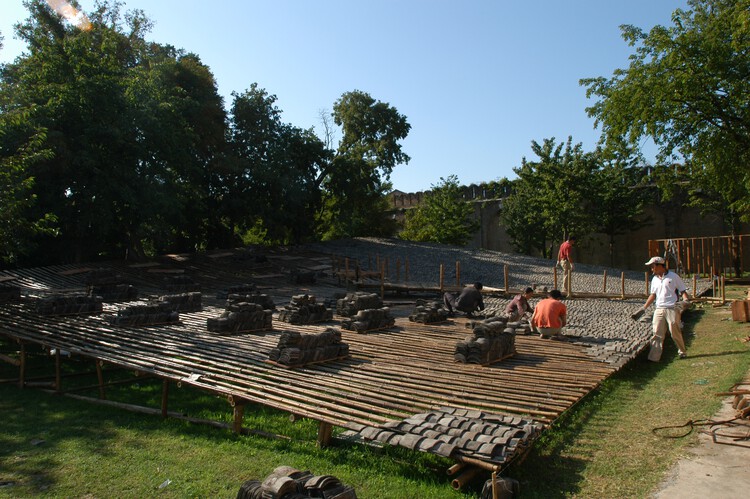
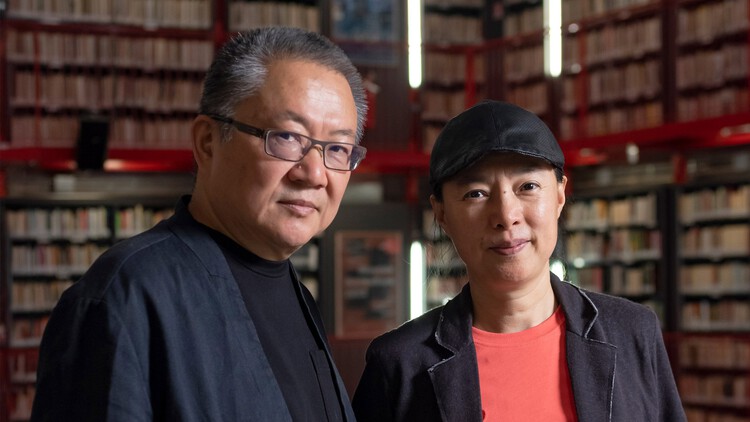
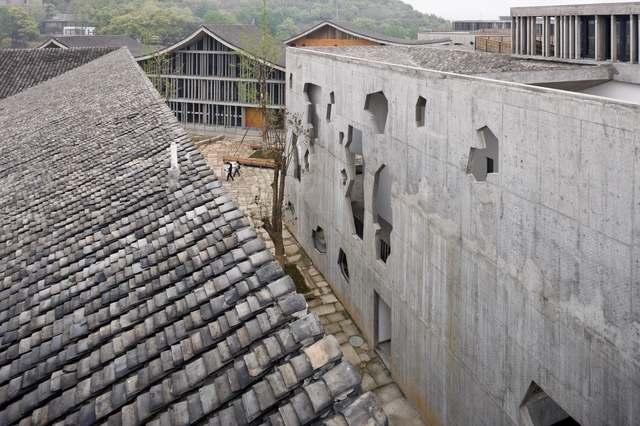
Wang Shu and Lu Wenyu of Amateur Architecture Studio are known for their distinctly contextual attitudes towards design which prize tradition and timelessness above anything else. In many cases, their use of materials is governed by local availability of salvaged building elements. Tiles, in particular, represent a material used repeatedly by Amateur Architecture studio and for Wang Shu, who won the 2012 Pritzker Prize, they offer a political as well as an architectural message.

Material Masters: The Traditional Tiles of Wang Shu & Lu Wenyu - Image 4 of 4