

[Architecture can] change the life of people and give them a new one right away. This is not a job for normal people to do. This should be the work of God.
Wang Shu: The Latest Architecture and News
Wang Shu: "Architecture is Not Just an Object That You Place in the Environment"
https://www.archdaily.com/867965/wang-shu-architecture-is-not-just-an-object-that-you-place-in-the-environmentAD Editorial Team
Kenneth Frampton On The Work of Wang Shu and Lu Wenyu
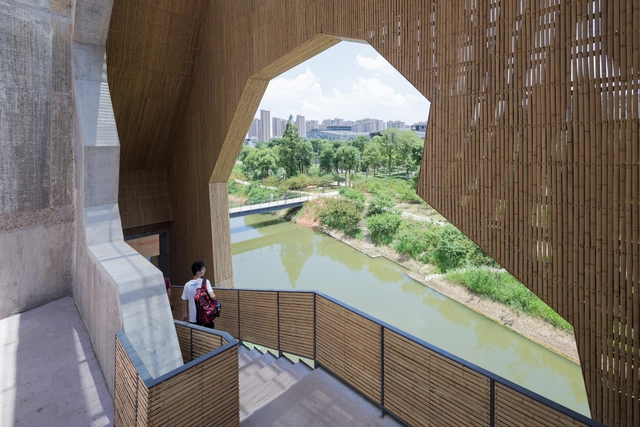
Until April 30th, the Louisiana Museum of Modern Art in Denmark is exhibiting the work of Wang Shu. The first in a new series of monographic exhibitions collectively titled "The Architect's Studio," this show of the work of the 2012 Pritzker Prize winner features an exhibition catalog that includes essays from Kenneth Frampton, Ole Bouman, Yiping Dong and Aric Chen. The following excerpt from the exhibition catalog, written by Kenneth Frampton, is republished here with the permission of the author and publisher.
The work of the Amateur Architecture Studio has come into being in categorical opposition to the recent, rapacious development that has engulfed large tracts of the Chinese continent, and which was first set in motion by Deng Xiaoping’s 1983 decision to open up the People’s Republic of China to foreign trade, first with special economic zones and later with regard to the entire country. Based in Hangzhou, Wang Shu and Lu Wenyu have witnessed firsthand the juggernaut of maximizing Chinese modernization from its impact on their own city. Three decades ago, Hangzhou had been expressly chosen by them as a desirable place in which to live and work, largely because of its venerable artistic traditions and its harmonious report with nature, symbolized for them by the virtually sacred West Lake, set in the very heart of the city and traversed, then as now, by the flat-bottomed boats plying across its surface. Wang Shu’s unique sensibility takes as its point of departure the equally panoramic tranquility of traditional Chinese painting. As Wang Shu has written:
“I am always amazed by these paintings when I see that the trees, the buildings and mountains are not just placed haphazardly... every building is laid out in a certain way in relation to the landscape and the trees, the direction it faces depending on the light and the features of the location, which make it suitable for human habitation.”
https://www.archdaily.com/867419/kenneth-frampton-on-the-work-of-wang-shu-and-lu-wenyuKenneth Frampton
Videos: 16 Top Architects Discuss China's "Museum Boom"
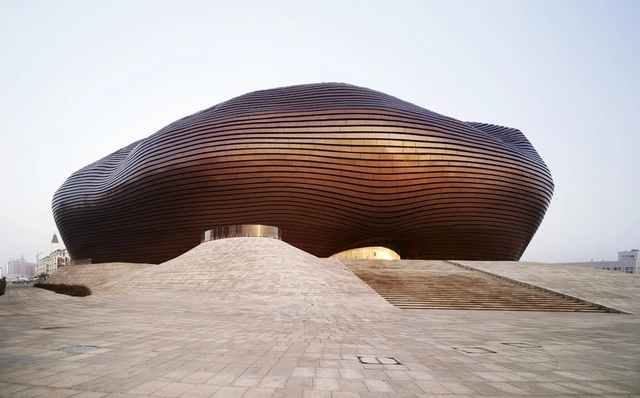
Currently on display at the Aedes Architecture Forum Berlin, "ZÀI XĪNG TǓ MÙ: Sixteen Chinese Museums, Fifteen Chinese Architects," takes an in-depth look at China’s recent museum boom and its effects on the socio-political and cultural landscape of modern China.
As part of the exhibition, filmmaker Moritz Dirks sat down with 16 of the top architects working in China today, including Wang Shu, Dang Qun of MAD Architects, and Zhu Pei of Studio Pei-Zhu, to discuss the challenges of creating cultural spaces that relate both to the global, digital, urban contexts of the contemporary world and to the strong heritage and identity of Chinese culture.
Continue after the break for the 16 interviews.
https://www.archdaily.com/796105/videos-16-top-chinese-architects-discuss-chinas-museum-boomPatrick Lynch
Material Masters: The Traditional Tiles of Wang Shu & Lu Wenyu
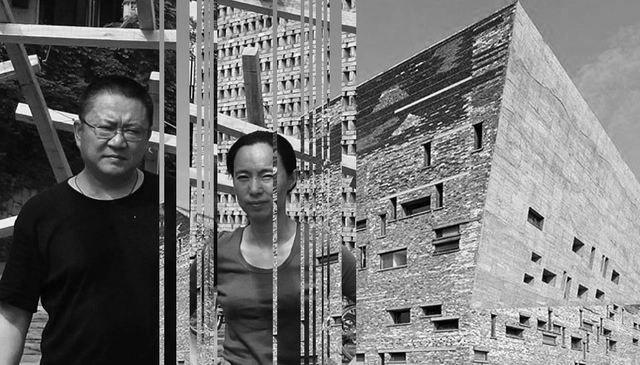
Wang Shu and Lu Wenyu of Amateur Architecture Studio are known for their distinctly contextual attitudes towards design which prize tradition and timelessness above anything else. In many cases, their use of materials is governed by local availability of salvaged building elements. Tiles, in particular, represent a material used repeatedly by Amateur Architecture studio and for Wang Shu, who won the 2012 Pritzker Prize, they offer a political as well as an architectural message.

https://www.archdaily.com/638948/material-masters-amateur-architecture-studio-s-work-with-tileEvan Rawn
ArchDaily Editors Select 20 (More) Amazing 21st Century Museums
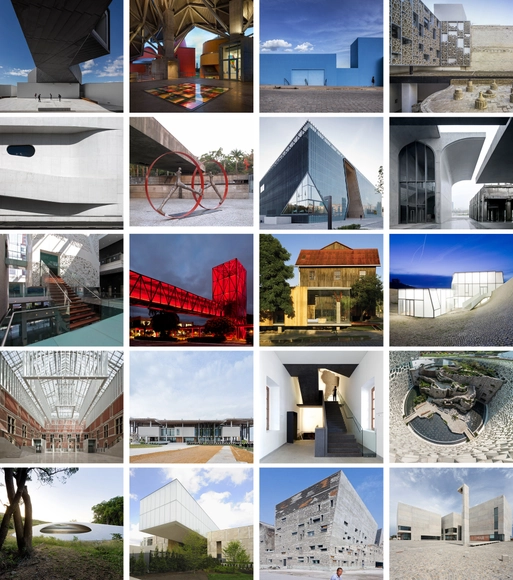
In honor of International Museum Day we’ve collected twenty compelling museum projects. In this round up you’ll find a truly global selection; from Wang Shu's Ningbo Historic Museum in China and Tod Williams + Billie Tsien's Barnes Foundation in Philadelphia to Monoblock's Contemporary Art Museum in Buenos Aires, see all of our editors’ favorites after the break!
https://www.archdaily.com/631994/archdaily-editors-select-20-more-amazing-21st-century-museumsAD Editorial Team
An Interview with Lu Wenyu, Amateur Architecture Studio
.jpg?1431461903)
“Every couple of years a new manifesto appears, but how long can it last? We need more people doing instead of talking. [At Amateur Architecture Studio] we spend an enormous amount of time experimenting, trying to resurrect the craftsmanship that is almost lost. We use a method that is passed on, hand-to-hand, to re-establish tradition instead of talking about abstract but empty concepts.”
- Lu Wenyu, Hangzhou, 2013
Pier Alessio Rizzardi: “A house instead of a building” is a really famous phrase of Amateur Architecture Studio. What is the meaning behind this concept?
Lu Wenyu: Once, Wang Shu said: “we only make houses, we don’t make architecture.” The house and architecture here have their own meanings. Making a house means making it for the people, making it more tranquil, or closer to nature, more humanized. Instead, architecture is an abstract concept, so many designs nowadays are actually architecture. So this sentence, from almost 20 years ago, “making houses, not architecture”, is about not making that abstract concept, but to make something really concrete and tangible, something that you can touch or that is made with your own hands… so when you see this house, you feel differently.
.jpg?1431461996 "Ningbo Historic Museum. Image © Evan Chakroff")
.jpg?1431461914 "Zhongshan Road. Image © Evan Chakroff")
.jpg?1431461954 "CIPEA Villa, Nanjing. Image © Evan Chakroff")
.jpg?1431462140 "Hangzhou Xiangshan Campus. Image © Evan Chakroff")
https://www.archdaily.com/630645/an-interview-with-lu-wenyu-amateur-architecture-studioPier Alessio Rizzardi
Why China's President Says "No More Weird Buildings"
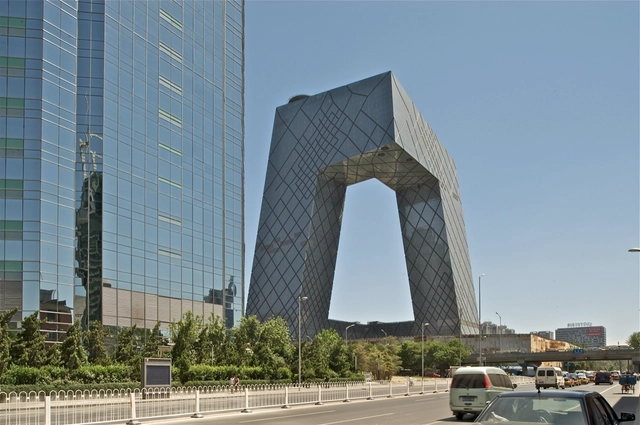
The President of the People's Republic of China, Xi Jinping, has reportedly called for an end to the "weird buildings" being built in China, and particularly in the nation's capital, Beijing. In a two hour speech at a literary symposium in Beijing last week, Mr Xi expressed his views that art should serve the people and be morally inspiring, identifying architectural projects such as OMA's CCTV Headquarters as the kind of building that should no longer be constructed in Beijing.
With China's construction boom being one of the most talked about features of today's architecture scene - and many a Western practice relying on their extravagant projects to prop up their studios - the Chinese leader's comments have the potential to affect the landscape of architectural practice worldwide. But what is behind these sentiments? Read on after the break to find out.
https://www.archdaily.com/559456/why-china-s-president-says-no-more-weird-buildingsRory Stott
Thom Mayne, Wang Shu and Lu Wenyu among the RIBA's 2015 Fellowships
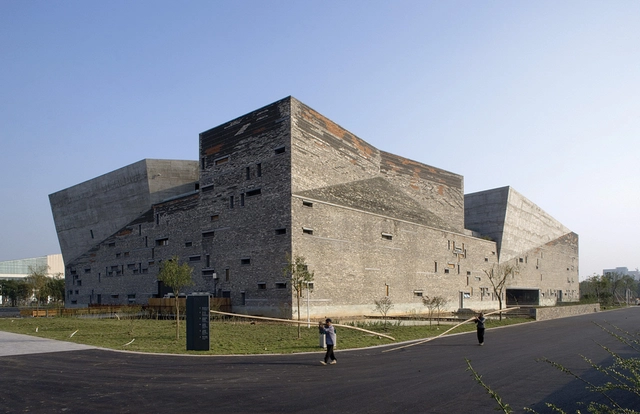
The Royal Institute of British Architects (RIBA) has announced 13 Honorary Fellowships and 11 International Fellowships which it will award at an event on February 3rd, along with the recently announced RIBA Royal Gold Medal.
Among others, the Honorary Fellowships include Director of Architecture at the British Design Council Vicky Richardson and academic Dalibor Vesely; the International Fellowships include Pritzker Prize Winners Thom Mayne and Wang Shu and his Partner Lu Wenyu. The Honorary and International Fellowships entitle winners to use the initials 'Hon FRIBA' and 'Int FRIBA,' respectively after their names.
Read on after the break for the full Fellowship lists
https://www.archdaily.com/551266/thom-mayne-wang-shu-and-lu-wenyu-among-the-riba-s-2015-fellowshipsRory Stott
Álvaro Siza, Carlos Castanheira and Wang Shu Design Museum for Hangzhou Art Academy
After inaugurating his first building in China – “The Building on the Water” – Álvaro Siza has just announced his second project in the country, again in collaboration with Portuguese architect Carlos Castanheira. This time the two architects will develop a museum for Hangzhou Art Academy.
The new museum - which will have approximately 15,000 sqm, a total area similar to that of Serralves Foundation building – will host an important collection of pieces from the famous German school of arts and design, Bauhaus, founded by Walter Gropius in 1919.
https://www.archdaily.com/544262/alvaro-siza-carlos-castanheira-and-wang-shu-design-museum-for-hangzhou-art-academyRomullo Baratto
New Images Released of Krumbach, Austria's Famous Bus Stops
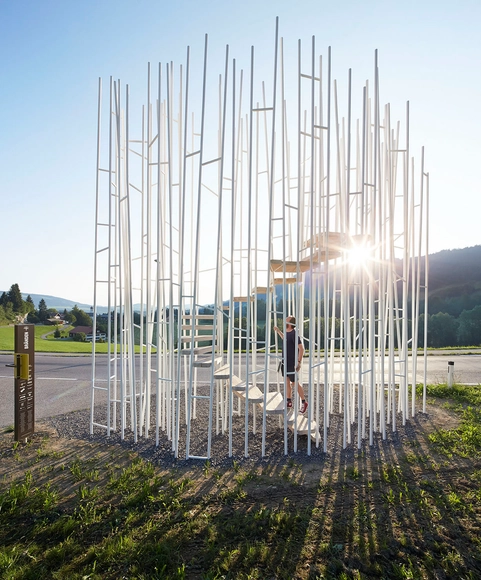
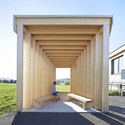
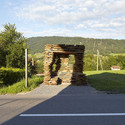
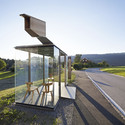
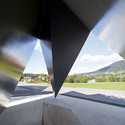
What happens when seven internationally acclaimed architects are invited to design sculptural bus stops for a tiny Austrian village of 1000 inhabitants? Collaborating with local architects and utilizing local materials to design the pavilions, Alexander Brodsky, Rintala Eggertsson, Ensamble Studio, Architecten de Vylder Vinck Taillieu, Smiljan Radic, Sou Fujimoto, and Wang Shu's Amateur Architecture Studio worked with Austria's Verein Kultur Krumbach to carry out the BUS:STOP project and usher in a unique new facet of culture to Krumbach. We brought you images of the design proposals earlier, and now we have photos of the incredible results: Hufton + Crow has just released a stunning new set of images showcasing the completed bus stops.
Hufton + Crow's brilliant photography captures the inimitable originality and sensational quality of the uniquely crafted pavilions embedded within the Austrian landscape. Immerse yourself in Krumbach and check out the latest images after the break.

https://www.archdaily.com/534182/new-images-released-of-krumbach-austria-s-famous-bus-stopsSadia Quddus
Brick Transformed: The 2014 Wienerberger Brick Award Winners
The following news is presented by ArchDaily Materials, our new US product catalog.
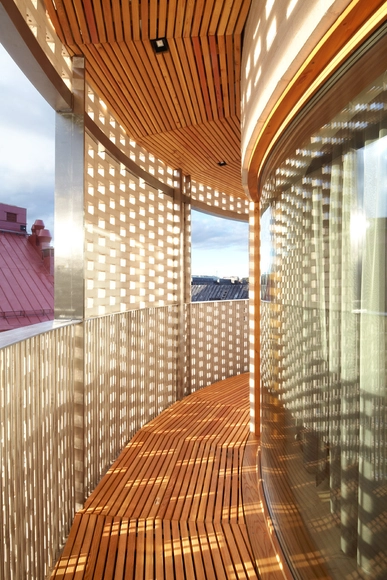
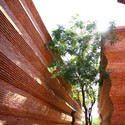
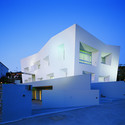
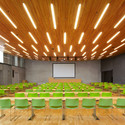
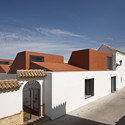
The 2014 Wienerberger Brick Award Winners exemplify brick's potential in contemporary architecture, transforming the common brick into something spectacular. This year's jury featured 2012 Pritzer winner Wang Shu, who commented on the "spatial and secret" feeling of the Grand Prize Winning Kantana Film and Animation Institute. See all seven winners after the break.

https://www.archdaily.com/510169/brick-transformed-the-2014-wienerberger-brick-award-winnersAndrew Galloway
BUS:STOP Unveils 7 Unusual Bus Shelters by World Class Architects
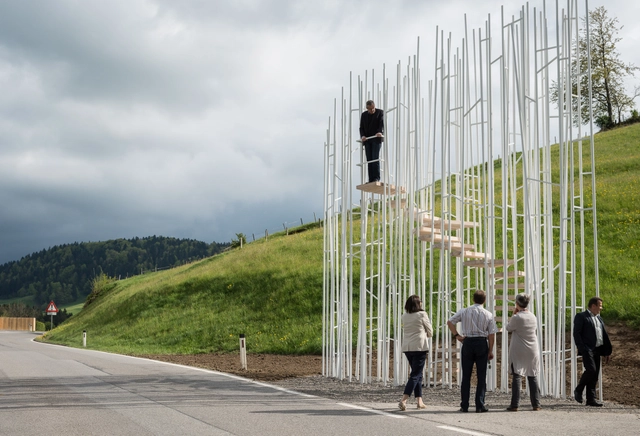
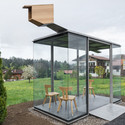
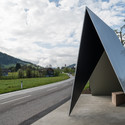
A year in the making, Krumbach in Austria has unveiled seven eye-catching bus shelters which have turned the world's gaze on the tiny village. Designed by internationally renowned architects such as Wang Shu, Sou Fujimoto and Smiljan Radic, who worked in collaboration with local architects and craftsmen, the whimsical structures will put the village of 1000 residents on the map.
Curator Dietmar Steiner praised the commitment of those involved, saying "the entire project succeeded because it was supported in the most generous fashion by more than 200 people." This included the architects, who took up their projects for little more than a free holiday in the area and the chance to engage in an unusual challenge. However, BUS:STOP was not merely a vanity project: Verena Konrad, Director of vai Vorarlberger Architektur Institut, noted that the project was important for "the successful connection of infrastructure and mobility for the rural area."
See images of all 7 shelters after the break


https://www.archdaily.com/506961/bus-stop-unveils-7-unusual-bus-shelters-by-world-class-architectsRory Stott
Jury Member Juhani Pallasmaa On Finding Less "Obvious" Pritzker Laureates
Last week, while the ArchDaily team was in Mexico City for the Mextrópoli Conference, we caught up with Pritzker Jury member Juhani Pallasmaa and asked him to shed some light onto the recent winners of one of architecture's highest honors. Watch Pallasmaa, a renowned Finnish architect and professor, explain what motivates his approach for recognizing architects in a world with "so much publicity."
"The Pritzker jury has now, for at least 5 years, tried to select architects who are not the most obvious names because there is so much publicity in the architectural world and we'd rather try to find architects who have not been published everywhere else..."
https://www.archdaily.com/491563/jury-member-juhani-pallasmaa-on-finding-less-obvious-pritzker-laureatesDavid Basulto
Wang Shu's Partner Lu Wenyu: I Never Wanted a Pritzker
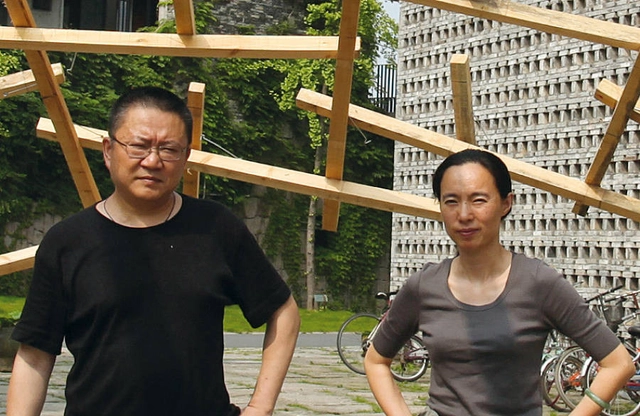
In an interview with Spanish newspaper El País, Lu Wenyu defends her husband Wang Shu for solely receiving the Pritzker Prize in 2012. Despite the fact that the couple co-founded Amateur Architecture Studio and have worked side by side ever since, Wengyu maintains that her husband would have shared the Prize with her - she just didn't want it.
She confides to El País: "In China, you lose your life if you become famous. I want a life and I prefer to spend it with my son. Over there I don't accept interviews. And not in English-speaking countries either [...] I'm happy to be able to do architecture that I believe helps our towns and cities to be better. I'm convinced that to talk about this awakens interest in others - not being famous." Read the full interview at El País
https://www.archdaily.com/463985/wang-shu-s-partner-lu-wenyu-i-never-wanted-a-pritzkerPola Mora
World Famous Architects Design Bus Stops for Tiny Austrian Village
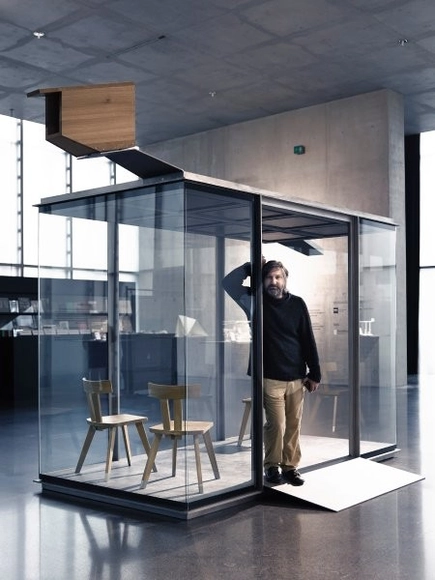
Krumbach, a small Austrian village of 1000 inhabitants, is not the place you'd expect to find structures from a variety of architecture's biggest names. But thanks to Verein Kultur Krumbach, a new association dedicated to encouraging culture in the village, that's exactly what's happening, with seven international architecture firms agreeing to design bus stops for Krumbach.
Read after the break to find out more about the seven designs.
https://www.archdaily.com/441385/world-famous-architects-design-bus-stops-for-tiny-austrian-villageRory Stott
China Plans to Move 250 Million into Cities by 2025
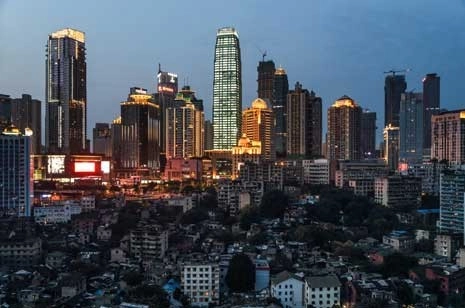
The Chinese government is pushing forward with a plan that will move 250 million Chinese people from rural communities into newly constructed towns and cities over the next 12 years. The government has been bulldozing ancient villages, temples and open-air theaters as well as paving over farmland to make way for mega-cities that will raise the number of city-dwellers in China to nearly the total urban population of the US.
To find out how and why this is happening, keep reading.
https://www.archdaily.com/390959/china-plans-to-move-250-million-into-cities-by-2025Barbara Porada
BUS:STOP Krumbach: 7 architects, 7 buildings, 7 statements
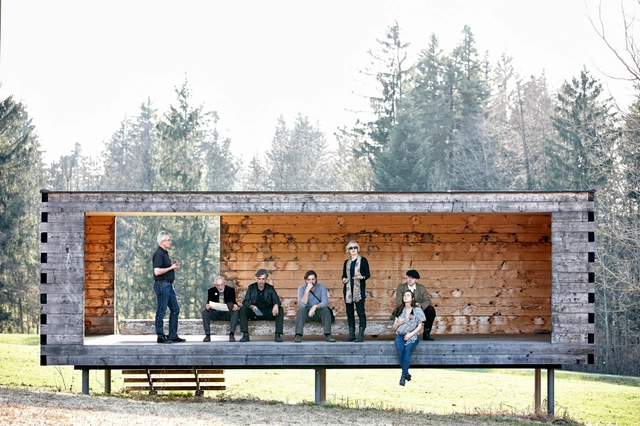
BUS:STOP Krumbach is a recently initiated project in the Bregenzerwald region of Austria that will bring together seven well-known architecture offices from around the world, pair them up with seven local architects and allow the pairs to work together on the design of seven new bus shelters in the town of Krumbach. A true collaboration between tradition and innovation, national and international, BUS:STOP hopes to create a series of small and functional buildings with their own unique characters that tell not only the story of these architects, but also of this special region.
For the list of participating offices and to learn more about BUS:STOP, read on.
https://www.archdaily.com/389079/bus-stop-krumbach-7-architects-7-buildings-7-statementsBarbara Porada
Wang Shu Honored as One of TIME 100’s Most Influential People
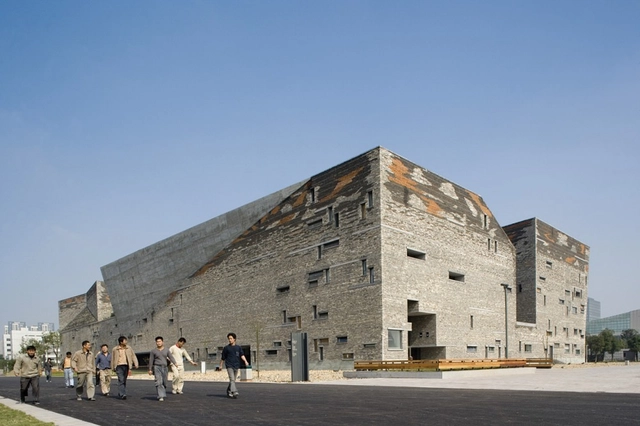
TIME Magazine has released their tenth-edition of the 100 issue, representing who they believe to be the world’s 100 most influential people in 2013. Gracing the list among music titan Jay-Z and Kickstarter CEO Perry Chen is architecture’s very own Wang Shu, who was honored for “successfully blending China’s quest for novel and eye-catching architecture with respect for traditional aesthetics.”
https://www.archdaily.com/364697/wang-shu-honored-as-one-of-time-100-s-most-influential-peopleKarissa Rosenfield