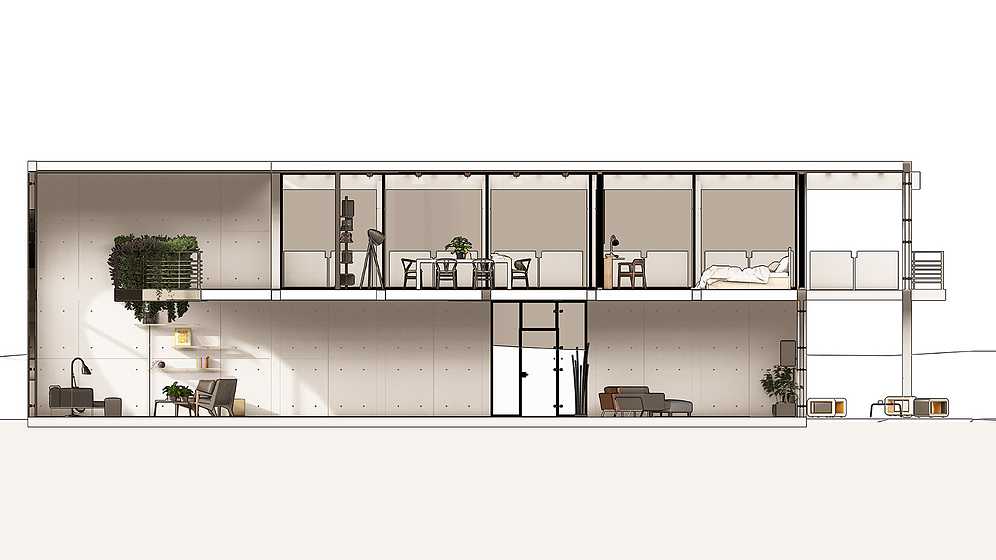
Produce personalized presentation boards that distill complex concepts into simple visual representations with a few helpful tools and effects.


Produce personalized presentation boards that distill complex concepts into simple visual representations with a few helpful tools and effects.
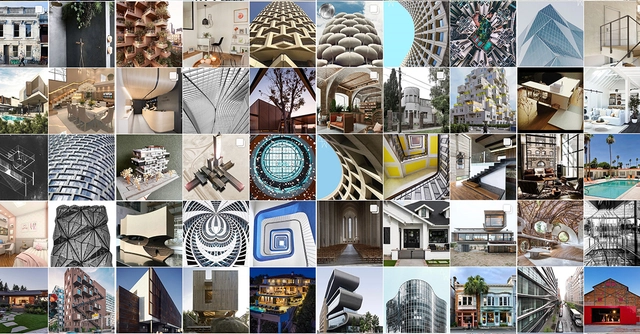
When you tap an Instagram geolocation, the nine most popular posts in that location float to the top. Sometimes, there's an uncanny similarity to these posts: near-identical pictures of smoothie bowls, tiled floors, or neon signs. In part, a place’s popularity on Instagram is a domino effect—one person posts a picture of a mural (Wynwood Walls, anyone?), and then everyone does. But a new Instagram Design Guide from Valé Architects suggests that some design features might be inherently more Instagrammable than others. Valé’s guide is interesting for its quasi-scientific analysis of Instagram aesthetic, but it also has real implications in the architecture world; a building’s popularity on social media (in this case, its Instagramability) can influence its perception in the non-digital world. Here are some of the traits that Valé says make a space successful on Instagram:

For the second time in 4 years, Charles Rennie Mackintosh’s Glasgow School of Art Building is ablaze. The BBC reports that the fire began at 23:00 BST and it has engulfed a large portion of the building. Thankfully no casualites have been reported, but one eye-witness said the building is ”going up like a tinderbox.”
.jpg?1528069797&format=webp&width=640&height=580)
As part of our 2018 Venice Architecture Biennale coverage, we present the completed Latvian Pavilion. To read the initial proposal, refer to our previously published post, "Latvian Pavilion at the 2018 Venice Biennale to Highlight Turning Points in 20th Century Apartment Block Design.”
Black walls and an exposed concrete floor create a mysterious and eerie backdrop for Together and Apart: 100 Years of Living—the Latvian Pavilion curated by urbanist Evelīna Ozola, architect Matīss Groskaufmanis, scenographer Anda Skrējānem and director Gundega Laiviņa.
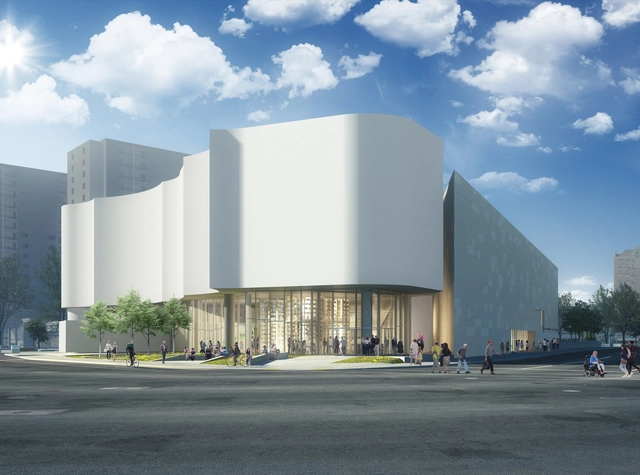
The Winnipeg Art Gallery’s Inuit Art Centre has broken ground in Winnipeg Manitoba. Designed by Michael Maltzan Architecture in collaboration with Cibinel Architecture, the 40,000-square-foot scheme is set to become the largest gallery space in the world devoted to Inuit art, culture, and history.
Arranged over four stories, the scheme is an addition to the 1971 museum designed by Gustavo Da Roza, and seeks to form a new cultural landmark for downtown Winnipeg.


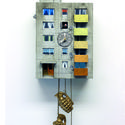
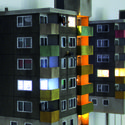
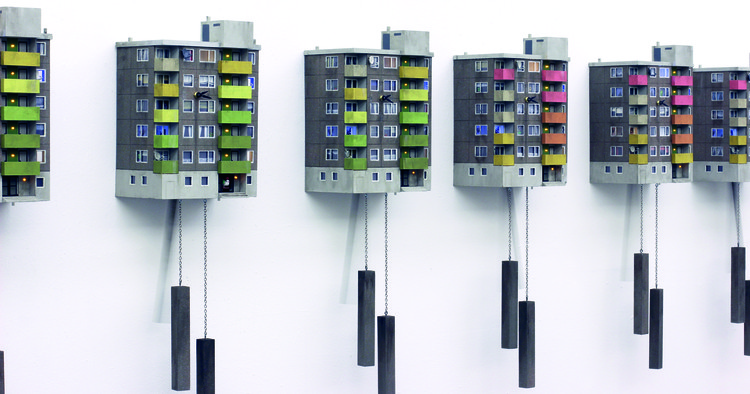
Coffee machines and garden gnomes aside, Brutalist fanatics have a new means of expressing their love for the controversial modernist style, with credit to Frankfurt-based artist Guido Zimmermann. His beautifully-crafted “Cuckoo Blocks” reinvent the traditional Black Forest cuckoo clock with a modernist Brutalism inspired by the architecture of the late 1960s.
More than an aesthetic centerpiece for Brutalist fanatics, the clocks are in fact a response to a decline in the middle class caused by increasing rent prices in modern metropolises.
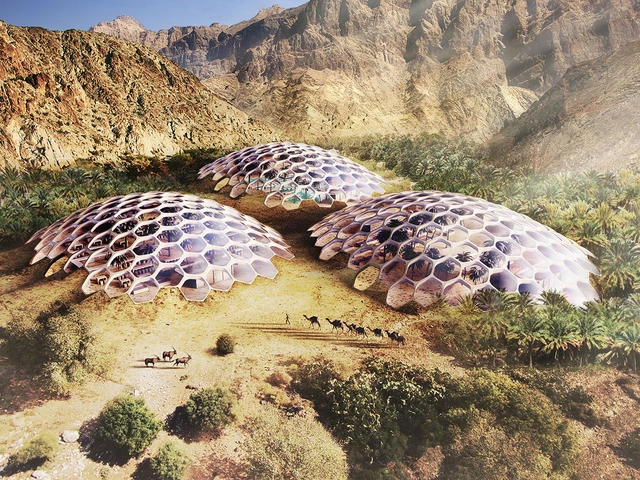
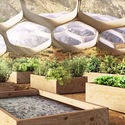
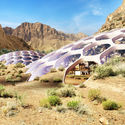
The world’s tallest building, the Burj Khalifa, towers at 828 meters in the heart of Dubai’s ever-growing urban core. But just a few hours east of the metropolis, a different kind of monument is garnering tourism to the United Arab Emirates: the Al Hajar Mountains. With its peak at 3,008 meters, the mountain range’s natural elegance rivals the country’s architectural achievements. The Biodomes Wildlife Conservation Centre, a project from Baharash Architecture for the UAE’s Eco Resort Group, seeks to celebrate the mountain range through an ecotourism paradigm.
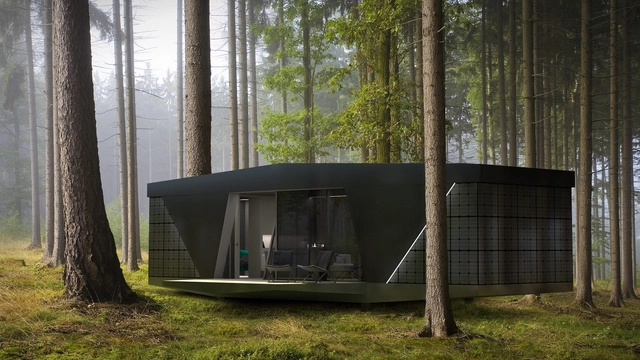
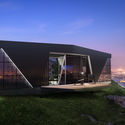
The uncontrollable roar of construction sites, the chaotic city streets, the monotony of spending more than 8 hours a day in a cubicle… All these daily grinds can take a toll on the human body and mind. Retreating into nature sounds liberating, however, our dependence on technology makes living off-the-grid almost impossible. Well, what if you could keep your modern lifestyle and sleep in a house hidden in the forest?
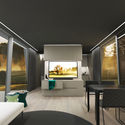
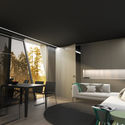
IO Houses created The SPACE, a versatile and innovative housing project for people who love nature and want to preserve it, just as much as they love contemporary, luxurious living.
.jpg?1528079465&format=webp&width=640&height=580)
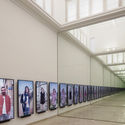
As part of our 2018 Venice Architecture Biennale coverage, we present the completed Russian Pavilion. To read the inital proposal, refer to our previously published post, "Russian Pavilion at 2018 Venice Biennale to Explore Rich Railway History."
The Russian Pavilion highlights the past, present, and future of Russian railways. The exhibition shows railways as a response to a landscape which is in many places uninhabitable, allowing the people who use them to explore Russia's expansive territories.

Swedish creative firm Studio Esinam has launched a new cutout shop, offering an aid to architects and designers seeking to enliven renders and visualizations. The studio’s products, including these print elevations of iconic landmarks, are made in Sweden with an emphasis on eco-friendly materials.
In celebration of the launch, the studio is offering a mixed pack of 50 diverse, high resolution cuts outs for free, normally priced at £100. Users can gain access to the offer using the discount code “archdaily” on the cutout shop here during the purchasing process.
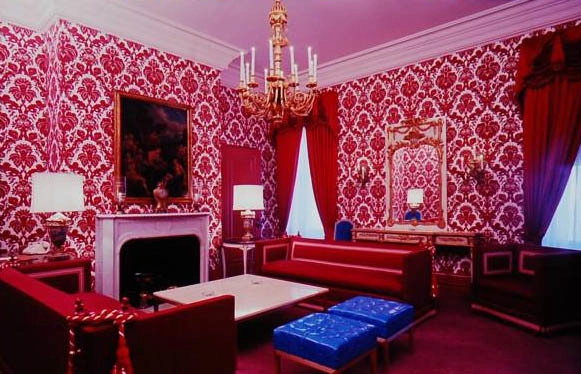
The laws of home decor often derive from personal opinion, varying depending on which “expert” you ask. In an effort to uncover the most serial interior design crimes of our time, technology giant Samsung turned to the British public.
In a public vote of 2000 UK adults, Samsung asked participants to vote on the worst interior design trends of the past 50 years. The results are as controversial as they are varied, with a total of 25 trends spanning half a century, and leaving no room intact.
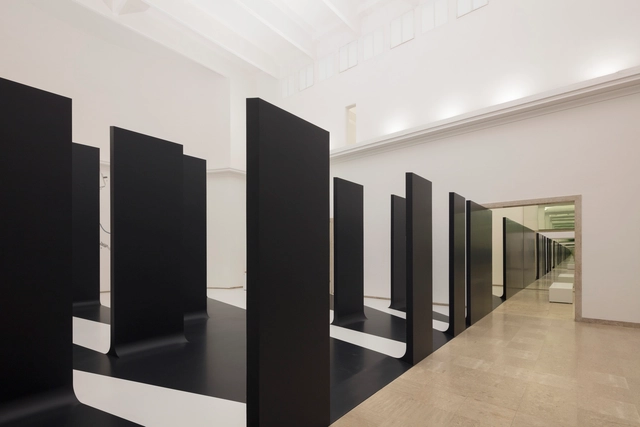
As part of our 2018 Venice Architecture Biennale coverage, we present the completed German Pavilion. To read the initial proposal, refer to our previously published post, “'Unbuilding Walls': German Pavilion at 2018 Venice Architecture Biennale to Probe Architecture of Division and Integration.”
Curated by GRAFT and Marianne Birthler, the German pavilion explores architectures of division and inclusion. In a light-filled space, black panels create division. The initial simplicity of the panels is complicated by their opposite sides, where text and images explicate the impact of wall-building worldwide.
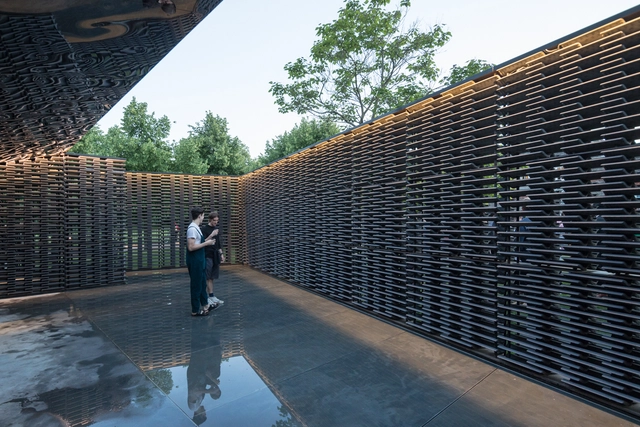
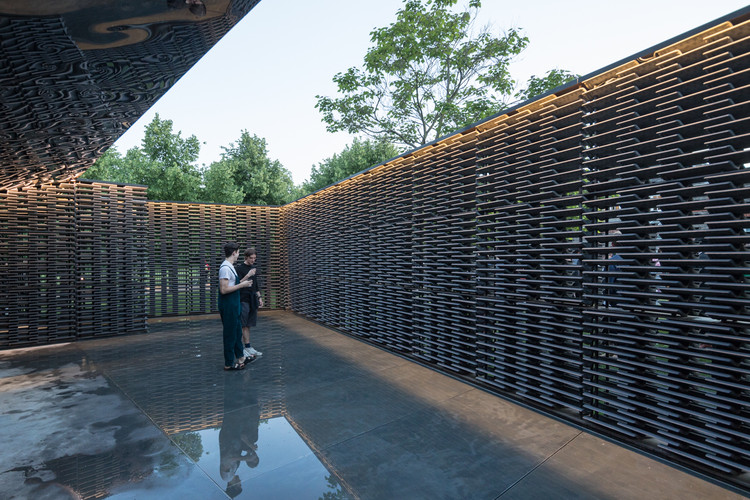
Following the opening of the 2018 Serpentine Pavillion this week, designed by Mexican architect Frida Escobedo, photographer Laurian Ghinitoiu has turned his lens to London. Ghinitoiu’s images, which you can discover below, capture the elemental beauty of Escobedo’s pavilion, defined by a permeable cement tile façade inspired by Mexican celosias.
Fusing elements typical to Mexican architecture with local London references, the pavilion centers on a courtyard enclosed by two rectangular volumes constructed using the characteristic celosia method.
.jpg?1528902145)
WOHA has released an update of their first office skyscraper for China, as their Vanke Yun City scheme tops out in Shenzhen. Manifesting as three tower blocks attached to a central T-shaped core, the scheme seeks to present “an alternative office tower typology that responds to the sub-tropical climate in Shenzhen.”
Set against the backdrop of ubiquitous post-modernist skyscrapers, the 1.6 million-square-foot (150,000 square-meter) scheme aims to “radically transform the soulless skyscraper into a highly liveable, humane, and sustainable micro-vertical city.”
Architecture is always evolving. The practice and business of architecture are undoubtedly evolving alongside the more obvious technological advances, but what we often forget is that there are no new ideas. When it comes to design, what we see manifested in our daily lives is the result of evolution. And at the root of that design evolution is inspiration.
A new initiative from Gianpiero Venturini and his firm Itinerant Office titled Past, Present, Future aims to open a research path based on the analysis of successful practices in the 21st Century while ultimately providing a new form of inspiration for the next generations of architects and designers. The documentary series begins with a select group of 11 international architects, including Jacob van Rijs, co-founder of MVRDV, Mario Cucinella, and Simone Sfriso, co-founder of TAMassociati. Each architect is featured in three video interviews in which they reveal the methodology behind their designs, the themes and approaches within their architectural practice, and the predictions they have for architecture in the near and distant future.
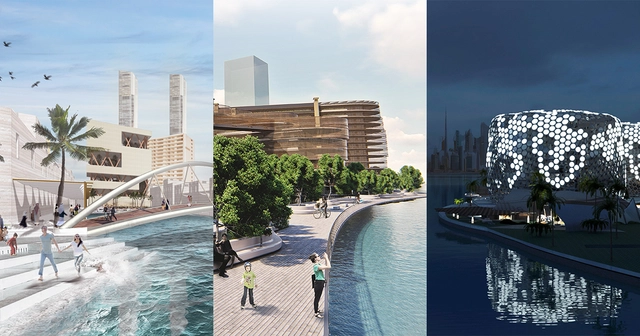
Students from South Africa, Belarus, and Germany have been chosen as the winners of the 14th edition MultiComfort House Students Contest, a contest created in 2004 and organized by Saint-Gobain. Entrants were to develop a project based on the principles of the multi-comfort concept, that is, "an optimum indoor environment ensuring the right level of fresh air, thermal, visual and acoustic comfort provided in a sustainable and energy efficient manner," as explained by the organizers.
In close collaboration with the Department of Planning of the Municipality of Dubai and the Dubai Properties Group, Saint-Gobain presented the challenge of designing a cross-cultural community project in the cultural village of Dubai, on the shores of the Al Jaddaf inlet.
Considering Dubai's hot and humid climate, the students had to find a way to reconcile reducing the energy consumption of the refrigeration and ventilation systems without compromising any of the comforts of the inhabitants; while at the same time providing an optimal relationship with the environment.
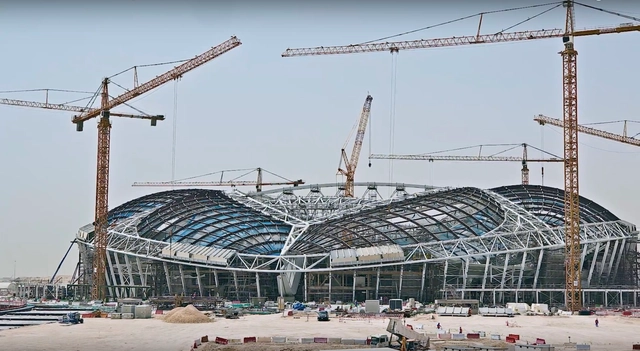
As the 2018 World Cup approaches, we architects can already look ahead to the next tournament. The 2022 FIFA World Cup in Qatar offers the most exciting opportunity in stadium design for decades, with the competition relying on an almost entirely new footballing infrastructure. Several world-renowned designers have submitted proposals, and the following set of newly released time-lapse videos show the progression of each stadium, as we approach four years to the competition’s start. Emphasising the structural shells, the videos highlight a sometimes overlooked facet of stadium design. To materialize the effortless magic of the initial renders - like those produced by Foster + Partners and Zaha Hadid Architects - phenomenal levels of engineering and problem solving are required, and in the early stages of construction, this becomes the visual focal point. Read on to see the beauty of these structural marvels, but be warned - you may develop World Cup fever.
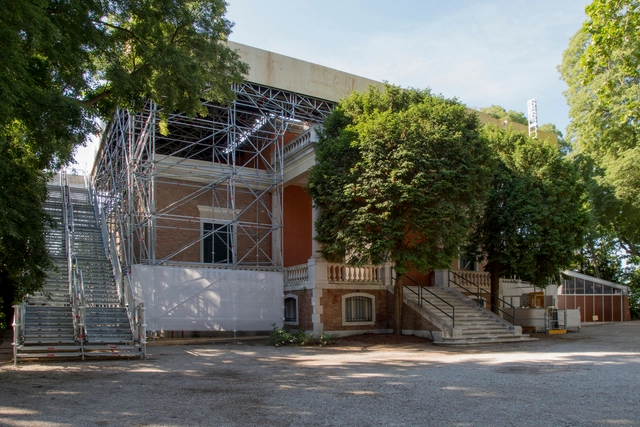
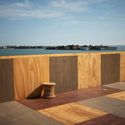
As part of our 2018 Venice Architecture Biennale coverage, we present the completed British Pavilion, which received an honorable mention in the Biennale awards. To read the initial proposal, refer to our previously published post, "Caruso St. John to Transform the British Pavilion Into a Politically Charged Meeting Space at 2018 Venice Biennale”
A joint venture from Caruso St John Architects and artist Marcus Taylor, "Island" creates an elevated public space, offering views of Venice and a unique place for both meeting and reflecting.

Hours before the start of the 2018 FIFA World Cup Russia's opening ceremony, the soccer organization will reveal if the Canada–Mexico–United States or Morocco will be selected to hold 2026 FIFA World Cup.
Ahead of the announcement, Morocco revealed the design of the stadium that would hold the final match if the North African country wins the bid--a new venue with capacity for 80,000 spectators. This stadium has been designed by Spanish architects Cruz y Ortiz Arquitectos, the firm that recently inaugurated the Wanda Metropolitano in Madrid. They are also currently working on the design of the Dalian Yifan Football Club stadium in China and another sports venue in Switzerland.
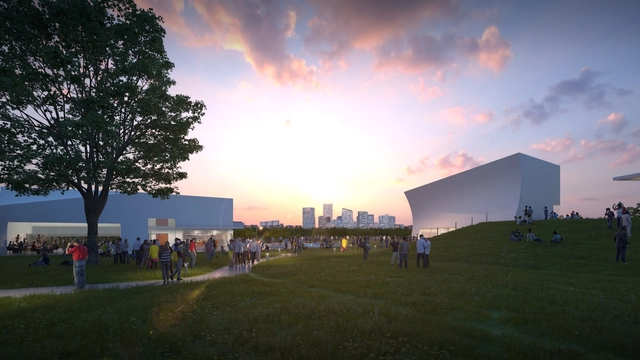
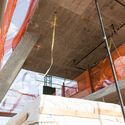
The John F. Kennedy Center for Performing Arts has released new photographs as construction continues on the Steven Holl Architects-designed expansion project in Washington DC. Due to open in September 2019, the REACH expansion project aims to “provide artists and visitors new and wide-ranging opportunities to fully interact and engage with the Center.”
The project features 72,000 square feet of interior space across a 4.6-acre site, resulting in a 20% increase in public areas, and a doubling of outdoor space.
After Frida Escobedo, Yana Peel and Hans Ulrich Obrist officially presented the 2018 Serpentine Pavilion on Monday, June 11 at Kensington Gardens in London, we had the opportunity to interview Mexican architect Frida Escobedo exclusively for ArchDaily. Escobedo shared with us with us the importance that designing pavilions has had in her career, the relevance of working on public spaces, and offered her thoughts on the perception of the Mexican context outside of Mexico. She also spoke further about the details of the pavilion itself and revealed where she would like the pavilion to be moved after completing its 4-month stay at Kensington Gardens.
The 2018 Serpentine Pavilion opens to the public on June 15th and will remain in place until October 7th, 2018.

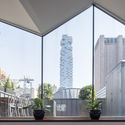
Jean Nouvel’s 53 West 53rd Street (53W53) has topped out in Midtown Manhattan, New York City. Rising 73 floors, the 145-condominium scheme is topped by a $70 million duplex, where celebrations were held last week attended by Nouvel, as reported by New York YIMBY.
Once the scheme has reached its peak of 1,050 feet, it will be tied with the Chrysler Building and New York Times Building as the sixth-tallest in New York City.
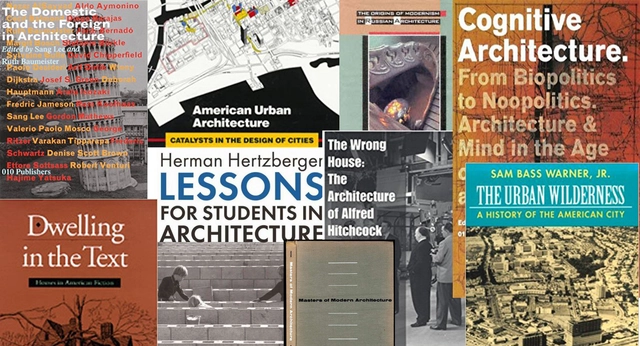
There are few things in this world better than books on architecture, especially when they're available to download for free! Following on from our ever-popular post from 2014, we've gathered up ten more books that cover a broad range of interesting topics—including advice to architecture students from Herman Hertzberger, a look at what sparks the formation and growth of a city, and even a book that offers an in-depth architectural analysis of Alfred Hitchcock's films. Check out the list below!

For many, summer brings a sharp increase in time spent outdoors. Whether that be a dip in the pool after a long day at work or a casual stroll to the office, the summer months are best enjoyed outside. Admittedly, there are times when the summer heat can be too intense, and A/C is needed, but why not enjoy the great outdoors while you're at it?
Architecture provides the unique opportunity to meld the comfort of the indoors with the experience of being outdoors. Selected from our project archives, these nine houses offer the perfect combination of indoor/outdoor spaces ripe for summer living.
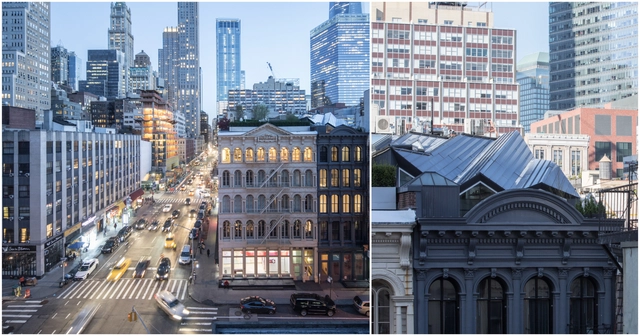
At first glance, The Stealth Building looks like a pristinely-restored cast iron apartment building. That’s because technically, it is. But upon closer inspection, the Lower Manhattan building is rife with innovative restoration and renovation practices by WORKac.

.jpg?1528069731 "© Ansis Starks")
.jpg?1528069782 "© Ansis Starks")

.jpg?1528069797)






.jpg?1528079427 "Courtesy of The Russian Pavilion")
.jpg?1528079373 "Courtesy of The Russian Pavilion")
.jpg?1528079361 "Courtesy of The Russian Pavilion")
.jpg?1528078250 "Courtesy of Anna Mikheeva")
.jpg?1528079465)





.jpg?1528902160 "Courtesy of WOHA")
.jpg?1528902003 "Courtesy of WOHA")
.jpg?1528902220 "Courtesy of WOHA")

.jpg?1528903768)