This week, questions about housing, safety, and the future of cities came into focus, from the impact of natural hazards to architecture's role in shaping more inclusive urban environments. The International Day for Disaster Risk Reduction, observed on October 13 under the theme "Resilience Starts at Home," highlighted these questions just days after a magnitude 7.7 earthquake struck Panama, damaging buildings and prompting evacuations nationwide. Beyond disaster preparedness, the week's developments also reflect broader efforts to address housing needs, give existing buildings new purposes, and create spaces that support education, culture, and public life.
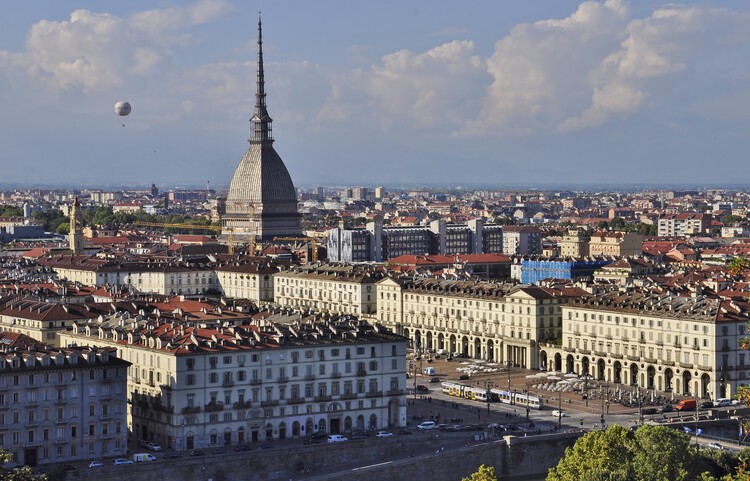
The second part of the Utopian Hours 2026 international city-making festival will be held in Turin on October 16 and 17. After a first chapter in Rotterdam, the festival is marking its tenth anniversary edition by returning to its hometown in Italy. The event's lineup and cultural program are designed to explore how cities can respond creatively to the social, environmental, and political challenges of the 21st century. The Utopian Hours festival has been organized since 2017 by Stratosferica, a nonprofit cultural association dedicated to producing and sharing urban knowledge through content on the evolution of cities, urban communication strategies, events, community building and placemaking.
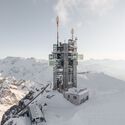
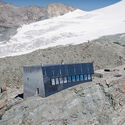
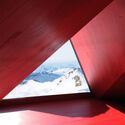
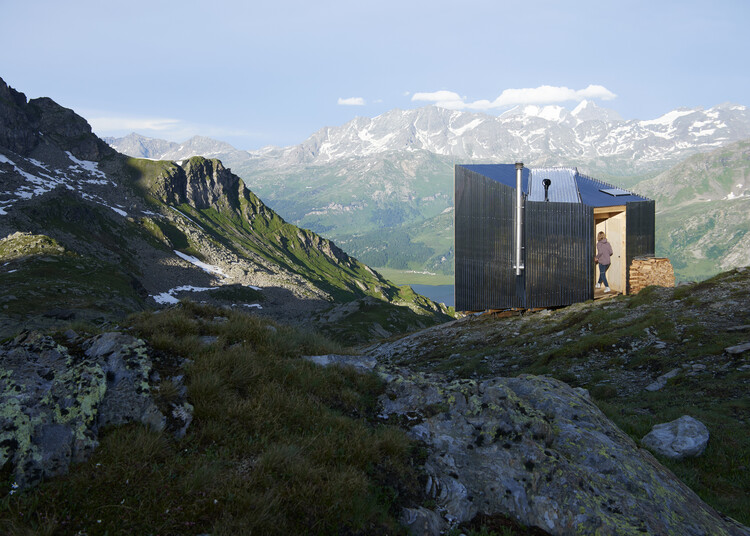
There is no harder place to build than a high mountain, and none where a building feels more provisional. From the Andes to the Himalaya to the Alps, high-altitude construction strips architecture back to its most elementary transactions. The rock reads as permanence itself, yet a structure set near the limit of habitation exists in negotiation with almost everything around it: with wind that arrives without obstruction, with a ground too steep and too frozen to excavate, and with everything it needs arriving from far below. What can be carried up, what can be assembled by few hands, and what can sustain itself are some of the terms of the problem.
Those constraints have produced a remarkably consistent building culture across otherwise unrelated ranges. The refuge, the hut, the bivouac, and the observatory belong to a shared typology in which shelter is inseparable from logistics, and where lightness, prefabrication, and self-sufficiency were structural necessities long before they became virtues.
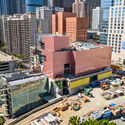
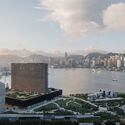
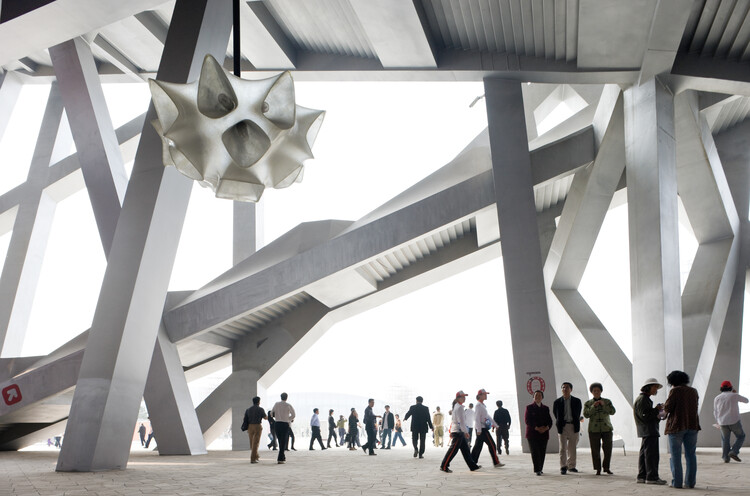
An exhibition tracing the vision behind Herzog & de Meuron's ten selected projects in China will open on September 12, 2026, at the M+ Museum in Hong Kong. The exhibition marks the museum's fifth anniversary; since opening, M+ has built its collection around visual art, design and architecture, moving image, and Hong Kong visual culture from the twentieth and twenty-first centuries. The museum building, designed by Herzog & de Meuron between 2012 and 2021, is located in the city's West Kowloon Cultural District (WestK), a cultural hub spanning forty hectares alongside Victoria Harbour. "Herzog & de Meuron: In Focus" is curated by Ikko Yokoyama and Iris Ng and reviews projects dating from 2002 to 2021, including Tai Kwun in Hong Kong (2006–2018) and the National Stadium in Beijing (2002–2008).
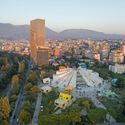
The Pyramid of Tirana opened as a museum to Enver Hoxha in October 1988, three years after his death and three years before the regime collapsed. In the decades that followed, it served as a radio station, a conference venue, a nightclub, and a base for NATO during the Kosovo war. In 2023, MVRDV reopened it as a park and technology school, adding steps to the façades so that the building could be walked over. The inauguration was timed to the Western Balkans Summit on 16 October, a date that some critics pointed out was Hoxha's birthday. Two projects of national self-definition, thirty-five years apart and built on opposite political premises, have used the same structure.
In a slim volume with a yellow-edged cover, recently published by the Porto-based imprint Circo de Ideias, the architect Paulo Martins Barata (a founding partner of Promontório) makes a deceptively bold claim that the architecture produced in Europe since the Great Recession belongs to neither of the two camps that structured the twentieth century's fiercest disciplinary debate.
The Language of Metamodern Architecture borrows its title, with evident irony, from Charles Jencks' 1977 The Language of Post-Modern Architecture, the book that famously declared modern architecture dead at 3:32 pm on July 15, 1972, with the demolition of Pruitt-Igoe. His wager is that another death, never officially certified, occurred somewhere around 2008, and that architecture has been living, mostly unaware, in what grew up around the grave.
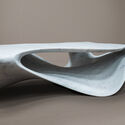
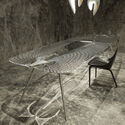
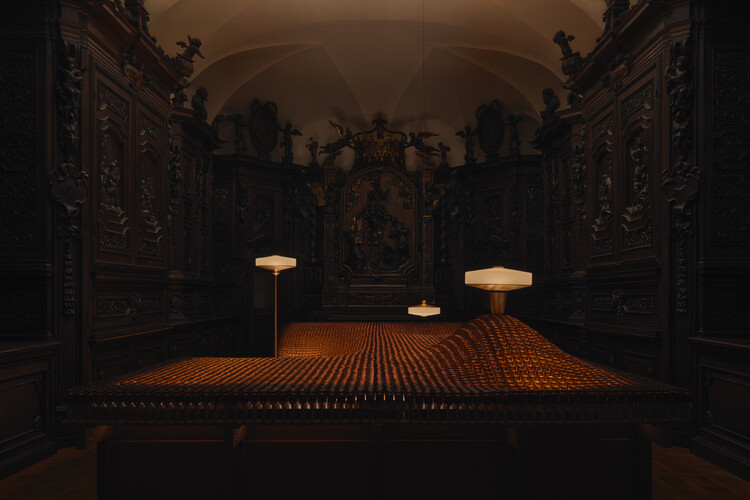
MTM—Made to Measure designed by Herzog & de Meuron for UniFor, Creative Direction by Studio Klass . Image Courtesy of UniFor
What allows a single architectural principle to generate many different outcomes? The answer lies in the systems that organize architecture: geometry, proportion, structure, and construction. Together, these can establish a set of rules that can accommodate different programs, contexts, and spatial conditions while maintaining a coherent identity. A structural grid, for example, can organize a variety of uses, just as a single construction detail can be repeated throughout an entire building without producing identical spaces. Can the same way of thinking be translated into furniture design without losing its identity? MTM—Made to Measure, developed by Herzog & de Meuron for UniFor, explores this question. Instead of designing each piece independently, the collection grows from a single structural principle that can be extended, adapted, and repeated across different functions while maintaining its internal coherence.
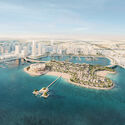
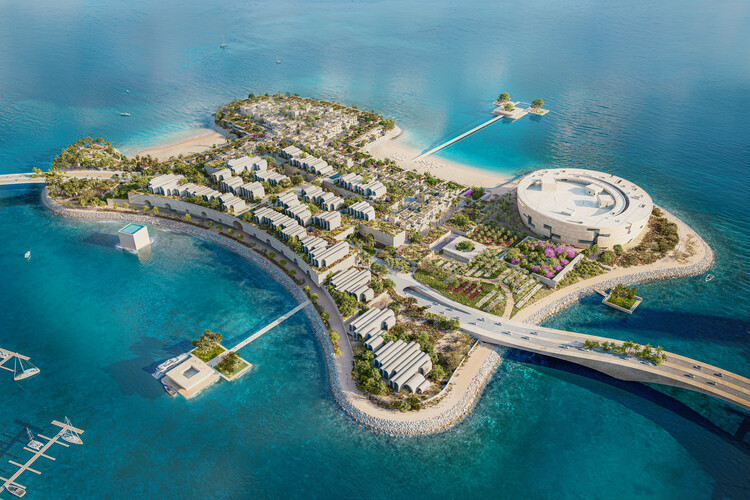
South aerial view of Al Maha Island, 2026. Render . Image Courtesy of Herzog & de Meuron
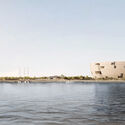
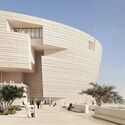
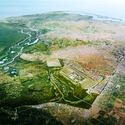
Al Maha Island is a 230,000 m² human-made island located off the coast of Lusail, Qatar. Built as an entertainment and leisure destination north of Doha, it opened in 2022, just ahead of the FIFA World Cup. In 2024, Qatar Museums released renderings of the future Lusail Museum, designed by Swiss architecture office Herzog & de Meuron and located on the southern tip of the island. Most recently, the firm revealed updated images of the island masterplan and the museum's exterior design. The new Lusail Museum will house a collection of Orientalist art, exploring the movement of people and ideas across the globe, past and present, and will offer opportunities for study and debate on contemporary global issues. It is expected to become the cultural anchor of Lusail City, in a building conceived by Jacques Herzog as "a vertically layered souk, or miniature city contained within a single building."
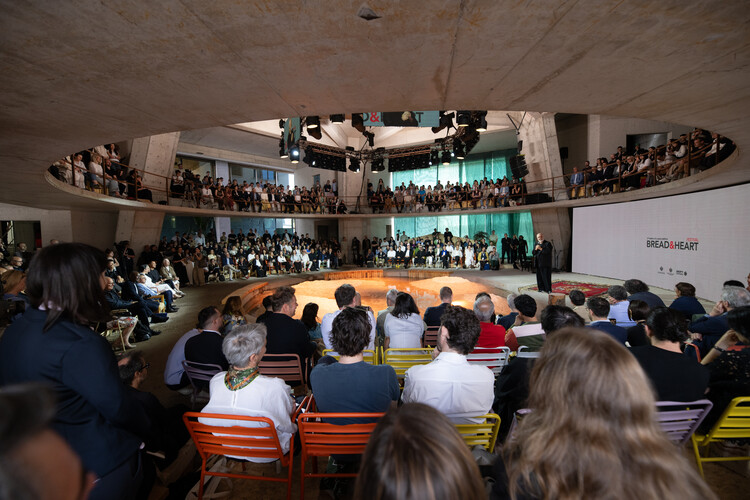
Bread & Heart Festival 2026. Image Courtesy of Bread & Heart Festival
Something has been happening in Tirana that the architectural world has not quite found the language for. In the space of a few years, a city of less than a million people in one of Europe's least-known countries has become the site of an extraordinary concentration of architectural ambition — a place where offices that rarely work in the same city, let alone the same decade, are building simultaneously, and where the questions that preoccupy contemporary architecture seem to arrive with an unusual urgency.
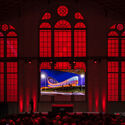
The second edition of the Bread & Heart Festival, held in Tirana from June 3 to 5, brought together more than two hundred architects, urban planners, developers, and professionals from across Europe, the Americas, Asia and beyond to discuss "Landscapes of Abundance", a theme organized around the curatorial premise of moving from portrait to landscape, from the individual building to the territory as a whole. The room it assembled would be difficult to replicate anywhere else in the architectural calendar: Francis Kéré, Jeanne Gang, Sumayya Vally, Pierre de Meuron, Bjarke Ingels, Reinier de Graaf, Stefano Boeri, Kersten Geers, Benedetta Tagliabue, Ma Yansong, among them.
There is growing awareness around sustainability—and the environmental cost of prematurely demolishing safe, structurally sound buildings only to replace them with new construction. In the broader race to reduce carbon emissions, corporations and institutions are placing greater emphasis on ESG performance (environmental impact, social responsibility, and governance). Many now require carbon accounting, set "carbon-neutral" targets, or purchase carbon credits to offset footprints.
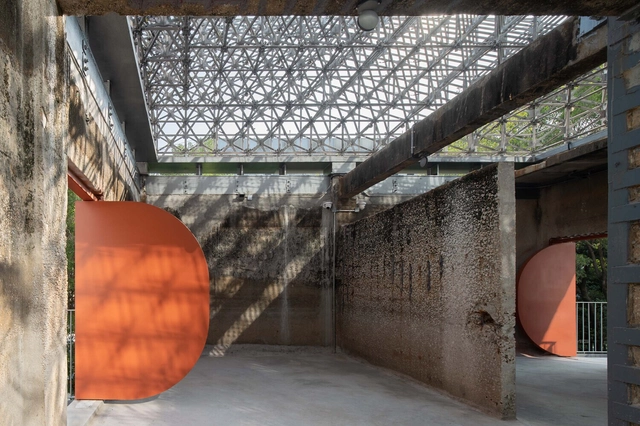
This shift, together with a wave of exemplary adaptive-reuse projects worldwide—Herzog & de Meuron's Tai Kwun in Hong Kong, Powerhouse Arts in Brooklyn, David Chipperfield's The Ned Doha, and Xu Tiantian's transformations of factories, quarries, and rammed-earth fortresses in China—has accelerated serious reconsideration of reuse as a primary development strategy. Yet despite its many benefits, adaptive reuse is still not as prevalent as it could be. Why and what might be the main obstacles and tensions?
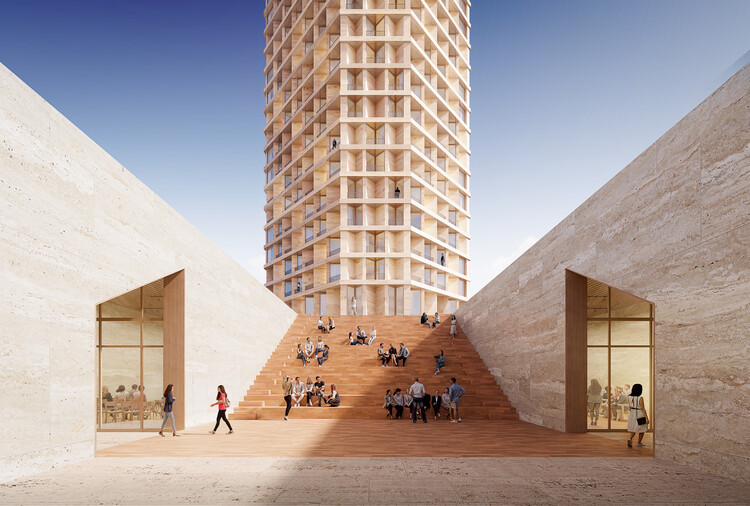
The Palace of Congresses renovation project. Terrace staircase render. Image Courtesy of Herzog & de Meuron
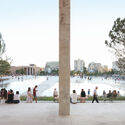
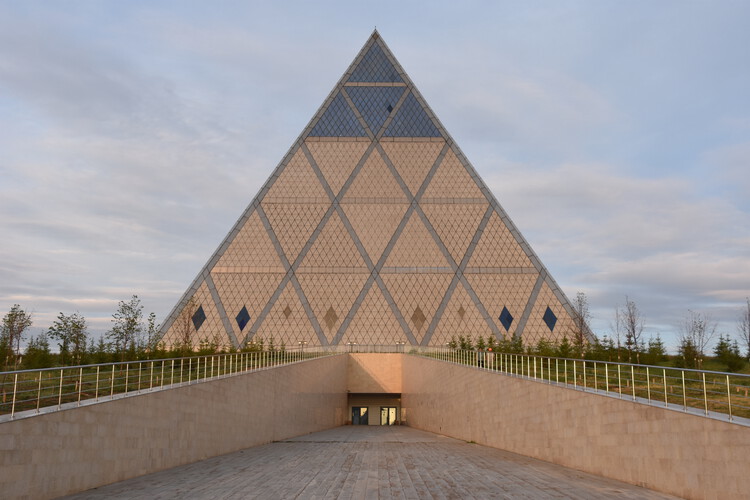
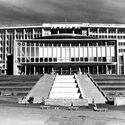
On June 3, 2026, Herzog & de Meuron was selected to revitalize the Palace of Congresses building in Tirana, Albania. The project was designed along with collaborators Julian Beqiri, Marsela Demaj, Michel Desvigne Paysagistes (MDP), ARUP, LDK, Gentian Shkurti, SUEB Industries sh.p.k., The Space Factory Ltd, MBBM, and KLAR sh.p.k. The Palace of Congresses (or Pallati i Kongreseve) was built during the People's Socialist Republic of Albania and opened in 1986 to host the Congresses of the Party of Labour of Albania and other official activities. The International Competition for the Redevelopment of the Palace of Congresses, carried out by the Albanian government, called for a comprehensive transformation of the building while preserving its historical identity. The project should address serious infrastructural issues and bring the Palace to contemporary standards in terms of technology, functionality, and quality of spaces.
This week, we revisited the ideas currently shaping the design of 21st-century cities, with a view toward a longer timeframe than that which characterised modern design. These examples of today's urban design point toward the cities of tomorrow, seeking to reflect collective memory and social identity while addressing the climate challenges we face today. From a new museum in Panama drawing on Latin American architectural tradition to an inflatable installation on Paris's oldest bridge over the Seine, built and not-yet-built projects rescue architecture as a repository of collective memory, while others explore its transformative potential through the lens of contemporary well-being. In this weekly news compilation, we present ongoing projects from Panama, numerous African countries, France, Canada, Italy, Australia, and the United States.
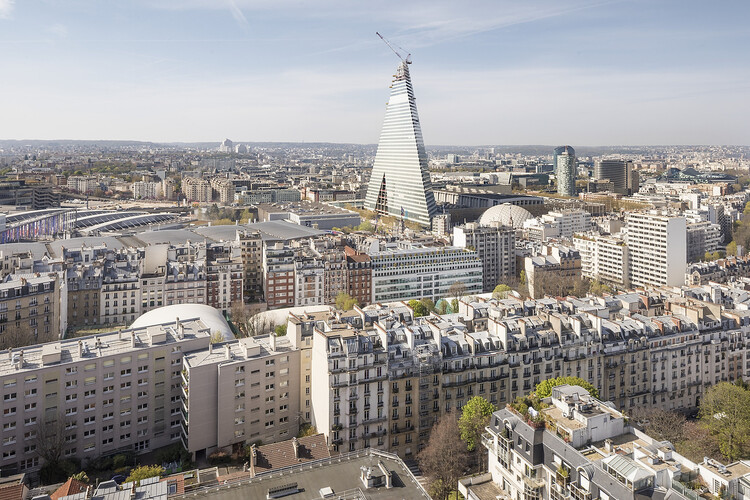
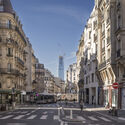
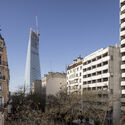
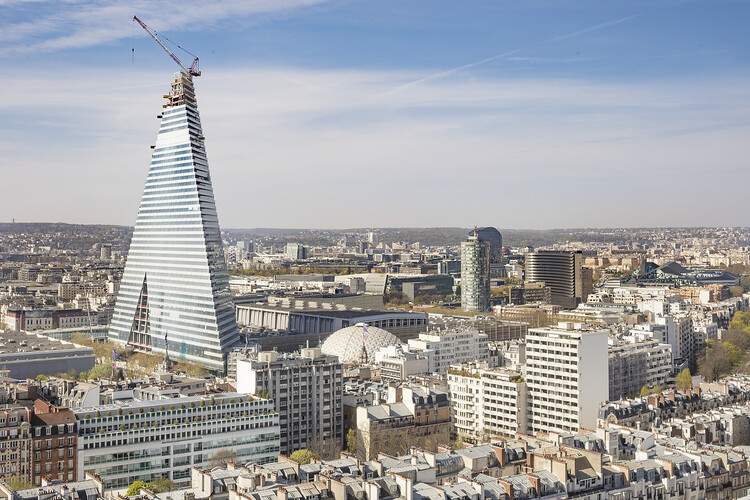
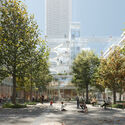
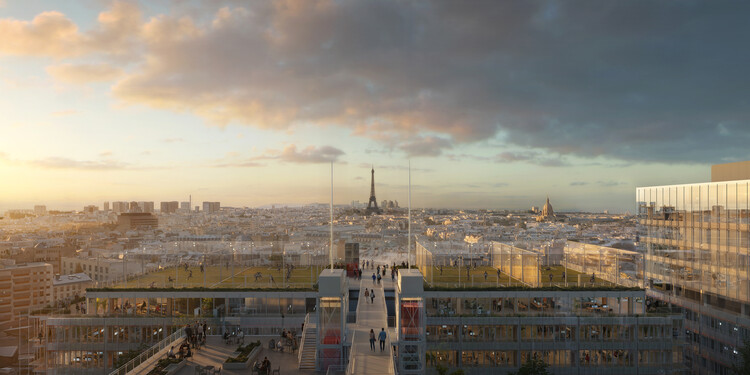
Twenty years after its ideation, Herzog & de Meuron's controversial Tour Triangle in Paris is reaching completion. The triangular, all-glass tower located in the city's 15th arrondissement topped out at 42 stories on April 24, 2026. The project's progress was marked by opposition, financial roadblocks, and legal disputes before construction began in 2022. The 180-meter tower is now the third-tallest building within Paris city limits, behind the 330-meter-tall Eiffel Tower, the 231-meter-tall The Link in La Défense, and the 210-meter-tall Tour Montparnasse. The building will retain this title indefinitely due to a skyscraper ban reinstated in 2023 by Mayor Anne Hidalgo, following persistent opposition to tall buildings in the city. The recent progress was documented by photographer Stefano Candito, ranging from an urban view of the building to a close-up look at its nearly completed structure.
Each spring, Milan Design Week 2026 transforms the city into a distributed platform for design culture, where prototypes, product launches, and research-driven explorations coexist across multiple scales, including a growing presence of architect-designed objects. Held from April 20 to 26, the 2026 edition once again centered around the 64th Salone del Mobile.Milano at Fiera Milano, complemented by a network of independent venues and exhibitions throughout the city, an expanded landscape that is further reflected in ArchDaily's accompanying selection of installations and exhibitions from this year's program.
At the turn of the 20th century, parallel, yet connected movements around the world ushered in a new style and architectural era. From the Arts and Crafts in England, Art Nouveau, then Art Deco in France, or the Jugendstil in Germany/Austria, these design and artistic developments spread around the world and took on different forms depending on their context. The basis remained similar, though, with a focus on artisanal value and craftsmanship; the use of wood, glass, and various metals; the integration of organic forms into the exterior facade and interior structure; and the refined incorporation of ornamentation as an architectural element, often as vegetation or geometric patterns.
Milan, a global hub of fashion and finance, increasingly asserts itself as a leading center for architecture and design. Its status as Italy's second-largest city underpins its vibrant cultural scene, attracting both established and emerging creative talent. Additionally, Milan is home to esteemed educational institutions recognized for their focus on heritage preservation and conservation. Its cultural and design significance is increasingly pronounced, as a growing number of creators are relocating to establish their presence in this vibrant creative hub.
Among Milan's most iconic landmarks are the flamboyant Gothic Duomo di Milano, the historically and artistically significant Santa Maria delle Grazie, and the ornate Galleria Vittorio Emanuele II, along with numerous Renaissance and Baroque sites. The city also boasts some of the most innovative modern and contemporary architecture, showcasing a unique dialogue between tradition and modernity. This synergy is exemplified by the contributions of architects like Aldo Rossi,Gio Ponti,Stefano Boeri, Mario Cucinella, Zaha Hadid, Grafton Architects, Herzog & de Meuron, and Foster and Partners.
The following guide highlights key historical landmarks alongside exemplary contemporary architecture curated by ArchDaily. This guide serves as an indispensable resource for those planning to explore Milan during the 2026 Design Week, presenting a blend of essential sites designed by renowned local and international architects.
Montparnasse Commercial Centre and CIT Tower redevelopment project, 2026. Image Courtesy of RPBW
This week's news compilation opens with two international commemorations, the International Day for Clean Energy and the International Day of Education, alongside a major archaeological discovery in Fano, Italy, where excavations have revealed a basilica described by Vitruvius, linking contemporary architectural discourse with deep historical continuity. Across this week's broader architecture news landscape, a central theme emerges around the advancement of civic architecture conceived as open, publicly engaged infrastructure, with cultural and institutional projects increasingly designed to strengthen their relationship with the city and everyday urban life. At the same time, renewed global attention turns toward Africa, where large-scale transport infrastructure and the conservation of modernist landmarks reflect interests in the region and the reassessment of the continent's architectural heritage. Complementing these narratives, this week's highlights also include a new model for car-free urban districts, co-designed public landscapes grounded in indigenous knowledge, and a residential development responding to regional context, reflecting how architecture is negotiating public space, civic responsibility, and territorial identity across diverse geographies.
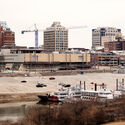
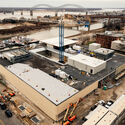
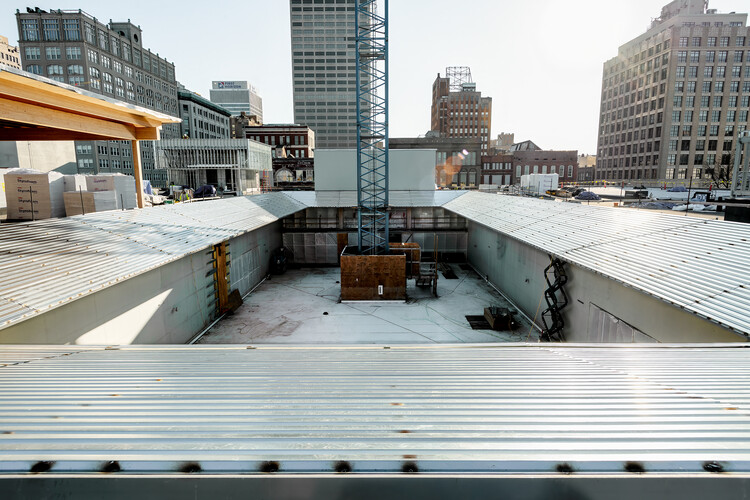
Pritzker Prize-winning architecture firm Herzog & de Meuron has released new images showing construction progress on the Memphis Art Museum, set to open in December 2026. Currently operating as the Memphis Brooks Museum of Art, the institution is both the oldest and largest art museum in Tennessee, United States, with a collection of more than 10,000 works spanning from ancient to contemporary art. Commissioned in 2019, the project marks the museum's relocation to a new site in Downtown Memphis along the Mississippi River bluff. The first images of the new cultural campus, designed by Herzog & de Meuron with architect of record archimania and landscape design by OLIN, were released in 2021. The 123,500-square-foot museum will expand gallery space by 50 percent and introduce extensive free, publicly accessible areas conceived as an open invitation to the city.