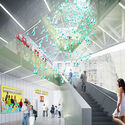
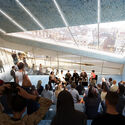
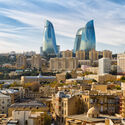
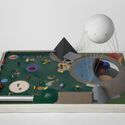
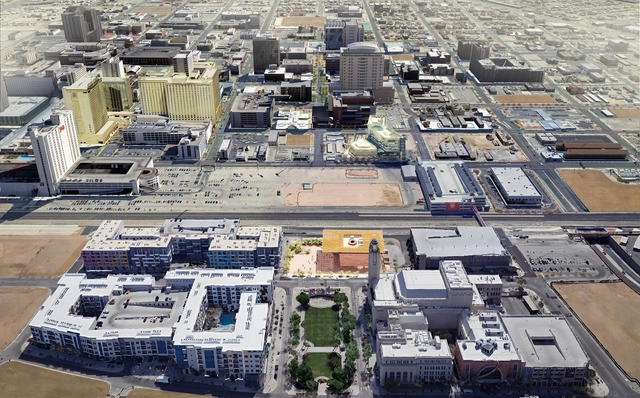
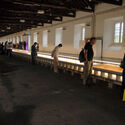
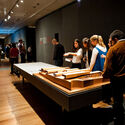
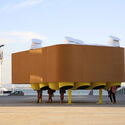
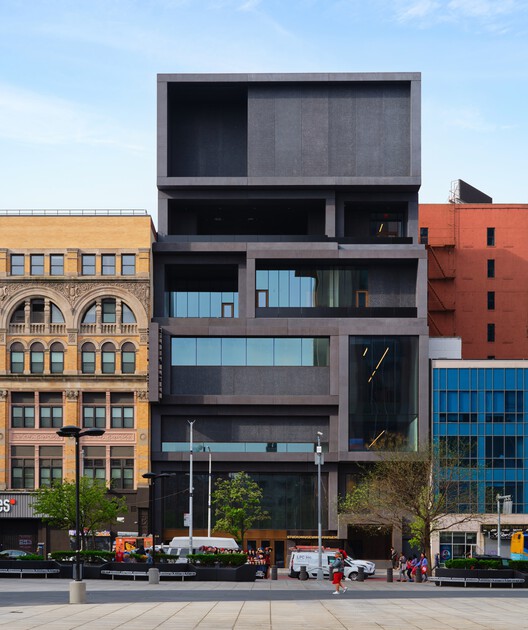
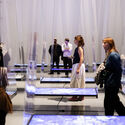
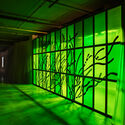
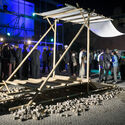
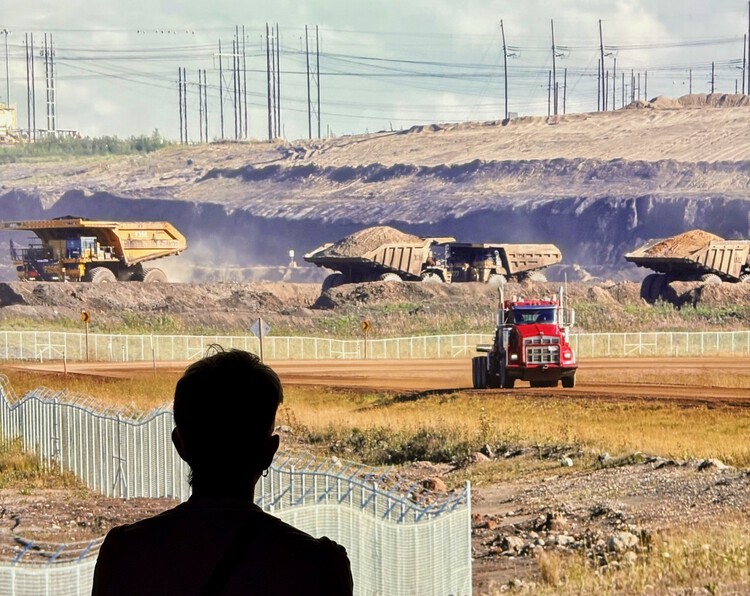
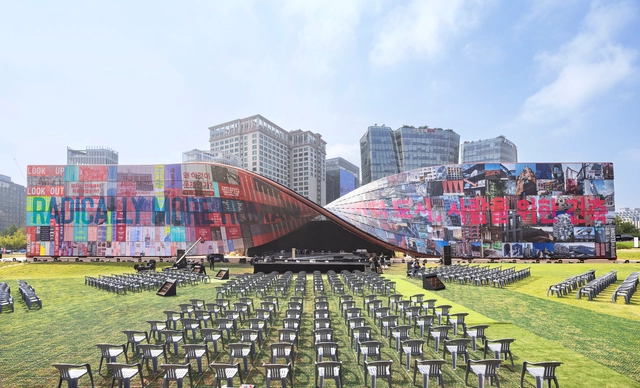
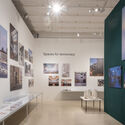
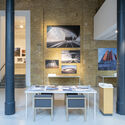
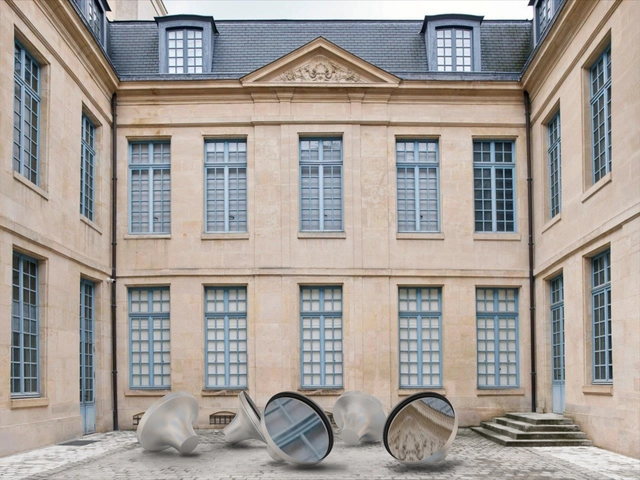
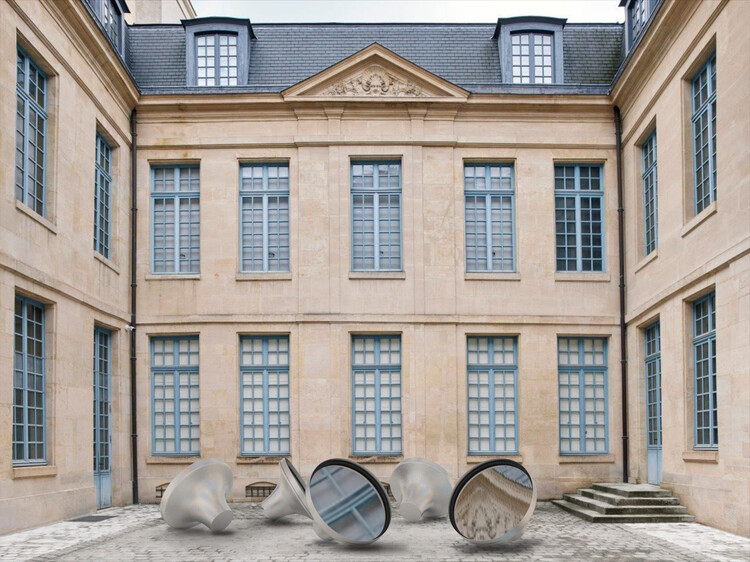
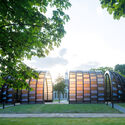
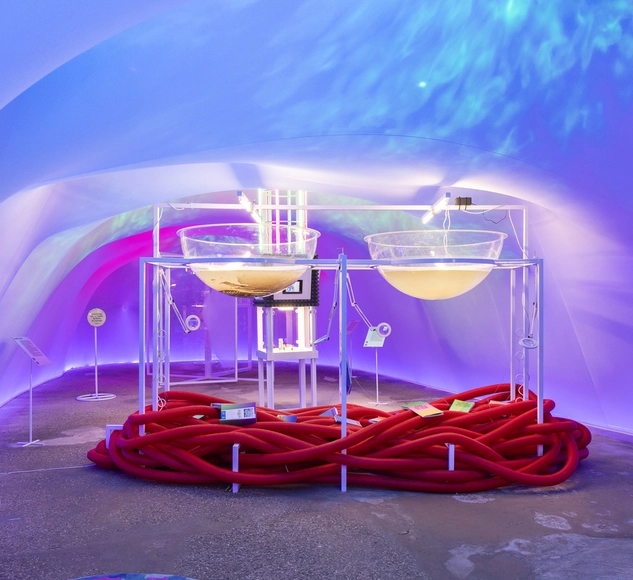
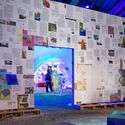
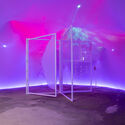
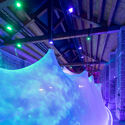
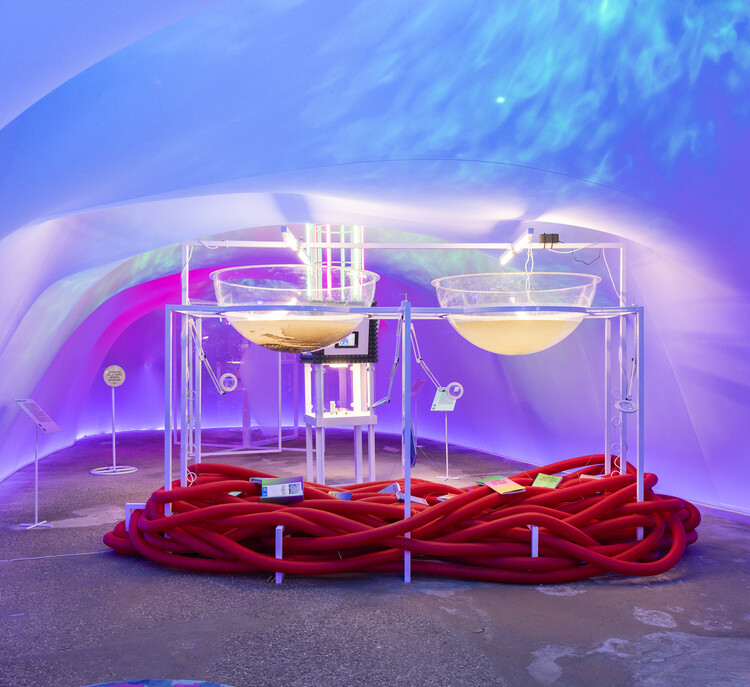
The Danish Architecture Center (DAC) will open its new exhibition, "Water is Coming" in October 2024, remaining open until March 12, 2025. The exhibition addresses the escalating global water crisis, prompted by melting polar ice, rising groundwater levels, and increasingly frequent and intense flooding. It acknowledges the reality of rising sea levels and extreme weather events, shifting the focus from mitigation to adaptation. The exhibition aims to foster a deeper understanding of our complex relationship with water, exploring its vital role as both a life-giving resource and a potential threat to human settlements.
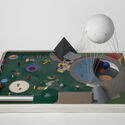
ane Drew and Maxwell Fry with a model of one of their many buildings for the Gold Coast, 1945. / Tropical Modernism - Architecture and Independence at the V&A South Kensington . Image Courtesy of RIBA
Reflecting on 2024, numerous architectural exhibitions have opened worldwide, addressing various themes, exhibition formats, and featured architects. Architectural design and architecture practice influence our daily lives in subtle and often unnoticed ways, where the end-users embrace built environments as they are. This reaction may arise from a combination of factors, such as a sense of powerlessness to enact significant change after a building is constructed or the experience of growing up in environments over which individuals had little or no agency in shaping. For these reasons, architectural exhibitions serve an essential purpose, offering society a chance to pause, reflect, and critically examine the myriad issues that surface during designing and building. These issues are often overlooked or need to be acknowledged, as practitioners may prioritize delivering projects within strict timelines over exploring more profound reflections.
In 2024, museums, galleries, and curators responded to the evolving challenges within the built environment with various approaches. Some exhibitions questioned the ethics of building materials and the practices behind supply chains, drawing attention to the broader implications of material choices. Others focused on documenting architectural movements worldwide, emphasizing their cultural and historical significance and the urgent need to preserve and adapt rather than replace them with entirely new builds. These efforts highlight the role of exhibitions in raising awareness about pressing issues while fostering a more critical dialogue about the architectural discipline.
Situated along the River Mur in the Lend district, the Kunsthaus challenges traditional architectural norms with its organic, free-flowing design. Rejecting orthogonal geometry, the museum seamlessly merges art, architecture, and public interaction, redefining the concept of a cultural institution. Its impact extends beyond aesthetics, sparking urban revitalization in a once-overlooked neighborhood, and bringing cultural vibrancy and economic activity.
1180 - The Gothic Choir. Image Courtesy of Histovery
Ahead of the official reopening of Notre Dame de Paris, scheduled for December 8, a series of exhibitions are happening worldwide, aiming to use immersive technologies and augmented reality to bring to a wider audience both the restoration efforts and the wider story of the beloved monument. The event aims to present significant chapters of the history of the iconic structure, from its medieval origins to its witnessing of historical events such as the coronation of Napoleon or the marriage of Henri IV, the 19th-century restoration which added the spire designed by French architect Viollet-le-Duc, and the devastating 2019 fire.
Before the emergence of AI, the internet, and TV— books and manuscripts were the primary vessels of knowledge. These artifacts, now echoing voices from the past, have played a fundamental role in shaping our shared legacy. A pivotal moment in this evolution came in the 15th century with Gutenberg's invention of the printing press, which revolutionized access to information and laid the groundwork for the democratization of knowledge. As a result of their historical and cultural significance, many early manuscripts and incunabula (books printed during the earliest period of typography) have been preserved in libraries and often remained in the shadows.
Worldwide, libraries have started unveiling these collections to the public, driven by a growing openness to showcase their 'treasures'. This allows a broader audience to appreciate the richness of these historical materials. While this effort fosters a deeper understanding of cultural heritage, it also introduces several challenges. One of the most critical is preservation, which must be carefully balanced with functional considerations. Key decisions include selecting and designing display case solutions, such as those from Goppion, that harmonize with the interior design and layout while providing effective protection.
https://www.archdaily.com/1021983/from-vault-to-exhibition-the-role-of-display-cases-in-the-worlds-librariesEnrique Tovar
Borderless Studio, “Kohn School in Roseland,” Chicago, 2023. Digital photograph. Photo: David Schalliol. From the 2024 grant to Borderless Studio and MAS Context for the publication “Beyond Closure: Reimagining Possibilities for Chicago’s Closed Schools” . Image Courtesy of Graham Foundation
The Graham Foundation, based in Chicago, has allocated $390,000 in grants to support 33 innovative projects worldwide. These initiatives include exhibitions, publications, and presentations aimed at enriching the discourse in architecture and its role in society. The projects, undertaken by architects, artists, curators, and educators, span various cities such as Johannesburg, New York, Chicago, and others, reflecting a global perspective on contemporary architectural issues.
The Utzon Center in Denmark has announced the opening of “Primitive Future: Everything Is Circulating,” a solo exhibition dedicated to exploring the work of renowned Japanese architect Sou Fujimoto. Marking the first time his work is presented in Denmark, this exhibition offers a glimpse into Fujimoto’s vision, waving together the themes of nature and architecture. The exhibition's centerpiece is an expansive 500-meter-long steel wire installation that serves as a three-dimensional sketch, framing 12 of Fujimoto’s architectural projects.
Starting on June 30th, 2024, Edmund Sumner presents the “Traces” exhibition, a solo show at Rodic Davidson Architects in London featuring architectural photography that explores cultural identity and historical significance across diverse landscapes. The show offers a profound exploration of architecture and design across diverse landscapes, including Europe, India, and Mexico, presenting a compelling intersection between photography and the built environment. Additionally, the photographer is expected to release his fifth book with Thames & Hudson in 2025.
Leah Wulfman Poster Image. Image Courtesy of Architectural League Prize for Young Architects + Designers
The Architectural League Prize for Young Architects + Designers is an annual portfolio competition for early-career practitioners in North America. Established in 1981, the competition is entered around a yearly theme. This year, the 2024 Young Architects + Designers Committee proposed the theme “Dirty,” prompting designers to “look beyond their presentations of professionalism, respectability, and expertise” and reject the sanitized ways of working.
The original work of the six winners of the 2024 League Prize for Young Architects + Designers is now on view in an online exhibition. The installations created for this occasion showcase the wide variety of responses and interpretations of the overarching theme. The projects presented online and in some instances also locally on-site, challenge traditional architectural practices and offer an immersive introduction to the works of the winners. In addition to the installations, a diverse program of lectures has been scheduled to develop the theme further.
The Graham Foundation has announced 56 new grants to individuals, selected from nearly 600 submissions. Centered on publications, research, exhibitions, films, site-specific installations, and digital initiatives, the funded projects "expand contemporary architecture ideas through innovative rigorous interdisciplinary work on the design and the built environment." The projects are led by 84 individuals, including established and emerging architects, artists, curators, designers, filmmakers, historians, and writers.
The Lindau Art Museum is hosting an exhibition titled “Christo and Jeanne-Claude - A Lifelong Journey.” Running from April 13th to October 13th, 2024, this display marks the first comprehensive museum exhibition on Christo and Jeanne-Claude in southern Germany, created in collaboration with the Christo and Janne-Claude Foundation. Featuring artistic drawings, detailed collages, early objects, and photographs, the exhibition documents the lifelong journey that led the artists to their famous large-scale temporary projects.
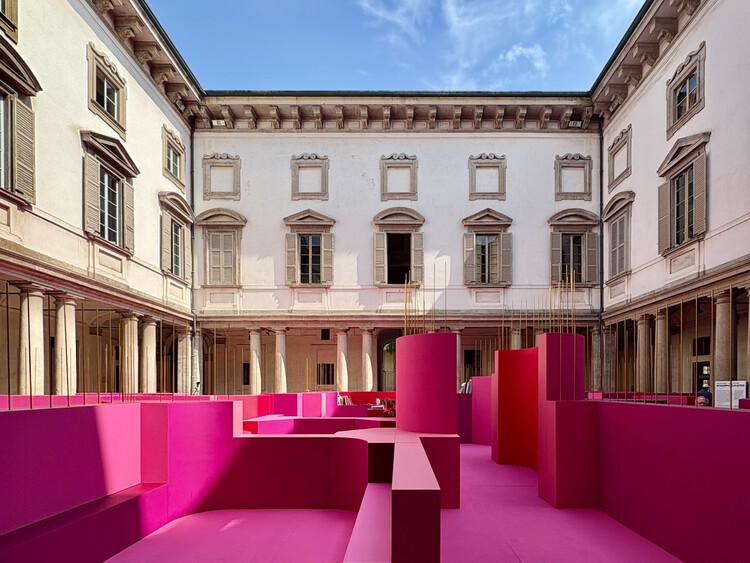
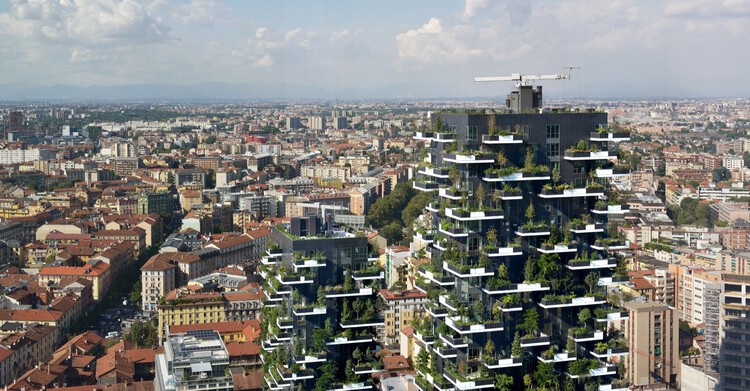
Piazza Gae Aulenti - Milano. Image Courtesy of Salone del Mobile.Milano
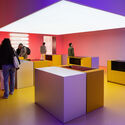
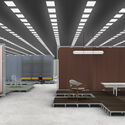
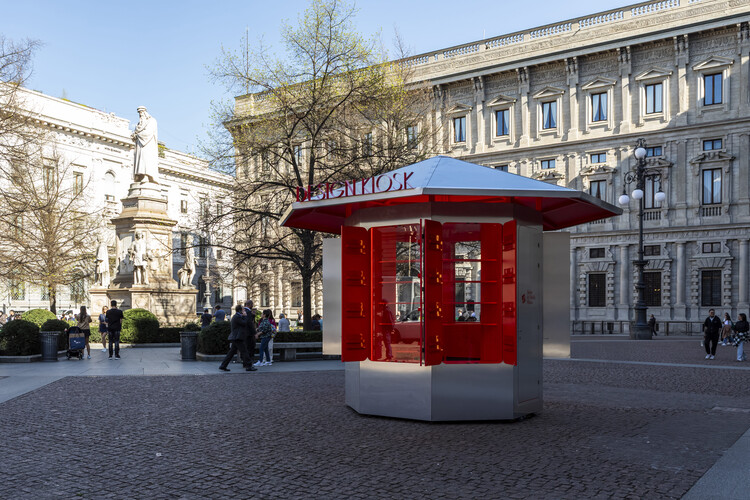
As Milan Design Week begins, the Italian city is transformed into the grounds of one of the most expansive celebrations of global design, with its streets and venues brimming with cultural events, exhibitions, large-scale installations, talks and conferences. At Rho Fiera, the 62nd edition of the Salone del Mobile.Milano brings together designers, architects, producers and leading figures of the design world, featuring over 1950 exhibitors which will remain open for the next 6 days. Additionally, across the city Fuorisalone opens up locations across the city with an engaging and varied cultural program.
Milan Design Week stands as one of the most important events in the global design calendar, serving not only as a showcase of innovation but also as a catalyst for critical discourse and creative exchange. This year, the event unfolds with a multitude of exhibitions, installations, and talks happening throughout Milano during the week of April 15-21, 2024. By bringing together diverse voices, perspectives, and talents, Milan Design Week becomes relevant for architects and serves as a nexus for interdisciplinary dialogue. To help you better navigate the plethora of events, conferences, and installations, this article highlights the main venues hosting activities revenant for architects and designers, from the expansive trade fair Salone del Mobile in Rho Fiera to design districts across the city and unexpected locations hidden in Palazzo courtyards or reimagined industrial heritage sites.
Immersive spaces are heavily sensorial environments meant to create impactful experiences crafted through intentionally curated architecture, light, imagery, sound, and sometimes even smell. To "immerse" oneself is to be wholly enveloped in a world shaped solely by immediate sensory input. Using digital tools to craft these environments to showcase art, create compelling exhibitions, and feature performance events has become increasingly popular. Evocative experiences like these can offer a respite from the inundation of personalized digital content and foster shared, grounding encounters. The design of these can exist at the intersection of architecture, graphic design, visual art, lighting design, music, and performance. They underscore the power of interdisciplinary collaboration to craft memorable moments. So, what role does architecture play in shaping these?
Studio Monnik, 'Alles Komt Goed', 2023. ‘Poreuze Stad’, Illustratie van Jan Cleijne. Een toekomstscenario voor Amsterdam in 2089. Image Courtesy of Het Nieuwe Instituut

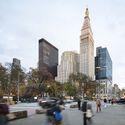
Still, the country faces expected and unexpected challenges, from an acute housing shortage to raising concerns regarding climate change and shifting ideas of ecology. In the words of curator Suzanne Mulder, the country is “once again on the drawing board,” as architects, urban planners, and designers are reopening conversations about the future by looking at past lessons. To come to their help, Rotterdam’s Nieuwe Instituut is organizing the exhibition ‘Designing the Netherlands: 100 Years of Past & Present Futures.’
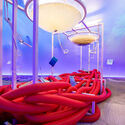
Poplar Assembly / Francisco Javier García García . Image Courtesy of Concéntrico
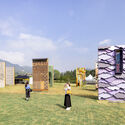
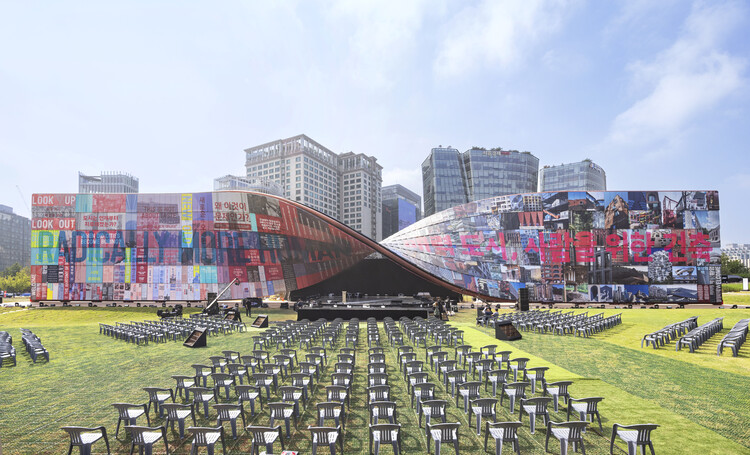
Now in its 10th edition, Concéntrico, the international festival of architecture and design in Logroño, has announced the winners of the open calls for urban interventions. Responding to the call to ‘Celebrate the City,’ the winning proposals will be temporarily built in Plaza Escuelas Trevijano, in Viña Lanciano of Bodegas LAN, and in Paseo del Espolón in the Spanish town of Logroño. The Festival welcomes visitors between April 25 and May 1, 2024, to explore the city through installations, exhibitions meetings, and performances.