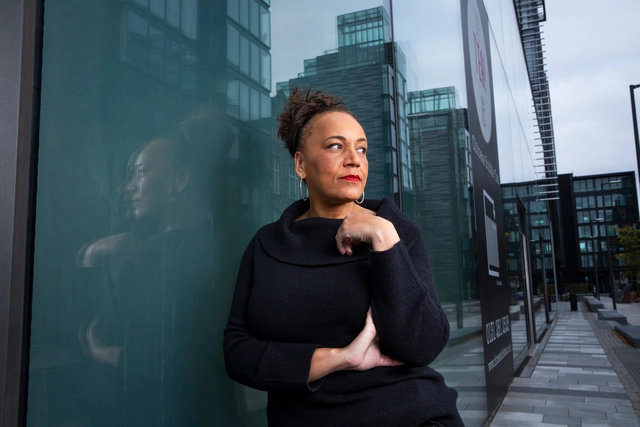
This week Phyllis Lambert, widely considered to be among the most influential figures in architecture, turned 90. Known primarily for founding the Canadian Centre for Architecture (CCA) in her hometown of Montrèal in 1979, she also acted as Director of Planning for the world-renowned Seagram Building in Manhattan (a tower commissioned by her family). The project is often cited as one of Mies van der Rohe's most important built works. As a practising architect, Lambert designed the Saidye Bronfman Centre (1967) – a performing arts center named after her mother.

Next year the Royal Institute of British Architects (RIBA) will open a seminal new exhibition: Mies van der Rohe & James Stirling: Circling the Square. The show will examine two iconic schemes proposed for the same site in the City of London: Mies van der Rohe’s unrealised Mansion House Square project (developed by Lord Peter Palumbo) and its built successor, James Stirling Michael Wilford & Associates’ No.1 Poultry.
https://www.archdaily.com/801387/riba-to-present-seminal-show-on-mies-van-der-rohes-unrealized-mansion-house-towerAD Editorial Team
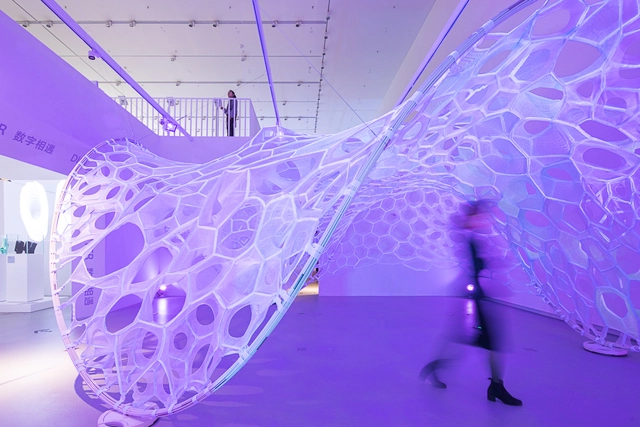
Singapore Archifest 2016 returns with a Pavilion designed with ‘Exhale’ as its theme at Raffles Place Park. Celebrating its 10th edition, Archifest’s theme for this year ‘Exhale’ seeks to challenge the rapidity and density of activities that define our pace of life, weigh in on the state of Singapore’s built environment and breathe new life into it.
The Museum of Modern Art in New York (MoMA) has released an online archive of over 3,500 of the museum’s past exhibitions from its founding in 1929 to today. Free and available to the public, the database contains photographs, press releases, checklists, catalogues and lists of featured artists.
Today, the Museum of Modern Art in New York announced a major retrospective of Frank Lloyd Wright's work to be displayed in 2017, commemorating 150 years since the architect's birth. Opening next June, the exhibition will feature approximately 450 works spanning Wright’s career including architectural drawings, models, building fragments, films, television broadcasts, print media, furniture, tableware, textiles, paintings, photographs, and scrapbooks, along with several works that have rarely or never been shown publicly.
BSA Space, Boston’s only center for architecture and design, seeks curatorial proposals for its 2018—2019 exhibition season. The deadline to submit is Friday, April 15, 2016. Major exhibitions run 4-6 months, and are intended to utilize all of the second floor gallery space. Guest curators will be given a budget of $30K-$70K, depending upon the size, scale and preparation, which will include all exhibition expenses, including materials, fabrication, installation, curator fees, and fees for any portion of this work contracted out.
A Japanese Constellation: Toyo Ito, SANAA, and Beyond focuses on the work of architects and designers orbiting Pritzker Prize winners Toyo Ito and SANAA. MoMA’s first presentation dedicated solely to Japanese practitioners, the exhibition spotlights a small cluster of contemporary Japanese architects working within the larger field, exploring their formal inventiveness and close professional relationships to frame a radical model of practice in the 21st century.
The Nordic nations—Finland, Norway and Sweden—have reached a pivotal point in their collective, and individual, architectural identities. The Grandfathers of the universal Nordic style—including the likes of Sverre Fehn, Peter Celsing, Gunnar Asplund, Sigurd Lewerentz, Alvar Aalto, and Eero Saarinen—provided a foundation upon which architects and designers since have both thrived on and been confined by. The Nordic Pavilion at the 2016 Venice Biennale—directed by Alejandro Aravena—will be the moment to probe: to discuss, argue, debate and challenge what Nordic architecture really is and, perhaps more importantly, what it could be in years to come.
We're asking for every practice (and individual) across the world who have built work in Finland, Norway and Sweden in the past eight years to submit their project(s) and be part of the largest survey of contemporary Nordic architecture ever compiled.
Update: the Open Call for In Therapy closed on the 24th January 2016.
There is perhaps no better display of modern architecture’s historical victory than Jacque Tati’s film Playtime. In it, a futuristic Paris has left-for-dead the grand boulevards of Haussmann, in favor of endless grids of International Style offices. The old city is reduced to longing reflections of Sacré-Cœur and the Eiffel Tower in the glass of these shiny new monoliths. But the irony central to the film is that this construction is created through mere surface treatments, and as the narrative unfolds, cheap mass-production withers in a world where the veneer has triumphed over craftsmanship and polish. In short, Modernism hasn’t always been all it's cracked up to be.
In the Museum of Modern Art’s new exhibition, "Endless House: Intersections of Art and Architecture," the simplicities of mass-market modern homes are abolished by artists and architects who, in examples from the 1940s to the present, have chosen to use the dwelling as a platform for universal messages and as an arena for architectural experimentation. In the same way that photography freed painting from the terrestrial concerns of realism, the simplicity of modernism liberated artists and architects to subvert extant conventions of buildings.
A temporary pavilion designed by London-based firm Adjaye Associates is housing a selection of works for the 56th International Art Exhibition, "All the World's Futures," in Venice. Curated by Okwui Enwezor, the exhibition explores the numerous ways in which art can be experienced in "an unfolding of typologies." Adjaye Associate's temporary museum seeks to parallel Enwezor's curatorial vision, and is nestled within a 316-meter-long, 16th-century ship-building warehouse in the Arsenale district.
On display until May 31st, the Vitra Design Museum's "Architecture of Independence – African Modernism" exhibition displays a cross-section of Africa's experimental architecture from the post-colonial years of the 1960s. Covering more than 80 projects in Kenya, Zambia, Ghana, Côte d’Ivoire, and Senegal, the exhibition aims to shed light on this little-known period of architecture history, and challenge Western notions of African countries. In this interview, originally published by Metropolis Magazine as "Q&A: Curator Manuel Herz on Africa's 'Grandiose' Modern Architecture," Curator Manuel Herz reveals the origins of the exhibition and shares his thoughts light on some of the buildings which the exhibition highlights.
Clare Dowdy: What triggered your interest in the post-colonial architecture of Central and Sub-Saharan Africa?
Manuel Herz: I was in Nairobi a couple of times around 2007 and noticed the architecture of that period was of outstanding quality but virtually unknown outside Kenya. This triggered an interest to research the whole of Sub-Saharan Africa. I found that the political urgency that existed at the time of the independence process is embodied in the architecture.
A ClockworkJerusalem, the exhibition showcased in the British Pavilion at last year's Venice Biennale, will make it's UK debut at London's Architectural Association (AA) next month. Commissioned by the British Council and curated by Sam Jacob, co-founder of FAT, and Wouter Vanstiphout, partner at Dutch practice Crimson Architectural Historians, the exhibition shines a light on the large scale projects of the 1950’s, 60’s and 70’s by exploring the "mature flowering of British Modernism at the moment it was at its most socially, politically and architecturally ambitious - but also the moment that witnessed its collapse."
Lateral Office'sArctic Adaptations exhibition, which was recognised with a Special Mention at the 2014 Venice Biennale, will travel make its debut in Canada at the Winnipeg Art Gallery this week before heading to Whitehouse, Vancouver, and Calgary. The exhibition "surveys a century of Arctic architecture, an urbanising present, and a projective near future of adaptive architecture in Nunavut" though interactive models, photography, and topographical maps of the twenty five communities of the area, as well as Inuit carvers’ scale models of some of the most recognised buildings in the territory. In addition, it proposes a future of adaptive and responsive architecture for Canada's northern territories.
House Housing, "An Untimely History of Architecture and Real Estate in Nineteen Episodes", was recently exhibited at Columbia University'sCasa Muraro in Venice. Staged as an "open house" organised and funded by the Buell Center, the exhibition responded unsolicited to Rem Koolhaas's call to exhibitors at the 2014 Venice Biennale to focus on Fundamentals by exploring housing in nineteen "discrete episodes." In narrating these episodes, brought together from across the last one hundred years in a mixture of domestic media, the exhibition brought together a collection of excerpts from global processes.
In the center of Berlin, an amazing institution known as the Temporäre Kunsthalle is a great venue for contemporary art as exhibits are housed not only within Adolf Krischanitz’s free plan interior, but also on the exterior. As each new artist brings his own personality to the building’s exterior, the 11 meter high building, which covers a ground surface of 20 by 56.25 meters, becomes the artist’s blank canvas, patiently waiting for its new treatment. The most recent exterior exhibition, autoR by Carsten Nicolai, is the third project to be realized on the façade.
More images and more about the exhibit after the break.