1. ArchDaily
  2. Eduardo Souto de Moura

Eduardo Souto de Moura: The Latest Architecture and News

RIBA Stirling Prize Winner and Faith Park in Albania: This Week’s Review

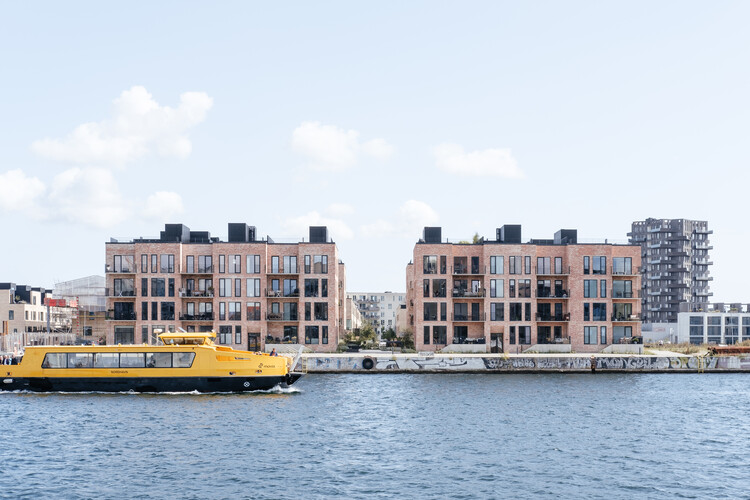
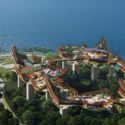
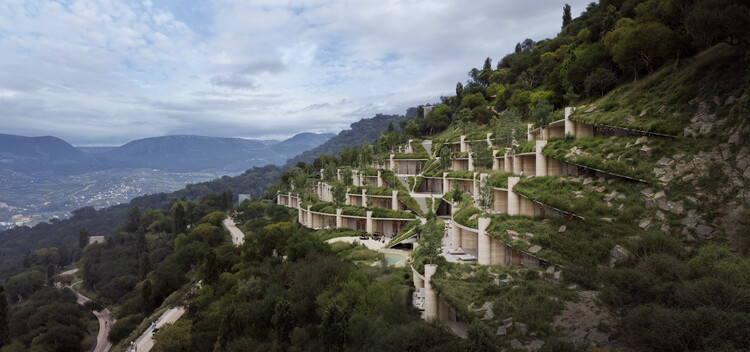
This week's architectural developments highlighted how design operates as a form of social and cultural infrastructure, linking care, community, and context across scales. From London's reinterpretation of the almshouse model to the transformation of urban gateways in Phnom Penh and Tirana, architecture reflected a shared interest in spaces that foster connection and adaptability. Parallel to these urban and infrastructural works, new cultural projects in Paris and Hanoi explored how museums and performance spaces can renew public institutions through material experimentation and spatial flexibility.

RIBA Stirling Prize Winner and Faith Park in Albania: This Week’s Review - Imagen 1 de 4RIBA Stirling Prize Winner and Faith Park in Albania: This Week’s Review - Imagen 2 de 4RIBA Stirling Prize Winner and Faith Park in Albania: This Week’s Review - Imagen 3 de 4RIBA Stirling Prize Winner and Faith Park in Albania: This Week’s Review - Imagen 4 de 4RIBA Stirling Prize Winner and Faith Park in Albania: This Week’s Review - More Images+ 3

Eduardo Souto de Moura and OODA Reveal Design for a New High-Rise Tower in Tirana, Albania

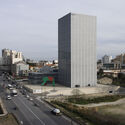
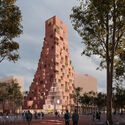
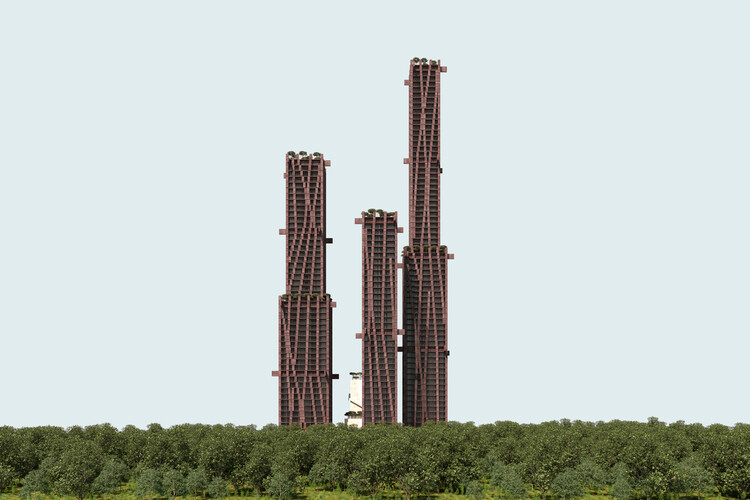
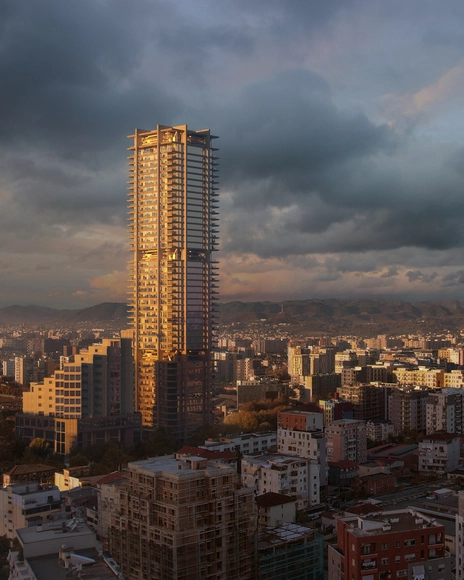
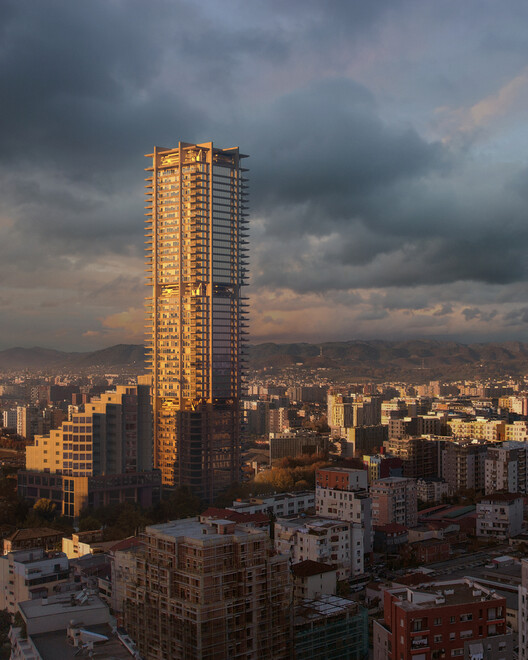
Eduardo Souto de Moura and OODA have unveiled the design of the Oricon Tower, a 180-meter mixed-use skyscraper planned for Tirana, Albania. Located near OODA's recently completed Bond Tower, the project is part of the city's ongoing transformation under the Tirana 2030 Masterplan, which envisions a denser and more connected urban core. The tower will house offices, residences, retail areas, and a hotel, contributing to the city's evolving skyline and serving as a new urban gateway between Tirana's historic center and its expanding western districts.

Eduardo Souto de Moura and OODA Reveal Design for a New High-Rise Tower in Tirana, Albania - Imagen 1 de 4Eduardo Souto de Moura and OODA Reveal Design for a New High-Rise Tower in Tirana, Albania - Imagen 2 de 4Eduardo Souto de Moura and OODA Reveal Design for a New High-Rise Tower in Tirana, Albania - Imagen 3 de 4Eduardo Souto de Moura and OODA Reveal Design for a New High-Rise Tower in Tirana, Albania - Imagen 4 de 4Eduardo Souto de Moura and OODA Reveal Design for a New High-Rise Tower in Tirana, Albania - More Images+ 14

Eduardo Souto de Moura Named 2025 Praemium Imperiale Laureate for Architecture

The Japan Art Association has named Portuguese architect Eduardo Souto de Moura as the 2025 Praemium Imperiale Laureate for Architecture. Now in its 36th edition, the award honors artists for their lifetime achievements in the fields of Painting, Sculpture, Architecture, Music, and Theater/Film. The Praemium Imperiale was established in 1988 to recognize individuals whose work has contributed significantly to the enrichment of the global cultural landscape. Souto de Moura was recognized for producing architecture that thoughtfully engages with the present moment while maintaining a timeless quality.

Eduardo Souto de Moura Named 2025 Praemium Imperiale Laureate for Architecture - Imagen 1 de 4Eduardo Souto de Moura Named 2025 Praemium Imperiale Laureate for Architecture - Imagen 2 de 4Eduardo Souto de Moura Named 2025 Praemium Imperiale Laureate for Architecture - Imagen 3 de 4Eduardo Souto de Moura Named 2025 Praemium Imperiale Laureate for Architecture - Imagen 4 de 4Eduardo Souto de Moura Named 2025 Praemium Imperiale Laureate for Architecture - More Images+ 2

Eduardo Souto de Moura Receives the Gold Medal from the Círculo de Bellas Artes in Madrid

The Portuguese architect Eduardo Souto de Moura will receive yet another international recognition for his career. On October 20th, the Circle of Fine Arts of Madrid or Círculo de Bellas Artes de Madrid (CBA) will award the architect the Gold Medal, its highest distinction. This tribute not only adds to Souto de Moura's extensive list of accolades, which includes the 2011 Pritzker Prize and the 2013 Wolf Prize, among others but also represents an expression of appreciation from the world of culture and the arts for a career and body of work that transcend architecture and "reach the dimension of poetry through the acceptance of the technical demands of buildings

Memorial by Eduardo Souto de Moura for the Victims of the Fire in Portugal Is Inaugurated

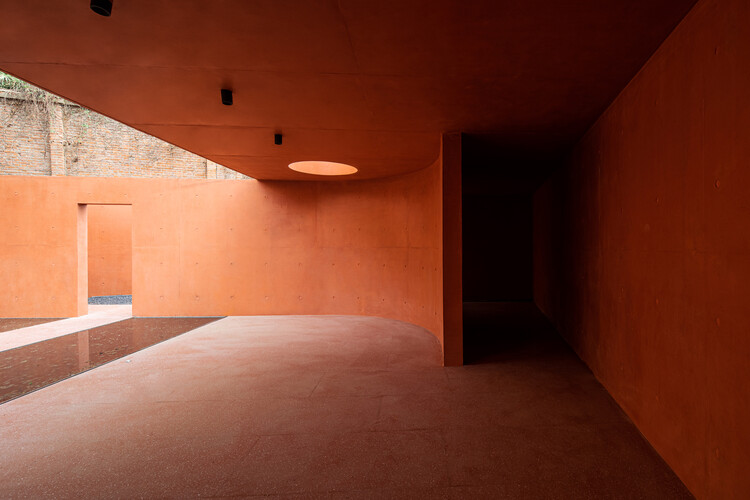
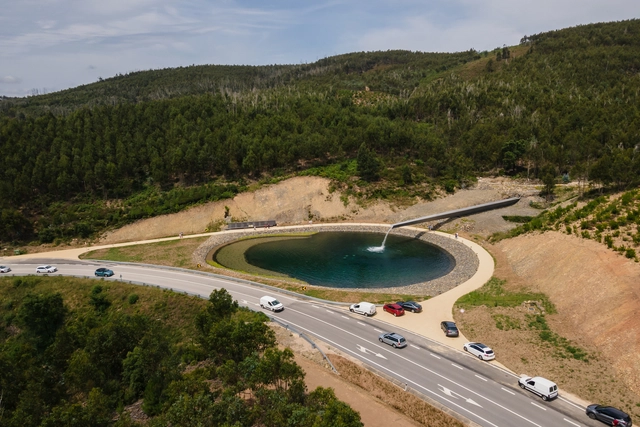
Pedrógão Grande, a Portuguese municipality located approximately 55 kilometers from Coimbra, inaugurated the Memorial in Homage to the Victims of the 2017 Forest Fires last week. This tragic event resulted in the loss of 66 lives and left 253 injured. The monument was designed by architect Eduardo Souto de Moura, winner of the 2011 Pritzker Prize.

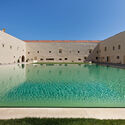
The work, initiated by Infraestruturas de Portugal (IP) two years ago, cost approximately 1.8 million Euros. According to IP, the monument features a framing lake spanning about 2,500 square meters in area. The lake is supplied by a 60-meter-long gargoyle and bordered by a strip of plants, including white water lilies, lilies, and ranunculus. Additionally, the project incorporates a wall with the name of each victim inscribed on it, according to IP.

Memorial by Eduardo Souto de Moura for the Victims of the Fire in Portugal Is Inaugurated - Image 1 of 4Memorial by Eduardo Souto de Moura for the Victims of the Fire in Portugal Is Inaugurated - Image 2 of 4Memorial by Eduardo Souto de Moura for the Victims of the Fire in Portugal Is Inaugurated - Image 3 of 4Memorial by Eduardo Souto de Moura for the Victims of the Fire in Portugal Is Inaugurated - Image 4 of 4Memorial by Eduardo Souto de Moura for the Victims of the Fire in Portugal Is Inaugurated - More Images+ 10

Interventions in Pre-existing Architecture: Adaptive Reuse Projects by Renowned Architects

Responsible use and consumption of natural resources and the impacts of the building industry have been ongoing concerns in the field of architecture and urban planning. In the past, concepts such as clean slates, mass demolitions, and building brand new structures were widely accepted and encouraged. Nowadays, a transformation seems to be taking place, calling for new approaches such as recycling, adaptive reuse, and renovations, taking advantage of what is already there. This article explores a selection of projects and provides a glimpse into interventions by renowned architects in pre-existing buildings.
Interventions in Pre-existing Architecture: Adaptive Reuse Projects by Renowned Architects - Image 1 of 4Interventions in Pre-existing Architecture: Adaptive Reuse Projects by Renowned Architects - Image 2 of 4Interventions in Pre-existing Architecture: Adaptive Reuse Projects by Renowned Architects - Image 3 of 4Interventions in Pre-existing Architecture: Adaptive Reuse Projects by Renowned Architects - Image 4 of 4Interventions in Pre-existing Architecture: Adaptive Reuse Projects by Renowned Architects - More Images+ 4

Stefano Boeri Reveals Circular Wooden Installation, Bringing Nature and Humans Together

Stefano Boeri Interiors has unveiled images of his latest circular wooden installation, in an open-air setting of contemporary art. Entitled TREE-ROOM, the project in which “humans and living nature come together, between meditation and contemplation”, is designed for Arte Sella and is located in the garden of Villa Strobele in Val di Sella, in Northern Italy.

Stefano Boeri Reveals Circular Wooden Installation, Bringing Nature and Humans Together - Image 1 of 4Stefano Boeri Reveals Circular Wooden Installation, Bringing Nature and Humans Together - Image 2 of 4Stefano Boeri Reveals Circular Wooden Installation, Bringing Nature and Humans Together - Image 3 of 4Stefano Boeri Reveals Circular Wooden Installation, Bringing Nature and Humans Together - Image 4 of 4Stefano Boeri Reveals Circular Wooden Installation, Bringing Nature and Humans Together - More Images+ 8

Spotlight: Eduardo Souto de Moura

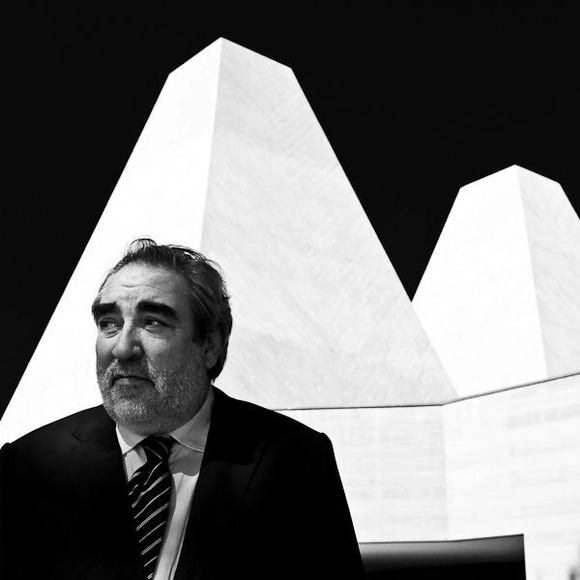
Eduardo Souto de Moura (born 25 July 1952), the Portuguese architect that won the 2011 Pritzker Prize, is known for designs that are formally simple yet serious and at times, dramatic, created through his thoughtful use of colors and materials. His architecture is both versatile and consistent, contextual yet universal, and rarely affected by current trends or styles.

Spotlight: Eduardo Souto de Moura - Image 1 of 4Spotlight: Eduardo Souto de Moura - Image 2 of 4Spotlight: Eduardo Souto de Moura - Image 3 of 4Spotlight: Eduardo Souto de Moura - Image 4 of 4Spotlight: Eduardo Souto de Moura - More Images+ 16

Eduardo Souto de Moura: “I Look Beyond Solution; I Look For an Expression”

Eduardo Souto de Moura: “I Look Beyond Solution; I Look For an Expression” - Arch Daily InterviewsEduardo Souto de Moura: “I Look Beyond Solution; I Look For an Expression” - Arch Daily InterviewsEduardo Souto de Moura: “I Look Beyond Solution; I Look For an Expression” - Arch Daily InterviewsEduardo Souto de Moura: “I Look Beyond Solution; I Look For an Expression” - Arch Daily InterviewsEduardo Souto de Moura: “I Look Beyond Solution; I Look For an Expression” - More Images+ 16

The architectural approach of 2011 Pritzker Prize-winner Eduardo Souto de Moura can be difficult to summarize. His convictions on matters of aesthetics and design are strongly held, but also highly individual and at times even unusual. In his work, this translates to buildings that are enigmatic, yet not flashy—in the words of the 2011 Pritzker Prize jury, “His buildings have a unique ability to convey seemingly conflicting characteristics—power and modesty, bravado and subtlety, bold public authority and sense of intimacy—at the same time.” In the latest interview from his “City of Ideas” series, Vladimir Belogolovsky speaks to Souto de Moura to probe his architectural mind and understand the thinking behind these powerful yet modest works.

The Technology Before the Wheel: A Brief History of Dry Stone Construction

Subscriber Access | 

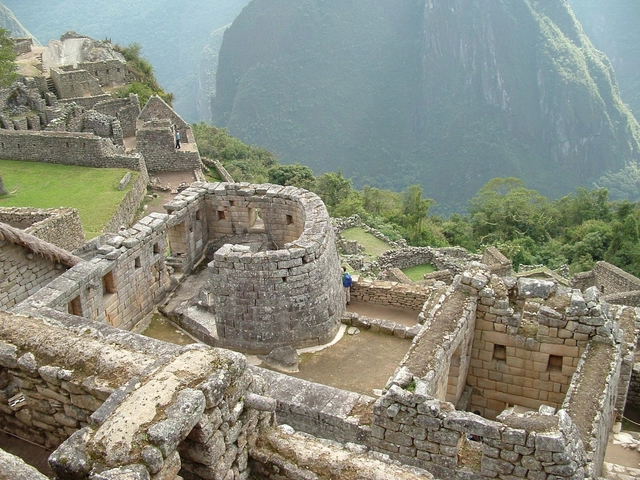
A collection of stones piled one on top of the other, dry stone is an iconic building method found just nearly everywhere in the world. Relying solely on an age-old craft to create sturdy, reliable structures and characterised by its rustic, interlocking shapes, the technique has deep roots that stretch back even before the invention of the wheel. Its principles are simple: stack the stones to create a unified, load-bearing wall. But the efficient, long-lasting results, coupled with the technique’s cultural significance, have lead to continued use and updated interpretations all the way to contemporary architecture today.

The Technology Before the Wheel: A Brief History of Dry Stone Construction - Image 1 of 4The Technology Before the Wheel: A Brief History of Dry Stone Construction - Image 2 of 4The Technology Before the Wheel: A Brief History of Dry Stone Construction - Image 3 of 4The Technology Before the Wheel: A Brief History of Dry Stone Construction - Image 4 of 4The Technology Before the Wheel: A Brief History of Dry Stone Construction - More Images+ 6

Look Inside the Vatican Venice Biennale Chapels in New Video from Spirit of Space

Look Inside the Vatican Venice Biennale Chapels in New Video from Spirit of Space  - Image 1 of 4
Norman Foster. Image Courtesy of Foster + Partners

Vatican City participated in the Venice Architecture Biennale for the first time this year, inviting the public to explore a sequence of unique chapels designed by renowned architects including Norman Foster and Eduardo Souto de Moura. Located in the woods that cover the island of San Giorgio Maggiore, the chapels offer interpretations of Gunnar Asplund’s 1920 chapel at Woodland Cemetery in Stockholm, a seminal example of modernist memorial architecture set in a similarly natural wooded context.

A new video produced by Spirit of Space offers a brief virtual tour of the structures that make up the Holy See’s pavilion, lingering on each just long enough to show different views and angles. As members of the public circulate through the chapels in each shot, the scenes give an impression of how each chapel guides circulation.

Eduardo Souto de Moura and META Unveil Proposed Exhibition Hall for Urban Renewal in Bruges

Eduardo Souto de Moura, in collaboration with META architectuurbureau, has released images of a proposed urban renewal project in the Belgian city of Bruges. The Beursplein & Congresgebouw consists of a new exhibition hall and covered public square on the site of a recently demolished trade fair complex.

The $46million (€40million) scheme seeks to act as a catalyst for urban renewal at the center of Bruges, with a dual role of exhibition hall and conference center capable of receiving business delegates on weekdays, and tourists on weekends.

Eduardo Souto de Moura and META Unveil Proposed Exhibition Hall for Urban Renewal in Bruges - Image 1 of 4Eduardo Souto de Moura and META Unveil Proposed Exhibition Hall for Urban Renewal in Bruges - Image 2 of 4Eduardo Souto de Moura and META Unveil Proposed Exhibition Hall for Urban Renewal in Bruges - Image 3 of 4Eduardo Souto de Moura and META Unveil Proposed Exhibition Hall for Urban Renewal in Bruges - Image 4 of 4Eduardo Souto de Moura and META Unveil Proposed Exhibition Hall for Urban Renewal in Bruges - More Images+ 5

10 Chapels in a Venice Forest Comprise The Vatican's First Ever Biennale Contribution

10 Chapels in a Venice Forest Comprise The Vatican's First Ever Biennale Contribution - Image 5 of 4
Aerial view. Image

With the opening of the 16th Venice Architecture Biennale comes a look at the first ever contribution by the Holy See, an exhibition that brings together architects to design chapels that, after the Biennale, can be relocated to sites around the globe.

Located in a wooded area on the Venetian island of San Giorgio Maggiore, 10 chapels by architects including Norman Foster, Eduardo Souto de Moura, and Smiljan Radic, are joined by the Asplund Chapel by MAP Architects. This 11th structure serves as a prelude to the other chapels, while reflecting on Gunnar Asplund's 1920 design for the Woodland Chapel.

10 Architects to Design Chapels for the 2018 Venice Architecture Biennale

In 2018 the Vatican will participate in the Venice Architecture Biennale for the first time. Ten international architects will construct 10 different chapels as part of the representation of the city-state in the Italian architecture event. The news was confirmed by Paraguayan media outlets ABC y Última Hora, who revealed that one of the participants was local architect Javier Corvalán.

The elite group of architects was selected by Francesco Dal Co, an Italian architecture historian and curator. The designers have been instructed that their chapels must be able to be relocated so that they can be deployed around the world, in places that are in need of these spaces of worship.

The architects who will build chapels in the 2018 Venice Architecture Biennale: