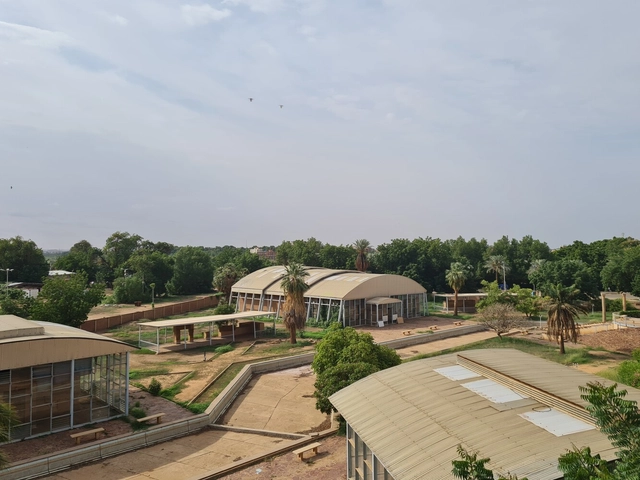
Two museums in Africa built in the mid-twentieth century carry the name 'National Museum.' They reflect the story of their respective nation's history and are tied to notions of national identity. Both are also examples of fine architecture built on the principles of Modernism, a movement associated with nation-building in Africa. However, their inception and purpose followed very different paths. This article explores the under-reported architecture of the National Museum of Ghana in Accra and the Sudan National Museum in Khartoum.
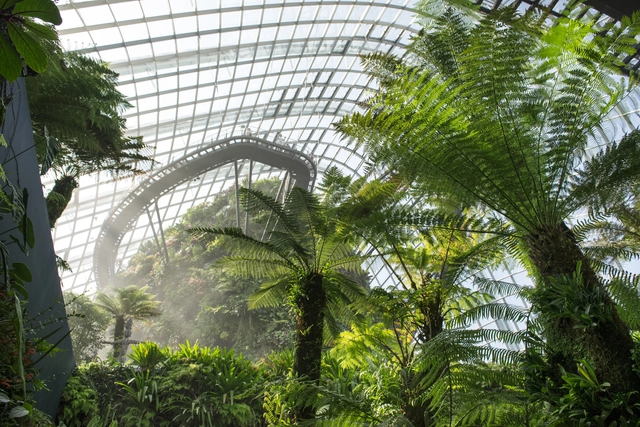
The world has lost 60 percent of animal populations since 1970. This staggering decline reflects the growing pressures on ecosystems, from habitat destruction to climate change. And 1 million species now face threats of extinction. As these problems continue to escalate, the importance of preserving biodiversity and restoring ecosystems becomes clearer.
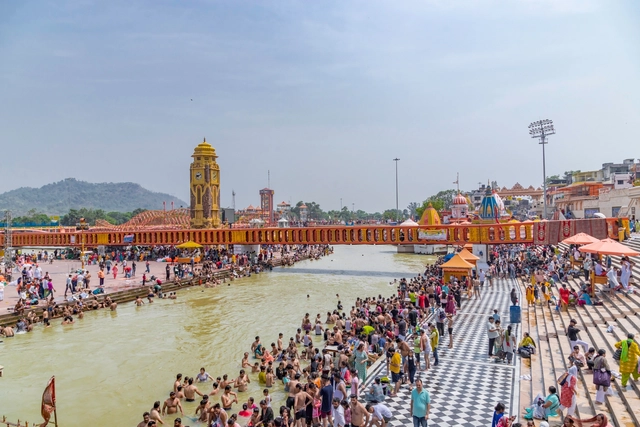
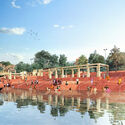
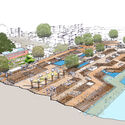
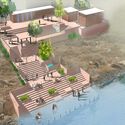
Ancient Indian civilizations once thrived along the banks of the country's many rivers, solidifying a connection between water and culture that endures to the present. Rivers have been integral to India's diverse communities, serving as essential resources for daily life and spiritual practice. Historically, these water bodies experienced an entrenched sense of custodianship; being cared for collectively by the communities that depended on them. Today, responsibility for the rivers shifts between the hands of multiple stakeholders, calling for a joint endeavor that acknowledges their cultural significance.
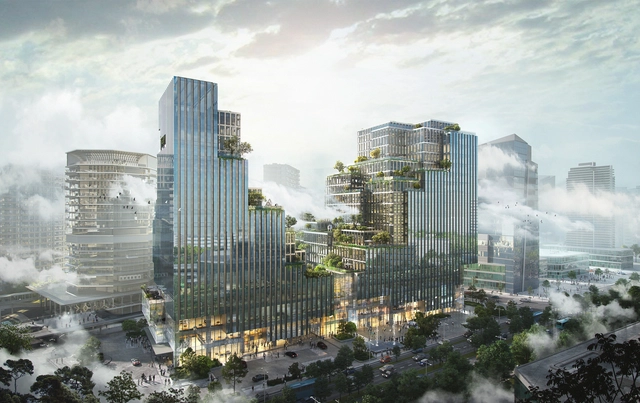
Büro Ole Scheeren has revealed their design for an 800,000 sq ft development following the concept of live-work-lay in Hangzhou, China. Titled Urban Glen, the project situated between West Lake and the Qiantang River comprises two towers connected by a central plinth. This feature, inspired by Hangzhou's hilly landscapes, becomes a built topography of terraces and exterior environments, aimed at optimizing natural light and the quality of both indoor and outdoor spaces. The Glen will house a variety of amenities, including ballrooms, meeting spaces, restaurants, and retail, all interwoven with public art from New World Development's extensive collection.
The UK Pavilion, designed by London-based Woo Architects, in collaboration with Japanese contractor ES Global, has been completed at the Expo 2025 in Osaka. Built on the principles of a circular economy, the pavilion features a modular, 10-by-10-meter gridded structure designed that prioritizes ease of assembly, disassembly, and relocation. Ultimately, the pavilion's design reflects the Expo's theme, "Come Build the Future," embodying sustainability and reuse.
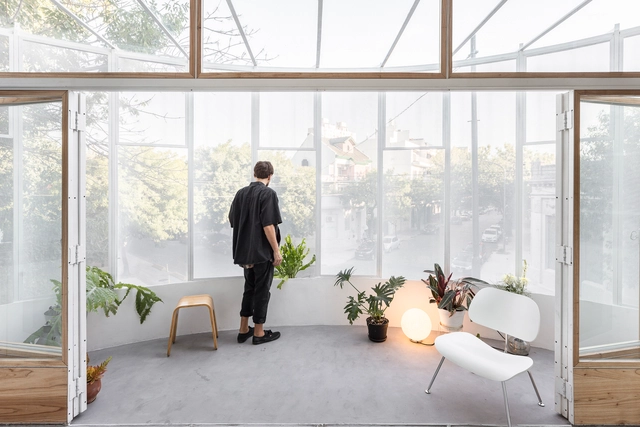
IR Arquitectura is not just a studio; it defines itself as a platform for exploration that integrates architectural practice with tangential topics such as the city, landscape, technology, and sustainability. Founded by Luciano Intile and Enrico Cavaglià, and based in Buenos Aires, Argentina, IR Arquitectura is an interdisciplinary collective comprising architects, designers, and professionals from various fields. Together, they tackle projects of varying scales and natures, seizing each opportunity to explore new solutions and strategies for contemporary living, particularly in urban contexts and in close connection with the environment.
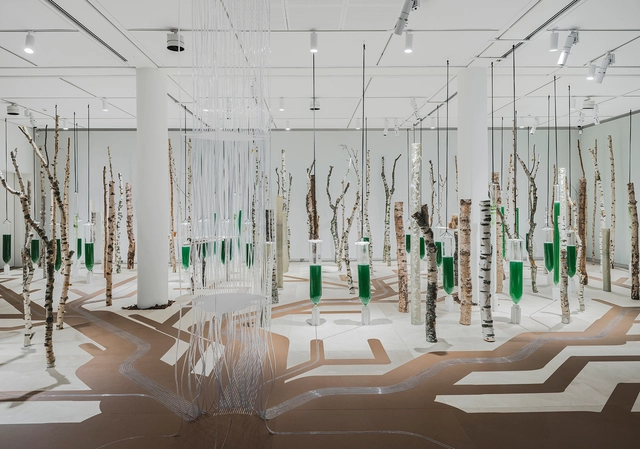
The Louisiana Museum of Modern Art's "Living Structures" exhibition, running from November 8th, 2024, to March 23rd, 2025, features Deep Forest, a new installation by Prof Claudia Pasquero and Dr. Marco Poletto founders of architecture and design innovation firm ecoLogicStudio, together with academic partner Innsbruck University. This immersive work challenges traditional architectural paradigms by embracing the naturalization of architecture and technology, a direct counterpoint to modernist attempts to mechanize nature. The exhibition represents the culmination of twenty years of research in bio-digital design, showcasing the potential of symbiotic relationships between technology and the natural world within built environments.
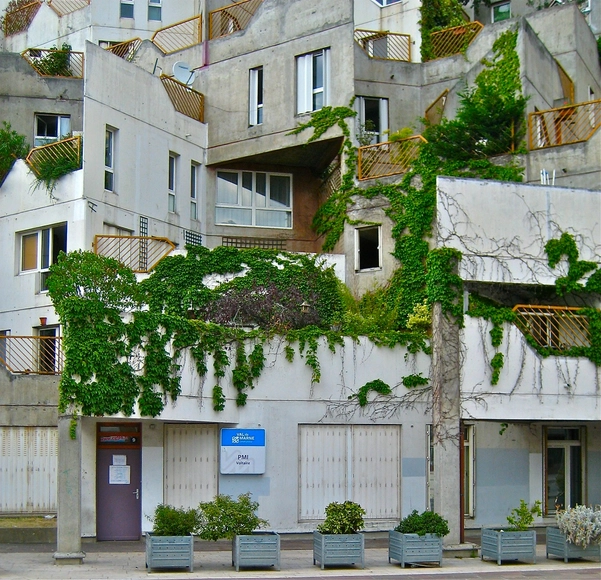
A few months ago, French architect Renée Gailhoustet was awarded the 2022 Royal Academy Architecture Prize. As housing challenges continue to embattle Paris and other French cities today, Gailhoustet was a timely choice, her body of work in the Paris suburbs – stretching back to the 1960s – still functioning today as compelling case studies to a social housing approach that concurrently embraces community and has a uniqueness of form.
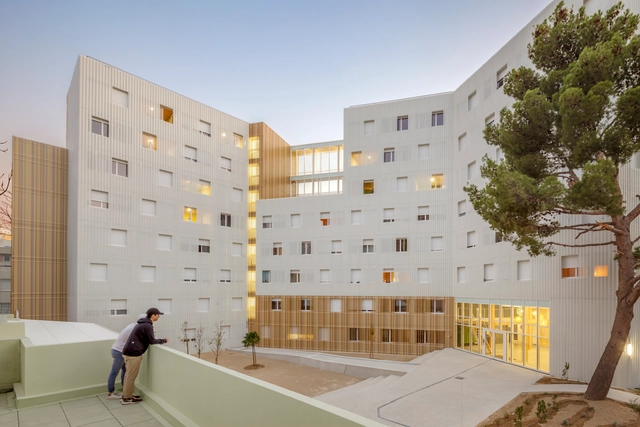
Student housing has undergone a remarkable transformation over the last century. Once seen as a utilitarian necessity, providing shelter and basic amenities for students, this architectural typology has evolved to address increasingly complex societal, cultural, and urban demands. Starting with Le Corbusier's modernist approach at the Cité Universitaire in Paris, student housing has reflected broader trends in architecture, urbanism, and social change.
Today, these buildings must cater to a highly diverse and transient population, navigating the pressures of affordability, density, and the evolving living standards of young adults. With rapid urbanization and increasing student mobility, universities now face the challenge of designing housing that is not only functional but also adaptable to different cultural and social contexts. This has led to more flexible, innovative solutions that promote both privacy and community living.
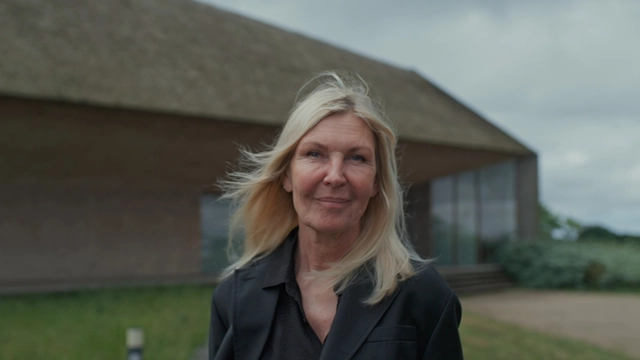
Buildings are deeply interconnected with their surroundings—the climate, culture, landscape, and the lives of their occupants. For Dorte Mandrup, a renowned Danish architect, context is more than a mere consideration; it is the driving force behind her designs. Her work demonstrates a profound curiosity about the people who will inhabit her buildings and the unique stories embedded within each site. Her buildings aren't just structures; they're thoughtful responses to their surroundings, without aiming to disappear within them.
Dorte Mandrup is featured, alongside Tosin Oshinowo, in the second installment of the documentary Women in Architecture, released November 12, 2024. Produced by Sky-Frame in collaboration with ArchDaily and directed by Boris Noir, the film builds upon the first episode, which highlighted Toshiko Mori, Gabriela Carrillo, and Johanna Meyer-Grohbrügge, offering a continued exploration of diverse perspectives within architecture.
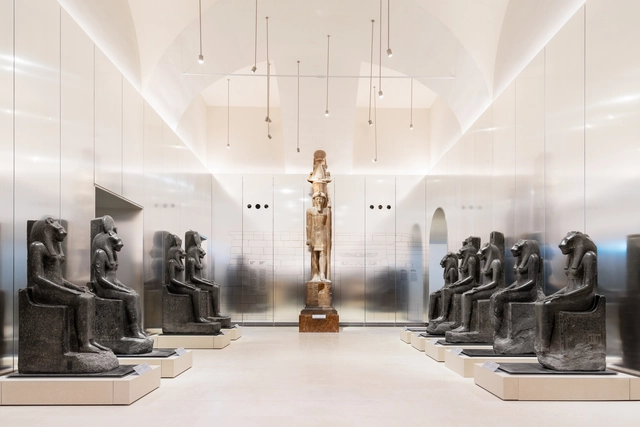
The Museo Egizio in Turin, Italy, celebrated its bicentennial this year with the inauguration of its redesigned Gallery of the Kings. This renovation, designed by OMA architects David Gianotten and Andreas Karavanas in collaboration with Andrea Tabocchini Architecture, marks a significant enhancement to the museum's exhibition spaces. The project, commissioned following a 2023 competition win, forms a key component of a larger Museo Egizio revitalization scheduled for completion in 2025. This larger project also includes a new covered courtyard and interconnected public spaces.
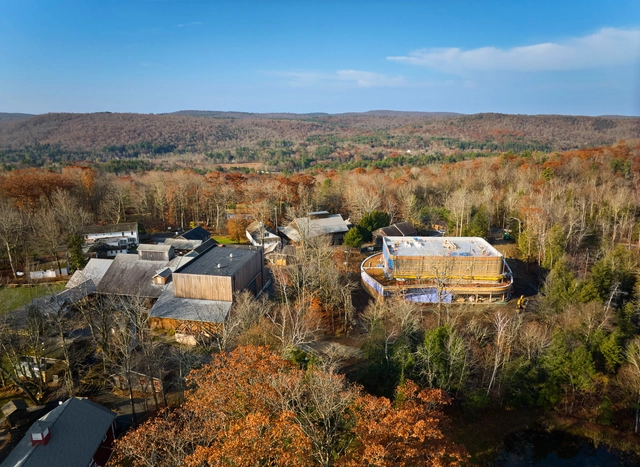
Jacob's Pillow, a historic hub for dance in the United States, will open the new Doris Duke Theatre on July 9, 2025. As of November 2024, construction is progressing on schedule, with the theater taking shape on the original site of the initial structure lost to a devastating fire in November 2020 in Massachusetts, United States. Designed by the Dutch firm Mecanoo, led by Francine Houben, in collaboration with New York-based Marvel, helmed by Jonathan Marvel, the project blends innovation with a deep reverence for the site's historic legacy.
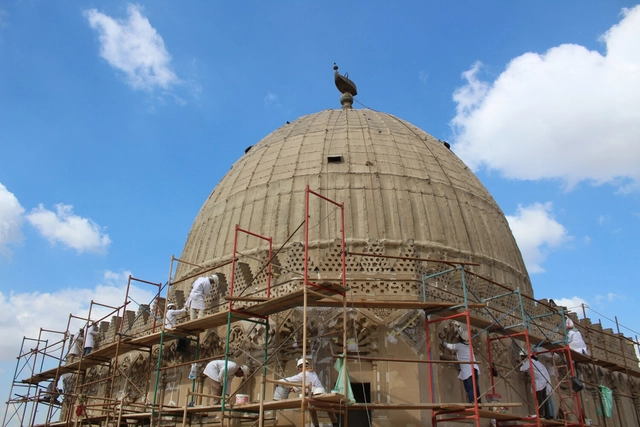
Al-Imam Al-Shafi'i. Image Courtesy of Megawra - Built Environment Collective
Cairo, often called the "City of a Thousand Minarets," boasts one of the richest cultural and architectural tapestries in the world. Its heritage reflects centuries of diverse influences from Pharaonic monuments to Islamic and Mamluk architecture. However, preserving this legacy is an ongoing challenge in the face of urban pressures, climate change, and socio-economic dynamics. Heritage conservation in Cairo is not just about safeguarding these structures; it's about integrating them into the lives of local communities, ensuring they remain dynamic and accessible spaces.
At the forefront of this mission is Dr. May al-Ibrashy, an architect and conservationist whose innovative and community-driven approach has redefined how heritage is preserved. As the founder of Megawra–Built Environment Collective, she has worked tirelessly in neighborhoods like Al-Khalifa, Al-Hattaba, and Sayyida Zeinab to restore historic monuments while creating vibrant public spaces. Her work bridges the gap between architectural preservation and urban regeneration, ensuring that these historic districts serve both as cultural landmarks and as living, functional spaces for their residents.
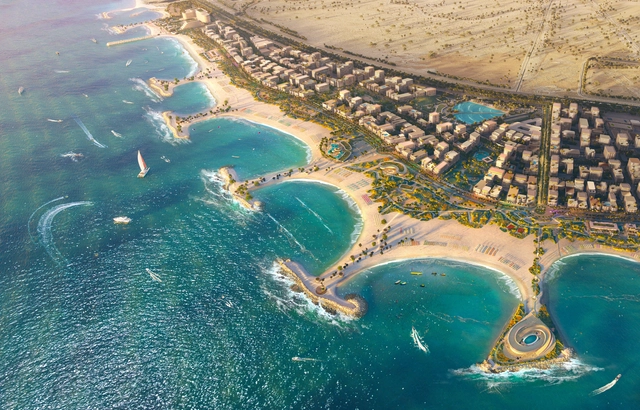
Foster + Partners have revealed their proposal for the Bilaj Al Jazayer Beach master plan, a new development aiming to introduce a new touristic destination along Bahrain's southwest coast. The 3.5-kilometer beachfront introduces a pedestrian-friendly infrastructure along with a mixed-use district fitted with residential areas, hotels, retail spaces, and public amenities.
The Pritzker Architecture Prize has released a special video honoring Riken Yamamoto, the 2024 Laureate. Presented in a documentary-style format, the film celebrates Yamamoto's distinguished architectural career and his contributions as the 53rd Laureate, honored earlier this year in Chicago. This milestone coincided with the 100th birthday of Cindy Pritzker, co-founder of the Prize with her late husband, Jay A. Pritzker.
The world certainly looks different through the eyes of a young child; enormous, intriguing, and somewhat overwhelming, and it has long been believed that what we encounter as children shapes our perspective of the world. When asked about his childhood memories in Switzerland, Peter Zumthor shared that the memories of his youth contain the deepest architectural experience, which has become reservoirs of the architectural atmospheres and images that he explores in his work as an architect today.
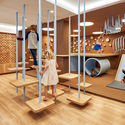
Having a complete understanding of how children change and grow physically and psychologically throughout their childhood requires an in-depth observation of different factors, such as their hereditary traits and genetics, the interactions they have with other children and adults, as well as the environment they are living, playing, and learning in. In celebration of World Children's Day on November 20th, we look at how architects and designers stimulated children's autonomy and promoted their mental and physical well-being through architecture and interior design. This initiative aligns with the theme of World Architecture Day 2024: "Mobilizing the Next Generation for Urban Transformation," emphasizing the crucial role that thoughtful design plays in shaping a sustainable and inclusive future for our cities and the communities within them.
Lydia Kallipoliti is a recognized architect, author, and educator whose pioneering research has transformed the way architecture engages with the pressing challenges of sustainability, technology, and environmental politics. As an Associate Professor at Columbia University's Graduate School of Architecture, Planning, and Preservation (GSAPP), Kallipoliti's approach to architectural education encourages students to confront critical issues such as waste, reuse, and closed-loop systems. Her pedagogical philosophy empowers students to see design not only as an aesthetic or functional pursuit but as a powerful tool for addressing global ecological crises, urging them to think systemically and creatively about the future of the built environment.
In addition to her role in academia, Kallipoliti has authored influential works such as The Architecture of Closed Worlds and Histories of Ecological Design: an Unfinished Cyclopedia, which delve deeply into the relationship between architecture and environmental politics. Her research and writings have sparked discourse on methods for architects to reconsider traditional design paradigms and embrace sustainability as a core tenet of architectural practice.










































.jpg?1637144526&format=webp&width=640&height=580)


.jpg?1637144526)