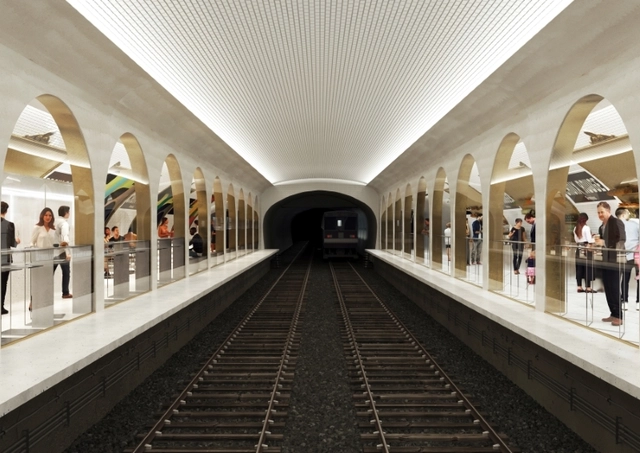
O projeto deve ressignificar o espaço e trazê-lo de volta à vida. Imagens: JeudiWang/SAME Architectes. Image Cortesia de Gazeta do Povo / Haus
On one side, an underground market; on the other, a restaurant and a cocktail bar. Terminus, as Paris's newest gastronomic center will be named, will repurpose a decommissioned subway station in the French capital's 6th arrondissement, with operations spanning both sides of the tracks.
The streets of Los Angeles will serve as a testing ground for a new asphalt compound made from recycled plastic. Developed by TechniSoil Industrial, the material incorporates plastic waste that would typically be discarded, mixing it with recycled asphalt reclaimed directly from the streets.
The governor of Espírito Santo, Renato Casagrande, signed a decree this week mandating the installation of solar energy harvesting systems in new state buildings. The law also applies to facilities constructed with state funds transferred to municipalities through agreements, accords, or covenants.
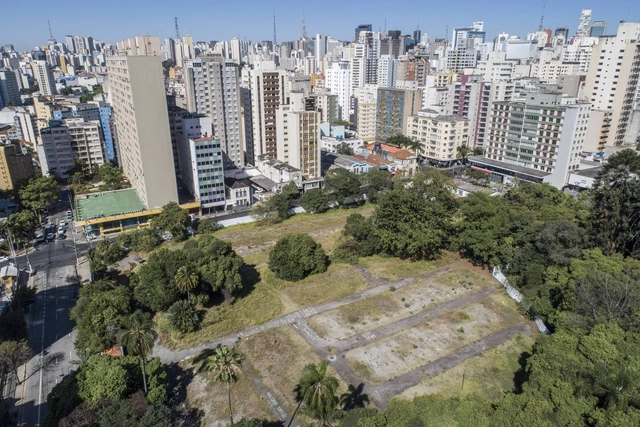
Eight months after the agreement was signed, São Paulo City Hall will finally assume ownership of the Parque Augusta site, which until now has been held by developers Setin and Cyrela. The signing of the deed will take place next Saturday, April 6, during a ceremony held on the site itself.
Brazil's recent political and social crisis—exemplified by the results of the latest election—is concerning and has been undermining citizens' trust in the decision-making processes that affect our lives and cities. One of the reasons for this is the absence of public spaces where people of different social classes, races, ethnicities, perspectives, and worldviews can meet, exchange, and represent who they are.
Public spaces are fundamental to democracy and citizenship. Modern planning and unequal urban development have led Brasília to become a segregated, fragmented, and deeply unequal city. The deteriorated public sphere and the resulting individualization of lifestyles worsen the situation, leaving us increasingly disconnected, intolerant, and civically disengaged.
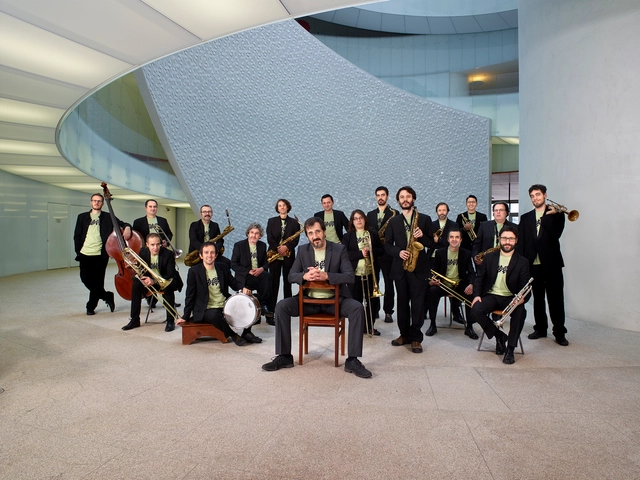
Matosinhos Jazz Orchestra. Image: Courtesy of Orquestra Jazz Matosinhos
At Casa da Arquitectura, the sounds of Brazil are heard every day at the exhibition “Infinito Vão – 90 Years of Brazilian Architecture,” but in April, this intersection of music and architecture will be further strengthened. Zuza Homem de Mello—a leading figure of jazz in Brazil, musicologist, journalist, radio host, and music producer—is the central figure of this programming, which includes the Illustrated and Musical Lecture “90 Years of Brazilian Song – 1928 to 2018,” the concert “Brazilian Music, Portuguese Musicians,” the presentation and screening of the documentary “Zuza Homem de Jazz,” and a poetic performance inspired by Clarice Lispector starring actress Camila Pitanga.
Brumadinho, MG. Photo by Ricardo Stuckert / Fotos Públicas. Via Gazeta do Povo
Brazilian architecture and urbanism organizations have published a technical note regarding the failure of the Vale mining company dam in the city of Brumadinho, Minas Gerais, on January 25 of this year. Released last Friday, the document outlines ten points that comprise a preventive action strategy aimed at avoiding further tragedies and "protecting and saving lives."
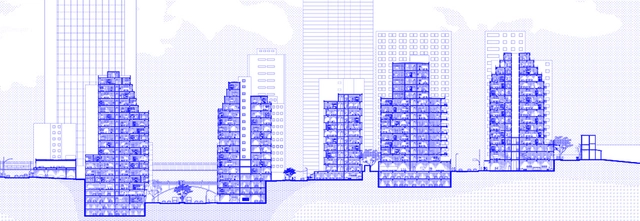
Architectural representation, regardless of the platform—whether a plan, section, isometric, or perspective—is simultaneously a product and a procedure. As a product, it is the final outcome representing the object, articulating scale, information, and medium. As a procedure, it is the process of defining what and how to represent, dissecting and translating information—understood not only as a graphic product but as a process of analyzing, selecting, and translating from one medium to another, an objective way of thinking through which new truths about the augmented object are revealed. For this procedure and product to be complete, their information must be understood by the viewer. This gives rise to graphic standards and codes that regularize comprehension and typically relate to the constructive logic of the building or city, whether existing or proposed. Ultimately, this graphic product is an abstraction of reality—an idealized, orthogonal translation of the aspects chosen for systematization.
https://www.archdaily.com/1121384/the-limits-of-the-section-an-essay-on-graphic-representationBeatriz Costa Hoyos
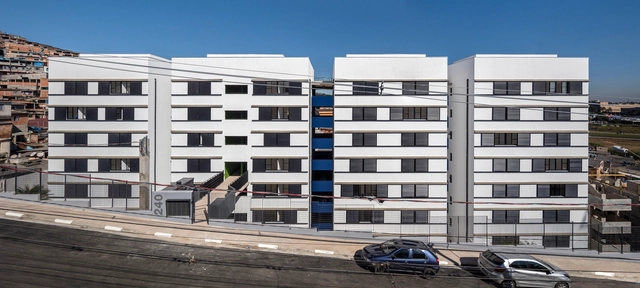
The Institute of Architects of Brazil - São Paulo Department has announced the winners of the IABsp 2019 Awards. Divided into 17 categories that cover social housing, commercial and cultural projects, urban design, and restoration—both built and unbuilt—as well as publications, photography, ephemeral architecture, and student projects, the IABsp 2019 Awards aim to identify the advancements and challenges in contemporary national architecture and urbanism. The initiative recognizes ingenious and significant proposals, particularly those that effectively contribute to the development of technique, knowledge, and the built environment in dialogue with nature, society, economy, and culture.
Architect and illustrator Matías Kim has shared with us a series of drawings featuring some of Oscar Niemeyer's most iconic works. With simple, precise lines, Kim explores the plasticity of the modern architect's works through static and moving images, revealing the interiors of projects such as Casa das Canoas and the Cathedral of Brasília.
The Reasons Offsite, an exhibition on modular and prefabricated architecture, was created in Portugal by the studio SUMMARY and is traveling around the world. The exhibition has been shown in Albania (at Tirana Architecture Week, in September 2018) and in the United States (at the Salt Gallery of the Boston Society of Architects, in March 2019). It now has two more editions confirmed for this year, in Edinburgh and Weimar, the latter as part of the Bauhaus centenary celebrations.
https://www.archdaily.com/1121352/the-reasons-offsite-an-immersive-virtual-reality-experience-developed-by-summaryPedro Vada
On Wednesday, October 9, the 21st Brazilian Congress of Architects (CBA) began. Organized by the Institute of Architects of Brazil (IAB) since 1945, this year's edition runs through October 12 in Porto Alegre, inviting professionals and the public to discuss its theme, Space and Democracy, through events held across various locations in the city's Historic Center.
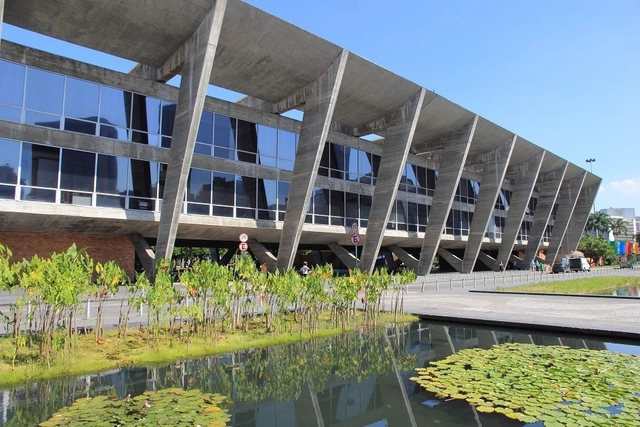
Museum of Modern Art. Designed by Rio de Janeiro architect Affonso Eduardo Reidy. Image courtesy of CAU/BR
Rio is the World Capital of Architecture. The title was awarded by the United Nations Educational, Scientific and Cultural Organization (UNESCO) on Friday morning, January 18, during a ceremony held at the organization's headquarters in Paris, and stems from the hosting of the World Congress of Architects in Rio in 2020. This is the first time a city has received this designation—established last year through a partnership between UNESCO and the International Union of Architects (UIA).
Conceived by Tatiane Gonzalez from Ateliê Digital Analógico, "Incerteza Invisível" is a large-scale technological urban intervention in the form of projection mapping, created by an all-female group.
The curatorial team of the XII São Paulo International Biennial of Architecture, comprising architects Vanessa Grossman, Charlotte Malterre-Barthes, and Ciro Miguel, has been named a recipient of the competitive 2019 Grants to Individuals from the prestigious, Chicago-based Graham Foundation for Advanced Studies in the Fine Arts. The grant was awarded for the publication of the book Todo dia/ Everyday, the result of the work and research that culminated in the theme of the XII São Paulo International Biennial of Architecture. The bilingual volume will be published by Ruby Press, a Berlin-based publisher specializing in books on architecture, art, and other cultural practices engaged in the production of space in contemporary society.
The magazine Solidarity Housing Production: An International Overview was launched on Monday, November 25, at the opening of the National Seminar on Technical Assistance for Social Interest Housing. The publication compiles the main contributions from the event of the same name, held in July 2018. Organized by architects and urban planners Luciana Ximenes and Thais Velasco, the magazine was produced by CAU/RJ and the Observatório das Metrópoles (Ippur/UFRJ).
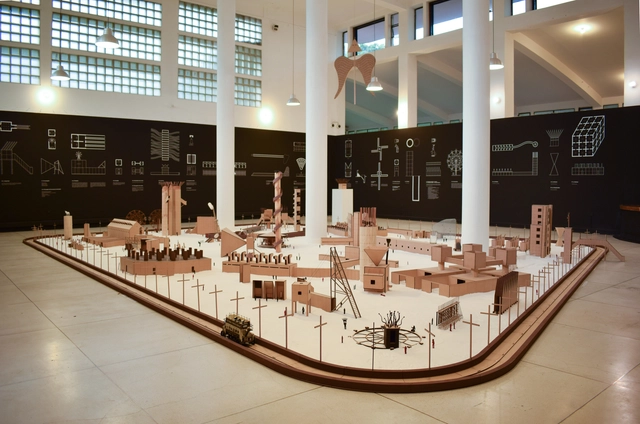
The exhibition Victims: A Work by John Hejdukmaterializes the unbuilt work of the New York architect, presented here for the first time by the Leopoldo Rother Architecture Museum at the National University of Colombia. Alongside the scale model of the project, the 67 figures are accompanied by narratives, illustrations, and a short film titled Structures of a Wound.
As a tribute to Mexico's rich and diverse chromatic palette, the Museo del Objeto del Objeto (MODO) presents its new temporary exhibition: “Mexico in Color,” curated by Ana Elena Mallet and Mariano Marroquín. The exhibition offers a cultural review of color perception in Mexico and its impact on art and design. One of the first experiences visitors will encounter is the conceptualization of color in folk art to forge identity. Subsequently, this element is adopted as a defining feature in the arts and, ultimately, as a driving force for the country's modernization.


.jpg?1559312649&format=webp&width=640&height=580)
-U204285124265iRC-1200x800_GP-Web.jpg?1549280258&format=webp&width=640&height=580)

.jpg?1570815954&format=webp&width=640&height=580)