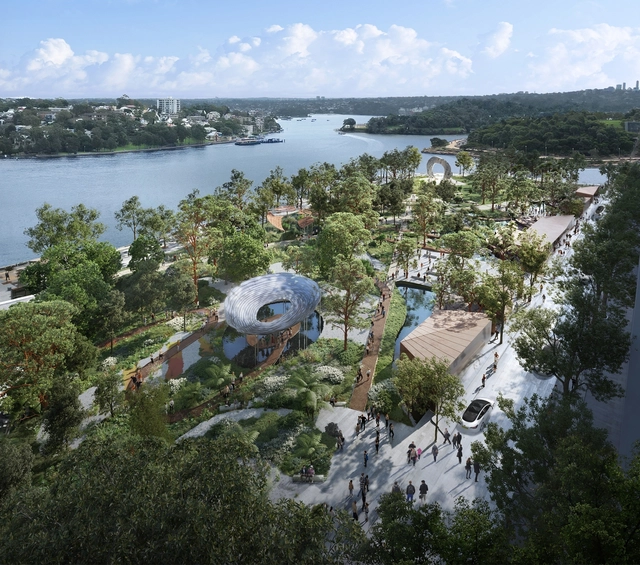
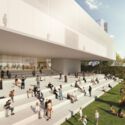
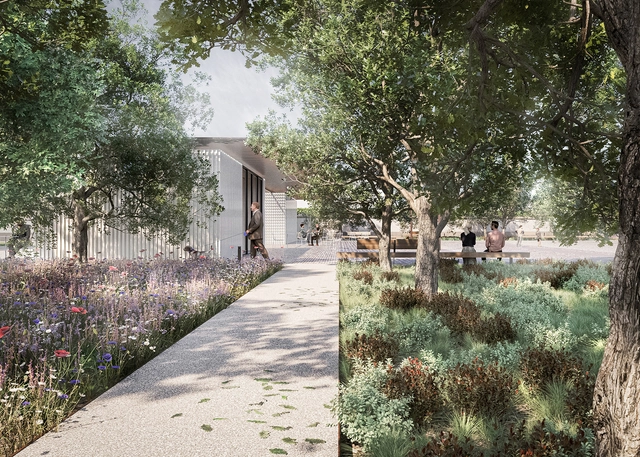
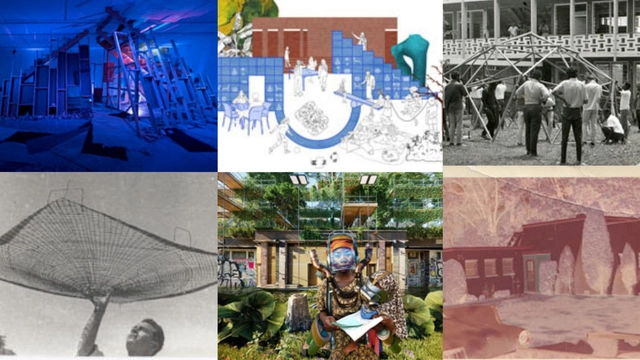
AKIN has been announced as the winning team in the Barangaroo Harbour Park Design Competition, a project that will transform a central location along the waterfront of Sydney, Australia. The winning team is a First Nations-led and Sydney-based ground composed of Yerrabingin, Architectus, Flying Fish Blue, Jacob Nash Design, and Studio Chris Fox, with Arup as engineering consultants. Through its designers, the group integrates Indigenous knowledge systems along with landscape architecture, regenerative design, public art, and place-making.
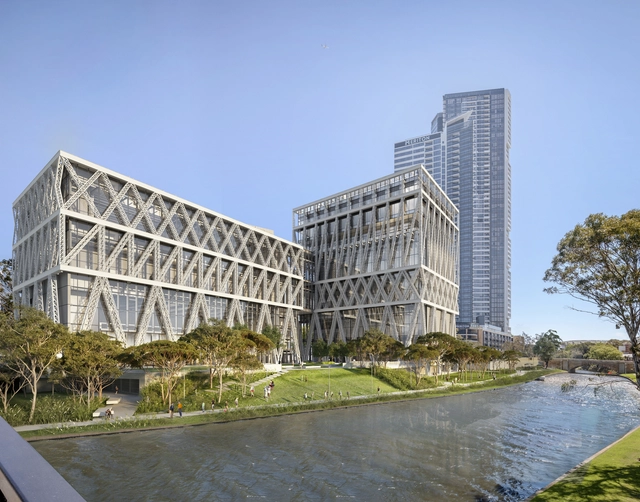
Powerhouse Parramata, Sydney’s new largest museum, has been announced to open in early 2025. The museum group overseeing the project sits at the intersection of the arts, design, science, and technology industries. Designed by Moreau Kusunoki in collaboration with local practice Genton, the museum will be located on the south bank of the Parramatta River in Western Sydney, acting as the largest cultural infrastructure project in the Australian capital city since the Sydney Opera House.
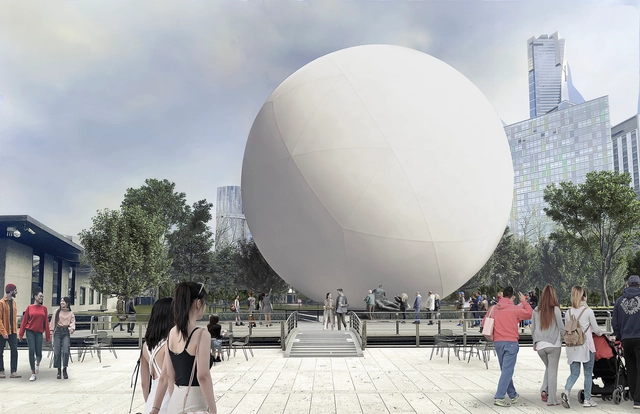
The National Gallery of Victoria 2023 Architecture Commission has chosen a colossal inflatable sphere, named (This is) Air, as its centerpiece. This unique creation is a collaboration between architect Nic Brunsdon and ENESS, aiming to bring the invisible into view by highlighting a fundamental aspect of life: breathing air.
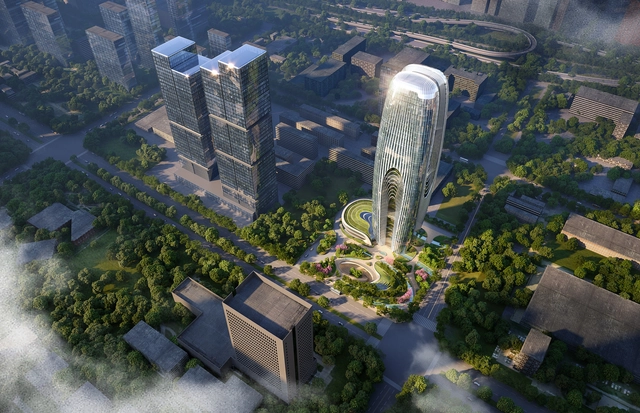
Zaha Hadid Architects has revealed the design of the Daxia Tower, to be built in the High-Tech Economic and Technological Development Zone of Xi’an, one of China’s largest inland cities with a population nearing nine million people. The tower will mark the center of Xi’an’s business district and will include offices, retail, and ancillary facilities, all designed with data analytics and behavior modeling to ensure a balanced disposition of spaces.
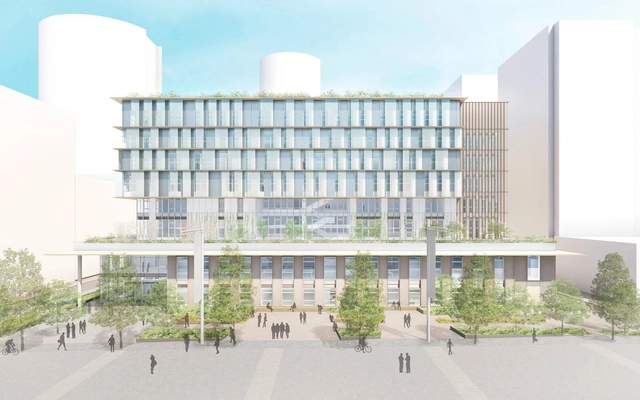
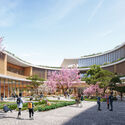
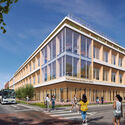
WilkinsonEyre has been selected to design a new college campus on the Olympic Way in Wembley, London, to serve as the new educational facility for the College of North West London. The project is designed to cater to over 300 students per week in addition to the 250 staff members. The new facility will offer classes in engineering, the built environment, and green skills, as well as digital technology, computing, health, and social care. The new campus scheme has recently been granted planning permission at the Council’s Planning Committee meeting and has now been passed to the Greater London Authority for final approval.
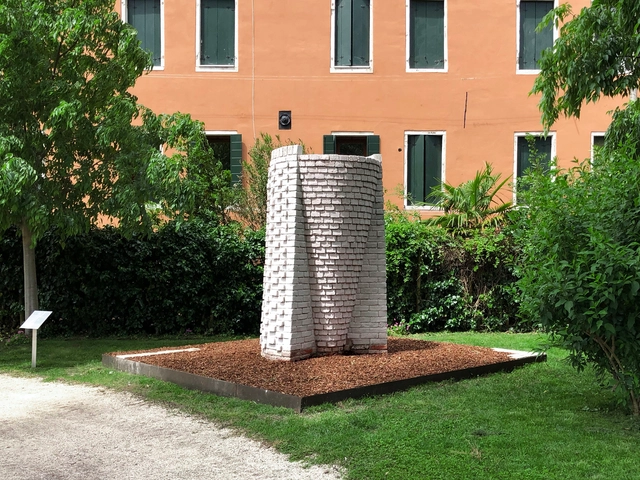
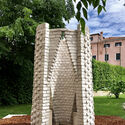
Urban Radicals presented a temporary pavilion “A Brick for Venice” as part of the European Cultural Center’s “Time Space Existence program during the same time as the 2023 Venice Architecture Biennale. The entirety of the brick pavilion was made with mud from the city’s canals. Furthermore, “A Brick for Venice” is the first proof of concept for the team’s novel waste-based construction product.
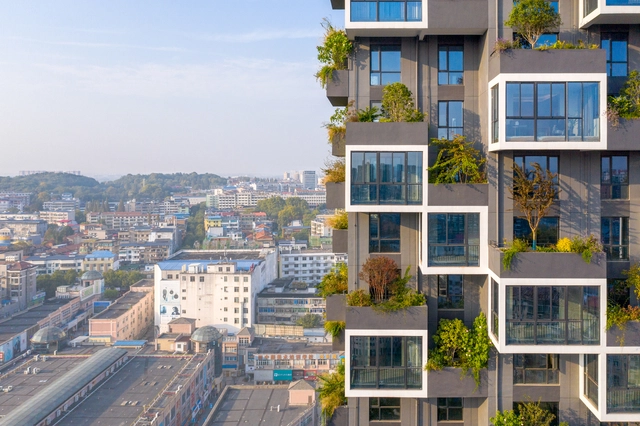
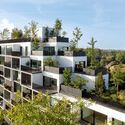
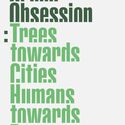
The “Green Obsession” campaign launched by Stefano Boeri Architetti has been declared the winner of the SDG Action Awards, the most important recognition of projects that support the United Nation’s 17 Sustainable Development Goals. As part of the SDG Action Campaign, the United Nations set out to reward initiatives that “mobilize, inspire and connect communities in order to promote positive change.” The winning initiative aims to help improve the relationship between nature and design by implementing the principles of urban forestation. Green Obsession represents a series of conferences, public programs and a book, “Green Obsession: Trees Towards Cities, Humans Towards Forests”, published in 2021 and supported by the Graham Foundation.
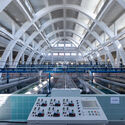
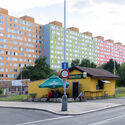
In the summer of 2022, Iwan Baan completed an urban pilgrimage through the unique streets of Prague. For 7 days, the photographer photographed the city on foot, on a bike, and from a helicopter, capturing the essence of the urban fabric, from the center to the periphery and the landscape along the Vltava River. Presenting the city as a raw and often neglected entity, Iwan Baan showcased his exhibition “Iwan Baan: Prague Diary” this year at CAMP.
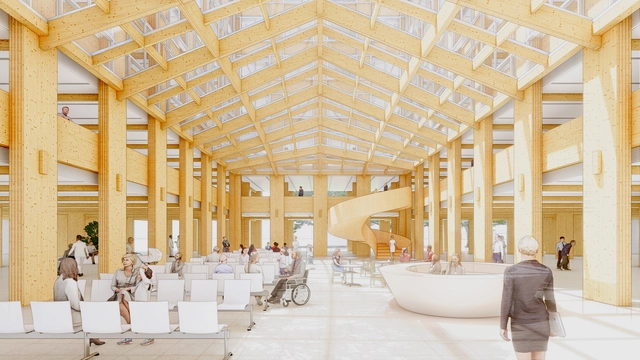
Lviv Hospital Proposal. Image Courtesy of Shigeru Ban
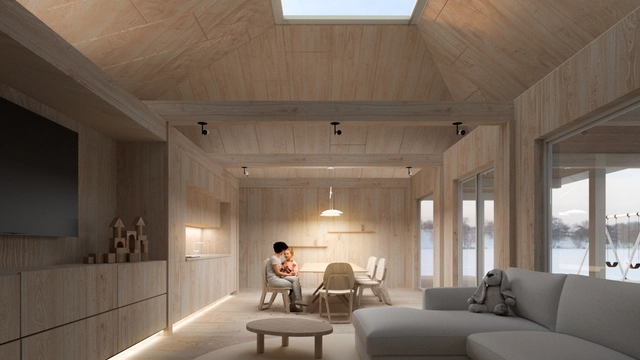
Shigeru Ban has announced the intention to collaborate with the municipality of Lviv to design an expansion of the Lviv hospital. As the largest hospital in Ukraine, this unit has witnessed an increase in the number of patients since the beginning of the war, leading to the need to increase the capacity of the institution. Shigeru Ban’s proposal uses cross-laminated wood and joints inspired by traditional wooden construction techniques to create a safe and welcoming environment for healing and recuperating.
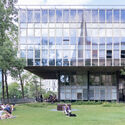
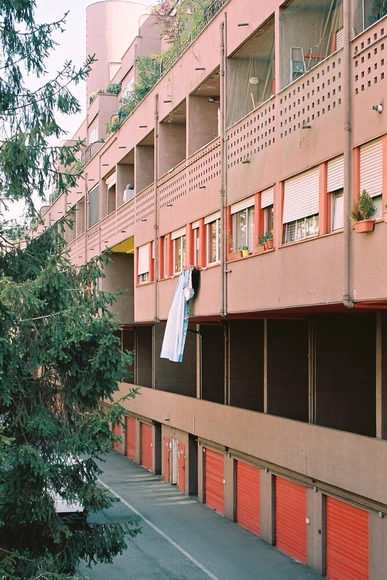
In the aftermath of the Second World War, a drastic housing shortage spread across Europe, and Milan was no exception. Various plans and solutions were conceived to address this crisis, outlining satellite communities for the city to accommodate between 50,000 and 130,000 residents each. The first of these communities began construction in 1946, just one year after the war's end: the Gallaratese project.
Switzerland-based office Oppenheim Architecture has been announced as the winner of a two-phase competition for the redesign and restoration of the Besa Museum in Tirana, Albania. The institution is dedicated to showcasing the Albanian code of honor represented through the name “Besa,” a concept that dictates welcoming any guests as one’s own. The museum is conceived as a continuation of the Jewish Museum on Vlora, diving deeper into the principle of Besa and its role in the help given to the Jews in Albania during the Holocaust.
OPEN Architecture’s Sun Tower, designed as a landmark for the Chinese coastal city of Yantai, topped out last month. On the summer solstice day, the 50-meter-tall structure reached its peak height. The landmark is expected to be open to the public in 2024. Acting as a cultural placeholder, the building reframes the typical understanding of "design with nature."
During the opening keynote at the UIA 2023 World Congress of Architects, Bjarke Ingels, the lead and founder of BIG, shared insights into pressing global challenges along with the office’s distinctive approach to addressing them. After the conference, ArchDaily had the chance to sit down with Bjarke Ingels to further expand on these topics. The discussion touched on a number of subjects, including BIG’s approach to design, based on their principle of “Hedonistic Sustainability,” the meaning and opportunities behind this change in mentality, the inter-applicability of technological innovations across different fields and even across planets, and the need to develop a New European Bauhaus as a response to the emerging environmental necessities.
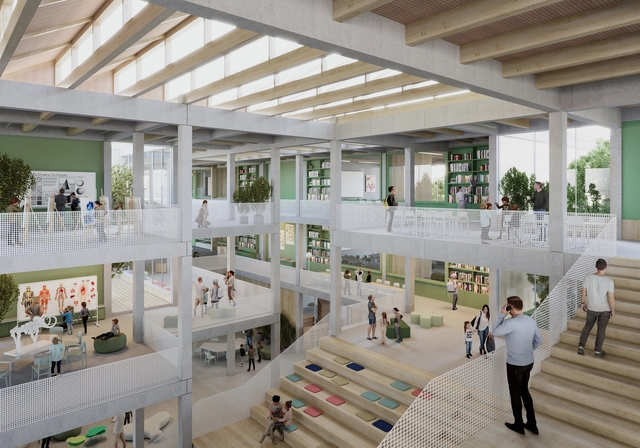
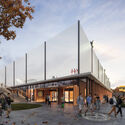
CHYBIK + KRISTOF has just won an architectural competition to design the new primary school in Stara Boleslav in the Czech Republic. The school will allow up to 900 children from sixteen neighboring towns to attend. Furthermore, the design is based on a flexible methodology that will enable the school to change in the future to meet new demands. The building's green atrium opens views of the city's primary local and historical structures. Moreover, the school is designed to become an educational and cultural hub for the town and the neighboring public.
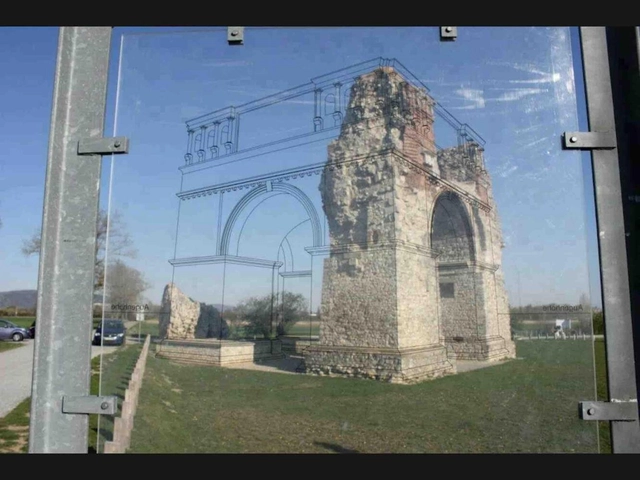
Lo-tech Augmented Reality. Image Courtesy of James Corbett
Augmented reality (AR) software has been a common feature in professional design toolkits for a while. But the recent release of Apple’s Vision Pro glasses shows the mixed-reality wearables sector is making serious inroads in consumer markets too, as one of the world’s biggest names in consumer design and technology enters the market.
A major reason for the immense hype surrounding Apple’s foray into AR/VR hardware, however, is the decision to position it as ‘spatial computing.’ By taking the complexity of augmented reality, and using it to heighten a familiar consumer sector – personal computing – the Cupertino-based brand has simplified the whole experience, widening its understanding and appeal.
Ennead Architects has been enlisted to redefine the campus of The American School in Japan (ASIJ) to align the international school’s academic mission with its environment. Currently defined by its aging and fragmented infrastructure, the campus is set to become a dynamic and innovative space, encouraging integrated learning, cohesion, and collaboration across age groups. Sustainability principles, along with the experience of Japanese heritage, also play an important role in the design of the master plan, which proposes a toolkit of solutions intended to help create a unified, sustainable and resilient campus.
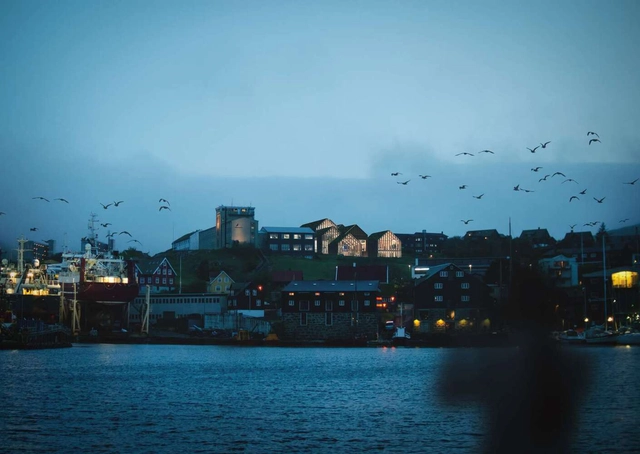
Henning Larsen Architects has just won the competition to design a new university campus building in Torshvan, Faroe Islands. The 8000m2 campus is primarily inspired by the Faroese settlements and indigenous lands, drawing on various ancient methodologies of building for extreme weather conditions. The new design “extends the comfortable outdoor season by 150 days each year,” transforming the campus into an ideal space for learning.
Ghisellini Architects, in collaboration with Lucrezia Alemanno and Paolo Beniamino De Vizzi has unveiled the redevelopment and complete redesign project for the new Piazza Francesca Cabrini in Livraga, Italy. Located about 45 kilometers southeast of Milan, the municipality of Livraga set out to transform the currently degraded public space and transform it into an attractive gathering place with site-specific environmental and landscaping features. Construction is expected to begin in August 2023 and is scheduled for competition in 2024.
The Graham Foundation announced awards to organizations worldwide, supporting 38 different projects. The projects range from exhibitions, publications, and other activations serving the public through arts and culture. Together, these projects examine various topics, platforms, and issues in contemporary architecture discourse and showcase the work of architects, artists, curators, designers, educators, and other professionals working with organizations around the world in places like Chicago, Los Angeles, Tijuana, and Beirut.
Videos
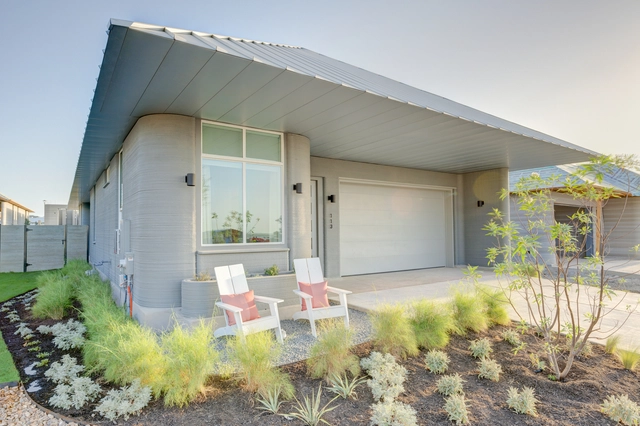
Lennar, ICON / 3D-printed, 100-home Community Wolf Ranch ,Rune Model Home. Image Courtesy of ICON, Lennar
The first 3D-printed model home built by ICON and Lennar and co-designed by BIG-Bjarke Ingels Group is now open for visits at the 100-home community of Wolf Ranch in the city of Georgetown, near Austin, Texas. The house is part of the largest-scale development of 3D-printed homes in the world, currently under construction. Several of the homes have already been sold. With more than 80 of the home sites actively under construction and nearing completion, the first homeowners are scheduled to move in this September.