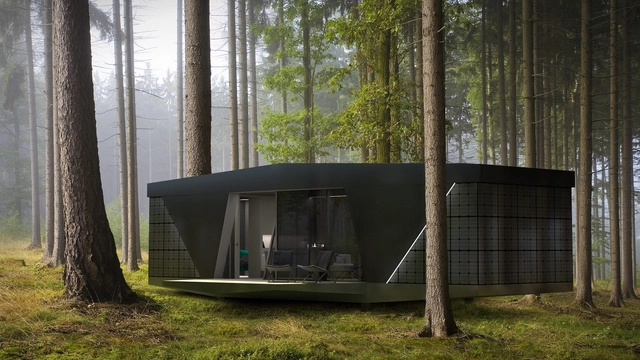
The uncontrollable roar of construction sites, the chaotic city streets, the monotony of spending more than 8 hours a day in a cubicle… All these daily grinds can take a toll on the human body and mind. Retreating into nature sounds liberating, however, our dependence on technology makes living off-the-grid almost impossible. Well, what if you could keep your modern lifestyle and sleep in a house hidden in the forest?
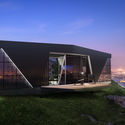
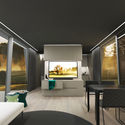
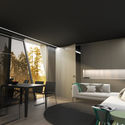
IO Houses created The SPACE, a versatile and innovative housing project for people who love nature and want to preserve it, just as much as they love contemporary, luxurious living.
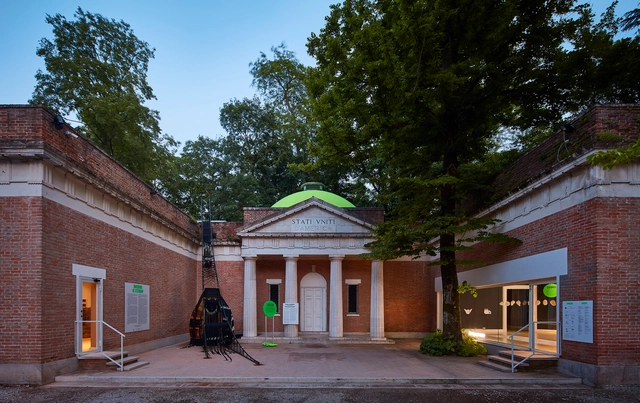
The Russian Pavilion highlights the past, present, and future of Russian railways. The exhibition shows railways as a response to a landscape which is in many places uninhabitable, allowing the people who use them to explore Russia's expansive territories.
In celebration of the launch, the studio is offering a mixed pack of 50 diverse, high resolution cuts outs for free, normally priced at £100. Users can gain access to the offer using the discount code “archdaily” on the cutout shop here during the purchasing process.
https://www.archdaily.com/896437/enliven-your-renders-with-studio-esinams-hi-res-cutouts-free-with-archdaily-discount-codeNiall Patrick Walsh
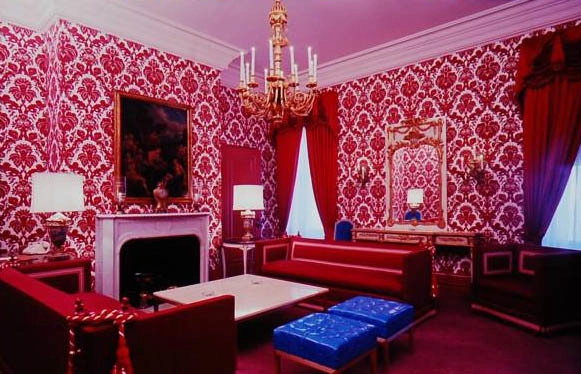
The laws of home decor often derive from personal opinion, varying depending on which “expert” you ask. In an effort to uncover the most serial interior design crimes of our time, technology giant Samsung turned to the British public.
In a public vote of 2000 UK adults, Samsung asked participants to vote on the worst interior design trends of the past 50 years. The results are as controversial as they are varied, with a total of 25 trends spanning half a century, and leaving no room intact.
https://www.archdaily.com/896422/do-not-try-this-at-home-the-25-worst-interior-design-trends-of-last-50-yearsNiall Patrick Walsh
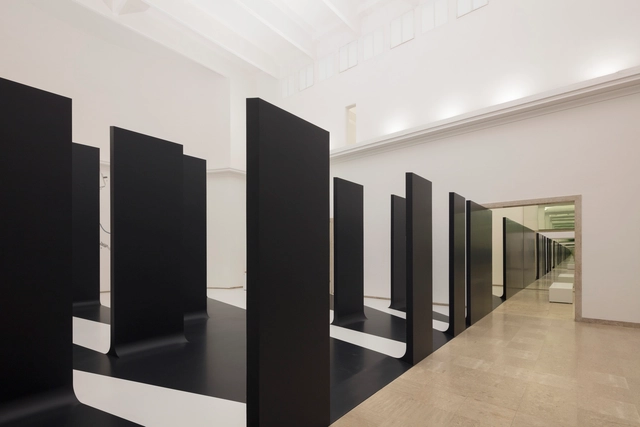
Curated by GRAFT and Marianne Birthler, the German pavilion explores architectures of division and inclusion. In a light-filled space, black panels create division. The initial simplicity of the panels is complicated by their opposite sides, where text and images explicate the impact of wall-building worldwide.
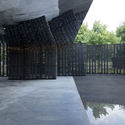
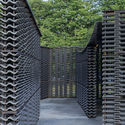
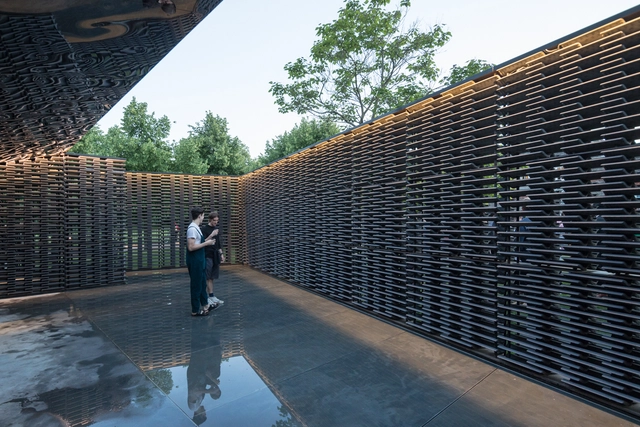
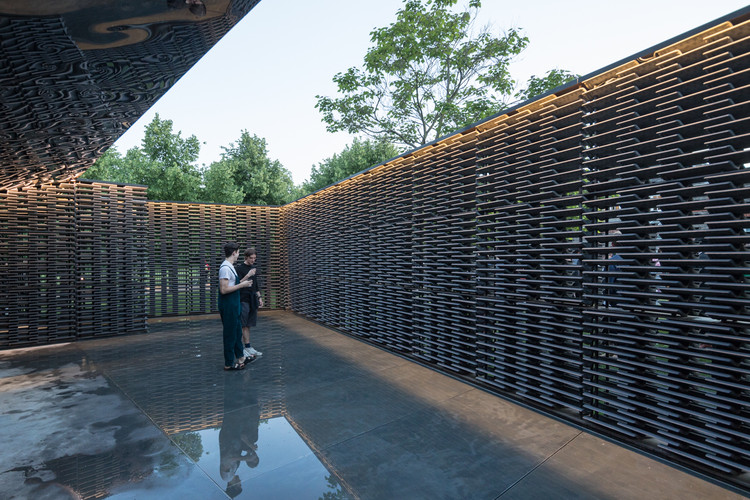
Fusing elements typical to Mexican architecture with local London references, the pavilion centers on a courtyard enclosed by two rectangular volumes constructed using the characteristic celosia method.
WOHA has released an update of their first office skyscraper for China, as their Vanke Yun City scheme tops out in Shenzhen. Manifesting as three tower blocks attached to a central T-shaped core, the scheme seeks to present “an alternative office tower typology that responds to the sub-tropical climate in Shenzhen.”
Set against the backdrop of ubiquitous post-modernist skyscrapers, the 1.6 million-square-foot (150,000 square-meter) scheme aims to “radically transform the soulless skyscraper into a highly liveable, humane, and sustainable micro-vertical city.”
Architecture is always evolving. The practice and business of architecture are undoubtedly evolving alongside the more obvious technological advances, but what we often forget is that there are no new ideas. When it comes to design, what we see manifested in our daily lives is the result of evolution. And at the root of that design evolution is inspiration.
A new initiative from Gianpiero Venturini and his firm Itinerant Office titled Past, Present, Future aims to open a research path based on the analysis of successful practices in the 21st Century while ultimately providing a new form of inspiration for the next generations of architects and designers. The documentary series begins with a select group of 11 international architects, including Jacob van Rijs, co-founder of MVRDV, Mario Cucinella, and Simone Sfriso, co-founder of TAMassociati. Each architect is featured in three video interviews in which they reveal the methodology behind their designs, the themes and approaches within their architectural practice, and the predictions they have for architecture in the near and distant future.
Students from South Africa, Belarus, and Germany have been chosen as the winners of the 14th edition MultiComfort House Students Contest, a contest created in 2004 and organized by Saint-Gobain. Entrants were to develop a project based on the principles of the multi-comfort concept, that is, "an optimum indoor environment ensuring the right level of fresh air, thermal, visual and acoustic comfort provided in a sustainable and energy efficient manner," as explained by the organizers.
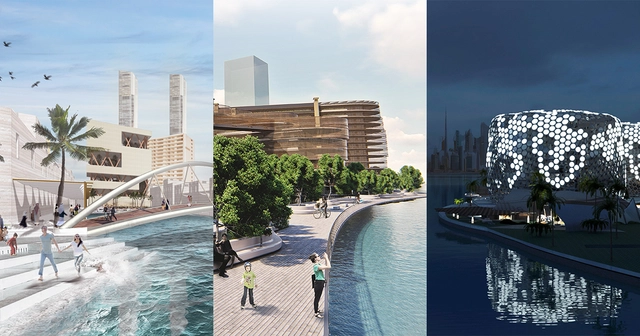
In close collaboration with the Department of Planning of the Municipality of Dubai and the Dubai Properties Group, Saint-Gobain presented the challenge of designing a cross-cultural community project in the cultural village of Dubai, on the shores of the Al Jaddaf inlet.
Considering Dubai's hot and humid climate, the students had to find a way to reconcile reducing the energy consumption of the refrigeration and ventilation systems without compromising any of the comforts of the inhabitants; while at the same time providing an optimal relationship with the environment.
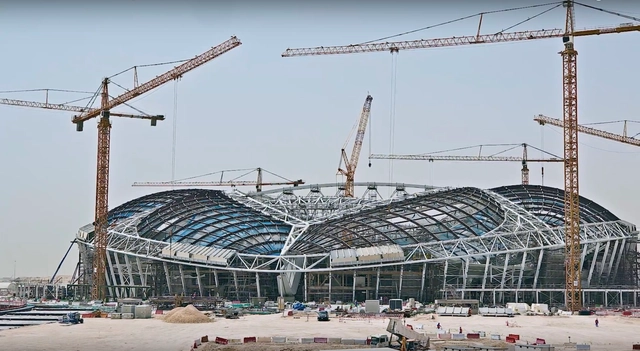
As the 2018 World Cup approaches, we architects can already look ahead to the next tournament. The 2022 FIFA World Cup in Qatar offers the most exciting opportunity in stadium design for decades, with the competition relying on an almost entirely new footballing infrastructure. Several world-renowned designers have submitted proposals, and the following set of newly released time-lapse videos show the progression of each stadium, as we approach four years to the competition’s start. Emphasising the structural shells, the videos highlight a sometimes overlooked facet of stadium design. To materialize the effortless magic of the initial renders - like those produced by Foster + Partners and Zaha Hadid Architects - phenomenal levels of engineering and problem solving are required, and in the early stages of construction, this becomes the visual focal point. Read on to see the beauty of these structural marvels, but be warned - you may develop World Cup fever.
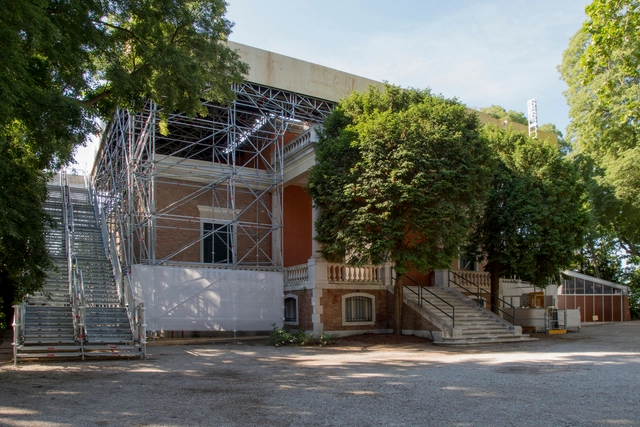
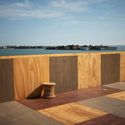
A joint venture from Caruso St John Architects and artist Marcus Taylor, "Island" creates an elevated public space, offering views of Venice and a unique place for both meeting and reflecting.
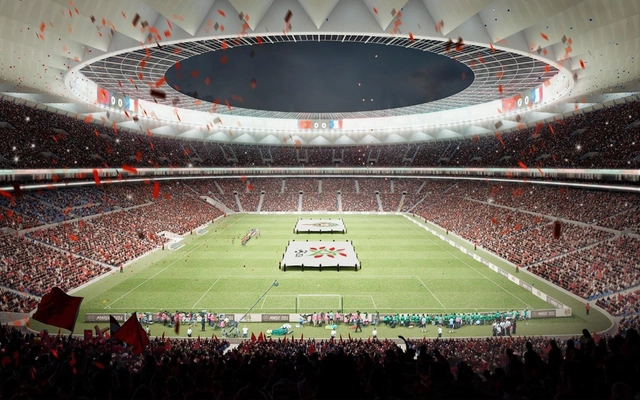
Hours before the start of the 2018 FIFA World Cup Russia's opening ceremony, the soccer organization will reveal if the Canada–Mexico–United States or Morocco will be selected to hold 2026 FIFA World Cup.
Ahead of the announcement, Morocco revealed the design of the stadium that would hold the final match if the North African country wins the bid--a new venue with capacity for 80,000 spectators. This stadium has been designed by Spanish architects Cruz y Ortiz Arquitectos, the firm that recently inaugurated the Wanda Metropolitano in Madrid. They are also currently working on the design of the Dalian Yifan Football Club stadium in China and another sports venue in Switzerland.
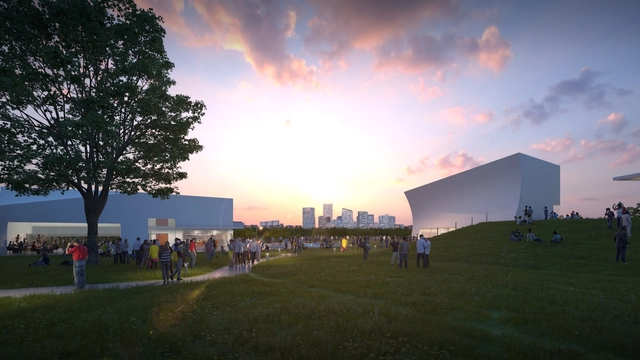
The project features 72,000 square feet of interior space across a 4.6-acre site, resulting in a 20% increase in public areas, and a doubling of outdoor space.
After Frida Escobedo, Yana Peel and Hans Ulrich Obrist officially presented the 2018 Serpentine Pavilion on Monday, June 11 at Kensington Gardens in London, we had the opportunity to interview Mexican architect Frida Escobedo exclusively for ArchDaily. Escobedo shared with us with us the importance that designing pavilions has had in her career, the relevance of working on public spaces, and offered her thoughts on the perception of the Mexican context outside of Mexico. She also spoke further about the details of the pavilion itself and revealed where she would like the pavilion to be moved after completing its 4-month stay at Kensington Gardens.
The 2018 Serpentine Pavilion opens to the public on June 15th and will remain in place until October 7th, 2018.
https://www.archdaily.com/896242/frida-escobedo-on-the-2018-serpentine-pavilion-mexican-architecture-is-an-architecture-of-layeringAD Editorial Team
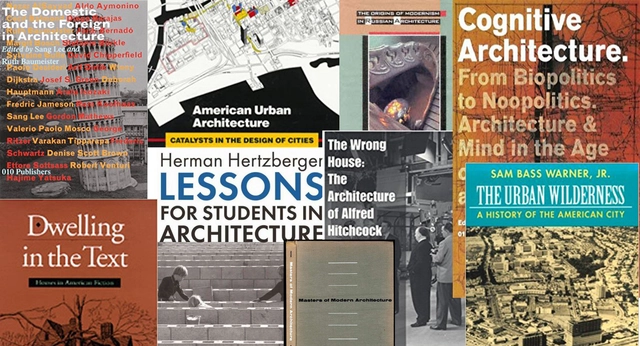
There are few things in this world better than books on architecture, especially when they're available to download for free! Following on from our ever-popular post from 2014, we've gathered up ten more books that cover a broad range of interesting topics—including advice to architecture students from Herman Hertzberger, a look at what sparks the formation and growth of a city, and even a book that offers an in-depth architectural analysis of Alfred Hitchcock's films. Check out the list below!
For many, summer brings a sharp increase in time spent outdoors. Whether that be a dip in the pool after a long day at work or a casual stroll to the office, the summer months are best enjoyed outside. Admittedly, there are times when the summer heat can be too intense, and A/C is needed, but why not enjoy the great outdoors while you're at it?
Architecture provides the unique opportunity to meld the comfort of the indoors with the experience of being outdoors. Selected from our project archives, these nine houses offer the perfect combination of indoor/outdoor spaces ripe for summer living.
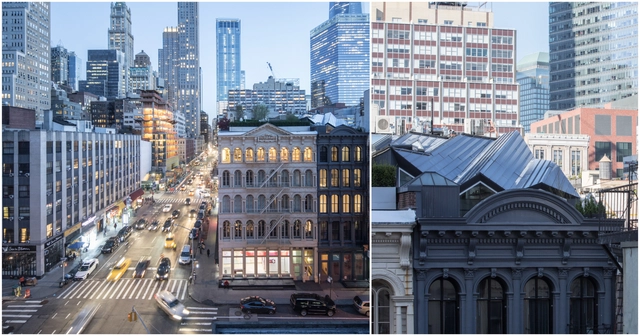
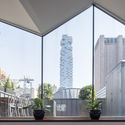
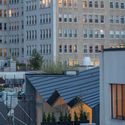
At first glance, The Stealth Building looks like a pristinely-restored cast iron apartment building. That’s because technically, it is. But upon closer inspection, the Lower Manhattan building is rife with innovative restoration and renovation practices by WORKac.
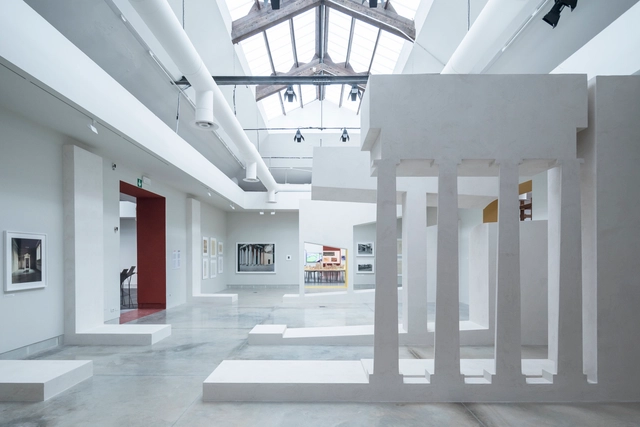
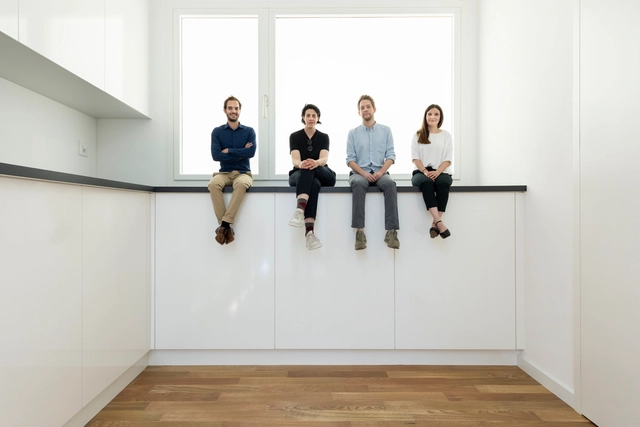
As part of our 2018 Venice Architecture Biennale coverage, we present Freestanding, an exhibition in the Biennale's Central Pavilion. Below, the team describes their contribution in their own words.
https://www.archdaily.com/896171/freestanding-exhibition-shows-the-power-and-poetry-of-sigurd-lewerentzs-architectureAD Editorial Team
Honored by this year’s jury as the winner of the Golden Lion for best national participation, the Swiss Pavilion actively defies conventional representation while exploring a specific point of contact between architecture and society: the house tour.
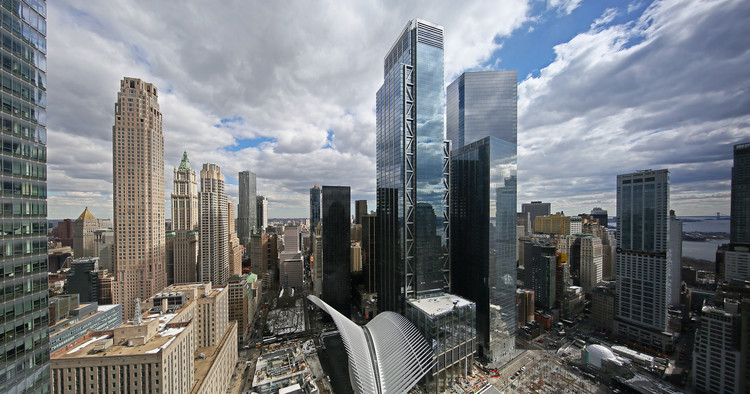
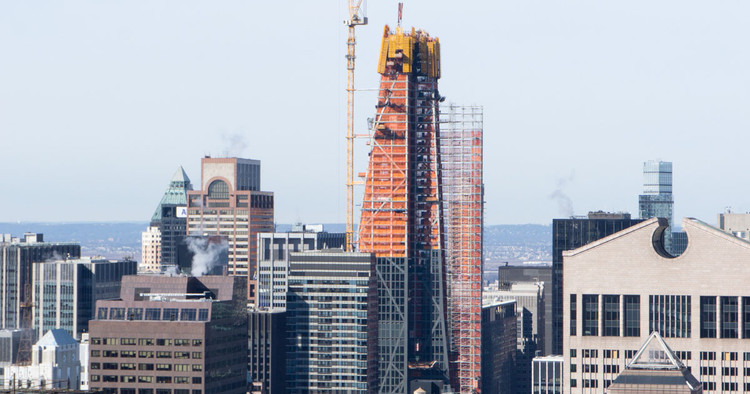
3 World Trade Center, designed by Rogers Stirk Harbour + Partners, has opened for business in Lower Manhattan, New York City. At 1079 feet tall, and 80 floors, the scheme is the fifth-highest in New York, and the penultimate tower to be opened on the World Trade Center site. Construction of the tower saw over 4,000 union workers apply millions of hours.
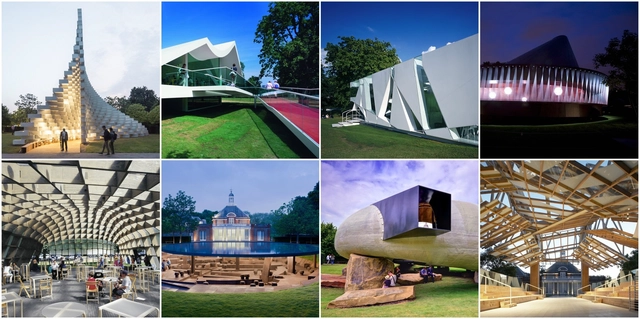
Lasting for close to two decades now, the annual Serpentine Gallery Pavilion Exhibition has become one of the most anticipated architectural events in London and for the global architecture community. Each of the previous eighteen pavilions have been thought-provoking, leaving an indelible mark and strong message to the architectural community. And even though each of the past pavilions are removed from the site after their short summer stints to occupy far-flung private estates, they continue to be shared through photographs, and in architectural lectures. With the launch of the 18th Pavilion, we take a look back at all the previous pavilions and their significance to the architecturally-minded public.
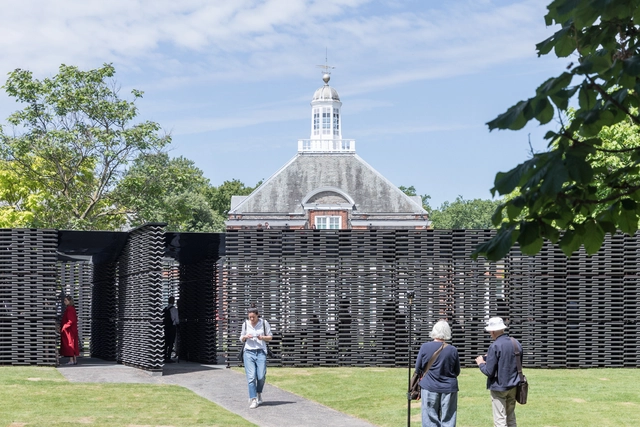
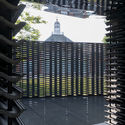
The 2018 Serpentine Gallery Pavilion, designed by Frida Escobedo, was unveiled today in London's Hyde Park. Escobedo's design, which fuses elements typical to Mexican architecture with local London references, features a courtyard enclosed by two rectangular volumes constructed from cement roof tiles. These tiles are stacked to form a celosia, a type of wall common to Mexican architecture which is permeable, allowing ventilation and views to the other side.
The pavilion representing the United States at this year’s biennale brings together the work of seven different transdisciplinary teams who each prepared an installation addressing the concept of citizenship at a different scale. Entitled Dimensions of Citizenship, the exhibition is intended to challenge the definition and conception of citizenship, examining issues and citing examples on the scale of the citizen, civitas, region, nation, globe, network and cosmos. The pavilion was commissioned on behalf of the US Department of State’s Bureau of Educational and Cultural Affairs by the School of the Art Institute of Chicago and the University of Chicago.




.jpg?1528079465&format=webp&width=640&height=580)
.jpg?1528079427 "Courtesy of The Russian Pavilion")
.jpg?1528079373 "Courtesy of The Russian Pavilion")
.jpg?1528079361 "Courtesy of The Russian Pavilion")
.jpg?1528078250 "Courtesy of Anna Mikheeva")
.jpg?1528079465)







.jpg?1528902145)
.jpg?1528902160 "Courtesy of WOHA")
.jpg?1528902003 "Courtesy of WOHA")
.jpg?1528902220 "Courtesy of WOHA")

.jpg?1528903768)

















_(003).jpg?1528735177 "© Joe Woolhead")