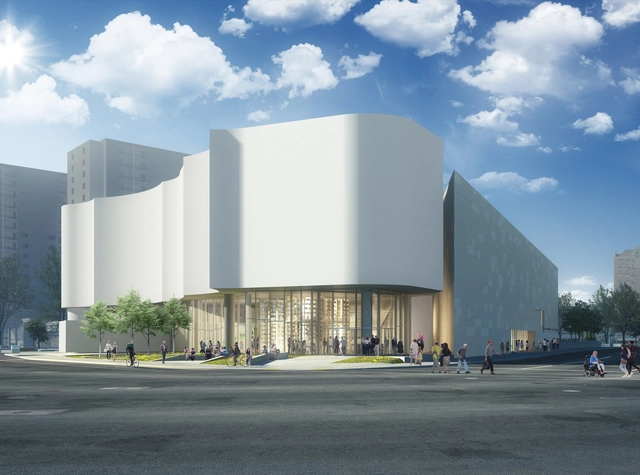
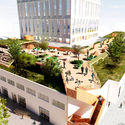
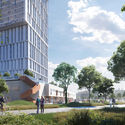
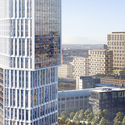
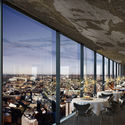
Benoy has released images of their competition-winning design for a waterfront development in Wenzhou, China. INCITY MEGA will form part of the Central Green Axis masterplan, a dramatic landscaped district cutting through the urban fabric of Wenzhou.
The 2.6 million square foot (250,000 square meter) INCITY MEGA scheme will occupy two of the eight plots on the Central Green Axis, with a mixed-use program including retail, movie theaters, plazas, and gyms. The scheme is in response to a rapidly-growing consumer population in Wenzhou and will join the ranks of previous schemes in the region by Hammer Schmidt Lassen, UNStudio, and HENN.
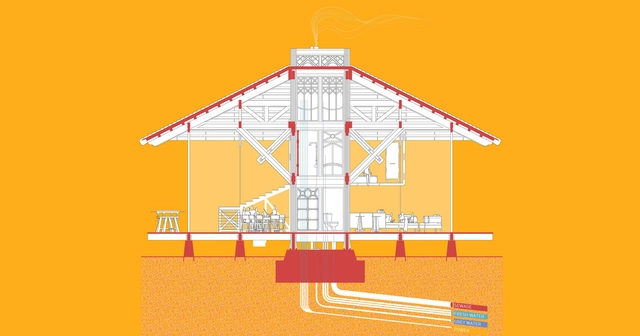
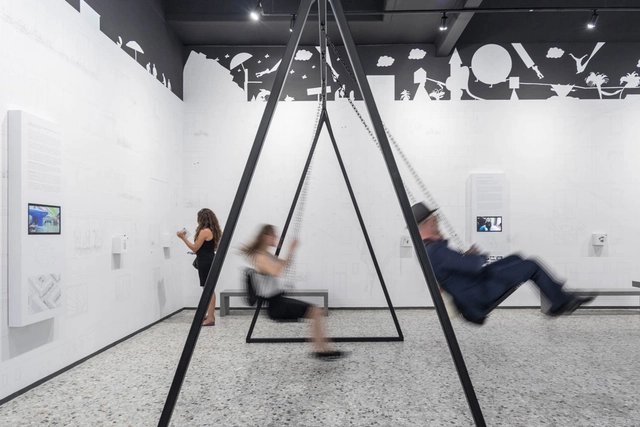
Solutions from the past can often provide practical answers for the problems of the future; as the London-based design and research firm, Space Popular demonstrate with their "Timber Hearth" concept. It is a building system that uses prefabrication to help DIY home-builders construct their own dwellings without needing to rely on professional or specialized labor. Presented as part of the ongoing 2018 Venice Biennale exhibition “Plots Prints Projections,” the concept takes inspiration from the ancient "hearth" tradition to explain how a system designed around a factory-built core can create new opportunities for the future of home construction.
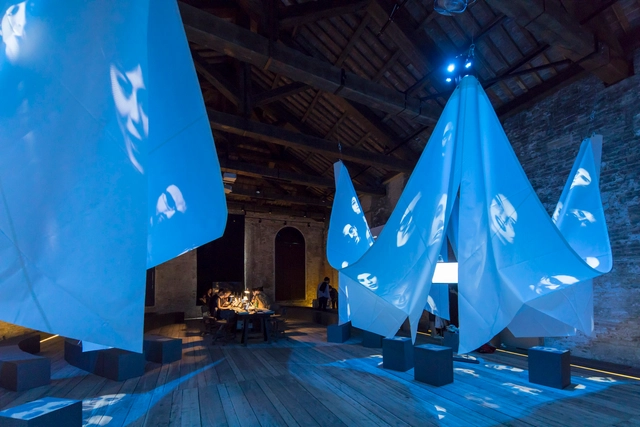
Kerem Piker of the firm Kerem Piker Mimarlık curated this year’s Pavilion of Turkey entitled Vardiya (the Shift), together with associate curators Cansu Cürgen, Yelta Köm, Nizam Onur Sönmez, Yağız Söylev and Erdem Tüzün. Coordinated by the Istanbul Foundation for Culture and Arts (İKSV) and installed at Sale d’Armi, Arsenale, the pavilion functions as a space for gathering, conversation and sharing ideas, with a series of video installations projected on draped fabric screens as well as a lecture and meeting space designed to host the 122 architecture students invited from around the world to participate in workshops, discussions and keynote lectures in the space.
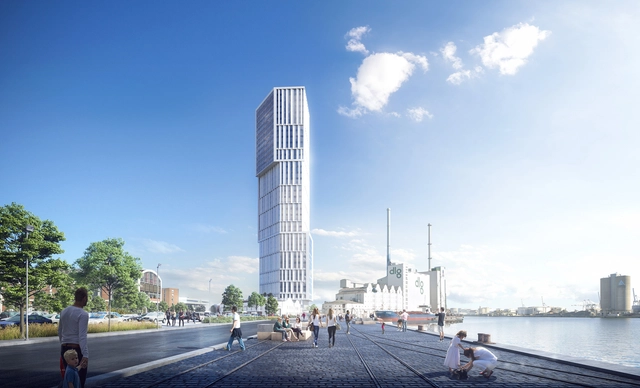
C.F. Møller Architects has released images its proposed 470-foot-high (144-meter-high) office tower at the Port of Aarhus in Denmark. Intended as a “bright sculptural landmark,” the scheme combines cultural, retail, and business functions to activate the public realm in a former industrial port area.
C.F. Møller’s plans will include the retention of an existing 60,000 square foot (5,600 square meter) industrial complex on the site, which will be opened up to establish a stronger connection between indoor and outdoor spaces. The new tower’s geometry originates from the existing building, forming a dialogue between old and new urban fabric.
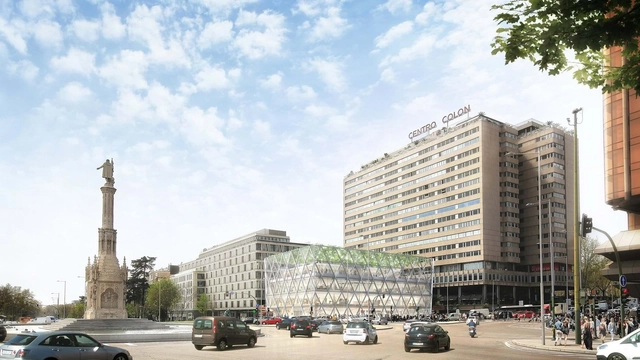
Foster + Partners has released details of their proposed comprehensive refurbishment of the Plaza Colón building in Madrid. Located at a historically significant site in Madrid, the scheme will see the transformation and revitalization of the existing structure to “create a new iconic landmark.”
Located at the junction of Madrid’s main north-south and east-west arteries, the building occupies one of the most important intersections in Madrid and forms a key part of the city’s long-term urban vision. The building also faces the bustling Plaza de Colón, one of the largest public spaces in Madrid, while linking three distinct districts containing luxury shopping, finance, art, and historic tradition.
https://www.archdaily.com/896786/foster-plus-partners-reveal-proposal-for-refurbished-axis-of-madridNiall Patrick Walsh
The “London Mastaba” has opened in Hyde Park. A temporary sculpture floating on the Serpentine Lake, the project is the first major public outdoor sculpture in the United Kingdom designed by the artist Christo. The opening comes as new photographs by Wolfgang Volz are released which chart the construction and completion of the striking art piece.
Featuring 7,506 horizontally-stacked barrels floating on the Serpentine Lake, the Mastaba coincides with an exhibition of Christo and Jeanne-Claude’s work at the Serpentine Galleries featuring sculptures, drawings, collages, and photographs spanning more than 60 years.
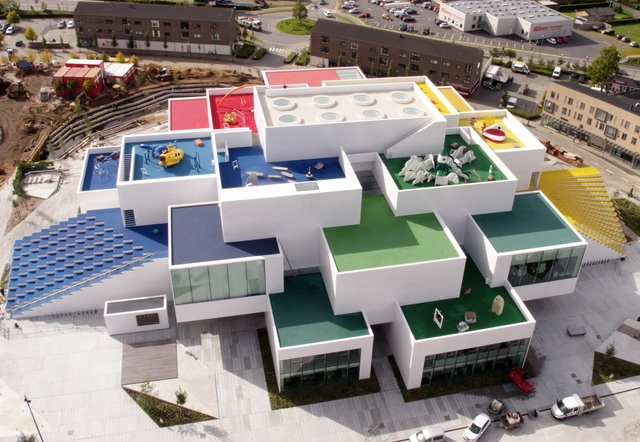
“LEGO House – Home of the Brick” offers the most thorough insight yet into the scheme’s creation, detailing major early construction issues, delays, and (spoiler alert!) the ultimate successful completion of one of the most iconic pieces of architecture created in recent years. The documentary dives into the history of the LEGO brand, the vision, and importance placed on the LEGO House by the company’s directors, and perhaps most interestingly, a series of interviews with Bjarke Ingels in which he reflects on the role of LEGO in the development of his own career.
https://www.archdaily.com/896653/bigs-lego-house-has-its-own-block-buster-netflix-documentaryNiall Patrick Walsh
The downtown skyline of a city is perhaps its most symbolic feature. The iconic cityscapes that we know and love are typically formed by skyscrapers, but much of the surrounding context is made up of other high-rise buildings. Yes, there is a difference between a skyscraper and a high-rise. Research company Emporis defines a high-rise as a building at least 35 meters (115 feet) or 12 stories tall. These high-rise buildings play a major role in the more sprawled urban context of larger cities today.
Read on for Emporis' list of the 20 cities in the world with the most high-rises. You might be surprised by which cities made the cut.
As part of our 2018 Venice Architecture Biennale coverage, we present the completed Romania Pavilion. Below, the curatorial team describes the exhibition in their own words.
Mnemonics proposes a contemporary take on the event’s theme and takes an ultimately optimistic snapshot of the public urban space that Romanian society has seen transforming over the past decades. It raises the question of the social and cultural functions of the free public space in Romanian cities.
The National Council of Architectural Registration Boards (NCARB) has recently released new data surveying the number of licensed architects in the United States. Conducted annually by NCARB, the 2017 Survey of Architectural Registration Boards provides exclusive insight into data from the architectural licensing boards of the 50 U.S. states, the District of Columbia, Guam, Puerto Rico, and the U.S. Virgin Islands. At first glance, the numbers reflect promising growth for the architecture profession. The number of architects licensed in the U.S. rose to 113,554, according to the survey, which is a 3% increase from 2016 and a 10% increase from the numbers reported a decade ago.
Even more impressive, when you compare the increase in registered architects to the U.S. population, the number of architects licensed has risen over 10% since 2008; while the total U.S. population has risen 8%, according to data from the U.S. Census Bureau. That equates to roughly 1 architect for every 2,900 people in the country. To put this into perspective, a medium-sized architecture firm of 50 people would theoretically have the potential to directly impact 145,000 people in the U.S.
Based on these statistics, one might assume that more architects naturally means more architecture, thus more influence from the profession in general. But that might not be the case. Read on for more data from NCARB's report and what it could mean for the profession as a whole.
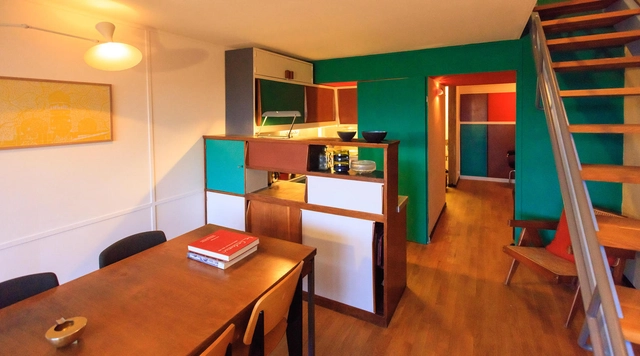
Mohr purchased the apartment in 2016 and embarked on a journey of demolition, measurement, and extensive renovation including lowering ceilings and moving walls in order to recreate the interior likely envisioned by Le Corbusier.
Stretching over one mile (1.5 kilometers), the cable car links the two thriving residential districts of Amsterdam-West and Amsterdam-Noord through a system of three slender pylons and two stations. The cable car has been designed to accommodate a future third station depending on the pattern of growth for surrounding districts.
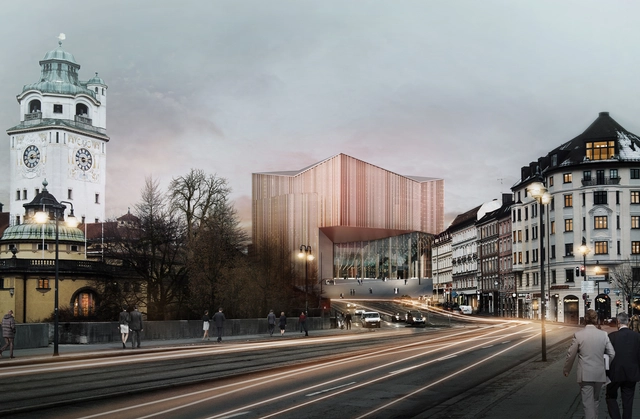
After conducting a concert at Munich’s Gasteig concert hall, Leonard Bernstein offered a scathing edict for the building: “burn it down.”
The Gasteig’s behemoth structure of brick and mirrored glass never met Bernstein’s decree. Instead, it has stood for decades, garnering vitriol from those who resent its postmodern aesthetic. In a design competition hosted by the Gasteig, seventeen architecture firms have attempted to change the concert hall and cultural center’s public perception with varied renovation schemes.
As part of our 2018 Venice Architecture Biennale coverage, we present the completed Indonesia Pavilion. Below, the curatorial team describes the exhibition in their own words.
What if architecture has no form and shape? It will be freed.
Even after the death of John Portman & Associates’ namesake architect in January, the firm continues his legacy of innovative and elegant hotel architecture. On Monday, the Atlanta and Shanghai-based firm announced that they had been selected to design a new hotel and residential tower in Xi Shui, China. Portman & Associates’ design, dubbed “Greenland Wuxi 200,” beat out international entries to a design competition hosted by the hotel developer Greenland Hong Kong Wuxi.
Eight sites from the World Monuments Fund’s 2018 World Monuments Watch list have been awarded $1 million in funding from American Express to support much-needed preservation and restoration initiatives. The sites were selected based on their vulnerability to specific threats like natural disasters, climate change or social forces like urbanization that have left them neglected.
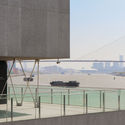
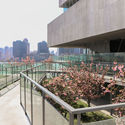
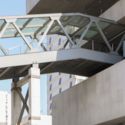
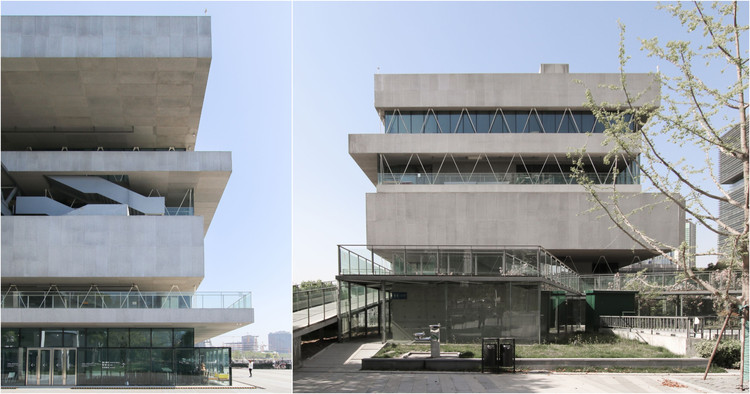
Architect Kris Provoost, who lives and works in Shanghai, has captured Atelier Deshaus' new Shanghai Modern Art Museum through a series of photographs, displaying both the details of the building as well as its context on the Shanghai riverfront. The Shanghai Modern Art Museum is an adaptive re-use project on the old Laobaidu coal bunker, its industrial exterior kept and re-interpreted into a contemporary architectural project. Provoost captured the beautiful detailing of the project, as well as how it transforms during the cherry blossom season.
The Australian Institute of Architects’ Gold Medal recognizes exemplary work by architects who have designed buildings of high value and great distinction, resulting in the advancement of the architecture profession.
This year, Jury Chair Richard Kirk presented Australian practitioner and Emeritus professor Alec Tzannes with the ceremony’s highest honor.
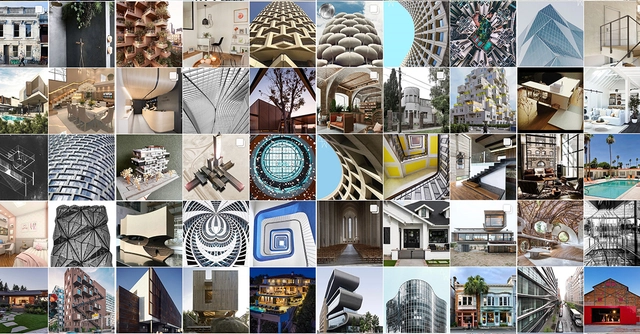
When you tap an Instagram geolocation, the nine most popular posts in that location float to the top. Sometimes, there's an uncanny similarity to these posts: near-identical pictures of smoothie bowls, tiled floors, or neon signs. In part, a place’s popularity on Instagram is a domino effect—one person posts a picture of a mural (Wynwood Walls, anyone?), and then everyone does. But a new Instagram Design Guide from Valé Architects suggests that some design features might be inherently more Instagrammable than others. Valé’s guide is interesting for its quasi-scientific analysis of Instagram aesthetic, but it also has real implications in the architecture world; a building’s popularity on social media (in this case, its Instagramability) can influence its perception in the non-digital world. Here are some of the traits that Valé says make a space successful on Instagram:
For the second time in 4 years, Charles Rennie Mackintosh’s Glasgow School of Art Building is ablaze. The BBC reports that the fire began at 23:00 BST and it has engulfed a large portion of the building. Thankfully no casualites have been reported, but one eye-witness said the building is ”going up like a tinderbox.”
https://www.archdaily.com/896545/charles-rennie-mackintoshs-glasgow-school-of-art-is-burning-againAD Editorial Team
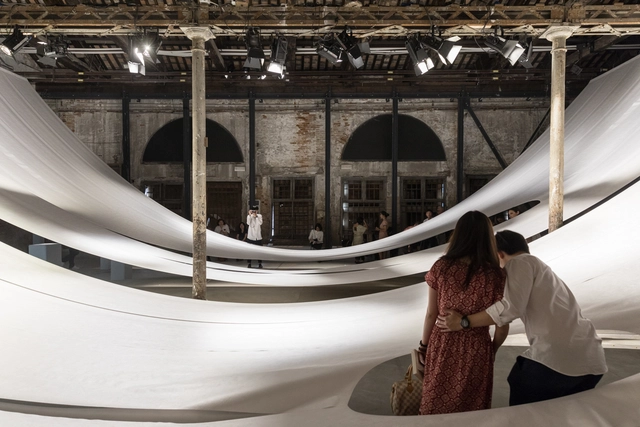
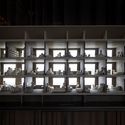
Black walls and an exposed concrete floor create a mysterious and eerie backdrop for Together and Apart: 100 Years of Living—the Latvian Pavilion curated by urbanist Evelīna Ozola, architect Matīss Groskaufmanis, scenographer Anda Skrējānem and director Gundega Laiviņa.
Arranged over four stories, the scheme is an addition to the 1971 museum designed by Gustavo Da Roza, and seeks to form a new cultural landmark for downtown Winnipeg.
https://www.archdaily.com/896511/michael-maltzan-architectures-inuit-art-centre-breaks-ground-in-winnipegNiall Patrick Walsh
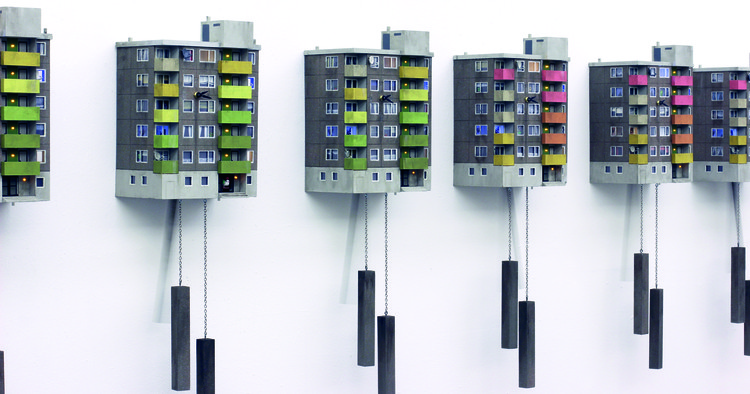
More than an aesthetic centerpiece for Brutalist fanatics, the clocks are in fact a response to a decline in the middle class caused by increasing rent prices in modern metropolises.
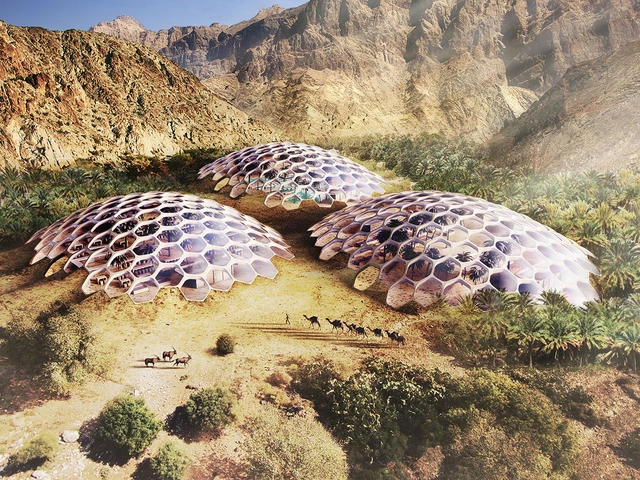
The world’s tallest building, the Burj Khalifa, towers at 828 meters in the heart of Dubai’s ever-growing urban core. But just a few hours east of the metropolis, a different kind of monument is garnering tourism to the United Arab Emirates: the Al Hajar Mountains. With its peak at 3,008 meters, the mountain range’s natural elegance rivals the country’s architectural achievements. The Biodomes Wildlife Conservation Centre, a project from Baharash Architecture for the UAE’s Eco Resort Group, seeks to celebrate the mountain range through an ecotourism paradigm.


.jpg?1529586226&format=webp&width=640&height=580)
.jpg?1529586216 "Courtesy of Benoy")
.jpg?1529586203 "Courtesy of Benoy")
.jpg?1529586175 "Courtesy of Benoy")
.jpg?1529586250 "Courtesy of Benoy")
.jpg?1529586226)







.jpg?1529420235)


.jpg?1529424931)










.jpg?1529322837&format=webp&width=640&height=580)
.jpg?1529322827 "Courtesy of Plompmozes")
.jpg?1529322882 "Courtesy of Plompmozes")
.jpg?1529322837 "Courtesy of Plompmozes")
.jpg?1529322845 "Courtesy of Plompmozes")
.jpg?1529322837)









.jpg?1528069797&format=webp&width=640&height=580)
.jpg?1528069731 "© Ansis Starks")
.jpg?1528069782 "© Ansis Starks")

.jpg?1528069797)