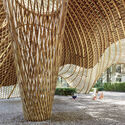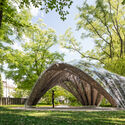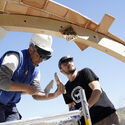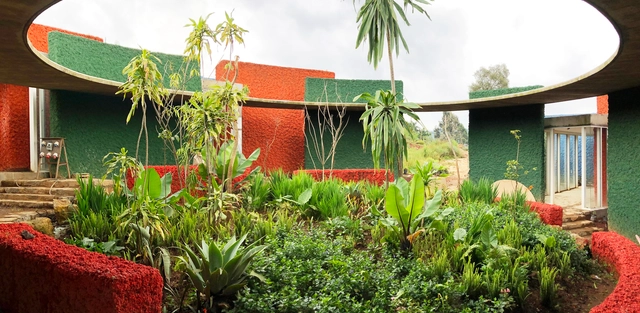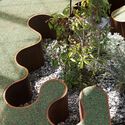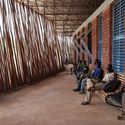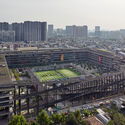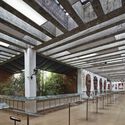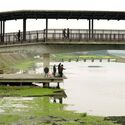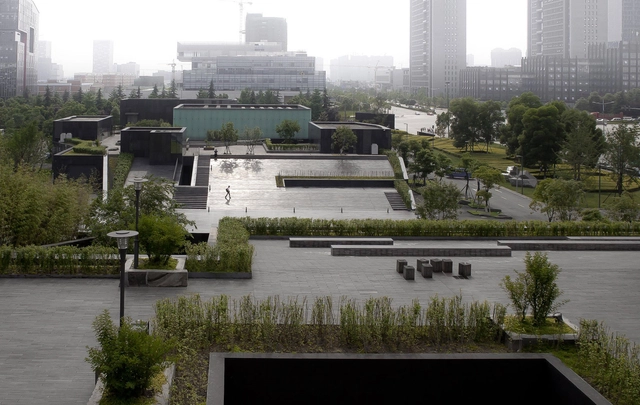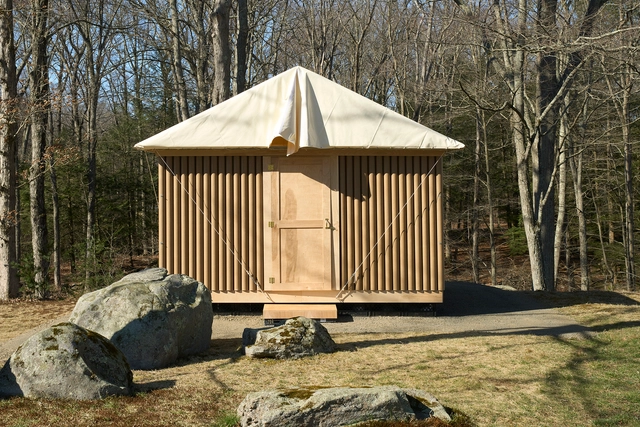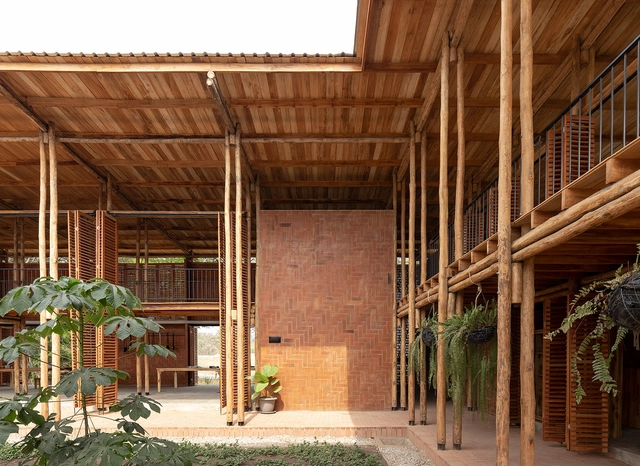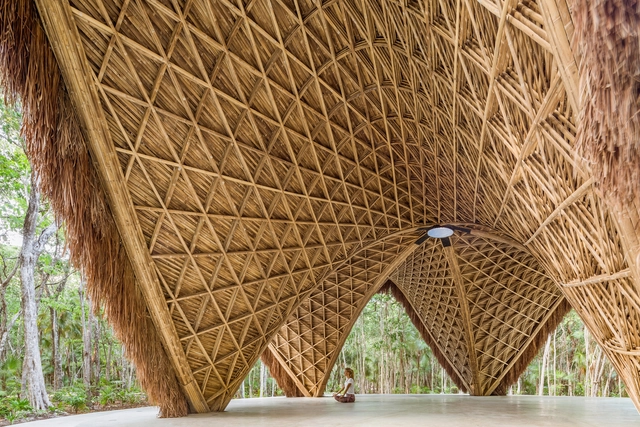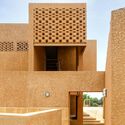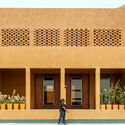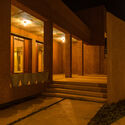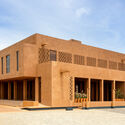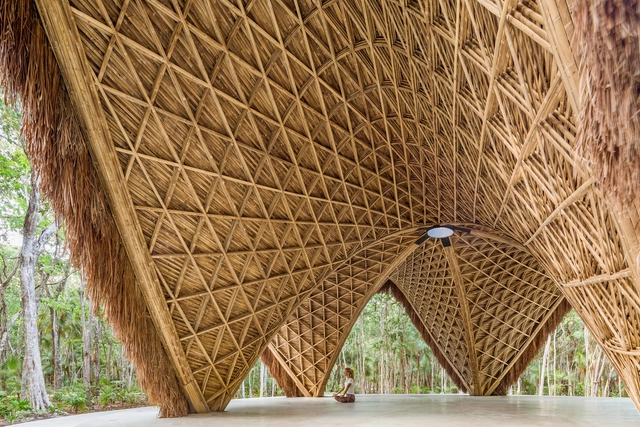
The Mies Crown Hall Americas Prize (MCHAP) has announced the winner of the fifth MCHAP.emerge award: the Community Production Center Las Tejedoras in Guayas, Ecuador, designed by Natura Futura architect José Fernando Gómez and architect Juan Carlos Bamba. The project offers a hub for local women artisans, providing them with spaces to learn, create, and showcase their textile creations. The winner announcement was made at the Conference on Critical Practice held at Mies van der Rohe's S. R. Crown Hall, an inaugural event that brought together the four MCHAP.emerge finalists to open up conversations about the future of the architecture profession across the Americas.
Founded by Senegalese architect Nzinga Mboup and French architect Nicolas Rondet, Worofila is a studio dedicated to bioclimatic and ecological architecture. Based in Dakar, Senegal, the firm explores the potential of vernacular materials like earth bricks and typha, applying modern techniques to create effective construction solutions. Their work addresses key issues of the environment, sustainability, and urbanization, merging traditional materials with innovative practices.
In this interview, Nzinga and Nicolas share their vision for a distinctly African modernity that integrates contemporary methods with traditional knowledge and resources. They advocate for a development approach that not only meets immediate needs but also empowers communities and fosters meaningful, long-term progress. Their insights provide a compelling perspective on how architecture can drive a more sustainable and contextually relevant future for African cities.
Space exploration isn’t merely a testament to human ambition or a quest for new territories and resources. Our ventures beyond Earth’s atmosphere are driven by a deeper purpose: to understand better our place in the cosmos and to pioneer innovations that can transform life on our home planet.
Within this scope, much is said about the different vernacular techniques employed in architecture, whether it is the production of adobe bricks, thatched roofs, woven bamboo walls, among many others. However, while vernacular technique focuses on specific actions or skills, its meaning differs from vernacular technologies.
The recently released “Abijo Mosque Documentary” explores the journey of designing and building the Abijo Mosque in Lagos, Nigeria. The documentary provides a detailed narrative of the design process and the cultural context around the new structure. Designed by Patrickwaheed Design Consultancy (PWDC), the mosque is a testament to the integration of traditional materials and contemporary architecture. The Abijo Mosque design also helps “build the case for a Nigerian architectural language.”
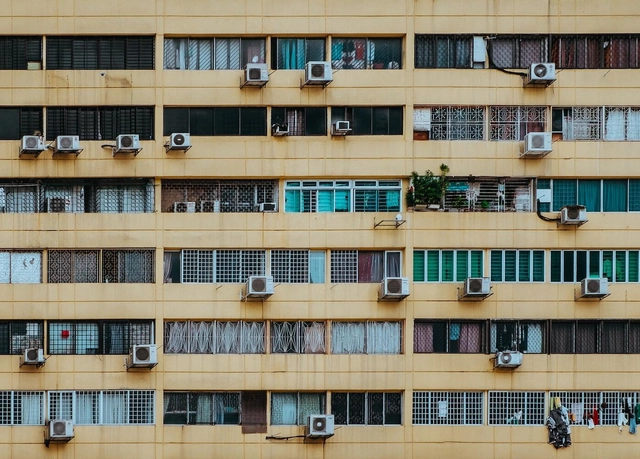
Between now and 2050, worldwide installation of cooling appliances, like air conditioning, is projected to triple, resulting in a twofold increase in energy consumption. This reliance on such devices, often seen as exacerbating global warming, poses a paradox: how can we fightrising temperatures in cities while simultaneously contributing to them through our dependence on these solutions?
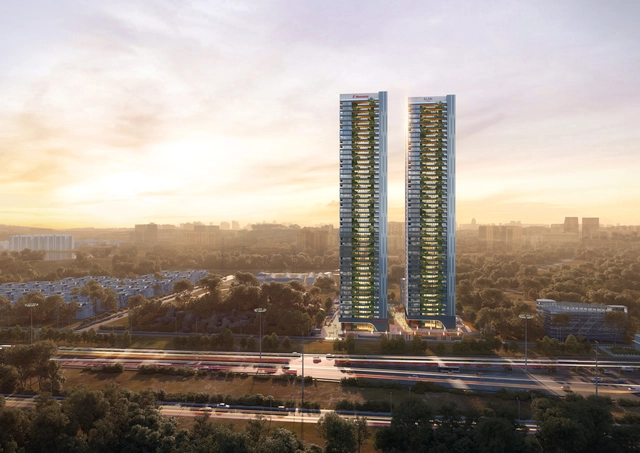
Courtesy of Architectural Dialogue | Elan - Meenakshi
Architecture competitions are platforms where innovation meets imagination, where the boundaries of what we know about design and architecture are relentlessly pushed. Serving as spaces for architects and designers to realize groundbreaking ideas, competitions challenge our conventions and shape our future environments. While countless creative concepts are proposed, only a handful are realized. In fact, these winning designs stand as a showcase for the creativity of architects, redefining our future built environments.
These winning projects demonstrate the global initiative to rethink the way we interact with spaces. HOKA fosters community interaction, while RITSO Resort merges tradition with modernity. Science Forest transforms museums into hubs for dialogue, and Elan-Meenakshi apartments in Hyderabad integrate urban living with green spaces. Ranging from Vietnam, Greece, Rome, to India, these examples showcase the transformative potential of architecture competition winners, reshaping our perception and interaction with the spaces we inhabit.
The Second Studio (formerly The Midnight Charette) is an explicit podcast about design, architecture, and the everyday. Hosted by Architects David Lee and Marina Bourderonnet, it features different creative professionals in unscripted conversations that allow for thoughtful takes and personal discussions.
A variety of subjects are covered with honesty and humor: some episodes are interviews, while others are tips for fellow designers, reviews of buildings and other projects, or casual explorations of everyday life and design. The Second Studio is also available on iTunes, Spotify, and YouTube.
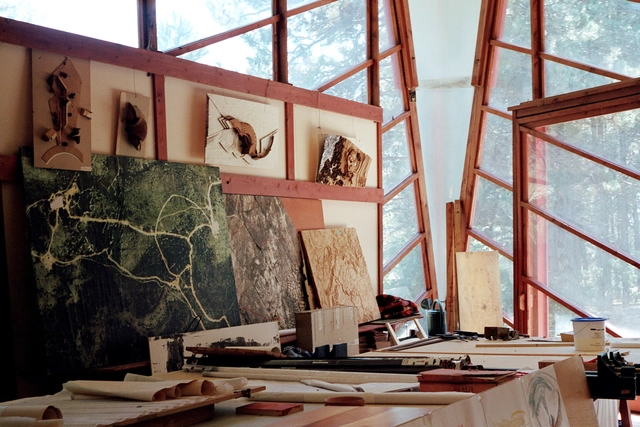
This week David and Marina of FAME Architecture & Design discuss the local architecture, adobe buildings, and natural landscapes of the southwest region of the United States. The two cover the role nature has in cities, designing experiences, how architecture can co-exist with the natural landscape, craftsmanship, and more. Destinations included the Taos Pueblo in New Mexico, Monument Valley, Antelope Canyon, Frank Lloyd Wright’s Taliesin West, and Paolo Soleri’s Arcosanti.
Since the advent of Modernism, architects have become schizophrenic in dealing with the reality of time. This is a problem, because time and gravity are two universal forces. Architects are exquisitely good at dealing with gravity—it is present in everything we design. We study it and engineer its unrelenting requirements. Gravity does a symbiotic dance with structure. No matter how a design feigns weightlessness, its mass cannot be denied. Architects must deal with gravity, whether it’s Frank Lloyd Wright’s sagging balconies at Fallingwater or today’s steroidally enhanced parametric buildings.
Cantercel, France, 2022. Image Courtesy of forty five degrees
When talking about space-making practices, architects and urban planners are usually thinking about participatory planning and collaborative processes, often overlooking the ways in which the communities themselves can become their own agents of change. As the people poses an intimate knowledge of not only their environment, but also of social and cultural norms, the needs of their communities and latent opportunities within their surroundings, they are often the ones initiating actions, supporting their peers and contributing positively to their locality. Research-focused office forty five degrees set out to explore these grass-roots initiatives, to meet the locals and gather their stories in an effort to gain a better understanding of the complex and diverse cultural territories across Europe. Their journey, organized under the “Radical Rituals” project, follows the 45°N parallel line that transverses Europe from East to West. The office has been selected as part of ArchDaily's 2023 New Practices, an annual survey aimed at showcasing those who adress the ever-growing challanges of our times and take architecture to new directions.
As the challenges posed by climate change increase in number and intensity, it also heightens the need to find sustainable building practices that connect to ecosystems and livelihoods rather than harm them. While often overlooked in the search for innovation, vernacular architecture can offer answers to contemporary issues. This type of architecture not only relies on readily available locally sourced materials but also on indigenous knowledge of local conditions like sun orientation, wind patterns, ventilation needs, and the behavior of materials in time. Dr. Sandra Piesik, director and architect of 3 ideas, and founder of HABITAT Coalition, explores this potential in her newest book, 'Habitat: Vernacular Architecture for a Changing Climate.'
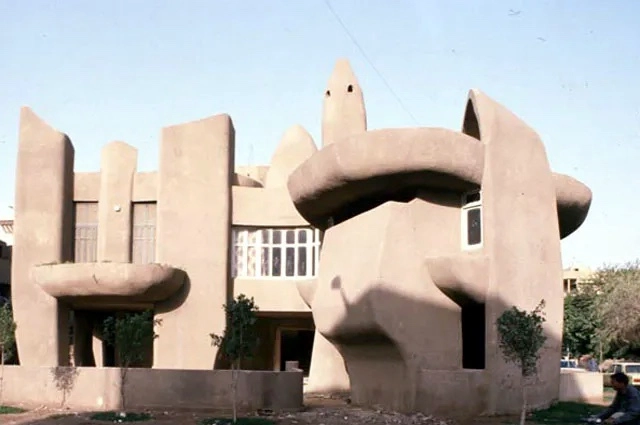
Villa Badran. Image Courtesy of Rare Books and Special Collections Library American University in Cairo
While Egyptian architects were exercising their understanding of modernism in the urban fabric in the 1970s, a “chubby rebellion” in the form of Villa Badran defied the standardized curvilinear forms and rigid geometry. Gamal Bakry dived deep into his imagination to construct this unique piece of architecture that still stands as part of the city of Cairo today. With curving and free-flowing facades, Villa Badran drew inspiration from natural forms. In an attempt to create a living space that was more natural in its essence, the bubbly intervention puts in place a monolithic composition that hosts a two-story detached home for an Egyptian family.
Whenever light falls on a surface there will be a shadow, no matter how insignificant its focus is. The outline will hardly be visible, but other shapes will come to the fore in this play of light and dark. In the case of being projected by solar dance, a latent dynamic is added to the shadows that can be used to intensify everyday phenomena, breaking the monotony of space. Orthogonal openings in a long corridor or woven pieces in a courtyard are examples of constructive elements that create patches of light and shadow, bringing in addition to aesthetic delight and thermal comfort to its users. In this way, it becomes evident that these intangible elements are essential parts of an environment that, long before Louis Kahn declared the power of shadows, was already being manipulated.
In Mendoza, Argentina, the digital fabrication research lab Node 39 FabLab created a frame loom structure made of digitally cut wood to help indigenous people in the central region of the country weave and create their traditional patterns. In the state of Ceará, northeast Brazil, a study entitled "Artífices Digitais" (Digital Artisans) by the Federal University of the State of Ceará used digital fabrication tools, namely 3D printing, to produce digital models, like digital prosthetics, to restore the damaged parts of an altarpiece of the high altar of the Mother Church in the city of Russas.
Primary School Tanouan Ibi, Mali. Image Courtesy of LEVS Architecten
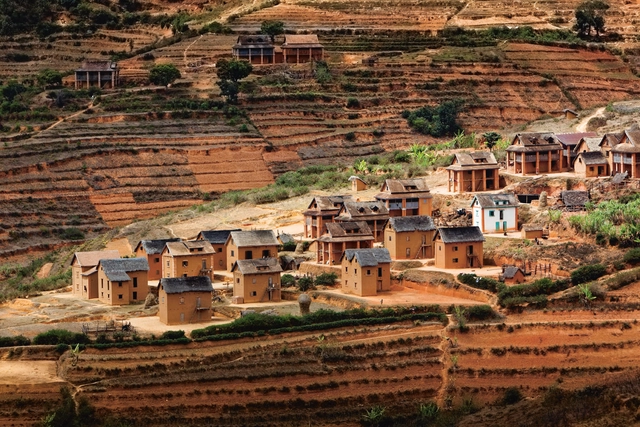
Vernacular architecture can be defined as a type of local or regional construction, using traditional materials and resources from the area where the building is located. Consequently, this architecture is closely related to its context and is aware of the specific geographic features and cultural aspects of its surroundings, being strongly influenced by them. For this reason, they are unique to different places in the world, becoming even a means of reaffirming an identity.
Angola, like many African countries, is experiencing a process of rapid urbanization. For the most part, these changes are happening under little to no regulation, filling cities with spaces that lack the infrastructure to provide a basic quality of life for residents. However, in spite of this unregulated development, it's worth noting the quality of contemporary architecture being produced in the second-largest Portuguese-speaking country, where projects draw inspiration from the strong local identity and blend with modern materials and technology.
In this article, we highlight 4 current projects in Angola. While it is a small sample, not only from the capital city of Luanda, but from smaller cities as well, it showcases the richness of Angola's local architecture--an art form that deserves worldwide recognition.
Modern Moroccan architecture is reinterpreting vernacular traditions. Taking its name from the Arabic al-maġhrib, or the “place the sun sets; the west”, the kingdom is a sovereign state home to numerous examples of Islamic design, as well as detailed art and ornamentation found within geometric patterns, friezes and open courtyards.
The regional expressions of a country’s culture are vital in helping us understand the relation between context and specific conditions of social manifestations. These nuances and singularities inside the realm of construction are translated into what can be called vernacular architecture. Although it has always existed, this universe of local exemplars of architecture with their particular materials, techniques and regional constructive solutions came to be well studied in the second half of the twentieth century in Brazil, in a project that traced national architecture history, headed by Lucio Costa.