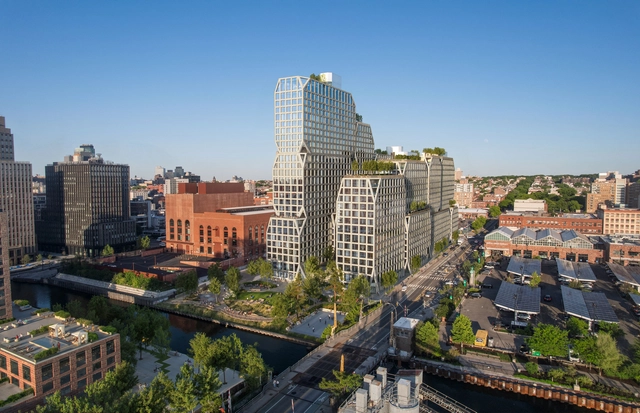
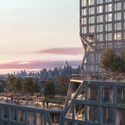
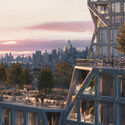
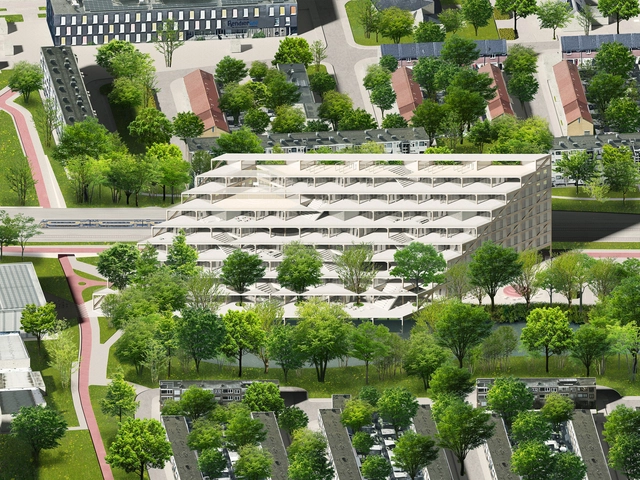
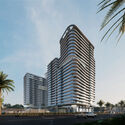
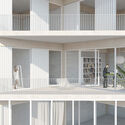
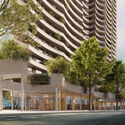
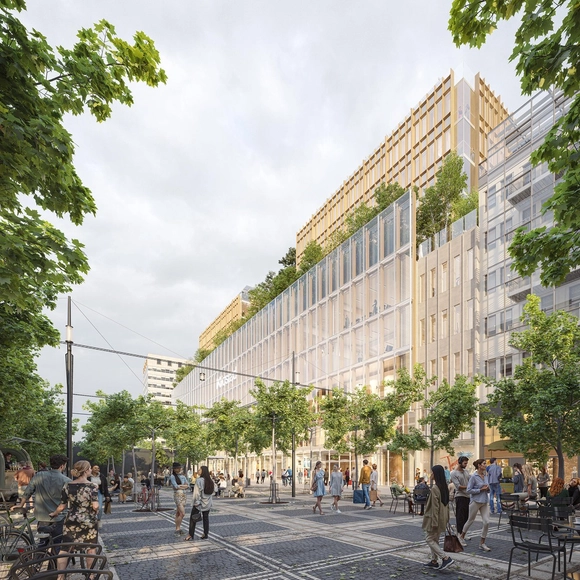
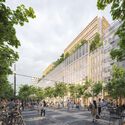
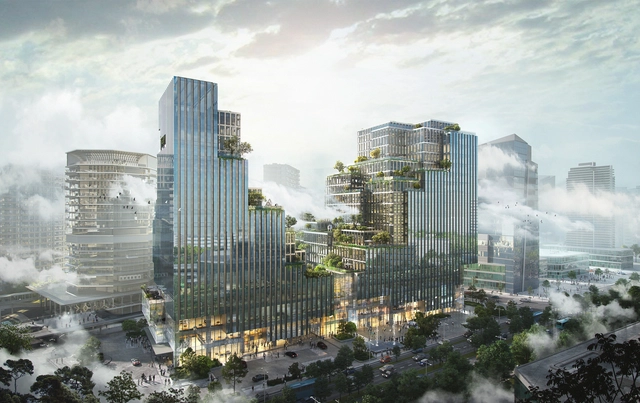
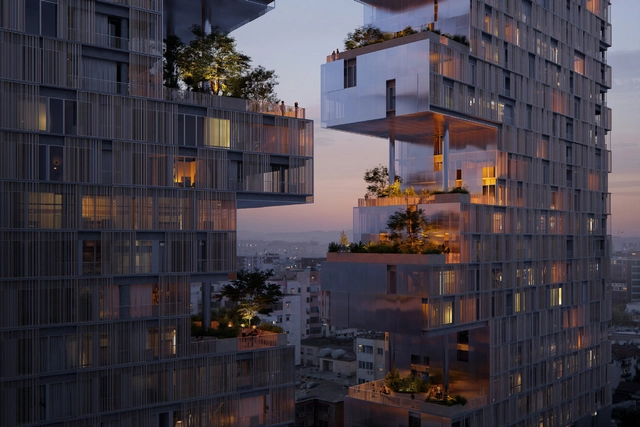
The proposed mixed-use tower at 175 Third Street is the fifth building planned across four sites within the Gowanus Wharf development in Brooklyn, New York. With views toward Manhattan and the Statue of Liberty, the 1,080,000 sq ft proposal includes affordable housing, retail and artist spaces, fitness areas, social and entertainment spaces, culminating in a rooftop with lounging zones and an outdoor pool. The project also envisions a 28,000-sq-ft public waterfront esplanade designed by Field Operations, intended to contribute to the ecological rehabilitation of the Gowanus Canal, continuing the broader transformation of this industrial neighborhood. Other project collaborators include dencityworks | architecture, AKRF, bucharest.studio, DeSimone, Ettinger Engineering Associates, Fried Frank, Hatfield Group, Impact Environmental, and Jenkins and Huntington.
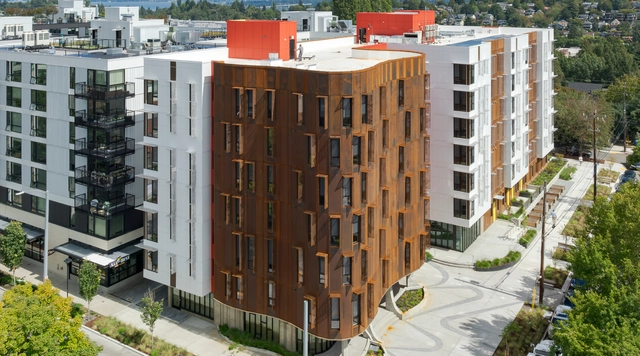
As urban neighborhoods continue to evolve, design plays a key role in shaping how buildings respond to urbanization, functional demands, and the character of their surroundings. Intertwined, these elements guide the transformation of urban life and influence how new developments engage with their context—a dynamic clearly visible in Seattle's Central District. Long considered a historic hub for the city's African American community, the Africatown Plaza project proposes a comprehensive approach that integrates architectural performance with community resonance, using the building envelope as a primary medium.
https://www.archdaily.com/1030331/metal-facade-systems-with-community-resonance-the-case-of-africatown-plazaEnrique Tovar
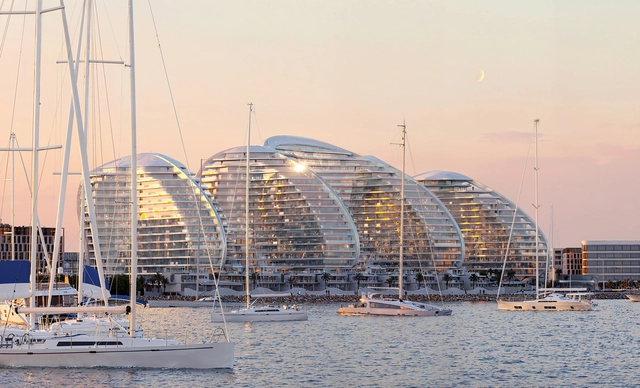
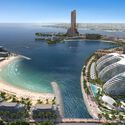
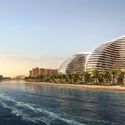
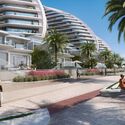
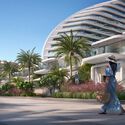
Oystra, Al Marjan, Render by MIR. Image Courtesy of ZHA
Oystra, designed by Zaha Hadid Architects, is a 128,000-square-metre seafront development located on Al Marjan Island in Ras Al Khaimah, United Arab Emirates, that comprises 950 residential units, a comprehensive range of shopping, dining, and leisure amenities. Ras Al Khaimah, one of the UAE's fastest-growing emirates, is projected to see a 55% increase in its population by 2030, driving the need for an additional 45,000 homes. The emirate's tourism sector is also experiencing significant growth, with the number of visitors expected to rise to 3.5 million annually by 2030, up from 100,000 in 2013.
Symbiosis, a Prototype for Living and Working. Image Courtesy of contexo
The future of urban life is increasingly being imagined as collective, layered, and adaptable. As cities grow denser and the boundaries between work, home, and leisure blur, architects are rethinking the traditional notion of residential living, shifting from isolated units to integrated, community-driven environments. This collection of unbuilt projects, submitted by the ArchDaily community, reflects this shift: a global exploration into how design can shape more resilient, inclusive, and connected ways of living.
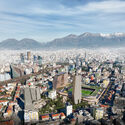
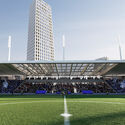
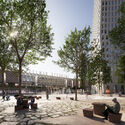
OMA/David Gianotten, has won the competition to revitalize the historic Selman Stërmasi Stadium and its surrounding area in central Tirana, Albania. Originally built in 1956, the stadium is now being redesigned to not only expand the existing football grounds but also to foster stronger links between surrounding neighborhoods in Tirana. With the revitalization, the stadium aims to be a key connector between the Blloku and Komune a Parisit neighborhoods.
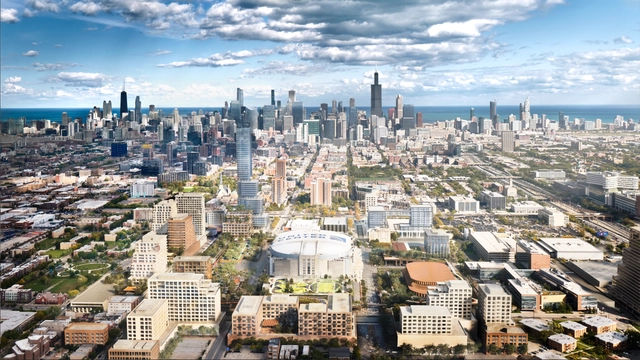
The United Center arena in Chicago, designed by HOK Sport (now Populous), Marmon Mok, and W.E. Simpson Company, was built between 1992 and 1994. With a capacity of over 20,000 seats for sports and general events, it includes more than 6,000 parking spaces in lots surrounding the arena. These parking lots span approximately 55 acres (over 22 hectares) in Chicago's West Side (1901 W. Madison Street). A new master plan, named the 1901 Project, aims to transform this space into a mixed-use neighborhood. Led by design collective RIOS, with contributions from landscape architecture studio Field Operations, this long-term, multi-phase project aims to connect neighborhoods by creating new public spaces and infrastructure on a metropolitan scale. The proposal recently received approval from the Chicago Plan Commission.
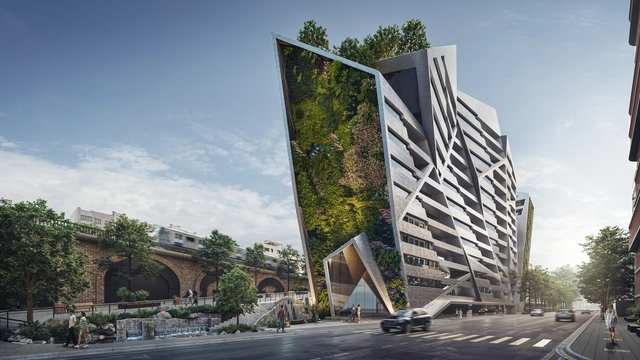
Following an international competition, Polish American architect Daniel Libeskind's firm, Studio Libeskind, in collaboration with La Compagnie de Phalsbourg, has been selected to design the flagship building for the Léon Blum district, adjacent to the future Line 15 station of the Grand Paris Express. The competition featured eight teams, including Snøhetta, Valode et Pistre, Stefano Boeri, Sou Fujimoto, and Jean-Paul Viguier. The winning project is a mixed-use building of over 20,000m², featuring a green wall and incorporating bio-sourced materials. The project is part of a broader urban development strategy for Issy-les-Moulineaux, an extra-wall area of Paris currently undergoing significant transformation.
Renzo Piano Building Workshop (RPBW), in collaboration with Holger Meyer Architekten, has won the competition for the new Midstad project in Frankfurt. Led by Joost Moolhuijzen and Erik Volz, the design reimagines the future of European city centers as resourceful and multifunctional. The project involves a 35,000 m² rehabilitation of an existing department store on the Zeil in Frankfurt's city center, integrating a six-story mass timber extension and a mixed-use, community-driven program. The project involves reconstruction during ongoing operation, partial demolition, and the expansion of the existing department store.
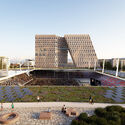
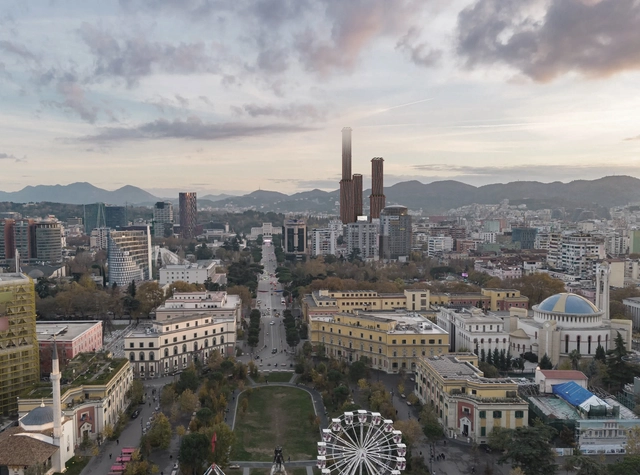
Swiss architect Valerio Olgiati has unveiled plans for Rruga Adem Jashari, a mixed-use development in Tirana, Albania, that seeks to blend urban living with the surrounding natural landscape. Positioned at the boundary between the city grid and an adjacent park, the project features three distinctive red concrete towers and a central white ziggurat. Combining residential, hospitality, and retail spaces, the development aims to create a seamless connection between the built environment and nature.
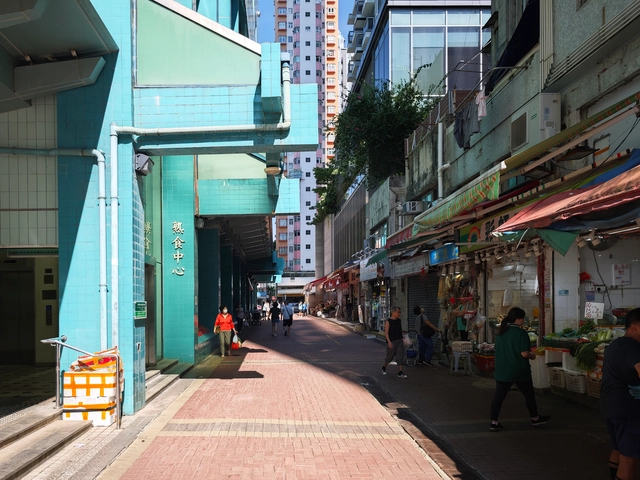
In Delirious New York, Rem Koolhaas vividly discusses the Downtown Athletic Club, a striking example of how an unassuming building exterior can conceal a vibrant mix of distinct, self-contained programs. Inside the uniform facade of this skyscraper, a private athletic club hosts an eclectic range of facilities—boxing gyms next to oyster bars and interior golf ranges below swimming pools—all segregated yet highly accessible. The Downtown Athletic Club epitomized the dynamism of New York's skyscrapers at the time, showcasing the thrill of capitalism through a selective, inward-focused world of leisure and privilege for the selected. This "machine of programs" operated independently of the external city as an isolated ecosystem within its walls. Yet, one might ask: could a similar model, designed for public use, create a more inclusive, lively community and neighborhood experience? This will activate the building within, instead of only serving the selected elites, and influence and transform the urban fabric and shapes around the building. In Hong Kong, a distant parallel can be drawn with the Municipal Services Buildings (MSBs)—publicly-funded structures that serve the community by integrating diverse functions within a singular vast building mass, much like the Downtown Athletic Club.
Air rights transactions have become essential in urban development, allowing cities to grow vertically while preserving limited land resources. Typically defined as the right to use or sell the space above a property, air rights enable property owners to transfer unused floor area ratio (FAR) to neighboring parcels, creating increased density and financial gain opportunities. However, the definition can vary based on locality and region, as each country interprets air rights and the ability to build or transfer them differently. As urban centers face mounting pressures from limited land supply and population growth, air rights continue to offer a creative solution that fosters architectural innovation and economic efficiency.
Büro Ole Scheeren has revealed their design for an 800,000 sq ft development following the concept of live-work-lay in Hangzhou, China. Titled Urban Glen, the project situated between West Lake and the Qiantang River comprises two towers connected by a central plinth. This feature, inspired by Hangzhou's hilly landscapes, becomes a built topography of terraces and exterior environments, aimed at optimizing natural light and the quality of both indoor and outdoor spaces. The Glen will house a variety of amenities, including ballrooms, meeting spaces, restaurants, and retail, all interwoven with public art from New World Development's extensive collection.
OODA has just revealed its design for a new mixed-use urban development in central Tirana, Albania. Located in the central district of Tirana on Myslym Street, the Ndarja building, represents a new approach to mixed-use urban development, incorporating residential, hospitality, office, and commercial functions within a single structure. The building comprises two distinct sections positioned along their narrow sides, creating a central square that serves as a gathering spot, contrasting the busy surroundings.
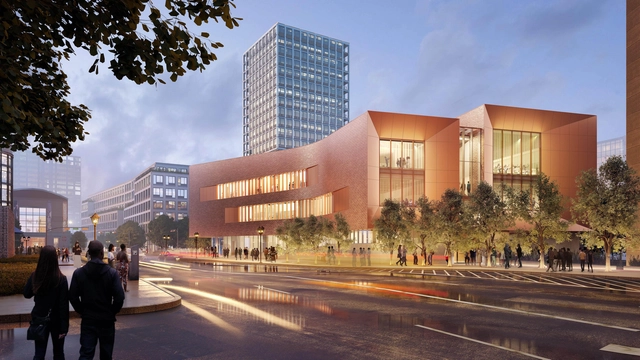
The New Jersey Performing Arts Center (NJPAC) has announced a three-year redevelopment of its 2-acre downtown Newark campus. The project, designed by architectural firms Skidmore, Owings & Merrill (SOM), and Weiss/Manfredi, has recently broken ground and is scheduled for completion in the fall of 2027. It integrates 350 mixed-income residential units, retail spaces, and a dynamic education and community center, in addition to rehearsal spaces, a new headquarters for jazz public radio station WBGO, and various outdoor gathering areas.
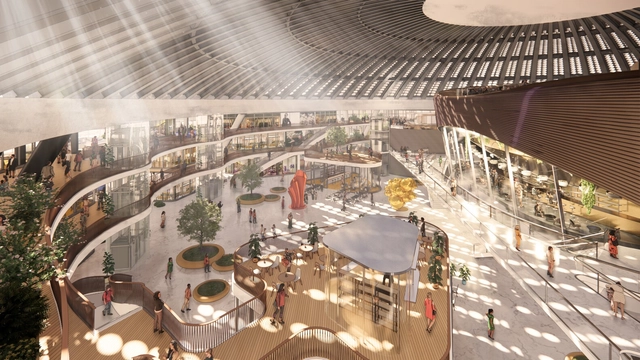
WilkinsonEyre has unveiled their proposal to revitalize the 1950s constructivist Belgrade Fair Hall 1, a landmark location overlooking the river Sava. The project is set to transform the exhibition hall into a mixed-use destination comprising three cultural venues and retail spaces, in addition to redesigning the waterfront park. WilkinsonEyre’s design incorporates light-touch interventions to the existing building, as it strives to respect and highlight the architectural qualities of the existing structure, such as the exposed concrete soffit or the unique shape of the building.
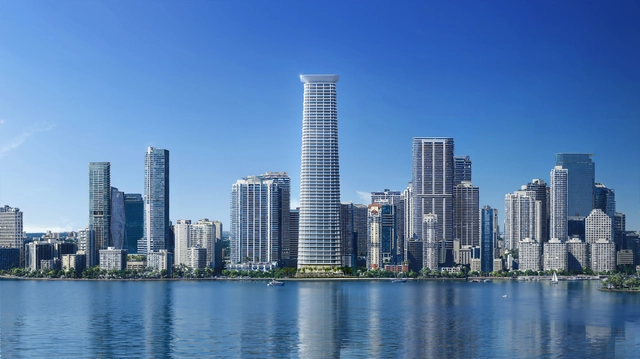
Foster + Partners has revealed the design of a new 54-story mixed-use tower to take shape in Miami. Set to become the new headquarters for the hedge fund Citadel, the tower is expected to feature 34 floors of office space and 212 hotel rooms on its upper levels, in addition to supporting retail spaces. In addition to Foster + Partners listed as the design architect, AAI Architects is the architect of record, and Field Operations is the landscape architect. The tower is expected to break ground in 2025, according to Citadel.
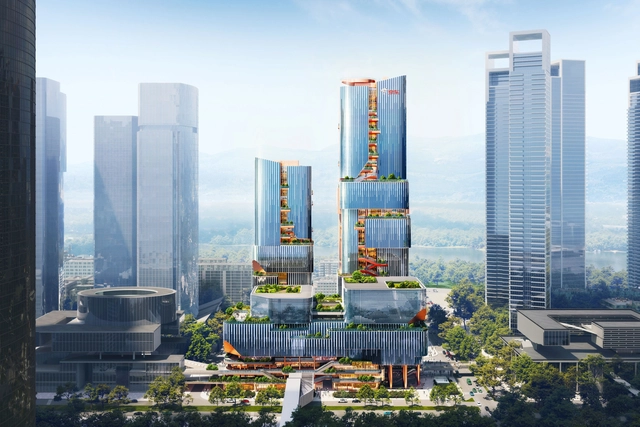
Büro Ole Scheeren’s latest project, Scenic City Towers, is currently under construction in the Shenzhen Bay Super Headquarters Base in China. This design for JD.com's new offices seeks to emphasize “in-between” spaces that blend the social fabric of urban life with nature, proposing a new model for working. Situated in Shenzhen’s Nanshan district, a booming business and financial area, the headquarters will join a community of global corporations around it.