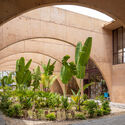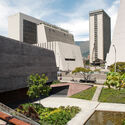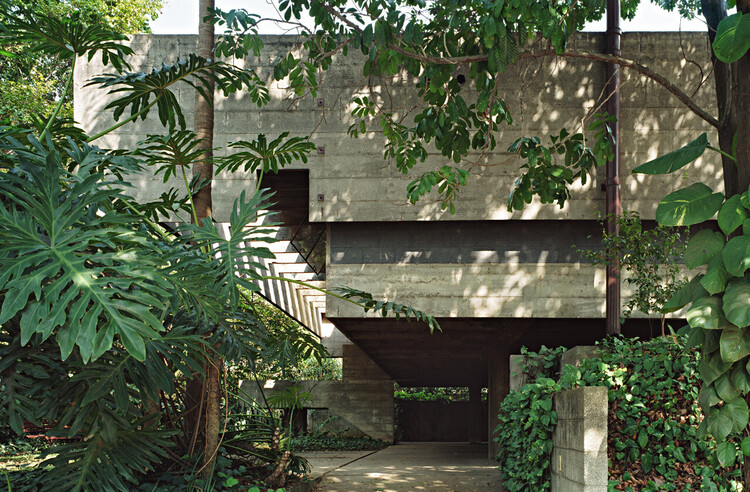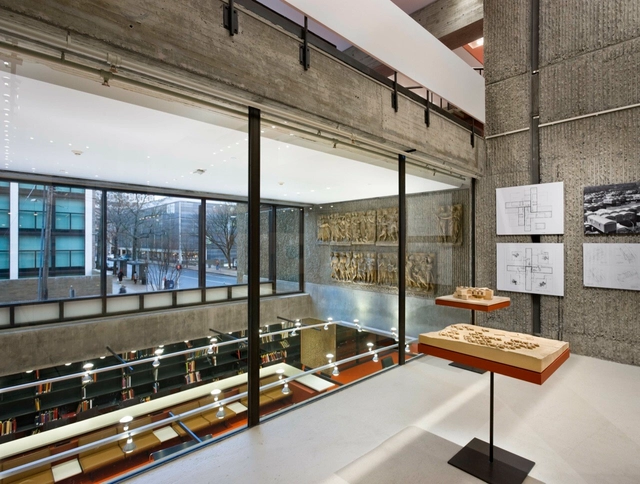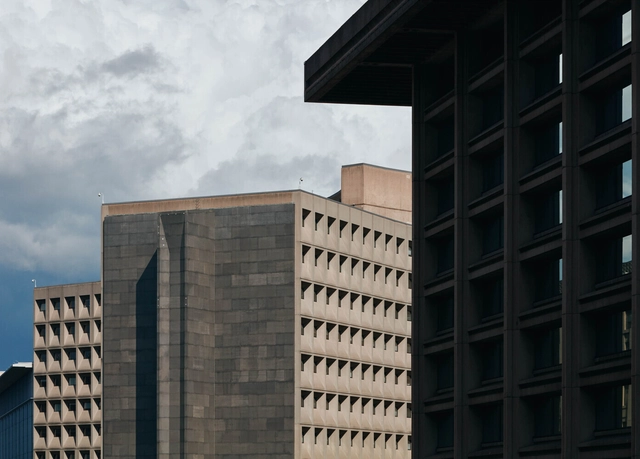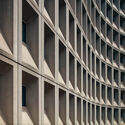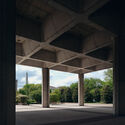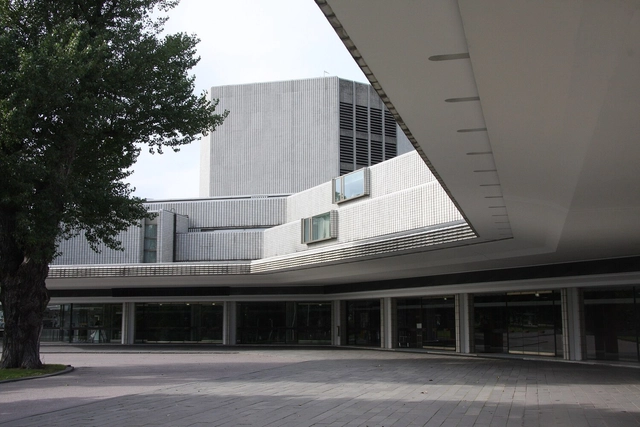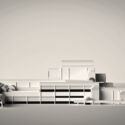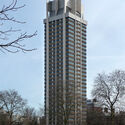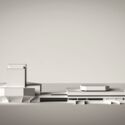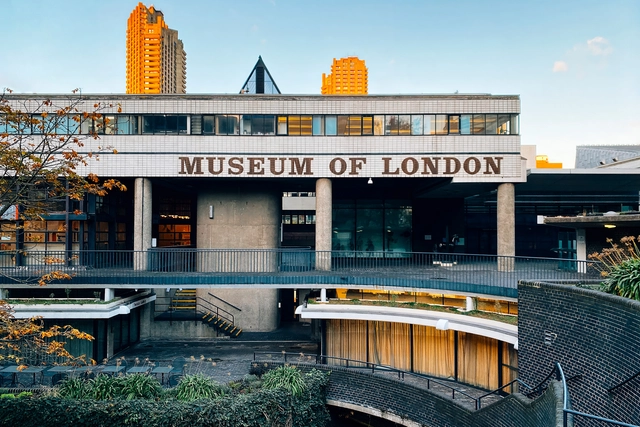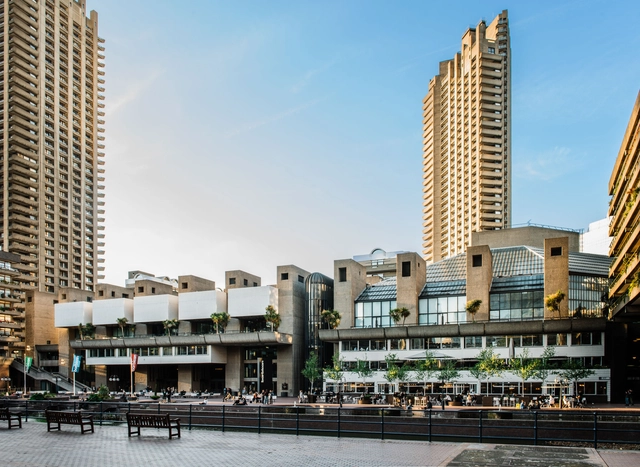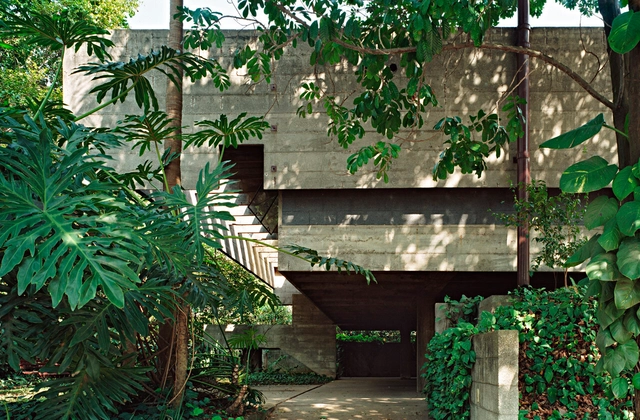
Nestled within the junction of London Wall and Aldersgate Street in the Barbican district of the City of London lies the Museum of London. Built in 1977, the brutalist building was home to the world's largest urban history collection, with more than six million objects curated to highlight London's social history. The museum has been closed for over two years with plans for relocation, while its historic building faces demolition to make way for a new development—the London Wall West scheme. This has sparked mixed reactions from London residents and people across the country, with calls to review the proposed design and campaigns favoring retrofit over the demolition of this unique modernist building. Photographer Arnolt Smead recently visited the museum to capture its beautiful architectural moments and highlight its unique features.
The City of London Corporation has approved a £191 million funding package for the first phase of the Barbican Centre's five-year renewal program. The initiative is aimed at addressing critical repairs and upgrades to this Grade II-listed venue, including improvements to accessibility, energy efficiency, and overall functionality of its aging infrastructure. The Barbican Renewal began in 2021 with an international competition for the multi-disciplinary design team to lead the efforts. In 2022, Allies and Morrison, Asif Khan Studio, and Buro Happold were selected, in collaboration with specialists in sustainability, heritage, landscaping, lighting design, acoustics, and more.
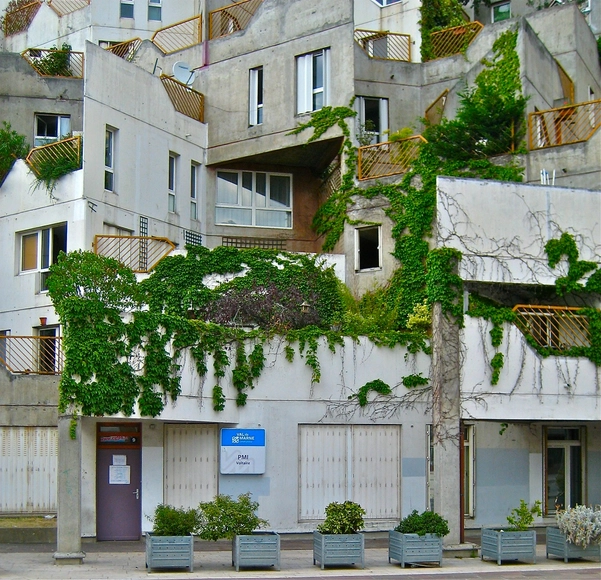
A few months ago, French architect Renée Gailhoustet was awarded the 2022 Royal Academy Architecture Prize. As housing challenges continue to embattle Paris and other French cities today, Gailhoustet was a timely choice, her body of work in the Paris suburbs – stretching back to the 1960s – still functioning today as compelling case studies to a social housing approach that concurrently embraces community and has a uniqueness of form.
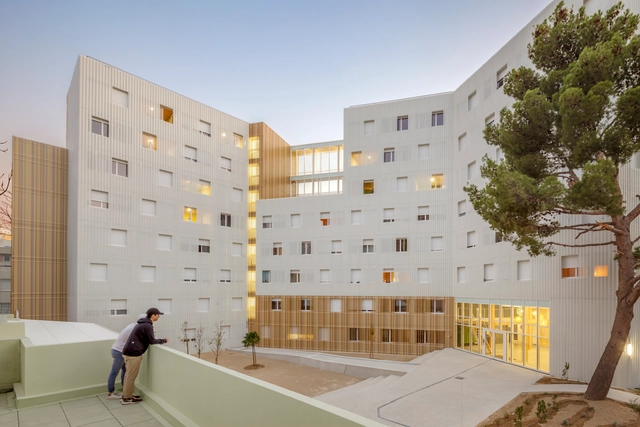
Student housing has undergone a remarkable transformation over the last century. Once seen as a utilitarian necessity, providing shelter and basic amenities for students, this architectural typology has evolved to address increasingly complex societal, cultural, and urban demands. Starting with Le Corbusier's modernist approach at the Cité Universitaire in Paris, student housing has reflected broader trends in architecture, urbanism, and social change.
Today, these buildings must cater to a highly diverse and transient population, navigating the pressures of affordability, density, and the evolving living standards of young adults. With rapid urbanization and increasing student mobility, universities now face the challenge of designing housing that is not only functional but also adaptable to different cultural and social contexts. This has led to more flexible, innovative solutions that promote both privacy and community living.
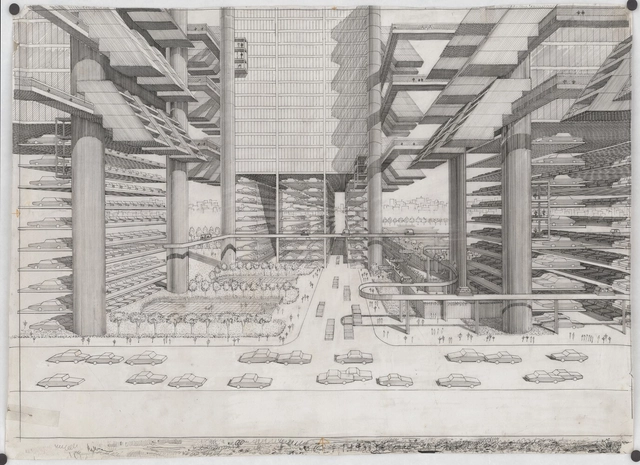
Perspective drawing of the Lower Manhattan Expressway / City Corridor project (unbuilt), New York ca. 1967–72. The Museum of Modern Art, New York, Gift of the Howard Gilman Foundation (1290.2000). Image Courtesy of The Met
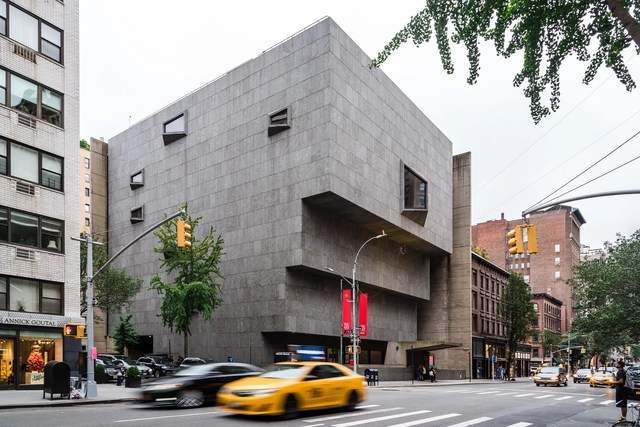
The Metropolitan Museum of Art has opened a major exhibition focused on the diverse and innovative career of Paul Rudolph, a second-generation Modernist architect whose work stands alongside luminaries such as Eero Saarinen and I.M. Pei. Titled "Materialized Space: The Architecture of Paul Rudolph," the exhibition is on display from September 30, 2024, to March 16, 2025, covering a wide spectrum of Rudolph's architectural contributions, from his experimental houses in Florida, through civic projects, to visionary urban megastructures and mixed-use skyscrapers.
From 1977 to 1983, the National Theatre in Prague underwent a major transformation with the opening of Nová Scéna, a modern counterpart to the traditional Neo-Renaissance theatre. For many years, Nová Scéna hosted the renowned Laterna Magika, the world’s first multimedia theatre. This groundbreaking performance style combined classical theatre with computer-generated visual effects, creating a unique dramatic experience. The striking glass building, a symbol of the communist era, became an iconic representation of the political power of the time. In recognition of its significance, this building was part of the Open House Prague festival in 2024—an annual event that invites the public to explore and appreciate the value of architecture.
Contemporary architecture in UNESCO World Heritage contexts presents a unique challenge: revitalizing historically significant sites while adhering to strict preservation guidelines. From urban centers to natural landscapes and intangible cultural traditions, these projects demonstrate the delicate balance between innovation and heritage conservation. Whether working in a mega city, a protected landscape, or a culturally rich rural area, architects are tasked with reimagining these spaces without compromising their historical value. Each project offers a fresh perspective on how heritage sites can evolve and remain relevant in modern times.
As a landmark of contemporary religious architecture in Portugal, the Church of the Sacred Heart of Jesus stands in contrast to traditional models, representing a work free from historicist stigmas. Resulting from a design competition organized in 1960, the church is notable for its civic dimension, urban role, and its anti-monumental and social significance. Integrated into the regular grid of the Avenidas Novas neighborhood, this example of the Movement for the Renewal of Sacred Art is part of a larger parish complex that often goes unnoticed by passersby. Its external street creates an unexpected public space, inviting people to enter and engage in a courtyard where architecture and the city merge. Finely crafted in terms of spatiality, detail, and light, the church holds many surprises for those who venture inside.
In Beirut, a city marked by transformation, the Interdesign Building echoes the vision of an architect steadfast in his conviction. Designed by Lebanese architect Khalil Khouri in 1973 during a period of economic growth, the building took 23 years to build, a process halted by the onset of the Lebanese Civil War. By the time it was completed in 1996, the urban landscape that surrounded it had changed. The structure has stood largely unused since, as a relic of hopeful modernity. While its design is singular in its narrative and expression, this structure illustrates the tension between aspiration and struggle throughout its complex history.
Madrid, the vibrant capital of Spain, offers a blend of tradition and modernity, reflected in its diverse architectural heritage. This rich past is etched into the old façades, expansive public spaces, and historic religious institutions that define much of Madrid’s character today. The city’s continuous architectural renewal, reflected in both respectful restorations and innovative new constructions, highlights Madrid’s commitment to preserving its heritage while embracing modernity.
In the 20th century, Madrid embraced modernity, influenced by movements such as Rationalism, the International Style, and Brutalism. Today, Madrid is a showcase for contemporary design, where contemporary projects by renowned architects coexist with its historical legacy. Structures like the CaixaForum by Herzog & de Meuron and Jean Nouvel’s Reina Sofía Museum exemplify the city’s interest in architectural explorations
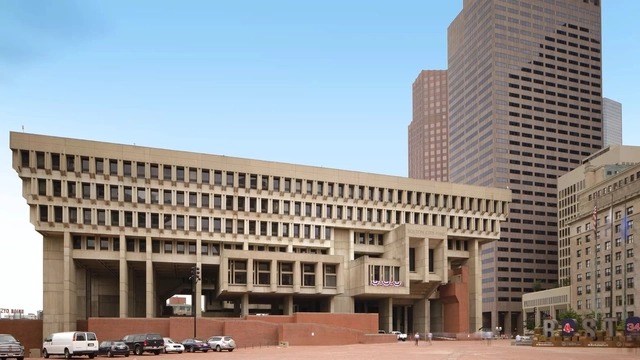
The Massachusetts administration, under Governor Maura Healey, has unveiled a new housing-centric proposal for the controversial Boston Government Service Center designed by Paul Rudolph and opened in 1971. Previously proposed to be redeveloped by the architecture office NBBJ with offices and commercial spaces, the updated vision aims to transform the Erich Lindemann and Charles F. Hurley buildings into housing facilities as part of the state’s goal to address the housing crisis while allowing for the historic preservation of the Brutalist structure.
Around 1949, the city of Buenos Aires led the construction of the Sixth Pantheon in the Chacarita neighborhood. Monumental in character and brutalist in style, this underground necropolis turned out to be the first and largest experiment in modern architecture in the funerary field. Designed by Ítala Fulvia Villa, one of the first Argentine women architects and urban planners, and a pioneer of South American modernism, along with her team comprised of Leila Cornell, Raquel S. de Días, Gunter Ernest, Carlos A. Gabutti, Ludovico Koppman, and Clorindo Testa, this work was discovered by Léa Namer, who conducted an in-depth investigation reflecting on the legacy of a modern utopia and a feminist rereading of history.
Brutalist buildings are a significant component of Washington, D.C.’s architectural identity. In the National Building Museum’s new exhibition, Capital Brutalism, this identity is explored further. Co-organized with the Southern Utah Museum of Art (SUMA), Capital Brutalism is a comprehensive exhibition of Brutalist architecture in Washington, D.C., to date, running until February 17th, 2025.
As part of the Design Doha 2024 Biennial, Glenn Adamson and Péter Tamás Nagy present the exhibition “Colors of the City: A Century of Architecture in Doha” investigating the architectural evolution of the capital of Qatar based on multiple global influences that characterize it. Running until March 30, 2024, the exhibition offers a journey through Doha's architectural history featuring various styles such as Classicism, Art Deco, and Modernism, contemplating the Qatari adaptations of these styles developed by architects from Europe, America, the Middle East, and South Asia.
Imagine a world thousands of years into the future, one where humanity has conquered planets from galaxies away, only to default to a neofeudalistic social order in a constant power struggle, all built upon an intricate tapestry of cultures and religions and set in a harsh yet vivid landscape that becomes a character in and of itself. This was the challenge faced by director Denis Villeneuve and production designer Patrice Vermette in creating the cinematic adaptation of Frank Herbert's 1965 novel. The two Dune movies, released in 2021 and 2024, were conceived as a whole and therefore share a coherent style and cinematic expression. Beyond aesthetics, the environment and architecture of Dune present a lived-in, believable world, one that anchors the action and characters, silently offering invaluable insights into the values and mythology of each civilization.
Several events have shaped Morocco since its independence. One of them is the Architects’ transition from serving the declining French empire to serving the newly independent Moroccan nation. Upon gaining independence in 1956, young Moroccan and foreign architects were tasked with constructing a self-sufficient Morocco. The demand for modern infrastructure, new administrative buildings, and improved education and health facilities led to a construction boom. This boom provided architects and planners the opportunity to express their vision.
Inspired by the popularity of modernism in Europe, architects experimented with buildings that embodied brutalism. This architectural style was not only a rebellion against the colonial vision of urban design in Morocco, but also a symbol of architectural unity in the urban landscape. Buildings were created in various typologies with the characteristic of exposed concrete, showcasing its inherent qualities of strength, durability, and functionality. These buildings, which can be seen in cities such as Agadir, Casablanca, Tangier, and parts of Marrakesh, represent a dialogue between brutalism and Moroccan culture, environment, and climate.