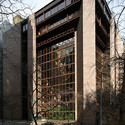
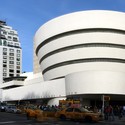
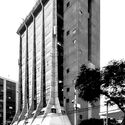
Boston City Hall. Image Courtesy of Reed Hilderbrand
It’s true that all trends are circular, and what was once seen as old and outdated becomes new and modern again- in fashion, music, art, and especially architecture. From the mid 20th century, brutalist architecture rose in popularity before reaching its peak in the mid-1970s, when it was disregarded for being too stylistic and non-conforming to the needs of clients who wanted their buildings to feel timeless. But the love for these concrete beasts is facing a resurgence, and a renewed appreciation for this architectural style is on the rise.
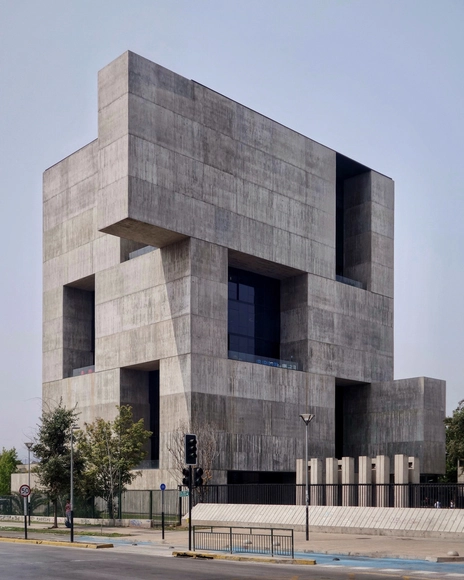
Sometimes sculptural and expressive, sometimes monolithic and monotonous, the Brutalist architectural style is equal parts diverse and divisive. From its origins as a by-product of the Modernism movement in the 1950s to today, Brutalist buildings, in architectural discourse, remain a popular point of discussion. A likely reason for this endurance is — with their raw concrete textures and dramatic shadows, brutalist buildings commonly photograph really well.
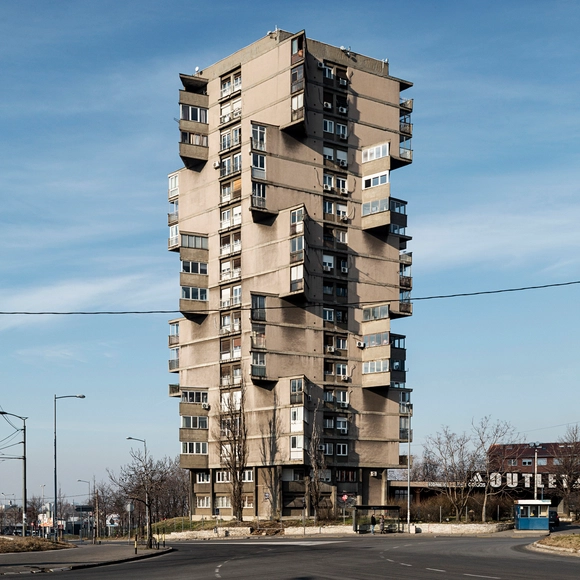
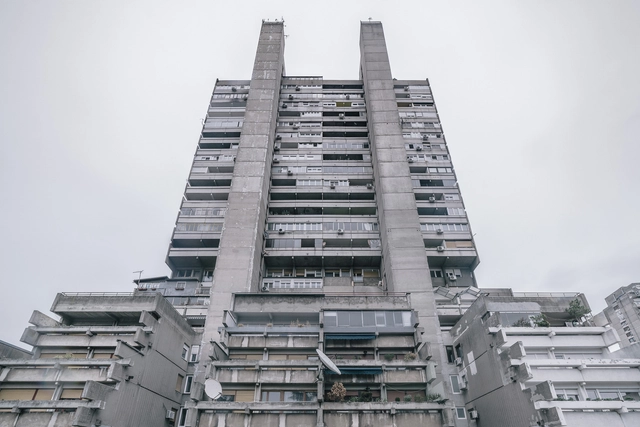
Brutalism is a deeply dividing architectural style - a subcategory of the Modernist movement that featured bare concrete finishes, unusual shapes, and an undoubtedly unique aesthetic. Whilst emerging into prominence in 1950s Great Britain, the most iconic examples of this architectural style are arguably found in Eastern Europe - particularly in the territory formerly known as Yugoslavia.
Munich – Bavaria’s capital since 1506 – is a city with layers and layers of history. Its many years as a rising architectural epicenter have left an interesting and unique mix of buildings. From Middle Age churches and cathedrals to contemporary synagogues. From skyscrapers to small pavilions. Brutalism to Art Nouveau. Munich’s architecture is truly extensive and marvelous.
Though not acknowledging Munich’s beer wonders would be wrong, the only mention of this substance would be in the stunning buildings (like the new Paulaner HQ by Hierl Architekten) that contain them. Yes, other aspects of the city are grandiose, but let’s focus on Munich’s top attraction: its architecture.
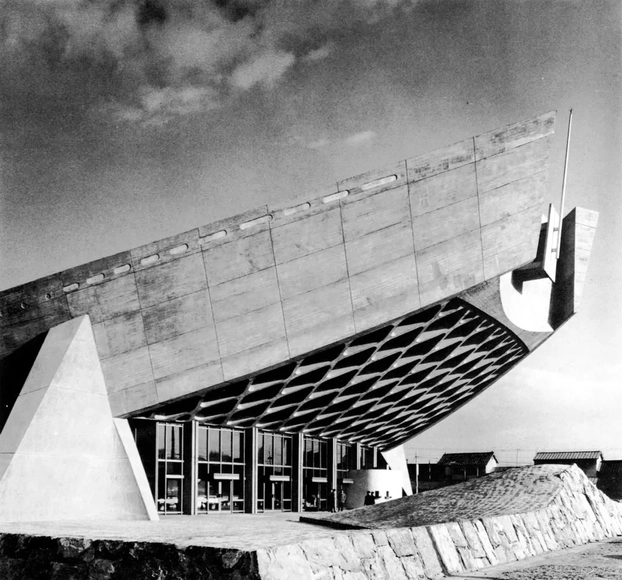
Local governor Toyohito Ikeda of Takamatsu, in Japan, announced that the famous Kagawa Gymnasium will be demolished. Built between 1961 and 1964 by the Pritzker Prize winnerKenzo Tange, the structure is a landmark of the modernist post-war era in Japan. This news has sparked the creation of a petition in an effort to save this 47-year-old monument.
From Taiwan to the Netherlands to Uruguay, Jakub Sawosko has extensively been photographing concrete architecture all over the world and displaying them on Instagram as @sh_sh_welt.
After living surrounded and fascinated by post-war concrete architecture in Europe in his early years, Sawosko moved to Taiwan where he eventually realized that Modernism had heavily influenced Taiwan as well. "I felt that [Taiwan's distinctive style of architecture] deserved more recognition", explains Jakub in conversation with ArchDaily via Instagram.
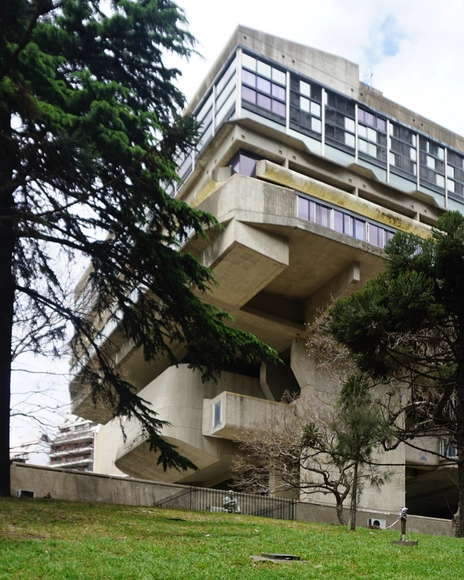
In the central Recoleta neighborhood of Buenos Aires, in a large lot between Austria Street, Agüero Street, and Del Libertador Avenue, stands the current building of the Mariano Moreno National Library, designed by architectsClorindo Testa, Francisco Bullrich, and Alicia Cazzaniga.
Built on the basis of the project that won first prize in a national competition in 1961, and completed in the early 1990s, it has become a landmark of modern Argentine architecture and an example of the variant of 20th century expressionism known as "brutalism".
Although there is much conflict surrounding the term Brutalist, there are certain constants and patterns within the movement that offer a concrete idea of the movement and its place in contemporary architecture.
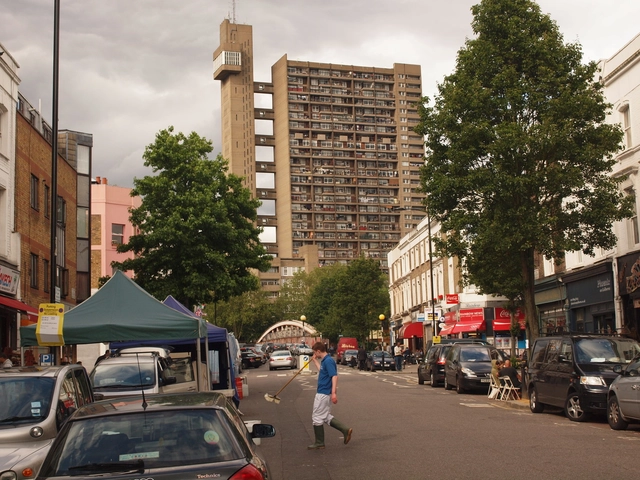
The buildings that adhere to Brutalism—an off-shoot of the Modern Movement that erupted between 1950 and 1970— stand out in part to their constructional sincerity- that is, keeping no secrets about the materials that went into their creation, their bold geometry, and the asperity of their textures and surfaces. Reinforced concrete is the predominant material in Brutalist works thanks to its prominent and dramatic texture, which is put on full display.
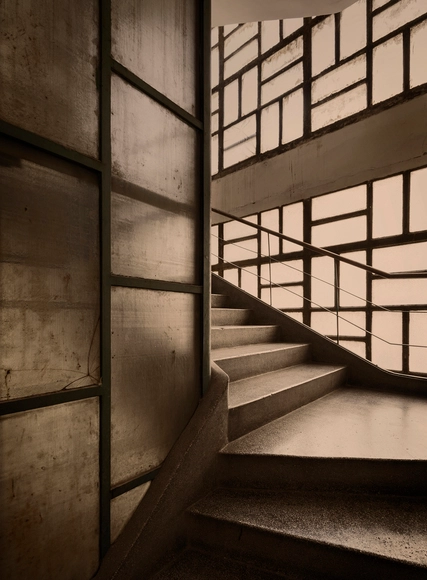
A city of electric architectural diversity – Belgrade’s Modernist structures give the Serbian capital a unique character. The grey of Belgrade’s Brutalist concrete is one of the city’s architectural signatures, existing in both complex volumetric facades and monolithic rectilinear forms. But while a plethora of architectural appraisals has been conducted on the external qualities of brutalist structures in Belgrade and beyond, photographic documentation of Belgrade’s brutalist interiors is relatively rare – something that photographer Inês d’Orey has sought to change in her most recent exhibition.
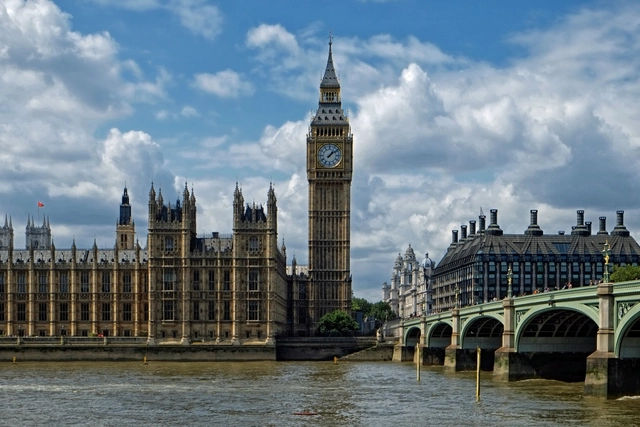
Elizabeth Tower (also known as "Big Ben"). Image Courtesy of Flickr user Eric Huybrechts
Her Majesty, Queen Elizabeth II, United Kingdom's longest-reigning monarch, has passed away at Balmoral Castle, aged 96. Earlier this year, Her Majesty became the first British Monarch to celebrate a Platinum Jubilee, marking 70 years since her ascension to the throne. During her coronation, the first ceremony of this type to be televised, newspapers and tv broadcasters talked about a “New Elizabethan Age” that would revive Britain from postwar gloom. Now, seven decades later, as the longest reign in British history has come to an end, people come together to honor The Queen and reflect upon her legacy in terms of culture, technology, and architecture.
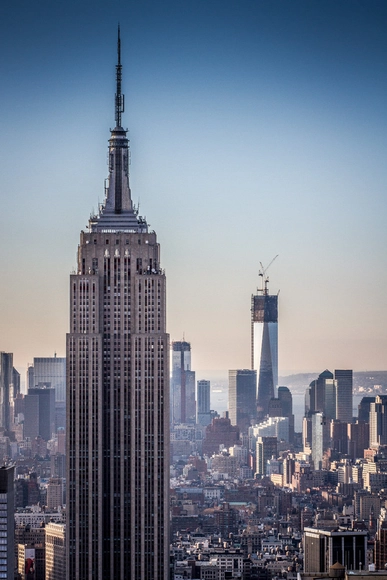
“A hundred times have I thought New York is a catastrophe, and fifty times: It is a beautiful catastrophe.” Le Corbusier. This architecture city guide celebrates Modernism in one of the world's greatest cities: New York. We embark on an architectural journey through nearly a century of innovative, revolutionary architecture: from early 20th century, revivalist Beaux-Arts; to machine-age Art Deco of the Inter-War period; to the elegant functionalism of the International Style; to the raw, exposed Brutalism characteristic of the Post-War years; and, finally, to the splendid forms of organic architecture. From world-renowned landmarks to undiscovered jewels, we invite you to explore the 2,028 blocks that make Manhattan an architectural mecca for citizens around the world.
The origins of brutalism can be traced to the UK in the 1950s during the post-war period. However, there is no clear record of its initial boundaries or theoretical frameworks. Despite this, it is widely agreed that it sought to uphold constructive sincerity as its main value and that it had, in the execution of Le Corbusier's Marseille Housing Unit (1952), a turning point for its global diffusion (Casado, 2019). For authors such as Banham (1966) or Collins (1977), constructive sincerity in Brutalist buildings does not only refer to material or technical criteria, but also to moral, political or ethical ones. These variables, in nations such as Peru, were fundamental and built an aesthetic while trying, through and from architecture, to construct an idea of a country. This essay seeks to be an approximation to these ideas and experiences.
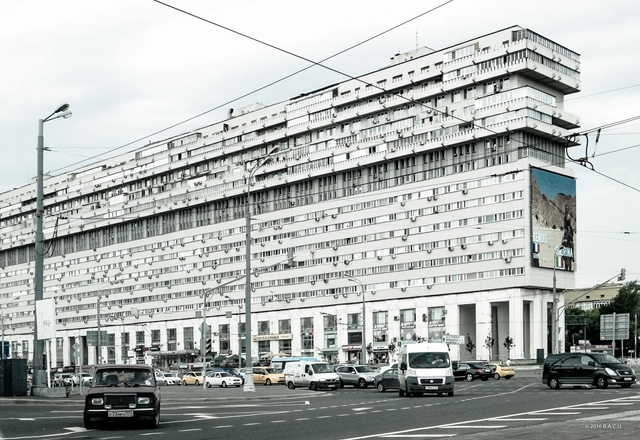
When cities grow, fuelled by an expanding population, housing becomes an essential component of the urban character of a metropolis. Across the world, housing experiments have been propagated by governments and states, with mixed results, and undoubtedly mixed opinions. The Soviet-era housing estates of Central and Eastern Europe are particularly interesting in that regard. These mass housing projects have been dismissed as eyesores and viewed as unimaginative monolithic structures. The legacy of these developments, however, is a lot more complicated than that.
Vista de la entrada principal. Image Cortesía de Weberhofer, W. (1970). Edificio PetroPerú. [Fotografías]. Archivo de la familia Weberhofer, Lima. Visitado el 3 de octubre de 2014
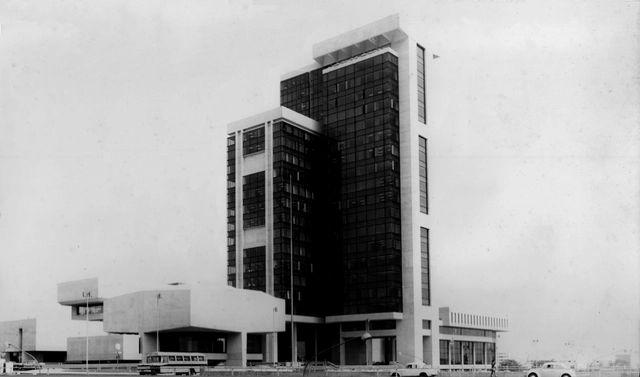
The Petroperú building, jointly designed by architects Walter Weberhofer and Daniel Arana Ríos, was the result of a state competition held by the military government of Velasco Alvarado in the early 1970s. The building, strategically located in the capital of Peru, within the prosperous district of San Isidro, was designed to house the recently created state company in charge of the whole petroleum process of the country (Petroperú S.A.). The monumental building, built and inaugurated in 1973, became the symbol of the newly installed regime.
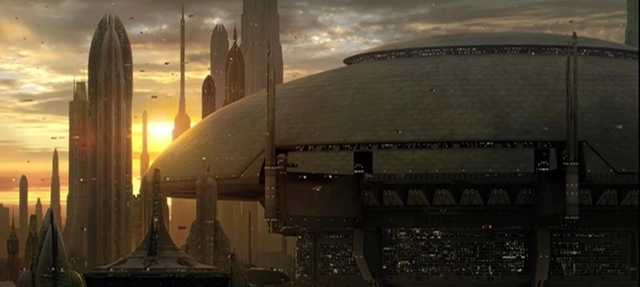
The Senate Building, Coruscant . Image via Star Wars, Revenge of the Sith / George Lucas
Depicting architectural visualizations of the future is no easy feat, so it makes much sense for designers to use aspects of our existing architecture as a foundation for these fictional worlds. Despite recent advancements in terms of animation technologies and CGI, there is still substantial use of existing architecture to provide tangible structural elements in film.
In terms of recycling architectural aesthetics, elements of the past and future are often integrated to create a hybridized style, an amalgamation of Retro, Dystopian, Modernist and Futuristic themes. From the resurgence of ancient pyramids and temples, to skylines reminiscent of the city of New York, visualizations vary depending on different notions of what our future may look like.
For centuries and centuries we’ve built – and the diversity in our global built environment is a testament to that. The many different cultures around the globe have had different ways of building throughout history, adapting locally found materials to construct their structures. Today, in our globalized present, building materials are transported across the globe far from their origins, a situation that means two buildings on completely opposites sides of the world can be more or less identical.
The term ‘Architect’ can be open to interpretation much like the reverence of an Artist. However, the universally recognized definition of the role is regarded as one who designs and plans buildings, a key member in terms of building construction. Architecture as a profession presents itself as a very diverse occupation. As an Art and Science in every sense, it offers insight into a vast range of subjects that can be applied to a range of different ventures.
Often Architecture students are offered with such a rigid path, constrained with these short-sighted ideas that an Architect must follow a particular direction to flourish in the field. When in fact it is interesting to note the vast opportunities that arise when given opportunity to diversify. Here are the Architects that have branched out and become successful fashion designers …
Buildings around the world are getting taller. Since the year 2000, global skyscraper construction has increased by 402%. Cities like Dubai are home to nearly 1000 high-rise buildings, and New York’s vibrant luxury real estate market has shown no signs of slowing down, with more high-rise additions slated to be added to its already towering skyline. There’s good in this – high-rises create much-needed space in already dense cities and can reduce urban sprawl in city centres, allowing for better preservation of natural areas.


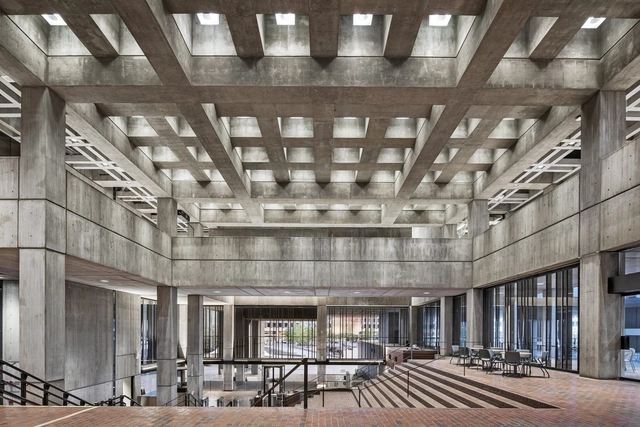
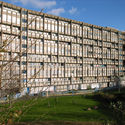
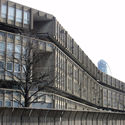
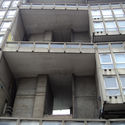






















.jpg?1379203393 "The University Village / James Ingo Freed & I.M. Pei (1967). Image Courtesy of Wikimedia Commons")