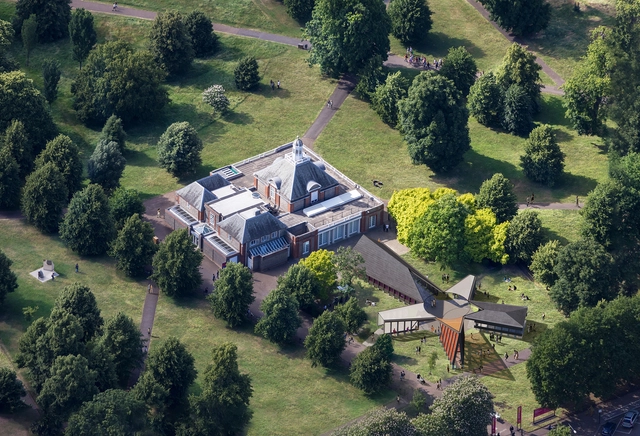
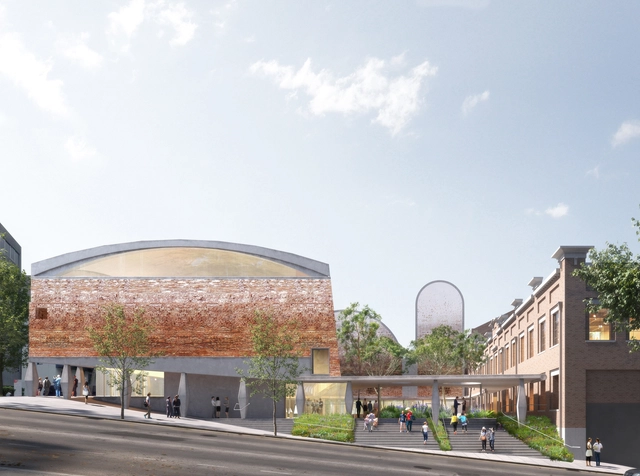
23rd Serpentine Pavilion by Mass Studies. Image Courtesy of Serpentine Gallery
Seoul-based Korean architect Minsuk Cho and his firm Mass Studies have been selected to design the 23rdSerpentine Pavilion, to open on June 5, 2024, in London’s Kensington Gardens. Titled “Archipelagic Void,” this iteration of the iconic commission will consist of five ‘islands’ displayed around an open space, breaking down the structure into a series of smaller elements intertwined with the park’s natural ecology. The pavilion will be open to the public from June 7, until October 27, 2024, with a press preview two days before the opening.
The Pritzker Architecture Prize 2024 Laureate Riken Yamamoto will deliver the lecture, "uncovering his journey in the discovery of communities throughout the world, inspiring his socially-driven architecture that blurs the boundaries between public and private dimensions". Following the lecture, Yamamoto will be joined by recent Laureates, Sir David Chipperfield CH (2023), Francis Kéré (2022), and Anne Lacaton (2021), who share a similar commitment to the value of the social system." They will discuss the responsibility of the architect as a catalyst for change and debate respective challenges of creating and bridging communities as they shape new approaches to the design of the built environment."
In 1956, when car ownership and the suburban development that this enabled were just being embraced as American cultural ideals, pioneering urbanist Jane Jacobs wrote that the U.S. was becoming “an unprecedented nation of centaurs. … Our automobile population is rising about as fast as our human population and promises to continue for another generation.” She continued, “the car is not only a monstrous land-eater itself: it abets that other insatiable land-eater—endless, strung-out suburbanization.”
https://www.archdaily.com/1016717/jane-jacobs-cyclistPeter L. Laurence
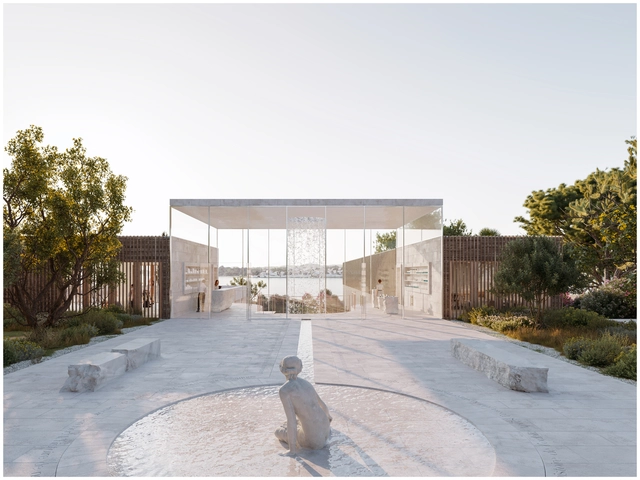
Delving into the realm of unbuilt architectural projects by renowned offices offers a peak into the design principles and ethos of the studios. The curated list of unbuilt projects submitted by established architecture practices has the potential to reveal new perspectives on the socio-cultural and environmental factors shaping contemporary architecture. These designs often respond to complex challenges such as sustainability, urbanization, and cultural preservation, reflecting architects' efforts to navigate and contribute meaningfully to the built environment.
Within this curated selection, one standout project is Rafael Viñoly Architects' Médano El Pinar, marking the late architect's last contribution to the architectural landscape. Other projects such as Aedas' Ellinikon Commercial Hub explore the opportunities of new developments, such as the disused airport transformed into Europe's largest coastal park in the periphery of Athens, while others are highlighting natural landscapes or offering spaces for creative and innovative programs. Featuring internationally recognized offices like SOM, Kohn Pedersen Fox, Gensler, or GAD Architecture, the selection showcases the unrealized concepts and architectural experimentations of renowned offices.
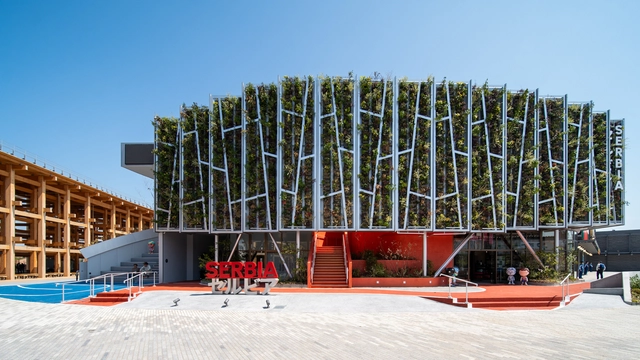
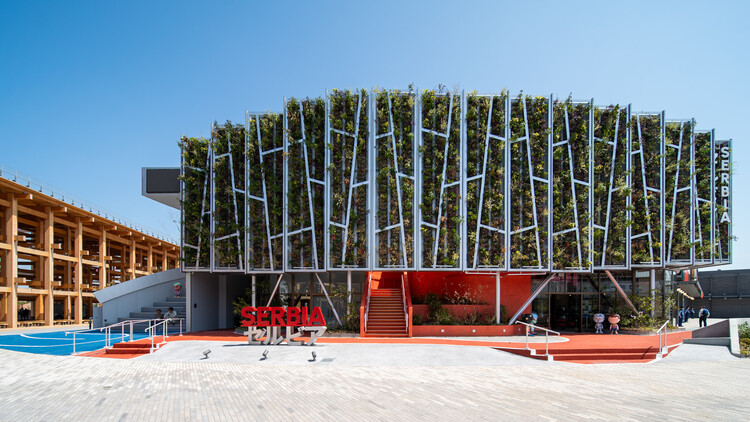
The Serbian Pavilion at Expo Osaka 2025 emerges as a compelling example of sustainable architecture infused with cultural storytelling, seamlessly integrating cutting-edge technology and emotional resonance. Designed by Aleatek Studio, the pavilion takes inspiration from Belgrade's protected Ratno Ostrvo (Great War Island) to realize the concept of a "Floating Forest." It stands out as the only Expo pavilion featuring a living façade, with over 95% of its materials recyclable and 80% intended for reuse in future construction. The design strategy also aligns with the theme "Play for humanity" of the upcoming Specialised Expo 2027 to be held in Belgrade.
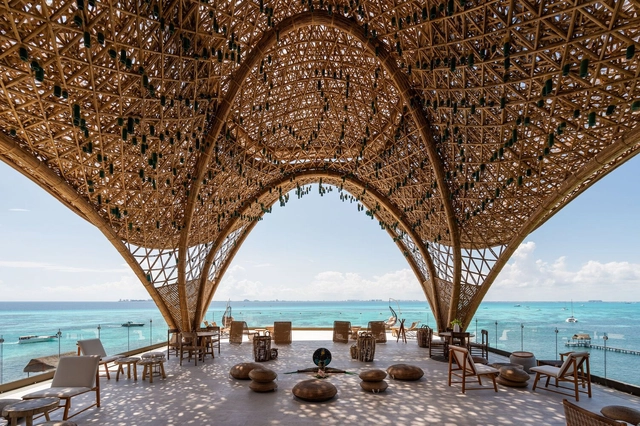
In the quest to promote a more sustainable construction where the use of natural materials contributes to the transmission of local traditions and cultures, an increasing number of architecture projects are exploring different resources and techniques to address environmental, economic, or social concerns. Understanding the benefits and qualities of materials such as color or texture influences the final experience of those who inhabit, walkthrough, or visit spaces. Therefore, understanding their technical, constructive, aesthetic, and functional properties should be part of the design process from the beginning.
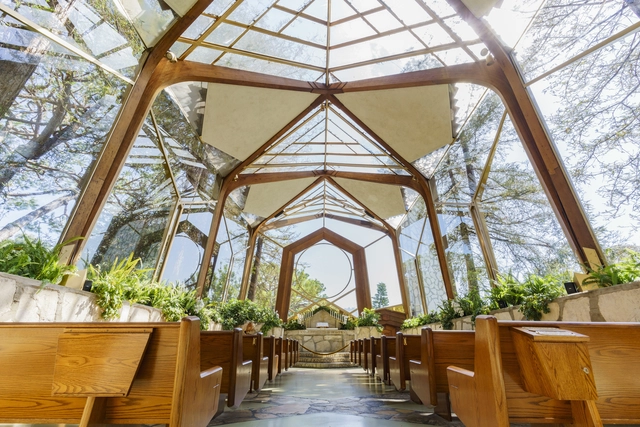
The Wayfarers Chapel, known locally as "The Glass Church," was designed by Lloyd Wright, the eldest son of architect Frank Lloyd Wright, and completed in 1951. Located in the Palos Verdes peninsula in Los Angeles, its design aimed to blend the lines between architecture and nature, with large-span glass panels opening up to space toward the redwood canopies. Last year, the structure was designated a national historic landmark. Now, due to “accelerated land movement” in the area, the structure, which has been closed off to the public since February, was announced to be disassembled to protect it from further damage.
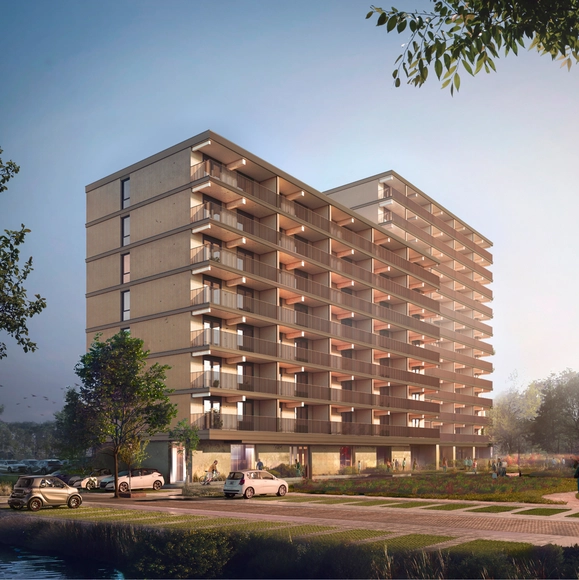
Powerhouse Company has revealed the design for the largest timber-built affordable housing complex in the Netherlands. “Valckensteyn” is a circular design featuring a 12-story timber structure and 82 homes. Situated within Pendrecht, a post-war neighborhood in Rotterdam, it sits on the site of a residential flat bearing the same name, demolished a decade ago. The timber structure seeks to be circular and sustainable in its design, creating a nature-inclusive environment that is accessible to all.
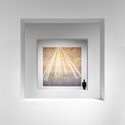
Step into the realm where the minimalism of the 1960s Light and Space movement intertwines with contemporary high-tech algorithms and sensors. Back then, light artists like James Turrell, Dan Flavin, and Robert Irwin captivated audiences with the bare essentials, using precisely daylight or lamps to heighten visual perception. Fast forward to today, Chromasonic takes this synergy of light and color but augments it with sound and algorithms. Envisioned as a global network to experience the harmony of body and mind, Johannes Girardoni's team unveiled the first satellite of perception in the heart of Venice Beach, California. Through a collaboration with Google, Milan Design Week showcased how the interplay of light and color can go on tour as a walk-in installation on a larger scale.
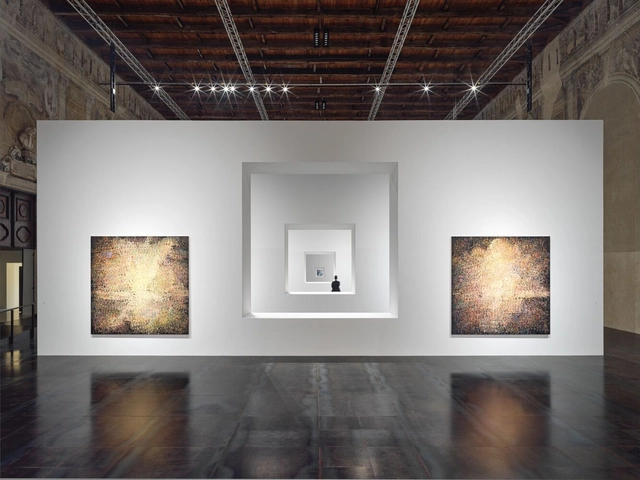
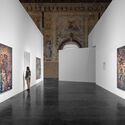
A new exhibition presenting the works of artist Zeng Fanzhi has opened in the historic Scuola Grande della Misericordia in Venice, Italy. Running from April 17 to September 30, 2024, concurrent with this year’s edition of the Venice Arts Biennale, the “Zeng Fanzhi: Near and Far/Now and Then” exhibition showcases the latest breakthroughs in the artist’s practice in a space adapted by architect Tadao Ando.
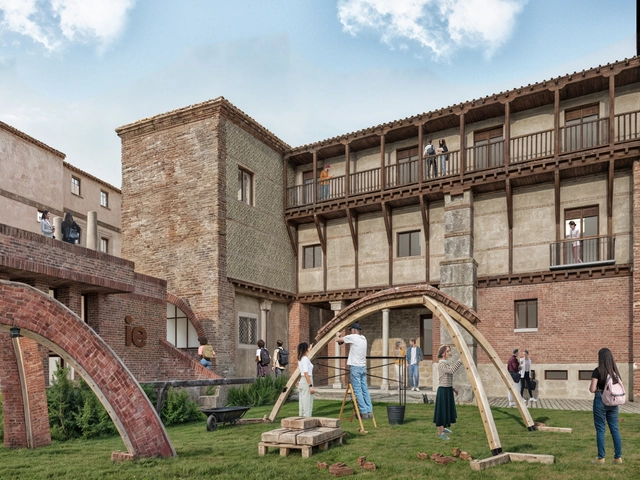
IE University has just announced the establishment of a new Creative Campus to be inaugurated in 2025 in Segovia, Spain. Situated within the historic Palacio de los Condes de Mansilla, this new campus will serve as an extension of the IE School of Architecture and Design. Developed to become an Innovation Hub, the project spans more than 5,000 square meters and boasts a Fab Lab, construction workshops, biomaterials, textile research laboratories, experimentation spaces, digital fabrication classrooms, and an exhibition venue. The amenities are designed for creative minds from different disciplines to collaborate, fostering a platform that provides real solutions for different challenges.
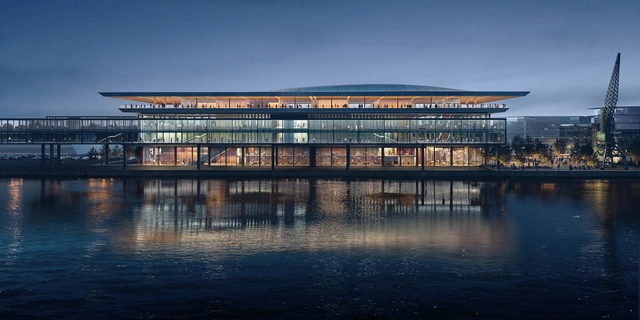
Zaha Hadid Architects (ZHA) has been announced as the winner of the international competition for the design of the Riga Ropax Terminal in Latvia. Collaborating with Latvian practices Sarma Norde Architects and Alps Landscape Architects, as well as Sweco Finland, ZHA’s proposal includes the repurposing of an existing shipping warehouse, to be transformed into a key multi-modal transport hub for the city, located along the Daugava River. The competition was open to anyone who qualified. Out of the ten registered entries, the third prize was awarded to US-based Berenblum Busch Architects, the second prize went to R-Konsult from Estonia.
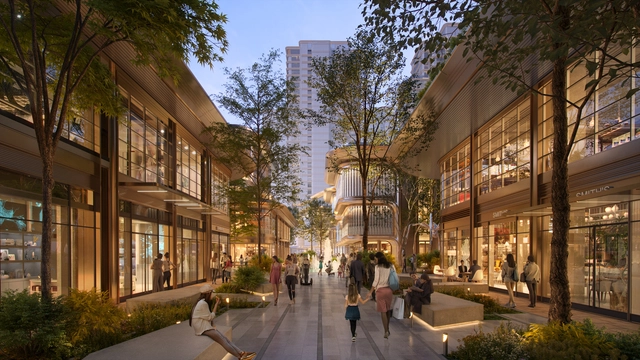
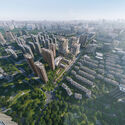
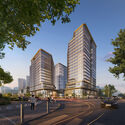
Foster + Partners has unveiled plans for the Changfeng mixed-use development in Shanghai, China. Designed as a component of the Shanghai Science and Technology Finance cluster in Putuo District, the project is part of the broader Shanghai 2035 Masterplan. The mixed-use scheme integrates with existing public green spaces to promote well-being and revitalizes an industrial area into a vibrant mixed-use neighborhood.
As the anticipation builds for the XXXIII Olympic Games in Paris, the city is preparing to host a global sporting event and embark on a journey of urban renewal. In a departure from traditional stadium-centric hosting, Paris 2024 embraces a new approach to the Olympic experience. Sports architecture has the ability to transcend functionality and become a space of collective experience and shared joy. In that sense, it invites individuals from diverse backgrounds to forge connections while celebrating athleticism. This month’s curated collection focuses on diverse forms of sports architecture, stadiums, venues, and landscaping projects, dissecting what components come together to form different sports architecture experiences.
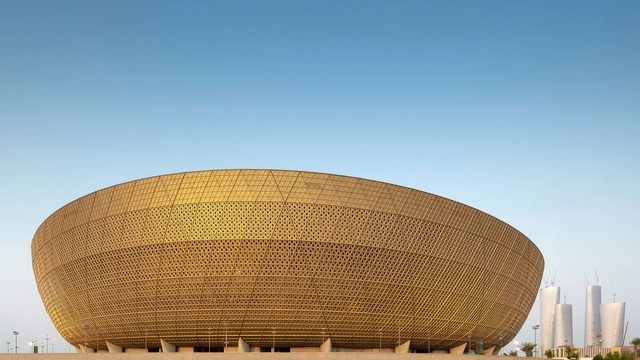
For the Qatar World Cup in 2022, Foster + Partners designed the iconic and more traditional Lusail FIFA stadium. In India, M:OFA Studios designed the National Institute of Water Sports, breaking away from the pragmatic norms of government institutions. In Hangzhou, China, the 2022 Asian Games featured a new Cricket Field by AZUT, emerging as an integration of sports infrastructure with the natural landscape. Meanwhile, in Order City, China, PLAT ASIA transformed an existing urban square into a Smart Sports Park, promoting community wellness and interaction. Finally, Opsis Architecture’s University of Idaho Arena serves as a main gateway to the University campus, celebrating the spirit of athleticism and community.
The Second Studio (formerly The Midnight Charette) is an explicit podcast about design, architecture, and the everyday. Hosted by Architects David Lee and Marina Bourderonnet, it features different creative professionals in unscripted conversations that allow for thoughtful takes and personal discussions.
A variety of subjects are covered with honesty and humor: some episodes are interviews, while others are tips for fellow designers, reviews of buildings and other projects, or casual explorations of everyday life and design. The Second Studio is also available on iTunes, Spotify, and YouTube.
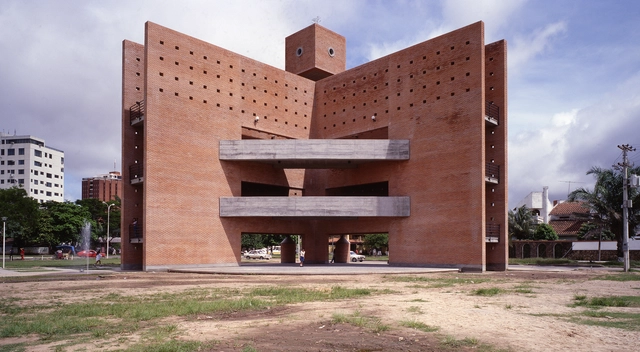
Santa Cruz de la Sierra is located on the eastern plains of Bolivia, on the banks of the Pirai River. Being the most populous city in the country, it reveals an extreme social and cultural complexity surrounded by extensive pampas and plains. Additionally, it represents one of the most developed cities in Bolivia, with a high municipal indicator of sustainable development. Delving into the importance of community architecture, popular appropriation, the character of urbanity, and other concepts, this article explores the history behind the Summit of the Americas Monument through a series of narratives, documentations, drawings, and images captured by Pino Musi.
Courtesy of [applied] Foreign Affairs, Institute of Architecture, University of Applied Arts Vienna
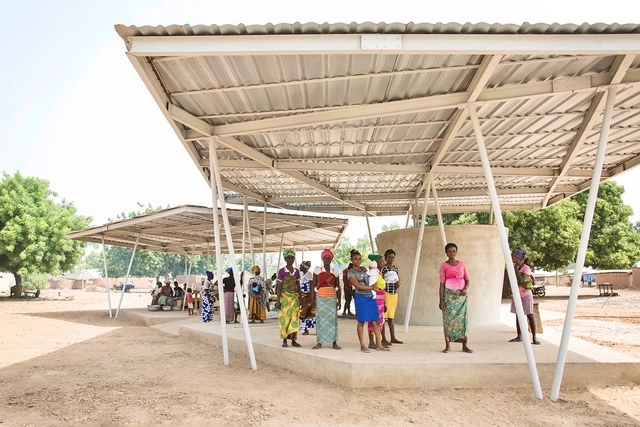
Public Markets are complex cases that beautifully combine an engineering exploration with the instigation of a beneficial public function. In fact, it doesn't take much to designate an open and accessible commercial hub that would encourage commercial exchange and economic development for small or local businesses. All one needs is a lot and a sheltering roof. However, many designers and architects have chosen to take this exercise beyond the social level and into further material and technical exploration.
Powerhouse, Australia’s largest museum institution dedicated to applied arts design, and technology, has revealed the plans for a comprehensive restoration of its three sites located in Sydney, Australia, in addition to the opening of a new site in Parramatta in Western Sydney in 2025. The Powerhouse Ultimo site contains two heritage-listed buildings: the Ultimo Powerhouse and the Ultimo Post Office. The project for the renovation of this heritage location is led by a team of architects, Durbach Block Jaggers working in partnership with Architectus, Youssofzay + Hart, and landscape architects, Tyrell Studio.