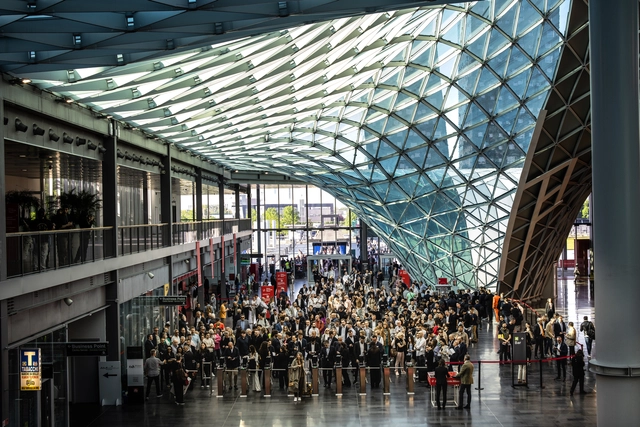
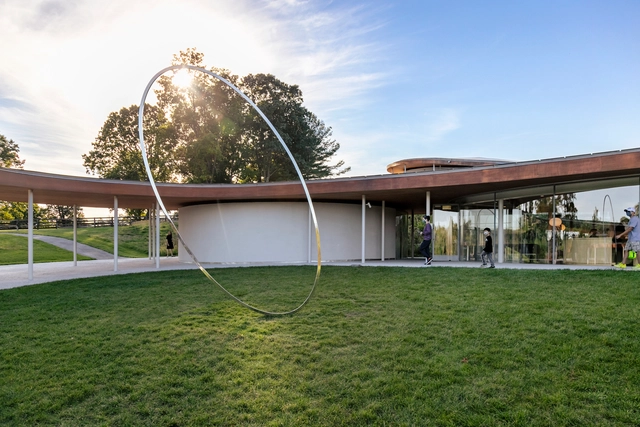
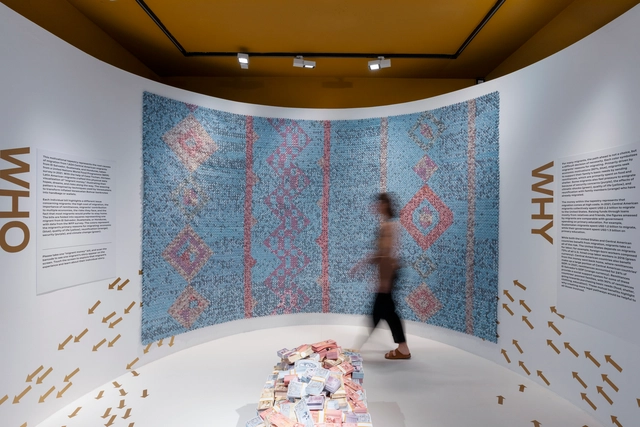
Entrance to Salone del Mobile 2024. Image Courtesy of Salone del Mobile.Milano
For the first time, the Salone del Mobile.Milano offers a comprehensive look at its impact with the release of "Milan Design (Eco) System," a research project developed in collaboration with the Politecnico di Milano. This inaugural annual report provides a detailed analysis of Milano Design Week's influence and impact, showcasing Salone's role as an international catalyst within the extensive program of design events. The report aims to establish a robust, long-term monitoring system that addresses key sustainability challenges – environmental, economic, and social – as well as inclusion and cultural developments. This data-driven approach is set to inform the future strategies for Salone and the wider design community.
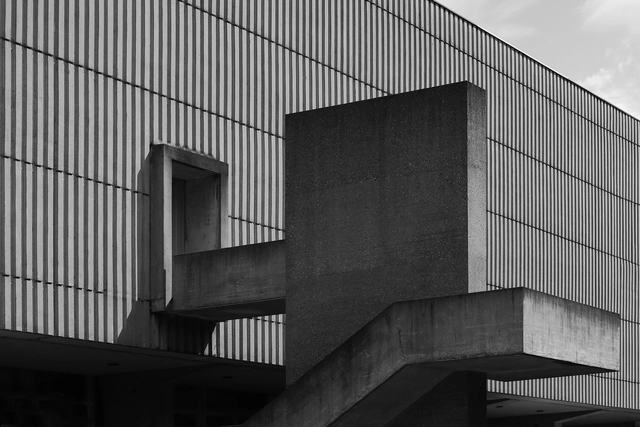
In his latest photographic journey, Paul Clemence explores the architectural essence of SwissMuseums at Le Salon Suisse, Miami Art Week. Delving into the architectural artistry of the region and the museum's significance in today's urban landscape, the photographer showcases a comprehensive exhibition. Titled "Shapes, Rhythm, Abstraction: Swiss Museums," the photo series includes Geneva, Lausanne, Basel, Zurich, and St. Gallen.
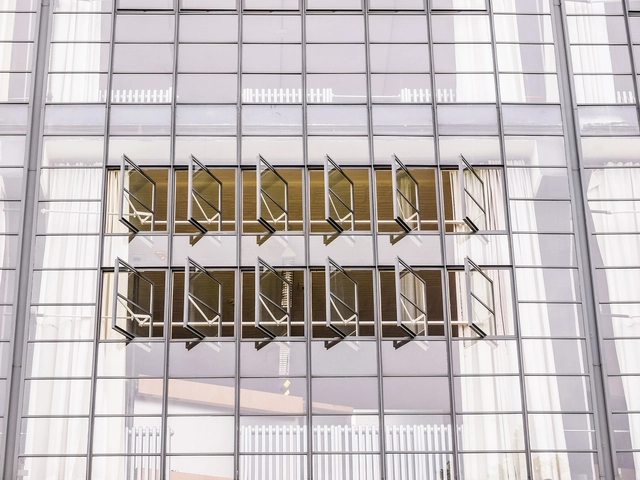
In 2024, a diverse range of topics have been comprehensively explored, some focusing specifically on architectural details and construction systems. These articles provide valuable insights into architecture's often-overlooked technical and functional aspects. By shifting attention away from aesthetics, materials, and spatial massing, they reveal the importance of intricate details and the construction systems underpinning contemporary projects' larger architectural vision.
Executing these seemingly small elements is crucial in shaping how architecture is perceived and experienced. Specifying and drawing a thoughtfully designed detail is not dissimilar to determining the correct screw in building a car—its thread count, material, and length—can dramatically influence not only the success of an architectural design but also the quality of the human experience it fosters. Such details, while often dismissed as mundane and may not be the most recognizable features of stellar projects, profoundly impact the cohesiveness and functionality of architectural projects.
Combining experience, knowledge, tradition, innovation, and experimentation, Estudio Planta, based in Buenos Aires, Argentina, focuses on fostering the relationship between architecture and nature by using vegetation as a building material and integrating outdoor spaces into daily life. Addressing the unique characteristics of each site, programmatic innovation, sustainability, care for noble materials, and construction details, the practice defines its identity by proposing ways of living in harmony with its inhabitants and understanding the legacy that architecture can leave for society.
The Second Studio (formerly The Midnight Charette) is an explicit podcast about design, architecture, and the everyday. Hosted by Architects David Lee and Marina Bourderonnet, it features different creative professionals in unscripted conversations that allow for thoughtful takes and personal discussions.
A variety of subjects are covered with honesty and humor: some episodes are interviews, while others are tips for fellow designers, reviews of buildings and other projects, or casual explorations of everyday life and design. The Second Studio is also available on iTunes, Spotify, and YouTube.
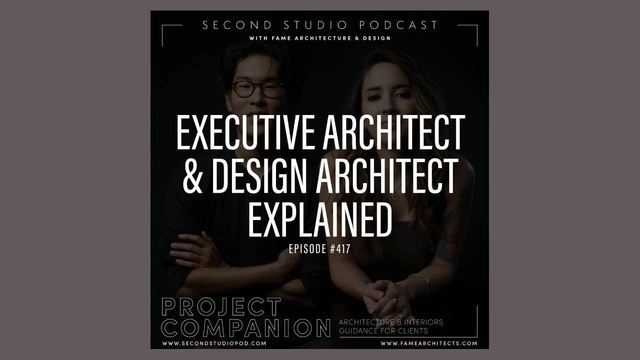
This week David and Marina of FAME Architecture & Design discuss the responsibilities and roles of the Design Architect and the Architect of Record (AOR) also known as the Executive Architect when working together during each project phase from pre-design to concept design; schematic design; design development; construction documentation; bidding; and construction. They two also discuss legal liabilities; fee differences; knowledge overlap; and more.
https://www.archdaily.com/1025778/the-second-studio-podcast-executive-architect-and-design-architect-roles-explainedThe Second Studio Podcast
As we move past Thanksgiving and step into December, the festive season is fast approaching. This time of year brings celebrations, holidays, and travel plans into full swing. Particularly in the Northern Hemisphere, there is a strong association between end-of-year festivities and cold, snowy weather.
Among the many traditions that celebrate the season, one of the most logistically and architecturally challenging is arranging for the giant Christmas tree for Rockefeller Center in New York City. This spectacle of moving a 70+ foot, 10+ ton tree into one of the busiest city centers in the world continues to capture the holiday spirit annually.
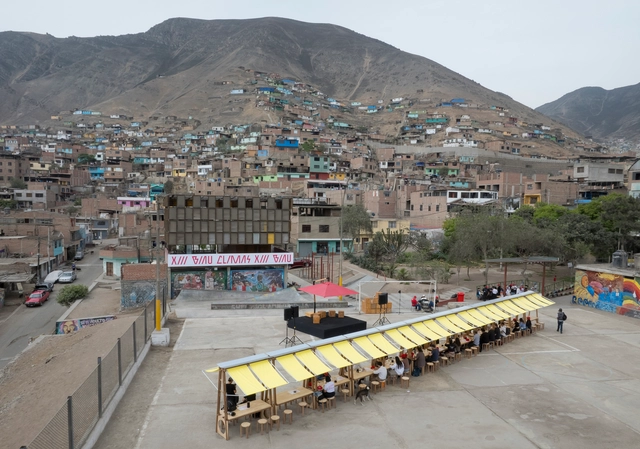
Local Comunal San Martín de Orúe, en La Balanza, Comas. Image Cortesía de BIAU
Amid the dynamism and speed that characterize our life in the contemporary world, especially concerning our cities and built environments, it is inevitable to recognize the importance of preserving spaces for pause and reflection, essential for addressing and discussing the key issues of architecture and urbanism that our society urgently needs today. The latest edition of the 13th Ibero-American Biennial of Architecture and Urbanism, held from December 2 to 6 in Lima, Peru, provided a unique gathering for such reflections and dialogues. Under the theme 'CLIMATES: Actions for the Good Living,' the event brought together architects and key figures from the field, who, during a week of roundtable discussions and conferences, focused on the challenges of global contemporary habitation, especially those shared between Spain and Latin America, thus serving as a bridge of knowledge between both contexts.
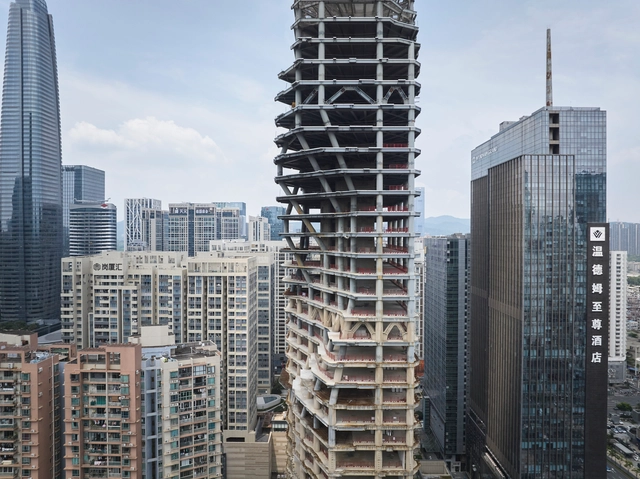
Construction has commenced on the Shenzhen Institute of Financial Technology tower, a 46-story building designed by Zaha Hadid Architects. Its design, situated on a narrow site in Shenzhen's Futian district, aims to respond to its urban context. The building's form, measuring 199 meters in height, incorporates setbacks placed to maximize sunlight penetration to surrounding streets and public areas. This design decision is further reflected in the façade's varying transparency and color, created by vertical and angled glazing mullions in black and bronze. Recent construction photographs reveal the topped-out tower, waiting to receive its envelope while temporarily showcasing openly its structure and interior organization.
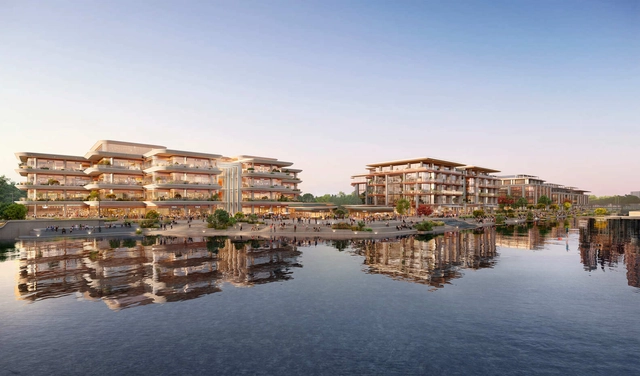
Construction has just begun on a new mixed-use project within the Sanlin Riverside development in Shanghai, designed by Foster + Partners. A recent groundbreaking ceremony marked the start of work on the site, which is envisioned to serve as a significant addition to the larger area. The development is designed to include modern office spaces in the northern section, with retail facilities and additional workspaces situated in the south. These components are connected by landscaped plazas, gardens, courtyards, and a park designed to host community markets, festivals, and waterfront activities. The site will also feature a colonnade along the river, aiming to appeal as a community gathering space.
The Latin American Architecture Biennial (BAL), which has gained significant relevance in the contemporary architectural scene, will celebrate its ninth edition next year. This meeting gathers emerging Latin American architecture studios in Pamplona, Spain, to share their work, fostering dialogue and debate about the current state of the discipline, as well as acting as a bridge between the Latin American continent and the Spanish context. In this edition, Costa Rica will be the guest country, accompanied by Honduras, El Salvador, Panama, Guatemala, and Nicaragua. As part of this invitation, there will be an exhibition and specific seminars dedicated to analyzing the situation of architecture in these countries.
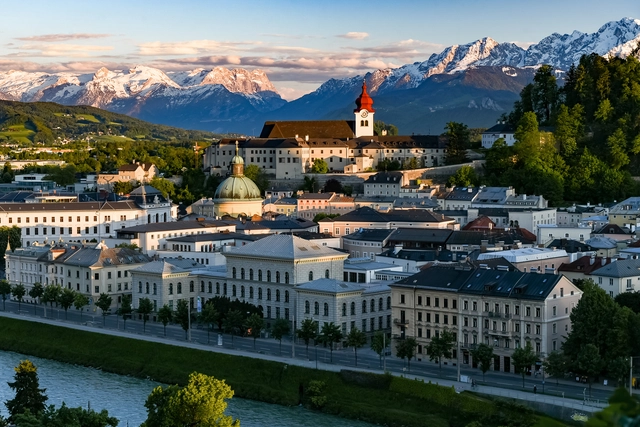
Salzburg, Austria, set along the Salzach River, is a city where history and architecture merge seamlessly. Dominated by the imposing M Castle, its historic core reflects a rich Baroque heritage. Landmarks like the Salzburg Cathedral, crafted by Santino Solari, and the elegant Leopoldskron Palace showcase a past marked by grandeur and cultural influence. Visitors can trace centuries of architectural evolution through the city's streets, from medieval strongholds to Baroque splendor, all within a UNESCO World Heritage site. Each winter, this setting hosts the Salzburg Christmas Market, recognized as one of the oldest Advent markets in Europe, with roots tracing back to a 15th-century "Tandlmarkt."
Yet, Salzburg is also a city of contrasts. Modern architecture has made its mark, blending harmoniously with its historic backdrop. Modern projects like Stadt Park Lehen and Paracelsus Bad & Kurhaus showcase contemporary design, while the Institute of Pharmacy and Gusswerk Extension add a fresh touch to the city's urban fabric. This balance between the old and the new defines Salzburg, where each architectural layer contributes to the city's dynamic, evolving story.
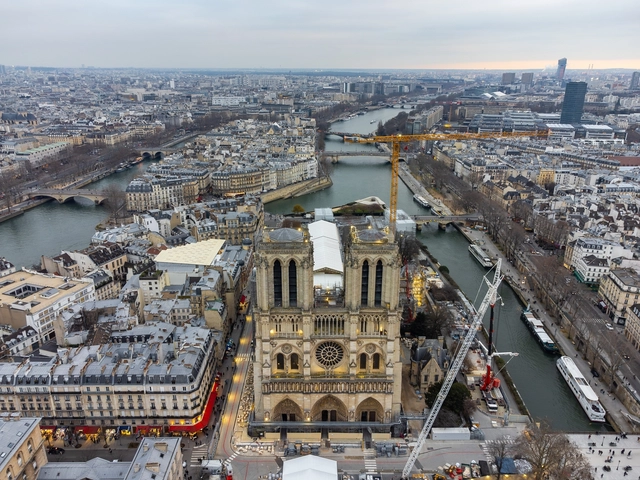
Notre Dame Cathedral reopened on December 7th, 2024, welcoming visitors for the first time since the 2019 fire. The restoration of Notre Dame Cathedral was a massive undertaking, led by chief architect Philippe Villeneuve, assisted by Rémi Fromont and Pascal Prunet. The project involved approximately 2,000 craftspeople, 250 companies, and about $900 million, demonstrating the immense scale and complexity of the work on a tight deadline. Despite the major milestone of opening before the end of the year, the restoration works are not yet complete, as they are scheduled to continue through 2026.
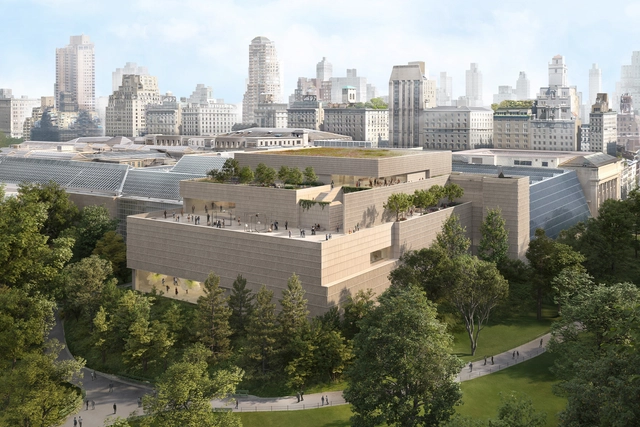
The Metropolitan Museum of Art in New York has unveiled the design for a new wing dedicated to its 20th- and 21st-century art collection. Architect Frida Escobedo, the first woman to design a Met wing, is leading the project. The Oscar L. Tang and H.M. Agnes Hsu-Tang Wing will increase gallery space by almost 50 percent, adding over 70,000 square feet. This expansion will address accessibility issues, improve infrastructure, and enhance the sustainability of the building. The opening of the new wing is anticipated in 2030.
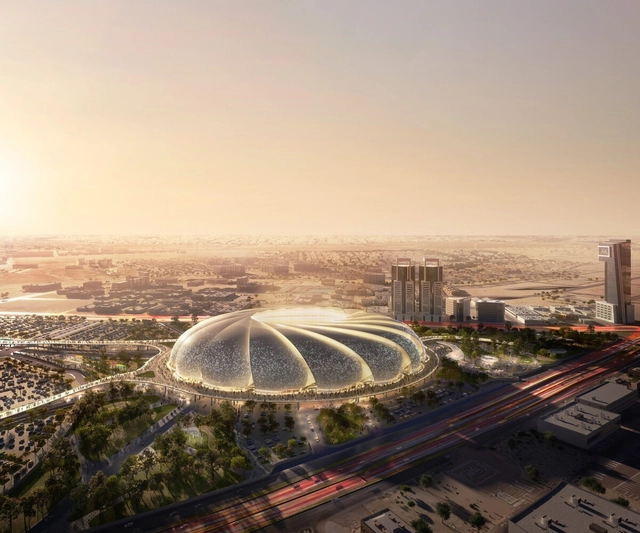
Aramco Stadium / Populous (Al Khobar). Image Courtesy of FIFA / Saudi Arabia 2024 Bid
Saudi Arabia was officially announced as the 2034 FIFA World Cup host. The country plans to build 11 new stadiums and refurbish four of its existing venues. The proposed host cities include Riyadh, Jeddah, Al Khobar, Abha, and the yet-unbuilt Neom, a 170-kilometer-long linear city proposed to be built on the Red Sea coast. Additionally, the plan involves 134 training sites across the country, with 73 newly built facilities.
Released on December 11, 2024, the announcement came as no surprise, given that only one bid was submitted for each of the 2030 and 2034 World Cup tournaments. Spain, Portugal, and Morocco have been confirmed as joint hosts for the 2030 event, while Saudi Arabia has been chosen to host the 2034 edition.
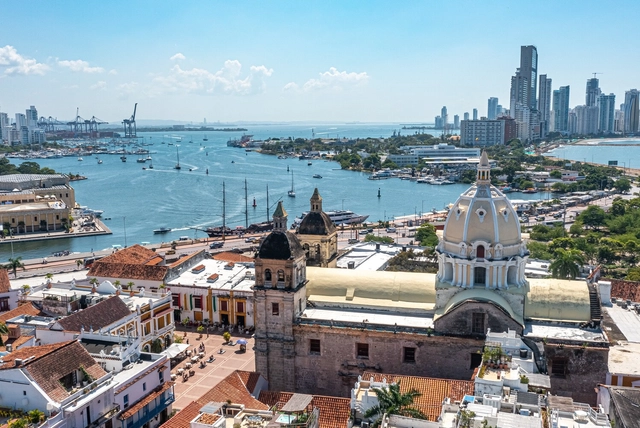
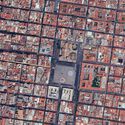
A look at most of the cities within Latin America reveals striking commonalities across countries, from Mexico down to Argentina: most cities have a well-defined area known as "El Centro" (The Center), anchored by a main plaza (Plaza Mayor), flanked by a church on one side and key buildings like the city hall on another. This is no coincidence, as it can be traced back to an urban planning system established during the Spanish colonization of the Americas in the 17th and 18th centuries. It gave standardized guidelines for city design across its viceroyalties. Unlike French and English colonies, Spanish settlements adhered to regulations that contributed to the emergence of a shared urban identity, with cities displaying similar spatial logic and architectural cohesion despite differing scales and contexts.
Temporal Shift by Sahar Coston Hardy. Image Courtesy of Grace Farms
Design for Freedom, an initiative launched by Grace Farms Foundation, has released an updated International Guidance & Toolkit designed to help architects and construction professionals source building materials ethically and avoid products linked to forced labor. The comprehensive online resource addresses the critical issue of forced labor within global supply chains, offering practical tools and strategies for implementation. The toolkit provides detailed information on twelve high-risk materials commonly used in construction, including glass, concrete, steel, timber, and bricks, highlighting the often inhumane conditions under which they are extracted and produced. The release of the guide coincides with Human Rights Day, further highlighting the urgency and global importance of addressing forced labor in the construction industry.
The European Cultural Centre (ECC) has unveiled the forthcoming chapter of its acclaimed Time Space Existence exhibition. Marking its seventh edition, this celebrated biennial architecture will once again transform Venice into a global hub of architectural innovation. From 10 May to 23 November, 2025, the iconic venues of Palazzo Bembo, Palazzo Mora, and Marinaressa Gardens will serve as vibrant stages for a kaleidoscope of ideas and visions redefining the built environment community.
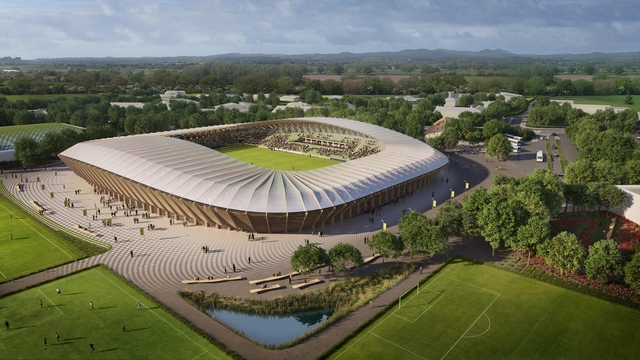
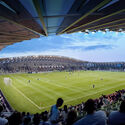
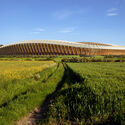
Zaha Hadid Architects has unveiled the design for Forest Green Rovers' Eco Park Stadium, located in Stroud, UK. As the first all-timber football stadium, the design uses sustainably sourced timber for key structural elements, including the framework, roof cantilevers, and cladding. The project combines innovative construction techniques with advanced material research to create a functional and environmentally considerate venue. Part of a larger development, the stadium is designed to integrate with its surroundings while offering facilities that benefit both the football club and the wider community.