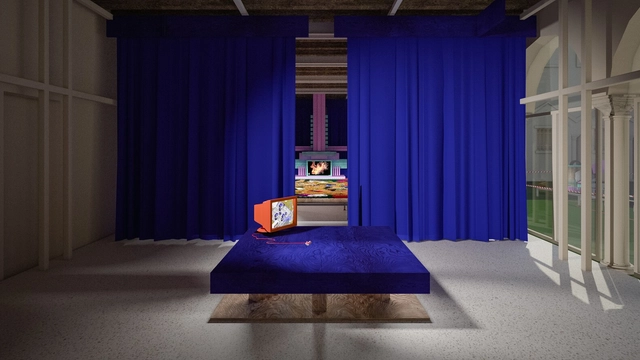
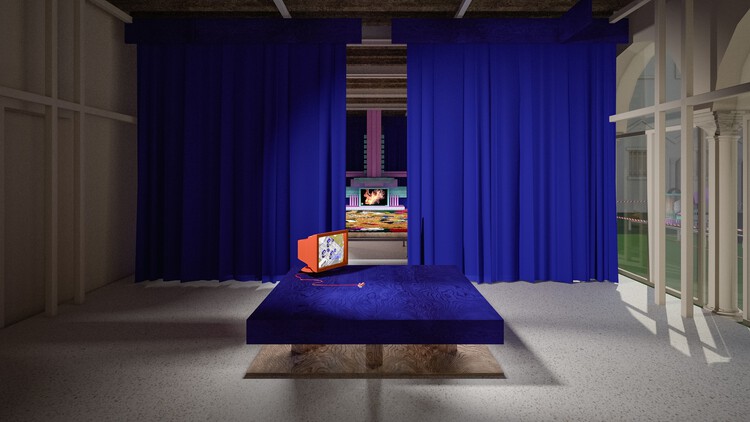
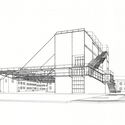
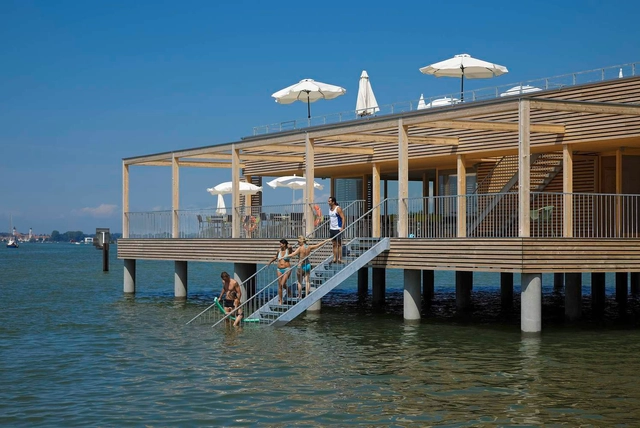
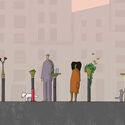
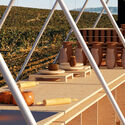
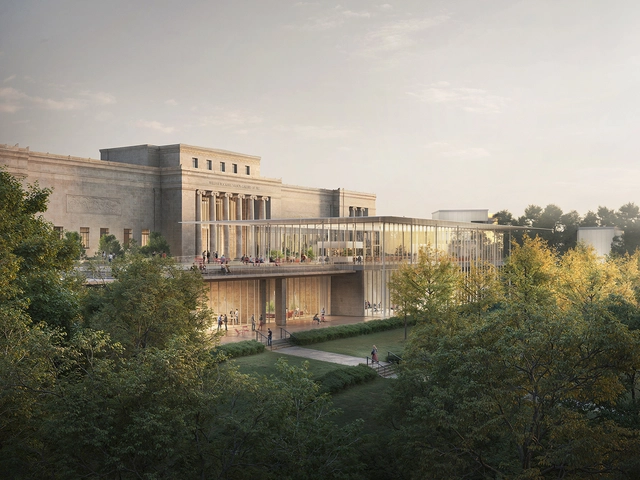
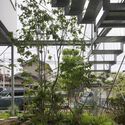
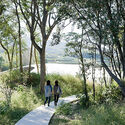
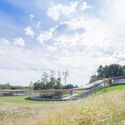
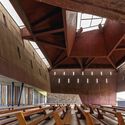
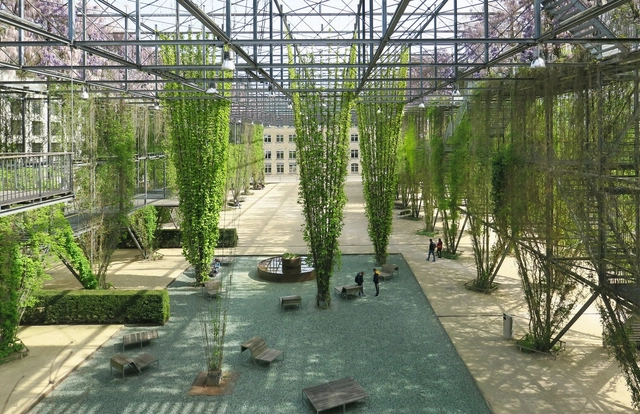
The Bulgarian contribution to the 2025 Venice Architecture Biennale is an experimental installation titled Pseudonature, situated at the intersection of nature and technology, reality and simulation. Curated by architect and designer Iassen Markov, the project explores the future of sustainability in a world where natural processes are increasingly mediated by artificial intelligence and human intervention. The exhibition features an outdoor installation that exposes technological and climate paradoxes and an interior space designed as a reimagined traditional Bulgarian room. Outside, physical interventions disrupt natural balances, highlighting the fragile interplay between technology and the environment. Inside, the space shifts to a setting for contemplation, where restoring equilibrium becomes a collective and introspective challenge.
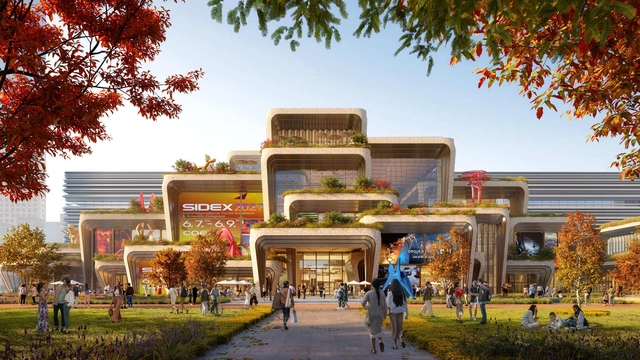
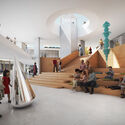
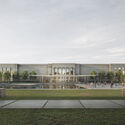
Heatherwick Studio has been selected to lead the redesign of the Coex Convention Centre in Seoul, following a competition aimed at reimagining the building's purpose and facade. In collaboration with the Korea International Trade Association (KITA), the studio's proposal seeks to transform the convention centre into a more open and inviting public space that reflects Seoul's evolving identity.
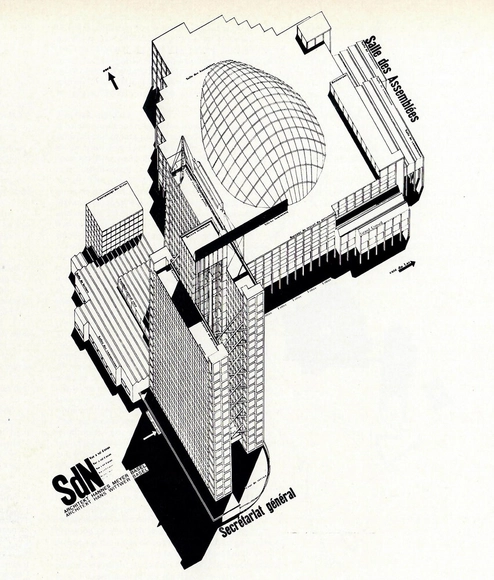
In March 2025, the actor Adrian Brody rose to the stage to collect his Academy Award for playing the role of László Toth in the acclaimed film, The Brutalist. The film is about a Bauhaus-educated architect who escaped Nazi Germany in the 1930s for the United States. Whilst the story is fictional, it reflects the lives of several émigré architects who left Central Europe in search of better working and intellectual conditions. These included the first three directors of Bauhaus, the renowned German school of design established in 1919. The first and third directors of the school, Walter Gropius and Mies van der Rohe respectively, ended up in the US where their careers in teaching and building both flourished. Lesser known is the second director, Hannes Meyer, who took a different path from his colleagues.
I love putting together lists of original manifesto-like statements by architects perpetually searching for breaking new ground. They provoke us to imagine possibilities we haven't dared to consider before. Questioning conventions should be a critic's primary objective to engage in a conversation with a creative. Otherwise, what is there to discuss, really? That's why speaking with Elizabeth Diller about her studio's work and intentions is like a breath of fresh air, especially nowadays when so many architects are happy to align themselves in pursuing what's expected. In one of our previous conversations, Diller put it bluntly: "We don't take professional boundaries seriously. Every time we are handed a program, we tear it apart and continuously ask new questions. Nothing is fixed." This time, we spoke about Diller Scofidio + Renfro's new monograph, "Architecture, Not Architecture." The book, a project in itself, aims to rethink the very limits of architecture. It reinvents what a book can be in the process. During our 1-1/2-hour discussion over Zoom, which I prefer for its frontal dual recording, she said eagerly, "We were always critiquing; we were always throwing grenades at things."
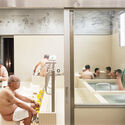
Historically, public bathing was a fundamental necessity for hygiene, giving rise to communal bathhouses in regions where private bathrooms were a rarity. In Japan, for instance, sento bathhouses emerged during the early Edo period, serving as essential facilities when most households lacked their own bathing spaces. Similarly, in other parts of the world where plumbing and water management were considered luxuries, shared public baths became vital components of urban life. Over time, these spaces evolved beyond their functional role, becoming venues for socializing, relaxation, and a temporary escape from daily routines.
However, in the modern era, private bathrooms have become ubiquitous in contemporary homes, effectively addressing the hygiene concerns that once made public bathhouses indispensable. With the rise of alternative social spaces—cafés, fitness centers, bars, and jazz lounges—the traditional communal bath no longer serves the same essential function. While some may still appreciate the social aspect of public bathing, the inconvenience of changing clothes and getting wet in front of strangers can deter many from engaging in the experience.
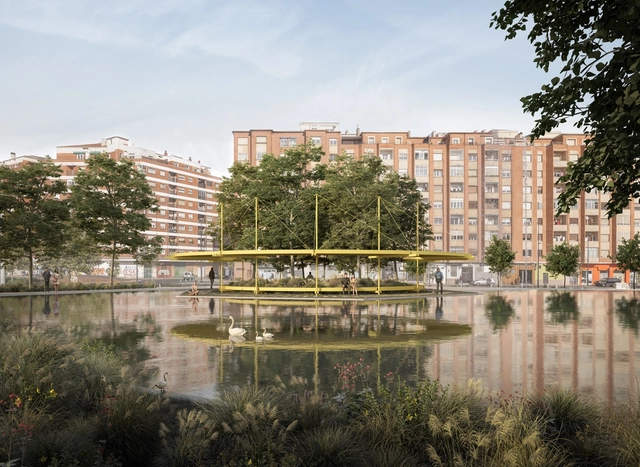
Al agua patos de K37.lab (Carlos Iraburu Elizalde, Álvaro Oriol, José Rodríguez-Losada, Carlos Iraburu Bonafé), España.. Image Cortesía de k37.lab
The renowned festival of ephemeral architecture and the city, Concéntrico, is gearing up for its eleventh edition, which, as every year, will take place in the city of Logroño. In 2025, the event will be held from June 19 to 24, featuring a program that includes various activities, conferences, and tours aimed at reflecting on public space, cities, and the ways we intervene in and interact with them.
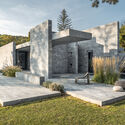
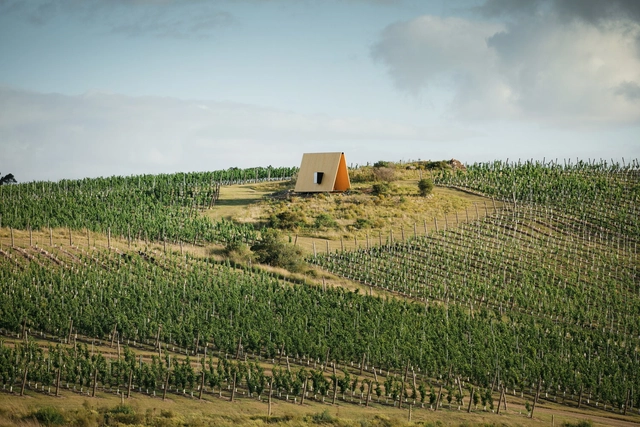
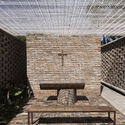
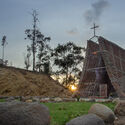
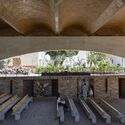
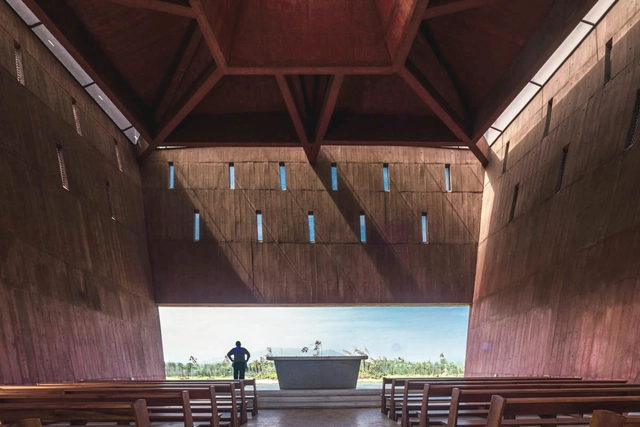
At a global level, contemporary architecture continues to explore tools and design methodologies to integrate nature into habitable spaces, given its proven benefits and contributions to improving people's quality of life. While there are diverse religious beliefs around the world, religious architecture generally expands beyond its uses and functions to connect with the sacred. Senses, memories, and emotions are transmitted in these spaces through the use of certain materials, spatial organizations, and even sounds and aromas that enhance experiences in atmospheres of spirituality, divinity, and reflection. In Mexico, Chile, Ecuador, Brazil, and Uruguay, projects for places of worship open to the outdoors reflect an architecture that adapts to different natural environments while maintaining the premise that each religion is tied to a social identity and requires a particular connection with its community and surrounding landscape.
Architecture and its atmospheric qualities have long been a subject of discussion, yet reaching a consensus on the matter remains elusive. This is largely because spatial experience is deeply personal—rooted in emotions, sensory perceptions, and individual preferences that are difficult to articulate in words alone. The way one perceives, feels, and interacts with a space adds another layer of complexity, making it challenging to define and agree upon its atmospheric impact. Nevertheless, architects and designers continuously strive to shape environments that are not only functional and comfortable but also capable of evoking emotions and leaving a lasting impression on their occupants.
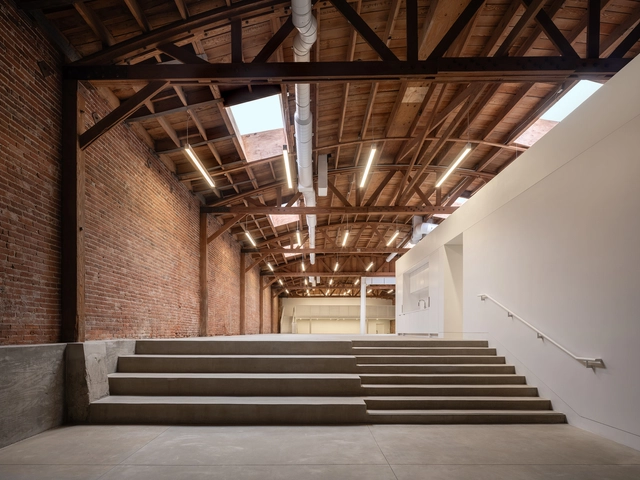
Many major cities in the United States are grappling with large industrial buildings that have fallen into disuse. These buildings hold historical and architectural significance and are often protected from demolition. Consequently, architects face the challenge and responsibility of adapting these buildings to contemporary functionalities. Opting against demolition reflects a sustainable construction approach and highlights the importance of honoring the built heritage.
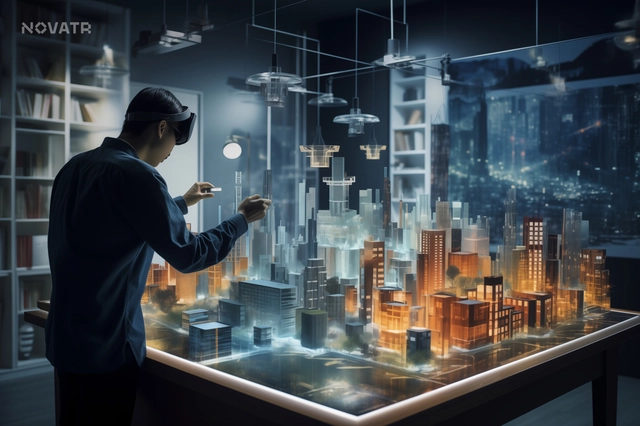
For many years, technology has been shaping the future of various industries, and the architecture, engineering, and construction (AEC) industry is no different. Initially, architects used to draw sketches on paper, which later progressed to 2D drawings, 3D digital blueprints, and now BIM—these technological advancements have changed how modern architects approach design by making it more sustainable and efficient. According to the 2024 RIBA AI study, 57% of architects believe AI will improve design process efficiency, and 54% expect to integrate it into their practice within the next two years.
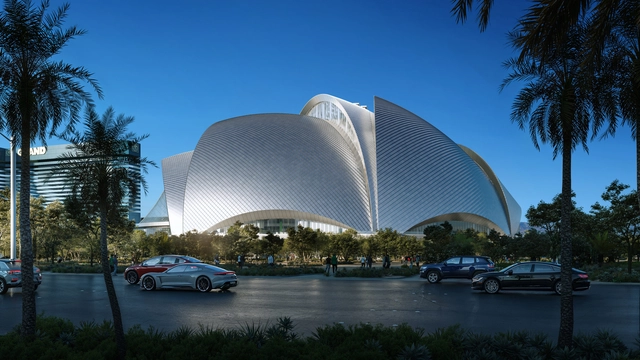
In March 2024, BIG and HNTB were announced as the winners of the competition to design the ballpark for the Athletics Major League Baseball team in Las Vegas. A year later, the two firms have released a new collection of renderings for the Las Vegas A's Ballpark, showcasing the envisioned interior design. Earlier releases revealed the stadium's exterior, shaped like an armadillo positioned between Tropicana Avenue and Reno Avenue on Las Vegas Boulevard. The open-air stadium, spanning nine acres, promises to have a notable presence on the Las Vegas skyline and is set for completion in spring 2028.
Zaha Hadid Architects has just revealed the design for Cityzen Tower, a 42-story high-rise set to become a landmark in Tbilisi, Georgia. Positioned in the Saburtalo district, the tower is part of the Cityzen development, a new civic hub integrating residential, commercial, and public spaces. Designed as a vertical extension of Tbilisi's new Central Park, the tower will bring together urban living and nature through cascading terraces and green spaces.
Sustainability in architecture is often framed as a universal challenge, leading to standardized solutions that prioritize efficiency over context. However, architecture is inherently tied to its environment — buildings interact with climate, topography, and cultural history in ways that demand specificity. Instead of relying on standardized sustainability checklists, how can architecture embrace site-specific solutions? This conversation is deeply connected to the concept of Genius Loci, or the spirit of a place, introduced by Christian Norberg-Schulz and embraced by architects advocating for designs that resonate with their surroundings. It suggests that architecture should not be imposed upon a site but rather emerge from it, informed by its materials, climate, and cultural significance. This philosophy challenges the widespread application of generic sustainable technologies, instead proposing that sustainability must be inherently tied to the location in which it operates.
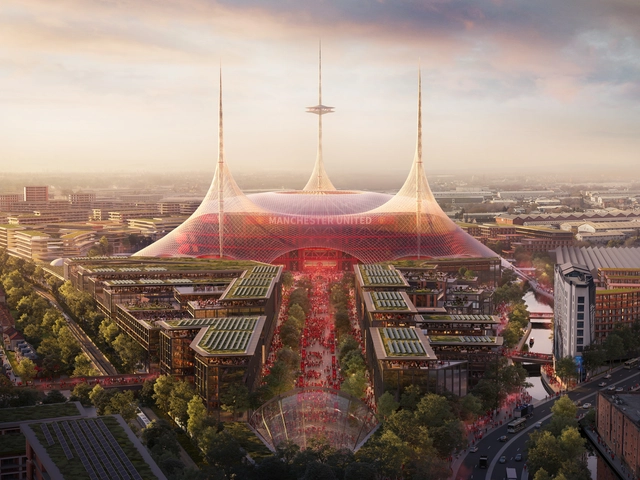
Aerial render. Image Courtesy of Foster + Partners
In September 2024, Foster + Partners announced its appointment by Manchester United for the development of a master plan for the Old Trafford Stadium District. The centerpiece of the master plan is a new stadium, set to become the largest football venue in the United Kingdom with a capacity of 100,000 seats. This week, the firm unveiled images of the stadium design along with surrounding public spaces, including parks, mixed-use developments, an open-air cinema, and a renovated train station. These images contain the illustrative concepts that will become the basis for more detailed feasibility, consultation, and planning work as the project enters new stages.
The creative fusion of art and activism in urban spaces has propelled the British collective Led by Donkeys into the spotlight, garnering millions of views for their interventions on social media. Their critical visual occupations - whether billboard messages during the day or large-scale projections at night - raise a compelling question: which medium holds the greater persuasive power? The book "Led by Donkeys: Adventures in Art, Activism and Accountability" offers a deep dive into their conceptual approach, charting their rapid evolution over six years. What began as a London-based response to Brexit has expanded into a global critique of political hypocrisy, addressing issues in Europe, the Middle East, and America. For Peter Weibel, former director of the ZKM Center for Art and Media in Karlsruhe, Germany, the innovative fusion of activism and art—or "Artivism"—represents the first new art form of the 21st century. Years of experience in environmental activism provided the group with crucial insights into the mechanics of political communication, the organization of public interventions, and the challenges of achieving meaningful societal change.
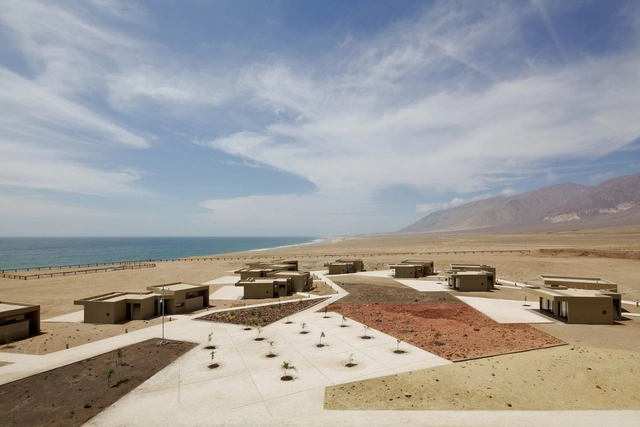
The desert is a landscape in constant transformation. Shaped by the wind, its dunes, ridges, and fissures emerge and fade in an ever-shifting expanse, as if the scenery itself were alive. It is a land of stark contrasts, where the scorching heat of the day gives way to the crisp coolness of the night, revealing nature in its most primal form. In such a dynamic and untamed environment, how can architecture not only integrate but also respect and engage with its surroundings? This is the challenge faced by hotels built within Latin America’s vast desert landscapes.