As self-driven cars are being introduced to our city streets and tech companies have expanded their influence far beyond the boundaries of our computer and smartphone displays, a new generation of architects are charged with imagining how to employ the technology of tomorrow in ways that will advance and improve the world’s built environments. With autonomous transportation, virtual and augmented reality and artificial intelligence promising unprecedented tools for revolutionizing human infrastructure in a future that no longer feels particularly distant, present-day data gathering and analysis capabilities have already transformed our ability to understand trends on an unforeseen scale.
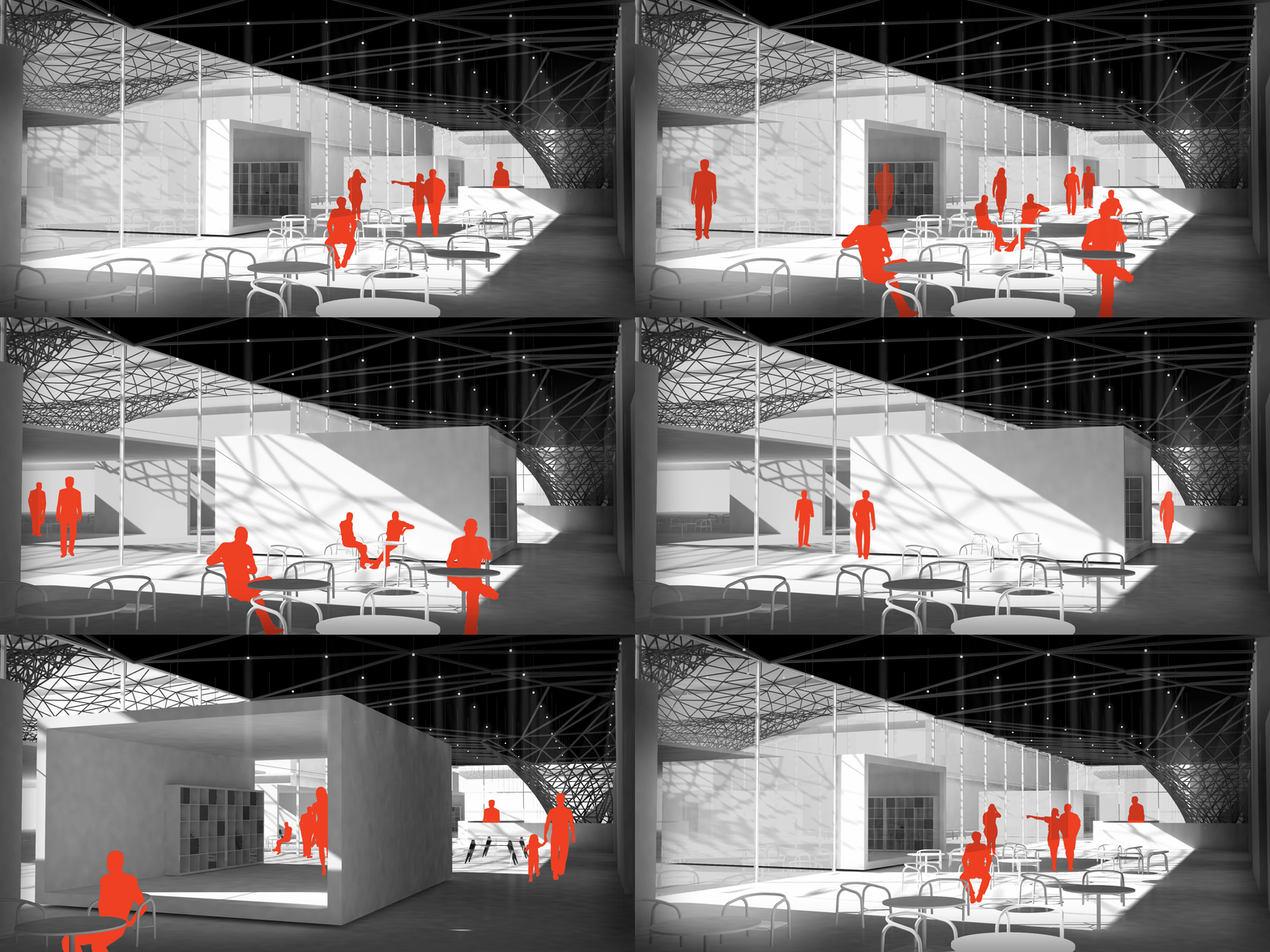
Taking full advantage of modern data science capabilities and semi-automated robotic technology currently deployed in factory settings around the world, Masters candidate Stanislas Chaillou from the Harvard GSD imagines how today’s new tech could help realize the longtime architectural ambition of creating flexible buildings capable of adapting to variable uses.
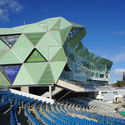
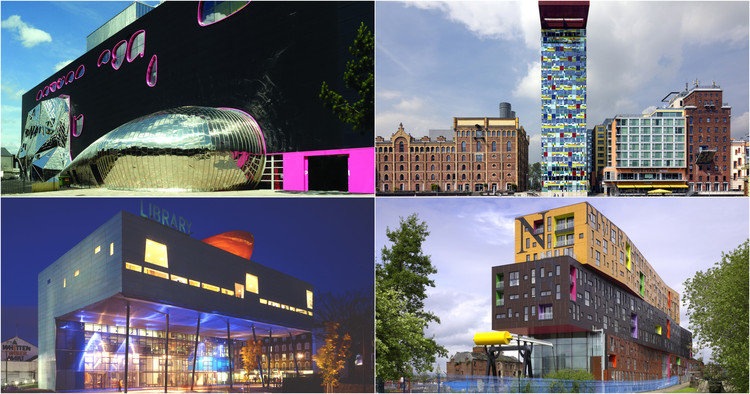
The late British architect Will Alsop was noted for his exuberant and irreverent attitude that took material form in his expressive, painterly portfolio of educational, civic, and residential works. At the ripe age of 23, he was awarded second place in the 1971 Centre Georges Pompidou. From there, he went on to work for the ever humorous Cedric Price before establishing his practice with John Lyall, and eventually many others, in the early 1980s. With a career spanning almost fifty years, here are ten iconic works from an architect who never missed an opportunity to play.
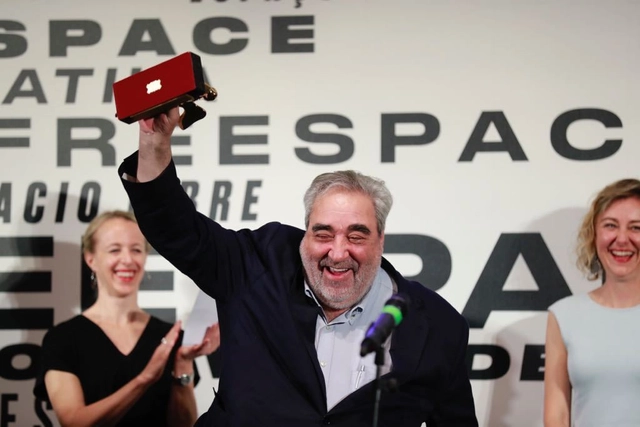
The curators of the 2018 Venice Biennale Yvonne Farrell and Shelley McNamara of Grafton Architects have announced the winning contributions to the 16th International Architecture Exhibition. Selected with the help of jury members Frank Barkow, Sofia Von Ellrichshausen, Kate Goodwin, Patricia Patkau, and Pier Paolo Tamburelli, the winners of the Golden Lion for Best National Participation went to Switzerland. Meanwhile, in the Freespace exhibition curated by Farrell and McNamara at Venice's Arsenale, Eduardo Souto de Moura will take home the Golden Lion for Best Participant in the International Exhibition.
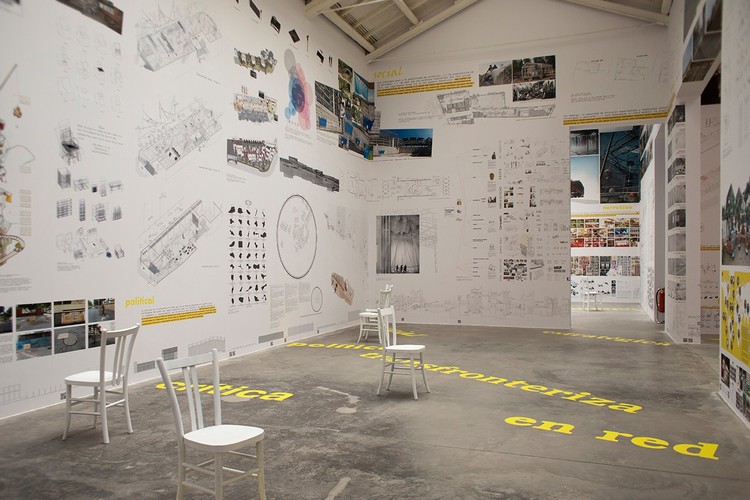
As part of our 2018 Venice Architecture Biennale coverage, we present the completed Spanish Pavilion. Below, the curatorial team describes the exhibition in their own words.
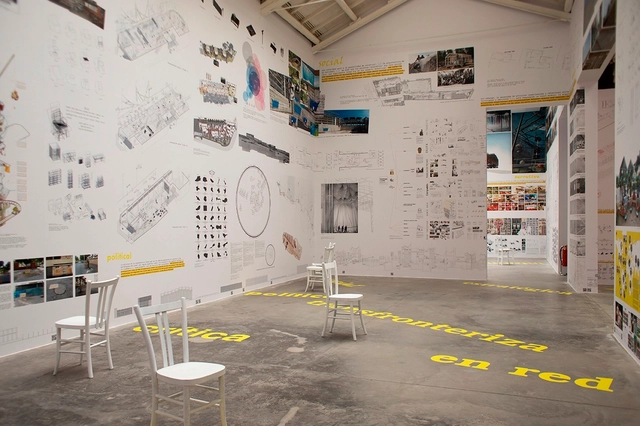
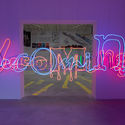
Becoming, the Spanish Pavilion at the Venice Biennale 2018, seeks to respond to the general theme of the event through the proposals and research being developed in the different learning environments within the country, placing special emphasis on the architect's new multidisciplinary profile.
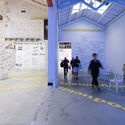
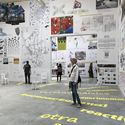
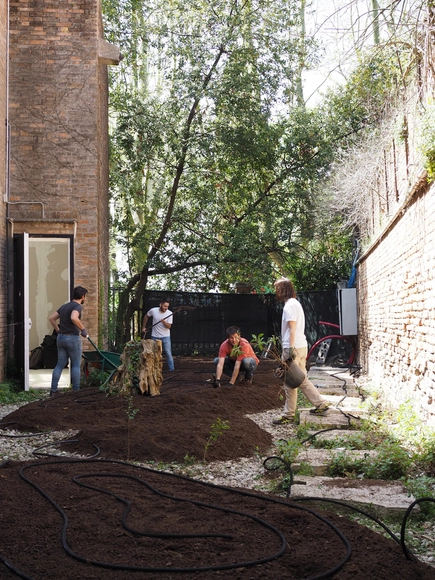
The exhibition, curated by the architect Atxu Amann, has occupied most of its budget in restoring the building in which it is located, "tattooing" its interior walls to load them with 143 proposals that are unified through 52 relevant concepts to our discipline today.
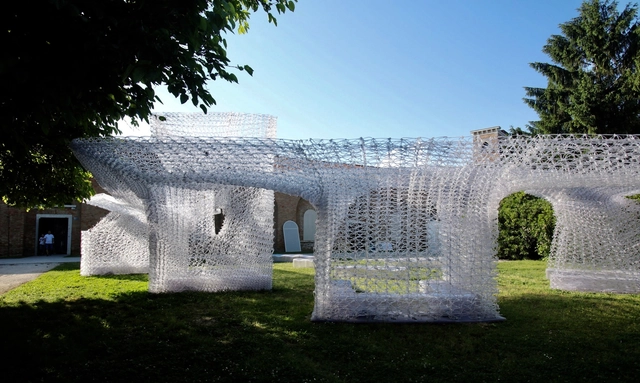
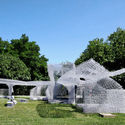
The Chinese Pavilion at the 2018 Venice Architecture Biennale, themed "Building a Future Countryside", is endeavored to explore new technology and ideas to make better of China's rural areas. A digitally-fabricated outdoor pavilion "Cloud Village" has been set up in addition to the national exhibition at the Venetian Arsenale. The Cloud Village has a twisting form which creates a sequence of open and semi-enclosed spaces under its roof. It seeks to convey an abstraction of the everyday life in Chinese countryside where boundaries of private and public realms are not always defined.
The Cloud Village is structurally made possible by the robotic printing technology developed by Philip F. Yuan and his team. Read below for a detailed account of the project from the architects.
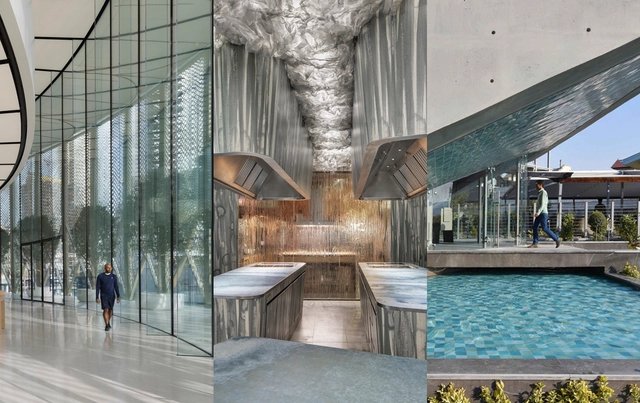
On April, the continental ceremony of the Prix Versailles 2018 took place in the International Center of Conférences d'Alger with the announcement of the selected projects in shops, shopping centers, hotels and restaurants for the "Africa and West Asia" and "Europe" regions.
The 24 new projects are now incorporated into the list of 46 continental winners -from Central America, the South and the Caribbean; North America; Central Asia and the Northeast; and South Asia and the Pacific regions- resulting in 70 projects that will compete in the 2018 Prix Versailles World Final at the UNESCO Headquarters.
The Mies Crown Hall Americas Prize (MCHAP) has announced the 31 winning schemes for the “2018 Outstanding Projects” award, chosen from 200 nominations. Awarded on a biennial basis, the awards seek to recognize the most distinguished architectural works built on the continents of North and South America.
With the opening of the 16th Venice Architecture Biennale comes a look at the first ever contribution by the Holy See, an exhibition that brings together architects to design chapels that, after the Biennale, can be relocated to sites around the globe.
Located in a wooded area on the Venetian island of San Giorgio Maggiore, 10 chapels by architects including Norman Foster, Eduardo Souto de Moura, and Smiljan Radic, are joined by the Asplund Chapel by MAP Architects. This 11th structure serves as a prelude to the other chapels, while reflecting on Gunnar Asplund's 1920 design for the Woodland Chapel.
While 2016's Golden Lion-winning project 'The Unfinished' surveyed architecture after the construction crisis, this year's Spanish pavilion will explore architecture's future through the eyes of researchers.
The 'becoming,' an exhibition curated by Spanish architect Atxu Amann, opens its doors to the works and productions of architecture students developed between 2012 and 2017. According to the curators, "becoming makes an allusion to a vector of the future, with a common educational background in the 'EscuelaS,' which extends to other learning experiences in space and time, in dialogue with other disciplines."
https://www.archdaily.com/894879/spanish-pavilion-at-the-2018-venice-biennale-to-reflect-architectural-learning-environmentsArchDaily Team
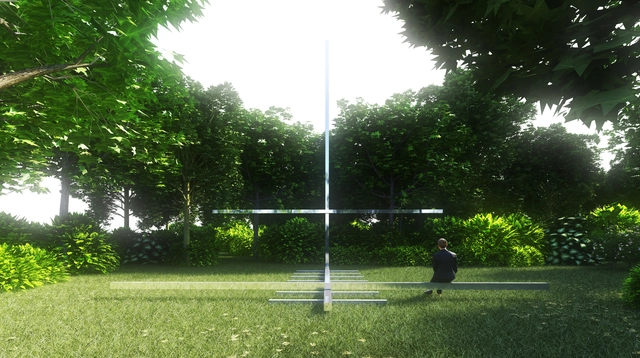
Selected along with nine other architects by the Vatican, Carla Juaçaba has shared images of her proposed chapel design as part of the Venice Architecture Biennial, which marks the city-state's first time participating in the largest architectural event in the world.
The proposed chapel design seeks a harmonious integration between the water and trees that surround Venice, with the nearby vegetation outlining the interior space of the chapel. The space between the treetops - which offers a view of the sky - functions as the ceiling of the chapel.
Luciano Menghini (IG: @lmenghini) – Advisor: Peter Testa
SCI-Arc's B.Arch thesis students recently presented their final thesis projects at the 2018 B.Arch Thesis Reviews, aimed at fostering discussion, debate, and mapping out new directions for architecture. The culmination of the school's five-year Bachelor of Architecture (B.Arch) curriculum, the year-long thesis program challenges the next generation of designers to take clear positions, form new perspectives regarding existing challenges, and conceive solutions for issues that architects will face in the future.
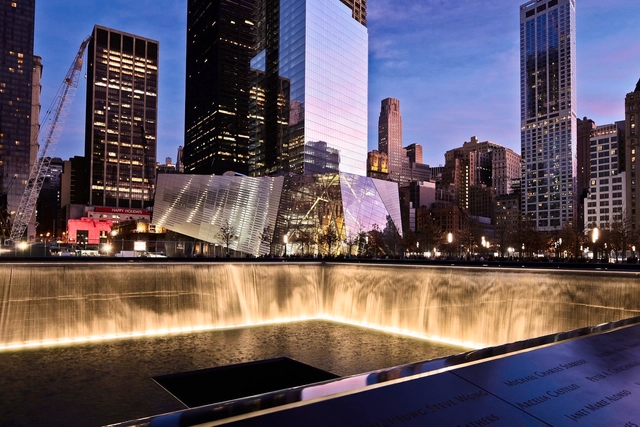
Louisiana Channel has released a new video interview with acclaimed architect Daniel Libeskind, in which he retraces the story behind his architectural career. In the interview, Libeskind unravels his view of architecture, and the architectural profession, drawing comparisons between architecture and music, while reflecting on the adherence to legislation and inherent optimistic outlook required to practice architecture.
In the 30-minute in-depth interview, Libeskind guides observers through his childhood, the roots of his architectural career, and reflects upon his most noted schemes, including the Jewish Museum in Berlin and the World Trade Center Masterplan in New York.
https://www.archdaily.com/895087/daniel-libeskind-retraces-his-life-and-architectural-career-in-engaging-in-depth-interviewNiall Patrick Walsh
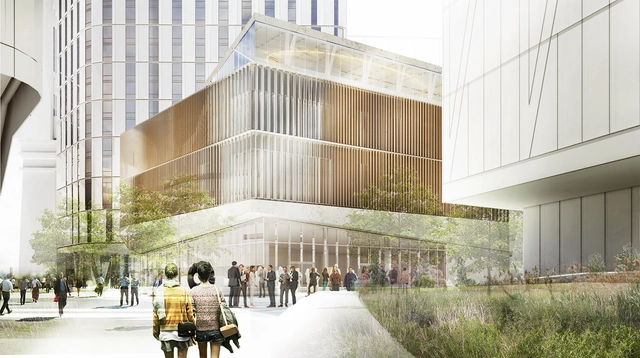
Verizon Executive Education Center and Graduate Hotel / Snøhetta and James Corner Field Operations. Image via New York City Public Design Commission
The New York City Public Design Commission and Mayor Bill de Blasio have announced the 11 projects selected as winners of their 2018 Awards for Excellence in Design. Established in 1983, the award has been bestowed annually to projects from the city’s five boroughs that “exemplify how innovative and thoughtful design can provide New Yorkers with the best possible public spaces and services and engender a sense of civic pride.”
The 2018 awards recognized projects which responded to the de Blasio Administration’s commitment to providing an “equitable, resilient, and diverse city for all New Yorkers.” All five New York boroughs feature in the awards, with schemes encompassing education, culture, art, and recreation.
Throughout the work of Beijing-based practice ARCHSTUDIO, there is a constant feeling of sensitivity to culture and history. That is not to say that the firm’s designs are not modern—far from it in fact—but that the work of founder Han Wenqiang infuses modern materials and forms with a distinctly Chinese sensibility, that is just as apparent in his designs for a food packaging facility as it is in a Buddhist shrine (incidentally, both designs which won ArchDaily Building of the Year Awards, in 2017 and 2018 respectively). In the latest interview from his “City of Ideas” series, Vladimir Belogolovsky speaks to Han about whether architecture is an art form and what it means to create “Chinese” architecture in the 21st century.
Which building is better, the duck or the ornamented shed? More importantly, what kind of architecture does the average American prefer? In their landmark 1972 publication Learning From Las Vegas, Denise Scott Brown and Robert Venturi probed these questions by turning their back on paternalistic modernism in favor of the glowing, overtly kitsch, and symbolic Mecca of the Las Vegas strip. From a chance encounter during a meeting in the Library of Fine Arts at the University of Pennsylvania and shared trips to the strip to critically shaping a new generation of architects, discover the hidden details of the romance and city that defined postmodernism in this latest episode from 99% Invisible.
As La Biennale prepares to open to the public this Saturday May 26, PLANE—SITE spoke to curators Yvonne Farrell and Shelley McNamara about this edition’s theme, Freespace. They move beyond architecture as an object, instead imagining Freespace as an invitation to think about architecture as a space of opportunities. Literally and metaphorically, Freespace presents environments of generosity, accessibility and freedom and celebrates the rich civic experiences that they create.
https://www.archdaily.com/895066/curators-yvonne-farrell-and-shelley-mcnamara-provide-insight-into-the-theme-of-the-2018-venice-biennaleAD Editorial Team
There is no female pronoun for architect in Italian, so a new project, Architette, was born aiming to professionally promote the female title in Italian. The project's objective consists of monitoring all-male juries and conferences, mentoring young generations on the ground to advocate for a more heterogeneous and fair professional landscape, where women can be an inspirational reference in architecture.
The Dubai-based firm, X-Architects, have found inspiration in the cultural and architectural heritage of Islam for their new design. The Revelation Mosque, a +2500 square meter project, aims to create a new "heart of the neighborhood" in Abu Dhabi, UAE. In creating a generous urban void among a towering context, the proposal offers an immersive escape from everyday life, where the public (regardless of religion) can gather, communicate, and interact with one another.
2019 TAB Curators. Image Courtesy of Estonian Centre for Architecture
Dr. Yael Reisner of Yael Reisner Studio, London, was selected as head curator for the 2019 Tallinn Architecture Biennale titled: “Beauty Matter: The Resurgence of Beauty." The architect’s winning proposal rejuvenates the importance of beauty, reflecting on how after almost 8 years of beauty being a tabooed subject, a cultural shift has changed its perception. The selected assistant curator will be Johanna Jõekalda, who has previously advised on the Estonian architectural scene and its socio-political-cultural features.
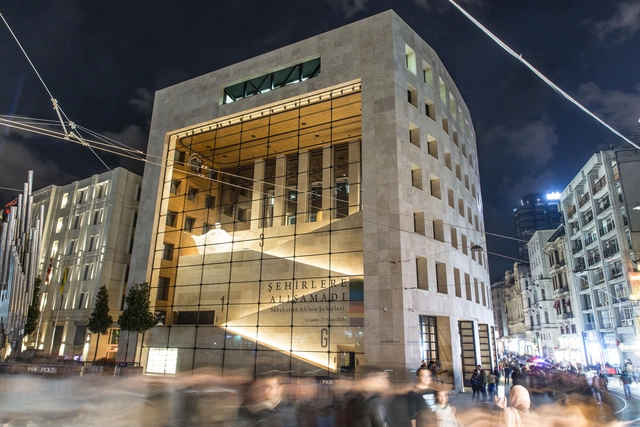
“Today, design has become a form of inquiry, power, and agency,” say Jan Boelen and Deniz Ova, curator and director of the 2018 Istanbul Design Biennial. “It has become vaster than the world itself, permeating all layers of everyday life.” Their curatorial statement for the 4th Istanbul Design Biennial, which opens later this year themed with the title “A School of Schools,” seeks to explore how design education, and education in general, can evolve and adapt in a new age of artificial intelligence.
The team is determined that the Biennial should not read as a two-year scheduled event, but should “reinvent itself and become a productive, process-orientated platform for education and design to research, experiment, and learn in.” The team is undoubtedly well equipped for the challenge.
https://www.archdaily.com/894670/jan-boelen-and-deniz-ova-curators-of-the-2018-istanbul-design-biennial-discuss-the-future-of-design-educationNiall Patrick Walsh
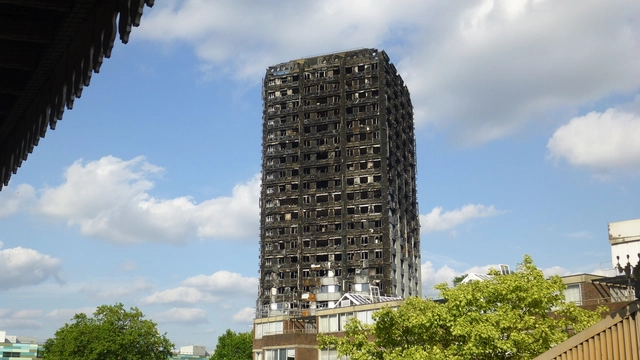
A BBC investigation has alleged that the insulation used in the refurbishment of London’s Grenfell Tower, which was tragically destroyed by fire in June 2017 with the loss of 72 people, never passed a fire safety test, and was unfit for use.
The BBC Panorama program, which aired on Monday night, concluded that the manufacturer Celotex “used extra fire retardant in the product that qualified for the safety certificate,” with the more flammable produce then sold for public use. According to the BBC, Celotex is yet to deny the program’s allegations.
https://www.archdaily.com/895008/bbc-investigation-finds-grenfell-tower-insulation-never-passed-fire-safety-testNiall Patrick Walsh
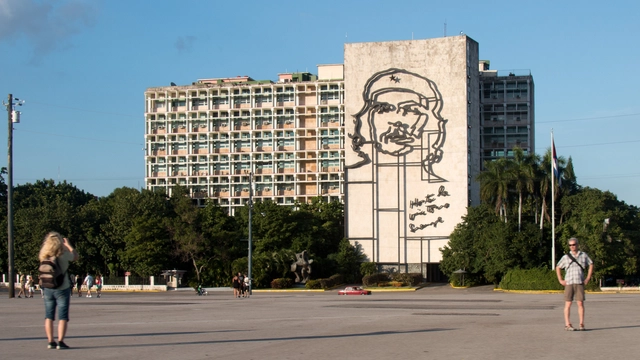
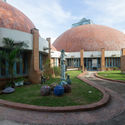
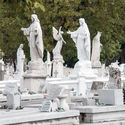
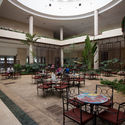
Havana is often referred to as a time machine that transports visitors to a particular moment in history, seemingly frozen in time. While it is a city that boasts an exhaustive timeline of imported styles, Havana in the present day is not defined by a singular historical era—either in its political climate or in its architectural zeitgeist.
Over the decades, the Cuban Revolution has had powerful domestic and international repercussions. In particular, it transformed Cuba’s relationship with the United States. But efforts to improve diplomatic relations have gained momentum in recent years, with the teetering lift of the embargo that exacerbated a David and Goliath situation and left a lasting economic impact on the Cuban people. Havana’s skyline has hardly altered since the fall of the Soviet Union, and the city became shut off from the rest of the world, having to rely heavily on its own resources. Today, the government in Havana occupies the gap between the last stance of post-Cold War communism, and the looming influence of Capitalism, a situation which reveals itself in the variety of distinct architectural styles. These seven sites in the island nation’s capital best explain the story about where Havana has been, and offer a prediction as to where it may head next.
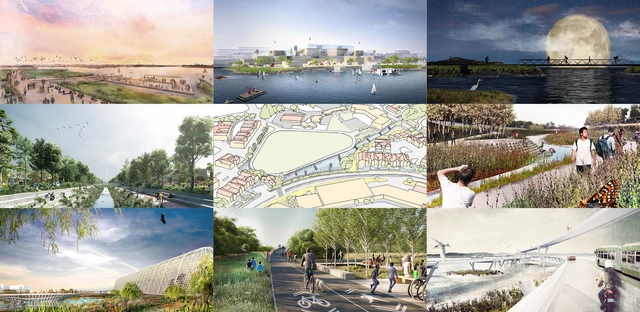
One year after the launch of Resilient by Design's Bay Area Challenge, led by TLS Landscape has presented the final nine design concepts. The Bay Area Challenge launched with a call to action to "bring together local residents, community organizations, public officials and local, national, and international experts to develop innovative solutions that will strengthen our region's resilience to sea level rise, severe storms, flooding, and earthquakes." The idea formulated as a “blueprint for resilience” that can be replicated and utilized locally and globally. Other urban challenges will also be addressed, including housing, transport, health and economic disparity as a means of not just protecting the current regions, but strengthening them.
The elite, collaborative teams include world-renowned designers like BIG, Mithun and HASSELL+.
Read on for more about each of the final design concepts.
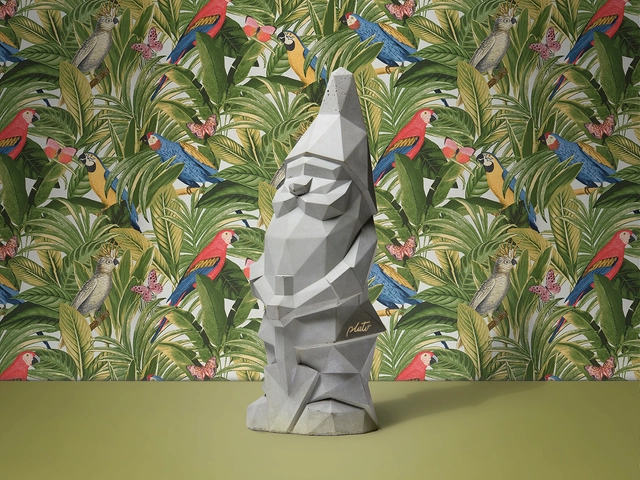
If you think you’ve seen this handsome fella before, you have; except he was wearing a flashy red hat and an old blue robe, attempting to protect your house from thieves. Luckily, gnomes have gotten quite the modern makeover. Thanks to the collaboration between Plato Design and designer Pellegrino Cucciniello, you can finally get rid of the kitschy little guy, and replace him with NINO, the modern, brutalist gnome.