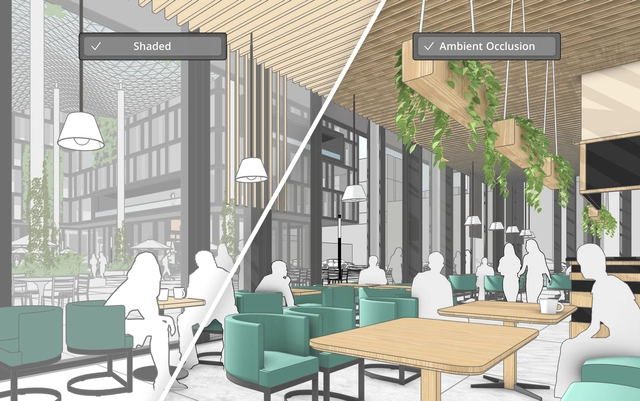
More realistic visuals and expedited as-built modeling workflows (directly on iPad with Scan-to-Design [Labs]) are part of the latest release of SketchUp architectural design software. The 2024 version includes performance upgrades to boost productivity, ranging from a new graphics engine to easier ways to share ideas with stakeholders.
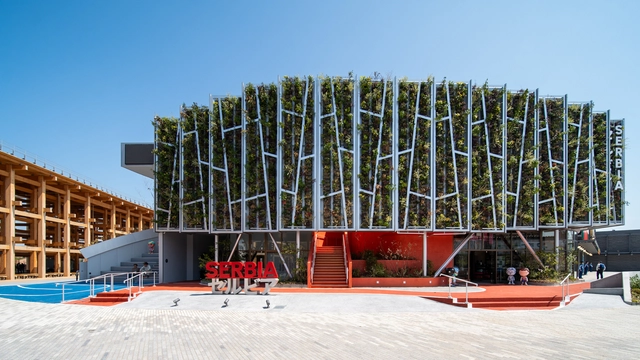
The Serbian Pavilion at Expo Osaka 2025 emerges as a compelling example of sustainable architecture infused with cultural storytelling, seamlessly integrating cutting-edge technology and emotional resonance. Designed by Aleatek Studio, the pavilion takes inspiration from Belgrade's protected Ratno Ostrvo (Great War Island) to realize the concept of a "Floating Forest." It stands out as the only Expo pavilion featuring a living façade, with over 95% of its materials recyclable and 80% intended for reuse in future construction. The design strategy also aligns with the theme "Play for humanity" of the upcoming Specialised Expo 2027 to be held in Belgrade.
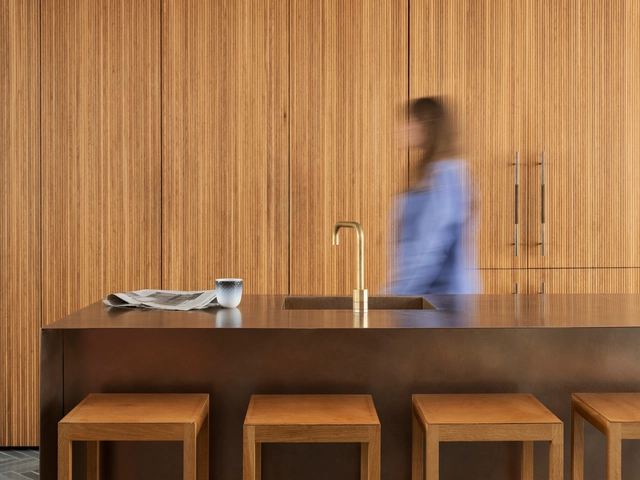
The DÉCA faucet has a minimalist, sculptural form with a unified body and geometric 10-edged grip. Image Courtesy of TONI Copenhagen
For designers seeking to evoke a sartorial expression of "quiet luxury" through an interior, a necessity to a minimalist palette is the addition of a sculptural object—one that catches the eye, glints like a jewel, and nods towards understated refinement. For kitchens and bathrooms where functionality reigns, how about capturing that moment of chic tension—that je ne sais quoi—with a radical faucet?
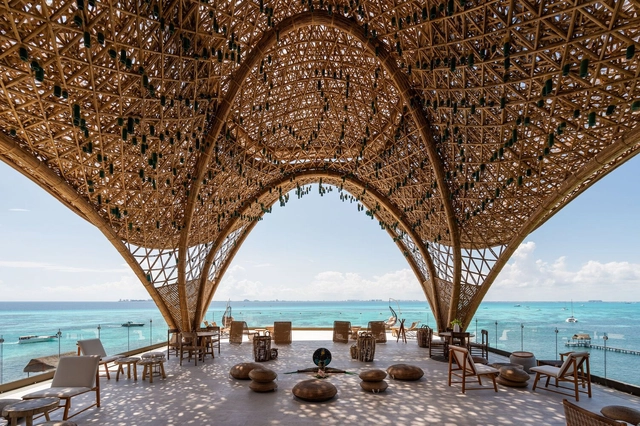
In the quest to promote a more sustainable construction where the use of natural materials contributes to the transmission of local traditions and cultures, an increasing number of architecture projects are exploring different resources and techniques to address environmental, economic, or social concerns. Understanding the benefits and qualities of materials such as color or texture influences the final experience of those who inhabit, walkthrough, or visit spaces. Therefore, understanding their technical, constructive, aesthetic, and functional properties should be part of the design process from the beginning.
The A' Design Award and Competition was established to promote and recognize the best in design worldwide, in all creative disciplines. The award is aimed at designers, innovators and companies that wish to stand out and attract the attention of the media, editors and buyers. These aspects are especially important in the world of design, where millions of products and projects are launched, and often end up being swallowed up and not receiving due recognition. To address this, hundreds of projects are submitted every year with a focus on innovation, technology, design and creativity. It offers a chance for recognition, with the valuable curatorship of a renowned jury and the possibility of a successful international launch. The A' Design Award contains a series of public relations, advertising and marketing services to celebrate the success of its winners. In addition, and unlike other design awards, it is completely free of charge.
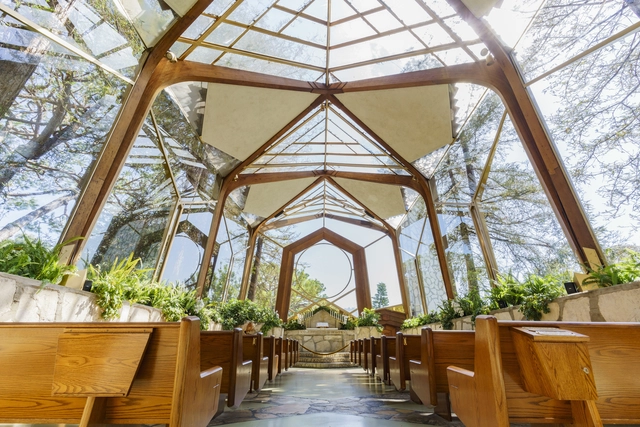
The Wayfarers Chapel, known locally as "The Glass Church," was designed by Lloyd Wright, the eldest son of architect Frank Lloyd Wright, and completed in 1951. Located in the Palos Verdes peninsula in Los Angeles, its design aimed to blend the lines between architecture and nature, with large-span glass panels opening up to space toward the redwood canopies. Last year, the structure was designated a national historic landmark. Now, due to “accelerated land movement” in the area, the structure, which has been closed off to the public since February, was announced to be disassembled to protect it from further damage.
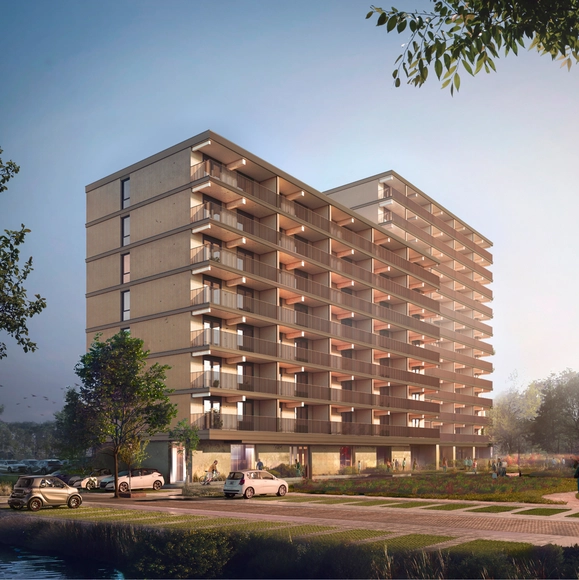
Powerhouse Company has revealed the design for the largest timber-built affordable housing complex in the Netherlands. “Valckensteyn” is a circular design featuring a 12-story timber structure and 82 homes. Situated within Pendrecht, a post-war neighborhood in Rotterdam, it sits on the site of a residential flat bearing the same name, demolished a decade ago. The timber structure seeks to be circular and sustainable in its design, creating a nature-inclusive environment that is accessible to all.
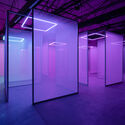
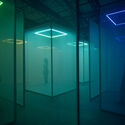
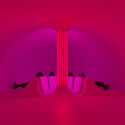
Step into the realm where the minimalism of the 1960s Light and Space movement intertwines with contemporary high-tech algorithms and sensors. Back then, light artists like James Turrell, Dan Flavin, and Robert Irwin captivated audiences with the bare essentials, using precisely daylight or lamps to heighten visual perception. Fast forward to today, Chromasonic takes this synergy of light and color but augments it with sound and algorithms. Envisioned as a global network to experience the harmony of body and mind, Johannes Girardoni's team unveiled the first satellite of perception in the heart of Venice Beach, California. Through a collaboration with Google, Milan Design Week showcased how the interplay of light and color can go on tour as a walk-in installation on a larger scale.
Throughout history, the undeniable interrelationship between sound and architecture has shaped users' experiences. From auditoriums to offices, cultural centers, and schools, acoustics in architecture can manifest itself in two ways: as a determining element of a structure's shape and as a material. When discussing aesthetics, the latter aspect is particularly relevant, as any material that forms part of a composition aims to have a cohesive design with the rest.
Integrating acoustics through materials presents a significant challenge, as certain attributes such as color, texture, or dimensions may hinder harmonization with the overall design of the space. This can unbalance the experience of the environment, since, although the acoustics are improved, the interior atmosphere is negatively affected. This situation highlights the importance of selecting the right material that can enhance acoustics while maintaining the coherence of the design.
https://www.archdaily.com/1015929/acoustics-that-blend-performance-with-aesthetics-why-material-choices-matterEnrique Tovar
Derived from the capstone project for the Specialization in Architecture for Education, this analysis addresses the intriguing potential of idle spaces within the educational realm. Titled "Idle Spaces for Placeless Education," this study investigates how disused architectural heritage can be transformed to meet the demand for dedicated infrastructure by educational institutions.
Developed at FADU - UNL, this article explores the revitalization of heritage to meet contemporary educational needs.
It's fundamental that architects know about structures, not only to bring their designs to reality but also to be able to discuss their projects with engineers in order to find the best solutions for construction. Structural pre-dimensioning is crucial to the initial design of the structural components, revealing the restrictions and the possibilities of the spaces.
One of the main loads that a structure must support is its own weight, so it's essential to know this information so that the different parts of the building can be dimensioned. When starting a structural project, the engineer doesn't yet know the dimensions of the different pieces that make up the structure, and therefore, can't know their own weight. A paradox appears without a solution: to know the weight it's necessary to know the dimensions, but, to know the dimensions, it's necessary to know the weight.
During the development of the project the architect finds himself in the curious situation of having to design without necessarily knowing the size of each of the parts of the building (such as the size of the pillars, for example). These important elements directly affect functionality and aesthetics of the project.
https://www.archdaily.com/891880/learn-to-pre-dimension-a-reinforced-concrete-structureJoão Carlos Souza
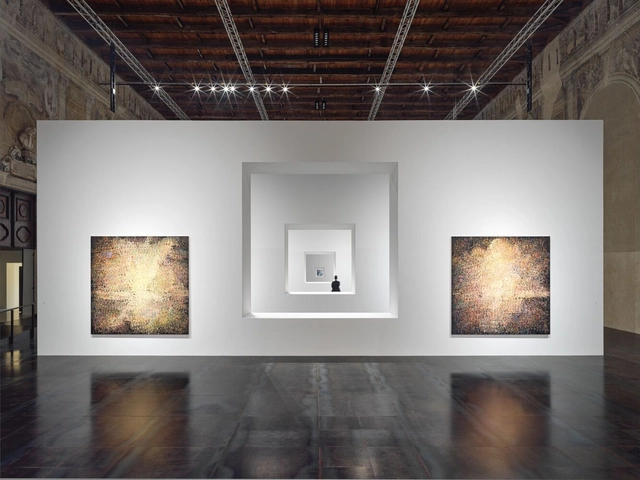
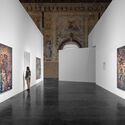
A new exhibition presenting the works of artist Zeng Fanzhi has opened in the historic Scuola Grande della Misericordia in Venice, Italy. Running from April 17 to September 30, 2024, concurrent with this year’s edition of the Venice Arts Biennale, the “Zeng Fanzhi: Near and Far/Now and Then” exhibition showcases the latest breakthroughs in the artist’s practice in a space adapted by architect Tadao Ando.
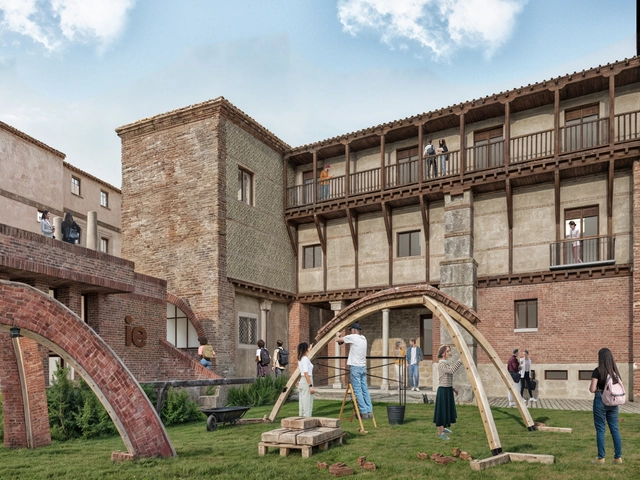
IE University has just announced the establishment of a new Creative Campus to be inaugurated in 2025 in Segovia, Spain. Situated within the historic Palacio de los Condes de Mansilla, this new campus will serve as an extension of the IE School of Architecture and Design. Developed to become an Innovation Hub, the project spans more than 5,000 square meters and boasts a Fab Lab, construction workshops, biomaterials, textile research laboratories, experimentation spaces, digital fabrication classrooms, and an exhibition venue. The amenities are designed for creative minds from different disciplines to collaborate, fostering a platform that provides real solutions for different challenges.
TALE Townhouse - Hohen Neuendorf. Image Cortesia de LAMILUX
Humanity has inhabited cities for millennia and witnessed a shift to a predominantly urban global population since 2010. Throughout this time, it has repeatedly come up with creative solutions to ease the challenges of living in urban environments. The “fifth façade," as Le Corbusier proposed, is a yearning for serenity, greenery and space, and is currently experiencing a growth in popularity, with people transforming rooftops into serene sanctuaries as one way to achieve it. Especially in densely populated areas, the attraction of roof terraces is undeniable, offering a break from the frenetic pace of urban life and a deeper connection with nature.
However, access to these spaces requires care, especially when it breaks through the roof slab. This requires seamless integration with the space below, technology to enable water-tightness and visual connection, along with easy handling for opening and closing. Designed with functionality and aesthetics in mind, these access hatches can integrate seamlessly into the roofscape, offering convenient access, adding value to the property, increasing its appeal to potential buyers or tenants, and creating a symbiotic relationship between architecture and lifestyle, where innovation drives desirability.
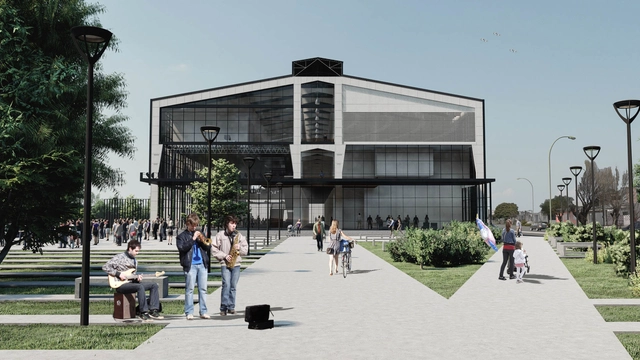
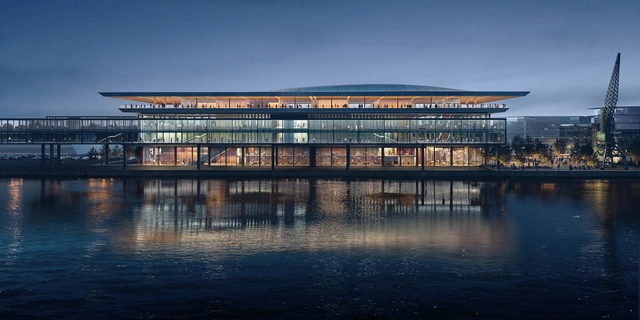
Zaha Hadid Architects (ZHA) has been announced as the winner of the international competition for the design of the Riga Ropax Terminal in Latvia. Collaborating with Latvian practices Sarma Norde Architects and Alps Landscape Architects, as well as Sweco Finland, ZHA’s proposal includes the repurposing of an existing shipping warehouse, to be transformed into a key multi-modal transport hub for the city, located along the Daugava River. The competition was open to anyone who qualified. Out of the ten registered entries, the third prize was awarded to US-based Berenblum Busch Architects, the second prize went to R-Konsult from Estonia.
As the anticipation builds for the XXXIII Olympic Games in Paris, the city is preparing to host a global sporting event and embark on a journey of urban renewal. In a departure from traditional stadium-centric hosting, Paris 2024 embraces a new approach to the Olympic experience. Sports architecture has the ability to transcend functionality and become a space of collective experience and shared joy. In that sense, it invites individuals from diverse backgrounds to forge connections while celebrating athleticism. This month’s curated collection focuses on diverse forms of sports architecture, stadiums, venues, and landscaping projects, dissecting what components come together to form different sports architecture experiences.
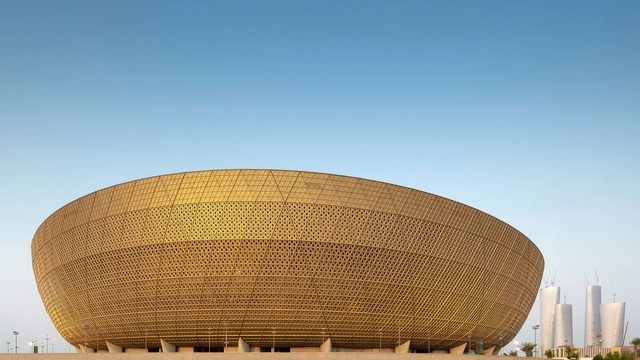
For the Qatar World Cup in 2022, Foster + Partners designed the iconic and more traditional Lusail FIFA stadium. In India, M:OFA Studios designed the National Institute of Water Sports, breaking away from the pragmatic norms of government institutions. In Hangzhou, China, the 2022 Asian Games featured a new Cricket Field by AZUT, emerging as an integration of sports infrastructure with the natural landscape. Meanwhile, in Order City, China, PLAT ASIA transformed an existing urban square into a Smart Sports Park, promoting community wellness and interaction. Finally, Opsis Architecture’s University of Idaho Arena serves as a main gateway to the University campus, celebrating the spirit of athleticism and community.
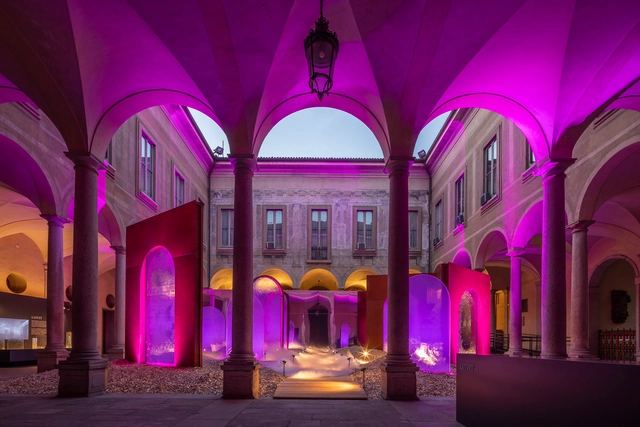
During Milan Design Week 2024, Lasvit presented its mastery in glassmaking and creative approach to design and architecture, with their latest installation "Re/Creation." Held at the Palazzo Isimbardi, the expert in hand-made glassmaking had various unique creations on display, leading with "Porta" as the centerpiece, conceived by Lasvit’s Art Director Maxim Velcovsky. The monumental piece highlighted the company’s expertise in using the fused glass furnace and its journey in redefining the relationship between glass and architecture.
"Re/Creation" emerged as a central attraction for visitors, offering a space for relaxation. Drawing inspiration from the fluidity of molten glass, the very title signifies a technique inherent in fused glass craftsmanship, where the material is allowed to organically flow into a predetermined shape guided by gravity. Within this tranquil setting, creatives were encouraged to unwind, fostering an environment conducive to rejuvenation and creative exploration.
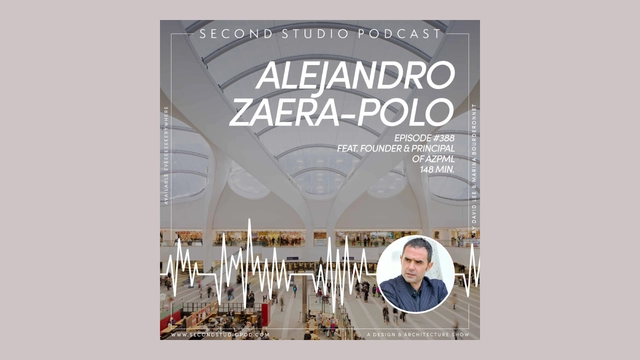
The Second Studio (formerly The Midnight Charette) is an explicit podcast about design, architecture, and the everyday. Hosted by Architects David Lee and Marina Bourderonnet, it features different creative professionals in unscripted conversations that allow for thoughtful takes and personal discussions.
A variety of subjects are covered with honesty and humor: some episodes are interviews, while others are tips for fellow designers, reviews of buildings and other projects, or casual explorations of everyday life and design. The Second Studio is also available on iTunes, Spotify, and YouTube.
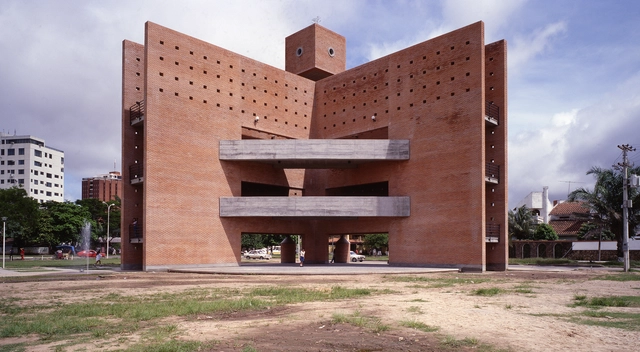
Santa Cruz de la Sierra is located on the eastern plains of Bolivia, on the banks of the Pirai River. Being the most populous city in the country, it reveals an extreme social and cultural complexity surrounded by extensive pampas and plains. Additionally, it represents one of the most developed cities in Bolivia, with a high municipal indicator of sustainable development. Delving into the importance of community architecture, popular appropriation, the character of urbanity, and other concepts, this article explores the history behind the Summit of the Americas Monument through a series of narratives, documentations, drawings, and images captured by Pino Musi.
Courtesy of [applied] Foreign Affairs, Institute of Architecture, University of Applied Arts Vienna
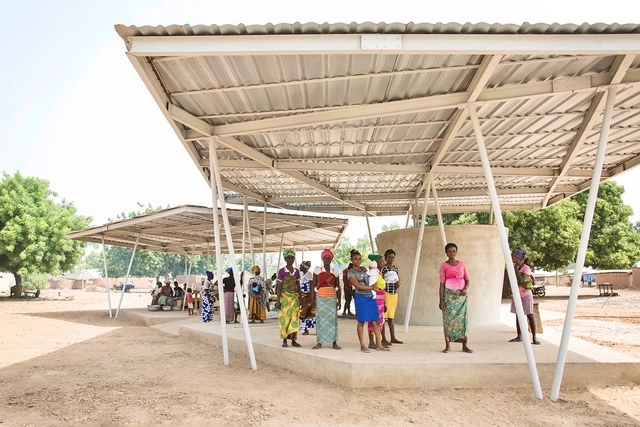
Public Markets are complex cases that beautifully combine an engineering exploration with the instigation of a beneficial public function. In fact, it doesn't take much to designate an open and accessible commercial hub that would encourage commercial exchange and economic development for small or local businesses. All one needs is a lot and a sheltering roof. However, many designers and architects have chosen to take this exercise beyond the social level and into further material and technical exploration.
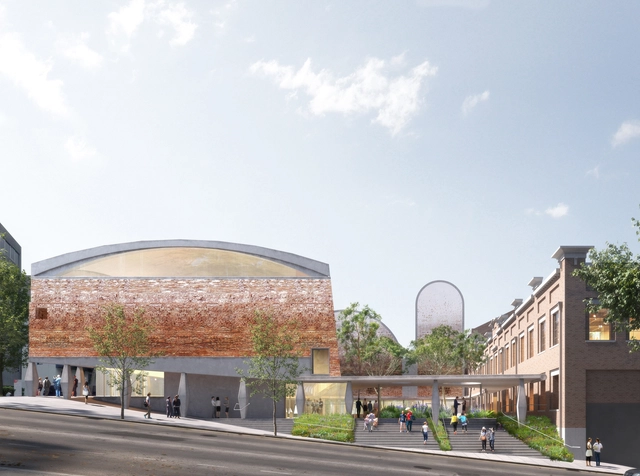
Powerhouse, Australia’s largest museum institution dedicated to applied arts design, and technology, has revealed the plans for a comprehensive restoration of its three sites located in Sydney, Australia, in addition to the opening of a new site in Parramatta in Western Sydney in 2025. The Powerhouse Ultimo site contains two heritage-listed buildings: the Ultimo Powerhouse and the Ultimo Post Office. The project for the renovation of this heritage location is led by a team of architects, Durbach Block Jaggers working in partnership with Architectus, Youssofzay + Hart, and landscape architects, Tyrell Studio.
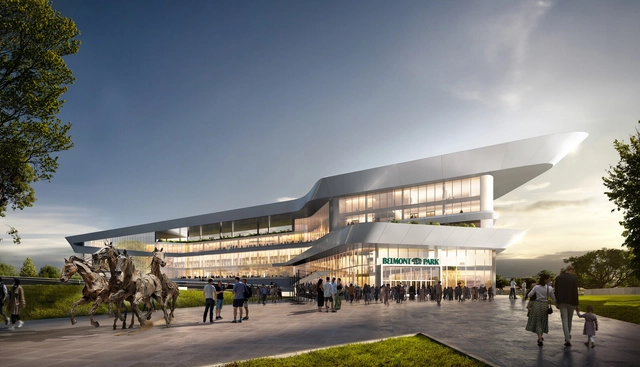
Populous has just unveiled a comprehensive design for the new Belmont Parkmodernization project. Situated in the iconic venue in Nassau County known for hosting the Belmont Stakes, the project seeks to usher in significant economic benefits, including the creation of thousands of jobs. Under the oversight of the New York Racing Association (NYRA), the project is set to be completed in the fall of 2026.
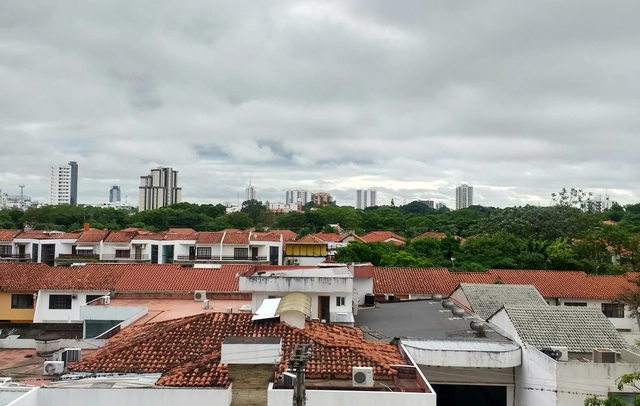
On the banks of the Amazonian river Piraí, the rings and canals of Santa Cruz de la Sierra not only enclose buildings of Bolivia's contemporary and modern architecture (curious examples of formalist rationalism, brutalism, and postmodernism are evident here) but also include a part of its diverse ancient and everyday architecture: from a historic center with endless arcades and colonial mansions to local markets and sheds such as the pahuichi cruceño.
On the occasion of the Latin American Architecture Students Meeting (ELEA) where we were invited to provide on-site coverage, we encountered ten of these places that can help you get a general overview of the city and its heterogeneous architecture.