Community & Content Editor at ArchDaily. Bachelor of Arts in Interior Architecture & Master's in Product & Business Development. Born and raised in Beirut, Lebanon.
In the midst of today's digital revolution, architectural representation is no longer solely based on high resolution photography. Architects are now collaborating with audiovisual professionals to transform their projects into cinematic experiences.
Earlier this year, German design firm 22quadrat founded 9sekunden, a new film studio specialized in short landscape and architecture documentaries. For Tadao Ando's Conference Pavilion, the studio take their viewers on a meditative journey, portraying the concrete structure's calm and restrained atmosphere in a short film.
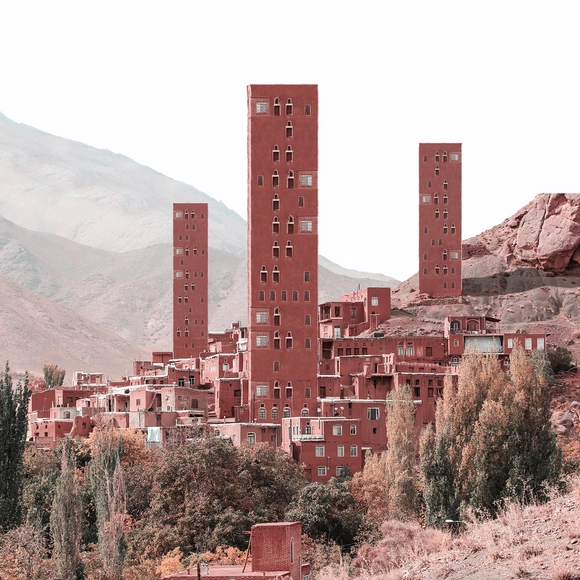
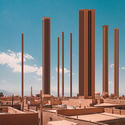
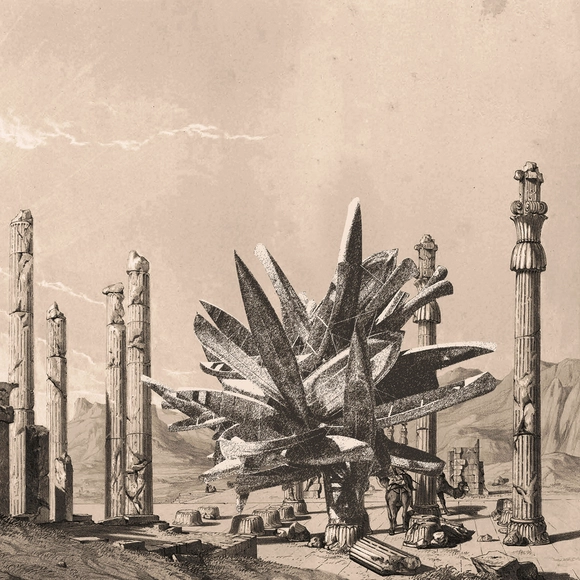
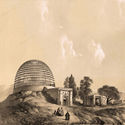
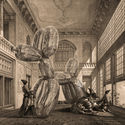
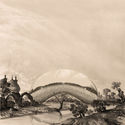
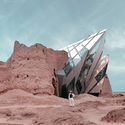
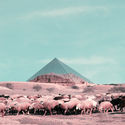
Architect and visual artist Mohammad Hassan Forouzanfar has been conceptually combining contemporary landmarks with traditional Iranian houses and palaces, in a photo-series titled "Retrofuturism". In his latest collection, the Persian architect chose to displace iconic structures and place them in 19th century paintings of the country by artist Eugène Flandin.
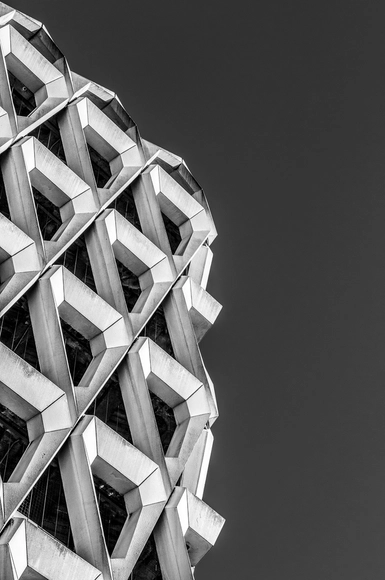
Rarely does one see brutalist architecture in the city of London. Primarily, these buildings were perceived as rebellious and grotesque, only to become the "go-to" style for commercial and governmental buildings after the Second World War. Nowadays, with the real estate market demands and dominance of contemporary architecture, these monumental grey structures are gradually fading away.
Santiago-based architect and photographer Grégoire Dorthe developed the passion of photography during his military service, when he realized that through his images, he is able to freeze moments and preserve what will be lost with time. In his photographic series titled "Brutal London", the Swiss photographer captures the raw forms and graphic qualities of the city's brutalist architecture, before these buildings meet their end.
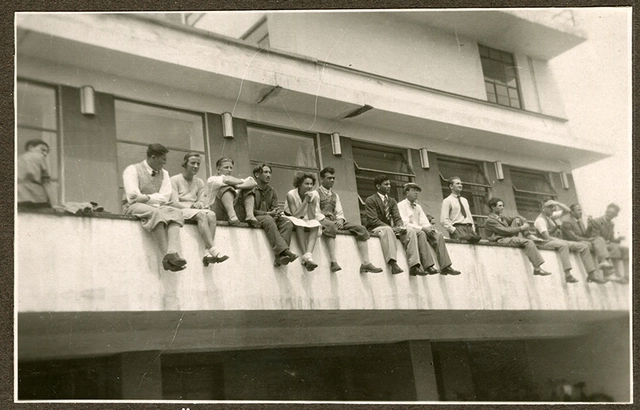
Students on the balustrade of the canteen terrace, around 1931 (photographer unknown). Image Courtesy of Stiftung Bauhaus Dessau
Women are imperative members of the design community, creating innovative and inspiring work in the fields of architecture, design, and urban planning. However, even with the rise of the women's movement, their contributions are still being questioned, compared, or taken for granted.
Metropolis Magazine looked back at the history of feminism in architecture, shedding the light on the times when the advocates witnessed unprecedented progress, and times when they lost their advantage.
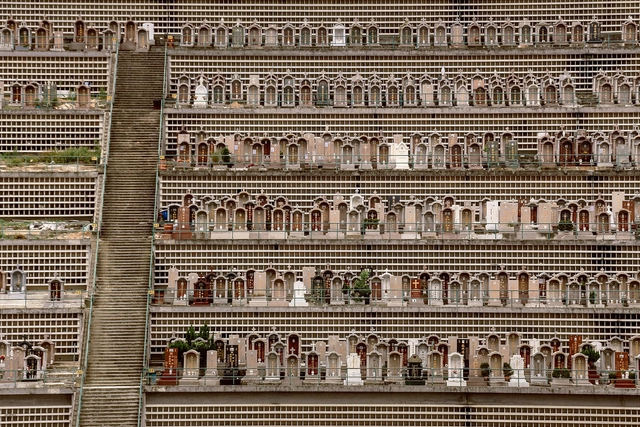
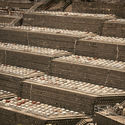
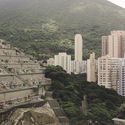
Hong Kong is considered to have one of the most exceptional skylines and urban schemes in the world: contemporary skyscrapers stand amidst the mountains and harbour, ancient houses nestled between futuristic structures, neon lights, landscapes... But among Hong Kong's numerous remarkable architectures, its spatial typology of death is like no other.
Over the course of five years, RIBA-nominated architectural photographerFinbarr Fallon captured the hyper-dense graveyards of Hong Kong, showcasing the sublime geometry of its mountainside burials in a series titled "Dead Space".
Open More Doors is a section by ArchDaily and the MINI Clubman that takes you behind the scenes of the world’s most innovative offices through exciting video interviews and an exclusive photo gallery featuring each studio’s workspace.
This month, we talked with Italian architecture firm Supervoid to discuss their design strategies and how they helped develop the office's interior space.
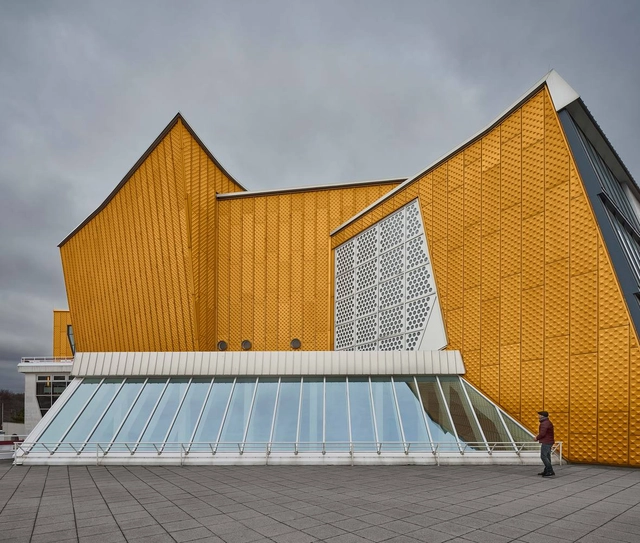
The Berlin Philharmonic by Hans Scharoun is one of the most prominent mid-20th century structures in the German city. The expressionist-style building with its bright-colored facade is the first of its kind by the German architect, as well as his most famous project to date. Scharoun’s design interprets rhythm and music as architecture, both conceptually and physically.
Architectural photographer Bahaa Ghoussainy unfolds Scharoun’s unique architecture by highlighting the concert hall’s dramatic angular geometry, vibrant yellow-hued facade, and play of lines and forms.
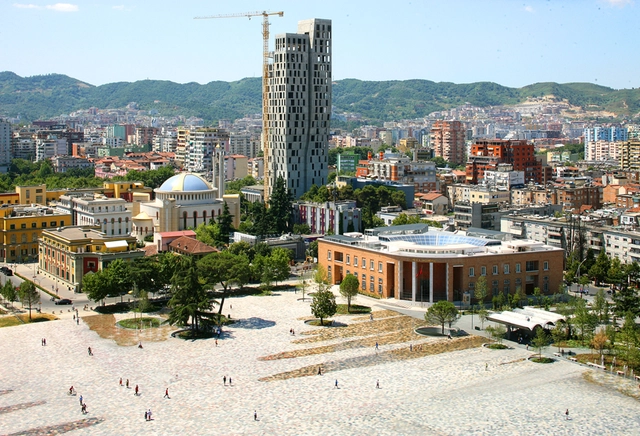
Skanderberg Square / 51N4E, Anri Sala, & Plan en Houtgoed. Image
Design trends are often the result of foreign cultural influences, avant-garde creations, and innovative solutions for people's ever-evolving needs. Although the design world seems like one big mood board, some cities have managed to outshine the rest with their recent projects.
As part of their annual Design Cities Listing, Metropolis Magazine has highlighted 10 cities across 5 continents with intriguing projects that have harmonized contemporary urbanism with traditional and faraway influences.
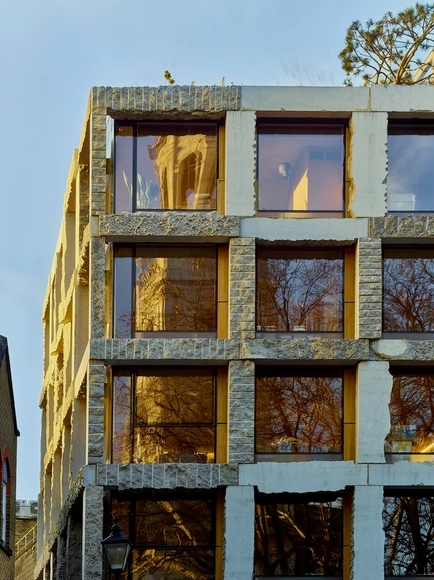
The architects behind the RIBA award-winning project have been in an ongoing battle with local planning authorities over attempts of demolishing the 7-storey building in the city of Clerkenwell, UK. Taha has also received an enforcement notice last year, claiming that "the structure does not reflect the building that was granted planning permission and conservation area consent in 2013".
However, a planning inspector overturned the council’s demolition request, granting the architects planning permission regardless of the differences between what was proposed and what is developed.
One of the main attractions of 2018’s Burning Man Festival was the ORB, designed by Bjarke Ingels, Iacob Lange & Laurent de Carniere. The inflated spherical mirror was created as a conceptual representation of Earth and human expression, leaving no trace after its deflation. The project consumed 30 tons of steel, 1,000 welding and sewing hours, and $300,000 of personal funds to make the ORB come to life.
As part of their mini-film series, creative duo another : have collaborated with music composer Yu Miyashita and released a short video that explores the process of creating the ORB in an otherworldly way.
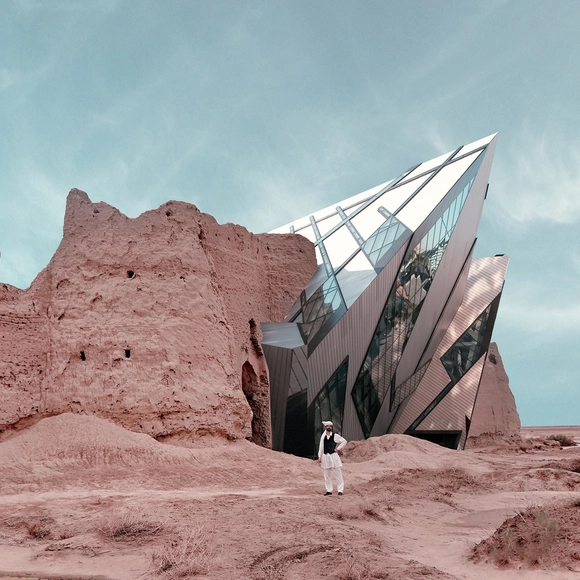
There is often a debate on whether architects and engineers should restore old buildings and preserve what is still standing as a token of the past, or completely demolish them and introduce contemporary designs and features. In Iran, the remains of historic monuments, some of which are World Heritage Sites, have yet to know their fate, as restoration strategies remain uncertain.
As part of his Retrofuturism series, Iranian architect Mohammad Hassan Forouzanfar selected a few pre-Islamic castles across Persian towns, and merged them with contemporary landmarks, bringing about a new definition of architectural restoration.
Creative duo another : have collaborated with music composer Yu Miyashita and released a short film that explores the geometric composition of the museum's structure in an exceptional way.
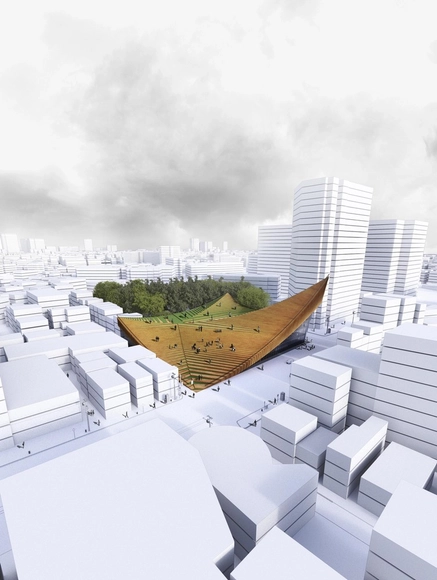
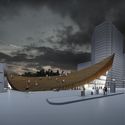
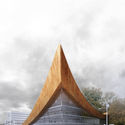
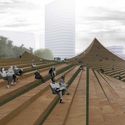
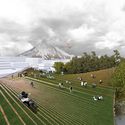
Although music halls generally appeal to groups of people with a specific interest, Persian architecture firm Hajizadeh & Associates developed a music hall that caters to all citizens of the city, and not just music lovers.
The "Tokyo Music Hall" is an award-winning design that transforms the music hall's roof into a space of contemplation and leisure, inspired by traditional Japanese architecture.
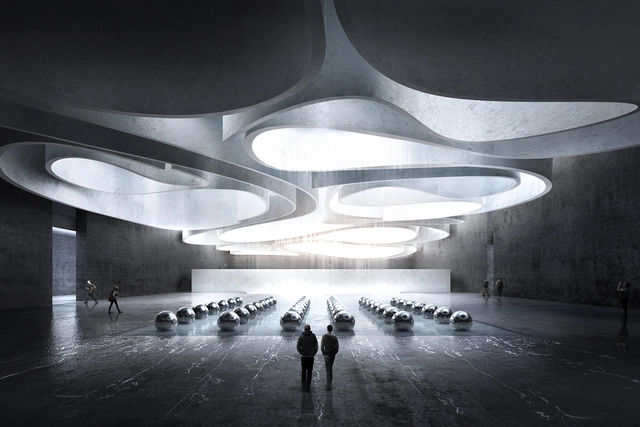
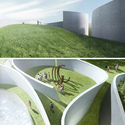
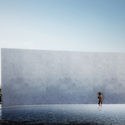
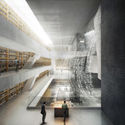
Writing is an unending dialogue that has been connecting one generation to another, maintaining history, culture, and information. For the National Museum of World Writing, stories were built rather than written.
Just as writing transcends the author to another realms, SAMOO Architects and Engineers have proposed ‘PAGES’, a structure of architecturally-devised scripts that disconnects visitors from the outer world, and introduces them to an exceptional architectural narration.
It is expected that within the next few of decades, Earth will have absolutely nothing left to offer whoever/whatever is capable of surviving on it. Although the human race is solely responsible for the damages done to the planet, a thin silver lining can still be seen if radical changes were to be done to the way we live on Earth and how we sustain it.
Since architects and designers carry a responsibility of building a substantial future, we have put together an A-Z list of every sustainability term that you might come across. Every week, a new set of letters will be published, helping you stay well-rounded on everything related to sustainable architecture and design. Here are the terms that start with letters J, K, and L.
The importance of nature and sustaining it has become a crucial feature in most contemporary projects. While some architects sustain nature by constructing with environmental-friendly material, others make way for the greenery to intervene with the structure, blurring the boundaries between man-made and Earth.
Villages and cities in Iran have always had a fixed low-rise horizontal skyline due to the lack of beam and column technology. Although some cities have already adopted contemporary styles and have constructed soaring skyscrapers, but the majority of towns remain committed to traditional building techniques.
Iranian architect Mohammad Hassan Forouzanfar decided to give traditional Iranian architecture a structural upgrade but kept its main features intact. In his conceptual creations titled "Retrofuturism", the architect used traditionally-designed houses as a starting point, but introduced them to the modern world of skyscrapers and surreal forms, mixing both styles together.
Past, Present, Future is an interview project by Itinerant Office, asking acclaimed architects to share their perspectives on the constantly evolving world of architecture. Each interview is split into three video segments: Past, Present, and Future, in which interviewees discuss their thoughts and experiences of architecture through each of those lenses. The first episode of the project featured 11 architects from Italy and the Netherlands and Episode II is comprised of interviews with 13 architects from Spain, Portugal, France, and Belgium.






_0262.jpg?1566906640 "© Laurian Ghinitoiu")
_0153.jpg?1566907296 "© Laurian Ghinitoiu")
_0268.jpg?1566907775 "© Laurian Ghinitoiu")
_0247.jpg?1566906787 "© Laurian Ghinitoiu")
_0247.jpg?1566906787)




.jpg?1564809225 "© SAMOO Architects and Engineers")


.jpg?1563519226)
.jpg?1563519226 "© ANU Design Group")
.jpg?1563518433 "© ANU Design Group")
.jpg?1563518775 "© ANU Design Group")
.jpg?1563519897 "© ANU Design Group")
.jpg?1563518401)