The Federal Government and the Association of Engineers and Architects of Mexico will award the 2020 National Architecture Award to Guadalajara-born architect Fray Gabriel Chávez de la Mora, who at 91 has stood out for his 175 projects over a 65-year career.
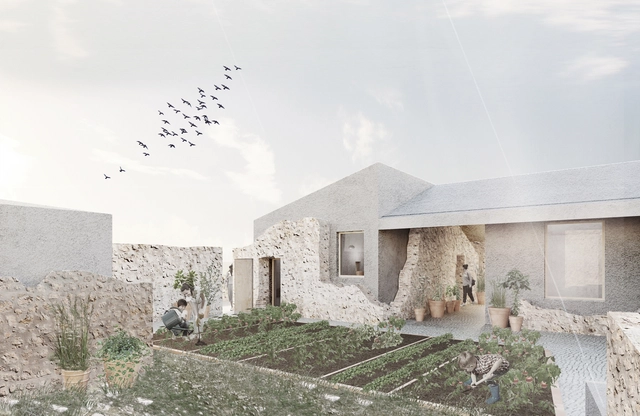
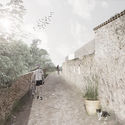
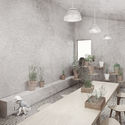
The results of the ideas competition to rehabilitate the Raixa estate in Mallorca, Spain, have been announced. Organized by the Department of Sustainability and Environment of the Consell de Mallorca with the collaboration of the Official Association of Architects of the Balearic Islands, the call invited participants to design architectural proposals to rehabilitate the existing building complex (a traditional estate of Moorish origin and high heritage value located at the foot of the Sierra de Tramontana) and transform it into an agroforestry training school (Margers) and a mountain shelter that highlights the Dry Stone Route (which begins in Valldemossa, passes through Raixa, and reaches Bunyola, Orient, and Alaró).
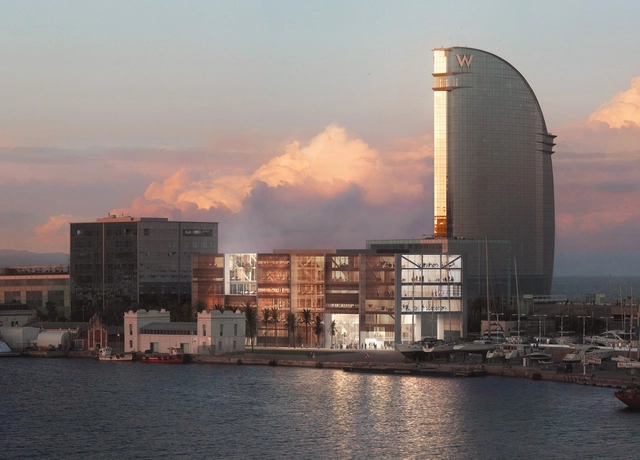
Render aéreo del proyecto del Nodo Náutico de Mestres Wage. Image Cortesía de MWA
International architecture studio Mestres Wåge has been selected to design Barcelona's future educational and technological hub for the maritime sector. The project, presented last April, stood out for its relationship with the surroundings, its permeability, its integration of public space, and its coherent functional layout.
CPTM platform at Luz Station in Downtown São Paulo. Photo: Bruno Escolastico/Photopress/Estadão Conteúdo
More than a year has passed since the pandemic imposed a new routine and atypical safety protocols on the world. A survey by NZN Intelligence, in partnership with the Estadão Summit Mobilidade Urbana, shows that 45.3% of people in Brazil have changed the way they get around since then.
Avoiding crowds led 40.2% of respondents to increase their use of private cars and 31.6% to travel more on foot or by bicycle, reflecting a global trend toward promoting active mobility.
Today is the day to announce the finalists for ODA2021. Our expert jury—meaning you, our readers—has selected 15 favorite projects from nearly 1,000 works of architecture across Latin America and Spain.
Now in its thirteenth year, this award has become a true tradition. We invite all of our readers to recognize the projects published during 2020 that inspired them and represent the identity of their local contexts in a globalized planet, shaping architectural practice in Latin America and Spain within an increasingly heterogeneous and multicultural world.
Starting today and until next Wednesday, March 31, at 11:59 PM (GMT -3), you can explore each of the finalists in detail and vote for the work that best represents the "Spanish-language" architecture that inspires us, defines us, and leaves its mark on us.
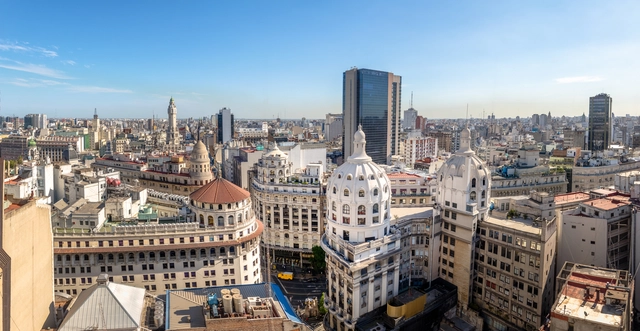
The Government of the Autonomous City of Buenos Aires has submitted a bill to the Legislature to create the Sustainable Urban Development Fund (FoDUS), aiming to carry out plans, programs, and projects designed to incentivize urban development in several of the city's neighborhoods through public, private, or mixed initiatives.
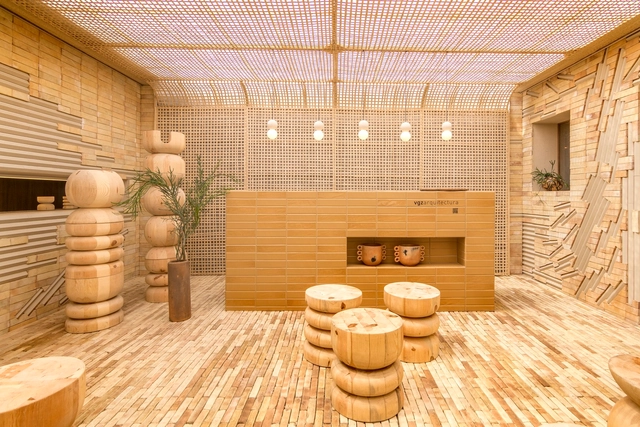
On October 5, Design House opened in Mexico City. As in previous years, the event showcases a series of installations integrating disciplines like design, architecture, and interior design. For nine years, across various venues, it has presented cutting-edge proposals from more than one hundred participating firms in collaboration with the showrooms of the Design Route, which provide the furniture and accessories that make up each space.
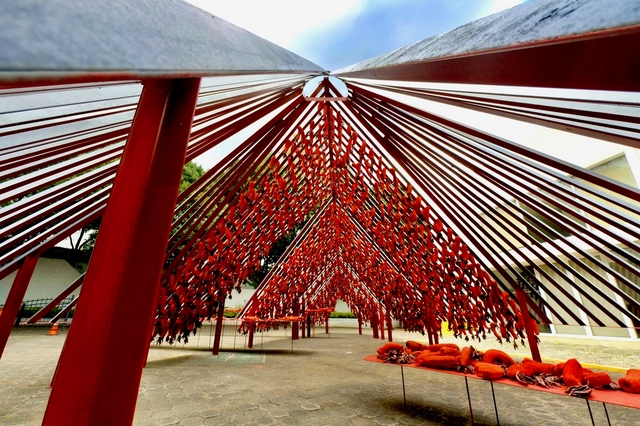
For the eighth time, the MEXTRÓPOLI Architecture and City Festival held the Arquine No. 23 | MEXTRÓPOLI 2021 Pavilion competition, a platform where architecture, urbanism, and art meet to reflect on and celebrate Mexico City. The event also aims to engage citizens by occupying public spaces with architectural interventions that can be activated by visitors. Celebrating public space and offering a fresh perspective on everyday pathways is precisely why MEXTRÓPOLI showcases these ephemeral works of architecture.
The “Faro Verde” Provincial Ideas Competition, organized by the College of Architects of the Province of Buenos Aires / District 8 (CAPBA) and promoted by BAHMS S.A. (a member of the Faro Verde Group), sought proposals for a new mixed-use building featuring housing, offices, retail, and parking in the city of Tandil, Buenos Aires Province, Argentina.
The jury awarded first prize to architects María Cristina Carasatorre and Luis Federico Risso, alongside collaborating architects Emilio Beilinson, Enrique Nakano, and Ms. María Sol Villaverde, with structural engineering consultation by engineer Alejandro Nico. Explore the project below.
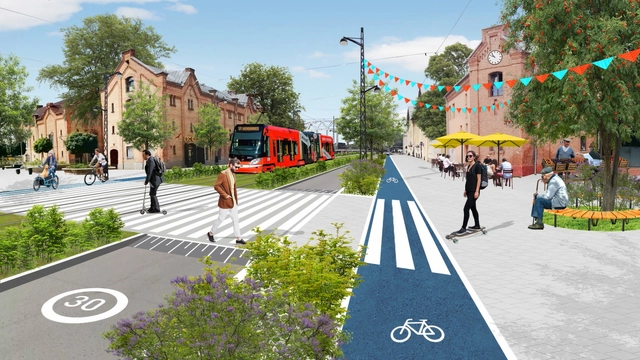
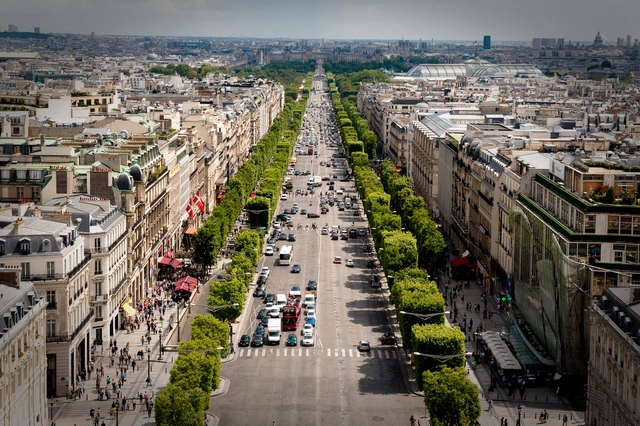
On August 30 of this year, a new speed limit of 30 kilometers per hour came into effect in Paris, France. Making streets safer, quieter, and less polluted are among the measure's goals. While it may seem too slow to many, the initiative has been paved gradually. The 30 km/h limit already applied to about 60% of Paris and now extends to cover almost the entire city. In addition, Paris has been implementing measures to restrict car use on certain streets for several years, while simultaneously expanding pedestrian-only zones.
Fundación Mi Parque in collaboration with Transelec, has developed a manual focusing on the technical and landscaping aspects of pruning urban trees near power transmission lines. This task is identified as an opportunity to move toward building an integrated and sustainable city image.
The Albeida Tourism Complex, designed by architects Alfonso Salgado Suárez and Francisco Liñares Túñez, and the new Spatial Planning Guidelines of the Basque Country are the winning projects of the latest edition of the 2020 Architecture and Urbanism Awards, presented by the Superior Council of Colleges of Architects of Spain (CSCAE).
The European Award for Architectural Heritage Intervention, organized by the COAC (Architects' Association of Catalonia) and AADIPA (Association of Architects for the Defense and Intervention in Architectural Heritage), has announced the shortlisted works in Category A (Intervention in built heritage) and Category B (Outer Spaces).
The finalists and winners will be announced on June 17 during the 5th International Biennial of Architectural Heritage Intervention.
Videos
Still from the film "Zaļa iela" by Oto Ozols
Cars remain one of the primary modes of transportation and a major contributor to the climate crisis, as the vast majority consume fossil fuels and generate emissions—particularly carbon dioxide, which intensifies the greenhouse effect and, consequently, global warming. As such, World Car-Free Day is celebrated internationally on September 22 to encourage people to spend a day without their cars and reflect on car dependency. To offer new perspectives on this issue, we highlight the work of Latvian architect Oto Ozols, who envisions cities designed for people rather than cars through videos that demonstrate how public space can be improved from this perspective.
Sede en Madrid | ITTI High Tech Institute . Image Cortesía de Comunicación ITTI
ITTI | High Tech Institute aims to pioneer BIM specialization, providing the knowledge to manage projects through its renowned "Learning By Doing" methodology. Its training programs equip BIM managers with the necessary resources to address complex issues from an innovative and revolutionary perspective.
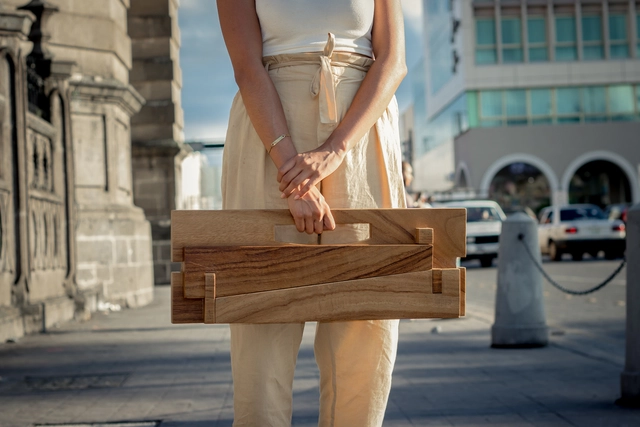
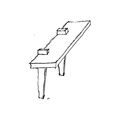
Luis Antonio Moreno Aguayo—architect and co-founder of Taller Matatipac in Tepic, Nayarit—presents his project: the Bípeda chair, which uses experimentation to simplify concepts to their elemental roots, employing critique as a tool to fuel creativity.
https://www.archdaily.com/1127907/taller-matatipac-presents-a-pre-hispanic-inspired-chair-in-mexicoArchDaily Team
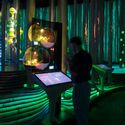
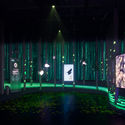
Under the theme “Connecting Minds, Creating the Future,” Expo Dubai 2020 —held from October 1, 2021, to March 31, 2022— is the first world expo hosted by an Arab nation and the Middle East region. The Spain Pavilion, under the slogan “Intelligence for Life,” synthesizes the idea of preserving a high quality of life on our planet for ourselves and future generations.
Designed by the firm amann cánovas maruri, the building is located in the expo's Sustainability District and stands out for its series of prominent truncated cones that rise above the landscape, evoking the feel of a traditional public square. Inside, the Pavilion houses two complementary thematic exhibition areas designed by the joint venture between External Reference and Onionlab. Here, the Barcelona-based firms have applied a striking blend of design, art, and technology to create a uniquely immersive experience.
Rescuing the invisible, diving into an erased urban memory, and walking on water. Surprising as it may seem, the world has not ended yet. However, those walking through Belo Horizonte, passing the busy intersection of Afonso Pena Avenue and Brasil Avenue, might be able to pinpoint exactly where it does. The “Acaba-Mundo” [World's End] is a creek that crossed the Curral del Rei settlement, the site to which the capital of Minas Gerais was relocated in 1897.













_16.43.35.jpg?1625522558&format=webp&width=640&height=580)