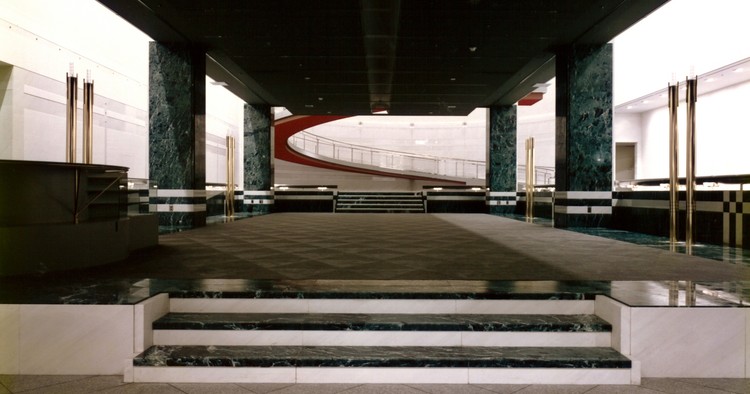
Designed by Natalie de Blois and Gordon Bunshaft of SOM and completed in 1961, 270 Park Avenue (formerly known as the Union Carbide Building) is considered a key example of the International Style in New York City that extended and even improved upon the precedent set by Mies van der Rohe’s Seagram Building.
But after new zoning legislation for the neighborhood was passed last year, the building’s current owner, JPMorgan Chase, has announced plans to raze the 707-foot-tall building in favor of a new, hi-tech supertall replacement. If plans go through, it would be the world’s largest and tallest building ever to be intentionally demolished.
Johann David Steingruber was a German architect and designer with over 100 buildings to his name, including many churches, town halls, school buildings and even breweries. However, perhaps what he is best known for today are the intricate illustrations of his 1773 Architectural Alphabet, in which he converted the alphabet into plans for a series of eccentric baroque palaces.
Done more as a "labor of love" rather than for any practical reason, Steingruber's book is a compilation of playful and intricate spatial relationships, with each letter providing its own unique set of challenges. Even though the letters naturally offer more complex shapes than we would ordinarily use for plans, the spaces somehow make sense. The baroque style of oval antichambers, domes, and vaults is evident not only in the plans but also in the elevations.
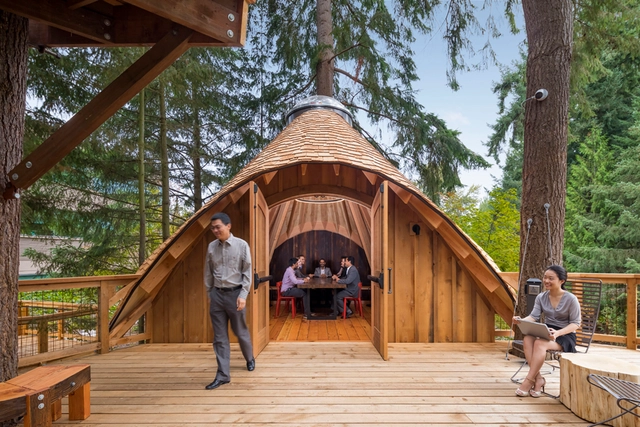
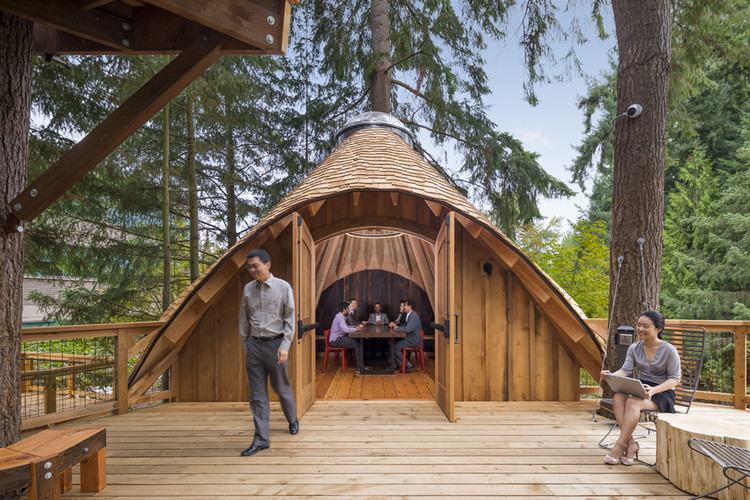
Microsoft is undertaking an ambitious overhaul of its 800 offices around the world and uncovering great insights about the intersections of technology and workplace design in the process. The technology giant’s global director of workplace strategies, Riku Pentikäinen, speaks to Metropolis’s Avinash Rajagopal about the company’s new workplaces, collaborating with designers and furniture manufacturers, and how his team takes a data-driven approach to office design.
Update 2/20/18:We've added a gallery of additional images to the post!
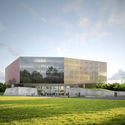
OMA has been selected as the winner of an international competition for the design of the new Palais de justice (courthouse) in Lille, France. Located on the outskirts of the city near the historic Vauban fortifications, the new courthouse will house the high court and district court of Lille within a colorful, expressive volume.
Last September, Nigerian Afrobeat musician Wizkid played to a sold-out house at the Royal Albert Hall in London, joining a growing list of illustrious African musicians, such as Selif Kaita, Youssou Ndour, Miriam Makeba and others, that have performed at that prestigious venue. This event affirmed the unfolding cultural renaissance across the continent, but it also signified the rising global influence of African music, movies, fashion, cuisine and the arts.
Sadly, traditional African architecture, especially in Sub-Saharan Africa, has not profited from this renaissance and has instead steadily lost its appeal across the continent. In spite of its towering influence in the pre-colonial era, it has largely failed to develop beyond the crude earthen walls and thatch roof architecture; for this reason it has remained unattractive to homeowners who often associate it with poverty. Consequently, the neglect of indigenous architecture has resulted in the dearth of skilled craftsmen knowledgeable in the art of traditional building, a reality that has further dimmed hopes for a revival of this architectural style.
New York City’s most buzzy megaproject, Hudson Yards, may have just added two more huge names to their list of notable architects, if a new report from the Wall Street Journal is to be trusted.
According to a source the WSJ describes as “a person familiar with the matter,” Santiago Calatrava and Frank Gehry will both design new residential towers for the second phase of the 28-acre complex, located at the north end of the High Line in west Manhattan.
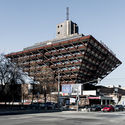
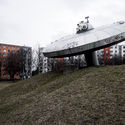
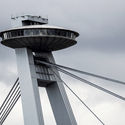
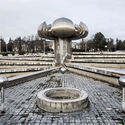
The history of Slovakia is riddled with political unrest and unwanted occupation, with the Slovak people having repeatedly been denied a voice throughout history. In the years following World War I, Slovakia was forced into the common state of Czechoslovakia; the territory was dismembered by the Nazi regime in 1938 and occupied by the Nazis for most of the Second World War, before being eventually liberated by Soviet and Romanian forces in 1945. Over the next four decades of communist rule—first by communists within Czechoslovakia itself and then later by the Soviet Union—the architecture of Slovakia came to develop into a unique form of sci-fi postmodernism that celebrated the shift in industrial influence at the time.
Photographer Stefano Perego has documented the Slovakian architecture from the 1960s–80s and has shared some of his photos with ArchDaily.
Begin to understand the inner workings of Fumihiko Maki's architectural mind in PLANE—SITE’s latest short film from their Time-Space-Existence series. Each film focuses on the different principles which drive the practice of famous architects. Maki is known for being experimental with materials and fusing east and west culture.
#donotsettle is an online video project created by Wahyu Pratomo and Kris Provoost about architecture and the way it is perceived by users. They visit buildings, make videos and write extended stories in their exclusive column on ArchDaily, #donotsettle Extra.
Yes, that library. The images of the Tianjin Binhai Library have appeared everywhere, from architecture blogs and news broadcasts to going completely viral on social media. We had to go see it and show you what the space is really like. So, we teamed up with MVRDV who sent us to Tianjin to see it up close.
Tianjin Binhai Library, designed by MVRDV, is part of the bigger master plan for the new Binhai Cultural Center (masterplanned by Germany’s GMP). The building has seen phenomenal success on social media reaching all corners of the world. Since the opening, the number of visitors has been constantly increasing, with many of them coming from way beyond Tianjin. It is a library as destination point, redefined.
The building was the subject of the season premier of "Impossible Builds," which profiles "the creation of some of the world’s most ambitious, complex and technologically advanced construction projects."
Described by the show as "one of the most complex skyscrapers ever to make it off the drawing board," the 62-story tower features a unique glass fiber reinforced concrete exoskeleton – a system never before seen at this scale.
The show is now available to watch in its entirety online. Check it out below!
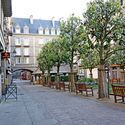
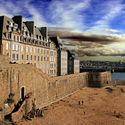
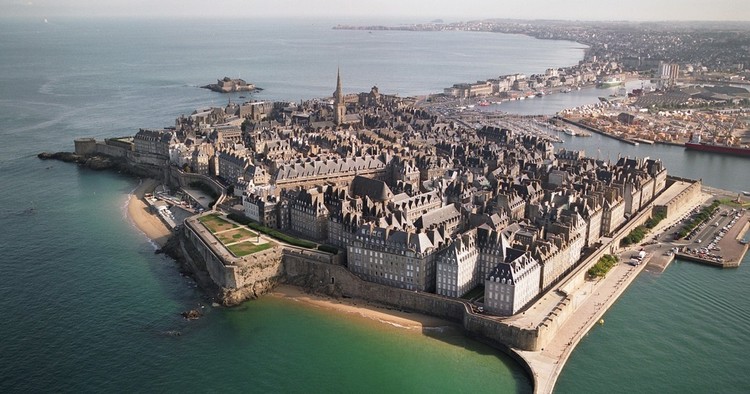
The protective fortress, winding cobblestone streets, and medieval urban layout are all characteristics of many coastal European towns. But when exploring the French town of Saint-Malo, it is difficult to believe that this is hardly the original city. What separates Saint-Malo from many other European towns located by the sea—aside from its striking location jutting out from the coastline—is the complex history of how it was heavily destroyed in World War II, but rebuilt to its original aesthetic.
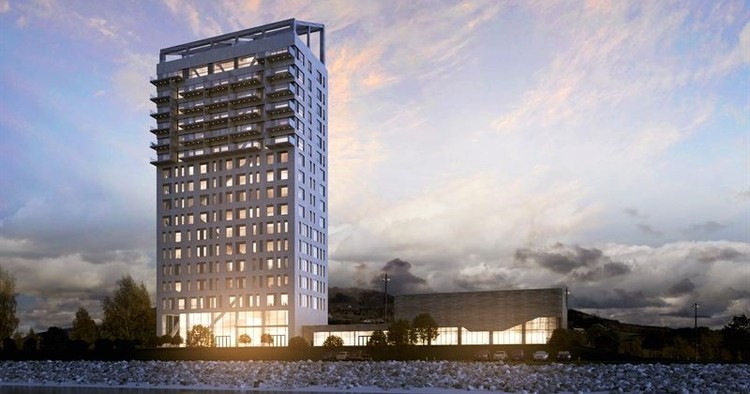
Over the last few months, we have seen a surge in large timber structures being constructed across the globe claiming to be the biggest, the tallest, or the first of their kind—for example, plans for the Dutch Mountains, the world’s largest wooden building, have recently been revealed. Contractors Moelven Limtre are one of the key drivers of this change as the perception of timber as a load-bearing material becomes more common. Their director Rune Abrahamsen is responsible for one of the current claimants of the world record for the tallest timber building, “Treet” in Bergen, at 51 meters tall. However, the contractor’s latest project Mjøstårnet is set to reach an even taller height of 81 meters.
The Madison Square Garden Company, the eponymous group behind New York City’s iconic concert and events venue, has revealed plans to building two new arenas on opposite sides of the world that will both be shaped like giant spheres.
To be branded as MSG Spheres, the venues will be located in Las Vegas and in London, and will be designed by Populous, the Kansas City-based firm responsible for a large number of stadia and arenas across the globe.
One of the last programs I attended as part of the Chicago Architecture Biennial was a panel titled “Making/Writing/Teaching Contested Histories” at the Chicago Cultural Center. The panel, organized by the Feminist Art and Architecture Collaborative (FAAC), aimed to “foreground issues of class, race, and gender, interrogating how they partake in the production of the built environment.”
The panelists, all academics in fields related to the built environment, were asked to bring in an object central to their practice or their teaching method. The objects on display were a painting, a pier, a refugee camp, and a living room.
Three or four decades ago, this array would’ve scandalized an audience of architects and architectural scholars, who might’ve been expecting, I don’t know, a photo of the Pantheon, or a plan of it, or even a piece of wood or a brick. Maybe even the choice of a piece of furniture would’ve induced some surprised gasps or confused looks.
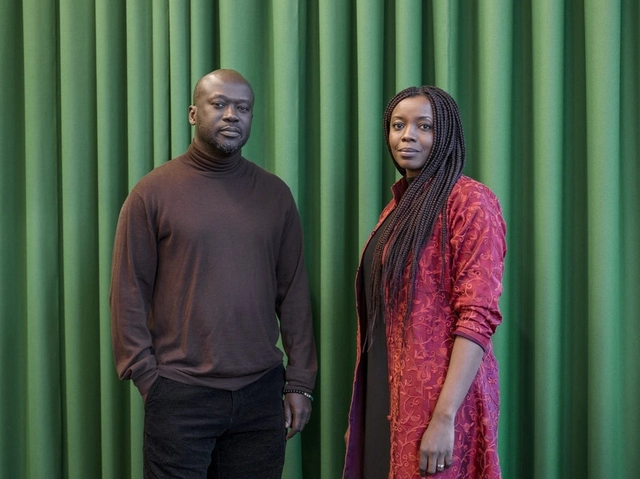
Sir David Adjaye with his protégée Mariam Kamara. Image Courtesy of Rolex Arts Initiative
Rolex has announced four new mentors and protégés for the prestigious Rolex Arts Initiative. In the architecture category, Sir David Adjaye was selected as mentor and Niger-based architect Mariam Kamara will be his protégée in 2018-2019.
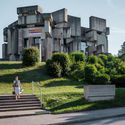
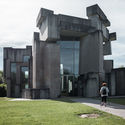
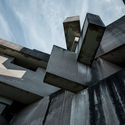
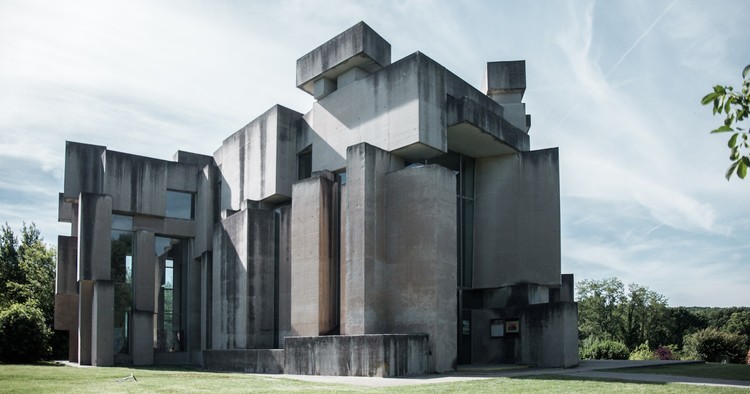
Located on a hill in Mauer, on the outskirts of Vienna, the Wotruba Church was the culmination of sculptor Fritz Wotruba’s life (the project’s architect, Fritz G. Mayr, is often forgotten). Constructed in the mid-1970s, Mayr completed the project one year after Wotruba’s death, enlarging the artist’s clay model to create a functional walk-in concrete sculpture. As can be seen in these images by Denis Esakov, the result is a chaotic brutalist ensemble that toys with the boundaries between art and architecture.
Spread the love! These 75 architecture valentines—handmade by ArchDaily readers from around the world—were chosen out of nearly 400 submissions.
The message that we wrote last year is so important that we'll say it again: ArchDaily's mission is to improve the quality of life of the world's inhabitants by publishing content for architects, designers, and decision-makers. We also realize how important tolerance, acceptance, and love are to the process of building a better world. So, from us to you, and from your fellow readers to the world, may you feel a wealth of love on this Valentine's Day. <3
https://www.archdaily.com/888881/75-valentines-for-architects-and-architecture-loversAD Editorial Team