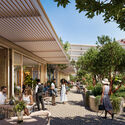
When designing spaces with reduced dimensions, adopting an efficient configuration and distribution is crucial for the user experience and the smooth development of activities and tasks to be carried out. In the case of bars and restaurants, numerous architecture and interior design professionals strive daily to meet the needs of clients, employees, and employers, considering everything from necessary installations and technologies to services, atmospheres, and furniture suitable for the type of gastronomy to be consumed.
In an effort to find effective strategies to mitigate the adverse effects of climate change, the Biden-Harris administration has released a draft of a new legislative initiative that strives to impose a National Definition for Zero Emissions Buildings. Overseen by the U.S. Department of Energy (DOE), the draft proposes a standardized and verifiable base for defining the common minimum conditions for such buildings, as well as pathways for transparent verifications by public and private entities. DOE has now launched a ‘request for information' asking for feedback from industry, academia, research laboratories, and other stakeholders before finalizing the document.
Courtesy of Thom Mayne | Constructing the Spontaneous
The Pritzker-winning architect Thom Mayne is presenting his display “Constructing the Spontaneous” in the Paul Kyle Gallery in Vancouver, Canada. Known for his contributions to architecture and design, the architect founded Morphosis in 1972, embodying his philosophy of architecture as an ever-evolving, dynamic process. Mayne’s latest display features his artworks, diving into the intricate relationship between cutting-edge technology and timeless human expression.
After the Hyatt Foundation announced that the 2024 Pritzker Prize be revealed on March 5 at 9 am EST, speculation has ignited regarding which architect or architects will receive architecture's most prestigious award. The Pritzker Architecture Prize, considered to be "the profession’s highest honor," has been granted annually, since 1979, by a jury, to a living architect or architects with significant achievements to humanity and the built environment.
A correctly sized kitchen island is more than just a functional architectural element—it's a key component of kitchen design. Beyond its primary functions, a well-sized kitchen island can serve as a versatile space adaptable to various household needs by enhancing workflow efficiency, providing additional storage, fostering social interaction, and contributing to the overall space aesthetics.
Whether utilized as a breakfast bar for quick meals, a study area for children's homework, or a hub for entertaining guests, its flexibility enhances the functionality and livability of any kitchen environment. Determining the appropriate size for a kitchen island, however, demands a meticulous approach, blending spatial considerations, workflow requirements, and design sensibilities.
Translucency, at its essence, is an optical property that enables the total or partial passage of light through materials, without providing a clear view of the objects behind them. Despite its apparent simplicity, this property has fascinating applications in the architectural field, generating attractive and powerful proposals that play with light without obstructing views.
Traditionally, glass sheets have been the symbolic material associated with transparency, commonly used in the fabrication of doors and windows. However, technological advances in production and the exploration of innovative materials have significantly expanded the opportunities to take advantage of this property in both interior and exterior applications. These advances challenge preconceived limitations and encourage creativity in the development of novel architectural proposals.
https://www.archdaily.com/1013517/seeing-through-layers-translucent-materials-in-architectureEnrique Tovar
In modern-day urban environments, green spaces such as gardens, home yards and public parks are becoming increasingly important to provide balance to our day-to-day lives. In the case of playgrounds, which are key public spaces for children, the question arises: if we make playgrounds for children to spend time and play in, why shouldn’t we extend this idea to serve adults as well? Adults need to be present in playgrounds, accompanying their children, so why not extend these areas to become interesting and inclusive for adults too?
Selected by the jury comprising 7 members: Frédéric Druot, Martin Braathen, Pippo Ciorra, Tinatin Gurgenidze, Adriana Krnáčová, Sala Makumbundu, and Hrvoje Njiric, from a list of 362 nominees, the "7 finalist works promote local policy references and can become global European models since all of them create inclusive and high-quality living environments."
Henning Larsen and Ramboll have won the competition to design the new campus for the prestigious scientific research center,CERN. Designed to integrate science and nature, the B777 building uses biogenic materials and low-carbon methods to reimagine traditional laboratory settings. Situated on the border of France and Switzerland, in CERN’s Prévessin Campus, the scheme aims to foster a sense of community, collaboration, and well-being.
Any historiography of architecture is inherently implicated and incomplete by definition: implicated because it demonstrates the interpretation and curation of examples by the one who writes it, and incomplete because, in this selection, divergent examples often fall outside the "official" timeline. However, the ability to trace forms, their application, and repetition over historical periods separated by centuries is always a good indication of genealogy. This lineage situates examples and broadens repertoire.
A historiography of architecture can bridge past-century elements and movements considered 'outdated' with contemporary forms and applications, establishing a nexus of relationships that offer conceptual and design insights. By categorizing specific styles, notable features are emphasized, often resonating with present-day scenarios as suggested by bibliographical sources, which holds even for seemingly distant connections, as exemplified by the Rococo.
We invite you to participate in the ArchDaily Building of the Year Awards. We ask you to recognize and reward the projects that you feel are creating the largest impact in the built environment, that ArchDaily has published on our projects database in 2023. By voting, you form part of an interdependent, impartial, distributed network of jurors and peers that has consistently helped us celebrate architecture of every scale, purpose, and condition, from countries large and small, and architects of all descriptions. Already 4000 projects have been filtered down to just 75 finalists – representing the best in each project category on ArchDaily.
Remember, registered users will be able to vote for their favorite project for each of the 15 categories included in the Awards. One vote per category. Voting ends on February 22nd, 2024 at 12:01 AM (EST). Thank you once again for helping us continue to democratize architectural excellence across the world.
Urban mobility in the United States has seen a radical transformation with the introduction of ridesharing services in the late 2000s. The widespread adoption of services such as Uber and Lyft has altered the way citizens move around cities, offering convenience, flexibility, and accessibility like never before. The innovative business model that excels at designing for individual users failed to foresee larger implications at the scale of the city - congestion, public transit systems, and car ownership. While European countries such as Brussels have pledged to encourage public transportation to curb traffic congestion issues, American cities hunt for solutions of their own.
Sumaya Dabbagh, the founder of Dabbagh Architects, based in the UAE, stands at the forefront of architectural innovation with a focus on identity and connection to place. Her recent participation in the Sharjah Architecture Triennial’s second edition “Earth to Earth" is a showcase of cumulative ideas that Dabbagh Architects has been fostering through their projects. Onsite in Sharjah, ArchDaily had the chance to speak to the architect about her exploration at the Triennial, as well as her broader architecture practice and its impact on the Global South.
The landscape of downtown São Paulo would not be the same without the presence of Copan. The building inserts Niemeyer's curves into São Paulo's dense verticality, creating a distinctive rhythm that becomes a landmark for all who encounter it. Besides accommodating around five thousand residents, the building serves various purposes, offering different typologies for its residential programs, varying apartment sizes, and prioritizing diversity among its tenants. Differences also emerge when we examine how each person inhabits a standard floor plan; renovations proposing distinct finishes and new layouts reflect the character of each resident but also showcase the inventiveness of the architects intervening in this classic structure. Thus, we gather here projects realized within this icon to demonstrate how each home is unique, even when created in series.
Religious architecture has always had a unique power to transcend the physical realm, transporting visitors to a spiritual journey. In many belief systems, it serves as a space between the earthly and the universal divine. This designed experience can often be facilitated through different choices, where light, form, materiality, and circulation play essential roles. Furthermore, architecture and design hold the power to have a profound impact on one’s lived spiritual experience.
This exploration of religious architecture in the global south showcases the integration of tradition and contemporary innovation. Whether it’s the Omani Mosque, where heritage and Islamic tradition are honored, or the Abrahamic Family House that features a mosque, a church, and a synagogue in dialogue and coexistence. Form and public access are explored through a design in Brazil, while a monastery in Uganda expands its size to serve guests and novitiate.
Immersive spaces are heavily sensorial environments meant to create impactful experiences crafted through intentionally curated architecture, light, imagery, sound, and sometimes even smell. To "immerse" oneself is to be wholly enveloped in a world shaped solely by immediate sensory input. Using digital tools to craft these environments to showcase art, create compelling exhibitions, and feature performance events has become increasingly popular. Evocative experiences like these can offer a respite from the inundation of personalized digital content and foster shared, grounding encounters. The design of these can exist at the intersection of architecture, graphic design, visual art, lighting design, music, and performance. They underscore the power of interdisciplinary collaboration to craft memorable moments. So, what role does architecture play in shaping these?
As far as history goes back, art and architecture have always been interrelated disciplines. From the elaboration of the Baroque movement to the geometric framework of modernism, architects found inspiration from stylistic approaches, techniques, and concepts of historic art movements, and translated them into large-scale habitable structures. In this article, we explore 5 of many art movements that paved the way for modern-day architecture, looking into how architects borrowed from their characteristics and approaches to design to create their very own architectural compositions.
As cities grow and evolve, the question of preserving, rehabilitating, or adapting historic sites arises. The intervention in such buildings requires a delicate balance between honoring their heritage and meeting contemporary demands. Often, the most innovative and radical solutions emerge when architects attempt to renew a building while maintaining its original footprint and as many features as possible. They then create modern extensions that either harmonize or contrast with the original structure. This approach not only revitalizes the building but also celebrates the synergy between the past and present, including materials, construction technology, architectural movements, stories, and overall building quality. The layering of both old and new elements through harmony or contrast requires an intelligent and sensitive approach that gives the building a unique aesthetic and a new meaning.
Promenade Residential Building by Natalia Ottonello / Guevara Ottonello Architects, 2022. Image Courtesy of A' Design Awards & Competition
"Born out of the desire to underline the best designs and well-designed products," the A' Design Awards recognize excellent and original talent from across the globe. Both a major achievement for designers and a source of inspiration for award-winning architects, brands, and design agencies, the Awards are open to contestants from every country. Registration for the A' Design Award & Competition 2023-2024 period is now in the "Last Call for Entries" stage. Register and upload your design here.
The project for implementing a fourth metro line in the Greek capital began in 2021, with the purpose of reducing the need for automobiles in the crowded city. As the 15-station new line is estimated to transport 340,000 passengers a day, up to 53,000 cars could be taken off the roads each day. While the opening of the line may be five years away, work has now begun to refurbish seven urban squares which will become stations. Despite public support for the initiative, the project has also led to some controversy, with residents fearing gentrification.
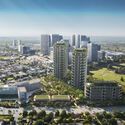
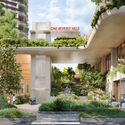
Foster + Partners has announced the start of construction on One Beverly Hills, revitalizing 17.5 acres of land in the city center. Proposing two residential buildings, a new hotel, a dining, and a retail pavilion, the development is expected to open in 2025. Designed in collaboration with design collective RIOS, who is leading the Landscape Architecture, the project features 10 acres of gardens and open space. The project’s masterplan, designed by Foster + Partners, also integrates existing landmarks like the Beverly Hilton and Waldorf Astoria Beverly Hills.
The use and demand for natural materials in architecture and interior design have facilitated the revival of updated traditional construction systems for the contemporary context. What was once considered rustic is now being explored in more modern settings; therefore, the application of the material is also subject to new forms of fixation, coloring, and orientation (horizontal or vertical). While wood is the dominant material in traditional systems and environmentally sustainable materials, another material that has been used for centuries, equally sustainable and biodegradable, and has received less attention is straw.
The official website of the Pritzker Prize has stated that the 2024 laureate will be announced on March 5 at 9 am EST. Granted annually, since 1979, to a living architect or architects with significant achievements to humanity and the built environment, the Pritzker Architecture Prize is considered to be "the profession’s highest honor."
Throughout history, San Diego has been a canvas for visionary architects who have left enduring legacies on its built environment. From iconic landmarks like the Geisel Library and the Salk Institute to the dynamic spaces of the San Diego Central Library and the Rady Shell at Jacobs Park, each piece of architecture reveals hidden aspects of the layered history and the spirit of exploration of San Diego.