3XN and GERNER GERNER PLUS have released details of their competition entry for the design of a new aquarium in Schönbrunn Zoo, Vienna. Developed in collaboration with aquarium specialists ATT, “Poseidon’s Realm” was designed to be “elegant, simple and mysterious, lying across the landscape like a great veil.” The scheme was awarded second place in an international competition for the aquarium’s design, with the winner yet to be announced.
The “Poseidon’s Realm” scheme is defined by a spacious green roof landscape embedded in the zoo’s path network. The aquarium covers a total area of 65,000 square feet (6,000 square meters), divided across four levels, with a large, glazed, wave-shaped entrance enticing visitors to transition between outdoor greenery and a “softly undulating waterworld.”
In March 1972, an article in The Architectural Review proclaimed that this structure was “probably the best building in Paris since Le Corbusier’s Cité de Refuge for the Salvation Army.”[1] The article was, of course, referring to Brazilian architect Oscar Niemeyer’s first project in Europe: the FrenchCommunist Party Headquarters in Paris, France, built between 1967 and 1980. Having worked with Le Corbusier on the 1952 United Nations Building in New York and recently finished the National Congress as well as additional iconic government buildings in Brasilia, Niemeyer was no stranger to the intimate relationship between architecture and political power.[2]
Studio Gang has released details of their proposed condominiumtower in Downtown Brooklyn, New York City. “11 Hoyt” has been designed with an emphasis on nature and community-building, responding to a lack of comfortable outdoor space in Brooklyn through the creation of an “outdoor-indoor environment."
The Studio Gang scheme, designed in collaboration with Hill West Architects, reclaims a former parking garage site in a rapidly-densifying area, where the population has increased by 40% in twenty years. 11 Hoyt is set to transform the site into an elevated green podium anchored by a 770,000-square-foot (71,000-square-meter) residential tower featuring a “scalloped” façade.
https://www.archdaily.com/892945/studio-gang-unveils-images-of-rippling-condominium-tower-in-brooklyn-new-yorkNiall Patrick Walsh
Sand is the most-consumed natural resource in the world after water and air. Modern cities are built out of it. In the construction industry alone, it is estimated that 25 billion tons of sand and gravel are used every year. That may sound a lot, but it’s not a surprising figure when you consider how everything you’re surrounded with is probably made of the stuff.
But it’s running out.
This is a scary fact to think about once you realize that sand is required to make both concrete and asphalt, not to mention every single window on this planet. The United Nations Environment Programme found out that from 2011 to 2013, China alone used more cement than the United States had used in the entire 20th century and in 2012, the world used enough concrete to build a wall around the equator that would be 89 feet high and 89 feet thick (27 by 27 meters).
On a hillside forest outside of Moscow, amongst 65-foot-high (20-meter-high) pine and birch trees, sits the only private house to be designed and built by Zaha Hadid in her lifetime. With a form defined by its natural surroundings, the Capital Hill Residence is divided into two components, one merging with the sloping hillside, and another “floating” 72 feet (22 meters) above ground to unlock spectacular views across the Russian forested landscape.
Modernity certainly does not have to be characterized by ugliness, but we may well have to make some revisions in our standards of beauty. — Edward J. Logue
pinkcomma gallery is proud to present Brutal Destruction, photographs of concrete architecture at the moment of its demise. The exhibit is curated by Chris Grimley of the architecture office over,under. The exhibit opens 12 April, 2018 from 6–9 p.m., and the will be on display through May 03, 2018.
Steven Holl Architects has won an international competition for the design of the Angers Collectors Museum and adjacent hotel in the historic city of Angers, France. Working in collaboration with developers Compagine de Phalsbourg, Holl’s scheme draws inspiration from the nearby 9th century Chateau d’Angers fortress, and seeks to form a new cultural gateway to the city.
In the 3rd Arrondissement of the French city of Lyon, construction has begun on Lyon Part-Dieu, an MVRDV-designed scheme seeking to transform the city’s main shopping center. Featuring partly-transparent glass and a public green roof, the MVRDV scheme will revitalize and integrate what was formerly an introverted complex built for an era dominated by the car.
At 166,000 square meters, Lyon Part-Dieu is the largest downtown shopping center in Europe, built in 1975. In order to improve the existing outdated complex, MVRDV worked with co-architects SUD to produce a design that offers a contemporary update to the existing façade and a re-organization of the interior program.
https://www.archdaily.com/890665/construction-begins-on-mvrdvs-redesign-for-europes-biggest-urban-shopping-centerNiall Patrick Walsh
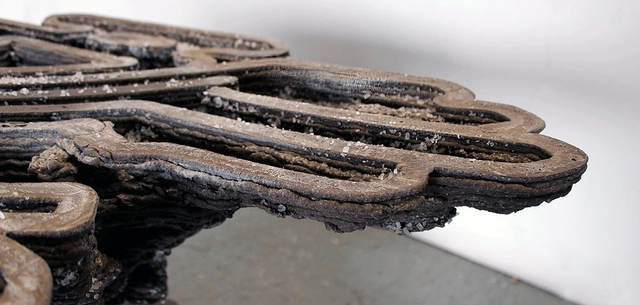
Courtesy of Lapyote Prasittisopin, Chanita Chuaysiri / Siam Research and Innovation
Siam Research and Innovation Company (SRI) is a Thailand-based cement manufacturer that has been developing innovations to push the limits of 3D printing in architecture. Their project 'Triple S' –developed in 2017– is based on traditional Thai craftsmanship to generate Surface, Structure, and Shelter in a single process; its specific artisanal form creating beautiful framework for structural purposes, easily building living spaces.
To speak of Paul Rudolph’s illustrious career is to trace a grand arc stretching from the 1940s to the 1990s. More often than not, the popular narrative begins with his student days at Harvard under the tutelage of Walter Gropius, touches upon his earliest, much-loved Florida beach houses, circles around his eventual break from the rigidity of both the Sarasota School and the International Style, and finally races towards the apex: his chairmanship of the Yale School of Architecture, and the concurrent shift to a Brutalist architectural style characterized by monumental forms, rugged concrete, and interwoven, multilevelled spaces awash with a remarkable interplay of light. Then comes the fall from grace: the beloved Yale Art and Architecture Building went up in flames just as the architecture profession began to question modernist ideals, and eventually Postmodernism was ushered in. Flickering, sputtering, Rudolph's grand narrative arc lurched towards Southeast Asia, bearing away the “martyred saint.” Save for several scattered commissions in the United States, Rudolph spent the last two decades of his life building abroad, mostly across Hong Kong, Indonesia, and Singapore, until his death in 1997.
But of course, time and again, historians have sought to challenge the myth of the failed architect by rereading his understudied work from the late years. Adding to this growing corpus of fresh research and alternate perspectives is architectural photographer Darren Soh’s ongoing project documenting—so far—three of Rudolph’s major works in Southeast Asia: The Colonnade (1986) and The Concourse (1994) in Singapore, and the Intiland Tower (1997) in Surabaya, Indonesia.
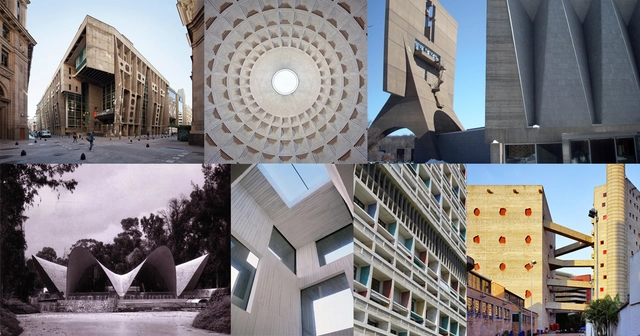
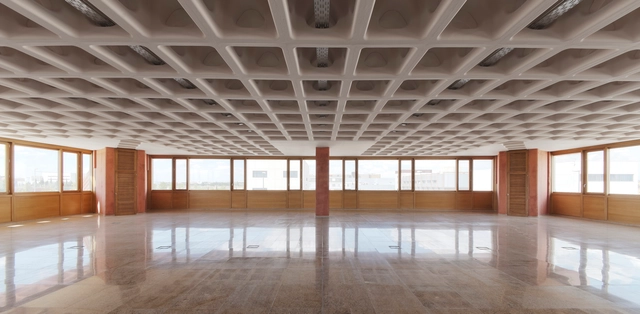
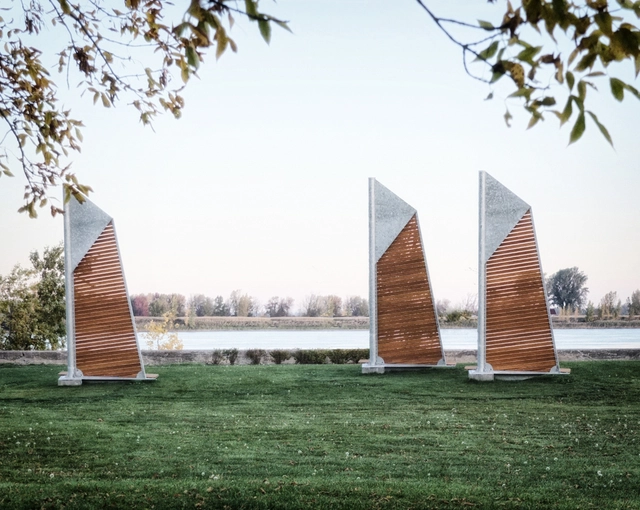
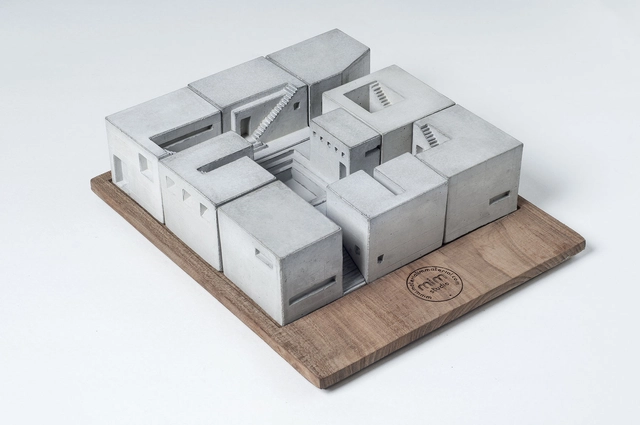
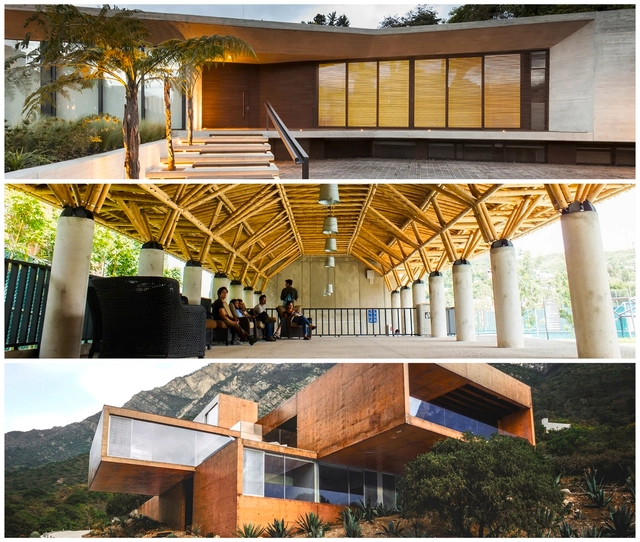
Of all construction materials, concrete is perhaps the one that allows the greatest diversity of finishes and textures. The mixture of its ingredients, the shape and texture of the formwork, and the pigmentation of the materials all offer the opportunity to achieve an interesting design. This week we've prepared a selection of 10 inspiring images of innovative concrete, taken by renowned photographers such as Gonzalo Viramonte, Song Yousub, and Ana Cecilia Garza Villarreal.
Beat Box: 30 apartments in 48 containers to transform the Danish neighborhood of Musicon, adjacent to the famous Roskilde Festival area. Designed by Arkitema Architects and constructed by Container Living, Beat Box is an integral part of Roskilde’s goal to revamp Musicon over the next 15 years by adding 1,000 jobs and 1,000 homes.
Researchers from the university of British Columbia have developed a new fiber-reinforced concrete treatment that can “dramatically [enhance] the earthquake resistance of seismically vulnerable [structures].”
Called EDCC (eco-friendly ductile cementitious composite), the material is engineered at the molecular level to react similarly to steel – with high strength, ductility and malleability. When sprayed onto the surface of traditionally poured interior concrete walls, it reinforces against seismic intensities as high as the magnitude 9.0-9.1 earthquake that hit Tohoku, Japan in 2011.
Finally, a brutalist map of New York City, thanks to London-based publisher, Blue Crow Media. The Concrete New York Map marks the tenth map in the architectural guide series, highlighting over fifty of The City’s finest concrete buildings.
Not often thought of as a brutalist capitol, the concrete jungle is filled with remarkable buildings by Breuer, Pei, Rudolph, Saarinen, Wright, alongside lesser-known works, mapped out, photographed, and paired with a description of the building. The map is edited by Allison Meier, and adorned with Jason Woods’ photography and is the perfect pocket guide for any architect or brutalism lover.