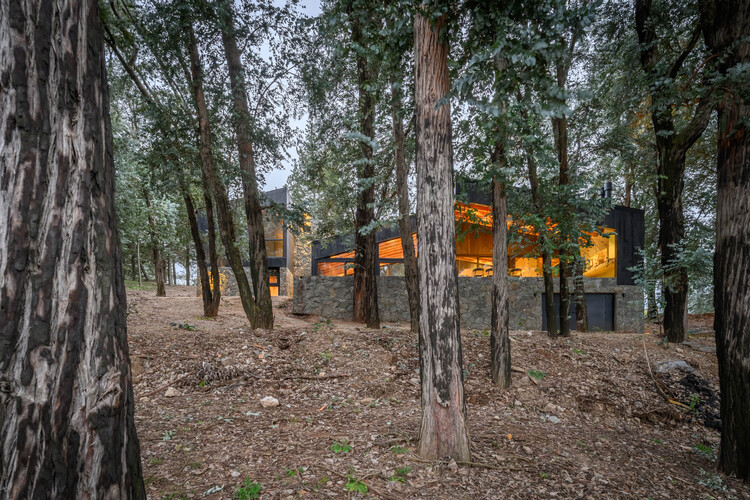
-
Architects: Estudio Palacios
- Area: 1520 m²
- Year: 2026


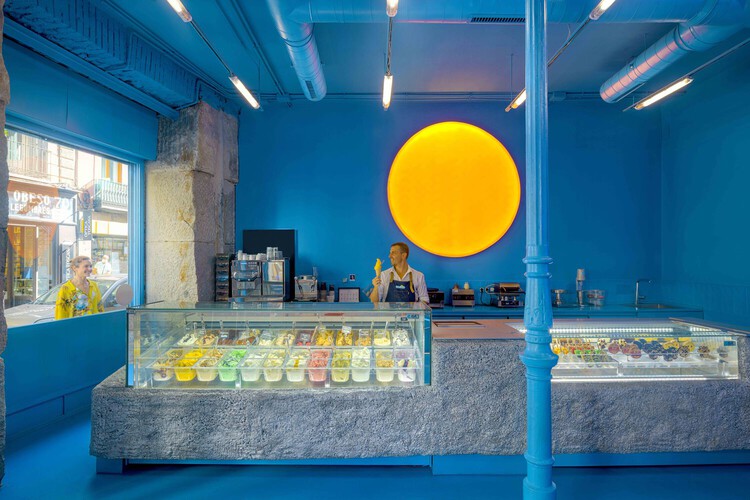
The ice cream shop functions as an exercise in branding through playfulness in retail and commercial spaces, a small architectural gesture designed to draw people in off the street or across the park. From dense urban cores to quiet coastal towns, designers return again and again to color, materiality, and childlike curiosity as the primary tools for these spaces. This consistency appears to persist regardless of climate, culture, or context, signifying that the common threads of design are connected by experience and indulgence.
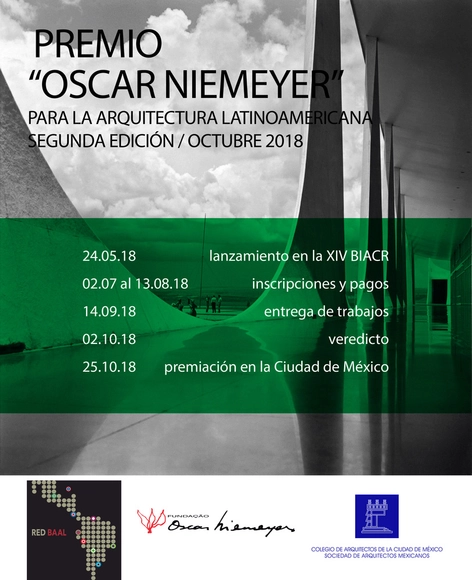
Eligible works for the second edition of the Oscar Niemeyer Award for Latin American Architecture include those recognized by a REDBAAL-member biennial or selected by a national association or college of architects in the aforementioned Latin American countries where no REDBAAL-affiliated biennial exists.
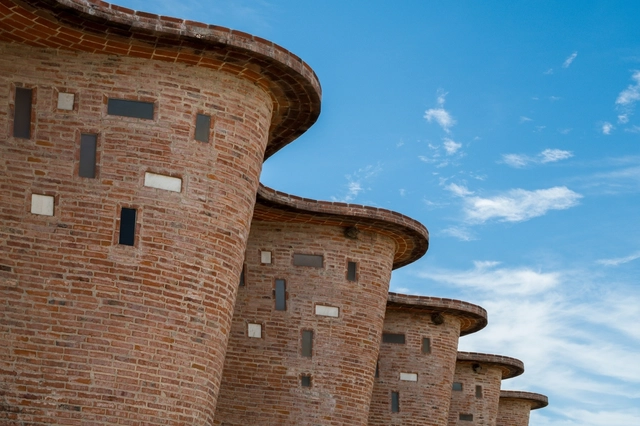
Born in Artigas, Uruguay, in the second decade of the twentieth century, Eladio Dieste became an exceptional builder, with most of his work located in Montevideo, the capital of his home country, and its adjacent cities. However, his work gained broader international recognition posthumously, after the Massachusetts Institute of Technology (MIT) celebrated it in 2005 through the theoretical work of Stanford Anderson. Trained as an engineer, his relationship with the construction site and in situ experimentation allowed him to push materiality and structural possibilities to their absolute limits.
With a practice deeply connected to the relationship between materiality and the construction site, he developed a rich architectural output based on studies of thin ceramic shells, which he termed reinforced ceramics. Alongside this construction technique, Dieste found that ceramic bricks offered the essential structural resolution he sought. The material possessed excellent structural properties—highly resistant to compression, quick to build with, and easy for local labor to handle—while the addition of steel reinforcement allowed it to resist tension and bending. Consequently, he found in brick the ideal medium for the plasticity and structural design he envisioned, enabling him to span large distances with slender self-supporting structures anchored only at their ends. Free of central supports, these structures unified walls, floors, and ceilings into a single cohesive body.
But what makes Eladio Dieste such a remarkable builder?

It is time to say goodbye to 2018 and look back at everything we have achieved. What captured our interest? What surprised us? What made an impact?
After presenting the best architecture of 2018, we decided to round up and highlight some of the Argentine projects that generated the most engagement on our social networks. Goodbye 2018, hello 2019.
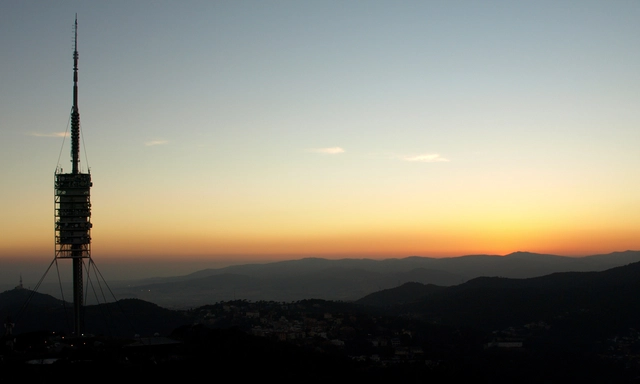
For optimal and wider propagation of TV and radio frequencies, antennas must be positioned in strategic and, above all, elevated locations. When the local topography is unfavorable, the construction of broadcasting towers and masts becomes essential. Yet, beyond serving a crucial function, these structures stand as visual landmarks, offering an extraordinary opportunity to transform urban infrastructure into pieces of unique aesthetic value. Renowned architects and their teams have designed radio and television towers that marry rigorous structural engineering with the plastic inventiveness of their chosen design solutions. We have selected a brief collection of television and radio transmission towers. See them below:
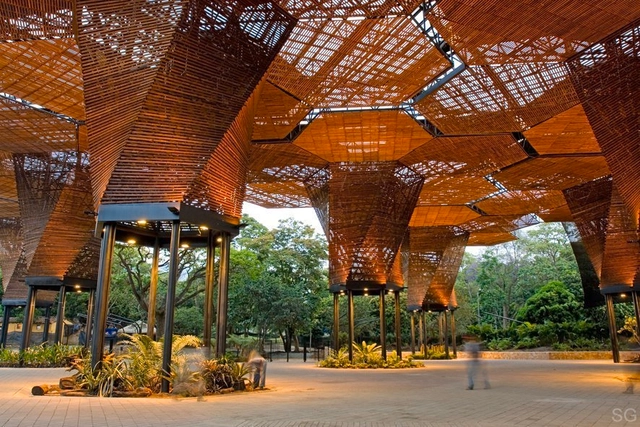
As is tradition, digital travel platform TripAdvisor has released the results of the 2018 Travelers' Choice awards. These accolades are determined by millions of reviews posted on the website, measuring "the year-over-year increase in positive traveler review ratings," the company explains. Additionally, these cities "have also experienced an increase in search traffic and booking interest" for accommodations.
According to Brooke Ferencsik, communications director at TripAdvisor, the selected cities share the fact that "they all have excellent accommodations, wonderful restaurants, and exceptional attractions for every travel budget."
In South America, six countries are represented on this year's list. Below, discover the ten cities chosen by TripAdvisor users:

Starting in May, Argentina reaffirms its presence at the Venice Biennale with an invitation to critically rethink the territory.
The "Imagined Lines" exhibition in the Argentine Pavilion, Horizontal Vertigo, curated by architects Javier Mendiondo, Pablo Anzilutti, Francisco Garrido, and Federico Cairoli, is a proposal to rediscover the territory as a collective construction—based on the potential of the relationship we perceive between territory and society—understanding architecture through its capacity to spark unexpected possibilities in each project.
Explore the selected projects and a statement from the curators below.
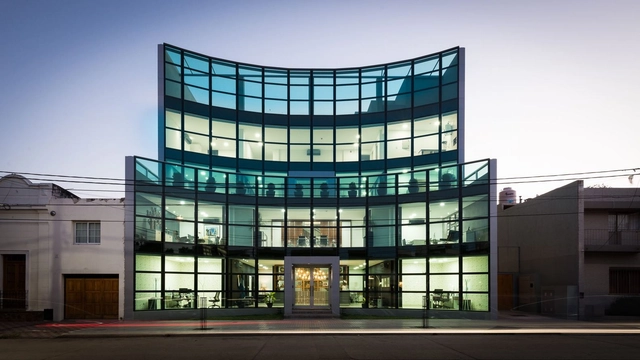
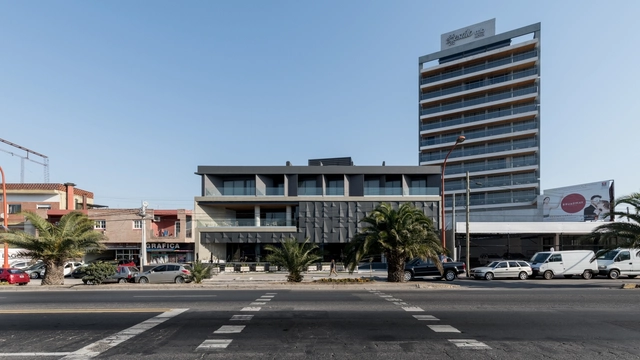

As part of Casa Portal 2018—an Argentine architecture and interior design exhibition dedicated to intertwining art and solidarity—the Emergen Project by visual artist Rocío Moreno and architect Gonzalo Viramonte is presented as a quest to reflect on the state of emergency at the Children's Hospital.
The visual proposal continues the production line associated with light-based work, this time using neon to illuminate children's drawings, thereby incorporating them into the conversation.
A few words from the authors follow:


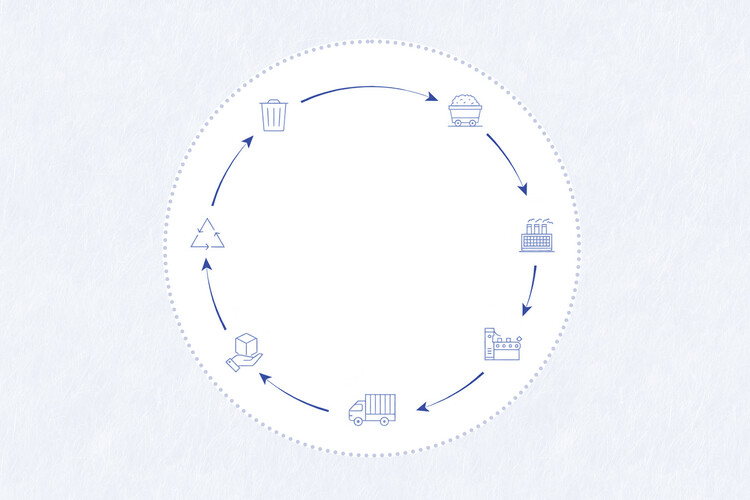
As a major driver of natural resource consumption, energy use, and greenhouse gas emissions, the construction industry has a significant impact on the environment, consuming 32% of global energy and contributing to 34% of global CO₂ emissions. Building materials play a crucial role in shaping the built environment. Through principles of circular economy, renewable and self-sufficient solutions, and technological innovations, analyzing the environmental performance of each material highlights the opportunity to review and assess the different stages of its life cycle.
By establishing a common framework for measuring and managing the environmental impact of building materials, Life Cycle Assessment (LCA) emerges as a key approach. This methodology provides a comprehensive evaluation of the environmental impacts associated with products, processes, or activities throughout their entire life cycle. From raw material extraction, manufacturing, and transportation to construction, use, and end-of-life treatment, the analysis considers the environmental burdens linked to each stage. In the context of building materials, LCA offers a holistic and systematic approach to assessing environmental performance and identifying opportunities for design optimization, among other improvements. In this way, it quantifies impacts such as carbon emissions, energy consumption, water use, air pollution, waste generation, and ecosystem depletion.