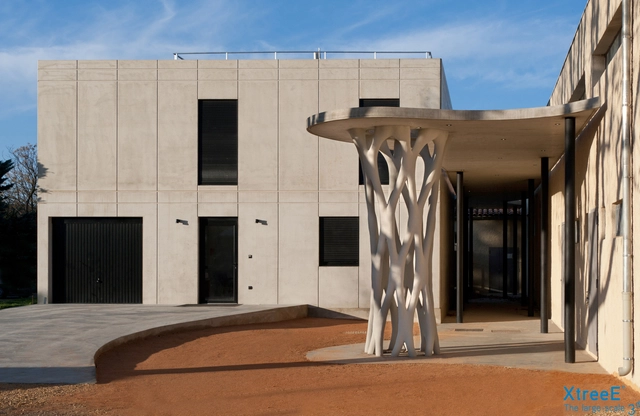
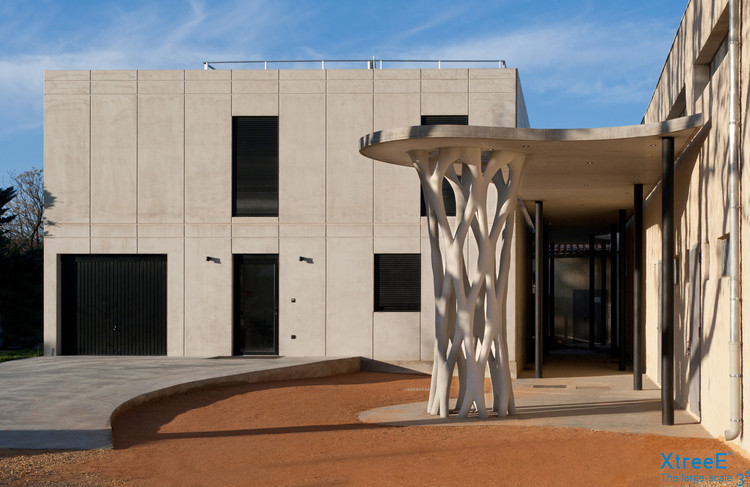
While large-scale 3D printing for architecture continues to be a busy area of research, France-based company XtreeE has been using 3D printed concrete in projects since 2015. Their latest creation is an organic truss-style support structure for a preschool playground in Aix-en-Provence.
This article is part of our 'Innovative Materials' series where we ask architects about the creative process behind choosing the materials they use in their work.
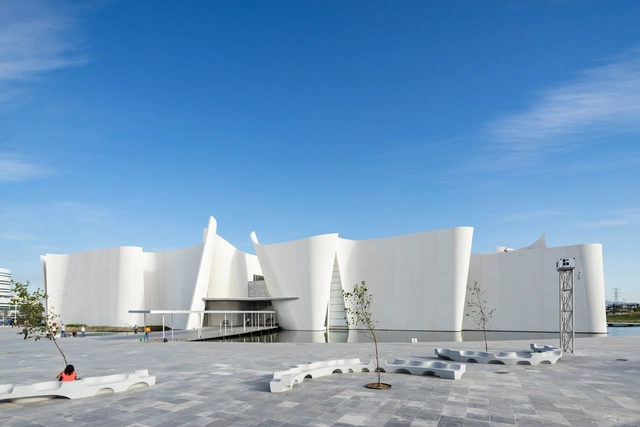
The Museo Internacional del Barroco (International Baroque Museum) by Toyo Ito is located 7km from Puebla, Mexico. The place is noted for its easy access, not only for cars, but also for being connected to a network of bike paths and public transport. In this interview we spoke with Alejandro Bribiesca Ortega and Miriam Carrada.
https://www.archdaily.com/805535/how-architects-realized-the-curving-twisted-slanted-walls-in-toyo-itos-mexican-museumArchDaily Team
The third Colored Concrete Works Award will be presented to modern architects who focus in their work on the beauty and aesthetic quality of this special building material. Previous winners being David Chipperfield and Akihisa Hirata.
Colored concrete is being used increasingly as a premium building material. Numerous buildings are constructed every year around the world that are colored with inorganic pigments. Specialty chemicals company LANXESS will be presenting in the third Colored Concrete Works Award in 2017 to architects who create modern architecture with colored concrete and focus on their work, the beauty and aesthetic quality of this special, natural building material.
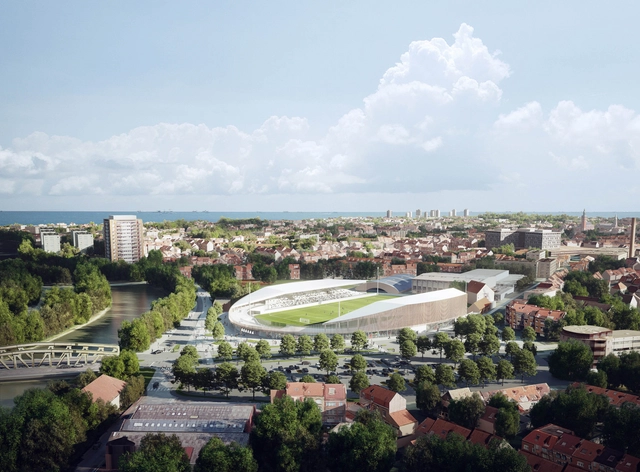
The stadium is located in the heart of Dunkirk. Image Courtesy of Viktor Fretyán
The SOCKEEL + OLGGA consortium have won a competition to design the new Tribut Stadium in Dunkirk, France. The historic stadium, in a prominent location on a canal bank in central Dunkirk, will be transformed into a 5,000 seat stadium seeking to maximize inclusiveness and accessibility.
As the common phrase attests, “history is written by the victors.” We therefore know that the story of the West is that of Europe and the United States, while the other actors in world history are minimized or invisible: it happened to the Chinese and Japanese during World War II, to the Ottoman Empire in sixteenth-century Europe, and to racial majorities in the common reading of Latin American independence. The same thing happens in architecture.
The current boom of the Global South is based not only on new work, but rather on the recognition of an invisible architecture which was apparently not worthy of publication in the journals of the 1990s. The world stage has changed, with the emergence of a humanity that is decentralized yet local; globalized, yet heterogeneous; accelerated, yet unbalanced. There are no longer red and blue countries, but a wide variety of colors, exploding like a Pollock painting.
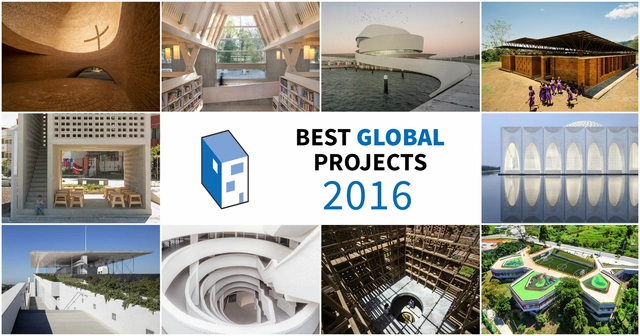
This serves as a preamble to consider the outstanding projects of 2016 according to the British critic Oliver Wainwright, whose map of the world appears to extend from New York in the West to Oslo in the East, with the exception of Birzeit in Palestine. The Global South represents more than 40% of the global economy and already includes most of the world’s megacities, yet has no architecture worthy of recognition? We wanted to highlight the following projects in order to expand the western-centric world view, enabling us to truly comprehend the extent of architectural innovation on a global scale.
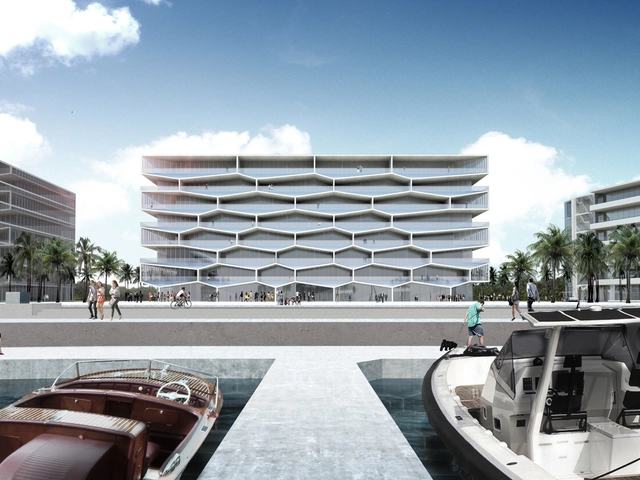
BIG are known for unconventional buildings that often raise the question “how were they able to do that?” Such is the case for BIG’s Honeycomb, a luxury eight-story condominium currently under construction in the Bahamas. The project’s hallmark is its hexagonal façade made up of private balconies, each with its own glass-fronted outdoor pool. The façade was also the project’s greatest engineering challenge, with each balcony (including pool water) weighing between 108,000 and 269,000 pounds (48,000-122,000 kilograms) while cantilevering up to 17.5 feet (5.3 meters) from the structure. Tasked with this challenging brief were DeSimone Consulting Engineers, who previously worked with BIG on The Grove. Read on for more detail on the Honeycomb’s innovative engineering.
Tricorn Shopping Centre, Portsmouth, 1965. Credit: RIBA Library Photographs Collection
Concrete has long been considered particularly harmful to the environment. However, Architect Magazinerecently published an article on Nature Geoscience, which may offer some concrete (pun intended) findings regarding the issue.
As the birthplace of our most recent Pritzker Prize winner, Alejandro Aravena, Santiago, Chile is full of iconic architecture. Because many of these buildings are situated in busy urban areas, their superior design is easy to miss. In an effort to encourage viewers to slow down and appreciate the volume, facades, context, and function of these urban landmarks, Benjamin Oportot and Alexandra Gray of San Sebastian University guided their 4th-year students in producing axonometric drawings of 11 buildings. The project centered on medium-sized office buildings built between 1989 and 2015, particularly focusing on their use of reinforced concrete.
https://www.archdaily.com/799875/11-stunning-axonometric-drawings-of-iconic-chilean-architecturePola Mora
The annual AAP American Architecture Prize, which recognizes outstanding architectural design, interior design, and landscape architecture worldwide, has given URBANLOGIC's Sichuan Arts Factory and Innovation Center a Silver Award in the mixed-use category. The panel of judges included Troy C. Therrien of the Guggenheim Foundation and Museum, Peggy Deamer of Yale University, Ben Van Berkel of UNStudio and Harvard University Graduate School of Design, and Alan Ricks and Michael Murphy, founders of Mass Design Group.
This piece of Brazilian architecture was conceived in 1961 by São Paulo architects João Batista Vilanova Artigas and Carlos Cascaldi. Together with the architectural movement of the Paulista School, they form part of the most important history of São Paulo, because of the large amount of works they constructed there and the recognition of many of them at an international level.
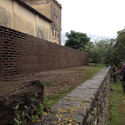
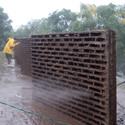
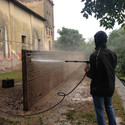
Using concrete and bricks made of raw mud, architects Solanito Benitez, Solano Benitez, Gloria Cabral, Maria Rovea and Ricardo Sargiotti built a wall able to be constructed by the two materials working in tandem. Once the concrete dries, the bricks are washed away, returning the mud back to its natural state, leaving spaces in the lines of concrete, like a kind of negative.
This artistic intervention arose from an invitation to participate in an art exhibition in Unquillo MUVA, Cordoba, Argentina from April 11 to May 3, 2014.
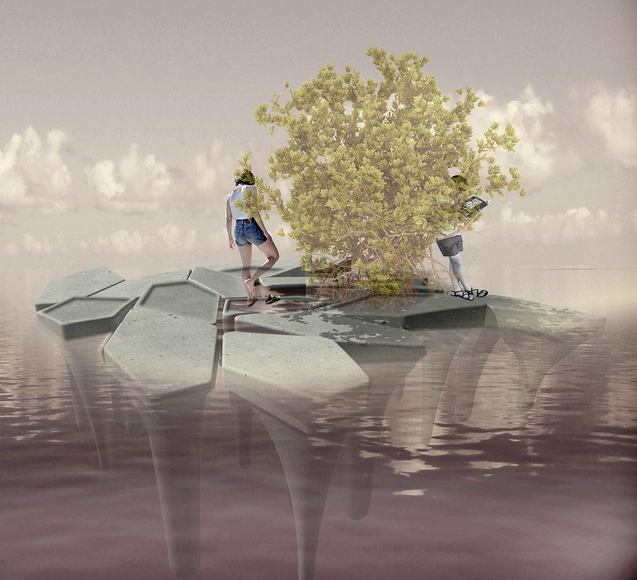
Mangroves are vital for stabilizing shorelines, but their recent depletion presents impending doom for coastal habitats.
Aptum Architecture and CEMEX Research Group might have a solution. Their collaborative project, Rhizolith Island (Isla Rhizolith), is a prototype that explores the potential for floating concrete structures to revitalize deteriorating shorelines. The structure was just installed in Cartagena, Columbia as part of the RC 2016 (Reunion del Concreto), an international Expo and Academic Conference on Concrete.
Update: We've added a video of the process to the article!
This year's Architectural Association (AA) Summer DLAB program culminated in Weave.X, the final working prototype of three-dimensionally interwoven concrete structures. Designed and fabricated by 21 participants from 11 countries in July and August, the prototype explores computational design, geometry rationalization, material behavior, and robotic fabrication as applied to concrete and robotic rod-bending techniques. The result is a network of self-supporting concrete branches that envelop an amorphous enclosure.
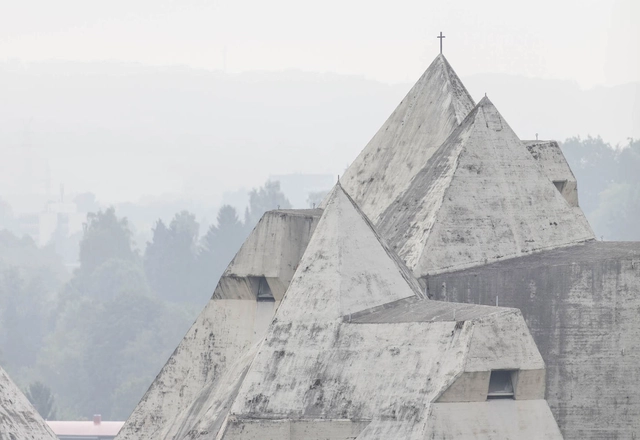
This exclusive photo essay by Laurian Ghinitoiu was originally commissioned for the fifth issue ofLOBBY. Available later this month, the latest issue of the London-based magazine—published in cooperation with the Bartlett School of Architecture—examines the theme of Faith as "a fervent drive, a dangerous doctrine, a beautifully fragile yet enduring construct, an unapologetic excuse, a desperate call for attention and a timely consideration on architectural responsibility."
In 1986 the Pritzker Architecture Prize announced their first German laureate. In a speech at the ceremony in London’s Goldsmiths’ Hall, the Duke of Gloucester suggested that the prize “may not guarantee immorality,” inferring, perhaps, that not even the most prestigious award in architecture could compete with an œuvre so compact, focussed and enduring as that of Gottfried Böhm – a “son, grandson, husband, and father of architects.”
An emerging sector of construction is developing new systems that manage to not only reduce construction times and costs, but also solve the housing problem in Mexico’s most disadvantaged areas. Originating from previously known construction techniques, national companies are venturing into international markets by proposing new models of construction that use fewer materials and have a greater structural strength and greater comfort. They’re also introducing smart materials adaptable to any construction need.
As part of this new industry breakthrough, Juan Manuel Reyes from Armados Omega and architect Jorge Capistrán have developed a new, low-cost construction system which also reduces construction time by 50%. It uses single module blocks and doesn’t require binders, mixtures, or skilled labor.
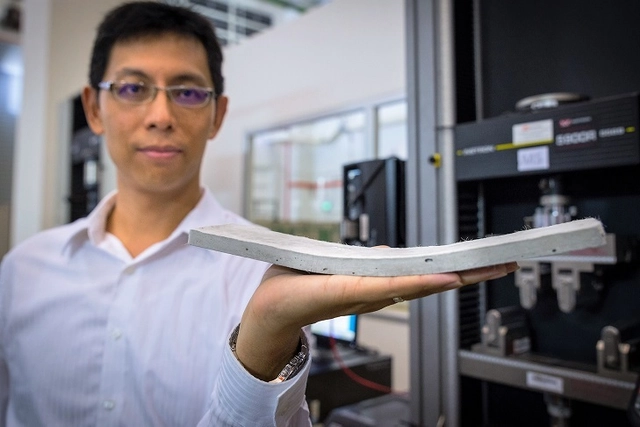
Scientists from Nanyang Technological University (NTU Singapore) have developed a bendable variety of concrete called ConFlexPave, which in addition to its increased flexibility, is both stronger and more durable than traditional concrete. Working at the NTU-JTC Industrial Infrastructure Innovation Centre (I³C), the team created the material by introducing polymer microfibers into the concrete mixture.
The innovation also allows for the production of slim precast pavement slabs, increasing installation speed. It is anticipated to be used in infrastructural projects, halving the amount of time needed for road works and new pavements while also requiring less maintenance.
Bridges and Highways infrastructure development have rapidly escalated in recent years in Asia Pacific, constituting 60% of the global market. Demand is largely driven by the availability of government road building funds, urbanization growth, and the need to replace or repair aging infrastructure. The Engineering and Maintenance components play a vital role in bridges & highways development as they are key to overall safety, project management and delivery of bridge and highway project and on a larger scale, a reflection of the country’s infrastructure plans and reputation.
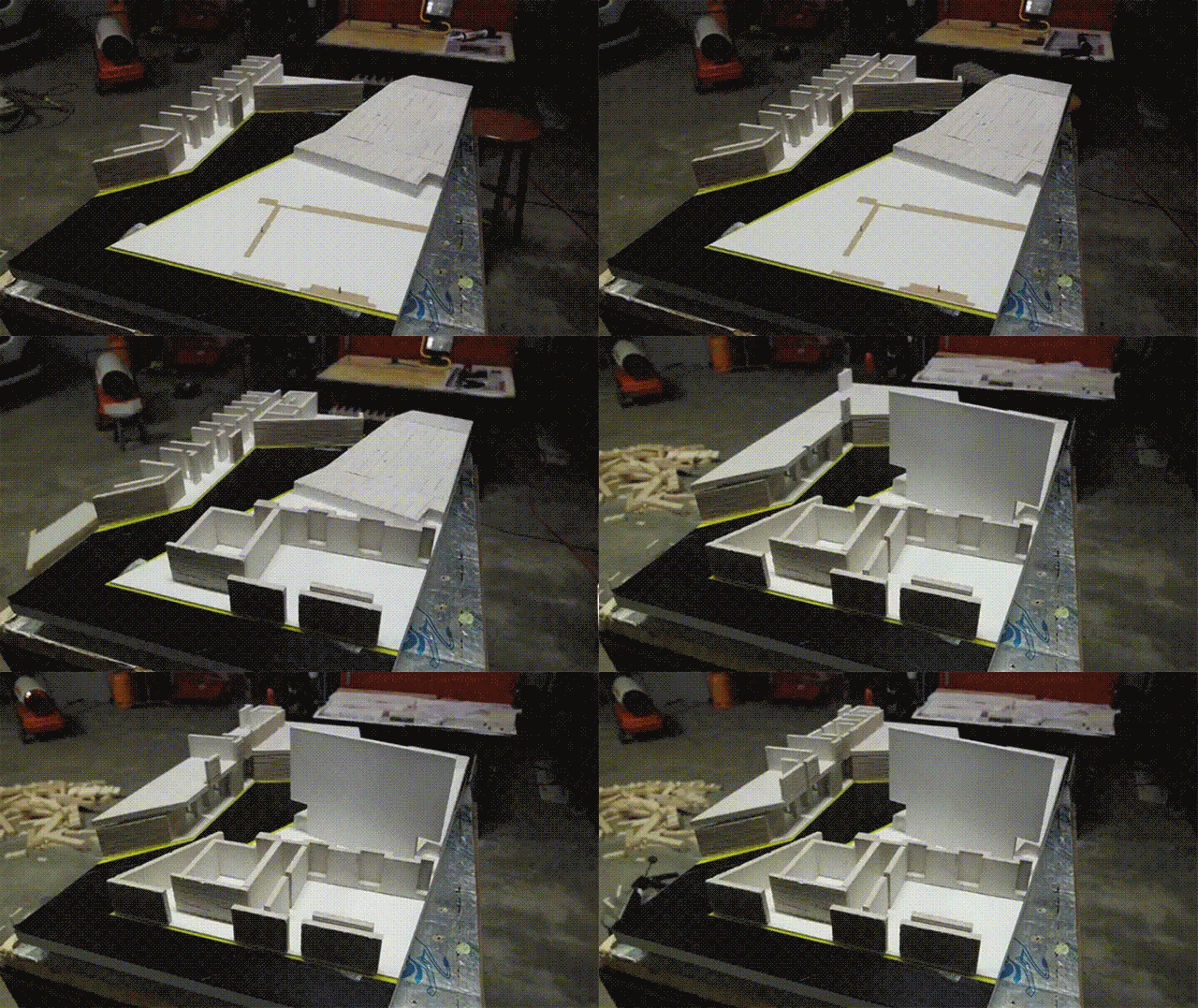
As part of the Danish contribution to the 2016 Venice BiennaleUrban Agency embarked on a challenging feat: the construction a 1:50 concrete model. The firm—based in Dublin, Copenhagen and Lyon—contributed three projects to the "Human Architectures" exhibition at this year's Danish Pavilion.
The video shows the careful, painstaking process of molding, setting and assembling the 150kg model. Urban Agency told ArchDaily,
https://www.archdaily.com/792982/this-is-how-urban-agency-made-a-150kg-concrete-modelAD Editorial Team















.jpg?1474570511 "Courtesy LOBBY Magazine. Image © Laurian Ghinitoiu")
.jpg?1474569951 "Courtesy LOBBY Magazine. Image © Laurian Ghinitoiu")
.jpg?1474569428 "Courtesy LOBBY Magazine. Image © Laurian Ghinitoiu")
.jpg?1474569212 "Courtesy LOBBY Magazine. Image © Laurian Ghinitoiu")