1. ArchDaily
  2. Horenychi

Horenychi: The Latest Architecture and News

Pop Up Box: A Customizable Retail Space in Germany

DITTEL | ARCHITEKTEN GmbH has created Pop Up Box, a convertible retail space located in a shopping center in Stuttgart, Germany. With its cube design, the Box serves as a self-contained, customizable presentation area, where retailers can move three of the four pieces to create his or her own sales space.

Translucent Concrete Animates the Facade of this Abu Dhabi Mosque

By day, the concrete facade of APG Architecture and Planning Group's latest project, the Al Aziz Mosque in Abu Dhabi, features protruding elements of Arabic script spelling out the 99 names of God from the Quran. By night though, the 515 square meter facade is transformed, as the concrete script lights up in the darkness. The effect is made possible thanks to the translucent concrete paneling system provided by German-based manufacturer LUCEM.

Translucent Concrete Animates the Facade of this Abu Dhabi Mosque - Image 1 of 4Translucent Concrete Animates the Facade of this Abu Dhabi Mosque - Image 2 of 4Translucent Concrete Animates the Facade of this Abu Dhabi Mosque - Image 3 of 4Translucent Concrete Animates the Facade of this Abu Dhabi Mosque - Image 4 of 4Translucent Concrete Animates the Facade of this Abu Dhabi Mosque - More Images+ 9

Puddle-Free Parking: New Absorbent Surface Swallows Water Instantly

Perhaps the only material on the architectural market known for its "thirst," ultra-porous concrete is being hailed as the future of urban water runoff management for warm climates. The emerging material reached mainstream popularity in recent weeks thanks to a viral video depicting an apparently ordinary car park absorbing an inordinate amount of water; 1.2 million views later, the video has ignited debate on viability and possible uses for water-absorbent concrete.

Ultra-porous concrete is gaining a foothold thanks to extensive research being conducted by architects and engineers around the world. Known for its rainy climate, daring use of innovative materials and unorthodox architecture, it comes as no surprise that the Dutch city of Rotterdam has embraced water-absorbent concrete for testing.

Puddle-Free Parking: New Absorbent Surface Swallows Water Instantly - Image 1 of 4Puddle-Free Parking: New Absorbent Surface Swallows Water Instantly - Image 2 of 4Puddle-Free Parking: New Absorbent Surface Swallows Water Instantly - Image 3 of 4Puddle-Free Parking: New Absorbent Surface Swallows Water Instantly - Image 4 of 4Puddle-Free Parking: New Absorbent Surface Swallows Water Instantly - More Images+ 5

Salt-Shaped Salt Shed Takes Shape Along Hudson River in New York City

New York City is replacing one of its 40 salt sheds on the Gansevoort Peninsula with a new, origami-like structure by Dattner Architects at Canal St/West St, along the Hudson River. Once completed, the shed will rise almost 70 feet tall and hold over 4,000 tons of salt in its six-foot thick concrete walls. In response to the complaints leveled against the Sanitation Garage across Spring Street from the new salt shed, Dattner Architects deliberately created a monolithic, crystalline form to contrast the scrim-like façade of its neighbour.

aarhus arkitekterne Designs Revolutionary Proton Therapy Center for Denmark

Danish practice aarhus arkitekterne has won a competition to design the new Proton Therapy Centre for advanced cancer treatment in Aarhus, Denmark. As “the most advanced radiation center to date and the only one of its kind in Denmark,” as well as one of only a few in the world, the Centre will undoubtedly become a pioneer in cancer treatment.

Designed from the inside out, the building’s façades are meant to convey the function of the interior, “and tell the story of precision, which is they key component of proton therapy as a form of treatment,” according to the architects. Thus, the atrium of the building becomes central to its orientation, providing not only an axis, but also a source of natural lighting.

Watershed Materials Hopes to Make Cement-Free Concrete Blocks a Reality

Concrete blocks. Ever since manufacturers developed techniques to make them cheaper than traditional clay-fired bricks, concrete blocks have been one of our most ubiquitous construction materials. However, this ubiquity comes at a price: worldwide, the production of concrete accounts for around 5% of all man-made carbon dioxide emissions, and concrete blocks (as opposed to in-situ concrete or concrete panels) contributes a significant portion of these emissions.
To curb these runaway carbon emissions, a California-based company called Watershed Materials is developing alternatives to the traditional concrete block which uses less cement, dramatically reducing the amount of carbon dioxide produced; they even have a product in the works which they hope will offer a widely applicable concrete block alternative which uses no cement at all.

Watershed Materials Hopes to Make Cement-Free Concrete Blocks a Reality - Image 1 of 4Watershed Materials Hopes to Make Cement-Free Concrete Blocks a Reality - Image 2 of 4Watershed Materials Hopes to Make Cement-Free Concrete Blocks a Reality - Image 3 of 4Watershed Materials Hopes to Make Cement-Free Concrete Blocks a Reality - Image 4 of 4Watershed Materials Hopes to Make Cement-Free Concrete Blocks a Reality - More Images+ 8

Images Emerge of Souto de Moura's First US Project

Images of Souto Moura Arquitectos' first US project has emerged. Aimed to replace a former gas station at 2715 Pennsylvanian Avenue NW in Washington DC, the five-story red brick and concrete building will feature a ground floor restaurant and eight 2,000-square-foot apartment units with balconies, a gym and penthouse terrace.

As BizJournals reports, the proposal is being pitched by EastBanc Inc. as the new "entrance to Georgetown." The Portuguese architect chose red brick "because it seems to be the most appropriate for this part of the city."

Exhibition: NORIHIKO DAN Symbiotic Thoughts of Architecture

A concrete tree trunk growing in the middle of a commercial street in Tokyo, an airport terminal that looks almost like a bird’s wing, a skyscraper facade that seems to move like ocean waves, a visitors’ center perfectly integrated into the landscape of Taiwan’s largest lake – nature is everpresent in Japanese architect Norihiko Dan’s buildings. His architecture never stands alone, for Dan always seeks symbiosis; this appears in his combination of geometric-archetypical with organic forms, in his urban planning projects, which bring submerged historic and cultural identities back to light, as well as in the ecological orientation of his buildings. With dramatic contrasts in architectural language and choice of materials Norihiko Dan insistently calls for a relationship between human beings and their surroundings.

Concrete: A Cultural History

Concrete polarizes opinion. Used almost universally in modern construction today, it is a material capable of provoking intense loathing as well as stirring passions. Its development can be traced as far back as Roman times. However, it was in the twentieth century that its full capabilities became realised. Over the past 100 years architects and engineers have seized upon the possibilities of concrete enthusiastically. Its widespread use in almost all building types we experience has given it a significance and meaning that has - for better or worse - leapt beyond buildings into politics, film, literature and art.

How "Heroic: Concrete Architecture and the New Boston" Hopes to Reclaim America's Concrete Heritage

Subscriber Access | 
How "Heroic: Concrete Architecture and the New Boston" Hopes to Reclaim America's Concrete Heritage - Image 5 of 4
Paul Rudolph, Government Service Center (1962-71). Image © Mark Pasnik

In 2007, when the late Mayor Thomas Menino announced his intentions to demolish Kallmann, McKinnell and Knowles' iconic Boston City Hall, he gave voice to a tragic but all-too-common popular discomfort with midcentury concrete architecture. Concerned that this threat was only the latest symptom of a pervasive misunderstanding of the significance of the concrete tradition, three architects - Mark Pasnik, Chris Grimley, and Michael Kubo - joined forces shortly thereafter to launch "The Heroic Project" and share their appreciation for this unfairly maligned chapter of architectural history. In addition to creating an internet web archive, Pasnik, Grimley, and Kubo jointly authored a forthcoming historical survey, Heroic: Concrete Architecture and the New Boston, scheduled to be released by The Monacelli Press in October 2015, which recasts the cultural and political story behind America's concrete heritage.

How "Heroic: Concrete Architecture and the New Boston" Hopes to Reclaim America's Concrete Heritage - Image 1 of 4How "Heroic: Concrete Architecture and the New Boston" Hopes to Reclaim America's Concrete Heritage - Image 2 of 4How "Heroic: Concrete Architecture and the New Boston" Hopes to Reclaim America's Concrete Heritage - Image 5 of 4How "Heroic: Concrete Architecture and the New Boston" Hopes to Reclaim America's Concrete Heritage - Image 3 of 4How Heroic: Concrete Architecture and the New Boston Hopes to Reclaim America's Concrete Heritage - More Images+ 7

99 Dom-Ino: How Le Corbusier Redefined Domestic Italian Architecture

Last year, for the centennial of the publication of Le Corbusier's design for the Maison Dom-Ino, Space Caviar traveled the length of the Italian peninsular in pursuit of ninety-nine reinforced concrete houses. Along the way they created ninety-nine short films. Their research, a survey of Italian domesticity and its relationship to the surrounding landscape over the past century, demonstrated that "few inventions have been as transformative of Italy as the concrete frame": simultaneously a symbol of wealth "generated by a building industry that rebuilt Italy from the rubble of the Second World War" and "the primary instrument of abusivismo," or the unregulated construction on the landscape. It is, as the team describe it, "the ultimate symbol of the architect’s extraordinary power — and enduring helplessness."

99 Dom-Ino: How Le Corbusier Redefined Domestic Italian Architecture - Image 1 of 499 Dom-Ino: How Le Corbusier Redefined Domestic Italian Architecture - Image 2 of 499 Dom-Ino: How Le Corbusier Redefined Domestic Italian Architecture - Image 3 of 499 Dom-Ino: How Le Corbusier Redefined Domestic Italian Architecture - Image 4 of 499 Dom-Ino: How Le Corbusier Redefined Domestic Italian Architecture - More Images+ 9

Matter Design's "Helix" Stair Takes Concrete to the Next Level

Exhibited at the BSA Space as part of the Boston Design Biennial in 2013, Matter Design's Helix is a concrete spiral staircase that is full of surprises. Chief among these is its size - the stair was built at half-size to address the practical issues of weight, liability and access - but more important are the details of its assembly. While the steps of most spiral staircases are supported from either the stair's perimeter or a central column, Helix transfers loads directly through the steps below to its base which, rather than resting on the floor as it appears, is in fact suspended from a beam in the ceiling.

 Matter Design's "Helix" Stair Takes Concrete to the Next Level - Image 1 of 4 Matter Design's "Helix" Stair Takes Concrete to the Next Level - Image 2 of 4 Matter Design's "Helix" Stair Takes Concrete to the Next Level - Image 6 of 4 Matter Design's "Helix" Stair Takes Concrete to the Next Level - Image 3 of 4 Matter Design's Helix Stair Takes Concrete to the Next Level - More Images+ 12

Material Minds: The Possibilities Of Ultra High Performance Concrete

Subscriber Access | 

Since the beginning of the Modernist era a century ago, concrete has been appreciated by architects for its strength, versatility and sculptural potential. For many countries, concrete played a key role in their recovery from the Second World War, and in their continued modernization during the second half of the 20th century. But in recent years - while it is still as widely-used as ever - concrete has fallen on something of an image problem, with criticisms of its environmental impact and its aesthetic appearance becoming commonplace.

That hasn't stopped some companies continuing to innovate with concrete. Among these companies is TAKTL, a facade panel designer and manufacturer that works exclusively with Ultra High Performance Concrete (UHPC). To find out what UHPC can offer to architecture, ArchDaily spoke to TAKTL about the potential of this material, and the future of concrete construction.

Material Minds: The Possibilities Of Ultra High Performance Concrete - Image 7 of 4

How to Build Your Own Furniture Using LEGOs for the Formwork

Subscriber Access | 

Since its creation in the first half of the 20th century, the LEGO brick has come to be used for much more than its original purpose as a children’s toy.

We’ve seen LEGOs used to create replicas of classic architecture, urban interventions, virtual games and even an entire house. Now, a new video highlights the bricks’ potential as a formwork for creating furniture. The bricks' ability to be easily assembled and disassembled makes for an efficient and easy-to-create formwork, which when filled with concrete and left to set creates these incredible, textured nesting tables.

Watch the video above for a tutorial on making the tables -- does anyone dare try it themselves? 

Buddy’s House / Sergey Makhno

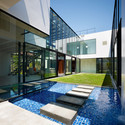
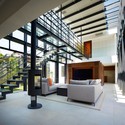
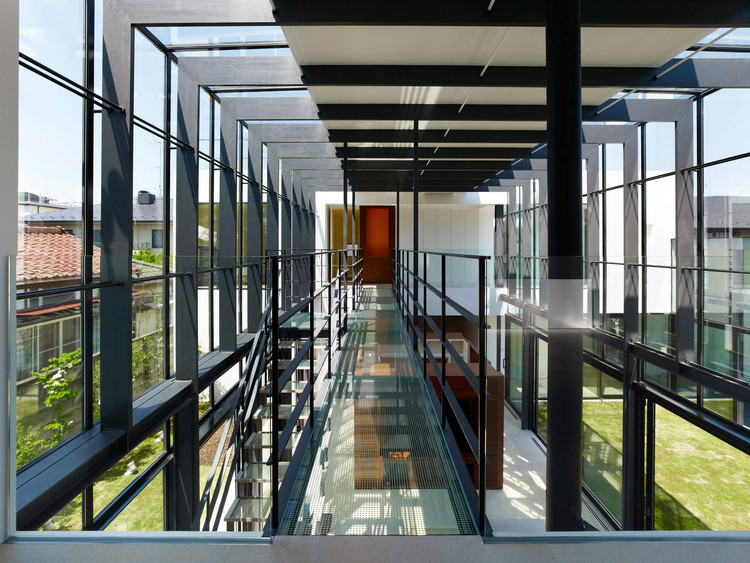
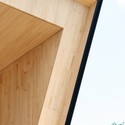
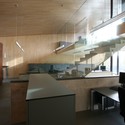
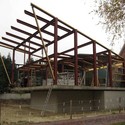
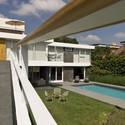
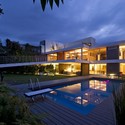
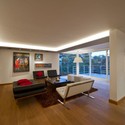
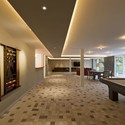
Buddy’s House / Sergey Makhno - Houses, Facade, DoorBuddy’s House / Sergey Makhno - Houses, Beam, Table, Lighting, ChairBuddy’s House / Sergey Makhno - Houses, Bedroom, Door, BedBuddy’s House / Sergey Makhno - Houses, FacadeBuddy’s House / Sergey Makhno - More Images+ 17

Horenychi, Ukraine
  • Architects: Sergey Makhno Architects
  • Area Area of this architecture project Area:  235
  • Year Completion year of this architecture project Year:  2014

Images Released of Tadao Ando's First NYC Building

Tadao Ando has unveiled his first New York building. An “ultra-luxury” condominium project known as 152 Elizabeth Street, the 32,000-square-foot building will replace an existing parking lot with a concrete structure comprised of seven residences - all of which will be “treated as custom homes” and “individually configured.”

“Part concrete, part jewel box, the building makes a strong yet quiet statement with a façade comprised of voluminous glass, galvanized steel and flanked by poured in-place concrete and a living green wall that rises the height of the building,” says the architects. The green wall, measuring 55-feet-high and 99-feet-wide and spanning the entire southern façade, is expected to be one of the largest in New York and will be designed by landscaping firm M. Paul Friedberg and Partners.

"Weight, Pride and Creativity" in Daniel Elis Karlsson and Pauline Algeröd's "Bärande Möte"

In the the former shipbuilding city of Gothenburg on Sweden's west coast stands Daniel Ellis Karlsson and Pauine Algeröd's "Bärande Möte," a glass and concrete wind shelter and pavilion.

Concrete beams are suspended in midair by load-bearing glass walls, inverting the traditional structural hierarchy between the two materials and allowing uninterrupted river views. Read more about the project and view selected images after the break.

AA DLAB 2014: The Natural and Digital Worlds Combine With Root-Like "CALLIPOD" Pavilion

Created for AA DLAB 2014 - the annual summer workshop undertaken by the Architectural Association at their Hooke Park facility - the 4.4 metre wide "CALLIPOD" pavilion blends perfectly into the wooded surroundings, appearing as though the roots of nearby trees have sprung from the ground to create a dome in the depths of the Dorset woodland. However, despite its natural outward appearance, the process of creating CALLIPOD was highly technical, combining a detailed algorithmic exploration of form and structure with both digital and traditional methods of fabrication.

AA DLAB 2014: The Natural and Digital Worlds Combine With Root-Like "CALLIPOD" Pavilion - Image 1 of 4AA DLAB 2014: The Natural and Digital Worlds Combine With Root-Like "CALLIPOD" Pavilion - Image 2 of 4AA DLAB 2014: The Natural and Digital Worlds Combine With Root-Like "CALLIPOD" Pavilion - Image 3 of 4AA DLAB 2014: The Natural and Digital Worlds Combine With Root-Like "CALLIPOD" Pavilion - Image 4 of 4AA DLAB 2014: The Natural and Digital Worlds Combine With Root-Like CALLIPOD Pavilion - More Images+ 11