Bunker 599, one of 700 secret bunkers that were used to weaponize artificial hydrology in during the 19th century (see: New Dutch Waterline), recently underwent a radical transformation. RAAAF [Rietveld Architecture-Art-Affordances], in collaboration with Atelier de Lyon, sliced through the seemingly indestructible bunker to link visitors to an existing network of footpaths, create a publicly accessible attraction to those revisiting the NDW, and form a dramatic connection with the flooded plains that were altered more than 200 years ago.
The video above takes you through the process of altering the concrete monolith, ending with film of the stunning result that has been attracting thousands of daily visitors since its completion. To learn more about the project, follow this link.
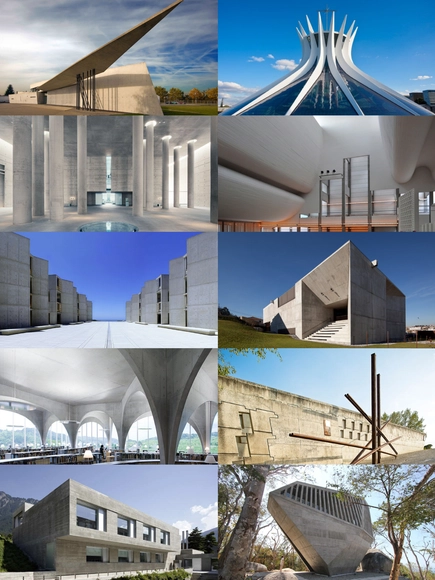
To celebrate the launch of ArchDaily Materials, our new product catalog, we've rounded up 10 awesome projects from around the world that were inspired by one material: concrete. Check out the projects after the break...
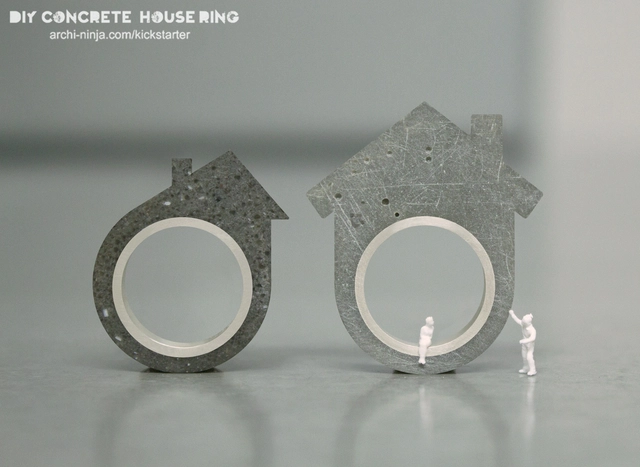
Dream of one day making your own home? Well, here's a fun mini alternative in the meantime. The "DIY Concrete House Ring" is a high quality silver and concrete ring that lets users experience the process of 'making'. The ring itself is made from a DIY compact kit, and comes in two familiar architectural silhouettes - gable roof or saltbox roof - and in either light or dark concrete. The project was developed by Linda Bennett, author of "10 Things They Don’t Teach You in Architecture School" and "Searching for a Job in Architecture? 10 Things You Need to Know…" via her blog, archi-ninja. Check out the project's debut on kickstarter (which offers fantastic perks for backers) for more information.
https://www.archdaily.com/448877/a-diy-concrete-house-travel-sizedKatherine Allen
The New York Times has published “A Short History of the Highrise” - an interactive documentary that explores the 2,500-year global history of vertical living and issues of social equality in an increasingly urbanized world. Organized in four short films - “Mud,” “Concrete,” “Glass,” and “Home” - viewers are given the option to "dig deeper" into each subject and explore additional archival material while viewing the film. Check out the film here.
Imagine a pervious asphalt that not only significantly reduces noise pollution, but saves millions in maintenance and repairs by its ability to self-heal. Well, this type of super-asphalt is not far from being distributed world-wide as experimental micromechanic pioneer Erik Schlangen of Delft Technical University has been studying the material’s potential on a test track in The Netherland’s for the past few years.
Basically, with the introduction of small steel wool fibers, Self Healing Asphaltis capable of repairing micro-cracks and significantly extending the service life of roadways through induction heating. Similarly, Schlangen is leading the research on Self Healing Concrete, where by infusing concrete with a harmless limestone-producing bacteria that feeds off of calcium lactate - a component of milk - the material has the potential to self-heal micro-cracks in the presence of rainwater.
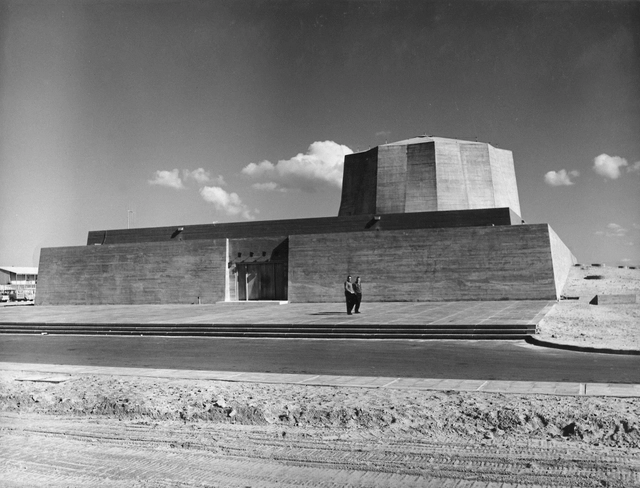
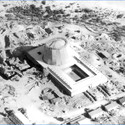
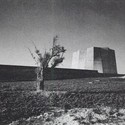
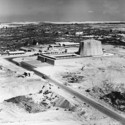
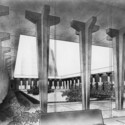
Philip Johnson and Gideon Ziv, Sorek Nuclear Research Center, Israel, 1956-9 (from: Zvi Efrat, The Israeli Project: Building and Architecture 1948-1973)
American architect and Prizker Prize winner Philip Johnson - who would have turned 107 today - is well known for his contributions to 20th century architecture, from the modernist Glass House in 1949 to his later infamous post modernist AT&T building in 1984. But did you know that Johnson designed a brutalistic nuclear plant in Israel? More on this monolithic concrete structure after the break...
Designed for the artwork of artist Rei Naito, the Teshima Art Museum is a seamless, earthen form of white concrete in which responds to the rolling landscape of an island located in the Inland Sea of Japan. Architect Ryue Nishizawa created the museum to be an open gallery, exposed to the elements, that is shaped by a 25cm thick concrete shell in which spans up to 60 meters.
Video courtesy of JA+U. More images after the break...
Scheduled to be the tallest tower in China and the second tallest building in the world by 2015, Kohn Pedersen Fox’s 660-meter-high Ping’an International Finance Center has received a major unexpected set back. Following an industrywide inspection conducted last week, Shenzhen government officials have discovered that a low-quality sea sand has been used by developers to create substandard concrete for KPF’s supertall skyscraper and at least 15 other buildings under construction.
The future of design requires thinking innovatively about the way current construction techniques function so we may expand upon their capabilities. Sustainability has evolved far beyond being a trend and has become an indelible part of this design process. Sustainable solutions have always pushed against the status quo of design and now the Structural Technology Group of UniversitatPolitècnicadeCatalunya – BarcelonaTech (UPC) has developed a concrete that sustains and encourages the growth of a multitude of biological organisms on its surface.
We have seen renditions of the vertical garden and vegetated facades, but what sets the biological concrete apart from these other systems is that it is an integral part of the structure. According to an article in Science Daily, the system is composed of three layers on top of the structural elements that together provide ecological, thermal and aesthetic advantages for the building.
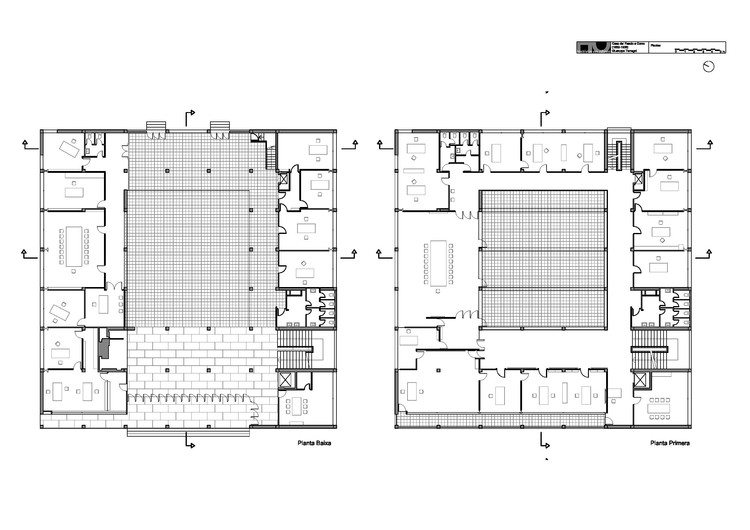
Casa del Fascio which sits in front of Como Cathedral is the work of the Italian Fascist architect Giuseppe Terragni. Built as the headquarters of the local Fascist Party, it was renamed Casa del Popolo after the war and has since served a number of civic agencies, including a Caribinieri station and a tax office.
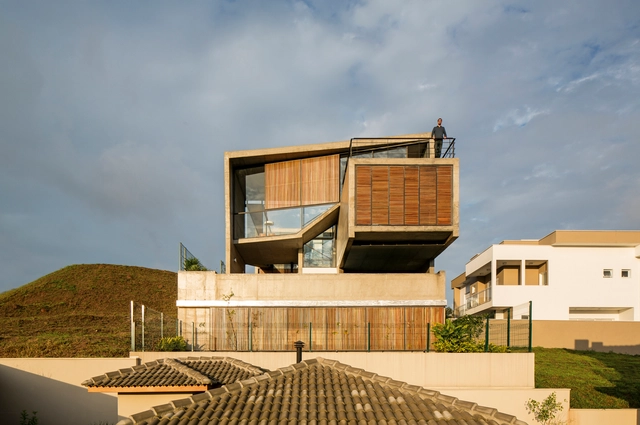
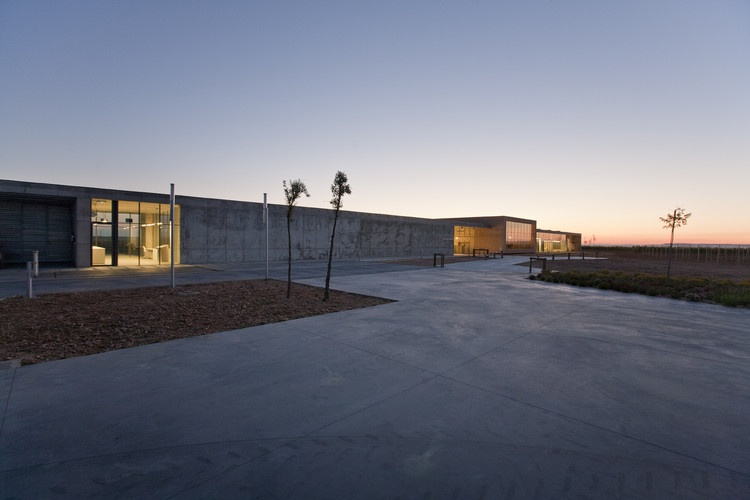
Architects: MUDAARQUITECTURA Location: Malpartida de Plasencia, Cáceres, Spain Design Team: Pablo Rey Medrano, Federico Rodriguez Cerro, Mª José Selgas Cáceres, Jorge E. Ramos Jular Technical Architect: Miguel Ángel Tierno de Dios Client: Dirección General de la Policía y la Guardia Civil Area: 2,946.65 sqm Project Year: 2011 Photography: Juan Carlos Quindós