Chilean Architecture

Capital Santiago

Language Spanish

Area 756,096.3 km2

Population 18,006,407

Chile's architecture ranges from a traditional colonial aesthetic to contemporary modern architecture as it traverses the variety of landscapes that make up the South American country. Chilean architecture and chilean architects have continued to define their place in contemporary architecture, with firms such as Alejandro Aravena and Pezo von Ellrichshausen garnering global attention and awards. This list of projects, news, and interviews delves into the intersections of geographies and styles that make up the chilean architectural identity.
  1. ArchDaily
  2. Countries
  3. Chile

Latest projects in Chile

Latest news in Chile

Designing in Harmony with Nature: Architecture in Urban Wetlands and the Pursuit of Territorial Well-Being

Subscriber Access | 

What does it mean to design while considering the rhythms and cycles of nature? What social relationships and connections with the natural environment can cities foster today and in the future? In the face of a triple environmental crisis driven by climate change, biodiversity loss, and pollution, along with zoonotic pandemics, increasing mental and emotional health issues, and digital hyperconnectivity, Fundación Cosmos proposes to explore learnings, experiences, and tools aimed at connecting people with their territories. Through nature-based urban planning, the intervention in urban wetlands presents an opportunity to enhance, learn from, and conserve natural and cultural heritage in pursuit of a sustainable and resilient future.
The Chilean Architecture Biennial Revives a Church Ruin as a Temporary Pavilion

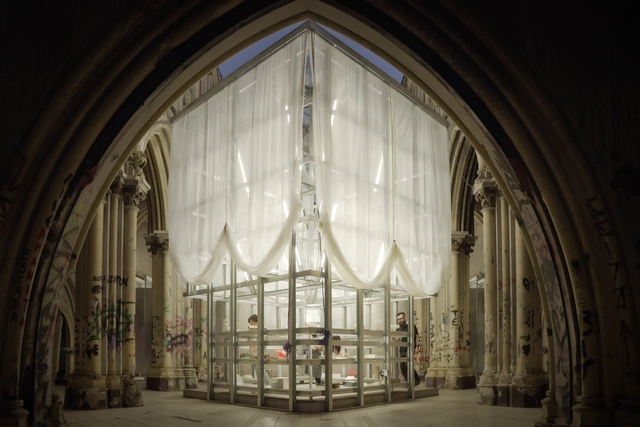
Between September 25 and October 5, 2025, the XXIII Chilean Architecture and Urbanism Biennial took place in Santiago. Under the title "DOUBLE EXPOSURE: (re)program · (re)adapt · (re)construct," the event was organized around the idea of "understanding architecture not as the production of the new, but as the ability to reactivate what already exists." Based on this premise, the curatorial team, composed of Ángela Carvajal and Sebastián López (Anagramma Arquitectes) together with Óscar Aceves, conceived a circuit of eight venues located in downtown Santiago. Their goal was to revive and reclaim urban spaces through a series of free public activities that drew around 70,000 visitors. Among the reactivated sites, the ruins of the San Francisco de Borja Church stood out. Burned during the social outburst of October 2019, the site hosted a temporary pavilion that served as a venue for talks, readings, art installations, discussions, and community events.

Highlights from BAL 2025: Latin American Architecture Biennial

Subscriber Access | 

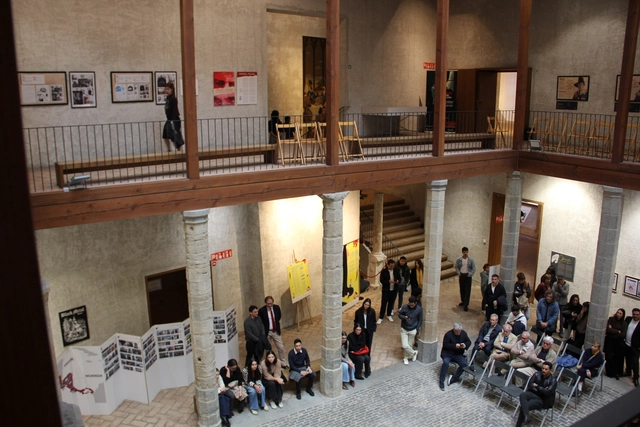
Held in Pamplona from the 23rd to the 26th of September, the 2025 Latin American Architecture Biennial (BAL) brought together emerging studios and established voices from across the continent. This year’s edition stood out for the diversity and depth of its participants: projects of striking formal and conceptual richness, developed by young yet remarkably mature offices. Together, they reflected the vitality of today’s Latin American architecture — thoughtful, inventive, and deeply aware of its context.

Designing with Vaults: 10 Residential Projects that Maximize Light and Volume

Subscriber Access | 

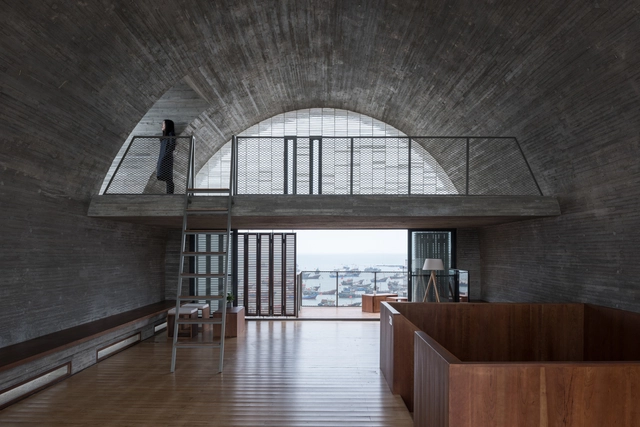
The term vault in architecture refers to a self-supporting arched structure that forms a ceiling or roof, which can effectively create a wide, column-free space. While traditional masonry vaults transfer loads to walls and buttresses, contemporary versions are more broadly defined as any ceiling that follows the roofline, creating a high, curved interior. These modern ceilings are typically framed using materials like concrete, timber, or steel, which provide the structural flexibility to create the dramatic effect of a vault without its historical constraints. The round arch vault, in particular, seems to have been a recently favored form for its simple, elegant geometry and its ability to adapt to a variety of modern residential styles.

Reflecting on Territory, Topography, and Landscape: Discover WHALE!’s Projects in Chile

Subscriber Access | 

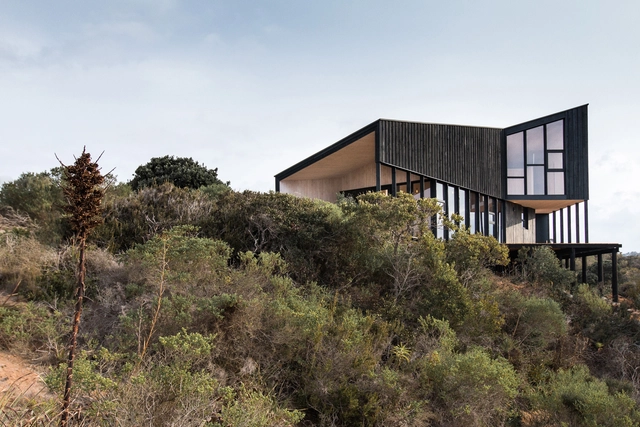
What logics and dynamics are involved in conceiving an architecture in dialogue with the territory and the landscape? How does topography determine the design and development process of architectural projects? Founded in Santiago, Chile, around 2012, the architecture firm WHALE! works with the concepts of territory and landscape as key axes of study and reflection in the pursuit of understanding how architecture is not only capable of designing spaces, but also of shaping the way human beings live, feel, and relate to the world.

Rural Lab: Latin America's Countryside as a Space for Experimentation

What if the future of architecture lies not in the cities, but beyond them? For decades, urbanization has dominated both discourse and statistics. We are constantly bombarded with data confirming the prevalence of urban life, but we rarely ask the opposite question: what did those who moved to the cities leave behind? What remains alive and evolving far from urban centers?

Salt as a Building Material: Rethinking the Life of Minerals and Waste in Architecture with Mále Uribe

In response to today's environmental, political, economic, and social challenges, material experimentation in architecture invites us to recognize the importance of researching and analyzing the properties of construction elements, and to understand the role of spatial design and its immediate surroundings. While various textiles, plastics, and even waste from different sources are being recycled and given a new life, the debate around the use of salt as a building material encourages the development of more sustainable practices to reduce the industry’s impact on the environment, as well as to explore the renewed life of discarded minerals and mining waste for implementation in architecture.

Learning Circles: 12 Educational Projects with Elliptical Plans

Subscriber Access | 

Creating an educational setting is a specific and sensitive task. Merging children's safety and learning optimization requirements with an aesthetic appeal and solid concept can birth some of the most beautiful, unique projects around. One common configuration is the elliptical or circular school. A circular, more specifically ringlike educational setting can suggest a sense of protectiveness and safety with the construction of the embracing surrounding membrane. It is also a practical setup that envelopes multiple functions while linking them, consequently allowing interactive instances through the central courtyard.

10 Pavilion Highlights from the London Design Biennale 2025

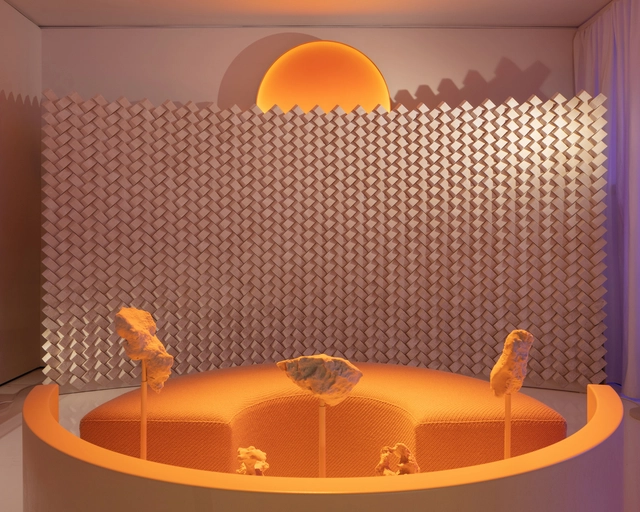
The fifth edition of the London Design Biennale is taking place at Somerset House from 5 to 29 June 2025. The theme of this year's edition is "Surface Reflections," an invitation to explore "the dynamic interplay between internal experience and external influence." The curatorial proposal, set by British artist and designer Samuel Ross, encourages a focus on the underlying layers of the objects, systems, and spaces that shape our daily lives. The Biennale exhibition is a journey through 35 pavilions by countries, institutional design teams, and curators, presenting soundscapes, immersive experiences, and performances, as well as sculptural and evocative objects. To confront contemporary global challenges, topics include identity, memory, innovation, technology, craftsmanship, ecology, and belonging.

UMWELT and Plan Común to Transform Partially Demolished Housing Block Into a Museum in Villa San Luis, Chile

The residential project Villa San Luis, originally named Villa Compañero Ministro Carlos Cortés, was built between 1971 and 1972 on land that today lies in one of the highest-income areas of Santiago, Chile. Initially designed as an urban center for 60,000 middle-income residents, with staggered buildings and a civic center covering 3.4 of its 50 hectares, the project was redefined in the 1970s to accommodate the unhoused population in the eastern sector of the Chilean capital. The process was not without conflict. During the dictatorship, the new residents of the complex were evicted, and the land was acquired by the military. From then on, the complex entered a process of reappropriation and resignification that now appears to be reaching a new milestone: the conversion of one of its buildings into a memorial site and museum, through a project by UMWELT and Plan Común.