1. ArchDaily
  2. Chilean Architecture

Chilean Architecture: The Latest Architecture and News

The Chilean Architecture Biennial Revives a Church Ruin as a Temporary Pavilion

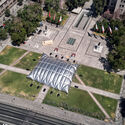
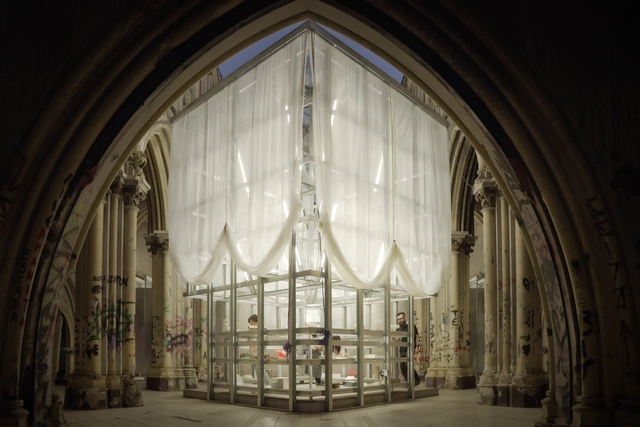
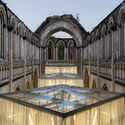
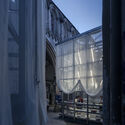
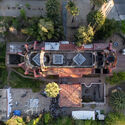
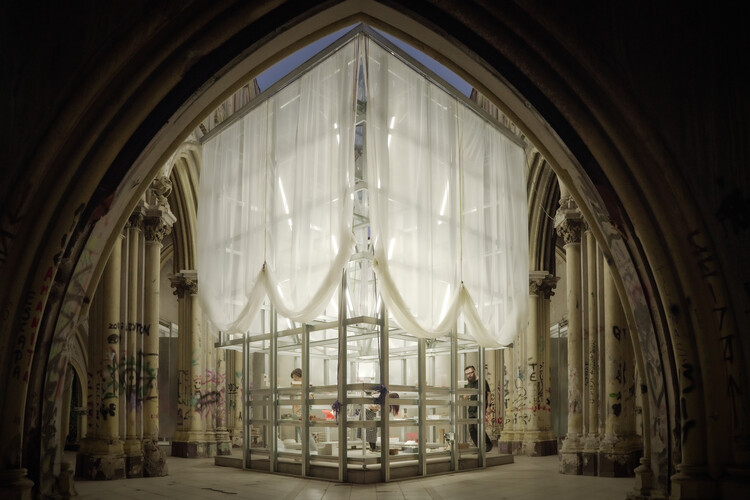
Between September 25 and October 5, 2025, the XXIII Chilean Architecture and Urbanism Biennial took place in Santiago. Under the title "DOUBLE EXPOSURE: (re)program · (re)adapt · (re)construct," the event was organized around the idea of "understanding architecture not as the production of the new, but as the ability to reactivate what already exists." Based on this premise, the curatorial team, composed of Ángela Carvajal and Sebastián López (Anagramma Arquitectes) together with Óscar Aceves, conceived a circuit of eight venues located in downtown Santiago. Their goal was to revive and reclaim urban spaces through a series of free public activities that drew around 70,000 visitors. Among the reactivated sites, the ruins of the San Francisco de Borja Church stood out. Burned during the social outburst of October 2019, the site hosted a temporary pavilion that served as a venue for talks, readings, art installations, discussions, and community events.

The Chilean Architecture Biennial Revives a Church Ruin as a Temporary Pavilion - Imagen 1 de 4The Chilean Architecture Biennial Revives a Church Ruin as a Temporary Pavilion - Imagen 2 de 4The Chilean Architecture Biennial Revives a Church Ruin as a Temporary Pavilion - Imagen 3 de 4The Chilean Architecture Biennial Revives a Church Ruin as a Temporary Pavilion - Imagen 4 de 4The Chilean Architecture Biennial Revives a Church Ruin as a Temporary Pavilion - More Images+ 17

UMWELT and Plan Común to Transform Partially Demolished Housing Block Into a Museum in Villa San Luis, Chile

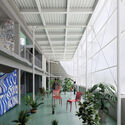
The residential project Villa San Luis, originally named Villa Compañero Ministro Carlos Cortés, was built between 1971 and 1972 on land that today lies in one of the highest-income areas of Santiago, Chile. Initially designed as an urban center for 60,000 middle-income residents, with staggered buildings and a civic center covering 3.4 of its 50 hectares, the project was redefined in the 1970s to accommodate the unhoused population in the eastern sector of the Chilean capital. The process was not without conflict. During the dictatorship, the new residents of the complex were evicted, and the land was acquired by the military. From then on, the complex entered a process of reappropriation and resignification that now appears to be reaching a new milestone: the conversion of one of its buildings into a memorial site and museum, through a project by UMWELT and Plan Común.

UMWELT and Plan Común to Transform Partially Demolished Housing Block Into a Museum in Villa San Luis, Chile - Imagem 1 de 4UMWELT and Plan Común to Transform Partially Demolished Housing Block Into a Museum in Villa San Luis, Chile - Imagem 2 de 4UMWELT and Plan Común to Transform Partially Demolished Housing Block Into a Museum in Villa San Luis, Chile - Imagem 3 de 4UMWELT and Plan Común to Transform Partially Demolished Housing Block Into a Museum in Villa San Luis, Chile - Imagem 4 de 4UMWELT and Plan Común to Transform Partially Demolished Housing Block Into a Museum in Villa San Luis, Chile - More Images+ 5

'Reflective Intelligences': Chile’s Pavilion at the Venice Biennale Explores the Political Significance of the Roundtable on Architecture and Its Relationship with AI

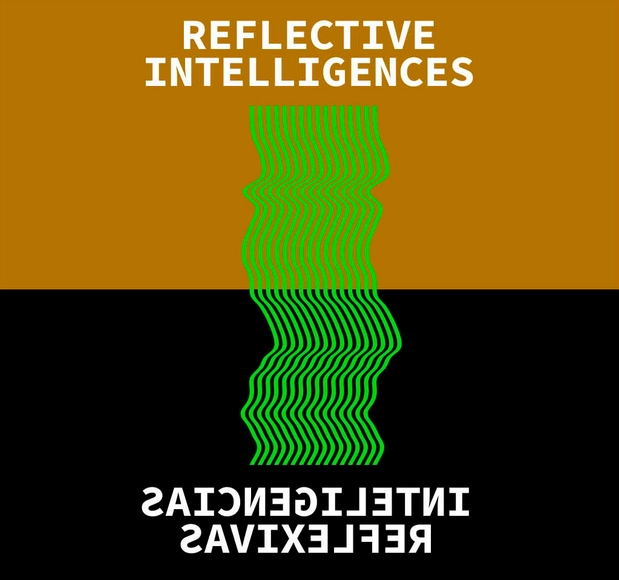
Out of 45 participating submissions for Chile's Pavilion at the 2025 Venice Architecture Biennale, the winning proposal has been recently announced. 'Reflective Intelligences,' the curatorial project by Serena Dambrosio, architect, researcher, and lecturer at Universidad Diego Portales; Nicolás Díaz Bejarano, architect, researcher, lecturer, and PhD candidate in Architecture and Urban Studies at Pontificia Universidad Católica de Chile; and Linda Schilling Cuellar, architect, urban designer,educator and doctoral candidate at the Centre for Research Architecture at Goldsmiths University.

'Reflective Intelligences': Chile’s Pavilion at the Venice Biennale Explores the Political Significance of the Roundtable on Architecture and Its Relationship with AI - Image 1 of 4'Reflective Intelligences': Chile’s Pavilion at the Venice Biennale Explores the Political Significance of the Roundtable on Architecture and Its Relationship with AI - Image 2 of 4'Reflective Intelligences': Chile’s Pavilion at the Venice Biennale Explores the Political Significance of the Roundtable on Architecture and Its Relationship with AI - Image 3 of 4'Reflective Intelligences': Chile’s Pavilion at the Venice Biennale Explores the Political Significance of the Roundtable on Architecture and Its Relationship with AI - Featured Image'Reflective Intelligences': Chile’s Pavilion at the Venice Biennale Explores the Political Significance of the Roundtable on Architecture and Its Relationship with AI - More Images+ 2

On-Site in Venice: 12 Interviews with Curators Discussing the Impact of the 2023 Venice Architecture Biennale

Subscriber Access | 

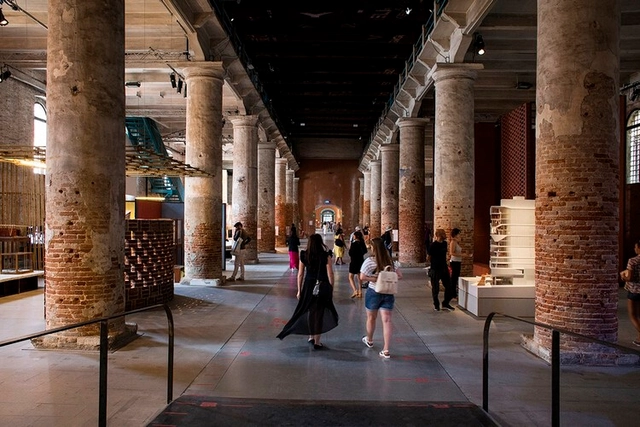
While exploring the 18th International Architecture Exhibition, the ArchDaily team had a chance to engage in conversation with several curators of the national pavilions, along with Lesley Lokko, the curator of the entire exhibition. The discussions delved into the unique character of this year’s edition focused on an understanding of Africa as a “Laboratory of the Future.” Through this lens, the biennale became “a healing experience,” in the words of Lesley Lokko, reinterpreting and deconstructing the meaning behind ideas such as decolonization, decarbonization, resource management, or finding the hidden potential in vernacular forms of practice.

Following Lokko’s curatorial direction, the exhibitions presented at the national pavilions explored the specific conditions of their territories, striving to uncover and highlight the unique challenges and opportunities faced by their local cultural landscapes. During the interviews, the curators opened up in regard to their personal inspirations and the drive behind the choice of program, the messages embedded in the displays, and their hopes for the future of the profession.

On-Site in Venice: 12 Interviews with Curators Discussing the Impact of the 2023 Venice Architecture Biennale - Image 1 of 4On-Site in Venice: 12 Interviews with Curators Discussing the Impact of the 2023 Venice Architecture Biennale - Image 2 of 4On-Site in Venice: 12 Interviews with Curators Discussing the Impact of the 2023 Venice Architecture Biennale - Image 3 of 4On-Site in Venice: 12 Interviews with Curators Discussing the Impact of the 2023 Venice Architecture Biennale - Image 4 of 4On-Site in Venice: 12 Interviews with Curators Discussing the Impact of the 2023 Venice Architecture Biennale - More Images+ 10

UMWELT, PRODUCTORA, and LANDMRX will Transform Abandoned Modernist Building into Chile's State Railway Headquarters

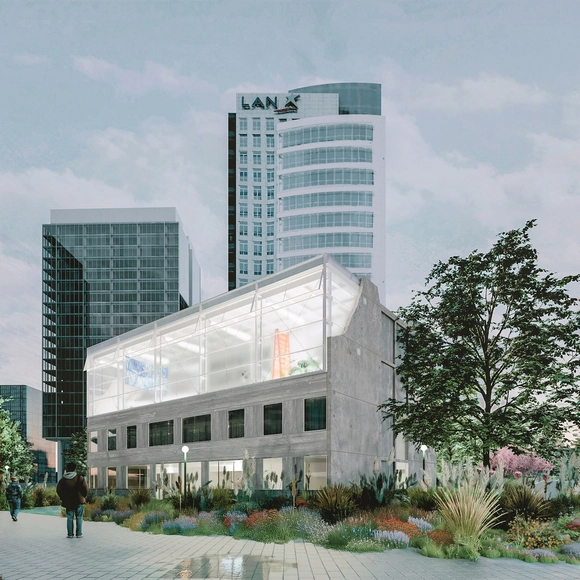
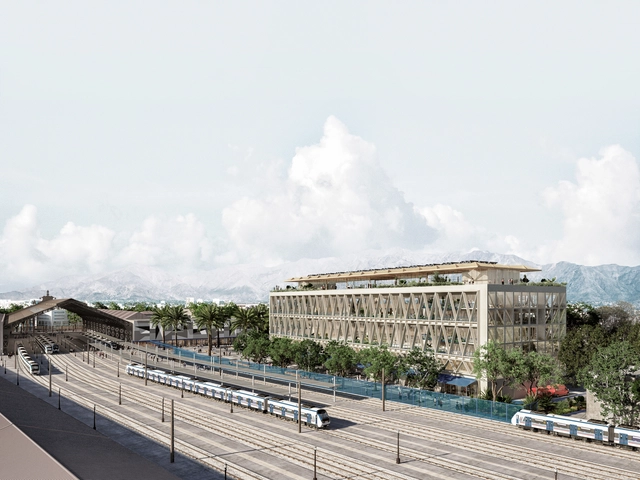
The Chilean architectural practice UMWELT, together with the landscape architecture office LANDMRX and the renowned Mexican firm PRODUCTORA, have won first place in the competition for the transformation of the former Correos de Chile (Chilean Postal Service) building located in Estación Central, Santiago. In 2021, EFE (Chile's State Railway Company) acquired the property to convert it into their new corporate headquarters, where the company's employees will work in interaction with the nearby railway operations.

UMWELT, PRODUCTORA, and LANDMRX will Transform Abandoned Modernist Building into Chile's State Railway Headquarters - Image 1 of 4UMWELT, PRODUCTORA, and LANDMRX will Transform Abandoned Modernist Building into Chile's State Railway Headquarters - Image 2 of 4UMWELT, PRODUCTORA, and LANDMRX will Transform Abandoned Modernist Building into Chile's State Railway Headquarters - Image 3 of 4UMWELT, PRODUCTORA, and LANDMRX will Transform Abandoned Modernist Building into Chile's State Railway Headquarters - Image 4 of 4UMWELT, PRODUCTORA, and LANDMRX will Transform Abandoned Modernist Building into Chile's State Railway Headquarters - More Images+ 12

Architecture Classics: 7 Sisters Housing Complex / Hugo Boetsch + Jorge Elton

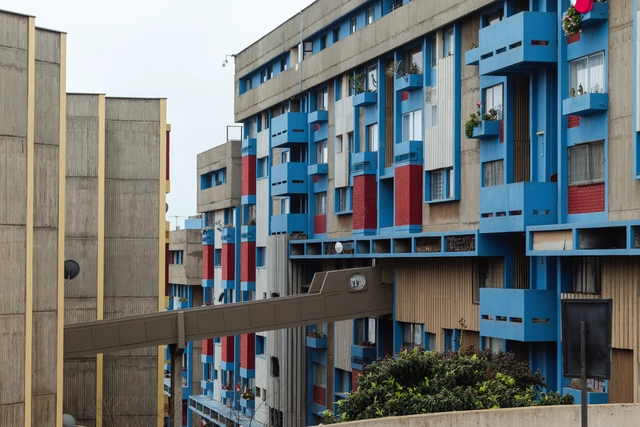
Located in the city of Viña del Mar, Chile, the Conjunto Habitacional 7 Hermanas (7 Sisters Housing Complex) stands out among the urban landscape of Viña del Mar for its architectural qualities, colors, materials, and magnitude. When you look up, you can see between the leafy ravine that overlooks the Quinta Vergara urban park, the group of buildings located in the Forestal sector, which take over the slope and the plateau of the hill, crowning itself as one of the most important works of modern architecture in the region of Valparaíso.

U House / Andres Nuñez Fuenzalida Arquitectos

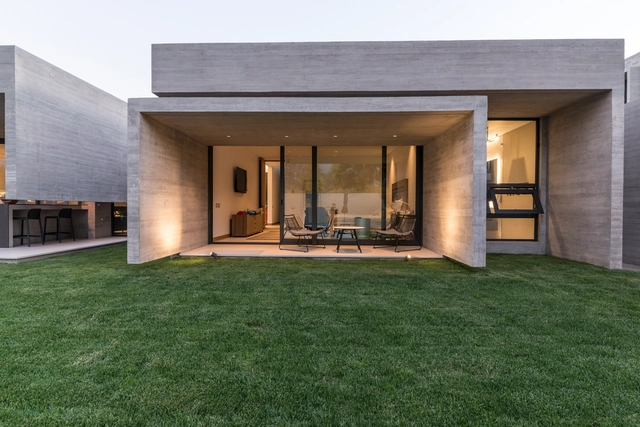
U House / Andres Nuñez Fuenzalida Arquitectos - ResidentialU House / Andres Nuñez Fuenzalida Arquitectos - ResidentialU House / Andres Nuñez Fuenzalida Arquitectos - Exterior Photography, Residential, FacadeU House / Andres Nuñez Fuenzalida Arquitectos - Interior Photography, Residential, TableU House / Andres Nuñez Fuenzalida Arquitectos - More Images+ 28

Santiago, Chile

M House / Andres Nuñez Fuenzalida Arquitectos

M House / Andres Nuñez Fuenzalida Arquitectos - HousesM House / Andres Nuñez Fuenzalida Arquitectos - HousesM House / Andres Nuñez Fuenzalida Arquitectos - HousesM House / Andres Nuñez Fuenzalida Arquitectos - HousesM House / Andres Nuñez Fuenzalida Arquitectos - More Images+ 20

Cachagua, Chile

CT House / nicolasCRUZarquitectos

CT House / nicolasCRUZarquitectos - Interior Photography, Houses, BeamCT House / nicolasCRUZarquitectos - Exterior Photography, HousesCT House / nicolasCRUZarquitectos - Interior Photography, Houses, Stairs, HandrailCT House / nicolasCRUZarquitectos - Interior Photography, Houses, FacadeCT House / nicolasCRUZarquitectos - More Images+ 35

Puerto Nuevo, Chile
  • Area Area of this architecture project Area:  260
  • Year Completion year of this architecture project Year:  2018
  • Manufacturers Brands with products used in this architecture project
    Manufacturers:  Bosca, CHC, Cintac, Cintac®, Kitchen Center, +1

Chilean Houses And Their Kitchens In Detail

Subscriber Access | 

Traditionally, Chilean housing has used the kitchen as a central space in their designs, from which all other venues are deployed. Being a focal point within each project, it's important to deepen its design and occupy every available square meter in favor of its effective use. Today, we review 7 kitchens designed specifically in Chilean homes; each one with particular details and distributions, and different combinations of materials, furniture, and equipment.

Alejandro Aravena Shares the Foundational Philosophies at the Core of His Socially Conscious Practice

Chilean architect Alejandro Aravena shares the fundamentals of his design philosophy in a documented interview titled “To Design is to Prefer.” The Pritzker Prize winner founded his practice in 2001, committed to exploring socially conscious design practices. His firm, Elemental, first gained international recognition for its work creating social housing projects in Chile, but its portfolio continues to expand to include work from museums, universities, transportation, and urban infrastructure.

This video highlights the mental process behind Aravena’s personal practices and insights into Elemental’s unique approach to design. The interview begins discussing Aravena’s introduction to architecture as a teen and how architecture, a rather obscure phenomenon to the young Aravena, became his passion. Throughout the film, Aravena flips to the pages of his sketchbooks, illustrating the raw hand of the architect.

EXTRA-ORDINARY: New Practices in Chilean Architecture

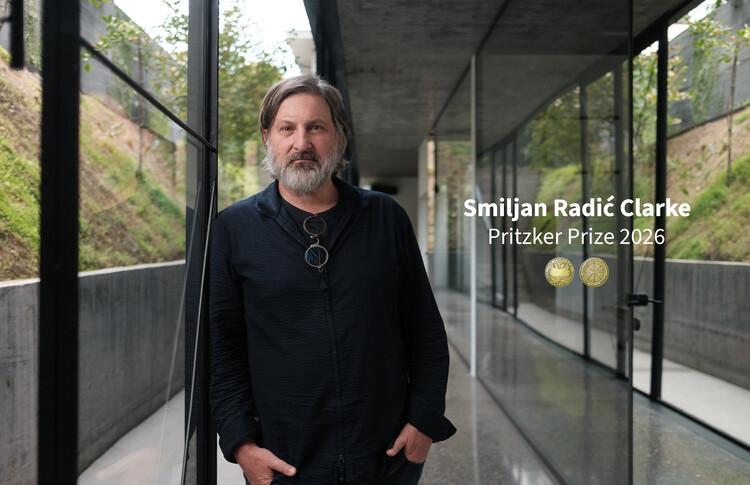
The Center for Architecture, in collaboration with CONSTRUCTO, will present the exhibition EXTRA-ORDINARY: New Practices in Chilean Architecture, opening on Wednesday, June 22 at 5:30 pm, curated by CONSTRUCTO foundersJeannette Plaut and Marcelo Sarovic. The opening will begin with a roundtable discussion between Plaut, Sarovic and MoMA Director Glenn Lowry and will be followed by a presentation by architect Smiljan Radic.

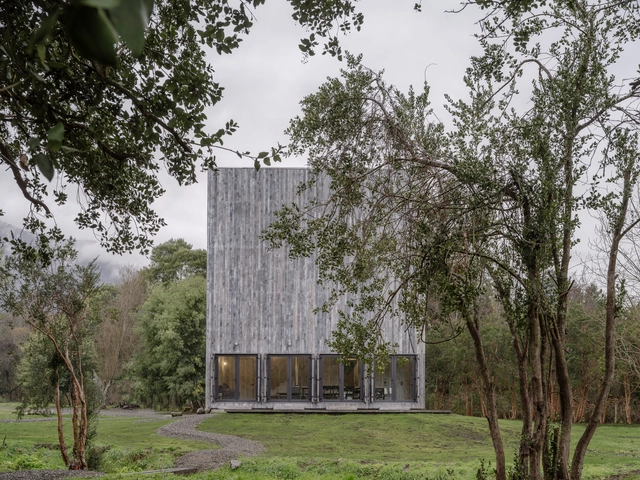
Panguipulli Hotel / GA estudio

Panguipulli, Chile
  • Architects: GA estudio
  • Year Completion year of this architecture project Year:  2012