As human beings we cannot live without stories, we need them to fill those gaps in our reality, to live in our imagination those thousands of lives that are different from ours and, in some cases, impossible.
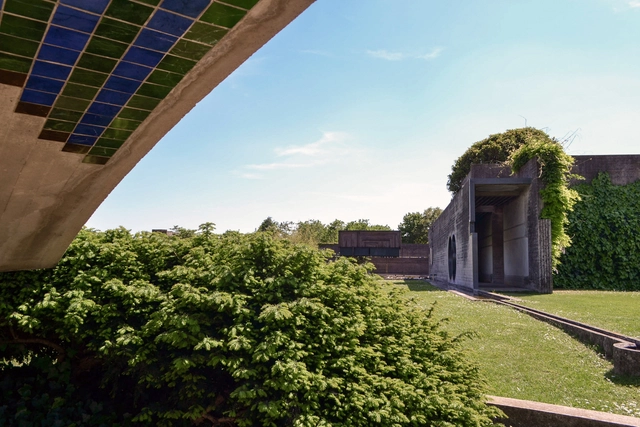
Could we qualify as "good architecture" that which has a story, or several stories, to tell us? That which is a story in itself? Such a subjective question undoubtedly generates different answers, but one possible answer is "yes". And one example is the Brion Tomb project, one of Venetian architect Carlo Scarpa's major masterpieces.
The Benedictine monastery chapel of Santa María de las Condes, visible from different points in the eastern part of Santiago, Chile, is a white volume, located halfway up the slopes of Los Piques hill.
The expression "a perfect storm" refers to an event (typically an unfortunate one) which is exacerbated due to a confluence of negative or unpredictable factors. It is widely used when describing meteorological phenomena, but can also be applied to other contexts, such as the economy. The analogy can also be used to describe the relationship between the climate crisis and the world's dependence on concrete. As demonstrated in the Chatham House report, while cement (an essential element for concrete manufacturing) is extremely detrimental to the greenhouse effect and climate crisis –representing about 8% of global CO2 emissions–, its global production is nevertheless expected to increase over the next 30 years. It is said that this increase will stem from the demand for rapid urbanization in regions such as Southeast Asia and sub-Saharan Africa. At the same time, the last IPCC report warned that we only have 11 years to reduce emissions and prevent irreversible damage due to climate change. In other words, the cement industry is facing a significant expansion at a time when emissions need to fall rapidly – a perfect storm.
Upon becoming a sovereign country, free from British Rule, the people of India found themselves faced with questions they had never needed to answer before. Coming from different cultures and origins, the citizens began to wonder what post-independence India would stand for. The nation-builders now had the choice to carve out their own future, along with the responsibility to reclaim its identity - but what was India's identity? Was it the temples and huts of the indigenous folk, the lofty palaces of the Mughal era, or the debris of British rule? There began a search for a contemporary Indian sensibility that would carry the collective histories of citizens towards a future of hope.
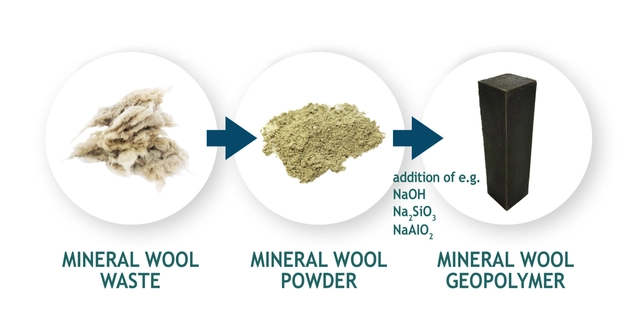
When approaching the process of recycling building materials, there are a number of obstacles to achieving a comprehensive and effective result. First, careless demolition can make the process very complex, as products with different recycling products are often mixed. In addition, not all materials can be efficiently recycled or processed, as many still need expensive or overly complex processes. But the construction industry, being a huge contributor to waste production and greenhouse gas emissions, has also developed multiple new technologies to improve its practices. This is the case of the WOOL2LOOP project, which seeks to solve one of the biggest challenges in applying a circular approach to construction and demolition waste.
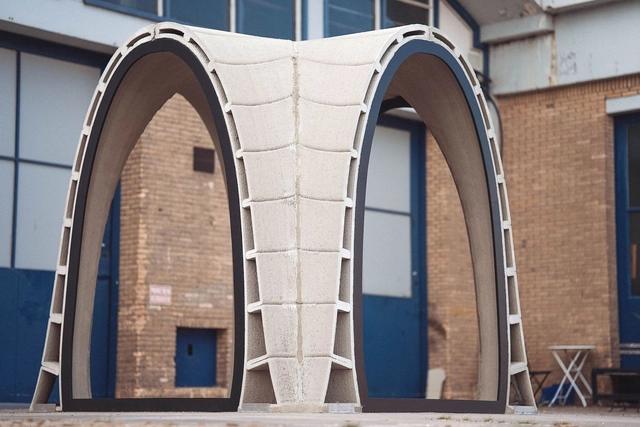
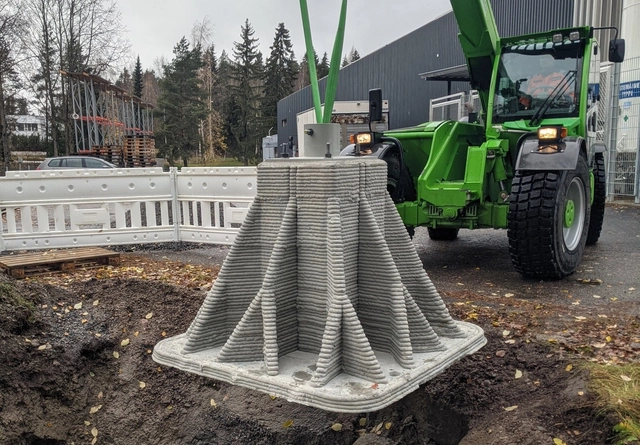
When browsing the 3D printing tag on ArchDaily, it is clear that this technology has developed at an incredibly fast pace. If in the early years we observed the concept as a distant possibility for the future or with small-scale examples, in recent years we have observed entire printed buildings and increasingly complex volumes being produced. Developed by reading a computer file, the fabrication is carried out through additive manufacturing with concrete - or other construction materials - and presents numerous difficulties in providing an efficient process that enables the constructive technique to become widespread. The pavilion printed by the Huizenprinters consortium, for example, illustrates this process well.
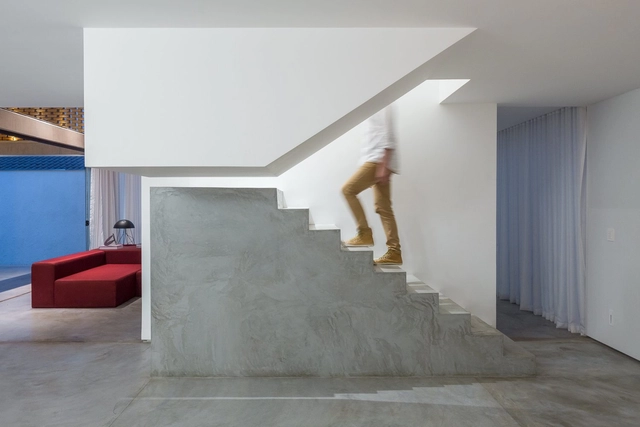
Whether to mark a change of direction, to highlight its first steps or its own presence in a room, stairs that combine two or more materials tend to draw attention by establishing dialogs between particular characteristics of each material. Concrete, steel and wood are some of the most common choices to compose the structure of stairs due to their high strength and versatility. But, when combined, these different materials expand their individual possibilities and reveal how the design can be tailored to their peculiarities and connections.
The combination of textures, colors, and finishes among materials can provide a number of creative solutions for these elements used for vertical circulation, as shown in LÂM’s Home, by AD+studio and House 9A, by 23o5Studio, characterized by stairs with a sturdy and rough base that meets a light and sleek structure of steps. The opposite composition order, a lighter base that meets a robust set of steps, thrives ingeniously in Luis Carbonell's Casa Chulavista and messina | rivas' Angatuba House, where the light wooden stairs' base is followed by raw concrete steps.
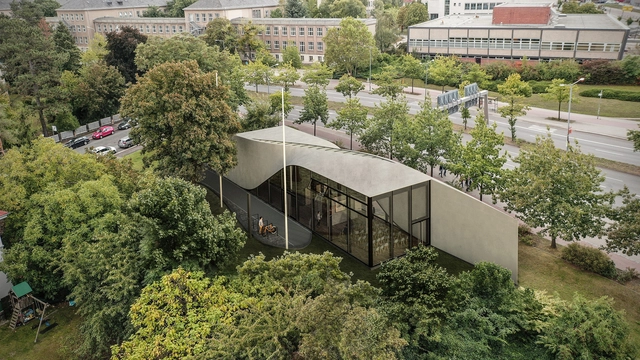
Cube / HENN Dresden University of Technology. Courtesy of Iurii Vakaliuk
Seen as one of the great promises for the future of construction, carbon concrete mixes strength, lightness and flexibility. In addition, at a time marked by a serious environmental crisis that puts the construction methods of the industry in check, carbon concrete emerges as an alternative that approaches the guidelines of sustainability.
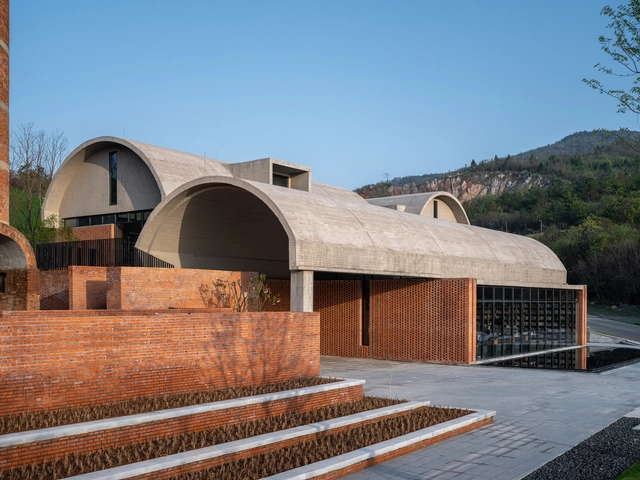
The oldest record of barrel vaults is estimated to date back to 4000 BC. These provided the spans in the Sumerian ziggurat at Nippur in Babylonia, built from fired bricks amalgamated with clay mortar. This type of vault was built as a continuous round arch and became a characteristic architectural element of Roman architecture, later used also in Renaissance architecture.
After water, concrete is the second most-consumed material on the planet and its production is substantially growing, expected to increase from 4.4 billion tons, reaching production up to 5.5 billion tons by 2050. Unfortunately, this comes at a huge environmental cost, accounting for almost eight percent of the global carbon emissions. With this estimated expected growth, stakeholders in the construction industry must work on integrating sustainable building materials and innovative processes.
For centuries and centuries we’ve built – and the diversity in our global built environment is a testament to that. The many different cultures around the globe have had different ways of building throughout history, adapting locally found materials to construct their structures. Today, in our globalized present, building materials are transported across the globe far from their origins, a situation that means two buildings on completely opposites sides of the world can be more or less identical.
Take a second to imagine a building or a room. Chances are you are envisioning flat rectangular surfaces and straight lines. Whether it be walls, beams or windows, most architectural elements come in standard and extremely practical orthogonal shapes. However, the pandemic has shed light on designs that are not only functional, but also that improve our mood and well-being. In that sense, the power of curved, free-flowing surfaces is unmatched, which explains why they have been making a comeback as a modern design trend. Adopting beautiful nature-inspired shapes, organic curls and bends energize rooms and make users feel good. In fact, neuroscientists have shown that this affection is hard-wired into the brain; in a 2013 study, they found that participants were most likely to consider a space beautiful if it was curvilinear instead of rectilinear. In short, humans love curves.
In this powerful new visual from Spirit of Space, we are introduced to Ricardo Bofill’s headquarters ‘The Factory’ or La Fábrica, Taller de Arquitectura. Once a disused and decaying cement factory from the turn of the century, with 30 silos, machine room, and galleries, it is now a significant transformative project, satisfying the Architect's longing for space via adaptive reuse.
A haven in the urban sprawl, engulfed by a floury of palm, olive, and eucalyptus trees. Spirit of Space visits the former hive of activity, now a tranquil mid-city refuge, an immense contrast to the industrial grime that used to reside here. Through moving pictures and multi-sensory experiences it explores the Brutalist form; a concrete shell… a skeleton intertwined with nature itself.
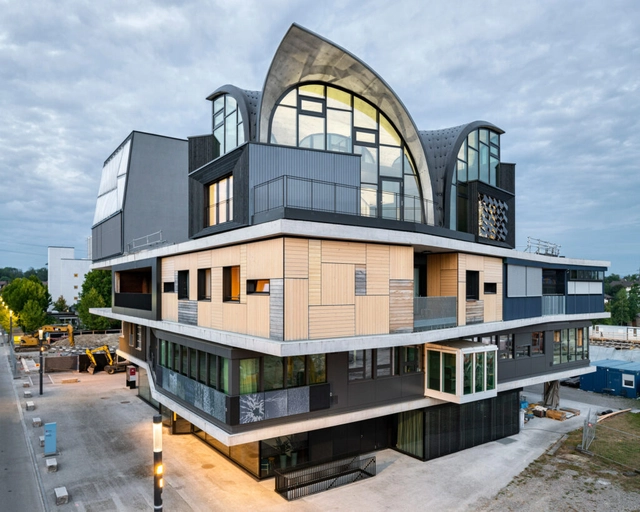
Dübendorf, Switzerland is something of hallowed ground for architectural technologists. There, on the shared academic campus of the Swiss Federal Laboratories for Materials Science and Technology and the Swiss Federal Institute of Aquatic Science and Technology, public university ETH Zurich has conducted nearly a decade of engineering and construction experimentation at the ever-evolving NEST research building. In August, ETH Zürich unveiled its latest extension of the building, HiLo (short for high performance-low emissions)—a two-story modular addition to the chameleon structure that harnesses medieval building principles and contemporary digital methods to raise the bar for more sustainable applications of concrete.
Much has been said about circularity in the construction industry. Inspired by nature, the circular economy works in a continuous process of production, resorption and recycling, self-managing and naturally regulating itself, where waste can turn into supplies for the production of new products. It is a very interesting concept, but it faces some practical difficulties in everyday life, whether in the demolition / disassembly process, or in the correct disposal of materials and waste; but mostly due to the lack of technologies available to recycle or give new use to construction materials. About 40% of all waste generated on Planet Earth comes from civil construction, and a good part of it could be recycled. Concrete is an especially important material because of its large carbon footprint in production, its ubiquity and massive use, and also because of the difficulty of recycling or reusing it.
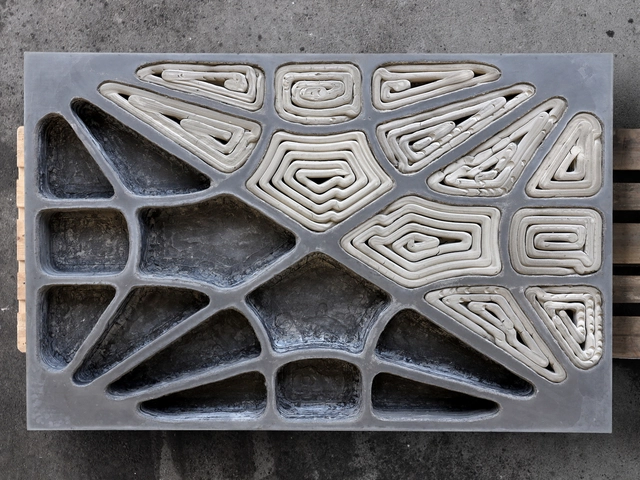
With the aim of generating a significant impact on the responsible and sustainable consumption of resources and energy in the construction industry, ETH Zürich in collaboration with FenX AG is using foam 3D printing (F3DP) to manufacture geometrically complex formwork for the construction of special elements in concrete.
The future of design requires thinking innovatively about the way current construction techniques function so we may expand upon their capabilities. Sustainability has evolved far beyond being a trend and has become an indelible part of this design process. Sustainable solutions have always pushed against the status quo of design and now the Structural Technology Group of UniversitatPolitècnicadeCatalunya – BarcelonaTech (UPC) has developed a concrete that sustains and encourages the growth of a multitude of biological organisms on its surface.
We have seen renditions of the vertical garden and vegetated facades, but what sets the biological concrete apart from these other systems is that it is an integral part of the structure. According to an article in Science Daily, the system is composed of three layers on top of the structural elements that together provide ecological, thermal and aesthetic advantages for the building.










_Maureen_M._Evans.jpg?1646840531 "© Maureen M. Evans")






.jpg?1645540015 "La Fábrica, Ricardo Bofill Taller de Arquitectura. Image Courtesy of Ricardo Bofill")
.jpg?1645655249 "Courtesy of Ricardo Bofill")
_%C2%A9_Richard_Powers.jpg?1645655222 "La Fábrica, Ricardo Bofill Taller de Arquitectura. Image © Richard Powers")
.jpg?1645655255 "Courtesy of Ricardo Bofill")