3D printing itself is no longer a new technology, but that hasn’t stopped researchers and innovators around the world from coming up with new applications and opportunities. Some experiments with new materials have been driven by sustainability concerns and others are simply the result of imagination and creativity. Others have chosen to invest their time utilizing more traditional materials in new ways. Materials, however, are just the beginning. Researchers have developed new processes that allow the creation of objects that were previously impossible to print and, on a larger scale, new building typologies are being tested - including a Mars habitat!
For thousands of years, concrete has been a foundation of the built environment: the most widely used man-made material on the planet. However, as architects, and the public alike, sharpen their focus on the causes and effects of climate change, the environmental damage caused by cement has become a subject of unease.
As exhibited in a recent in-depth article by Lucy Rodgers for BBC News, cement is the source of about 8% of global CO2 emissions. The piece was written off the back of the UN’s COP24 climate change conference in Poland and found that in order to meet the requirements of the 2015 Paris Climate Agreement, annual cement emissions must fall by 16% by 2030.
https://www.archdaily.com/909187/the-environmental-cost-of-cement-and-what-to-do-about-itNiall Patrick Walsh
Videos
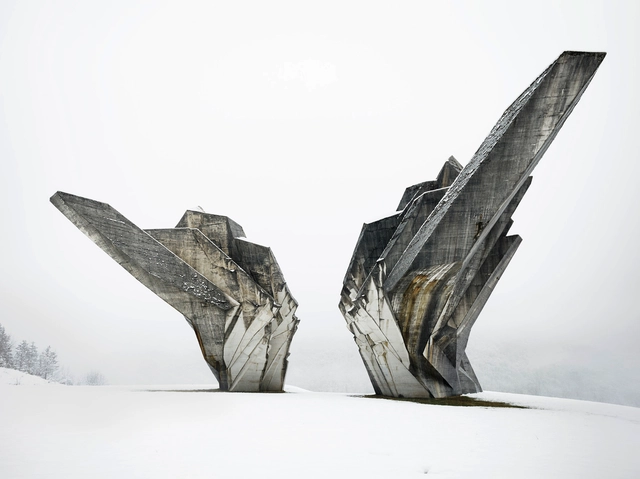
Miodrag Živković, Monument to the Battle of Sutjeska, 1965-71, Tjentište, Bosnia and Herzegovina. View of the western exposure. Photo: Valentin Jeck, commissioned by The Museum of Modern Art, New York, 2017.
With the exhibition soon coming to an end, Martino Stierli (Chief Curator of Architecture and Design at MoMA) and Vladimir Kulic (Guest Curator and Architecture Historian) have presented a 7-minute-long video guiding viewers through the highlights of the exhibition.
https://www.archdaily.com/908777/an-expert-guide-through-momas-toward-a-concrete-utopia-architecture-in-yugoslavia-1948-nil-1980Niall Patrick Walsh
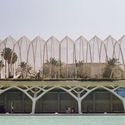
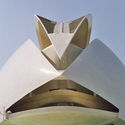
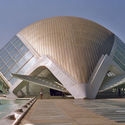
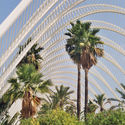
The architectural and engineering feats of Spanish architect Santiago Calatrava can be admired around the world, but his City of Arts and Sciences, designed alongside Felix Candela, has remained a modern architectural marvel. Like many international visitors, Lebanese photographer Anthony Saroufim found himself inherently attracted to the highly publicized building complex with a specific, tailored angle - unraveling the relationship between the built reality and the people interacting with it.
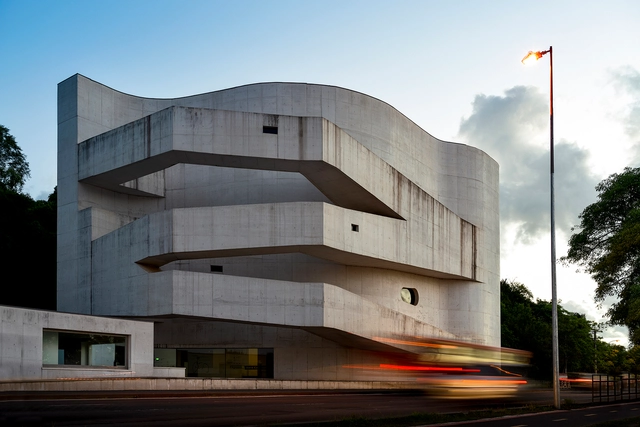
Alvaro Siza orchestrates, like no other, the experience of the visitor in his works. By means of compressions and decompression, openings and closings, volumes, voids and light, the Portuguese architect marks the paths, points of view, and perspective of the passage of time. In this photo essay, Ronaldo Azambuja photographed the Iberê Camargo Foundation ten years after its inauguration.
Great school design is more than just a good piece of architecture. Particularly in vulnerable areas with poor public infrastructure, schools symbolize the role of the state and education as a transforming agent for social improvement. They can also become areas for community life, sports, courses, among other uses. Unfortunately, these projects do not always receive the attention they deserve.
Schools require diverse and complex programs and flows, therefore, developing an educational project is one of the greatest challenges for architects. Due to the economy, rationalization, and speed of work, Brazil's largest portion of school projects are designed from prefabricated concrete elements with rigid modulations and, in rare cases, steel. But what may seem to limit at first, can actually become an exercise in structural creativity.
In an attempt to elucidate the systems used to materialize these projects, we've selected a compilation of seven prefabricated schools in plan and section to create incredible spaces for learning.
Concrete may be the material most associated with modern Brazilian architecture; high resistance to compression and, when armed, capable of assuming various forms. Its plasticity has made it a favorite material for some of Brazil's most expressive architects of the last century.
Today, it is still widely explored in the architectural production of Brazil, either for its structural robustness, ease of maintenance, or aesthetic value.
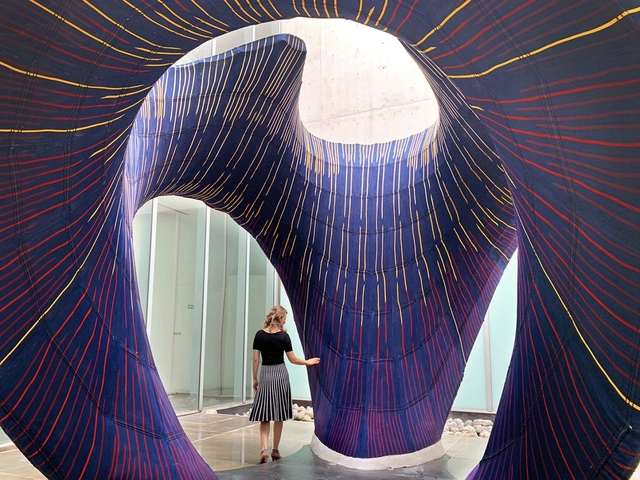
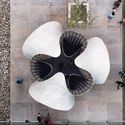
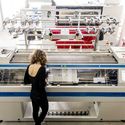
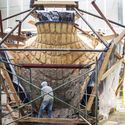
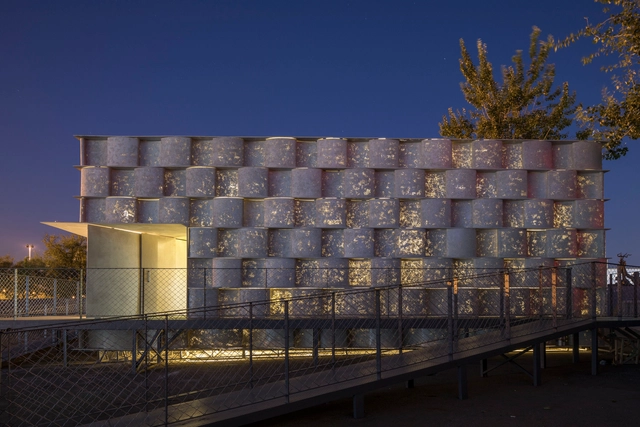
The “KnitCandela” prototype represents the first application of this technology at an architectural scale, a five-tonne concrete structure on display at the Museo Universitario Arte Contemporaneo in Mexico City.
https://www.archdaily.com/905231/zaha-hadid-architects-and-eth-zurich-create-3d-knitted-concrete-pavilion-transportable-via-suitcaseNiall Patrick Walsh
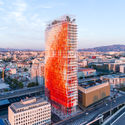
The Jean Nouvel-designed La Marseillaise has been completed, decorating the skyline of Marseille, France with 27 shades of red, white, and blue concrete. Standing at 135 meters, the 31-story office tower contains a business restaurant, nursery, and retail.
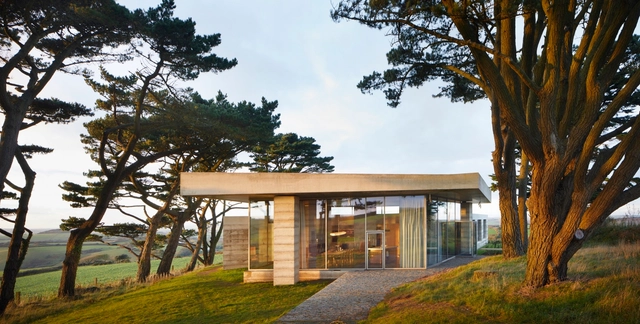
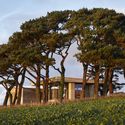
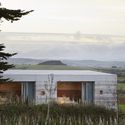
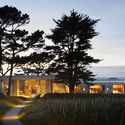
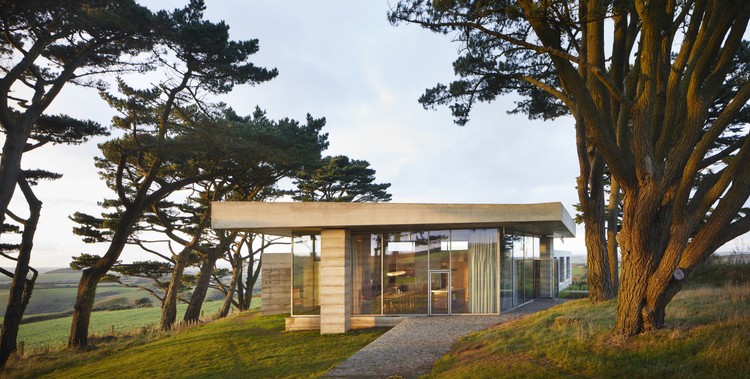
Living Architecture has published photographs of the Peter Zumthor-designed “Secular Retreat” as it nears completion in Chivelstone, Devon. The retreat will be the Pritzker Prize-winning architect’s first permanent building in the UK.
The dramatic, layered concrete and glass retreat is the seventh commission in the Living Architecture series, “designed by leading artists and architects in distinctive, unique sites across England.
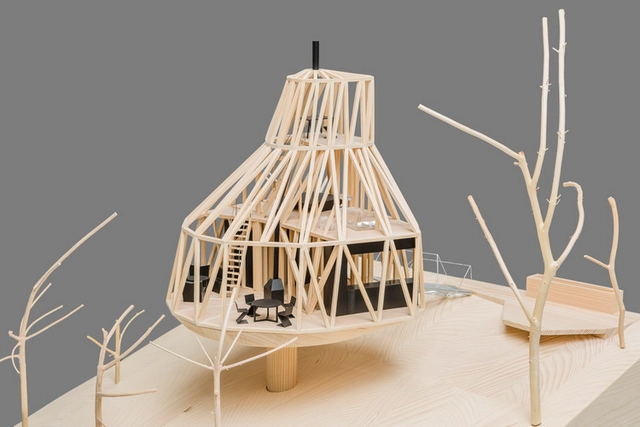
For centuries, physical modeling has been a staple of architectural education and practice. Allowing the designer and client to explore a scheme in plan, elevation, and perspective all at once, the physical model aims to simulate the spatial relationship between volumes and to understand constructive systems.
Even in an age of ultra-high quality rendering, and virtual reality, physical material models represent a beloved, tried and tested method of conveying ideas both during the design process and at presentation stage. Whether through a rapid, five-minute volumetric test of paper models, or a carefully sculpted timber construction detail, careful choice of material can greatly assist the modeling process, allowing designers to remain abstract, or test physical properties of structural systems.
This article was originally published on June 16, 2016. To read the stories behind other celebrated architecture projects, visit our AD Classics section.
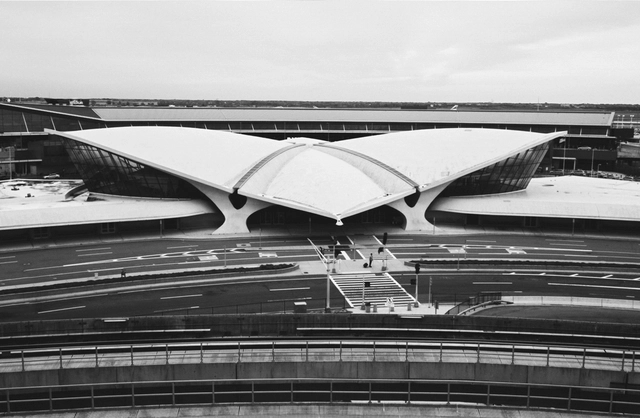
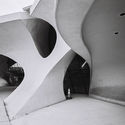
Built in the early days of airline travel, the TWA Terminal is a concrete symbol of the rapid technological transformations which were fueled by the outset of the Second World War. Eero Saarinen sought to capture the sensation of flight in all aspects of the building, from a fluid and open interior, to the wing-like concrete shell of the roof. At TWA’s behest, Saarinen designed more than a functional terminal; he designed a monument to the airline and to aviation itself.
This AD Classic features a series of exclusive images by Cameron Blaylock, photographed in May 2016. Blaylock used a Contax camera and Zeiss lenses with Rollei black and white film to reflect camera technology of the 1960s.
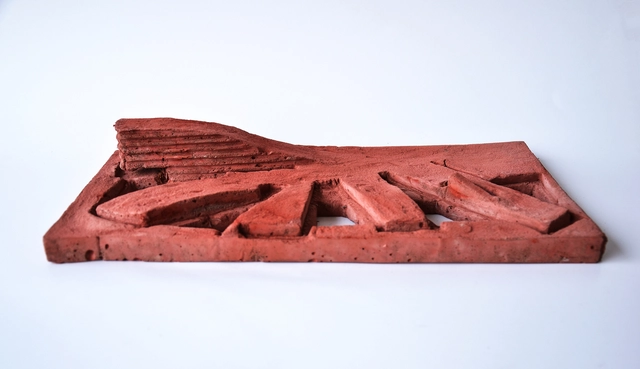
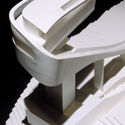
The contact between hands and models should never be lost. Going into this experience provokes silence, forcing us to think about the care that goes into concrete models. Few words are needed, as models often tell us everything we need to know through the beauty and simplicity that goes into their creation and the importance of the manual process in an architect's work.
This article was originally published on May 9, 2016. To read the stories behind other celebrated architecture projects, visit our AD Classics section.
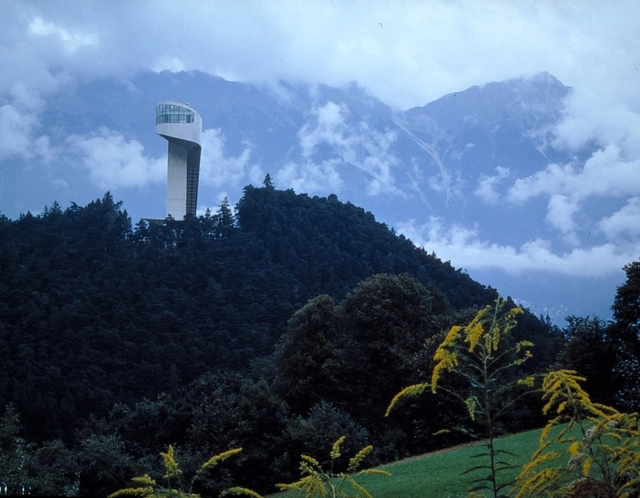
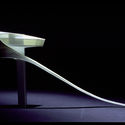
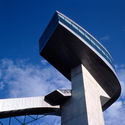
Situated on the peak of Bergisel Mountain above the picturesque alpine city of Innsbruck, Austria, the Bergisel Ski Jump represents the contemporary incarnation of a historic landmark. Designed by Zaha Hadid between 1999 and 2002, the Ski Jump is a study in formal expression: its sweeping lines and minimalist aesthetic create a sense of graceful, high-speed motion, reflecting the dynamic sensation of a ski jump in a monumental structure that stands above the historic center of Innsbruck and the mountain slopes around.
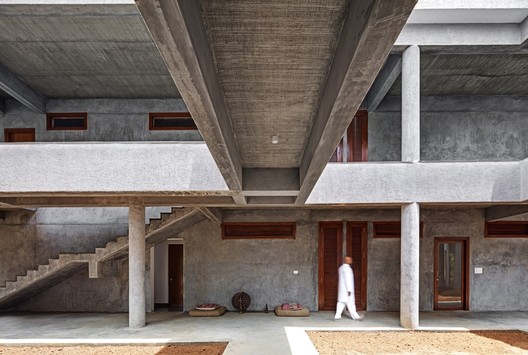
Greatly influenced by the modern movement--and in particular the presence of Le Corbusier--contemporary Indian architecture reflects a mixture of traditional and western references. Using mainly local materials such as brick, concrete and stone, Indian buildings stand out with their high visual impact and a assertive heaviness.
Because of its scarcity, wood is mostly used in details and finishes rather than as main structures. Some of the most successful architects in India have managed to gracefully balance the use of concrete and wood in a gentle gesture that evokes elegance and rough textures.
Here we present some of the best examples of contemporary Indian architecture that have used both concrete and wood in a harmonious and attractive way.
This article was originally published on April 21, 2016. To read the stories behind other celebrated architecture projects, visit our AD Classics section.
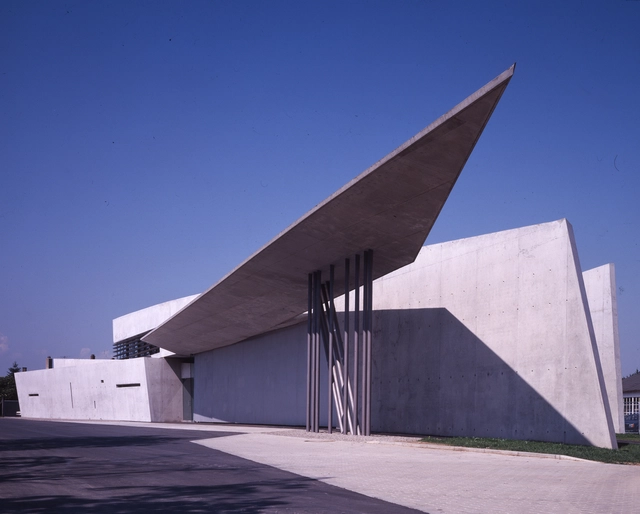
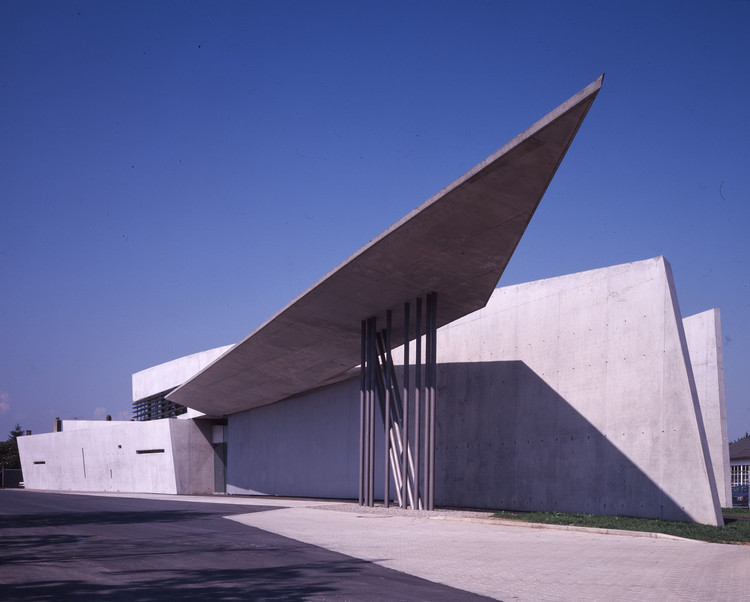
Although Zaha Hadid began her remarkable architectural career in the late 1970s, it would not be until the 1990s that her work would lift out her drawings and paintings to be realized in physical form. The VitraFire Station, designed for the factory complex of the same name in Weil-am-Rhein, Germany, was the among the first of Hadid’s design projects to be built. The building’s obliquely intersecting concrete planes, which serve to shape and define the street running through the complex, represent the earliest attempt to translate Hadid’s fantastical, powerful conceptual drawings into a functional architectural space.
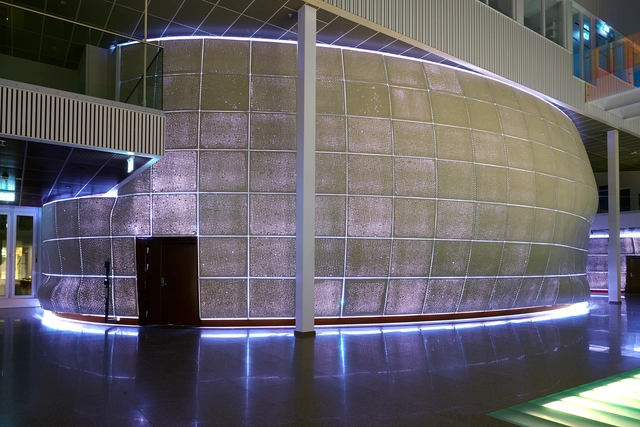
An installation at the Karolinska Institutet in Sweden is made entirely of translucent concrete panels. Composed of concrete and bubble wrap, the site blends both high and low technology processes. This high-tech lecture hall is an amorphous space with unique acoustic qualities.
The panels were created by compressing High-Performance Concrete between two layers of Bubble-Wrap. With 262,500 cavities and 1,000,000 membrane-perforations, the material creates a diffused echo-free ambiance.





















-%E4%B8%AD%E5%BA%AD%E5%8F%8A%E7%BB%BF%E6%A4%8D.jpg?1538737025 "Atrium and Green Plant. Image © Fangfang Tian")