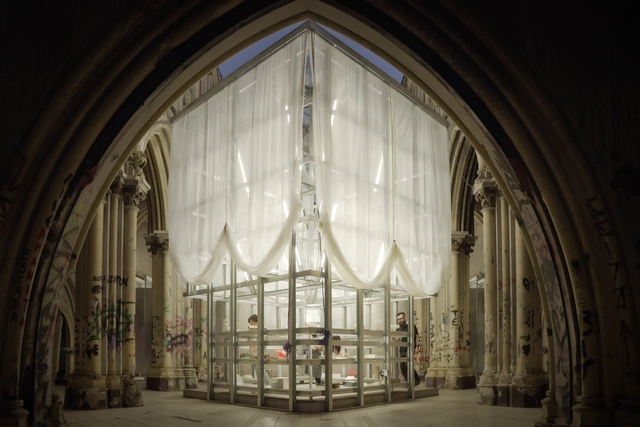
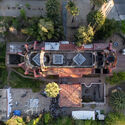
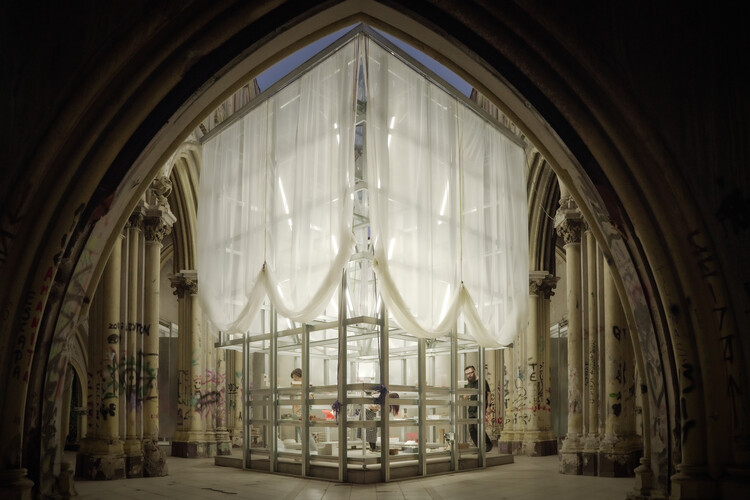
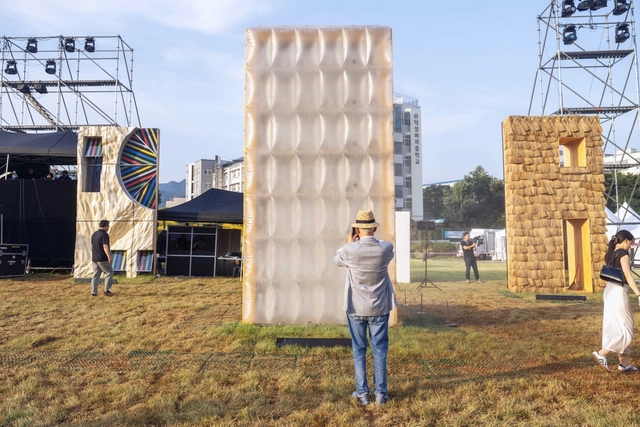
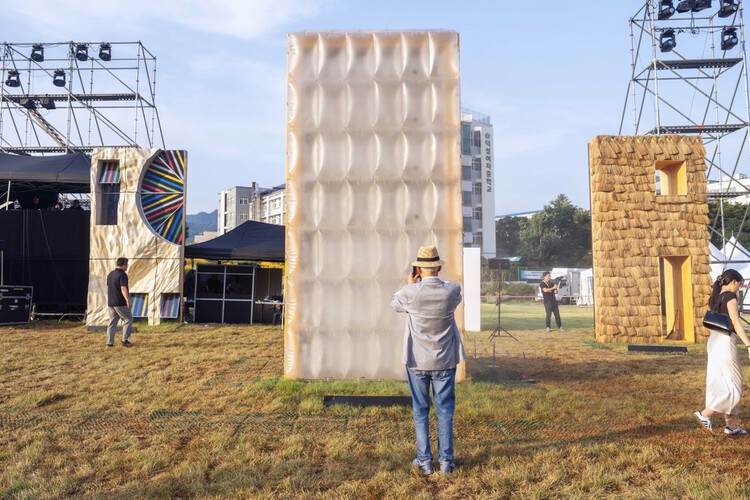
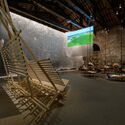
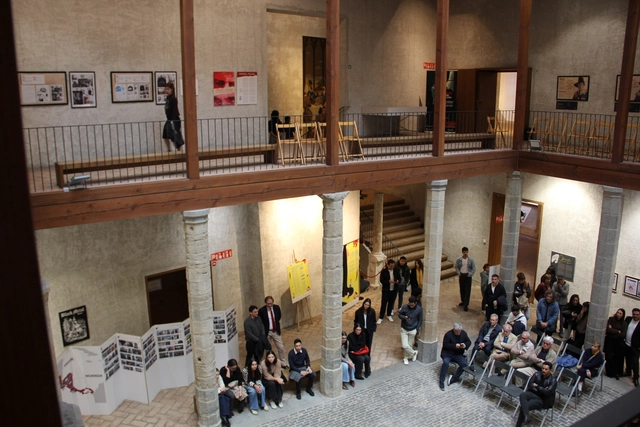
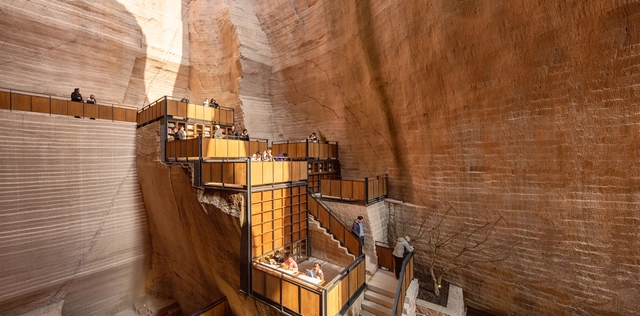
Between September 25 and October 5, 2025, the XXIII Chilean Architecture and Urbanism Biennial took place in Santiago. Under the title "DOUBLE EXPOSURE: (re)program · (re)adapt · (re)construct," the event was organized around the idea of "understanding architecture not as the production of the new, but as the ability to reactivate what already exists." Based on this premise, the curatorial team, composed of Ángela Carvajal and Sebastián López (Anagramma Arquitectes) together with Óscar Aceves, conceived a circuit of eight venues located in downtown Santiago. Their goal was to revive and reclaim urban spaces through a series of free public activities that drew around 70,000 visitors. Among the reactivated sites, the ruins of the San Francisco de Borja Church stood out. Burned during the social outburst of October 2019, the site hosted a temporary pavilion that served as a venue for talks, readings, art installations, discussions, and community events.
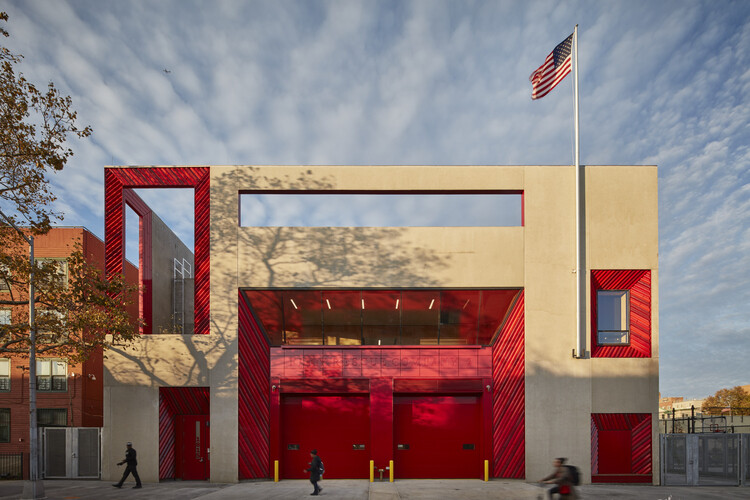
What should be taken into account when designing a fire station? The answer may seem obvious: functionality and efficiency. After all, every second counts in an emergency. But can a building designed for urgent operations also be aesthetically compelling, welcoming, and connected to its community? In recent decades, architects such as Zaha Hadid and Álvaro Siza have demonstrated that it can. By rethinking this building type, they have created spaces that go beyond emergency response—spaces that strengthen social ties, support the well-being of firefighters, and become urban landmarks.
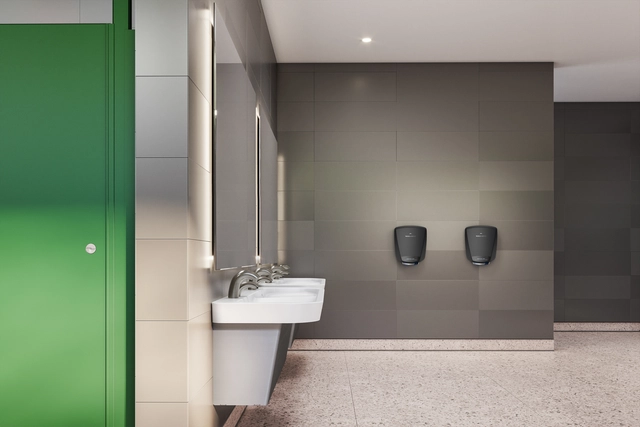
In the pursuit of cleaner, safer public restrooms, hand dryers have long faced a unique challenge: how to effectively kill germs in fast-moving air. Traditional germicidal technologies—like UV lights and ionizers— struggle to deliver meaningful impact because they only have milliseconds to interact with airborne microbes. Cold plasma technology is emerging as a new contender that could redefine hygiene standards.
For over a century and a half, corporations have periodically taken on the role of city builders. Neighborhoods or even entire settlements that exist at the intersection of commerce and civic life, "company towns" are recurring urban types. The corporate city has long reshaped itself to match the spirit of each era, whether through the pastoral idealism of industrial England or the cinematic optimism of mid-century America. In its latest guise, the mixed-income campus district, architecture becomes a language of belonging, branding, and quiet persuasion.
In the Water Lilies rooms at the Musée de l'Orangerie in Paris, Claude Monet conceived a 360-degree gallery where visitors are enveloped by continuous landscapes, dissolving the boundaries between painting and environment. There, he sought not merely to represent nature through his distinctive style, but to construct an atmosphere, a perceptual state that the visitor literally inhabits. Architecture, traditionally associated with materiality and permanence, thus gains a new dimension of time, movement, and sensory experience.
Similarly, when contemporary architecture transforms its planes into active surfaces, it extends this pursuit of immersion and presence, now amplified by technology. At the entrance of SOPREMA's new Mammut Tower in Oberroßbach, Germany, architecture and digital narrative converge. Designed and executed by ASB GlassFloor, the newly completed lobby is an immersive environment combining glass, light, and sound into a complete spatial and sensorial experience, demonstrating how interactive technologies can become architectural materials in their own right.
In addition to photographing the studios, Goodwin asked each practice the same question: "What makes for a good office space and office culture for you?" Their responses accompany the images, offering insight into how architects define the atmosphere of their workplaces. Studio Okami describes its workplace as a "home office away from home," while Brut highlights the role of shared meals and greenery in softening their penthouse space.
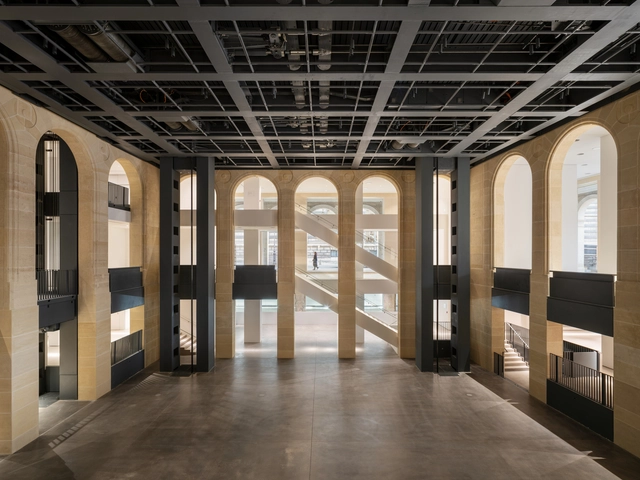
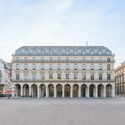
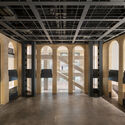
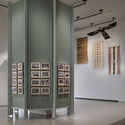
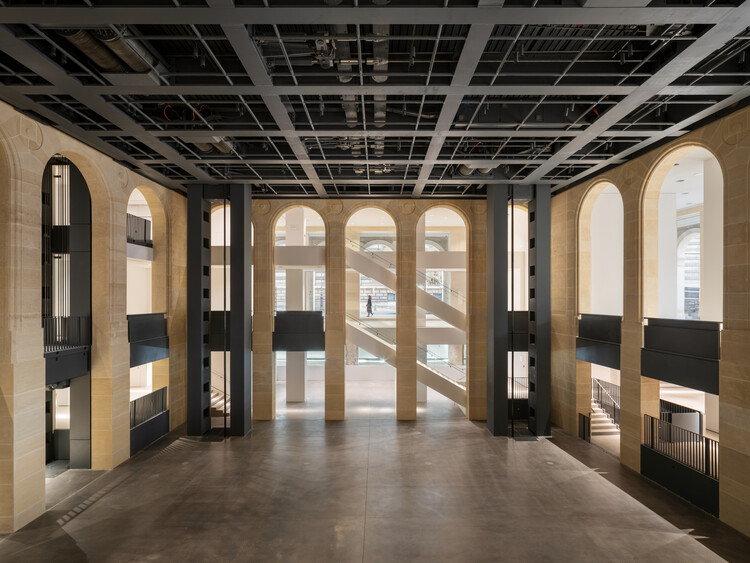
On October 25, 2025, the Fondation Cartier Pour l'Art Contemporain will open its new premises to the public with an inaugural exhibition drawn from its own Collection, entitled Exposition Générale. Located in the heart of Paris, the new space occupies a Haussmannian building that once housed the Grands Magasins du Louvre, recently reimagined by Jean Nouvel. Conceived as a dynamic architecture with five mobile platforms, the building was designed to expand the possibilities of a traditional exhibition venue. These mechanisms aim to accommodate all forms of visual expression, including photography, cinema, the performing arts, science, and craft, within a space that resonates with the urban life of Paris and engages with questions of urban planning and ecology. Within these parameters, the inaugural exhibition brings together more than 600 works by over 100 artists in a contemporary scenography designed by Formafantasma.
Spaces of hospitality are a mirror to how different cultures articulate generosity, care, belonging, and identity. In busy city settings, this is reflected in hotels, service systems, and curated amenities that directly shape the visitor experience. These spaces translate care into measurable forms, where success is correlated with efficiency, luxury, and brand identity.
Cultural diplomacy refers to the use of cultural expression and creative exchange to foster understanding and build relationships between nations. In this context, architecture has long played a distinctive role. Beyond its functional and aesthetic dimensions, it serves as a medium of communication, a language through which countries express identity, values, and ambition on the global stage.
Architecture operates as a form of soft power — persuasive rather than coercive — enabling nations to project influence through material presence. From modernist embassies in the post-war era to monumental pavilions at world expositions, governments and institutions have recognized the built environment's potential to shape perception. By commissioning prominent architects and adopting specific design languages, countries have used architecture to signal modernity, tradition, innovation, or stability.
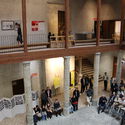
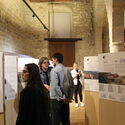
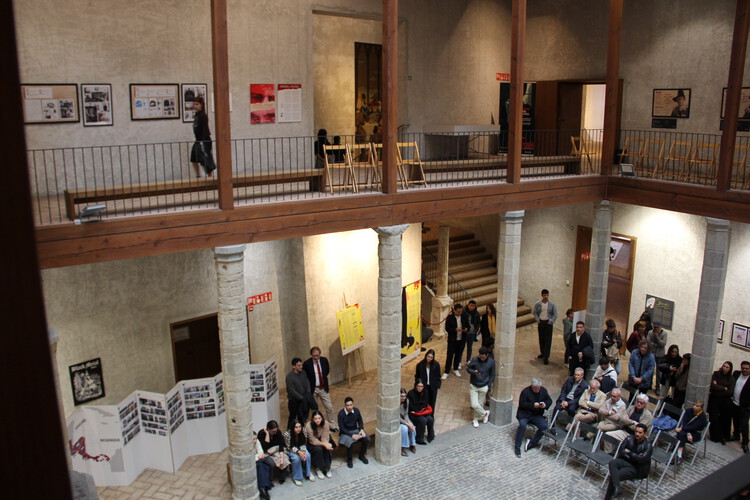
Held in Pamplona from the 23rd to the 26th of September, the 2025 Latin American Architecture Biennial (BAL) brought together emerging studios and established voices from across the continent. This year’s edition stood out for the diversity and depth of its participants: projects of striking formal and conceptual richness, developed by young yet remarkably mature offices. Together, they reflected the vitality of today’s Latin American architecture — thoughtful, inventive, and deeply aware of its context.
In the world of interior architecture, where creativity and culture intersect, Tola Ojuolape stands as a designer whose work is a testament to personal narrative. From her early studies in art and construction to her degree in interior architecture, Tola's career has been shaped by a deep connection to her Nigerian heritage, discovered during her travels back to the African continent. This journey has profoundly influenced her design philosophy, creating a process tightly woven with history, culture, and a sense of place.
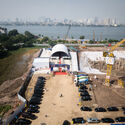
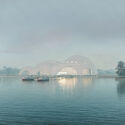
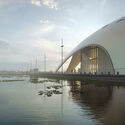
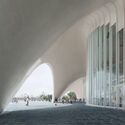
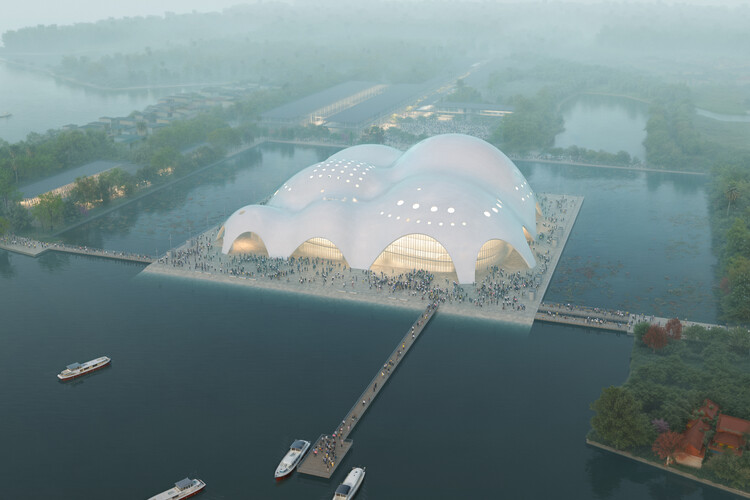
Isola Della Musica Opera and Convention hall by Renzo Piano Building Workshop. Render. Image Courtesy of RPBW
Renzo Piano Building Workshop (RPBW), in collaboration with Sydney and Hanoi-based PTW Architects, has begun construction of the Isola della Musica, a new opera house and convention center in Hanoi, Vietnam. Commissioned by Sun Group, the project was first conceived in 2017 and forms part of a broader masterplan that reshapes the existing boundary between West Lake and Đầm Trị Lake. Inspired by the region's history of pearl cultivation, the building features a series of curved concrete shells whose forms and surfaces evoke the texture and luminosity of mother-of-pearl.
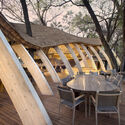
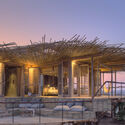
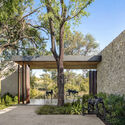
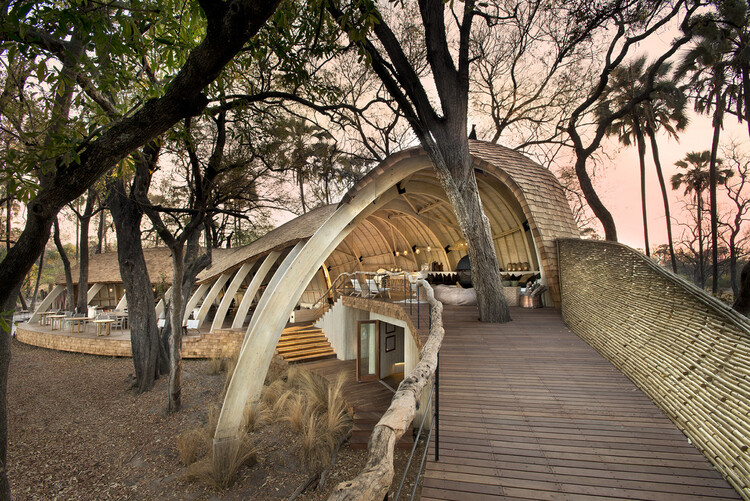
Sandibe Okavango Safari Lodge / Nicholas Plewman Architects in Association with Michaelis Boyd Associates
In Eastern and Southern Africa, safari lodges attract tourists from around the world wishing to witness the landscapes and fauna of the natural world. Usually situated in national parks and game reserves, their remote locations make for costly journeys and are therefore suitable for luxury stays. Often overlooked as an architectural typology, many lodges risk falling into the trap of being contextually insensitive or crudely mimicking vernacular building methods, resulting in pastiche. On the other hand, the safari lodge sits at the intersection of the man-made and natural worlds, bringing together rural dwellers and townfolk, wealth and poverty, wildlife and humans. Thus, it can be an opportunity to design with the highest social and environmental responsibility.
Terrazzo has long stood at the intersection of durability, artistry, and timeless appeal. Originating in Italy as a pragmatic way to reuse marble fragments in flooring, terrazzo has since become synonymous with elegance and strength in architecture. Traditionally crafted by hand using stone chips and lime and later, cement, it created continuous, seamless surfaces that celebrated both craftsmanship and endurance. Over time, as construction methods evolved and projects began to demand greater efficiency, adaptability, and modularity, terrazzo expanded beyond its traditional limits. From poured-in-place systems to modern epoxy-based formulations, it has evolved into a versatile material that enables thinner sections, faster installation, and a wider range of colors and aggregates. Today, precast terrazzo complements the traditional method, unlocking new applications without compromising performance or beauty, from stairs and wall cladding to furniture and custom design elements.
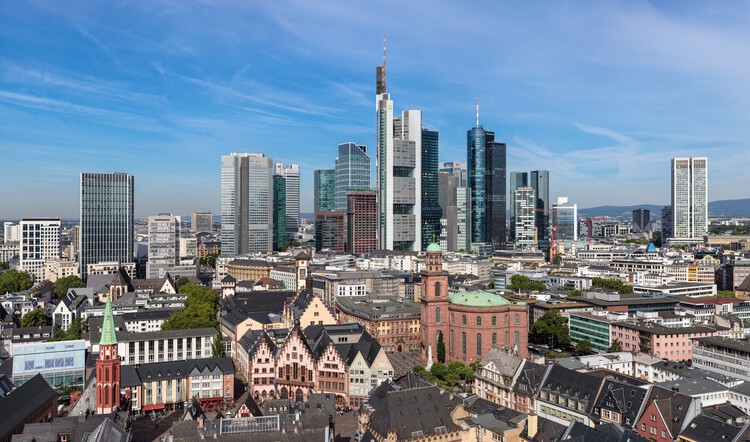
Frankfurt is often recognised for its distinctive skyline, a rare feature in European cities. Towering glass skyscrapers mark its role as a global financial hub, yet beneath this vertical image lies a city layered with centuries of history, destruction, and reconstruction. From medieval timber-framed houses to post-war modernism and contemporary high-rises, Frankfurt has consistently reinvented itself through architecture, producing a built environment where different periods coexist in dialogue.
The city's transformation accelerated after World War II, when much of its historic core was destroyed and planners sought to balance rapid economic growth with the need for cultural reconstruction. Landmarks such as the Römerberg square were meticulously rebuilt, while modernist interventions and infrastructural projects introduced new scales and languages. More recently, projects by internationally renowned offices have reshaped the riverfront and business districts, adding architectural icons that express Frankfurt's global role.
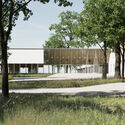
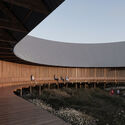
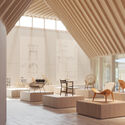
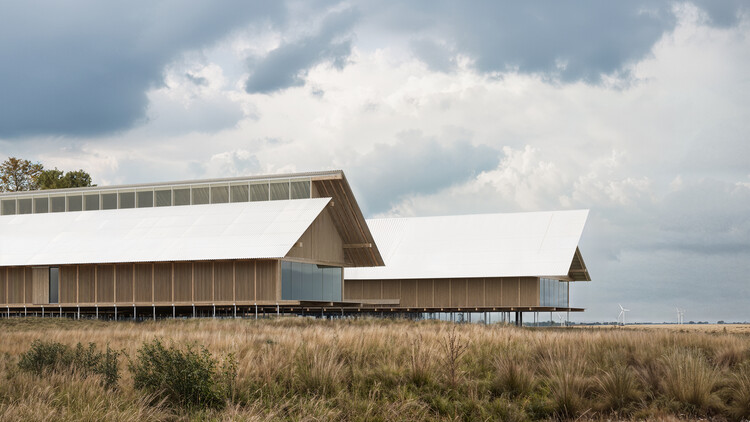
Cobe has revealed the design for Museum Wegner in Tønder, Denmark, a new cultural institution dedicated to the life and work of renowned Danish designer Hans J. Wegner. The museum will be located at Hestholm, a historicfarm dating back to 1445, and will combine the adaptive reuse of existing structures with a contemporaryextension. Selected as the project architect in February 2024 following a competitive interview process, Cobe is now moving the design toward realization with strong local and national support.
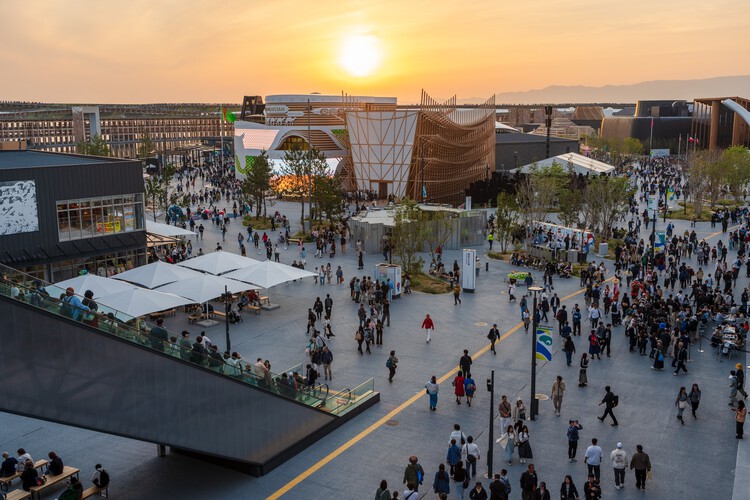
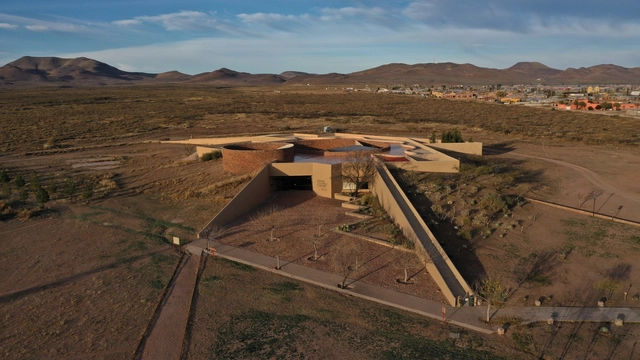
This week in architecture, global recognitions and new unveilings underscored the field's growing commitment to climate awareness, cultural continuity, and adaptive reuse. From Expo 2025 Osaka's closing ceremonies to international award announcements, the focus turned to architects and designers redefining the relationship between place, material, and community. Alongside these recognitions, major new projects, from Dubai to California, illustrated how design continues to evolve across scales: shaping cities, preserving heritage, and addressing urgent global challenges through context-driven architecture.
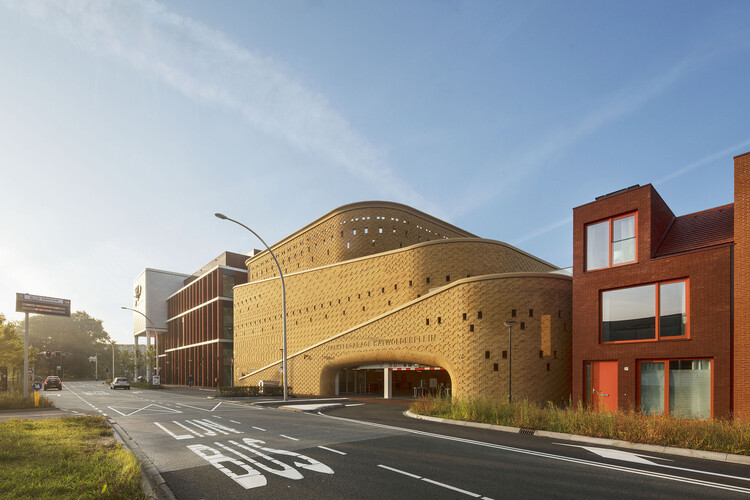
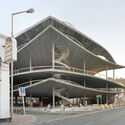
In an era of people-centered urban planning, 15-minute cities, “eyes on the street,” and active public spaces, parking garages are often seen as the antithesis of contemporary urban ideals. But that was not always the case. If today they challenge architects and planners to reinvent them in pursuit of more sustainable mobility and more human cities, in the past they stood as witnesses to a radical transformation in how we move, inhabit, and perceive urban space. Once symbols of modernity, parking garages embodied the height of an age when the automobile was seen as a driving force of progress. This shift in meaning reveals them as much more than utilitarian structures — they are powerful reflections of the evolution of urbanism, technology, and social habits over the past two centuries.
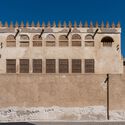
Bahrain's architectural participations in the international exhibitions have gained increasing global recognition, marked most recently by major awards at Expo 2025 Osaka and the Venice Architecture Biennale. These milestones reflect a broader trajectory in which the country's design culture, rooted in climatic intelligence and cultural continuity, has become a prominent voice in international conversations on context-driven architecture.
This growing visibility builds upon a deep architectural lineage. Bahrain's identity has long been shaped by its position as a maritime crossroads of the Arabian Gulf, where the legacy of pearling settlements and the compact urban fabric of Muharraq and Manama reveal a dialogue between local traditions and global exchange. Today, that dialogue evolves through practices that merge preservation with experimentation, translating heritage into a contemporary architectural language that is both place-specific and forward-looking.
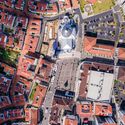
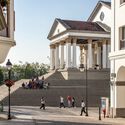
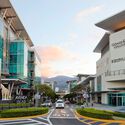
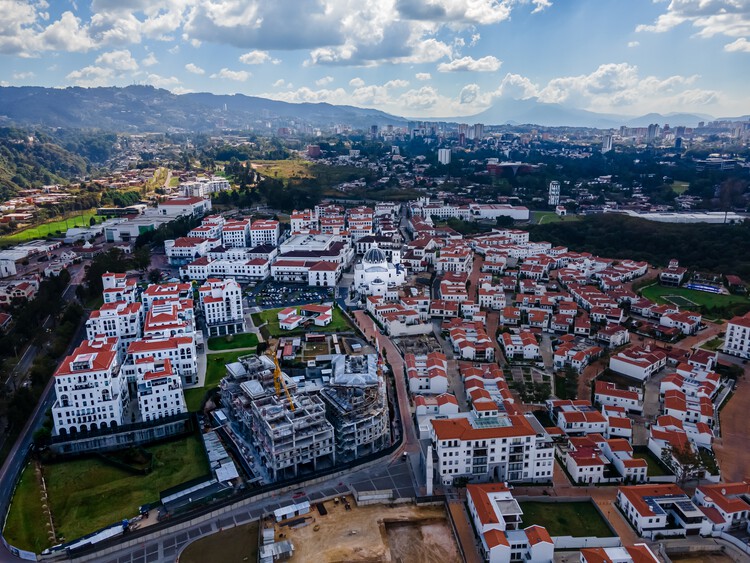
Ciudad Cayalá, a privately developed, mixed-use community on the outskirts of Guatemala City, is often described as a "theme park" of white lime-washed walls, red tiles, and cobbled plazas. A closer examination, however, reveals a more complex urban narrative. Its significance, however, lies in its capacity to create a safe and well-managed public space, proposing a modern reinterpretation of historic urban principles that mark the region's architectural and urban heritage. Behind the Antigua-style façades lies an urban experiment: a modern re-engagement with architectural elements like arcades, courtyards, and open plazas, which propose a privately-managed public space as a solution to urban challenges in the region.
Like the famous Russian Matryoshka doll, opening a package often feels like uncovering endless layers. Inside a cardboard box, there might be molded Styrofoam, then several plastic air pillows, and finally, individual plastic wrapping around each piece. Even a small product can leave behind a trail of plastic waste far larger than its size. Now imagine this logic applied to a construction site where every component, every delivery of materials, often arrives wrapped in multiple layers of protection. What already seems excessive in retail becomes monumental when repeated daily on large construction projects.