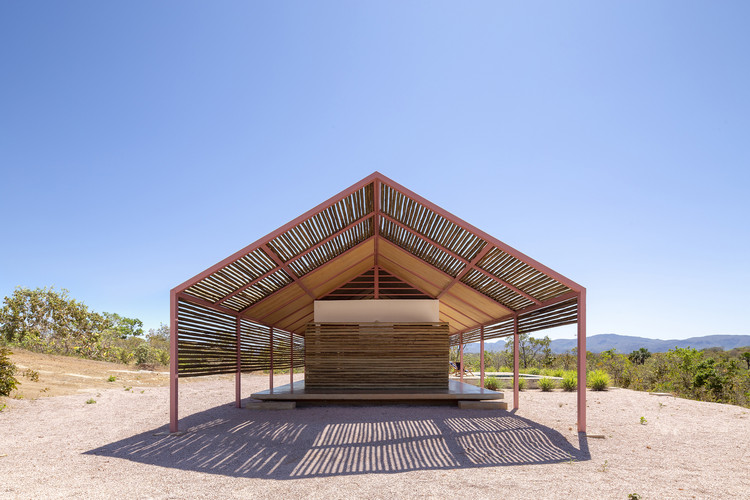
Between January and December 2018, addressing the housing demands of Indigenous communities, Grupo ][ Fresta initiated a technical architectural consulting project for the Guarani and Tupi ethnic communities located in the state of São Paulo, in the municipalities of São Paulo, São Bernardo do Campo, Mongaguá, Praia Grande, and Itanhaém.
This work was developed within the framework of a Basic Environmental Plan (PBA), a prerequisite for the environmental licensing of developments located in Indigenous territories.
Architecture is one of the most beautiful professions—there is an undeniable romance in building the spaces where human beings dwell. It is also one of the oldest: if considered as an activity that organizes space, some form of architectural thinking can be identified dating back at least hundreds of thousands of years. Its beauty, however, is partially eclipsed by widespread frustration within the professional field in Brazil. A general lack of awareness regarding its importance to society, difficulty securing contracts, fierce competition, scarce opportunities in public projects, low-paying jobs, and a willingness to work without fees all contribute to the precarious state of architecture and urban planning.
A city is a shared space where individuals seek to realize their desires and goals. Streets, sidewalks, and public spaces foster encounters and connections among diverse groups, strengthening the sense of community. Urban mobility plays a fundamental role in the social and economic development of cities, particularly in citizens' quality of life. It is not just about transportation, but about how people move through the city, impacting the time and energy expended by residents, as well as migration, communication, the formation of personal social networks, traffic flows, housing, health, and the spatial distribution of diverse points of interest. According to Ole B. Jensen, “contemporary cities and places are defined by mobility and their flows.”
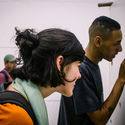
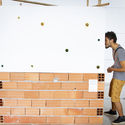
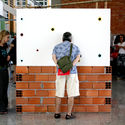
“WHERE DO WE FIND OURSELVES?” is the title of the installation produced by Estúdio Mangava for feverestival 2020 (Campinas International Theater Festival). It was exhibited during the second week of February, about a month before we went into quarantine. The festival's organizers challenged the studio to represent the edition's theme through an interactive installation, which aimed to reaffirm its present, revisit the past, and project the future: what do we want to build from here? What do we want to reinvent? What kind of world project are we seeking? What are our desirable futures?
Through the Contemporary Culture and Reality Seminar course—then coordinated by Professor José Guilherme Pereira, together with Baque Cidade and the Carmen Portinho Feminist Collective—Escola da Cidade welcomed Mestra Joana Cavalcante, from Nação do Maracatu Encanto do Pina, for a discussion on what Maracatu is and how, in its local territories—with the city of Recife (PE) serving as an emblematic case—it resists as a social organization while exposing issues such as racism, sexism, real estate speculation, and socio-spatial segregation.
https://www.archdaily.com/1124225/maracatu-culture-and-space-mestra-joana-discusses-black-culture-in-the-urban-dynamics-of-recifeEscola da Cidade
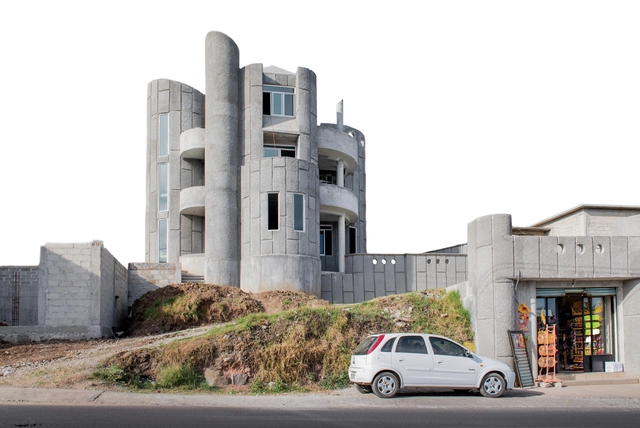
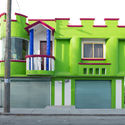
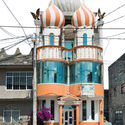
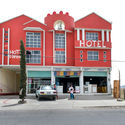
In Mexico, the practice of self-construction remains a divisive topic within the architectural community, with proponents both for and against a practice that is highly conventional and widespread throughout the country. However, though far from a consensus among construction professionals, autonomous building processes are an undeniable reality driven by economic, cultural, and social conditions—a phenomenon that knows no borders. With this in mind, over the last few years, architects have launched a series of initiatives aimed at developing and providing informative materials, support guides, and manuals for self-construction, addressing safety and well-being, and ultimately bringing to light a practice that is increasingly difficult to ignore.
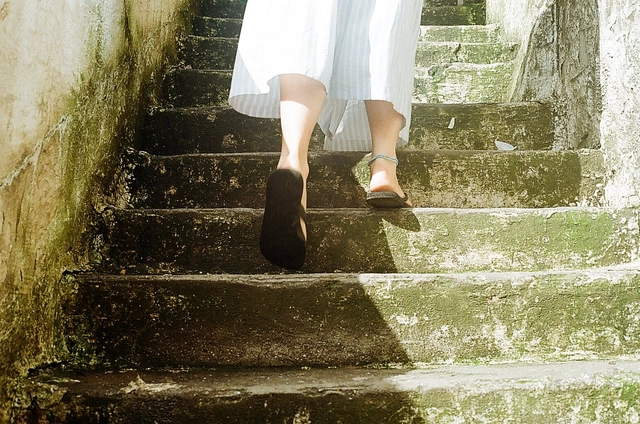
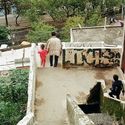
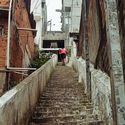
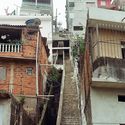
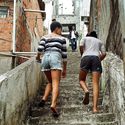
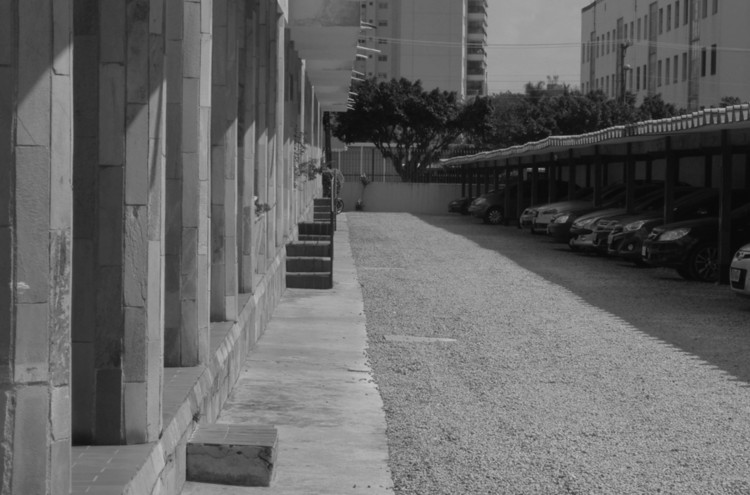
Steps, analog photo, 2018 | Canon 50mm | own production
When considering the history of occupation in the city of São Paulo and the pursuit of a universal, democratic urban planning, understanding the role and movement of women in the urban context—particularly on the city's periphery—becomes essential. Here, we look at the Jardim Damasceno neighborhood and its spaces in motion—the stairways—to understand how these bodies express themselves in this context, their actions and transformations, and how gender is perceived by them.
The composition of interior spaces is essential to human well-being. During the Covid-19 pandemic, this topic gained even greater prominence, as the design of indoor environments—beyond being aesthetically pleasing—can also help prevent disease and directly influence how we feel.
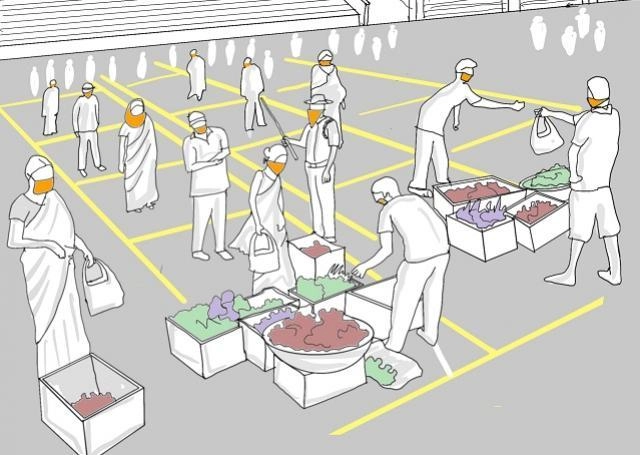
A temporary Rythu bazaar in Visakhapatnam, India. Illustration: Rajeev Malagi/WRI
When was the last time you walked through a market without being conscious of people walking nearby, or took a stroll in your neighborhood park without worrying about the hygiene of your surroundings?
The COVID-19 pandemic brought the world to a standstill. Even though residents in many places have already spent long periods locked down at home, we are still adapting to this new normal, working to reshape how we interact with others and with outdoor public spaces.
Cortesia de PC3 - Pensamento Crítico e Cidade Contemporânea
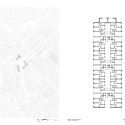
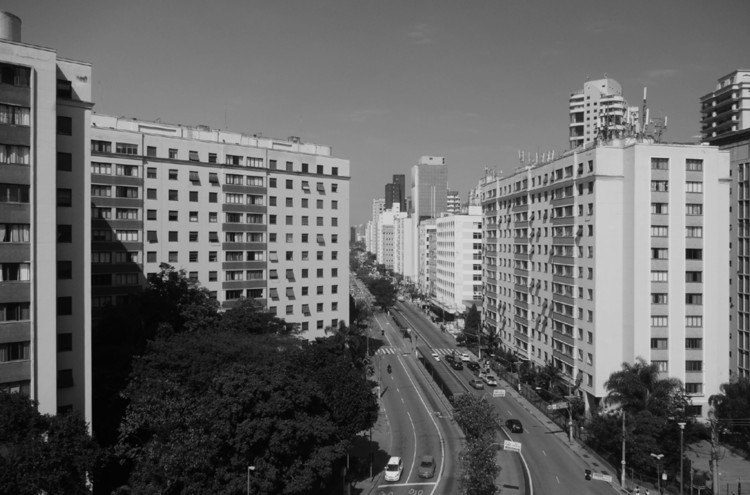
Located at the intersection of Nove de Julho and São Gabriel (formerly Flora) avenues and Groelândia Street, between the neighborhoods of Jardim América and Itaim-Bibi, this complex, with its three twelve-story buildings, became a prominent landmark on one of the most important corridors connecting downtown São Paulo to the city's southern zone.
https://www.archdaily.com/1123638/verticalization-and-spatial-quality-in-collective-housing-9-de-julho-residential-complexPC3 - Pensamento Crítico e Cidade Contemporânea
Aflitos Chapel. Via Wikimedia Commons. Creative Commons License
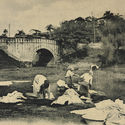
The 2018 discovery of nine skeletal remains in São Paulo's current Liberdade neighborhood brought to light physical evidence of the city's first public necropolis, the Cemitério dos Aflitos (Cemetery of the Afflicted), also known as the Cemitério dos Enforcados (Cemetery of the Hanged). According to municipal archival documents, between 1775 and 1858, the cemetery was primarily the final resting place for the marginalized: enslaved Black men and women, the poor, the destitute, and those condemned to the gallows. While the Cemitério dos Aflitos was a scattered territory of those cast out of São Paulo society, the Irmandade do Rosário (Sisterhood of the Rosary), founded in 1720, was established as a demarcated Black territory in the city, where enslaved, freed, and free people lived together, held funerals, celebrated festivals, and practiced religious devotions, "when this segment of São Paulo's population would burst onto the streets together, with their characteristic attire, adornments, and sounds" (WISSENBACH, 1988: 206-7).
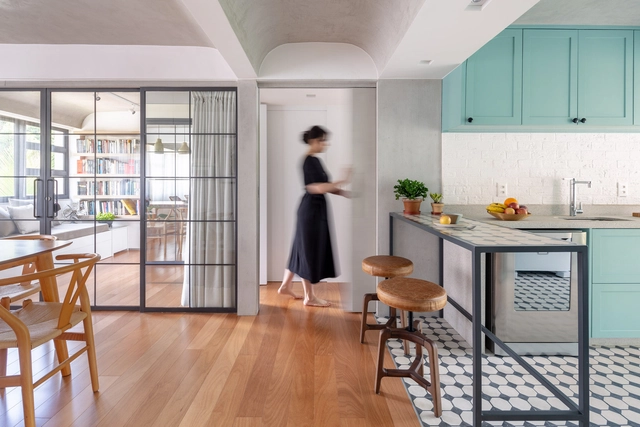
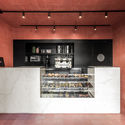
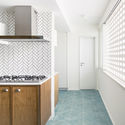
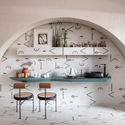
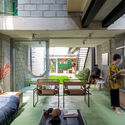
Frequently used in wet areas, such as bathrooms and kitchens, as well as outdoor spaces like plazas and sidewalks, cement tiles are increasingly being incorporated into other rooms in interior design projects. This is due not only to their beauty, but also to their ability to adapt to the specific demands of different uses, along with practical benefits like easy cleaning.
Although the urban fabric of Buenos Aires is characterized by a heterogeneous and constantly changing morphological condition, within the range of low-density housing, it is possible to detect certain recurring typologies that emerged from the interplay of successive historical variables—such as block subdivision strategies, urban regulations and their subsequent updates, or the building traditions of those who built the city. One of these identifiable typologies is the PH, whose name derives from *Propiedad Horizontal* (Horizontal Property), a regulation that allowed the development of individual homes within a single plot.
Considered one of the world's oldest construction techniques, structural masonry in Brazil was first used during the colonial period with stone, adobe, and rammed earth. Since then, the method has evolved, finding renewed viability through contemporary materials such as modular concrete blocks or load-bearing ceramic blocks.
In this construction method, where the structure and enclosure are built simultaneously, columns and beams are unnecessary. Consequently, the walls serve a dual purpose: they define the spaces while functioning as the load-bearing structure of the building.
Cortesia de PC3 - Pensamento Crítico e Cidade Contemporânea
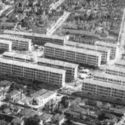
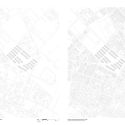
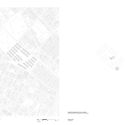
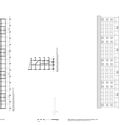
The Industrial Workers' Retirement and Pension Institute (IAPI) commissioned the prominent Rio de Janeiro architect Paulo Antunes Ribeiro, national president of the Institute of Architects of Brazil (IAB) in the 1950s, to design this project in the industrial neighborhood of Mooca, an area already highly consolidated by the 1940s. Occupying a large urban void, the housing complex consists of seventeen blocks arranged to follow a rational layout, though without the same geometric rigor that Attilio Corrêa Lima had adopted at Várzea do Carmo. Within Mooca's fragmented urban fabric, Ribeiro introduced a modern urban design that eliminated traditional subdivision lots, creating a large public space where the blocks are integrated into green areas.
https://www.archdaily.com/1123374/housing-projects-in-industrialized-zones-the-case-of-the-mooca-residential-complexPC3 - Pensamento Crítico e Cidade Contemporânea
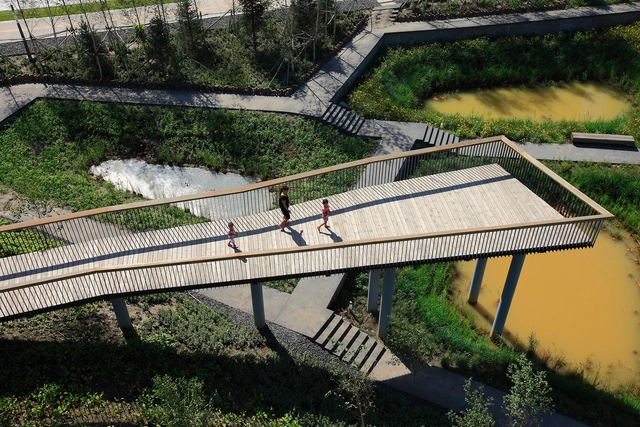
On this October 4th, National Landscape Architect Day, it is worth reflecting on the following question: What is the importance of landscape design? A seemingly simple question, yet one with a surprising answer. Landscape architecture is the tool with the greatest potential to transform our cities and, consequently, how contemporary society relates to nature.
Architecture and urbanism are ways of materializing what is to come. Yet, how can we design a common future while keeping this future open to new meanings and in constant motion, driven by the subjects who appropriate it? How can architects understand themselves as part of the movement to revalue collective spaces? How can we use this tool to distribute power—building direct democracy and free behavior through participation in everyday life? How can we recognize relationship as a tool for constructing an architecture of freedom?
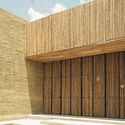
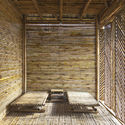
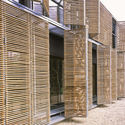
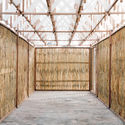
Historically, bamboo has been used as a raw material in traditional low-income construction, serving as a substitute for other woods to build structures, cabinetry, and even furniture. Today, due to its numerous advantages regarding durability, strength, versatility, and low environmental impact, it has earned the moniker "vegetal steel," securing a privileged place in the construction industry. The current search for sustainable development materials has generated new construction fusions that bring contemporary materials and techniques into play with traditional elements, merging and highlighting the unique qualities of materials from each region.
Cortesia de PC3 - Pensamento Crítico e Cidade Contemporânea
The original plan for the Várzea do Carmo Housing Complex, developed by a team from the Industrial Workers' Retirement and Pensions Institute (IAPI) and coordinated by the architect and urban planner Attilio Corrêa Lima, is one of the most avant-garde proposals of the period discussed in this book. Its urban planning, radically modern and rationalist, goes beyond established models of residential neighborhoods: it proposes creating an urban centrality with a working-class housing complex as its starting point.
https://www.archdaily.com/1123384/housing-as-urban-centrality-the-varzea-do-carmo-housing-complexPC3 - Pensamento Crítico e Cidade Contemporânea
Rainwater Source Park / Turenscape. Image courtesy of Turenscape.
The 17 Sustainable Development Goals (SDGs) were established by the United Nations (UN) in 2015 as part of a global agenda aimed at implementing public policies to guide humanity toward a sustainable future by 2030.
According to the organization, the goals are a universal call to action to end poverty, protect the planet, and ensure that by 2030 all people enjoy peace and prosperity. They address a wide range of issues, including health, education, gender equality, reduced inequalities, sustainable consumption and production, the protection and sustainable use of oceans and terrestrial ecosystems, and inclusive economic growth.
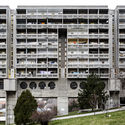
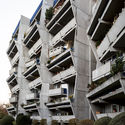
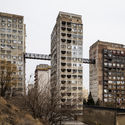
While there is a certain lack of theoretical definition regarding the limits and scope of the term "Brutalist," there are certain constants in its aesthetic parameters that allow us to establish a relatively concrete line of analysis. In this context, Brutalist buildings—a style of the Modern Movement that experienced its boom between the 1950s and 1970s—are characterized by their tectonic honesty, exposing the materials of construction along with their structural and building logic, geometric forms, and rough surfaces. Reinforced concrete emerges as the primary material of choice; both the textures left by rough timber formwork and the imperfections of the concrete itself are no longer concealed by plaster or paint, but are deliberately displayed to highlight the building processes.
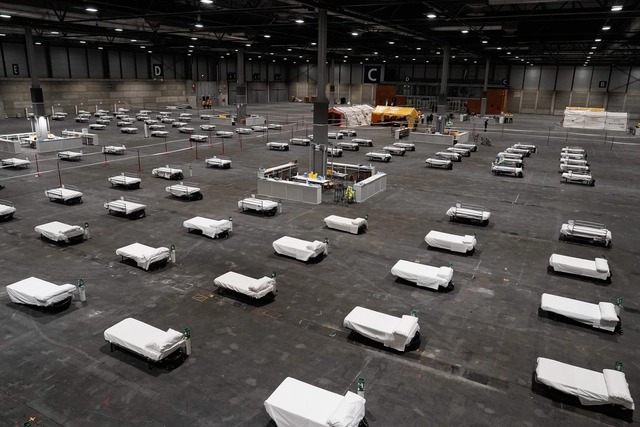
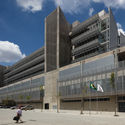
Field hospital set up at IFEMA. Courtesy of Comunidad de Madrid
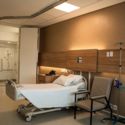
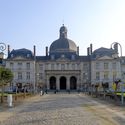
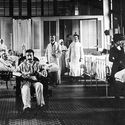
Just like us, words have a history. The word cure comes from Latin and is linked to the act of caring. This same root gives rise to the word *curator*, the person responsible for a collection or an institution, for example. Meanwhile, care, in the medical sense, was perhaps first described by Celsus: In hoc casu medici cura esse debet, ut morbum mutet (In this case, medical care is indicated to change the course of the disease) [1]. Today, when we think of a cure, we often speak of it as an isolated event within a given treatment. A cure for the flu. A cure for cancer. A cure for the novel coronavirus. A finish line that ends a journey. However, it is important to think of healing as a process that depends on multiple factors.
With a land area of over 8.5 million square kilometers, Brazil is a country of immense geographic diversity, with climates that vary from region to region. Consequently, natural ventilation strategies in architecture must be analyzed based on local specificities, requiring an analysis of topography, climate, surroundings, and wind patterns, alongside the study of the architectural design itself.
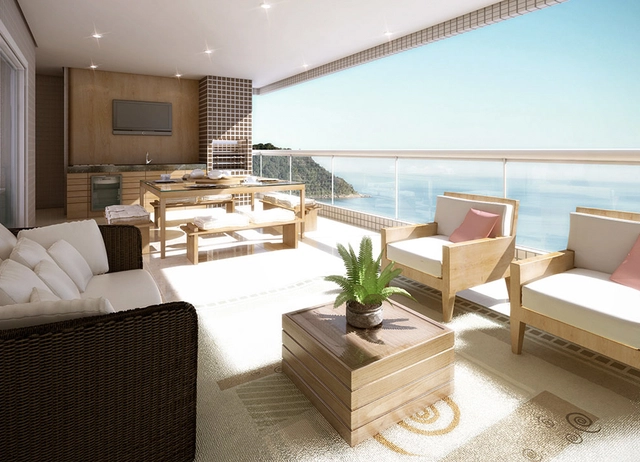
Most real estate brochures proudly showcase a specific feature: the gourmet balcony. Have you ever stopped to think that perhaps these spaces, typically equipped with a barbecue grill, say more about real estate speculation than about the actual barbecue culture in Brazil?
https://www.archdaily.com/1123640/gourmet-balcony-national-passion-or-real-estate-strategyArchDaily Team
.jpg?1599230293 "© Otávio Sasseron")




















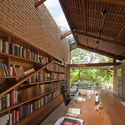
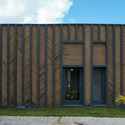
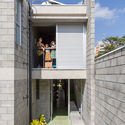
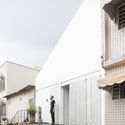













.jpg?1602591397 "Dos Cajueiros House / Terra Capobianco + Galeria Arquitetos. Image: © Nelson Kon")
.jpg?1602591657 "B+B House / Studio MK27 - Marcio Kogan + Renata Furlanetto + Galeria Arquitetos. Image: © Fernando Guerra | FG+SG")
.jpg?1602591386 "Delta House / Bernardes Semi-detached House / CR2 Arquitetura. Image: Architecture. Image: © Ruy Teixeira")