1. ArchDaily
  2. MVRDV

MVRDV: The Latest Architecture and News

MVRDV and Buro Happold Reveal Design for the Lampegiet Theatre in Veenendaal, Netherlands

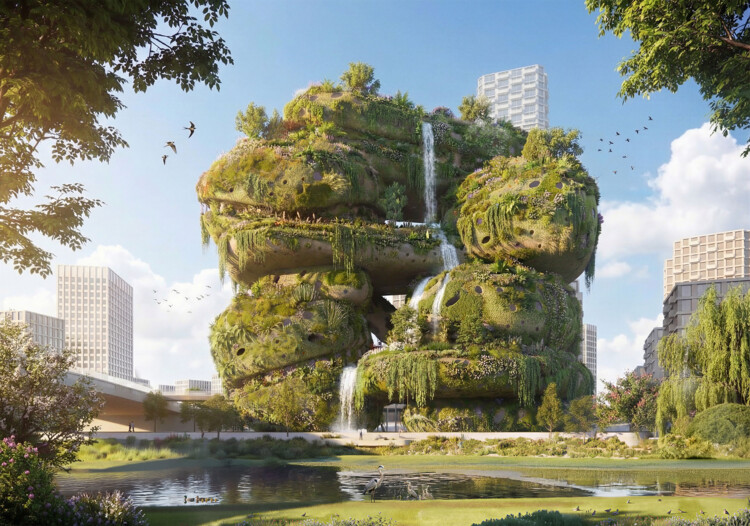
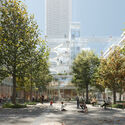
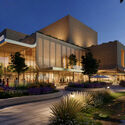
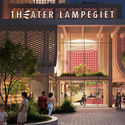
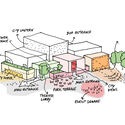
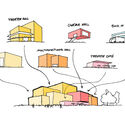
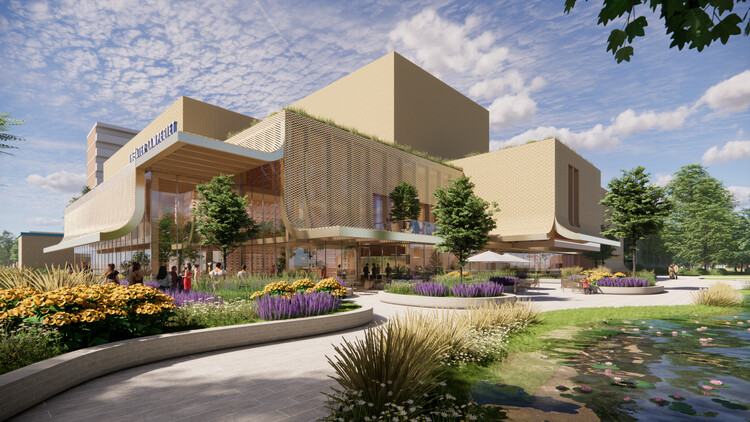
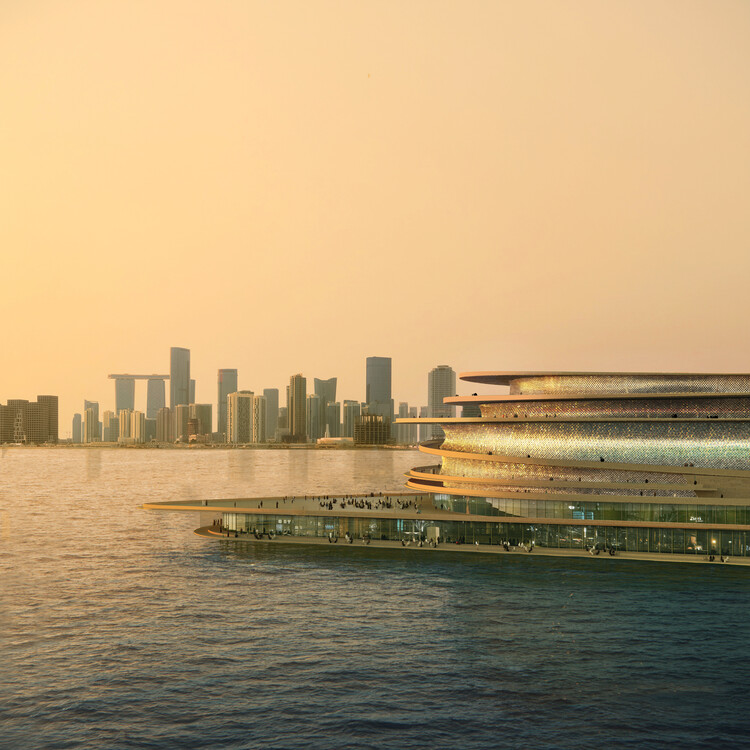
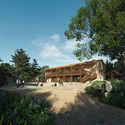
Designed by MVRDV in collaboration with Buro Happold, the new Lampegiet Theatre in Veenendaal, the Netherlands, is scheduled to replace the existing theatre building from 1988. Approved by the Veenendaal City Council in January 2026, the project is expected to begin construction in 2027 and reach completion in 2029. Conceived as a contemporary cultural venue that responds to both current performance requirements and the city's historical identity, the new theatre introduces a compact, multi-volume composition wrapped in a porous ceramic facade that allows the building to act as an illuminated urban landmark.

MVRDV and Buro Happold Reveal Design for the Lampegiet Theatre in Veenendaal, Netherlands - Image 1 of 4MVRDV and Buro Happold Reveal Design for the Lampegiet Theatre in Veenendaal, Netherlands - Image 2 of 4MVRDV and Buro Happold Reveal Design for the Lampegiet Theatre in Veenendaal, Netherlands - Image 3 of 4MVRDV and Buro Happold Reveal Design for the Lampegiet Theatre in Veenendaal, Netherlands - Image 4 of 4MVRDV and Buro Happold Reveal Design for the Lampegiet Theatre in Veenendaal, Netherlands - More Images+ 3

Serpentine Pavilion 2026 and Lina Ghotmeh’s House of Performing Arts: This Week’s Review

Architecture's public role emerges as a central theme across recent announcements, institutional projects, and professional programs. The selection of the 2026 Serpentine Pavilion designer foregrounds architecture as a space for public encounter and material inquiry, while major civic and cultural projects point to renewed investment in institutions that support education, exchange, and urban continuity. Alongside these developments, international award programs and policy-aligned initiatives continue to situate architecture within broader conversations on sustainability, social responsibility, and long-term impact, highlighting how design decisions at both intimate and monumental scales respond to shared environmental and civic challenges.

Serpentine Pavilion 2026 and Lina Ghotmeh’s House of Performing Arts: This Week’s Review - Image 1 of 4Serpentine Pavilion 2026 and Lina Ghotmeh’s House of Performing Arts: This Week’s Review - Image 2 of 4Serpentine Pavilion 2026 and Lina Ghotmeh’s House of Performing Arts: This Week’s Review - Image 3 of 4Serpentine Pavilion 2026 and Lina Ghotmeh’s House of Performing Arts: This Week’s Review - Image 4 of 4Serpentine Pavilion 2026 and Lina Ghotmeh’s House of Performing Arts: This Week’s Review - More Images+ 8

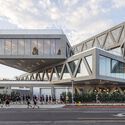
EU Mies Awards Shortlist and MVRDV’s Fluid Facade in Beijing: This Week’s Review

Spanning multiple geographies and scales, this week's architecture news reflects ongoing discussions around long-term planning, institutional frameworks, and the public role of architecture. National-scale urban initiatives and large civic developments point to how planning and infrastructure are being used to reorganize cities and territorial systems, while parallel attention to stadiums, cultural facilities, and mixed-use projects highlights the expanding civic ambitions of large-scale architecture. Alongside these, interviews and heritage-focused projects foreground participatory practices and the careful reuse of existing structures, highlighting architecture's capacity to operate within complex social and political conditions. Recognition platforms and professional programs further situate these practices within a broader architectural discourse, offering insight into how contemporary work is evaluated and shared across regions.

EU Mies Awards Shortlist and MVRDV’s Fluid Facade in Beijing: This Week’s Review - Image 1 of 4EU Mies Awards Shortlist and MVRDV’s Fluid Facade in Beijing: This Week’s Review - Image 2 of 4EU Mies Awards Shortlist and MVRDV’s Fluid Facade in Beijing: This Week’s Review - Image 3 of 4EU Mies Awards Shortlist and MVRDV’s Fluid Facade in Beijing: This Week’s Review - Image 4 of 4EU Mies Awards Shortlist and MVRDV’s Fluid Facade in Beijing: This Week’s Review - More Images+ 8

MVRDV Receives Approval for Plum Village Buddhist Monastery Renovations in France

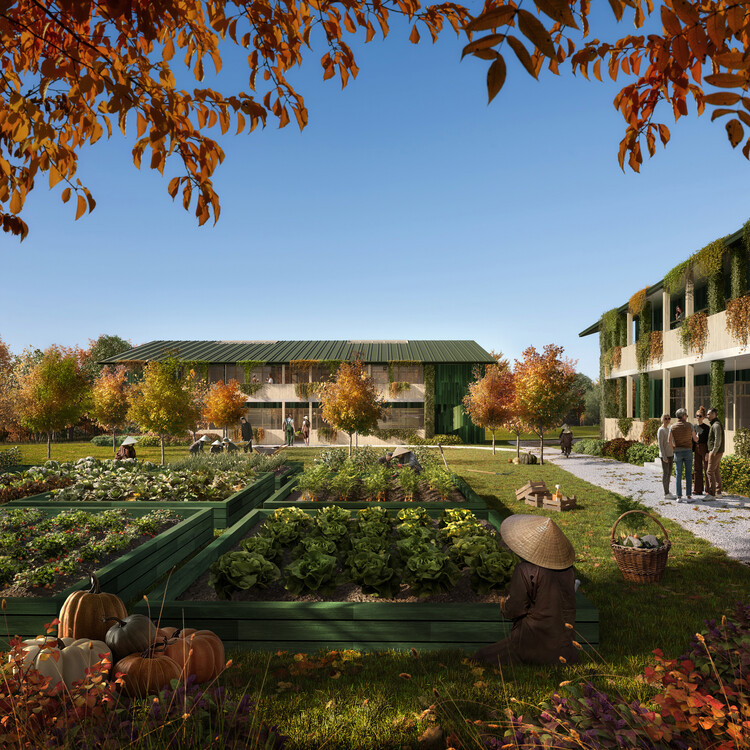
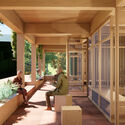
The Plum Village Buddhist Monastery in southern Dordogne, France, has received construction approval for the first phase of its ongoing collaboration with Dutch architecture studio MVRDV. The approvals cover the Upper Hamlet masterplan phase, including the construction of new guest houses and the renovation and expansion of the monastery's bookshop, as well as a new nunnery building at the Lower Hamlet. Developed in collaboration with co-architect MoonWalkLocal and consultants OTEIS, VPEAS, and Emacoustic, the wider project includes two masterplans for the Monastery's Upper and Lower Hamlets, four communal guest houses, a new nunnery, and the transformation of an existing bookshop. Working on a non-profit basis, the design team prioritises renovation alongside the use of circular and bio-based materials, aligning the architectural approach with the monastery's philosophical principles. The proposed additions aim to better accommodate the annual visitors who travel to Plum Village to engage with the teachings of Engaged Buddhism.

MVRDV Receives Approval for Plum Village Buddhist Monastery Renovations in France - 1 的图像 4MVRDV Receives Approval for Plum Village Buddhist Monastery Renovations in France - 2 的图像 4MVRDV Receives Approval for Plum Village Buddhist Monastery Renovations in France - 3 的图像 4MVRDV Receives Approval for Plum Village Buddhist Monastery Renovations in France - 4 的图像 4MVRDV Receives Approval for Plum Village Buddhist Monastery Renovations in France - More Images+ 45

MVRDV Clads ADDP Architects' Modular Residential Towers with a Pixelated Facade in Singapore

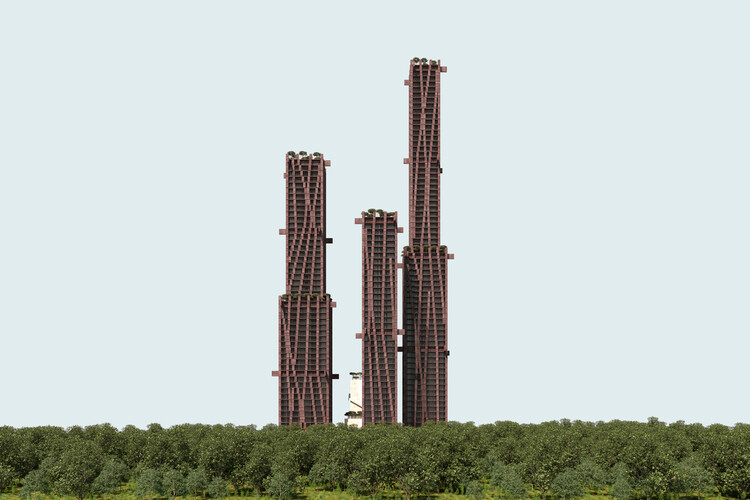
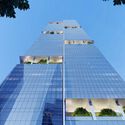
Two 36-storey residential towers have been completed on Irwell Bank Road in Singapore, featuring a pixelated facade designed by MVRDV. The scheme builds on the modular system developed by ADDP Architects, who designed the buildings using Prefabricated Prefinished Volumetric Construction (PPVC). MVRDV's facade introduces variation across the elevations and marks the locations of the communal green spaces on the 24th floor and the rooftop. Irwell Hill Residences, developed by City Developments Limited (CDL), is MVRDV's debut collaboration on a building in Singapore's urban core.

MVRDV Clads ADDP Architects' Modular Residential Towers with a Pixelated Facade in Singapore - Imagem 1 de 4MVRDV Clads ADDP Architects' Modular Residential Towers with a Pixelated Facade in Singapore - Imagem 2 de 4MVRDV Clads ADDP Architects' Modular Residential Towers with a Pixelated Facade in Singapore - Imagem 3 de 4MVRDV Clads ADDP Architects' Modular Residential Towers with a Pixelated Facade in Singapore - Imagem 4 de 4MVRDV Clads ADDP Architects' Modular Residential Towers with a Pixelated Facade in Singapore - More Images+ 22

New Cultural Venues, Awards and Transformative Architecture From Ghana to New York: This Week’s Review

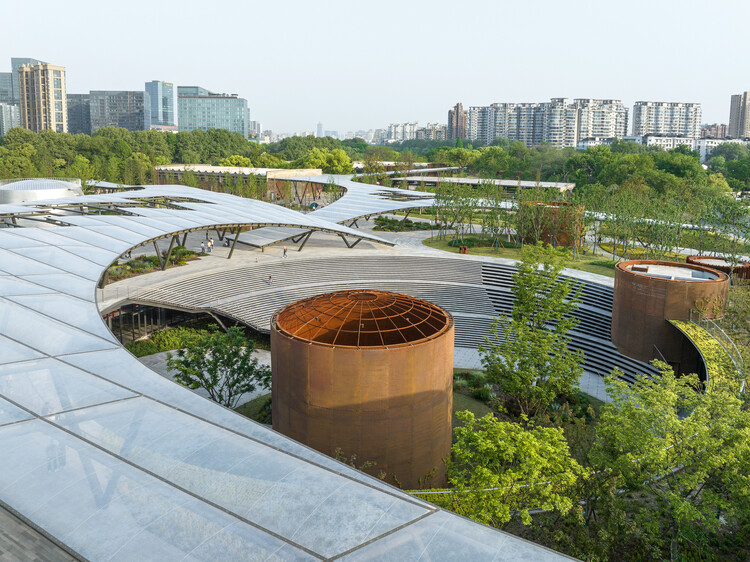
This week's architecture news highlights a diverse global landscape of design innovation, cultural investment, and adaptive reuse. Across continents, new museums and cultural venues are opening to foster dialogue around art, design, and community engagement. At the same time, major recognitions and project announcements underscore the growing importance of sustainable, socially conscious practices in shaping contemporary architecture. From adaptive transformations in New York, Tainan, and Milan, including preparations for the Milano Cortina 2026 Winter Games, to new cultural landmarks in Ghana and Qatar, this week's overview features projects by leading firms such as Herzog & de Meuron, Snøhetta, and Mecanoo, alongside initiatives from emerging practices like Limbo Accra in West Africa.
New Cultural Venues, Awards and Transformative Architecture From Ghana to New York: This Week’s Review - Imagen 1 de 4New Cultural Venues, Awards and Transformative Architecture From Ghana to New York: This Week’s Review - Imagen 2 de 4New Cultural Venues, Awards and Transformative Architecture From Ghana to New York: This Week’s Review - Imagen 3 de 4New Cultural Venues, Awards and Transformative Architecture From Ghana to New York: This Week’s Review - Imagen 4 de 4New Cultural Venues, Awards and Transformative Architecture From Ghana to New York: This Week’s Review - More Images+ 17

MVRDV Designs Spherical Landmark for Tirana’s New Asllan Rusi Sports Palace

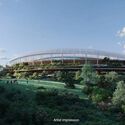
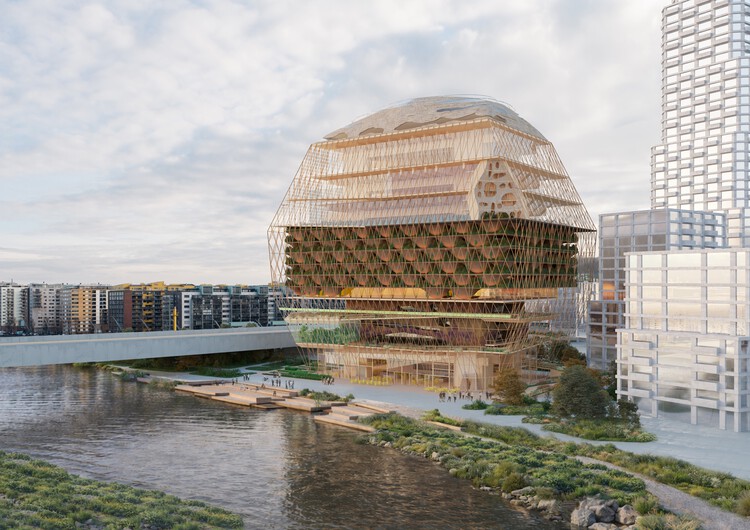
Tirana, the capital of Albania, is experiencing a rapid transformation driven by the long-term urban strategy outlined in the Tirana 2030 (TR030) Master Plan. Developed in 2017 by Stefano Boeri Architetti, UNLAB, and IND [Inter.National.Design] through a competition organized by the Ministry of Urban Development, the plan's objectives include increasing urban density, improving public infrastructure, and integrating green spaces and open areas into the urban fabric. It is in this dynamic setting that MVRDV has won the international competition for Tirana's new Asllan Rusi Sports Palace. Conceived as a mixed-use development, the project, named The Grand Ballroom, combines a 6,000-seat arena for basketball and volleyball with residential apartments, a hotel, and ground-level retail. With its spherical form exceeding 100 metres in diameter, the design adds a distinctive landmark to Tirana's growing collection of ambitious architectural projects.
MVRDV Designs Spherical Landmark for Tirana’s New Asllan Rusi Sports Palace - Imagen 1 de 4MVRDV Designs Spherical Landmark for Tirana’s New Asllan Rusi Sports Palace - Imagen 2 de 4MVRDV Designs Spherical Landmark for Tirana’s New Asllan Rusi Sports Palace - Imagen 3 de 4MVRDV Designs Spherical Landmark for Tirana’s New Asllan Rusi Sports Palace - Imagen 4 de 4MVRDV Designs Spherical Landmark for Tirana’s New Asllan Rusi Sports Palace - More Images+ 5

MVRDV Advances Urban Densification with The Sax Residential Towers in Rotterdam

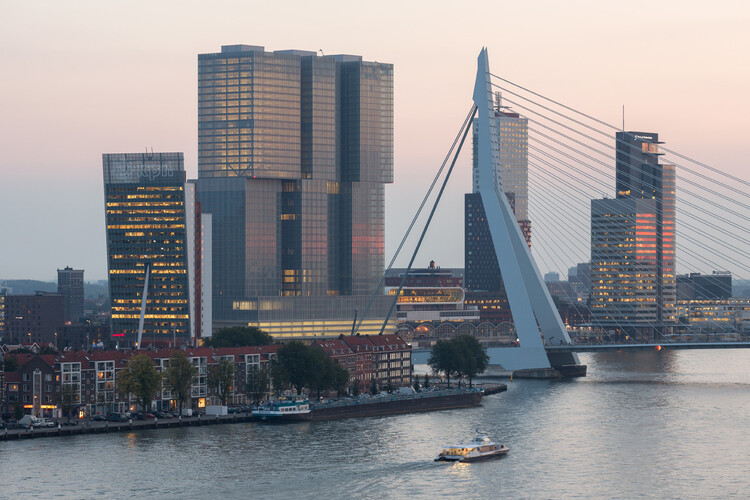
The City of Rotterdam, developers BPD and Synchroon, and architecture firm MVRDV have officially begun construction on The Sax, a major residential project located on Rotterdam's Wilhelminapier. Designed to contribute to the city's ongoing densification efforts, the development will deliver 916 apartments within two interconnected towers. Once completed, The Sax will make Wilhelminapier the most densely populated area in the Netherlands, making the project an example of compact urban growth. The design comprises two towers, combining a wide mix of housing types and shared amenities with strong connections to public transport and sustainable mobility solutions, including parking for 1,800 bicycles and a fully automated car garage. With its silver façade and undulating balconies, the building's form echoes the shape of a saxophone, reflecting the character of Rotterdam.
MVRDV Advances Urban Densification with The Sax Residential Towers in Rotterdam - Image 1 of 4MVRDV Advances Urban Densification with The Sax Residential Towers in Rotterdam - Image 2 of 4MVRDV Advances Urban Densification with The Sax Residential Towers in Rotterdam - Image 3 of 4MVRDV Advances Urban Densification with The Sax Residential Towers in Rotterdam - Image 4 of 4MVRDV Advances Urban Densification with The Sax Residential Towers in Rotterdam - More Images+ 18

The Final Weeks of the Venice Architecture Biennale and New Projects Breaking Ground: This Week’s Review

As the 19th Venice Architecture Biennale enters its concluding weeks, the global architecture scene continues to unveil significant projects and recognitions. This week's highlights include Studio Libeskind's residential complex in Prague; sauerbruch hutton's Panorama Constance exhibition building in Germany, and CRA–Carlo Ratti Associati's digitally fabricated bivouac for the upcoming Milano Cortina 2026 Winter Olympics. In New York, Venezuelan artist Miguel Braceli designed a major public artwork for the city's waterfront, addressing themes of migration, diversity, and the complexities of geopolitical identity. The week also brought recognition to sustainable and creative achievements, from the Holcim Foundation's regional awards for sustainable construction to the publication of Tadao Ando. Sketches, Drawings, and Architecture by Taschen, celebrating nearly five decades of the architect's design process.

The Final Weeks of the Venice Architecture Biennale and New Projects Breaking Ground: This Week’s Review - Image 1 of 4The Final Weeks of the Venice Architecture Biennale and New Projects Breaking Ground: This Week’s Review - Image 2 of 4The Final Weeks of the Venice Architecture Biennale and New Projects Breaking Ground: This Week’s Review - Image 3 of 4The Final Weeks of the Venice Architecture Biennale and New Projects Breaking Ground: This Week’s Review - Image 4 of 4The Final Weeks of the Venice Architecture Biennale and New Projects Breaking Ground: This Week’s Review - More Images+ 25

MVRDV Breaks Ground on the Innovation Park Artificial Intelligence Campus in Heilbronn, Germany

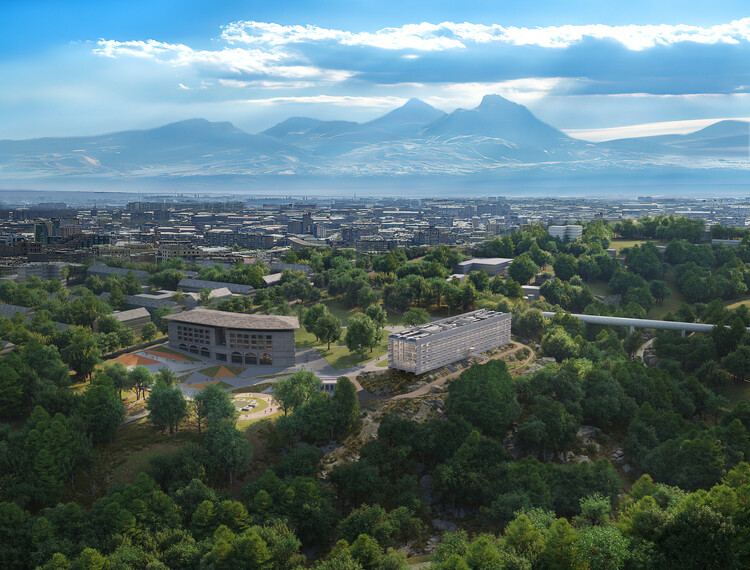
Construction began on the Innovation Park Artificial Intelligence (IPAI) Campus in Heilbronn, Germany, designed by the Dutch architectural firm MVRDV. Developed by the IPAI Konsortium, which includes the State of Baden-Württemberg, the Dieter Schwarz Foundation, Schwarz Gruppe, and the City of Heilbronn, the 30-hectare campus is envisioned as an international hub for over 5,000 professionals advancing innovative and responsible AI solutions. Centered on principles of openness, collaboration, and sustainability, the project aims to integrate workplaces, public spaces, and research facilities, establishing a setting where technology and human interaction coexist.

MVRDV Breaks Ground on the Innovation Park Artificial Intelligence Campus in Heilbronn, Germany - 1 的图像 4MVRDV Breaks Ground on the Innovation Park Artificial Intelligence Campus in Heilbronn, Germany - 2 的图像 4MVRDV Breaks Ground on the Innovation Park Artificial Intelligence Campus in Heilbronn, Germany - 3 的图像 4MVRDV Breaks Ground on the Innovation Park Artificial Intelligence Campus in Heilbronn, Germany - 4 的图像 4MVRDV Breaks Ground on the Innovation Park Artificial Intelligence Campus in Heilbronn, Germany - More Images+ 12

CarbonSpace: Designing with Carbon from the First Sketch

Subscriber Access | 

Every act of building begins with the transformation of raw materials, energy, and land, and this inevitably entails environmental impact. This encompasses all the changes a process triggers in the natural world: from resource extraction to pollutant emissions, from energy consumption to biodiversity loss. Measuring this is complex, as it spans multiple dimensions. Carbon has emerged as the common metric, translating these effects into greenhouse gas emissions (CO₂ equivalent) directly linked to global warming. This standardization has made it omnipresent and comparable across materials, systems, and sectors. Reducing carbon emissions, therefore, means addressing the root of global warming, which is a particularly urgent task in the construction industry, responsible for about 39% of global emissions. In response to this challenge, MVRDV NEXT, the innovation and digital tools division of the Dutch architectural firm, launched CarbonSpace, a free, open platform that brings carbon accounting to the architect's desk, right at the napkin sketch stage.

CarbonSpace: Designing with Carbon from the First Sketch - Image 1 of 4CarbonSpace: Designing with Carbon from the First Sketch - Image 2 of 4CarbonSpace: Designing with Carbon from the First Sketch - Image 3 of 4CarbonSpace: Designing with Carbon from the First Sketch - Image 4 of 4CarbonSpace: Designing with Carbon from the First Sketch - More Images+ 19