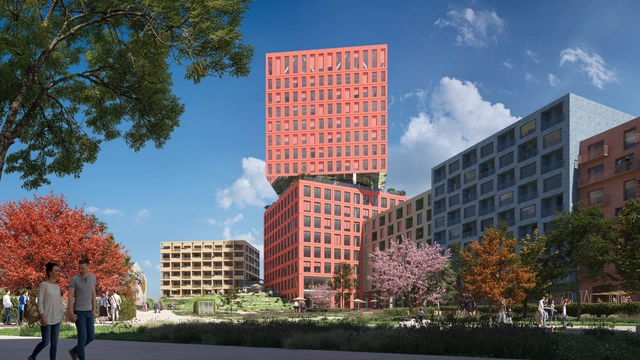
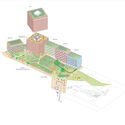
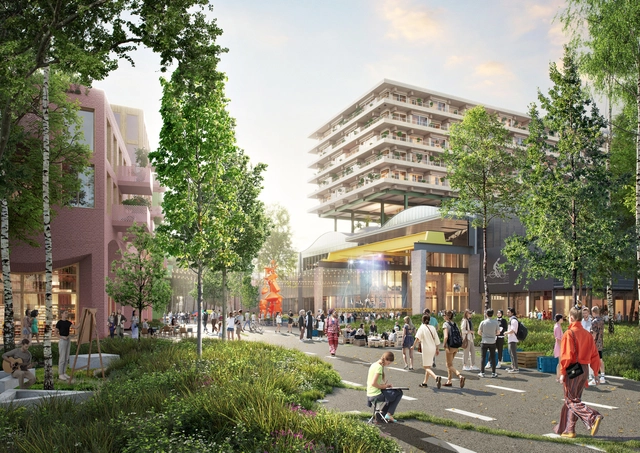
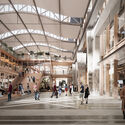
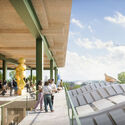
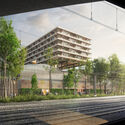
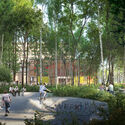
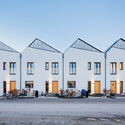
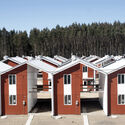
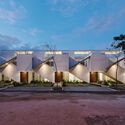
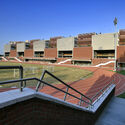
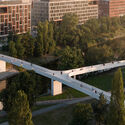
MVRDV and LOLA Landscape Architects have just revealed the new development of “Grüne Mitte” in Düsseldorf, Germany. Centered around open communication, negotiation, and compromise, the project aims to introduce 500 new apartments and community spaces to enhance the neighborhood. Approximately 50% of the scheme is designated as social or affordable housing, which was designed in participatory processes with the residents.
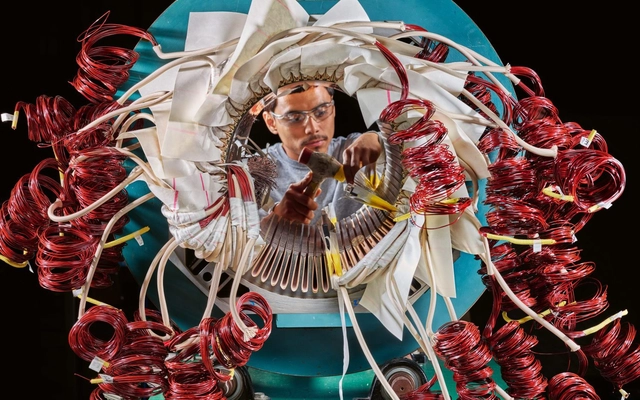
Christopher Payne’s fascination with factories goes back decades. As an architecture student at the University of Pennsylvania in the 1990s, Payne had the good fortune to find a summer job with an agency inside the National Park Service called the Historic American Buildings Survey. “They sent teams of architecture students, historians, and photographers to document all kinds of projects,” he says. “We documented grain elevators in Buffalo, cast iron bridges in Ohio, a power plant in Alabama, and national parks in Utah. That experience instilled a deep appreciation for industrial architecture.” After graduation, he worked for several years as an architect in New York City before transitioning full-time to photography. His previous books include New York’s Forgotten Substations: The Power Behind the Subway; Asylum: Inside the Closed World of State Mental Hospitals; North Brother Island: The Last Unknown Place in New York City; and Making Steinway: An American Workplace. Last month, Payne gave the School of Visual Art’s Ralph Caplan Memorial Lecture, and shortly afterward I reached out to him to talk about his most recent book, Made in America (Abrams), his long love affair with factories, and the photographic process.
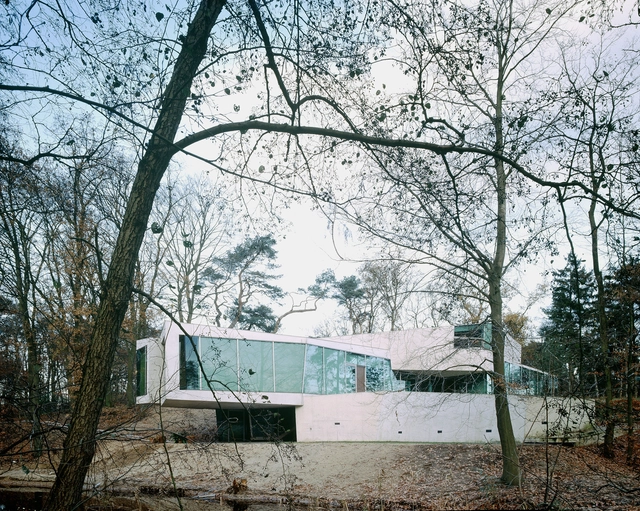
In 1993 a young professional couple from Amsterdam set out to build a private house unlike any other. They wanted to create something that “would be recognized as a reference in terms of renewal of the architectural language.” They reached out to several architects, including Rem Koolhaas, but finally decided to entrust the commission to Dutch architect Ben van Berkel after he studied the site and came up with a vision for the project, relating it to the couple’s lifestyle.
Located in Het Gooi, its design took over 5 years, going through several iterations, but always coming back to its core inspiration: the Möbius loop. The shape, defined as a single-sided surface with no boundaries, was the key to a new architectural language that aimed to weave together all the individual activities of each family member, allowing the functional program to be integrated within the dynamic structure. By 1998, when the house was completed, it became widely published and internationally recognized. It also became a sort of manifesto for its architect, as it uses an organizational principle to inform the final image.
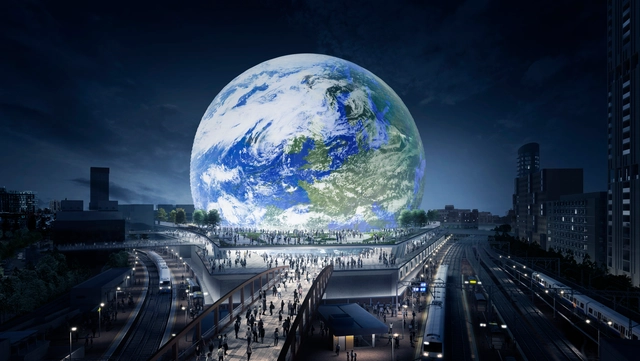
MSG Sphere London. Image Courtesy of The Madison Square Garden Company
Madison Square Garden Entertainment (MSG), the developer behind the recently opened The Sphere at the Venetian Resort in Las Vegas, has announced that plans for a similar project in London have been withdrawn for lack of support from London’s planning officials, as reported by The Guardian. The plans were initially announced in 2018, with planning permission filed in March 2019. The 300ft-tall structure, having a capacity of 21,000 seats, was to be located in Stratford, east London. In November 2023, following a combination of unfavorable comments in planning officer reports and opposition from residents, London’s mayor Sadiq Khan withdrew his initial support.
MVRDV has just announced the WärtZ masterplan, that repurposes a former business park near the railway station into a dynamic innovation hub. Developed by AM and designed by a team including MVRDV, Orange Architects, and LOLA Landscape Architect, the scheme introduces residential homes, creative workspaces, dining establishments, and various neighborhood amenities. At the core of the new design is the newly renovated Wärtsilä hall, a former factory redesigned with a signature undulating roof topped by a hovering wooden apartment block.
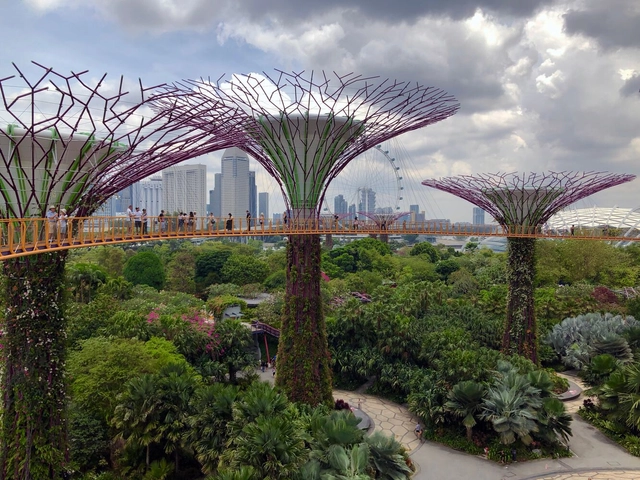
Marina Gardens, Singapore. Image by Nick Fewings Unsplash
For a long time, sustainability in the architectural field was synonymous with technology. Efficiency was directly linked to innovative technological devices that adorned buildings with gadgets. Nowadays, however, sustainability increasingly encompasses different strategies that also involve acknowledging vernacular techniques and local materials as crucial for creating sustainable and carbon-neutral buildings.
Nevertheless, regardless of the technique or materials employed, the common denominator is the pursuit of reducing the carbon footprint of our architecture, which demands changes in how buildings are conceived, constructed, and operated. In other words, whether returning to vernacular methods or utilizing cutting-edge applications, these strategies aim to reach the same destination and, therefore, are equally valid despite being vastly different.
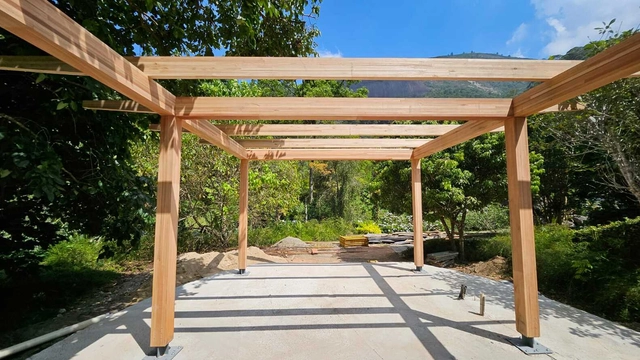
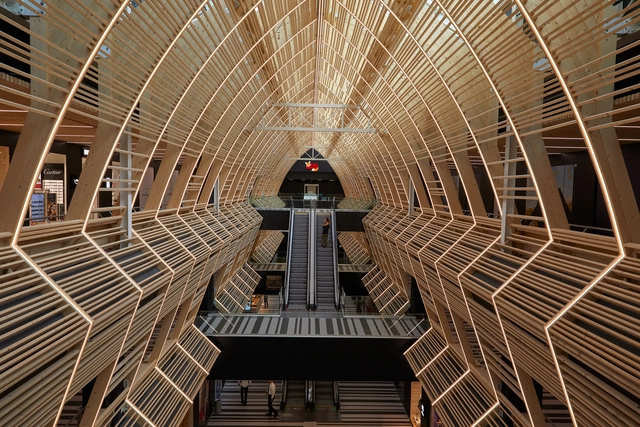
It's fascinating to observe the current state of wood in the world of architecture. The material, once seemingly forgotten by modernity, has resurged with full force, facing significant challenges but also revealing promising opportunities. The aesthetic and architectural appeal of engineered wood, coupled with its intrinsic association with sustainability, has been a catalyst for the increase in wood-centric projects around the world.
Due to technological advancements and research into the limits and possibilities of this material, there has been a significant leap in the development of wood in construction. Buildings around the world are being erected with wooden structures, driven by the increasing interest in sustainable solutions based on renewable resources, a demand from both the public and architects and their clients.
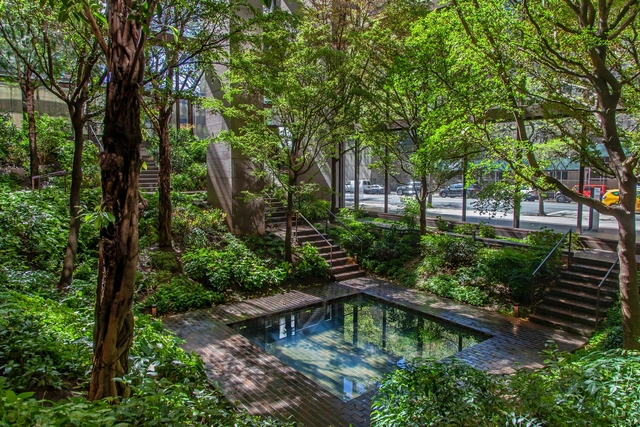
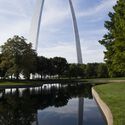
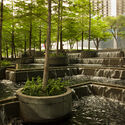
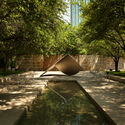
As a landscape architect, Dan Kiley has significantly contributed to the world of design. The designer worked with influential architects such as Louis Kahn, I.M. Pei, and Eero Saarinen. Influenced by the timeless landscapes of André Le Nôtre, most of his designs are well-known for their manner of merging grids and allées, striking a balance between natural and organized beauty.
Opening January 18th, “The Landscape Architecture Legacy of Dan Kiley” exhibition is a traveling photographic exhibition honoring one of the most critical Modernist landscape architects. Curated by The Cultural Landscape Foundation, the display aims to explore and spread awareness of the architect’s profound impact. Showcased at The Exhibition Space @ ABC Stone in Brooklyn, the show offers a captivating journey through 27 carefully chosen designs by Dan Kiley.
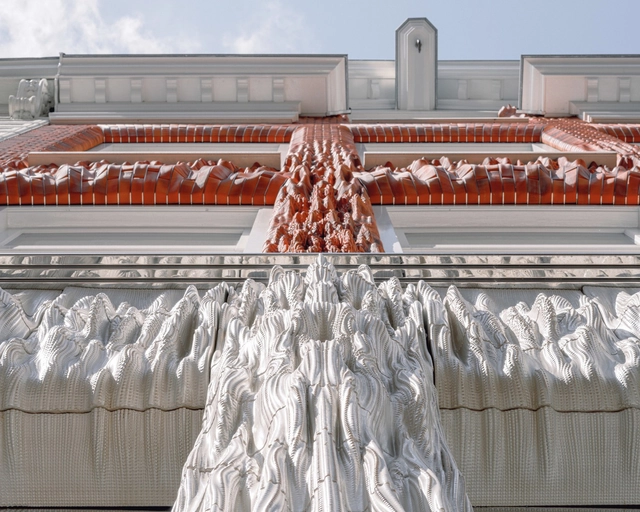
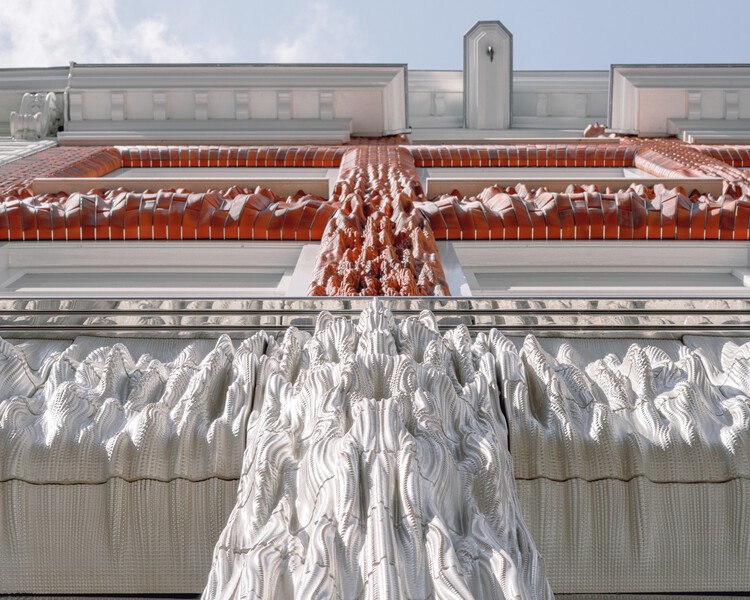
Advancements in 3D printing technology are progressing at an unprecedented pace, accompanied by a parallel surge in computational power for manipulating and creating intricate geometries. This synergy has the potential to offer architects an unprecedented level of artistic freedom in regards to the complex textures they can generate, thanks to the technology's remarkable high resolution and rapid manufacturing capabilities. If the question of production was out of the way, and architects could now sculpt virtually anything into a facade effectively and efficiently, what would they sculpt?
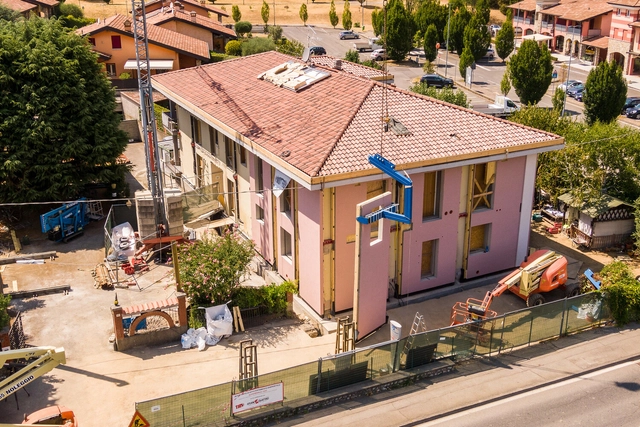
of Energiesprong, an innovative system that uses prefabricated insulated wall and roof panels . Image Courtesy of World Habitat
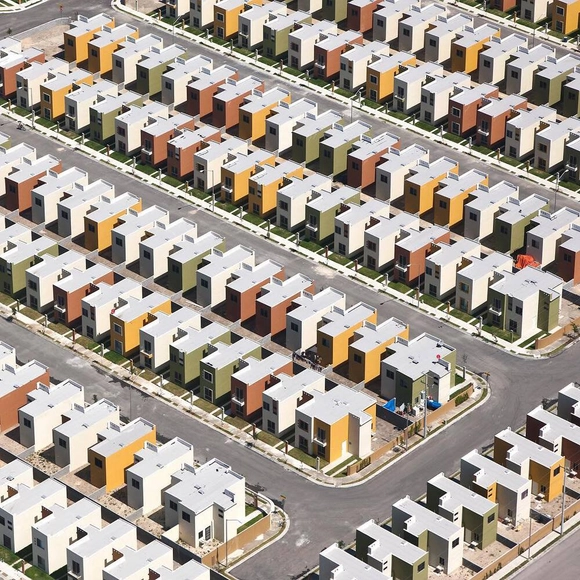
International non-profit organization World Habitat, in partnership with UN-Habitat, has announced the World Habitat Awards 2024. The prizes strive to highlight projects that demonstrate novel and transformative approaches to housing that incorporate principles of climate change adaptation and community-driven solutions. This year, 8 projects have been selected, out of which 2 projects were recognized with the Gold World Habitat Award.
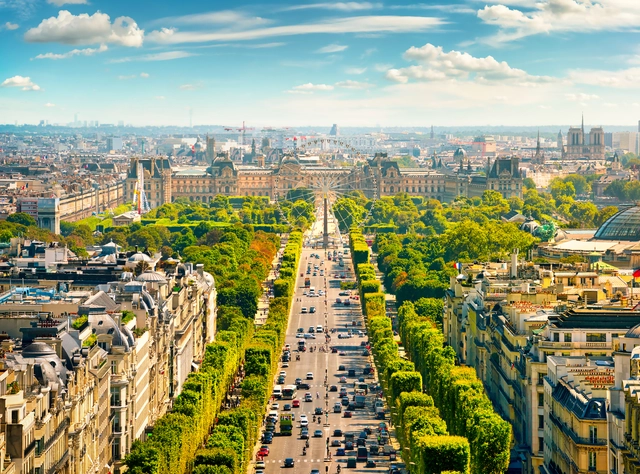
via Shutterstock | givaga | View on Avenue des Champs Elysses
As the countdown to the XXXIII Olympic Games in Paris ticks away, the city is making preparations that will completely shift its urban landscape and infrastructure. Set to be the largest event ever organized in France, the games will start on 26 July and continue till 11 August 2024. With only 200 days left, the Paris City Council has approved around 43 new initiatives acting as a catalyst for the city's transformation – aiming for a greener, healthier, and mobile Paris. From cleaning the Seine River to building a cycling lane, activating a transit line, and banning non-essential city traffic, the heart of the French capital is on a mission against time to revitalize its historic urban core.
With a total of 95 new projects recognized by Prix Versailles, the 24 global winners of this 2023 edition have recently been announced. They stand as evidence of the aesthetic vitality of each of their respective regions, paying homage to the work of numerous pioneering and/or internationally renowned firms.
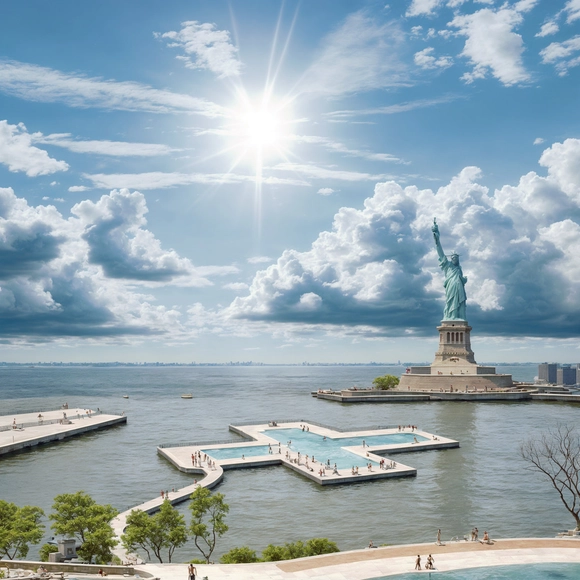
New York Governor Hochul has announced a partnership with the nonprofit Friends of + POOL to open the first urban river-sourced swimming facility in the United States. Utilizing + POOL’s design and technology, the 2,000-square-foot plus-shaped swimming pool is set to open in New York City’s East River in the summer of 2024. In 2010, four young designers, Archie Lee Coates IV, Dong-Ping Wong, Jeffrey Franklin, and Oana Stanescu, established + POOL with the goal of providing New Yorkers with access to free and safe river swimming. Now the state promised to invest $16 million to pilot and scale the system, hoping to expand it across the state of New York.
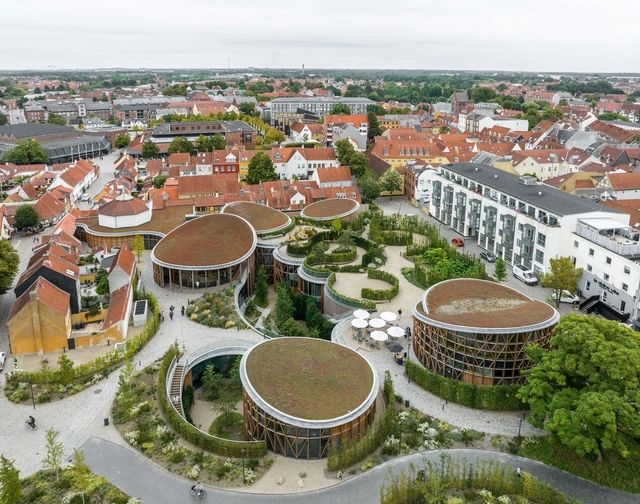
Courtesy of Danish Landscape Award | H.C. Andersen Garden
The Danish Landscape Award 2023 has been awarded to the H.C. Andersen Garden, designed by MASU Planning. The award focuses on honoring landscape architectural works with character, serving as “inspiration” for the industry. Situated in Odense in Denmark, this year’s winner was praised for reviving urban renewal in the city center by creating an escape that blends with the existing context.
The flow of architectural values throughout the centuries demonstrates the prevalence of some parameters over others in each historical period. In terms of composition, one of the most fundamental considerations revolves around issues of symmetry and balance. Indeed, a design does not necessarily have to be symmetrical to convey the notion of compositional balance. Its elements do not have to be repeated side by side for the whole to convey a sense of completeness, stability, and... paradoxically, symmetry. Many contemporary projects achieve a balanced compositional whole without repeating their elements side by side.
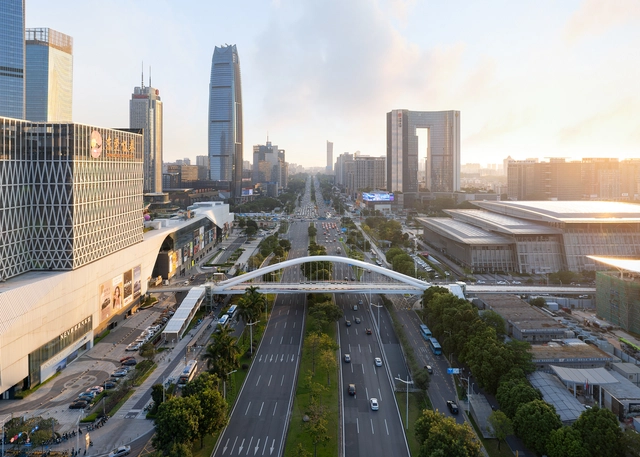
In a city, celebrating the act of walking has become a form of non-traditional planning. In the age of cars, challenging the dominance of vehicular transportation by championing the pedestrian experience is not very common. For this reason, pedestrian bridges worldwide stand as symbols of connectivity and architectural ingenuity. These soaring structures embody the urban experience for its core user: the pedestrian. Although the structures began as practical solutions to traffic management, they have evolved into iconic landmarks and pivotal components of city planning.
The significance of these projects represents a shift towards human-centric design in urban landscapes. The Kusugibashi Bridge in Japan, rebuilt by Kengo Kuma & Associates symbolizes resilience, while the Hangzhou Riverfront Public Space’s Silk Bridge showcases urban connectivity through revitalizing the waterfront. The Donnguan Central Area Slow-Traffic Bridge addresses connectivity and greenery, and SBE NV’s Vlasburg Bridge dedicates itself to enhanced water routes for the community. Collectively, these bridges drive urban revitalization into the future, emphasizing sustainability and integrating with community needs.
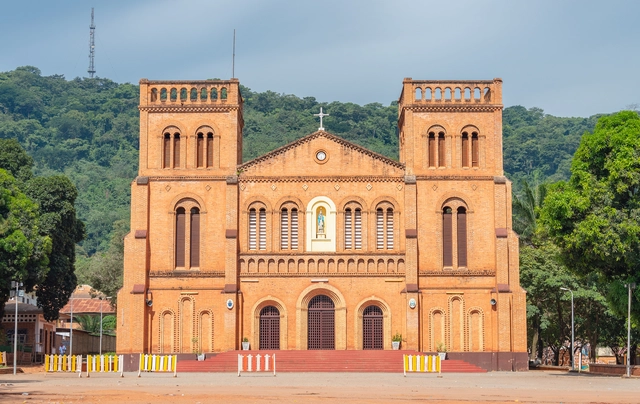
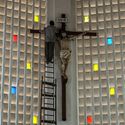
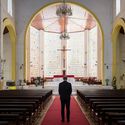
Located in the city of Bangui, the capital of the Central African Republic, is the Notre DameCathedral. This large red brick church was built in the early 1900s in the French colonial style. As the city grew from a small outpost to a colonial capital, the building was formed as a cultural and symbolic fusion of European and Central African architectural styles. Designed by French architect Roger Erell, the cathedral showcases local construction craftsmanship, provides a space for spiritual solace, and contributes to the national identity of the country.
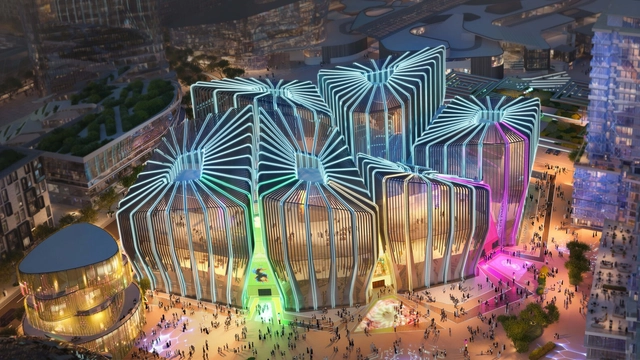
"Populous - Qiddiya Esports Arena - Gaming & Esports District . Image Courtesy of Populous
Populous has unveiled the design of the Qiddiya City EsportsArena, a new facility aimed to become the focal point for Qiddiya City, a planned entertainment and tourism megaproject in Riyadh, Saudi Arabia. Featuring the largest total area of video screens of any esports arena, along with immersive 4D technologies, the new arena strives to become the central attraction in the ‘world’s first mixed-use gaming and esports district.’