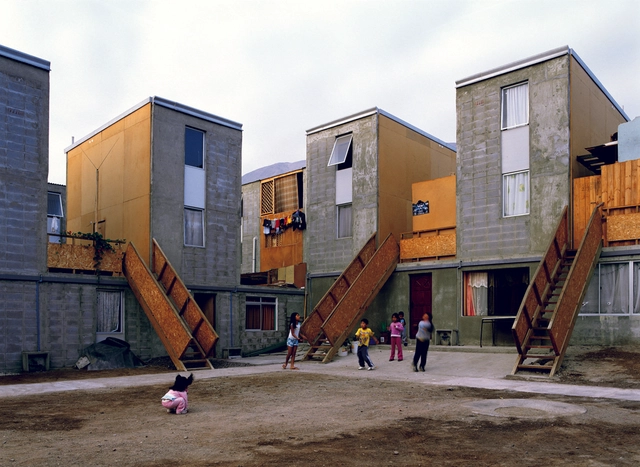
Justin McGuirk’s Radical Cities: Across Latin America in Search of a New Architectureshould be required reading for anyone looking for ways out of the bleak social inequality we’re stuck in. There were 40 million more slum dwellers worldwide in 2012 than there were in 2010, according to the UN. Private markets clearly can’t provide universal housing in any way approaching efficiency, and governments are often hostile to the poor. The only alternative is collective action at the grassroots level, and I’ve never read more vivid reporting on the subject.
https://www.archdaily.com/629354/radical-cities-radical-solutions-justin-mcguirk-s-book-finds-opportunities-in-unexpected-placesJoshua K Leon
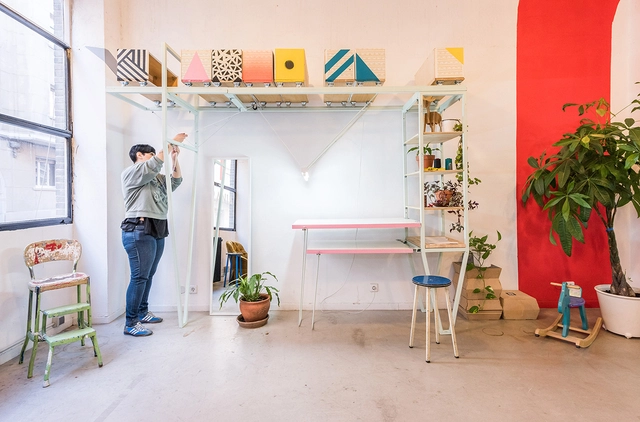
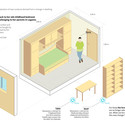
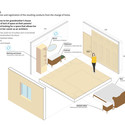
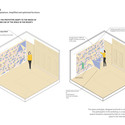
Moving back home with your parents after living independently can often create spatial tension, as the furniture and rooms that sufficed for your teenage years may no longer serve the needs of young adult life. Spanish firm PKMN [pacman] Architectures’ latest project Home Back Home, seeks to provide an architectural and spatial solution for the temporary living spaces that result from moving back home.
With it becoming increasingly common in Spain for young adults between the ages of 25 and 40 to move back into their parents’ homes, PKMN sought to answer the question: What are the domestic models resulting from this change of paradigm and economic collapse? To answer this question and develop their Home Back Home project, the studio carried out two case studies. Learn more about their proposal and see their spatial solutions, after the break.
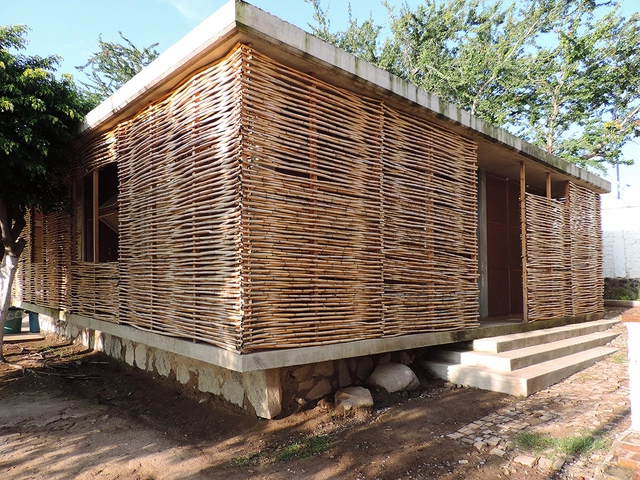
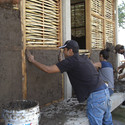
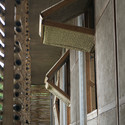
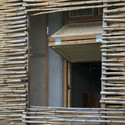
Developed by architects from Colectivo bma in Barranca de Huentitán, Guadalajara, Mexico, this new building for the Mexican Institute for Community Development (IMDEC) was built in just four days with the help of 100 volunteers.
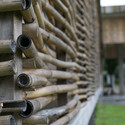
The new facility includes both housing and meeting space, and was constructed using local building techniques and materials. Built with a concrete base, the walls were made using bahareque (reed frames and mud) and woven reed lattices that cover most of the building’s exterior.
Learn more about the construction process after the break.
In a recent article in which ArchDaily reached out to our readers for comments about all-nighter culture, one comment that seemed to strike a chord with many people was kopmis' assertion that, thanks to the tendency for professors to "rip apart" projects in a final review, "there is no field of study that offers so much humiliation as architecture." But what causes this tendency? In this article, originally published by Section Cut as "The Final Review: Negaters Gonna Negate," Mark Stanley - an Adjunct Professor at Woodbury University School of Architecture - discusses the challenges facing the reviewers themselves, offering an explanation of why they often lapse into such negative tactics - and how they can avoid them.
https://www.archdaily.com/629314/why-do-professors-rip-apart-projects-in-the-final-reviewMark Stanley
Swedish firm Studio Esinam's new print series depicts "Elevations" of architectural landmarks across the globe. Using minimalist line drawings, the illustrations attempt to "capture the unique feeling of various cities around the world".
Meticulously recreating the facades of landmarks in Berlin, Brooklyn, Copenhagen, Gothenburg, London, Paris, Stockholm, and Tokyo, the growing collection of prints reframes technical drawings as works of art. By distilling iconic facades to their barest and most essential elements, Studio Esinam aims to direct "attention to details that mostly pass unseen."
View selected prints from the "Elevations" series after the break.
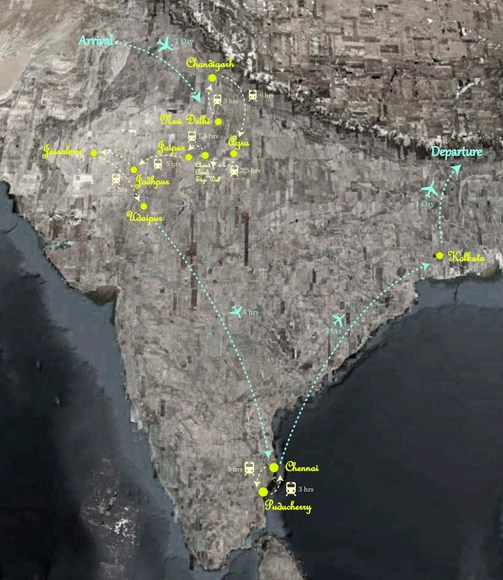
Michelle Tianhui Chen, a Master's candidate at the Yale School of Architecture, has won Robert A.M. Stern Architects' $10,000 RAMSA Travel Fellowship. With the award, Chen will travel to India where she will study the architectural shift from a diverse fabric of expressive design languages to a politically and ethnically neutral vocabulary.
"In our world of increasingly ubiquitous gleaming towers, clean in form but cleansed of details, looking to centuries-old traditions might be a means toward reestablishing human attachment to our everyday surroundings," says Ms. Chen. Her proposal promises to "culminate in a book of drawings and text that attempts to chart a path to a more balanced architecture—one which does not forsake cultural expression for a shallow conception of political order."
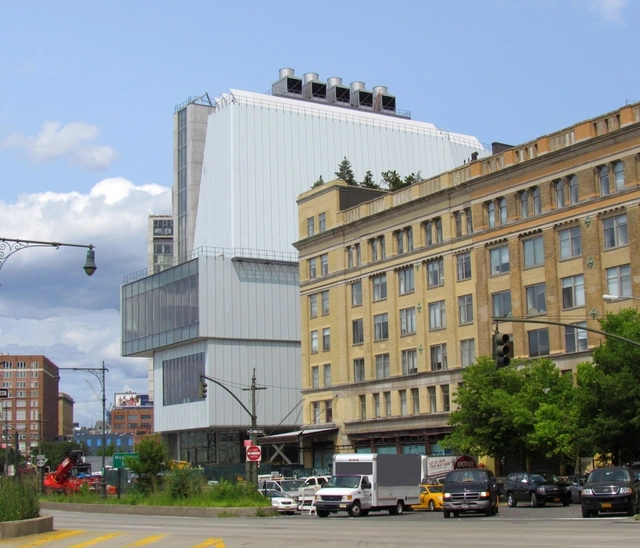
According to the New York Post, Renzo Piano has been commissioned by Michael Shvo and Bizzi & Partners to design his first US residential tower. Planned to rise in the southern Manhattan district of Soho at 100 Varick Street, the Piano-designed tower will include up to 280,000 square-feet of housing and reach nearly 300 feet. Featured amenities include a "gated private driveway" and "automated parking." Stay tuned for more details.
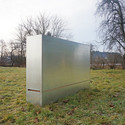
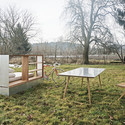
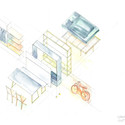
Permitting travel on a budget, the architects of Juust have designed a compact "Travelbox" that consolidates all the essentials - bike, bed, table, chair and storage. Beautifully constructed from wood and clad in aluminum, the clever arrangement brings the comfort of home to wherever life may lead you.
"In its closed position it is rigid, efficient, and ready to endure the inevitable bumps of international travel. Upon arrival the Travelbox can be unfolded to instantly transform your new abode into a comfortable home," says Juust.
With 145 countries participating in the 2015 Expo, alongside input from international organizations, corporate partners and an extensive program organized by the Expo itself, there's a lot going on in Milan right now. So much so, in fact, that it can be a little overwhelming to get a handle on all the sights that are worth your attention.
To help you out, we've put together a guided tour of the key pavilions that are turning heads, including the defining vistas of the expo grounds, the displays that are worth your time and the oddities that might entertain. From the Expo's defining icon, the 30-meter-tall Tree of Life, to the exhibition on architecture's favorite consumable (that's coffee), and all the national pavilions in between, the things you need to see are here. Whether you're planning to visit the Expo and want a quick and dirty way to ensure you've covered the highlights, or whether you're simply hoping to live vicariously through the internet, this tour is for you.
May 8th marks the 70-year anniversary of the end of World War II in Europe, when Germany’s Third Reich surrendered to the Allied forces. To commemorate the anniversary, Konstantin von zur Muehlen has released “Spirit of Berlin,” a short color film with historic footage showing everyday life in the German capital in July 1945 -- just two months after the end of the war.
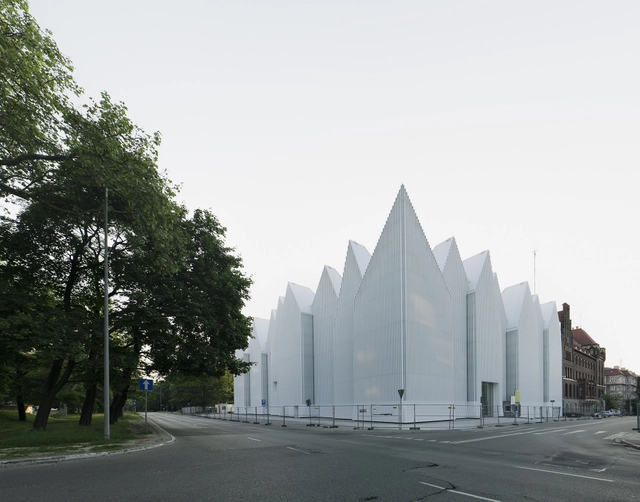
Barozzi / Veiga’s Philharmonic Hall Szczecin in Szczecin, Poland has been selected as the winner of the 2015 EU Prize for Contemporary Architecture-Mies van der Rohe Award. The design was influenced by the surrounding context and buildings, specifically by the “verticality of the city’s residential buildings, by the monumentality of the upright ornaments of its neo-Gothic churches and the heavy volumes of its Classicist buildings, by the towers that dot its entire skyline and the cranes of its port,” according to the architects. The Philharmonic Hall features large skylights and is clad with glass on the outside, providing a contrast to the surrounding buildings.
Dresden's Baroque Frauenkirche was destroyed by Allied bombing in 1945, only to be revived in the same form in 2005
Is there a growing nostalgia pervading attitudes to civic architecture in Europe? From Berlin's new Royal Palace on the River Spree to Turkey's rekindled fascination with their Ottoman heritage, architecture is becoming the medium of choice for exploring a city's roots and a people's past. In this post originally published by TheLong+Short, Feargus O'Sullivan investigates how many governments and developers have decided that the way to future lies in looking backwards.
Reading about Dubai’s Burj Khalifa in the German press, you’d be forgiven for thinking the building was in Leipzig, not the Middle East. “The tallest building in the world is so German,” saidDer Spiegelwhen the tower opened in 2010. “The Burj Khalifa is an Ossi!" shouted Bild, using the common nickname for East Germans. The headlines were partly right: when East Germany’s old parliament building, the Palace of the Republic in Berlin, was demolished in 2006, several thousand tonnes of steel girders were stripped from its carcass and shipped to the Gulf for use in the construction of Burj Khalifa.
Google's ambitious plans to expand its California headquarters in Mountain View took a major blow last night when council members announced their decision to award LinkedIn three-quarters of the North Bayshore area site. With just 500,000 square-feet of area to work with, Google would only be able to construct one of its four proposed buildings.
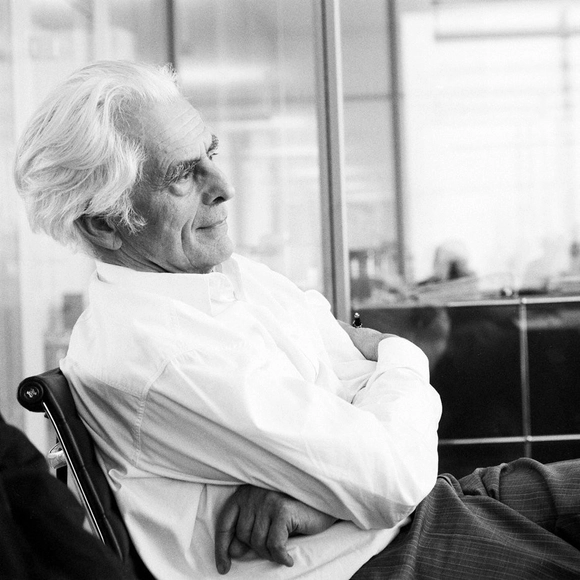
"We are inspired by his decades-long passion for the art of architecture; by his analytic rigor, manifest in subtle and articulate buildings and penetrating readings of history and place; by the broad and profoundly informed humanist culture that suffuses his writings and approach to education; and by the unbounded curiosity and delight he takes in new ideas, new work, and new talent. Henry N. Cobb embodies that combination of capability and conviction—artistic, intellectual, practical, and civic—that defines the ideal architect.”
Shigeru Ban Architects, together with the Voluntary Architects' Network (VAN), has announced plans to send emergency shelter, housing and other community facilitates to the victims of Nepal's deadly April 25th earthquake. As part of a three-phase plan, Shigeru Ban will first delivery and assemble tents with plastic partitions acquired though donation to provide immediate shelter. A few months after, the Japanese practice will collaborate with local architects and students to build temporary housing with materials found prevalent in Nepal.
Permanent housing will also be provided in the architect-led recovery plan's third phase, although little details have been released. However, you canhelp make it happenby donating to Shigeru Ban's efforts (here).
Watch Shigeru Ban's TED Talk on paper emergency structures, after the break.
Architecture professor and photographer Henry Plummer has heightened the transformative power of daylight with his cameras and published several remarkable books about light and architecture. His deep interest in light, and his lyrical writing perspective, were formed through his contact with the designer and art theorist György Kepes while studying at MIT. Within his numerous photo journeys Plummer has documented the various facets of daylight in Japan and the Nordic Countries, and of masters like Le Corbusier and Louis Kahn. As a Professor Emeritus of Architecture at the University of Illinois at Urbana-Champaign Plummer also still has ambitious plans for future book projects. In the second part of this interview, Plummer reveals how changing technologies have affected his photography, and discusses his thoughts on phenomenology and developing a poetic language of light.
If you missed it, you can read part one of this interview here.
uncube has published an entire issue dedicated to the late Frei Otto. The architect and inventor, known best for his tensile structures, was the first ever to be awarded the Pritzker Prize posthumously. Honoring Otto with more than a "simple retrospective homage," uncube has compiled an extensive online issue of "thoughts, anecdotes and observations" that reflect Otto's legacy and the ideas that lead him to be a significant part of architectural history. View the entire uncube issue on Frei Otto, here.
A new research study conducted by the Council on Tall Buildings and Urban Habitat (CTBUH), entitled Tall Buildings in Numbers – Japan: A History of Tall Innovations, examines the evolution of tall buildings in Japan since the 1960s. The study highlights key innovations in Japan’s skyline through a compilation of graphic representations, including a timeline of notable highrises, a scatterplot of towers over 150 meters and annual construction rates, and a comparison of skyscraper density with regional populations.
The medium of film has long been employed to visualise, document and narrate architectural and urban space. Since the advent of more accessible devices to capture and record these journeys and explorations it has been used more frequently by practices and students in an attempt to develop new ways of experiencing built designs. #donotsettle, a YouTube channel established by two architects and urban enthusiasts while studying at TUDelft in The Netherlands, seeks to reconcile the disparity between film as architectural representation and as an experiential medium. Although not high in production value, their films are exciting examples of how user-oriented architectural 'vlogging' can uncover an entirely new way of understanding the world around us, imbued with a refreshing level of enthusiasm and authenticity.
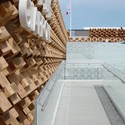
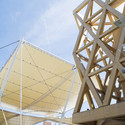
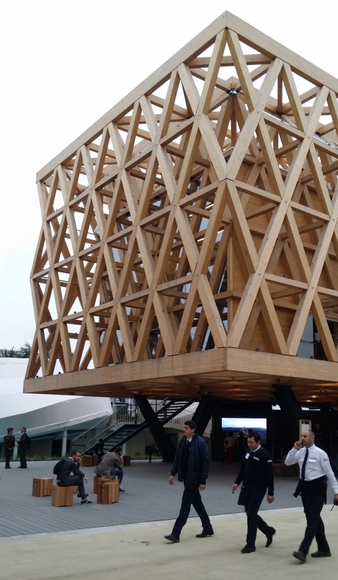
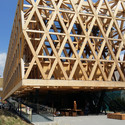
Chilean architect Cristián Undurraga has shared a series of photos with us of Chile’s recently inaugurated pavilion at the Milan Expo 2015. Undurraga’s design for the pavilion was chosen from 21 projects submitted in a public competition held by the College of Architects and the Chilean Association of Architecture Offices (AOA) in 2013. Undurraga's pavilion follows a rich lineage of Chilean architecture created for World Expositions set by the historic iceberg created for the Seville Expo '92 and the gold medal winning Shanghai Expo pavilion from 2010.
The pavilion aims to position Chile as a “food power” (potencia alimentaria), emphasizing the quality of its food and the vast markets that Chilean exports reach. The journey through the pavilion is complemented by audiovisual devices, ending with the Table of Chile where the visitor can taste and buy Chilean food products.
The Milan Expo opened on May 1st and will run until October 31, receiving an estimated 24 million people.
See images and visitor reactions of the Chilean pavilion after the break.
Unless architecture is truly your passion, Norman Foster thinks you should simply find something else to pursue. In the Louisiana Channel's latest, the prolific English architect advises the young to live "every living second of your life" doing what you love.
The world's energy infrastructure may soon undergo significant change; Tesla Motors recently unveiled the Powerwall, a compact, lithium-ion battery pack that will allow residents to autonomously consume energy by drawing from their own sun-powered reserve. For just $3,500, you can purchase an attractive, wall-mounted battery capable of storing up to 10 kilowatt-hours of energy - about a third of what the average US household uses daily. Beyond this, the company will also be offering scalable Powerpacks to businesses and utility companies that will allow limitless storage. Powerwalls will go out for delivery this summer.
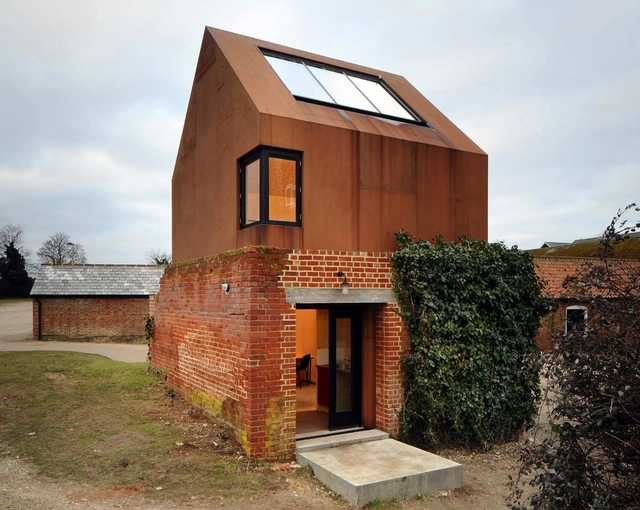
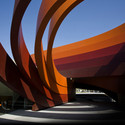
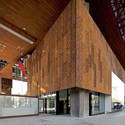
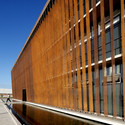
One of the most interesting trends in architectural materials of recent years is the increase in use of weathering steel - more commonly referred to by its trademark name, Cor-Ten. Thought the material has been around for decades, first being used for architectural purposes in the Eero Saarinen-designed John Deere Headquarters in 1964, the material has seen a surge in popularity in the last decade or so, being used in everything from individual houses and tiny kiosks, to SHoP's design for the Barclays Center in Brooklyn, which used a staggering 12,000 weathering steel panels.




.jpg?1430382174)





.jpg?1431095540&format=webp&width=640&height=580)