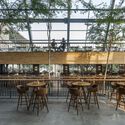
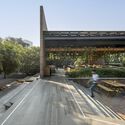
Magic Bus / RMA Architects

Architects: RMA Architects
Location: Panvel, Mumbai, India
Architect In Charge: Rahul Mehrotra
Consultants: Vijay K. Patil & Associates, D.R.Bellare, Riyaz Rangwala, Sunil Services, Sewri
Area: 2,415 sqm
Year: 2007
Photographs: Ariel Huber, Rahul Mehrotra, RMA Architects
House in a Tea Garden / RMA Architects

Architects: RMA Architects
Location: Coonoor, India
Architect In Charge: Rahul Mehrotra
Area: 8,000 sq ft
Year: 2008
Photographs: Rahul Mehrotra, Rajesh Vora, RMA Architects
Designing the Future of Design: An Interview with Kumar Vyas by Victoria Lautman

“What do we mean by education?” “What is design?” “Can design be taught?”
These were some of the questions a small group of innovative pioneers – huddled in the attic of Le Corbusier’s Sanskar Kendra museum – asked themselves when they set about creating what would become the National Institute of Design (NID) in Ahmedabad, India’s first design school. The year was 1962, and not only were there no designers in the country, the profession of design, for Indians, simply did not exist.
One of these pioneers – who would head the industrial design department, help formulate the school’s curriculum, and train its faculty members – was Kumar Vyas. Born in 1929, Vyas remained at NID for three decades, and continues to work from his office on the campus he helped create. His numerous articles and books were essential to establishing India’s current design-rich environment; two years ago, he received the prestigious Sir Misha Black Medal for Excellence in Design Education.
Vyas’ experience designing a design education is not only a fascinating journey, but also a source of inspiration – if architecture education took Vyas’ lessons to heart, and re-examined itself from square one, how would it be different? Read Victoria Lautman’s interview with Vyas after the break, and tell us what you think in the comments below.
Motisons Tower / Kothari Associates

Architects: Kothari Associates
Location: Jaipur, India
Director: Utkarsh Kothari
Chief Architect: Ravindra Verma
Senior Architect: Rajesh Singh
Area: 50,000 sqft
Year: 2013
Photographs: Courtesy of Kothari Associates
CSMVS – Visitor Centre at the Prince of Wales Museum / RMA Architects

Architects: RMA Architects
Location: Mumbai, India
Year: 2011
Photographs: Rajesh Vora, Edmund Sumner
Nirvana Film Office / SJK Architects

Architects: SJK Architects
Location: Bangalore, India
Design Team: Shimul Javeri Kadri, Sarika Shetty, Roshni Kshirsagar, Poonam Sachdev
Area: 8,000 sqm
Year: 2011
Photographs: Pallon Daruwalla & Shimul Javeri Kadri
The Brick House / Hiren Patel Architects

Architects: Hiren Patel Architects
Location: Ahmedabad, Gujarat, India
Architect In Charge: Hiren Patel
Area: 335 sqm
Year: 2008
Photographs: Sebastian Zachariah
Hotel Avasa / Nandu Associates

Architects: Nandu Associates
Location: Madhapur, Hyderabad, India
Team: B. Nanda Kumar, Ankita Gupta, B.H.Ravi Shankar, B.Naveen Reddy
Area: 8179.0 sqm
Year: 2012
Photographs: Bharath Ramamrutam
Shipara / SDeG

Architects: SDeG
Location: Bangalore, India
Design Team: Sujit, Balaji
Project Team : Sujit, Balaji, Gayathri, Anju, Darshan, Prabhakar, Ananya
Structural Design: Eco Consultants
Contractor (Civil): JK Constructions
Area: 340 sqm
Year: 2012
Photographs: Clare Arni
Vasant Vihar Residence / Vir.Mueller architects

Architects: Vir.Mueller architects
Location: New Delhi, India
Partners In Charge: Christine Mueller & Pankaj Vir Gupta
Project Team: Harsh Vardhan Jain, Hillary Collins, Saurabh Jain, Kai Pedersen, Mansi Maheshwari, Laura Blosser, Elizabeth Shaw, Vijender Singh Rana
Area: 4,100 sqm
Year: 2010
Photographs: Courtesy of Vir.Mueller architects
India’s Evolution vs. China’s Revolution

This article, by Austin Williams, originally appeared in The Asian Age as “India, China: Talk of the Town.” Williams is the co-author of Lure of the City: From Slums to Suburbs and director of the Future Cities Project. He teaches architecture and urban studies at XJTL University in Suzhou, China. Email him at futurecitiesproject@gmail.com
As an architect living in Suzhou, just outside Shanghai, I have become blasé about the skyline being transformed before my very eyes. The classic view of Shanghai’s towering waterfront may not represent great architecture, but it’s impressive all the same… and constantly improving. In most cities across China it is the same story: high-speed construction activity, modernisation, transformation and skyscrapers everywhere. There is a palpable sense of opportunity pending — what the émigrés to America must have felt when arriving in New York 100 years ago.
While many Western commentators point to the failures (the accidents, the pollution and the corruption) with an unremitting Schadenfreude, China marches on. Where else can you watch a modern city grow and change in real time? Where else, indeed?
Read more of Austin Williams’ account of the different kinds of urban development happening in China and India, after the break…
Dual House / VPA Architects

Architects: VPA Architects
Location: Ahmedabad, India
Area: 1,000 sqm
Year: 2012
Photographs: Courtesy of VPA Architects
Toll Plaza / archohm

Architects: archohm
Location: Narol-Naroda Road, Gujarat, India
Design Team: Mrs. Rachna Mittal, Mr. Shahzad Ahmad
Principal Architect: Mr. Sourabh Gupta
Client: L&T IDPL Ltd
Area: 3,860 sqm
Year: 2010
Photographs: Courtesy of archohm
Samundra Institute of Maritime Studies / Christopher Charles Benninger Architects

Architects: Christopher Charles Benninger Architects
Location: Lonavla, Pune, India
Architect In Charge: Prof. Christopher Benninger
Design Team: Daraius Choksi, Harsh Manrao, Shivaji Karekar, Akshay Modhak, Sujit Kothiwale, Neha Kothiwale, Shalaka Vaidya, Kshitija Parmar, Madhvi Bhuradia, Noel Jerald, Er. Rahul Sathe
Area: 21,500 sqm
Year: 2007
Photographs: A. Ramprasad Naidu
Office for Crayons / IAAD

Architects: IAAD
Location: Okhla, Nueva Delhi, Delhi, India
Design Team: Jyoti, Sumit, Rachna
Area: 11,000 sqft
Year: 2007
Photographs: Andre Fanthome
The Frill House / Hiren Patel Architects

Architects: Hiren Patel Architects
Location: Ahmedabad, Gujarat, India
Area: 9,000 ft2
Year: 2012
Photographs: Sebastian Zachariah
Slum Rehabilitation Promise to Mumbai’s 20 Million

Slums, shanty-towns, favelas - they are all products of an exploding migration from rural to urban areas. Over the last half century, people living in or near metropolises has risen in proportion to the global population. Migrations from rural areas to urban areas have grown exponentially as cities have developed into hubs of economic activity and job growth promising new opportunities for social mobility and education. Yet, with all these perceptions holding fast, many people who choose to migrate find themselves in the difficult circumstances of integrating into an environment without the proper resources to accommodate the growing population. Cities, for example, like Mumbai, India’s largest city and 11th on the list as of 2012 with a population of an estimated 20.5 million. According to a New York Times article from 2011, about 60% of that number live in the makeshift dwellings that now occupy lucrative land for Mumbai’s developers.
More to come after the break.
Poona House / Rajiv Saini

Architects: Rajiv Saini
Location: Mumbai, Maharashtra, India
Architect In Charge: Rajiv Saini
Design Team: Suprio Bhattacharjee, Kalyani Kale, Neeraj Singh, Ruchi Sharma
Area: 12,000 ft2
Year: 2008
Photographs: Courtesy of Rajiv Saini