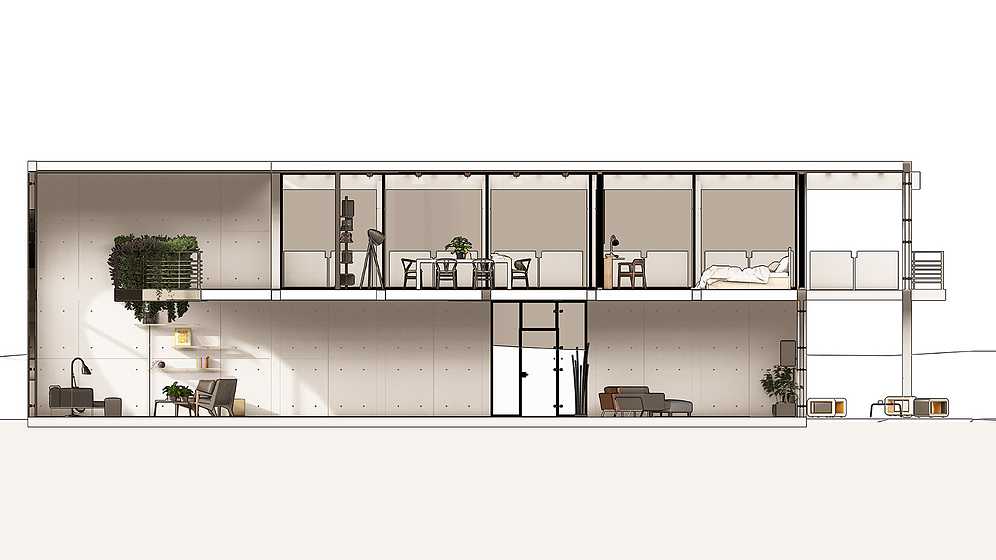
Produce personalized presentation boards that distill complex concepts into simple visual representations with a few helpful tools and effects.


Produce personalized presentation boards that distill complex concepts into simple visual representations with a few helpful tools and effects.

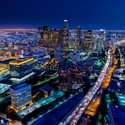
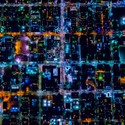
The latest in his high-altitude "AIR" series, Pulitzer Prize-winning photographer Vincent Laforet has captured the sprawling city of Los Angeles at night from a dizzying 10,000 feet. First starting this "dream project" in his hometown of New York then Las Vegas and San Francisco, AIR is taking Laforet worldwide with upcoming visits planned for London, Paris, Tokyo and more.
Preview a stunning selection of Laforet's Los Angeles series, after the break.
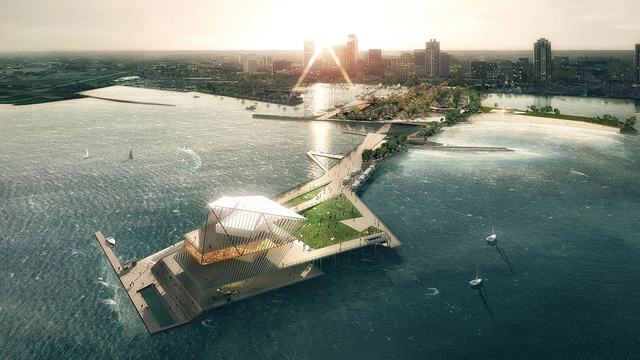
A consortium of Tampa-based ASD, Rogers Partners Architects+Urban Designers, and Ken Smith Landscape Architect has been announced as winners of the second St. Petersburg Pier redesign competition. Chosen after the city failed to implement Michael Maltzen Architecture’s competition-winning proposal due to strong public opposition, the new winning scheme, "Pier Park" takes a more scaled down (and affordable) approach to redesigning the site's landmark 1970s pier by focusing on public experience rather than architectural intervention.
Read on after the break for more on the $46 million Pier Park proposal.
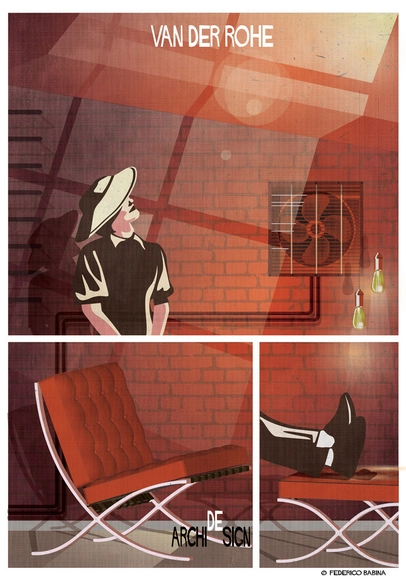
With his latest series of illustrations, Federico Babina offers us "a journey into the universe of design" through 28 illustrations which use a composition of frames to tell stories around iconic designs. "I like to think of the objects that inhabit our homes as a silent audience, but active in our lives," explains Babina. "The objects themselves tell stories, not inanimate things but things that soak up the life that surrounds them."
Through the combination of so-called "timeless" designs with clear references to the times and styles that produced them, Babina tells the history of these iconic objects that we may take for granted today (with the occasional saucy human story thrown in for good measure).
See the entire set of ARCHIDESIGN illustrations after the break - and if you missed them, make sure to check out Federico Babina's previous illustration sets and his website.
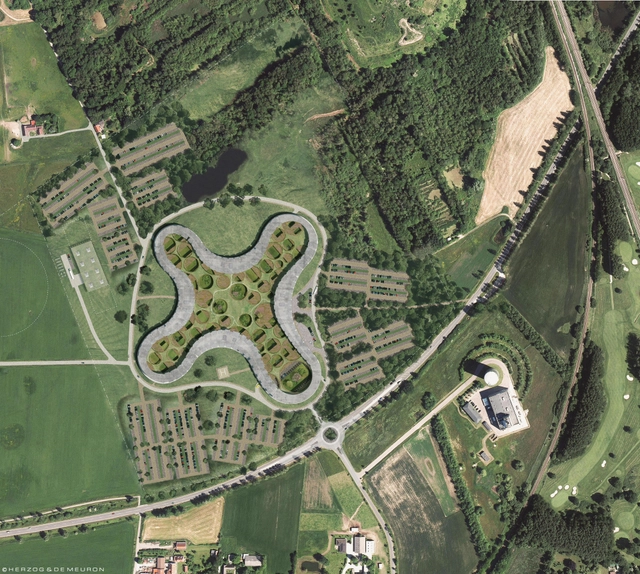
Jacques Herzog’s first lecture in Denmark will be livestreamed on April 28, from 11:30 – 1:30 EST, during which the Swiss architect will discuss the New North Zealand Hospital project. Herzog & de Meuron, along with Danish firm Vilhelm Lauritzen Architects, was selected to design the 124,000-square-meter facility during an international design competition last year. To be built near Hillerød, the hospital will be Herzog & de Meuron’s first project in Scandinavia. Learn more about the project and view the livestream of the lecture after the break.
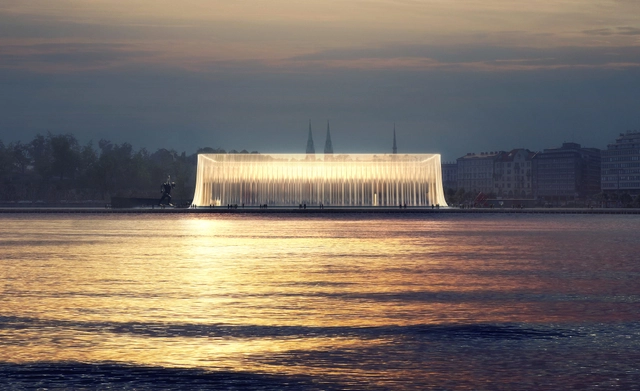
For years, competitions have powered the stream of architectural output, producing such icons as the Vietnam War Memorial, Sydney Opera House, Central Park, and Ground Zero memorial. One need only look to the buzz surrounding the Guggenheim Helsinki competition and ArchDaily's own amply filled tag to see that competitions are part of the very lifeblood coursing through contemporary architecture. But what do architects really think about design competitions?
With 1414 responses from 65 countries, the Architectural Record/Van Alen Institute Competition survey is one of the most comprehensive investigations of this question to date. Speaking to the Architectural Record in February, Van Alen Institute competitions director Jerome Chou said that the survey hoped to identify the pros and cons of the competitions process, and offer suggestions for its improvement. "[W]e're hoping to advance the dialogue about the future of competitions, develop new models, and reach new audience," Chou said.
Launched in February this year, the survey sought responses from international design professionals who had participated in a competition during their career.
Read a summary of the survey's key findings after the break.
Monocle, a briefing on global affairs, business, culture and design, was founded by in 2007 by Tyler Brûlé, the former Editor-in-Chief of Wallpaper*. With over thirty correspondents working around the world, the magazine also has local bureaux in Tokyo, New York City, Hong Kong, Zürich, Toronto, Istanbul and Singapore. This month saw the publication host their inaugural international conference, centering on the enduring theme that has preoccupied the magazine since launch: Quality of Life.
Set against the backdrop of Portugal's capital, Lisbon, the event was hosted by Brûlé alongside editors Andrew Tuck, Robert Bound, Sophie Grove and Steve Bloomfield. The opinions of twenty-three internationally renowned speakers―including Martin Roth (Director of London's Victoria & Albert Museum), Taco Dibbits (of Amsterdam's Rijksmuseum) and Brazilian architect Isay Weinfeld, alongside the Mayors of Oslo and Porto―were keenly listened to by 160 delegates who had traveled from across the world. The points for discussion allowed for a breadth of discourse that spanned housing and urbanism, to explorations of the 'high street' and the significance of the museum in the contemporary city. The thematic scope of these conversations made them accessible, inspirational and, more importantly, both relevant and widely applicable.



Surface Magazine has launched its 2015 Avant Guardian photography contest, now in its 15th year. Calling for submissions now through June 1, the competition provides emerging photographers the chance to be featured in Surface's October issue and their upcoming New York exhibition.
25 photographs will be shortlisted by Surface editors; ultimately 10 winners will be selected by a well-respected judging panel that includes architectural photographers Ingmar Kurth and Hélène Binet, as well as Stephen Hilger (Pratt Institute), Roy Schwalbach (Jack Studios), and photographers Youssef Nabil and Delfino Sisto Legnani. For more information or to submit your work, visit surfacemag.com.
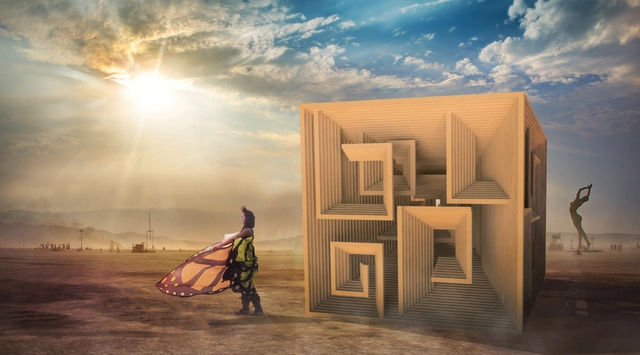
Three students from Diploma Studio 10 (DS10) at the University of Westminster have received grants to see their designs realized at this year’s Burning Man festival. The projects - The Infinity Tree, Reflection, and Bismuth Bivouac - are temporary pavilions that will provide respite for festival-goers, each with a unique experiential quality to captivate the masses.
Drawing upon the 2015 Burning Man theme "Carnival of Mirrors," the three pavilions will explore the illusory and enchanting qualities of old-fashioned carnival culture while serving as functional spaces of rest and shelter from the Black Rock Desert sun. These and other installations will make up a “temporary metropolis” from August 30 to September 7.
More on the designs and their Kickstarter campaign, after the break.
Building up to the May 9 opening of OMA's Fondazione Prada, Italian filmmakers Ila Bêka and Louise Lemoine have released 15-video series that captures the rhythmic and somewhat "transient" nature of the project's last month of construction. Part of a long ongoing relationship between Prada and OMA, the highly anticipated venue will be an "unusually diverse environment" sculpted from a historic 20th-century distillery south of Milan's city center that will be used to exhibit art.
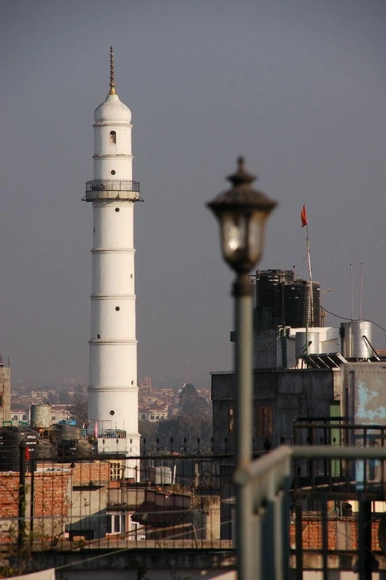
Just one of the many tragedies involved in the devastating magnitude 7.8 earthquake that struck Nepal on Saturday - which as of this morning is known to have claimed the lives of over 3,500 people - is its effect on the historic architecture of the region. Home to seven UNESCO World Heritage Sites in the affected regions of Kathmandu, Patan and Bhaktapur, news outlets from the BBC to The Washington Post are reporting extensive damage to some of the country's most significant monuments.

Looking towards the uppermost floors of the new Whitney Museum of American Art, thick clouds roll diagonally across the sky behind. Reflected in the ample window of the museum’s main gallery they dash in a different direction, while the building’s white facade flashes light and dark in response to the changing light conditions. Superimposed over this scene, bold all-caps lettering pronounces the title of an article: the simple but dramatic “A New Whitney.”
This is the sight that greeted readers of Michael Kimmelman’s review of the Whitney in The New York Times last Sunday. Scroll down just a little, and the first thing you encounter is a list of credits: Jeremy Ashkenas and Alicia Desantis produced the article; graphics were contributed by Mika Gröndahl, Yuliya Parshina-Kottas and Graham Roberts; and videos by Damon Winter (the editor behind the entire endeavor, Mary Suh, is not mentioned).
Before even reading the article’s opening words, one thing is clear: this is not your average building review. As a matter of fact, it might even be the most important article in recent architectural memory.

The Royal Institute of British Architects (RIBA)’s Future Trends Survey for March 2015 has "bounced back strongly" in comparison to February, as the workload index rose to +36 from +26 last month. Private housing and the commercial sector remains strong, while uncertainty still surrounds forecasts in the public sector. Workload forecast balance figures have remained high, the highest numbers being reported from practices in London (+42) and in the south of England (+39). In addition, large and medium sized practices have reported confidence about staffing levels, while small practices remain "more circumspect."
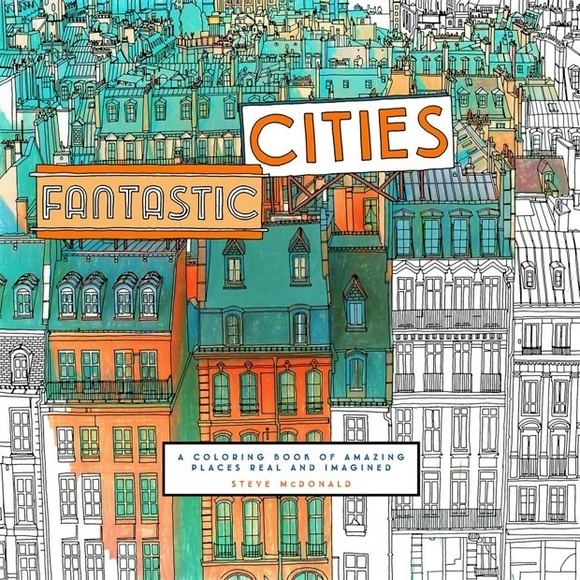
Canadian artist Steve McDonald has released "Fantastic Cities," an illustrated coloring book featuring 60 cities from around the world. From Paris to New York, Tokyo to Istanbul, the illustrations will take any architect or urban planner back to childhood times.
The book, with 48 full-view pages of real and imaginary places, is on sale Amazon and Chronicle Books. Take a look inside, after the break.
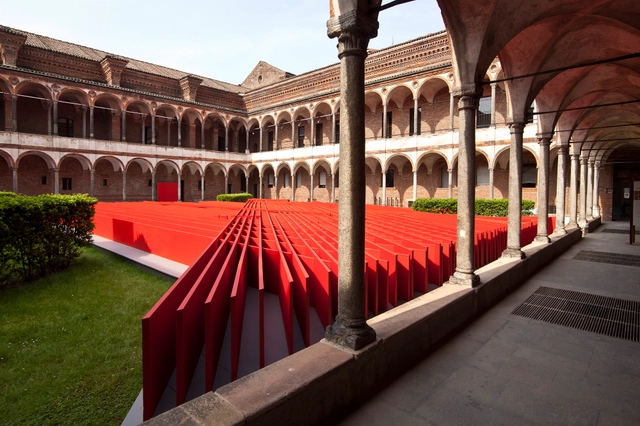
Daniel Libeskind, together with Italian paint company Oikos, has transformed the Università Statale’s Pharmacy Courtyard into a garden of "Future Flowers" as part of the 2015 Milan Design Week. On view through May 24, the installation was inspired by one of Libeskind’s "Chamberwork" drawings. It features a series of intersecting red metal "blades" that represent a collection of Oikos paints developed by Libeskind.
here.
The organized complexity in artifacts and buildings, as I have described it, leads to a positive response from users. This is the perception of “life” which we sense in certain structures and places in the built environment. The physical structure of the world has a massive effect on human beings. A crucial task of architectural theory is to explain and predict the impact that living structure — or its absence — has on us.

Students from Eindhoven University of Technology (TU/e) will attempt to beat the world-record for the longest open span attained by an ice structure by constructing an ice bridge inspired by Leonardo da Vinci. Following a yearly tradition of exhibiting architecture made from ice, the bridge is anticipated to span an astounding 50 meters. If the team succeeds, they will shatter the school's previous record set in 2014 when students built an ice dome spanning 30 meters.
Read on after the break for more on the massive ice bridge.
Since its creation in the first half of the 20th century, the LEGO brick has come to be used for much more than its original purpose as a children’s toy.
We’ve seen LEGOs used to create replicas of classic architecture, urban interventions, virtual games and even an entire house. Now, a new video highlights the bricks’ potential as a formwork for creating furniture. The bricks' ability to be easily assembled and disassembled makes for an efficient and easy-to-create formwork, which when filled with concrete and left to set creates these incredible, textured nesting tables.
Watch the video above for a tutorial on making the tables -- does anyone dare try it themselves?
In 2014 renowned Dutch politician Neelie Kroes, then a commissioner for the European Union, stated that coding should be taught in elementary school in the Netherlands, arguing that “Coding is the reading and writing of the future” and that if the Dutch didn’t incorporate it into their education system it would fall behind school systems in other countries. The reactions to both Kroes’ statement and Michael Kilkelly's article "5 Reasons Architects Should Learn To Code" were quite similar. Those already capable of writing code agreed; many who have never even seen, let alone written any script responded negatively. Many reactions to Micheal Kilkelly's article covered the same ideas: “There's no time!” “Coding is not designing!” Or just plain, “No!”
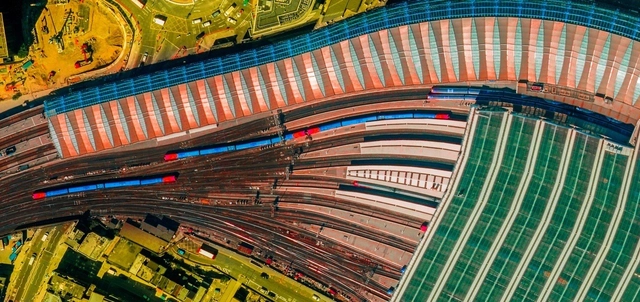
Hovering high above the earth's surface and presenting a serenely distant view of the terrain we inhabit, ULTRADISTANCIA is the latest photographic project from Argentinian artist, academic, and veteran traveller Federico Winer. The experimental series uses "the marvelous screens of Google Earth" to present stunning images of environments both built and natural.
Learn more about the project and view selected images after the break.
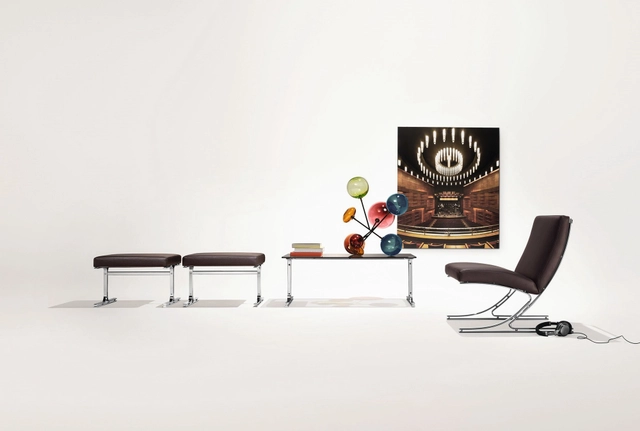
The 54th edition of Milan Design Week (also known as Salone del Mobile) recently came to a close. In celebration of its success, we have compiled a list of the most talked about architect-designed products showcased this year. Take a look after the break to see new products from Rem Koolhaas, Zaha Hadid, David Chipperfield, and more.
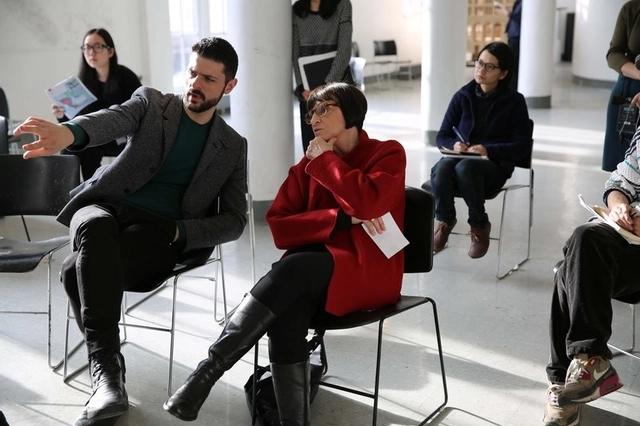
Hailed as one of "50 Great Teachers" by NPR, ivy-league architecture professor Diana Agrest's out-of-the-box teaching methods have brought her to the forefront of studio academia. A testament to her instruction, her students have gone on to attain some of the most prestigious awards for creative pursuits, including the Pritzker Prize and the MacArthur "genius grant." With her belief that architects' work should be informed by multiple disciplines, Agrest has developed a teaching style to push the boundaries of traditional studio culture and challenge her students to explore the built environment through various lenses, particularly film. Read NPR's full article on Agrest, here.
.jpg?1429823426&format=webp&width=640&height=580)
By adjoining 200,000 fabric-lined floatable components, Christo hopes to allow the residents of two mainland towns in Italy's Lombardy region to walk on water for a duration of two weeks in June 2016. If approved, the "Floating Piers" would connect both towns with the Lake Iseo islands via an extended, brightly colored fabric dock that would stretch across two miles.
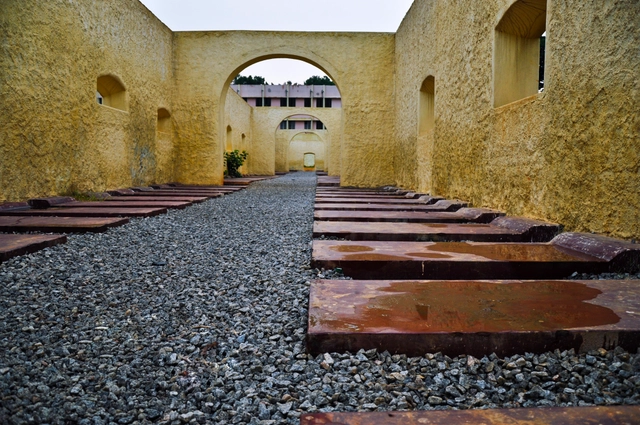
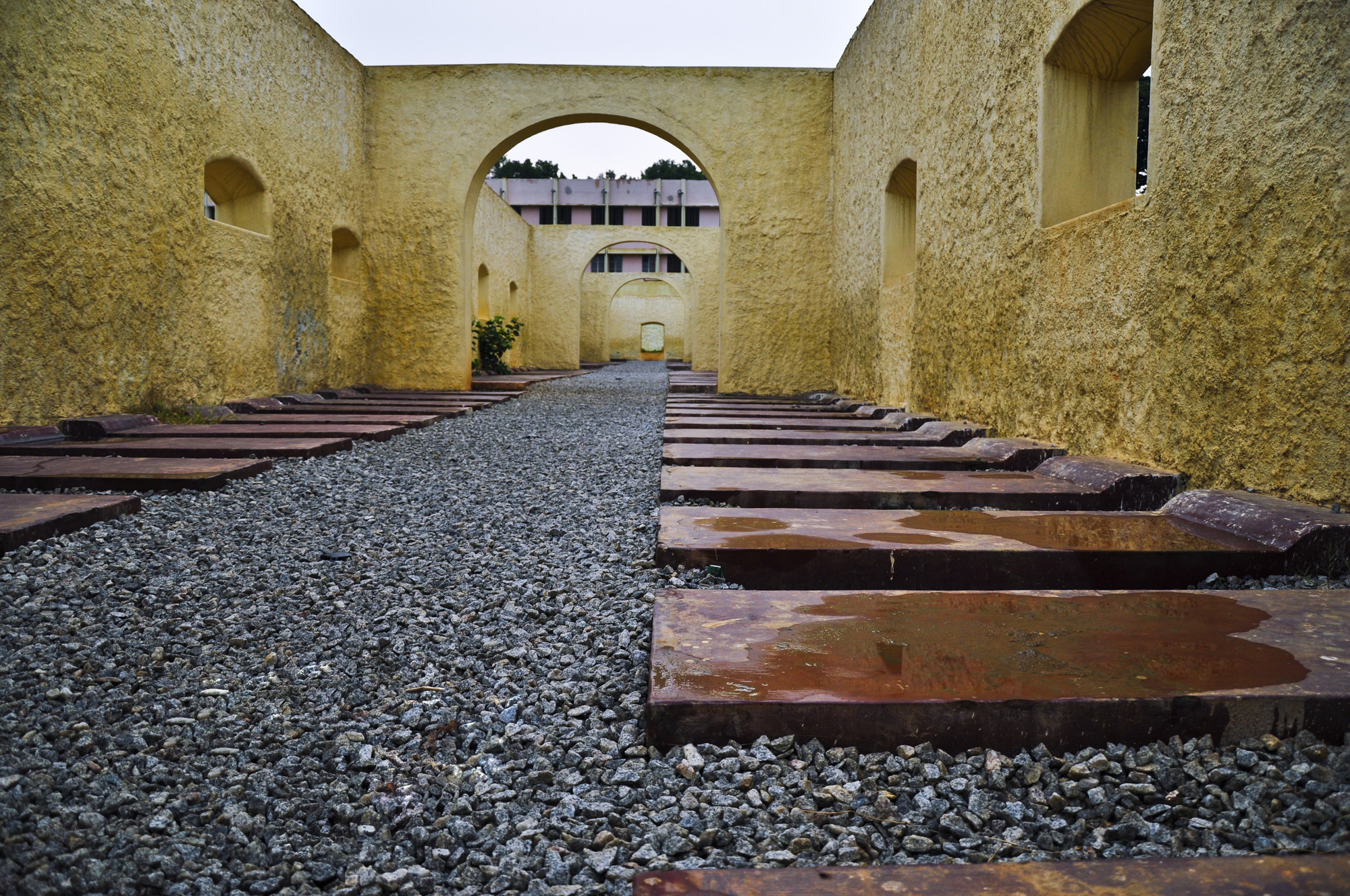
Prisons are often seen as problematic for their local communities. After centuries of correctional facilities discouraging economic growth and occupying valuable real estate as a necessary component of towns and cities, many of these institutions have been relocated away from city centers and their abandoned vestiges are left as unpleasant reminders of their former use. In fact, the majority of prisons built in the United States since 1980 have been placed in non-metropolitan areas and once served as a substantial economic development strategy in depressed rural communities. [1] However, a new pressure is about to emerge on the US prison systems: beginning in 2010, America's prison population declined for the first time in decades, suggesting that in the near future repurposing these structures will become a particularly relevant endeavor for both community development and economic sustainability. These abandoned shells offer architects valuable opportunities to reimagine programmatic functions and transform an otherwise problematic location into an integral neighborhood space.
Why repurpose prisons rather than starting fresh? The answer to this question lies in the inherent architectural features of the prison typology, namely the fact that these structures are built to last. People also often forget that prison buildings are not limited to low-rise secure housing units - in fact, prisons feature an array of spaces that have great potential for reuse including buildings for light industrial activity, training or office buildings, low-security housing, and large outdoor spaces. These elements offer a wide variety of real estate for new programmatic uses, and cities around the world have begun to discover their potential. What could the US learn from these examples, at home and overseas?
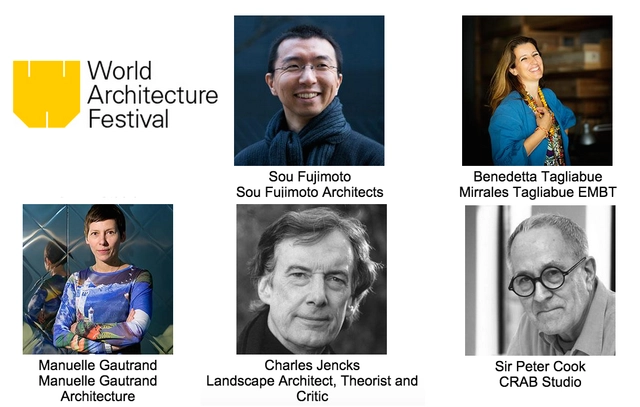
From November 4-6, the 2015 World Architecture Festival (WAF) will take place in Suntec in central Singapore, featuring three days of conferences, exhibitions and lectures, in addition to the awards ceremony. As the world’s largest architectural festival and awards event, the WAF awards honor exceptional architecture from around the globe across 30 categories. Over 70 judges attend the festival and critique the submitted projects. Among this year’s “superjurors” are Peter Cook, Sou Fujimoto, Benedetta Tagliabue, Manuelle Gautrand, Charles Jencks, and Kerry Hill.
All entries must be submitted by May 22nd to be considered for the WAF awards. Shortlisted projects will compete for category prizes on the first two days of the festival. On the third (and last) day, the category winners will present their projects to the “super-juries,” which will select the World Landscape, Future Project and Completed Building of the Year.
Past winners have included Zaha Hadid Architects, BIG, Snøhetta and Vo Trong Nghia. Prizes for small projects, use of wood and use of color will also be awarded.
But you can browse the last one: 417